Kalimah learning library

Practical Guidance for Arabic and Quran Learners

Clear explanations, realistic study advice, and carefully selected resources for adult learners, parents, and Quran students.

Arabic teacher (f)arabic teacher (m)BlogHow to ........?
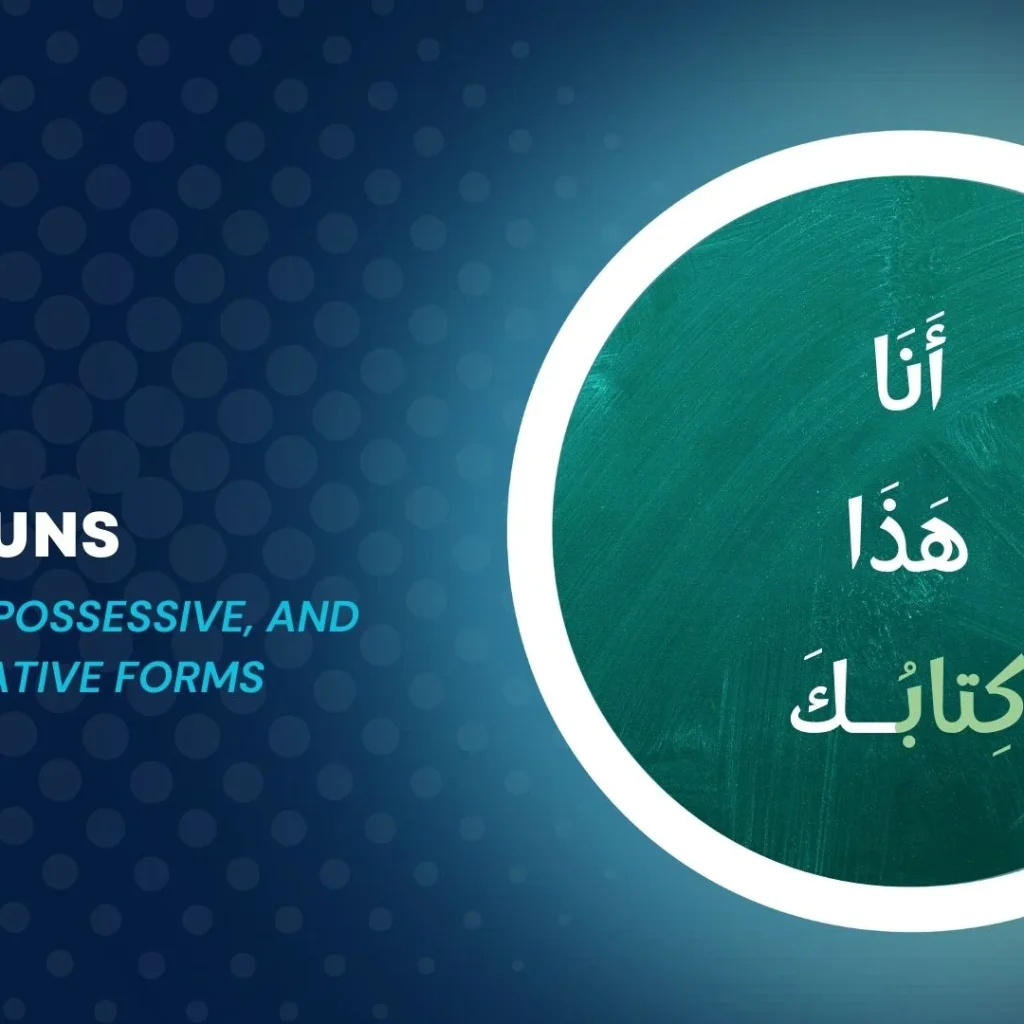
Arabic Pronouns – With Types, Examples, and Worksheet
Blog

Arabic Pronouns – With Types, Examples, and Worksheet

Arabic pronouns (الضمائر – al-ḍamāʾir) are words that replace nouns, varying by person (1st/2nd/3rd), number (singular/dual/plural), and gender (masculine/feminine)—creating 14 personal pronouns in total. They divide into detached pronouns (stand-alone: أنا – I, هو – he) and attached pronouns (suffixes: ـي – my, ـه – his). Additional types include demonstrative (هذا – this), relative (الذي – who/which), and interrogative (من – who?) pronouns. Mastering pronoun gender agreement and attachment rules is essential for Arabic fluency. Quick-Start Beginner Table Essential Pronouns (Learn First) Arabic Transliteration Usage […]

6 June، 2026 Read article →
Learn Arabic in Malaysia: Universities, Costs & Full Guide
Blog

Learn Arabic in Malaysia: Universities, Costs & Full Guide

Malaysia offers affordable, quality Arabic education through institutions like International Islamic University Malaysia (IIUM) and University of Malaya, with tuition ranging from $1,100-$3,300/year and total living costs around $4,000-$8,000 annually—significantly cheaper than Middle Eastern or Western alternatives. The country combines Modern Standard Arabic (MSA) programs with Islamic studies in a Muslim-majority, multicultural environment. While not an Arabic-speaking country, Malaysia’s strong Islamic educational tradition, English-medium instruction, and […]

6 June، 2026 Read article →
What Are The Characteristics Of Arabic Letters (Sifaat Al Huroof)?
Blog

What Are The Characteristics Of Arabic Letters (Sifaat Al Huroof)?

Sifaat al-Huroof, or Characteristics of Arabic Letters, refers to the fixed ways in which Arabic letters are pronounced, distinguishing them from others sharing the same articulation point. These characteristics are crucial for accurate pronunciation and are divided into two categories: Sifaat al-Lazimah (permanent characteristics) and Sifaat al-Areedah (redundant characteristics).  Permanent characteristics, such as jahr (audibility) and […]

6 June، 2026 Read article →
Learn How to Introduce Yourself in Arabic
Blog

Learn How to Introduce Yourself in Arabic

To introduce yourself in Arabic, start with the greeting السلام عليكم (As-salamu alaykum – Peace be upon you), then say اسمي [Your Name] (Ismi [Name] – My name is…). Share your age with عمري [Number] عامًا (Umri [Number] ‘aman), where you’re from using أنا من [Country] (Ana min [Country]), and your profession with أنا [Job] (Ana [Job]). Close politely with تشرفت بمقابلتك (Tasharraftu bimuqābalatik – Nice to […]

6 June، 2026 Read article →
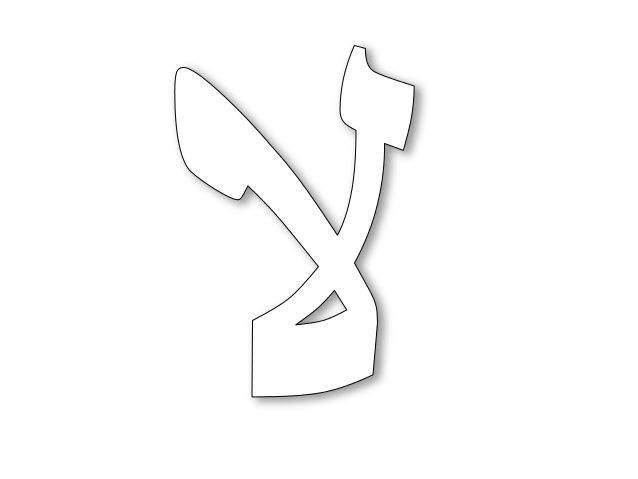
Lam Alif In Arabic Letter With Pronunciation And Examples 
Learning Arabic

Lam Alif In Arabic Letter With Pronunciation And Examples 

When beginners start learning Arabic letters, they often notice a special shape that looks like two letters joined together: لا. This shape is called lam alif. It is one of the most important combinations in Arabic writing because it appears frequently in words, sentences, and Qur’anic Arabic. The lam alif arabic letter is not a […]

6 June، 2026 Read article →
What is a noun in the Arabic and Their Types
Blog

What is a noun in the Arabic and Their Types

An Arabic noun (اسم – ism) is a word that names a person, place, thing, or concept and can stand independently in a sentence. Unlike English, Arabic nouns are classified by gender (masculine/feminine), number (singular/dual/plural), definiteness (definite with ال or indefinite without it), and derivation (derived from verbs or non-derived). Every Arabic noun has grammatical case (nominative, accusative, genitive) that changes based on sentence position. Understanding these […]

6 June، 2026 Read article →
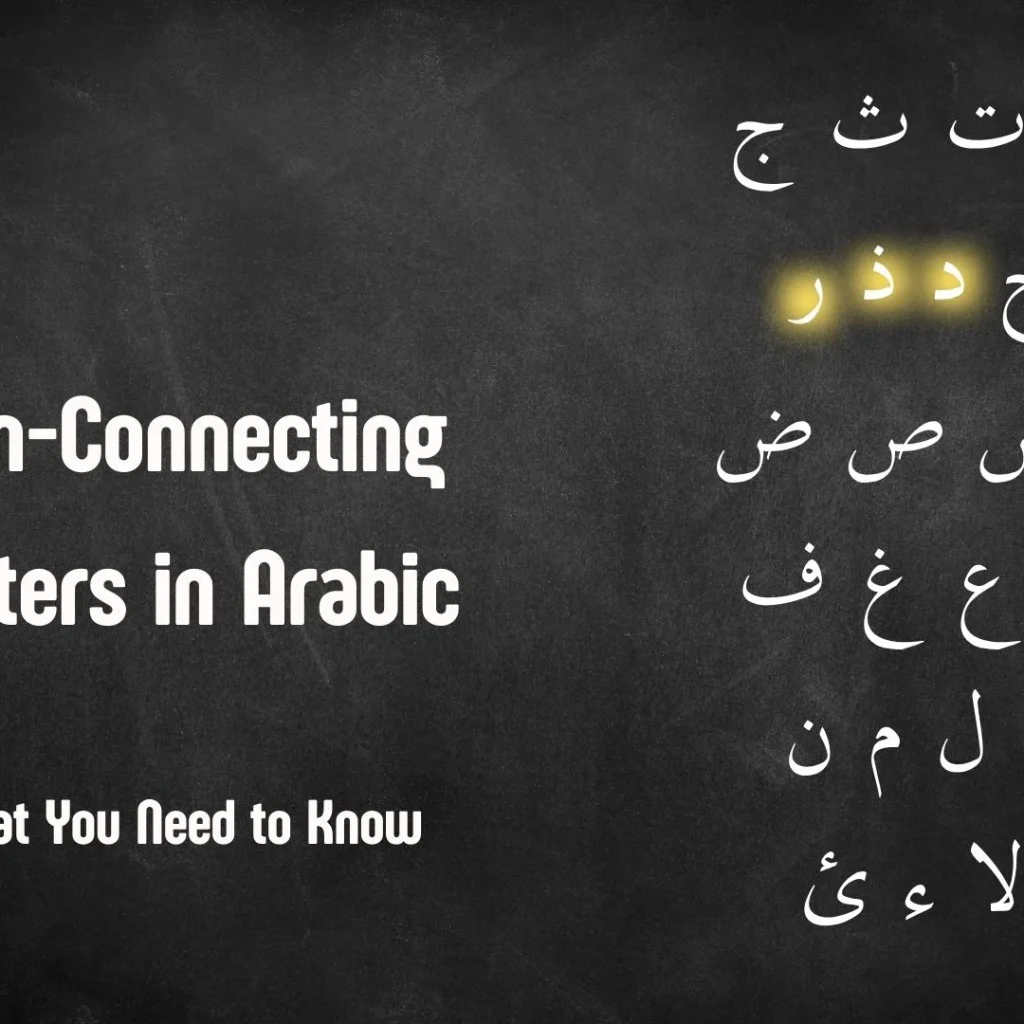
Arabic Non-Connecting Letters: Full Guide
Blog

Arabic Non-Connecting Letters: Full Guide

In a nutshell: Arabic non-connecting letters, like Alif and Dal, create clear visual breaks in words, preventing confusion in writing. Mastering these letters is key to smooth reading and accurate pronunciation in Arabic. If you’re familiar with the typography function, you’ll be aware of the significance of letters in all languages, including Arabic. Arabic has […]

6 June، 2026 Read article →
Arabic Consonants With Examples, And How They Differ From Vowels?
Blog

Arabic Consonants With Examples, And How They Differ From Vowels?

In a nutshell: Arabic consonants consist of 28 letters that serve as the backbone of the arabic language, with some also functioning as vowels depending on context. Unlike English, Arabic phonology blends consonants and vowels, relying on diacritical marks (harakat) to indicate vowel sounds. This unique structure introduces requires mastery of pronunciation rules like the […]

6 June، 2026 Read article →
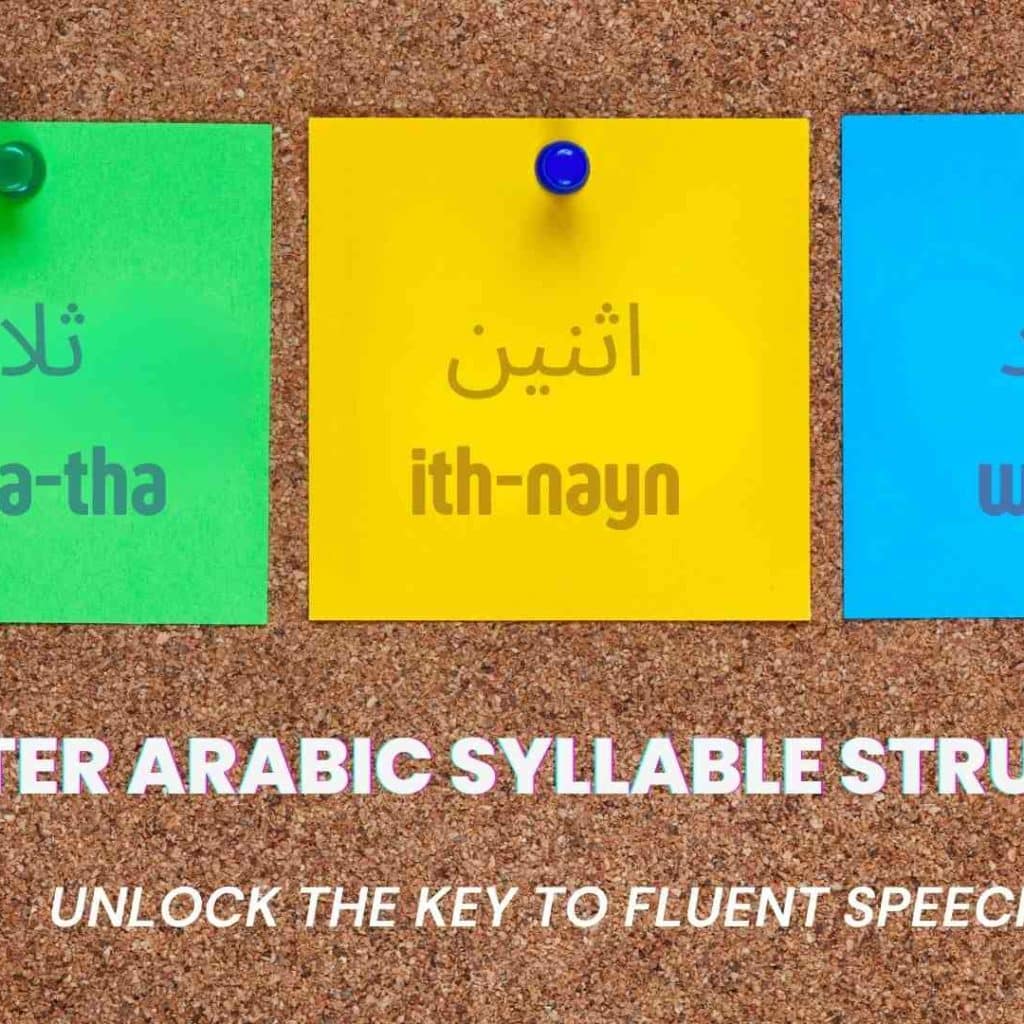
Syllable Structure In Arabic
Blog

Syllable Structure In Arabic

The theory of syllable structure has been strongly influenced by the study of Arabic, for two reasons. First, many dialects of Arabic provide examples of regular and productive processes that make reference to syllable structure.  Second, different varieties of spoken Arabic instantiate different inventories of syllable types, and these different inventories are associated with a […]

6 June، 2026 Read article →
Arabic Writing Practice for Kids: Expert Tips With 3 Worksheets
Blog

Arabic Writing Practice for Kids: Expert Tips With 3 Worksheets

Teaching Arabic writing to kids requires a structured approach starting with individual letter shapes, then positional forms (beginning, middle, end), and finally harakat (vowel marks) and madd (long vowels). Children should progress gradually from tracing letters to writing words, then simple sentences.  Three essential free worksheets help: (1) Arabic Alphabet Tracing Sheets for letter formation, (2) […]

6 June، 2026 Read article →
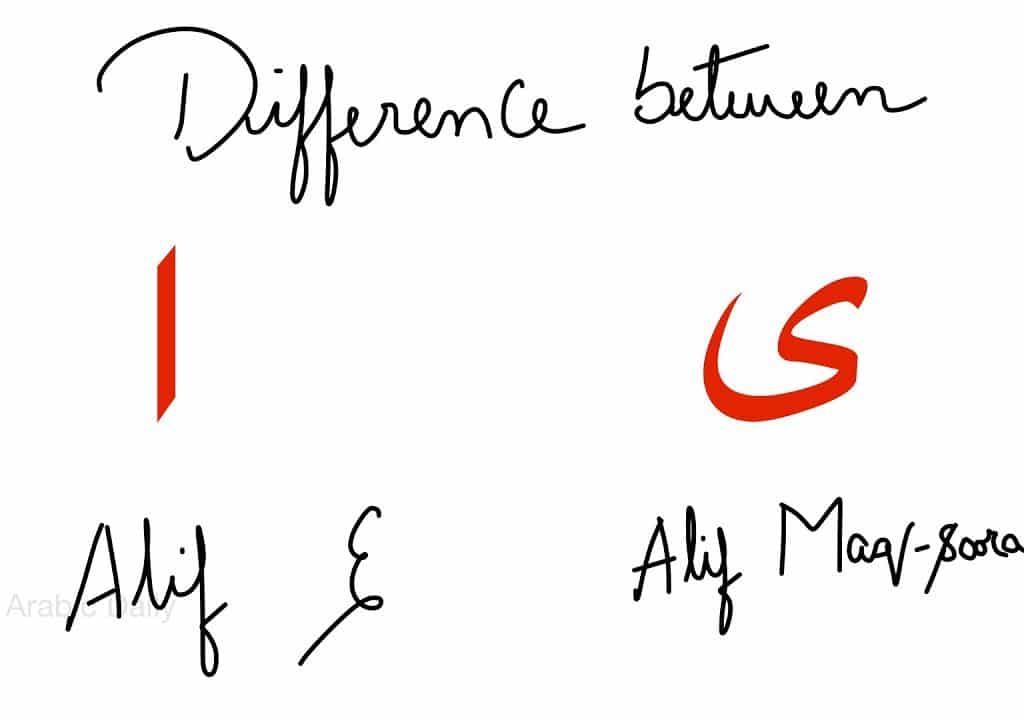
Alif Maqsurah مكسورة In Arabic Compared To The Mamdudah
Learning Arabic

Alif Maqsurah مكسورة In Arabic Compared To The Mamdudah

When learning Arabic, many students feel confused when they see two letters that look different but sound very similar: ا and ى. Both can represent a long “ā” sound at the end of words, but they are not written in the same way. This is where alif maqsurah in Arabic becomes important. Alif maqsurah is […]

6 June، 2026 Read article →
Learn To Read Arabic In 21 Days
Blog

Learn To Read Arabic In 21 Days

In a nutshell: “Read Arabic in 21 Days” by Haniff Bagh Khan offers a fast-paced, 3-week program designed for beginners to achieve basic Arabic proficiency. Through daily lessons and practical exercises, the course efficiently builds essential language skills while providing cultural insights, making it an ideal starting point for anyone eager to learn Arabic quickly. […]

6 June، 2026 Read article →

No matching article

Try another keyword or category.

Our editorial promise

Useful before promotional.

Kalimah articles should help readers make a better learning decision. We separate habits from full programs, explain trade-offs, and connect advice to real study outcomes.

Get a Personal Recommendation
Clear learning purposeEvery article answers a practical learner or parent question.
Realistic expectationsShortcuts are framed as habits or tools—not substitutes for guided progress.
A next step that fitsReaders can continue independently or request placement and teacher guidance.