Kalimah learning library

Practical Guidance for Arabic and Quran Learners

Clear explanations, realistic study advice, and carefully selected resources for adult learners, parents, and Quran students.

Arabic teacher (f)arabic teacher (m)BlogHow to ........?
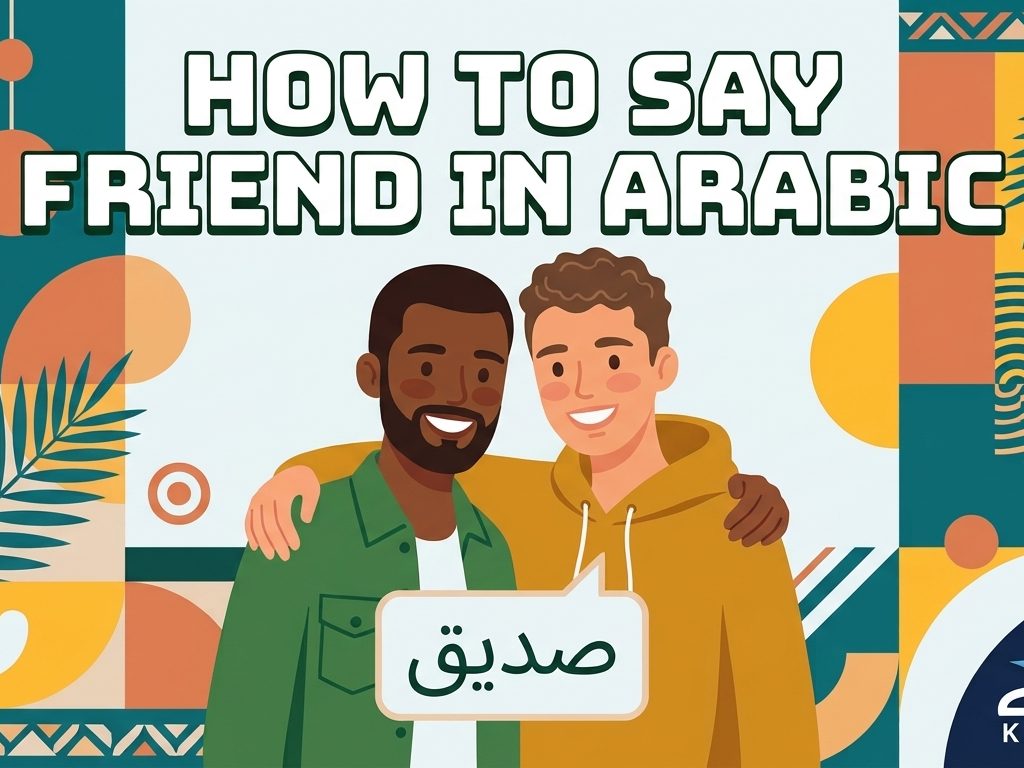
How To Say Friend In Arabic – A Simple Step-By-Step Guide
Learning Arabic

How To Say Friend In Arabic – A Simple Step-By-Step Guide

You want to call someone “my friend” in Arabic, so you look it up. Easy, right? Then a friend from Cairo says something different, and suddenly you’re not so sure. Learning how to say friend in Arabic can feel tricky at first, but it’s simpler than it looks. Let’s start with the word everyone knows. […]

10 November، 2026 Read article →
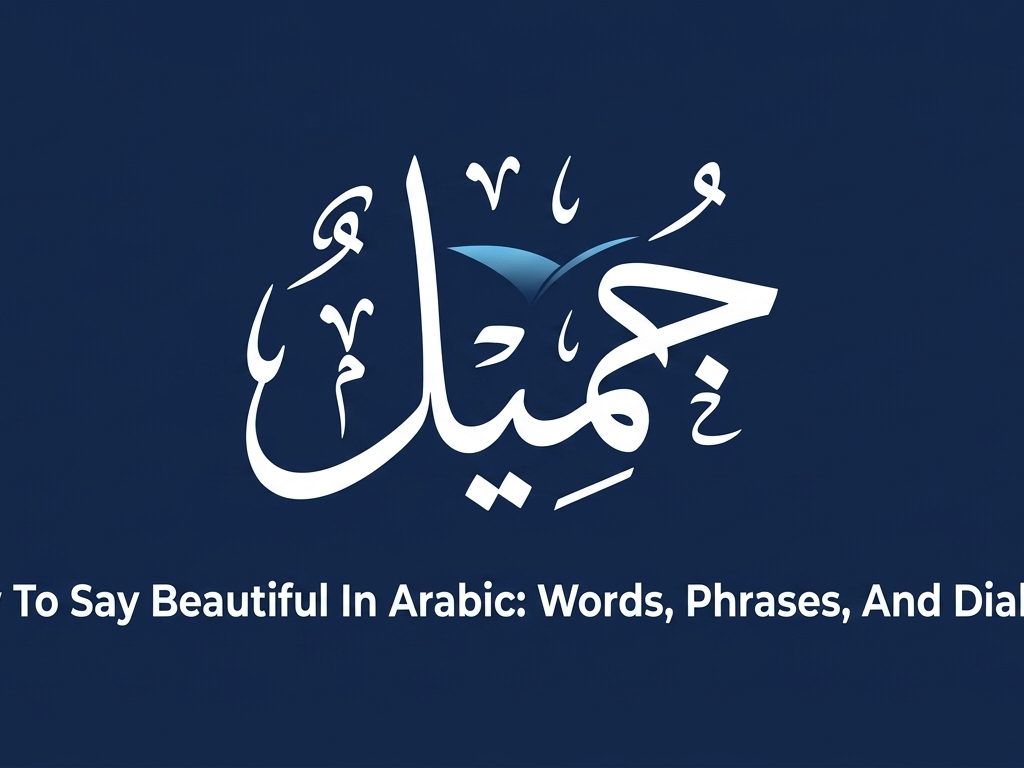
How To Say Beautiful In Arabic – 5 Easy Steps 
Learning Arabic

How To Say Beautiful In Arabic – 5 Easy Steps 

Have you ever wanted to tell someone they look lovely in Arabic? Maybe a friend showed you her wedding photos, or you stood in front of a sunset in Cairo and wanted the right word. Knowing how to say beautiful in Arabic lets you share that moment in a way that feels warm and real. […]

9 November، 2026 Read article →
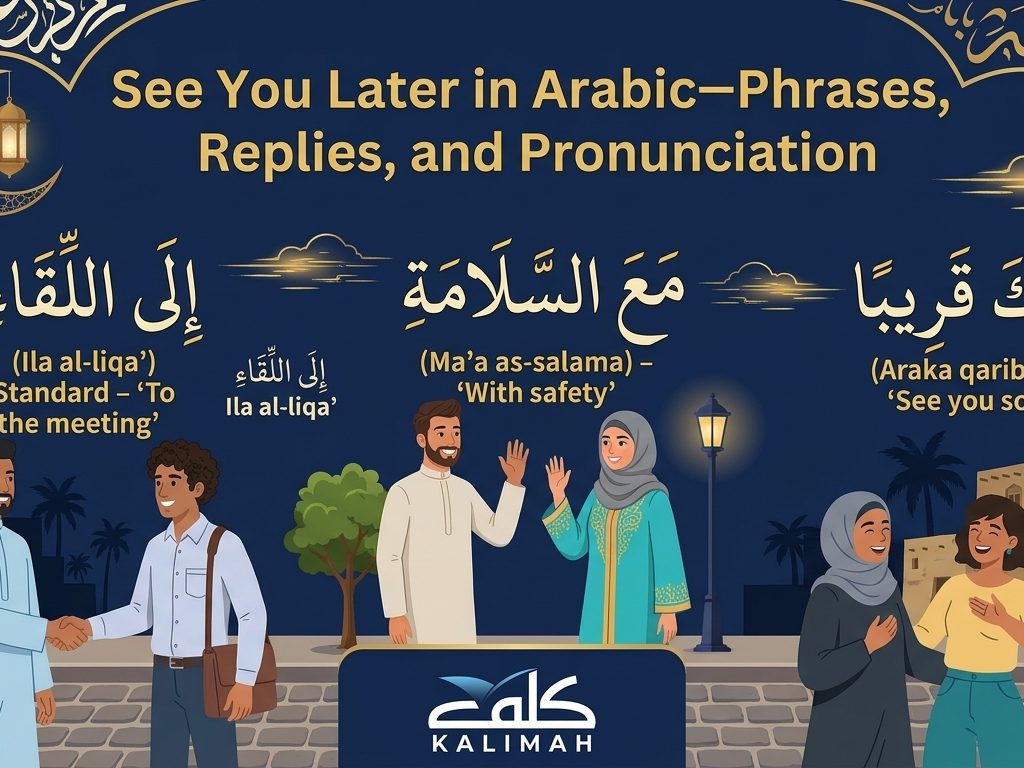
See You Later In Arabic – Phrases, Replies And Pronunciation
Learning Arabic

See You Later In Arabic – Phrases, Replies And Pronunciation

Picture this. You’ve just finished coffee with an Arab friend, and it’s time to go. You stand up, open your mouth, and nothing comes out. Is it ma’a as-salaama? Ila al-liqaa’? Learning how to say see you later in Arabic seems simple until the moment you need it. The tricky part is that Arabic doesn’t […]

9 November، 2026 Read article →
Good Afternoon In Arabic (Egyptian and Formal) And How To Reply 
Learning Arabic

Good Afternoon In Arabic (Egyptian and Formal) And How To Reply 

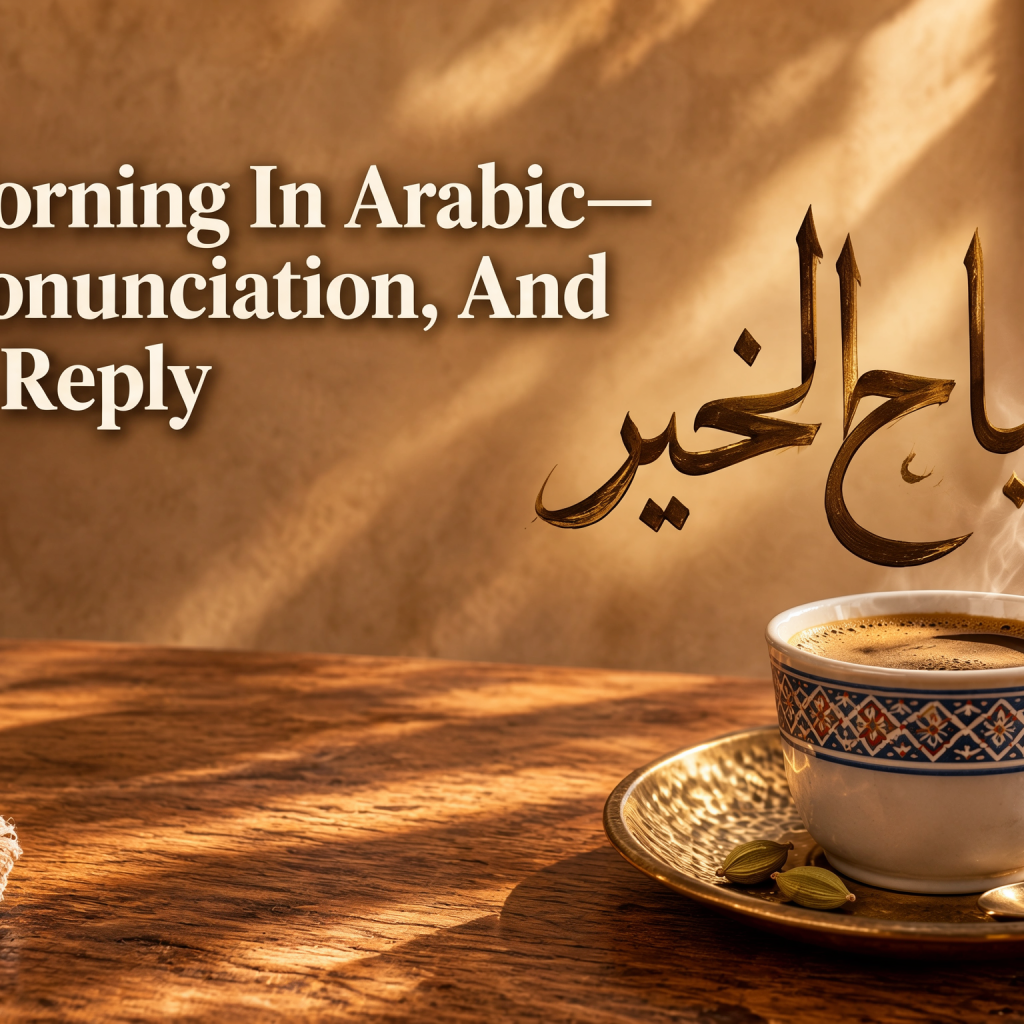
It’s 3 p.m., and your Arab coworker walks past your desk. You want to say hi, but “sabah al-khayr” feels wrong this late in the day. So what do you say? Good afternoon in Arabic is مساء الخير (masaa al-khayr). If someone says it to you first, answer with مساء النور (masaa an-nour). Here’s the […]

8 November، 2026 Read article →
Good Evening In Arabic – How To Say, Write & Reply
Learning Arabic

Good Evening In Arabic – How To Say, Write & Reply

Your Arab friend’s face pops up on the video call. It’s 7 p.m. where she lives, and you want to open in Arabic. But what do you say? You say masā’ al-khayr (مساء الخير). That’s good evening in Arabic, and it’s the greeting you’ll hear most from noon until night. Shop owners say it. Teachers […]

8 November، 2026 Read article →
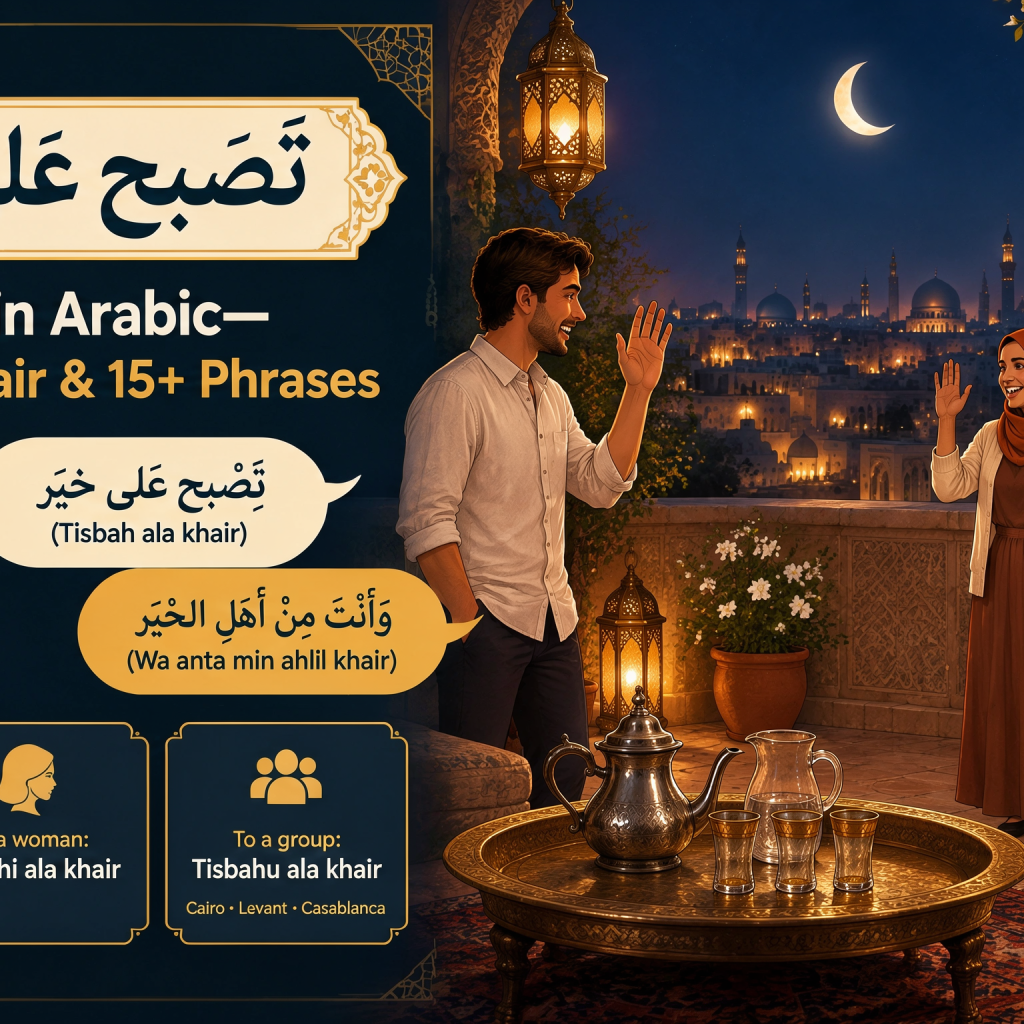
Good Night in Arabic – Tisbah Ala Khair & 15+ Phrases 
Learning Arabic

Good Night in Arabic – Tisbah Ala Khair & 15+ Phrases 

Your friends are putting on their shoes by the door. It’s late, and you want to say good night in Arabic, but you freeze. Do you say it the same way to his sister? Would people in Morocco even use the same words? The good news is that one short phrase covers almost every case. […]

7 November، 2026 Read article →
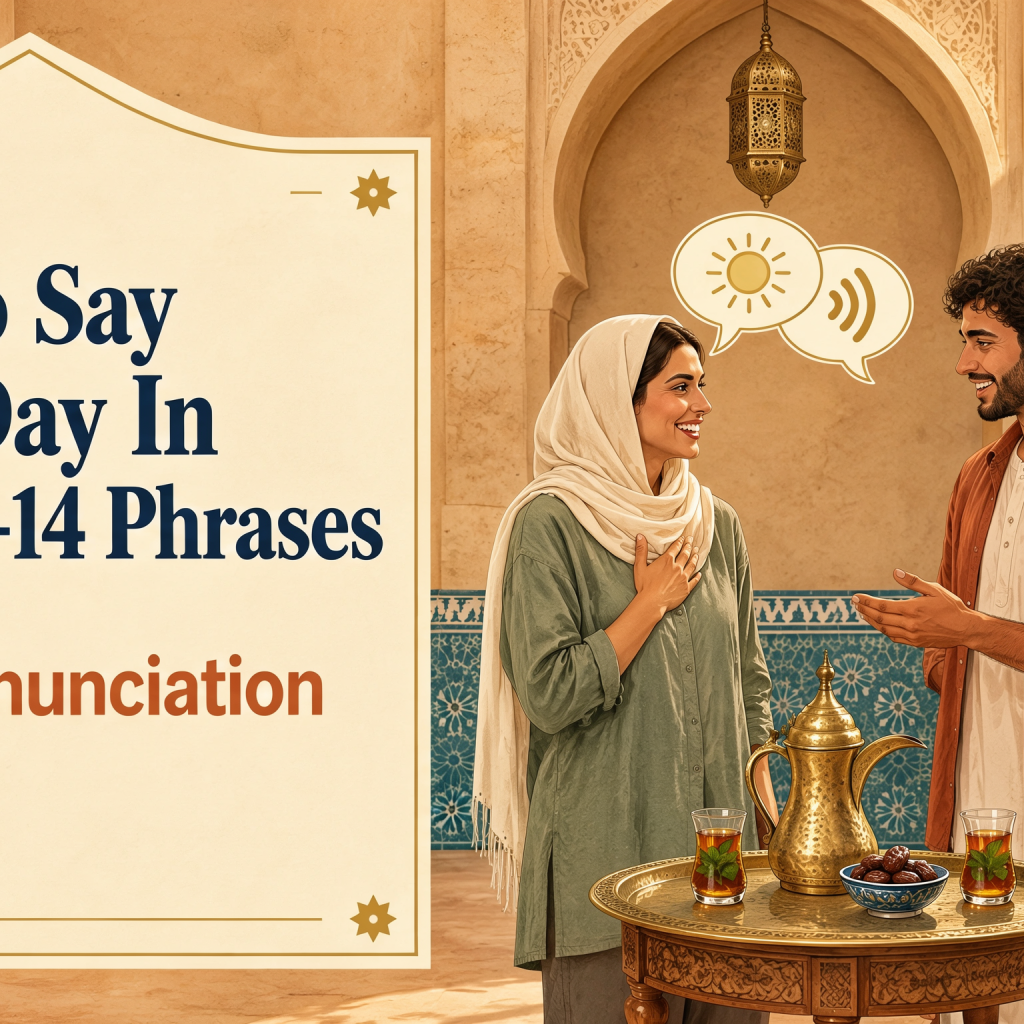
How To Say Good Day In Arabic -14 Phrases With Pronunciation 
Learning Arabic

How To Say Good Day In Arabic -14 Phrases With Pronunciation 

Want to know how to say good day in Arabic? Most of the time, you’ll say يوم سعيد (yawm saʿīd), which means “a happy day.” If you want the full “have a good day,” you’ll say أتمنى لك يومًا سعيدًا (atamannā laka yawman saʿīdan). That’s the quick answer. The longer one is more fun, because […]

6 November، 2026 Read article →
How To Say Cat In Arabic – Words, Dialects And Pronunciation
Students' posts

How To Say Cat In Arabic – Words, Dialects And Pronunciation

Have you ever watched a cat stroll into a masjid and wondered what the children were calling it? For anyone learning the language of the Quran, small everyday words are where fluency begins. Learning how to say cat in Arabic is a friendly first step into vocabulary, grammar, and even Tajweed sounds. The answer is […]

6 November، 2026 Read article →

No matching article

Try another keyword or category.

Our editorial promise

Useful before promotional.

Kalimah articles should help readers make a better learning decision. We separate habits from full programs, explain trade-offs, and connect advice to real study outcomes.

Get a Personal Recommendation
Clear learning purposeEvery article answers a practical learner or parent question.
Realistic expectationsShortcuts are framed as habits or tools—not substitutes for guided progress.
A next step that fitsReaders can continue independently or request placement and teacher guidance.