Kalimah learning library

Practical Guidance for Arabic and Quran Learners

Clear explanations, realistic study advice, and carefully selected resources for adult learners, parents, and Quran students.

Arabic teacher (f)arabic teacher (m)BlogHow to ........?
Animals in Arabic
Blog

Animals in Arabic

This article is about learning animal vocabulary in Arabic—like a small Arabic dictionary for animals. You’ll find easy and useful words with examples in Arabic sentences. If you want to talk about animals in Arabic, memorize the most important animal terms, this is a good place to start.  How Do You Say “Animal” in Arabic? […]

30 November، 2025 Read article →
Best Age To Start Learning Arabic And How For Each Age-Range?
Blog

Best Age To Start Learning Arabic And How For Each Age-Range?

In a Nutshell: No matter your age, diving into Arabic can be a thrilling adventure! Kids soak up the language effortlessly through play and stories, teens leverage their analytical minds for deeper understanding, and adults bring valuable experience and motivation to their learning journey. With engaging methods and personalized approaches, mastering Arabic becomes a rewarding […]

30 November، 2025 Read article →
5 Essential Reasons Why the Quran in Arabic
Blog

5 Essential Reasons Why the Quran in Arabic

In a nutshell: Why is the Quran in Arabic? The Quran’s use of Arabic is a divine choice, preserving its profound beauty and depth. Arabic’s rich vocabulary and intricate grammar capture the text’s miraculous eloquence, making the original revelation unique and unaltered, while translations can only convey a glimpse of its true essence. “When I […]

30 November، 2025 Read article →
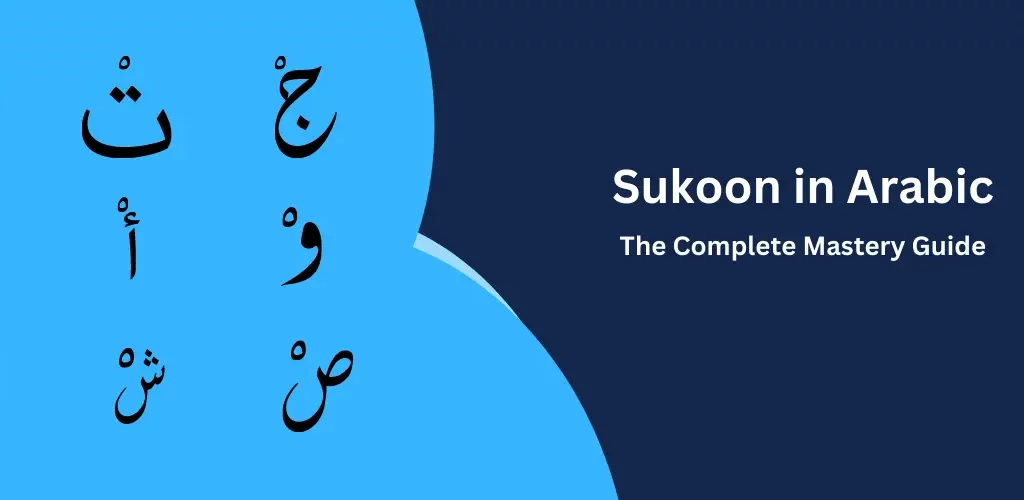
Sukoon in Arabic With Letters Examples
Blog

Sukoon in Arabic With Letters Examples

Sukoon is rooted in the concept of tranquility, mastering sukoon is essential for both language learners and those who appreciate the elegance of the Arabic script. Sukoon is a small diacritical mark in Arabic, symbolizes stillness and marks the absence of a vowel after a consonant. Sukoon played an important role in the linguistic study […]

30 November، 2025 Read article →
Verbs In Arabic – 50 Common Verbs, Forms & Conjugation
Blog

Verbs In Arabic – 50 Common Verbs, Forms & Conjugation

Key Takeaways Most Arabic verbs grow from a three-letter root, and fixed patterns turn that one root into dozens of related verbs and nouns. Learners need only Forms I to X in daily Arabic, because Forms XI to XV are rare and appear mainly in classical poetry. Arabic has two verb stems, past and present, […]

29 November، 2025 Read article →
Arabic Numbers For Kids 1 to 100 With Printable Worksheets
Blog

Arabic Numbers For Kids 1 to 100 With Printable Worksheets

Key Takeaways Children learn Arabic numbers fastest in small groups of ten, starting with spoken names before written Eastern Arabic numerals. Numbers 1 and 2 follow the noun and match its gender, while 3 to 10 take the opposite gender. Short daily counting with real objects, such as fingers, fruit, and prayer rak’ahs, works better […]

29 November، 2025 Read article →
The Arabic Letter “و” (Waw): Sounds, Forms, And Examples
Blog

The Arabic Letter “و” (Waw): Sounds, Forms, And Examples

Among the letters of the Arabic alphabet, “و” (Waw) stands out as a graceful and versatile character. It’s not only a letter but also plays a significant role as a vowel and conjunction in Arabic grammar and vocabulary. Let’s explore its forms, pronunciation, and how it appears in different contexts. The Letter Waw “و” In […]

28 November، 2025 Read article →
Adjectives in Arabic With Examples And Sentences
Blog

Adjectives in Arabic With Examples And Sentences

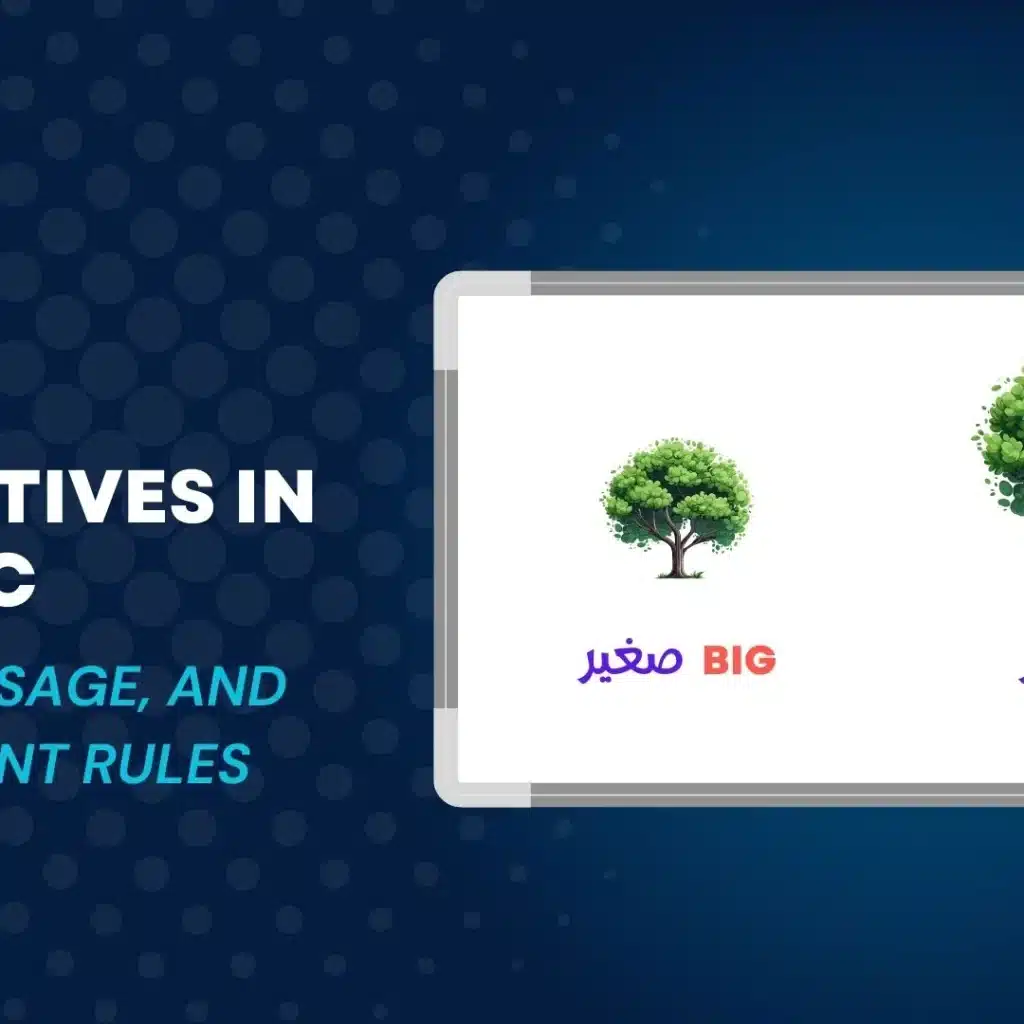
In a nutshell, Arabic adjectives describe nouns by agreeing with them in gender, number, case, and definiteness. They include true adjectives, which directly describe nouns, and causative adjectives, which describe related qualities. Adjectives also show relationships, like “American أمريكي” from “America أمريكا”. In Arabic, just like in English, adjectives are words that describe nouns. They […]

28 November، 2025 Read article →
Basic Arabic Conversation for Beginners 
Blog

Basic Arabic Conversation for Beginners 

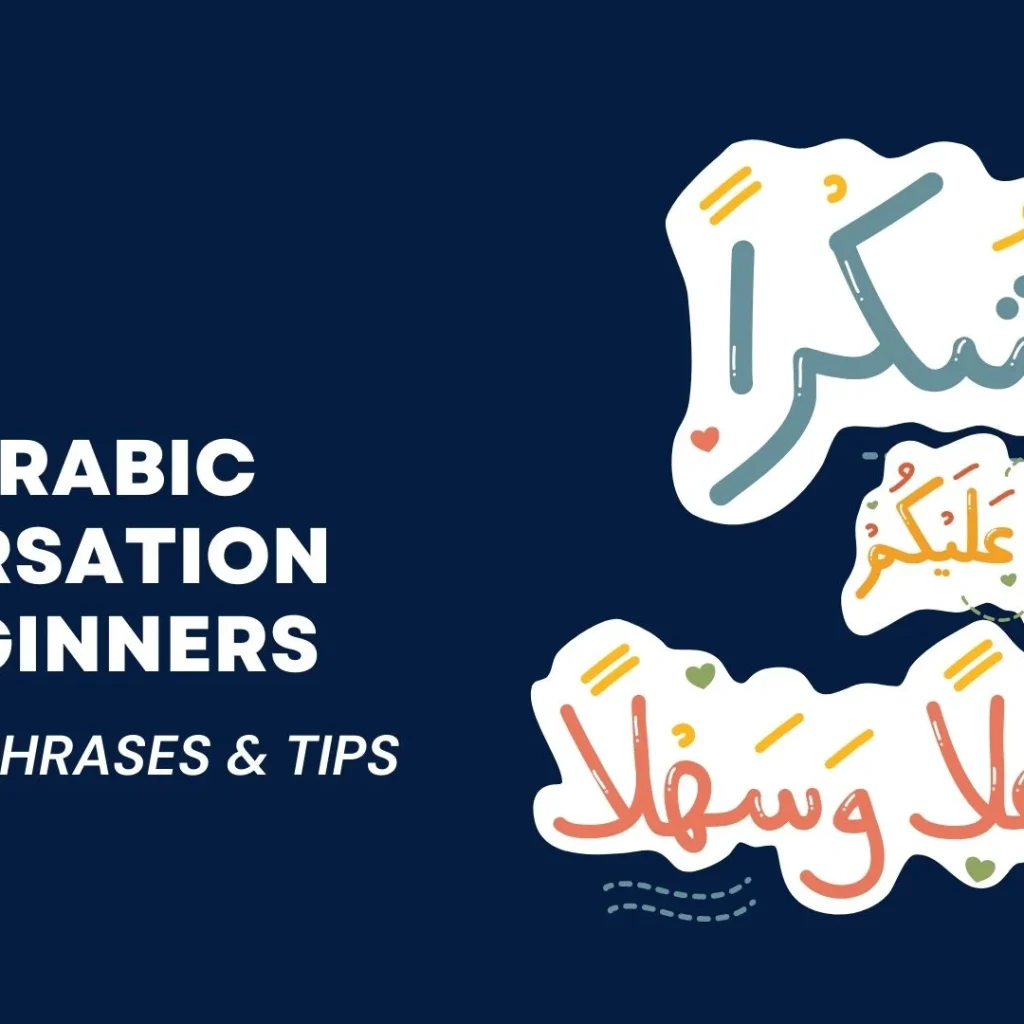
In a nutshell: Learning basic Arabic conversation include mastering greetings, polite phrases, and self-introductions, which can be effectively practiced through structured courses like those at Kalimah Center. Emphasizing listening, repetition, and real-life interactions, students gain confidence and fluency, making the journey to speaking Arabic both enjoyable and rewarding. As-salamu alaykum (Peace be upon you)! If […]

28 November، 2025 Read article →
Arabic Verb Conjugation
Blog

Arabic Verb Conjugation

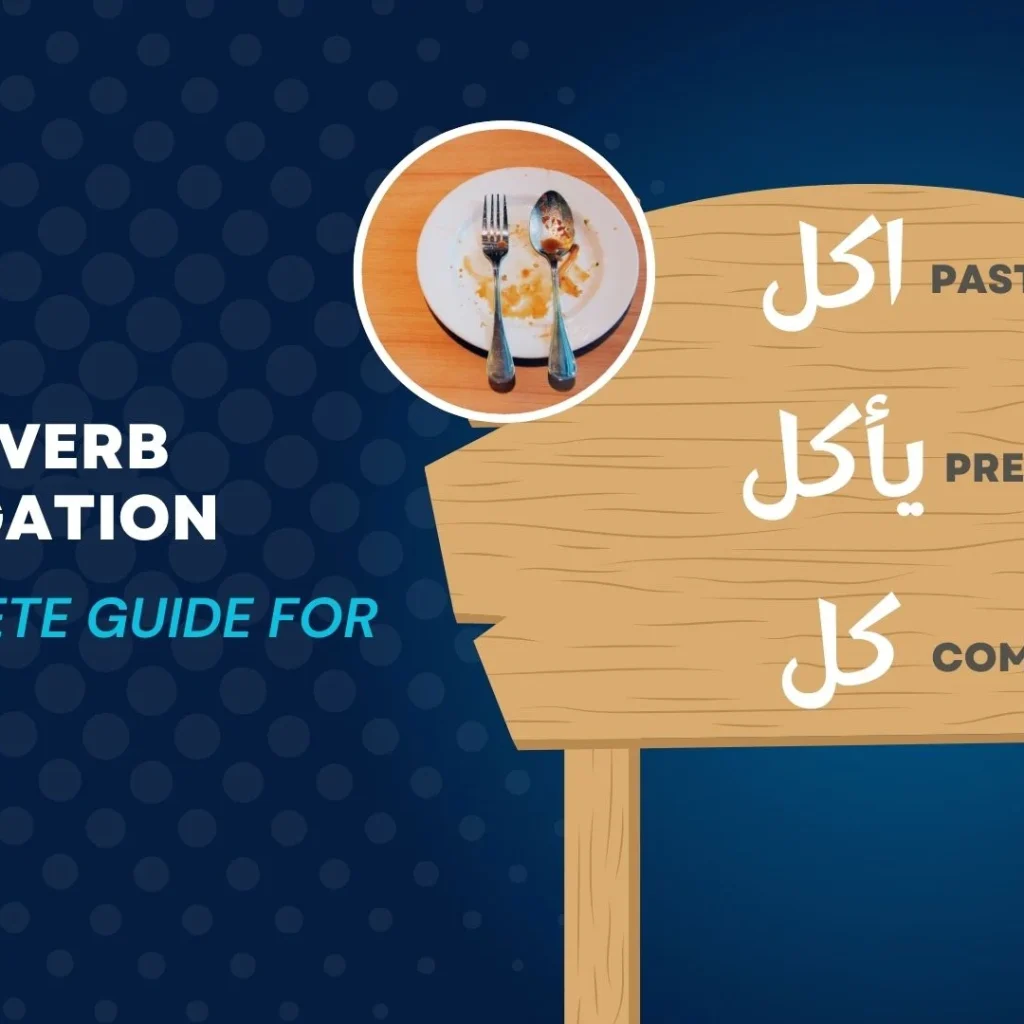
Arabic is one of the Semitic languages. The Arabic verbs are derived from a set of three consonants, known as base letters. The process of deriving verbs from these base letters is called Arabic verb conjugation.  In this article, we will explore the methods of Arabic verb conjugation in the past, present and imperative forms, […]

27 November، 2025 Read article →
The Islamic Call To Prayer Words In Arabic With English Translation and Transliteration And Iqamah
Blog

The Islamic Call To Prayer Words In Arabic With English Translation and Transliteration And Iqamah

The Call to Prayer in Islam, known as Adhan, holds a significant place in Islamic tradition. It serves as a reminder for the faithful to pause their daily activities and come together for communal worship. The Adhan encapsulates essential elements of the Islamic faith, including the acknowledgment of Allah’s greatness and the prophethood of Muhammad […]

27 November، 2025 Read article →

No matching article

Try another keyword or category.

Our editorial promise

Useful before promotional.

Kalimah articles should help readers make a better learning decision. We separate habits from full programs, explain trade-offs, and connect advice to real study outcomes.

Get a Personal Recommendation
Clear learning purposeEvery article answers a practical learner or parent question.
Realistic expectationsShortcuts are framed as habits or tools—not substitutes for guided progress.
A next step that fitsReaders can continue independently or request placement and teacher guidance.