Kalimah learning library

Practical Guidance for Arabic and Quran Learners

Clear explanations, realistic study advice, and carefully selected resources for adult learners, parents, and Quran students.

Arabic teacher (f)arabic teacher (m)BlogHow to ........?
Arabic Root Letters: The System Behind Every Arabic Word
Learning Arabic

Arabic Root Letters: The System Behind Every Arabic Word

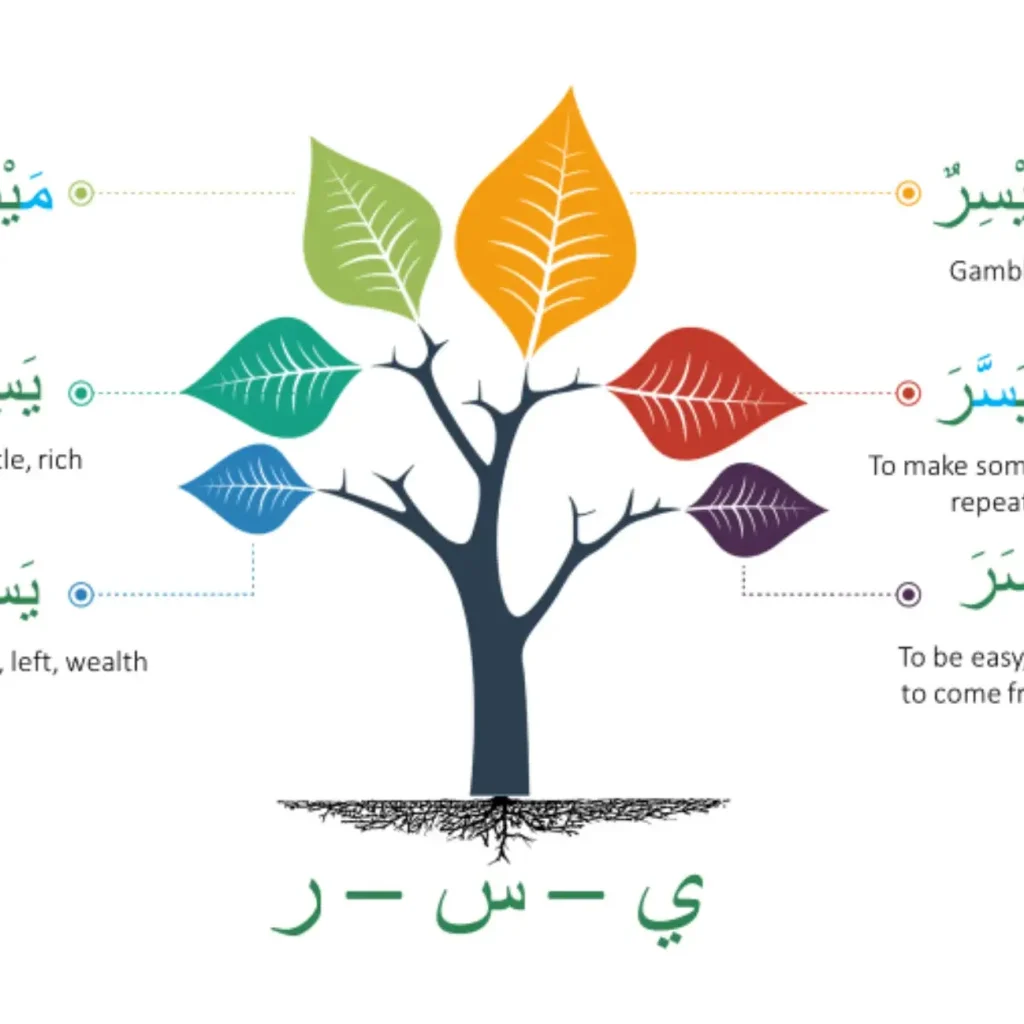
Arabic root letters explain something that confuses almost every new learner: why does kitab (book), kataba (he wrote), and maktaba (library) all feel related? The answer is the root system — a structure unique to Semitic languages where a small set of consonants carries the core meaning, and everything else is built around it. Arabic […]

1 July، 2026 Read article →
Arabic Morphology For Beginners – A Complete Guide To Sarf
Learning Arabic

Arabic Morphology For Beginners – A Complete Guide To Sarf

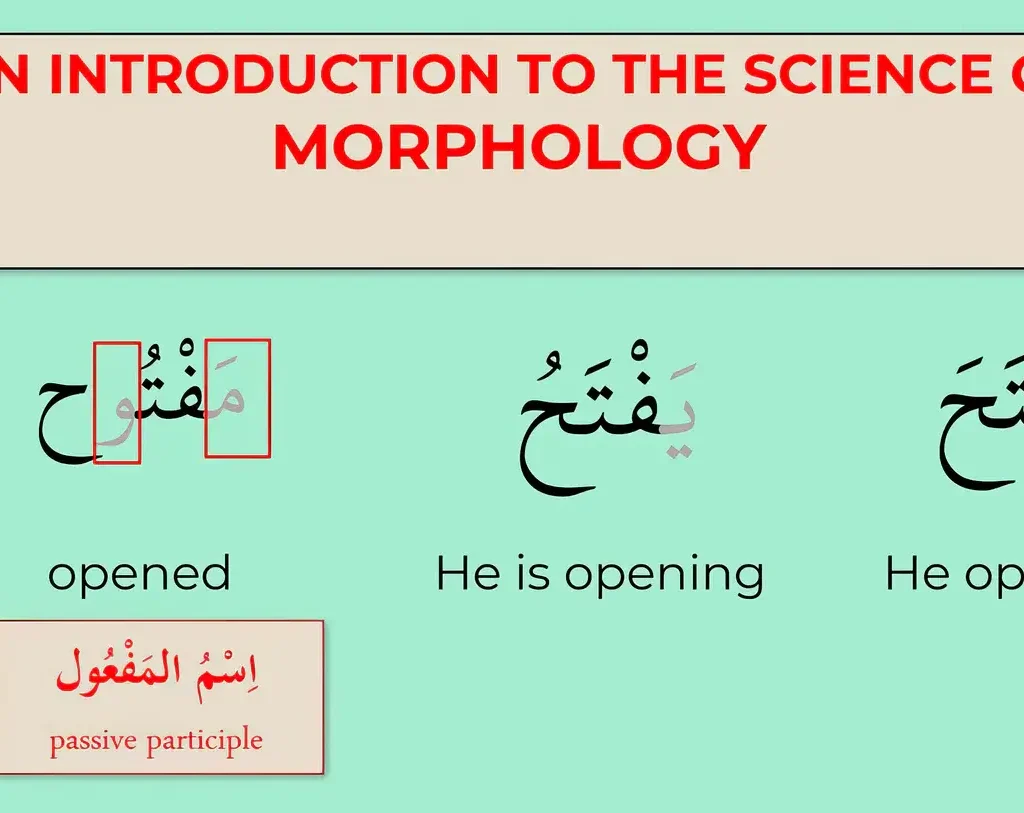
Have you ever wondered why “كَتَبَ” (he wrote) and “مَكْتُوب” (written) share the same three letters but mean different things? The answer lies in arabic morphology, the branch of Arabic linguistics that explains how words change shape to create new meanings.  If you’re learning Quranic Arabic or trying to read classical texts, understanding this system […]

30 June، 2026 Read article →
Top 13 Fruits in Arabic: Names, Pronunciation & Meaning
Blog

Top 13 Fruits in Arabic: Names, Pronunciation & Meaning

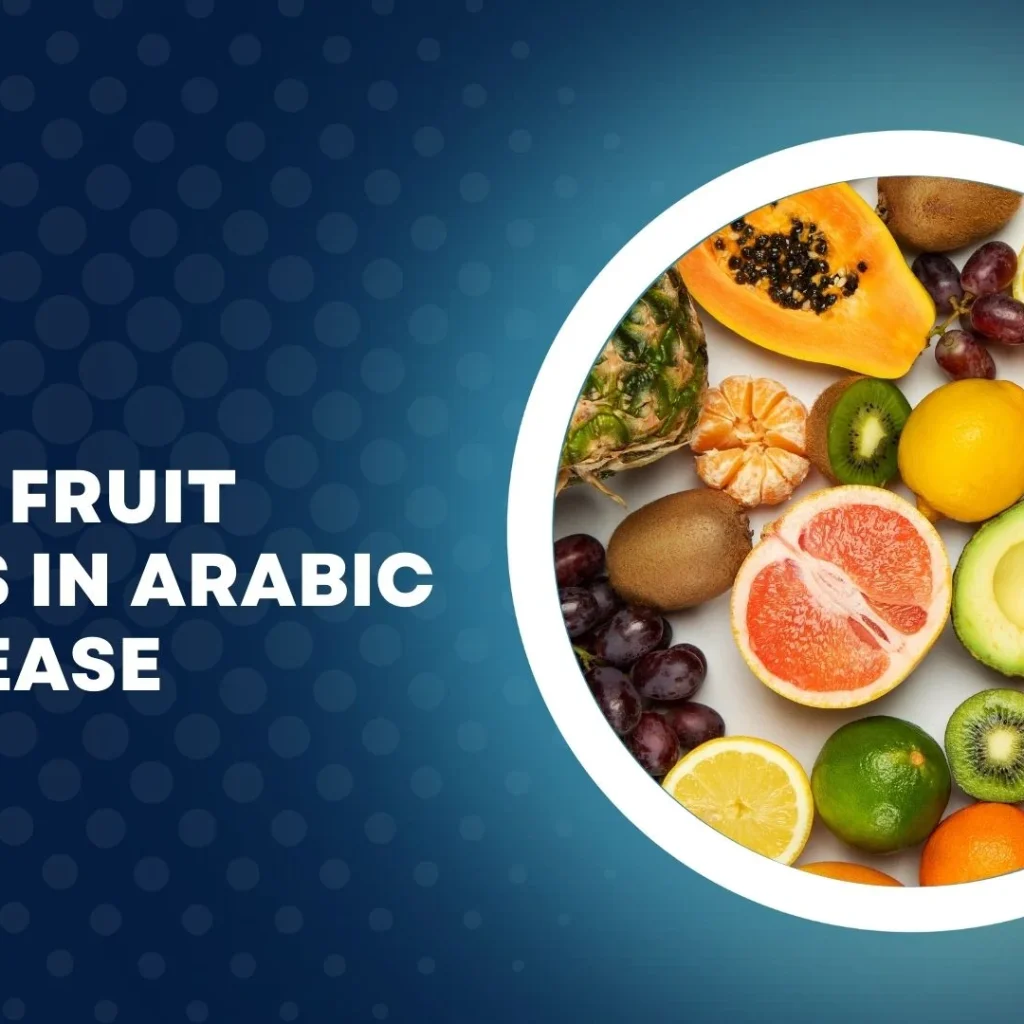
Common Arabic fruit names include تفاح (tuffah, apple), موز (mawz, banana), برتقال (burtuqal, orange), and عنب (‘inab, grapes). The word for “fruit” is فاكهة (faakiha) singular or فواكه (fawaakih) plural. Several fruits appear in the Quran: رمان (rumman, pomegranate), تين (teen, fig), تمر (tamar, dates), and عنب (grapes), holding religious significance. Regional dialects vary slightly […]

14 June، 2026 Read article →
Why Is Arabic Written Right to Left?
Blog

Why Is Arabic Written Right to Left?

Arabic is written right-to-left (RTL) due to its Semitic language ancestry, inherited from Phoenician script through Nabataean. Ancient stonemasons carved RTL for visibility when holding chisel (left hand) and hammer (right hand). Unlike Greek/Latin which shifted to left-to-right (LTR), Arabic retained RTL direction because its cursive, connected script became too stylized to reverse. Hebrew, Persian, […]

14 June، 2026 Read article →
Arabic Personal Pronouns Guide: Chart, Examples & Practice
Blog

Arabic Personal Pronouns Guide: Chart, Examples & Practice

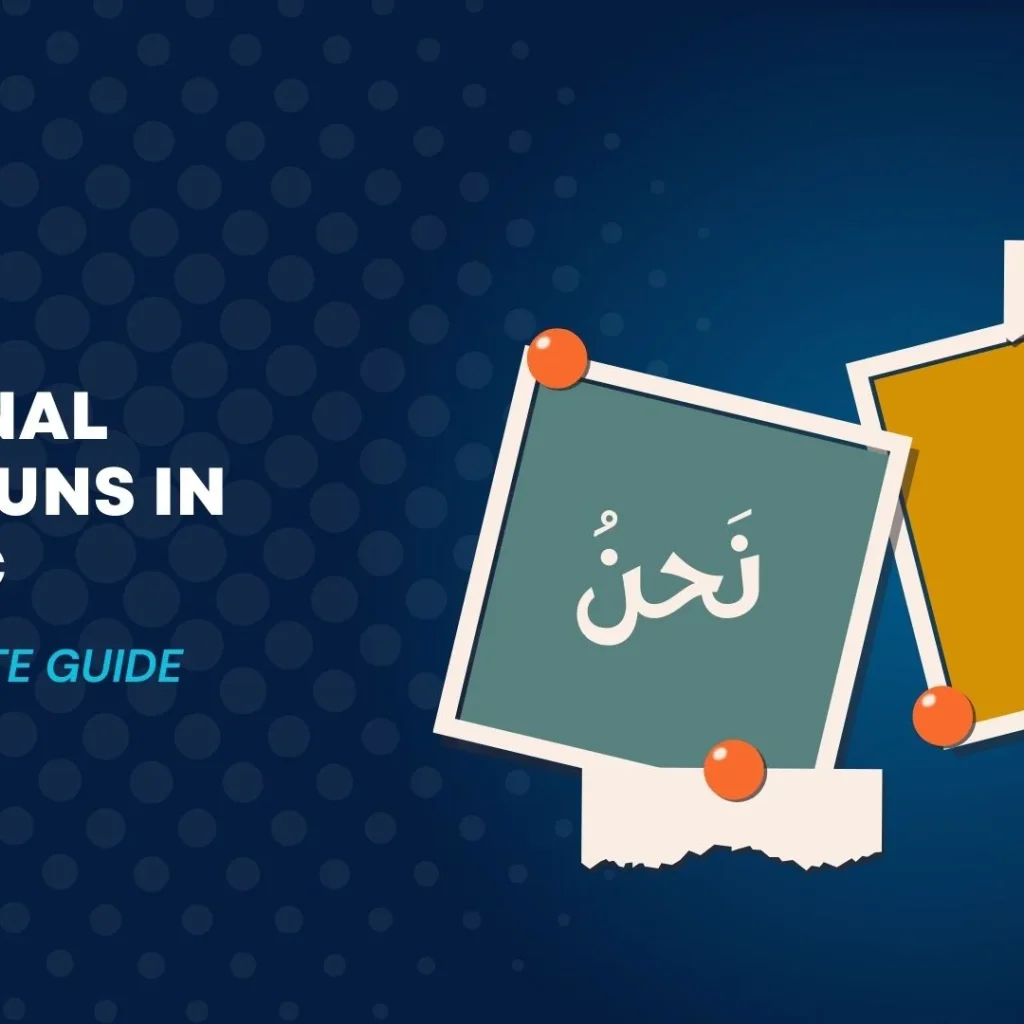
Arabic personal pronouns replace nouns and indicate person (I, you, he), gender (masculine/feminine), and number (singular, dual, plural). Two main types exist: detached pronouns (standalone like أنا “I”) and attached pronouns (suffixes like ـه “his/him”). Use detached pronouns for emphasis or as sentence subjects; use attached pronouns for possession (كتابه “his book”) or objects (رأيته […]

14 June، 2026 Read article →
Plurals In Arabic: Arabic Plurals – Its Types, Patterns, And Examples
Blog

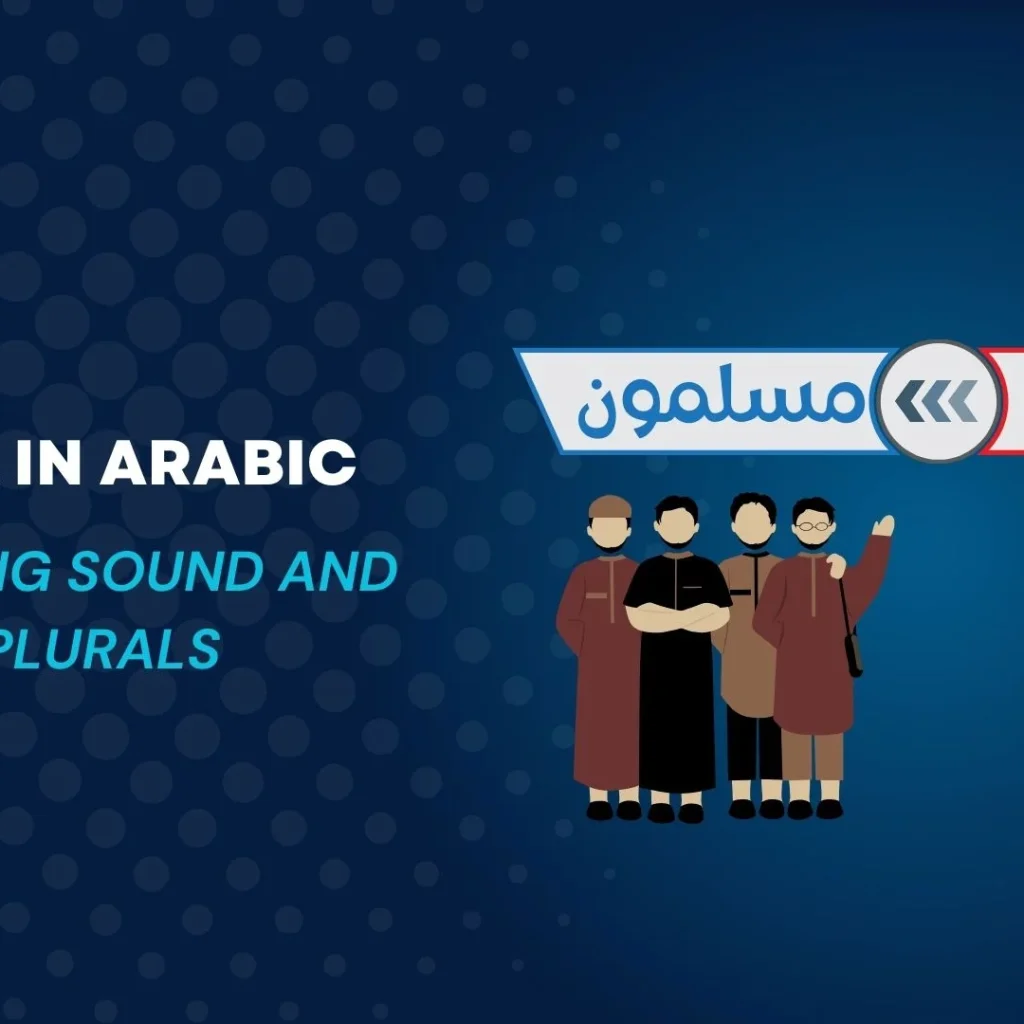
Plurals In Arabic: Arabic Plurals – Its Types, Patterns, And Examples

In a nutshell: Arabic plurals come in three types: sound masculine, sound feminine, and broken plurals. Sound plurals follow set patterns by adding suffixes, while broken plurals alter the internal structure of words. These plurals are governed by grammatical cases and use distinct patterns for quantities and advanced forms. Plurals in Arabic (الجمع al-jam’) are […]

14 June، 2026 Read article →
Free Arabic Worksheets for Kids: Alphabet to Numbers (PDF)
Blog

Free Arabic Worksheets for Kids: Alphabet to Numbers (PDF)

Free Arabic worksheets for kids cover alphabet recognition (28 letters), writing practice, reading comprehension, number learning (1-100), and word building. For ages 3-5, focus on letter tracing and recognition worksheets. Ages 6-8 benefit from word formation and simple sentence worksheets. Ages 9-12 can handle reading comprehension and grammar exercises. Combine printable PDFs with interactive practice—spend […]

14 June، 2026 Read article →
Arabic Courses in Norwich: Local & Online Options
Learning Arabic

Arabic Courses in Norwich: Local & Online Options

Norwich offers Arabic courses through the University of East Anglia (UEA) language center, Norwich Central Mosque community classes, and online platforms like Kalimah Center. UEA provides academic Modern Standard Arabic for university students and community learners. Norwich Central Mosque offers beginner Quranic Arabic on weekends. For flexible scheduling, online options provide live instruction with native […]

14 June، 2026 Read article →
11 Best Arabic Language Scholarships
Blog

11 Best Arabic Language Scholarships

Top Arabic language scholarships include the fully-funded Fulbright Program (U.S. citizens, covers tuition + living expenses), Critical Language Scholarship/CLS (intensive summer immersion), and Chevening Scholarships (UK government, graduate level). Universities like American University in Cairo and Qatar University offer institutional scholarships for international students. Application deadlines typically fall between October-February for programs starting the following […]

14 June، 2026 Read article →
Arabic Negation Guide: How to Say No, Not & Negate
Blog

Arabic Negation Guide: How to Say No, Not & Negate

Arabic negation uses specific particles to express “no” or “not” depending on tense and sentence type. Use لا (la) for present tense verbs, لم (lam) for past tense, لن (lan) for future tense, and ليس (laysa) for nominal sentences. For example: “لا أفهم” (I don’t understand), “لم أذهب” (I didn’t go), “لن أسافر” (I won’t […]

14 June، 2026 Read article →
How to Practice Arabic Speaking: 11 Proven Methods
Blog

How to Practice Arabic Speaking: 11 Proven Methods

To practice Arabic speaking effectively, engage in daily activities like shadowing native speakers, narrating your routine in Arabic, and using language exchange apps such as HelloTalk or Tandem. Combine structured lessons with real-world practice: talk to yourself, record your voice, and role-play common scenarios like ordering food or asking directions. Consistent 15-30 minute daily sessions […]

14 June، 2026 Read article →

No matching article

Try another keyword or category.

Our editorial promise

Useful before promotional.

Kalimah articles should help readers make a better learning decision. We separate habits from full programs, explain trade-offs, and connect advice to real study outcomes.

Get a Personal Recommendation
Clear learning purposeEvery article answers a practical learner or parent question.
Realistic expectationsShortcuts are framed as habits or tools—not substitutes for guided progress.
A next step that fitsReaders can continue independently or request placement and teacher guidance.