The Arabic letter “ن” (Noon) is an important component of the Arabic alphabet. This article talks about its pronunciation, uses, variations, and how it is utilized to form words in Arabic. Knowing “ن” helps students improve their reading, writing, and speaking.
The Letter Noon in Arabic “ن”
The letter “ن” is the twenty-fifth letter in the Arabic alphabet. It is not difficult to recognize from other letters due to its distinct shape—a small, rounded object with a dot placed on top of it.

Unlike other letters in Arabic, “ن” does not change its form based on its location in a word, and it is easy in word formation.
Isolated form: “ن”
Initial form: “نـ”
Medial form: “ـنـ”
Final form: “ـن”
How To Pronounce The Letter “ن” (Noon)?
The “ن” sound is similar to the English letter “N,” like in the word “night” or “name.” It is made by the tongue touching the upper part of the mouth, which creates a smooth nasal sound.

Sound comparison: “ن” has a less nasal sound compared to emphatic sounds like “ط” or “ض.”
Tajweed considerations: In reciting the Quran, “ن” plays a significant role in certain rules such as “Ikhfa'” (hiding) and “Idgham” (assimilation), which govern the way it combines with other letters.
Master Arabic with Kalimah Center
Join our expert-led online classes and start your journey toward Arabic fluency today.
Book Your Free TrialPositions And Forms Of The Letter “ن” In Arabic Words
The letter “ن” varies according to the position it takes in a word, blending with other letters except for certain non-joining letters.

Beginning: “ناجح” (nagih – successful), “نار” (naar – fire)
In the middle: “منزل” (manzil – house), “إنسان” (insaan – human)
At the end: “باذنجان ” (bazingan- eggplant), “ألوان” (alwan – colors)
Examples of “ن” in Sentences
To observe how “ن” functions, below are some example sentences employing this letter:
- “نجح الطالب في الامتحان” (The student passed the exam)
- “النمر حيوان مفترس” (The tiger is a predatory animal)
- “نور الشمس أجمل ما في الكون” (Sunlight is the most beautiful thing in the universe)
How to Master The Letter “ن” (Noon)?
For those who wish to master the use of “ن,” below are some tips:

- Pronunciation Practice: Listening to a native speaker and recitation of words with the “ن” to achieve correct pronunciation.
- Writing Exercises: Practicing writing various forms of “ن” in order to achieve fluency in connecting with other letters.
- Reading Arabic Texts: Reading articles and books strengthens consciousness of “ن” in everyday life.
- Memorizing Quranic Verses: Since “ن” appears frequently in the Quran, practicing rules of Tajweed will refine understanding and pronunciation.
Read more about: The Arabic Letter “هـ” (Ha) With Its Forms, Examples, And Pronunciation
Challenges In Learning The Letter “ن” And How To Overcome Them

Despite its simplicity, students can experience some difficulties:
- Dot Misplacement: Some learners forget the dot in “ن” or put it in a different position.
- Mixup with “ب” (Baa) or “ت” (Taa): Since “ن” and these letters might appear similar in handwriting, extra attention should be paid to differentiate between them.
- Tajweed Rules: It might be hard to learn rules like “Idgham” (merging) and “Ikhfa'” (hiding) but should be applied to recite correctly.
Master Arabic with Kalimah Center
Join our expert-led online classes and start your journey toward Arabic fluency today.
Book Your Free TrialInside Kalimah Center: Moments from Our Courses
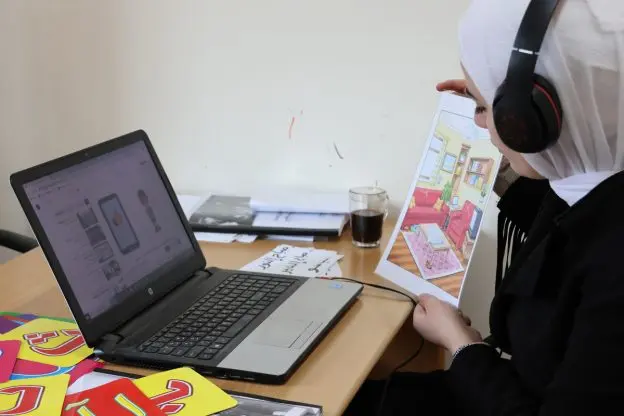
Get a glimpse into the vibrant learning experience at Kalimah Center. These snapshots capture real moments from our live classes—where students engage deeply, connect with passionate instructors, and grow in a welcoming, supportive environment.
Here Are The Reviews On Our Courses:
Our students frequently commend the excellence of our courses and the commitment shown by our instructors. You can read their complete reviews on Trustpilot.

Unlock Your Potential in Arabic and Quran with Kalimah Center!
Ready to deepen your connection with the Quran and enhance your understanding of Arabic? Join Kalimah Center today and embark on a transformative journey of learning and growth! Our professional, handpicked Online Arabic and Quran Tutors are dedicated to helping you master these essential skills with ease and expertise.
📚 Explore Our Courses:
Online Arabic Course: Tailored to your level, our comprehensive Arabic program includes 16 teaching levels and 400+ hours of personalized sessions.
Online Quran With Tajweed Course: Perfect for non-Arabic speakers, our course spans 13 levels and equips you with Tajweed mastery from beginner to advanced.
Online Arabic Course For Kids: Nurture your child’s love for Arabic with our engaging and structured program, available in 24 levels for primary, intermediate, and secondary stages.
🚀 Start Your Free Trial Today! 🚀
Don’t miss out on this life-changing opportunity to deepen your faith and knowledge. Sign up now for your free trial and take the first step towards becoming a better practicing Muslim with Kalimah Center!
Conclusion
The letter “ن” is the core of the Arabic language, appearing in hundreds of words and phrases. Its distinctive pronunciation, variable forms, and frequent use make it an essential letter to master. With reading, writing, and listening practice, students can easily become proficient at recognizing and using “ن” effectively.
FAQs about Arabic Letter “ن” (Noon)
How is the Arabic letter Noon (ن) pronounced?
The Arabic letter Noon (ن) is pronounced like the English letter “N” in words like “name” or “night.” It is a smooth nasal sound produced by touching the tip of the tongue to the upper part of the mouth.
What are the four written forms of the letter Noon (ن)?
The letter Noon changes its shape based on its position in a word. Its four forms are: Isolated (ن), Initial (نـ), Medial (ـنـ), and Final (ـن). It easily connects to adjacent letters unless preceded by a non-joining letter.
What are some common examples of the letter Noon in Arabic words?
Common examples include “ناجح” (nagih – successful) at the beginning, “منزل” (manzil – house) in the middle, and “ألوان” (alwan – colors) at the end of a word.
Why is the letter Noon (ن) important in Tajweed and Quranic recitation?
In Tajweed, the letter Noon is central to foundational rules such as Ikhfa’ (hiding) and Idgham (assimilation/merging). These rules govern how the sound of Noon blends with surrounding letters during Quranic recitation.
What are the main challenges when learning the Arabic letter Noon?
Learners frequently struggle with misplacing its single top dot, confusing its script forms with similar letters like Baa (ب) or Taa (ت), and mastering its specific Tajweed rules during recitation.