
| Key Takeaways |
|---|
| مع السلامة (Ma’a as-salama) is the safest farewell across all Arabic-speaking countries, and it is usually said by the person who stays behind. |
| The usual reply to مع السلامة is الله يسلمك (Allah yisallimak), meaning “May God keep you safe.” |
| Phrases such as أراكَ لاحقًا change with gender: Araka for a man, Araki for a woman, and Arakum for a group. |
| Saying السلام عليكم when leaving a gathering is a Sunnah, confirmed in Sunan Abi Dawud 5208. |
| Dialects add everyday farewells such as بخاطرك in Levantine Arabic and بسلامة in Moroccan Darija. |
Every conversation ends with a farewell, and learning how to say goodbye in Arabic is one of the first social skills any learner needs. The right phrase shows respect, warmth, and cultural awareness in a single moment.
Many learners know only ma’a as-salama (مع السلامة), yet Arabic offers formal farewells, casual sign-offs, religious blessings, and dialect expressions. Each one fits a different relationship, setting, and level of closeness between speakers.
This guide covers the most common Arabic farewell phrases, their correct replies, gender forms, dialect versions, and real examples from daily life. You will also find a quick reference chart and the mistakes beginners make most often.
Most Common Way to Say Goodbye in Arabic
The most common way to say goodbye in Arabic is ma’a as-salamah (مع السلامة), which means “go with peace.” It’s equivalent to “goodbye” or “safe travels” in English and can be used in almost any situation.
Strictly speaking, ma’a as-salama is said by the person who stays to the person who is leaving. The one leaving often starts with a phrase like bil-idhn (بالإذن), meaning “with your permission,” before hearing ma’a as-salama in return.
When to Use Ma’a as-Salama
Ma’a as-salama is appropriate in almost any situation, whether formal or informal. You can use it:
- When saying goodbye to friends, family, or colleagues.
- When ending phone conversations and voice messages.
- In written messages, although written farewells usually prefer other closings.
For example, if you are ending a phone call with a business contact:
- You: شكرا لوقتك، بالإذن. (Shukran li-waqtik, bil-idhn.): Thank you for your time, with your permission.
- Business Contact: مع السلامة. (Ma’a as-salama.): Goodbye.
How to Reply to Ma’a as-Salama
Replying correctly matters as much as saying the farewell itself. When someone tells you ma’a as-salama, the most natural reply is a short blessing that returns the wish for safety.
- To a man: الله يسلمك (Allah yisallimak): May God keep you safe.
- To a woman: الله يسلمكِ (Allah yisallimik): May God keep you safe.
- To a group: الله يسلمكم (Allah yisallimkum): May God keep you all safe.

Saying “See You Later” in Arabic
The most common ways to say “see you later” in Arabic are إلى اللقاء (Ila al-liqa’) and أراكَ لاحقًا (Araka lahiqan). Each carries a slightly different tone and suits a different context.
Choosing the right phrase makes your Arabic sound natural. A formal phrase with a close friend sounds stiff, while a casual phrase with a manager can feel too relaxed.
1. إلى اللقاء (Ila al-Liqa’)
Ila al-liqa’ is the most formal way to say “see you later,” and it literally means “until the meeting.” It suggests a longer gap before the next meeting or a more formal relationship.
You might use it with a business associate, a professor, or someone you do not know well. It also appears often in news broadcasts and formal speeches.
Example:
Imagine you are leaving a business meeting.
- Business Partner: أتمنى لك يومًا سعيدًا (Atamanna laka yawman sa’eedan): I wish you a happy day.
- You: شكرًا لك، إلى اللقاء (Shukran laka, ila al-liqa’): Thank you, until we meet again.
2. أراكَ لاحقًا (Araka Lahiqan) / أراكِ لاحقًا (Araki Lahiqan)
Araka or Araki lahiqan is the everyday way to say “see you later.” It suits friends, colleagues, and casual acquaintances. Remember the gender difference: أراكَ لاحقًا (Araka) to a man and أراكِ لاحقًا (Araki) to a woman.
This is a crucial aspect of Arabic grammar that we cover extensively in our courses at Kalimah Center.
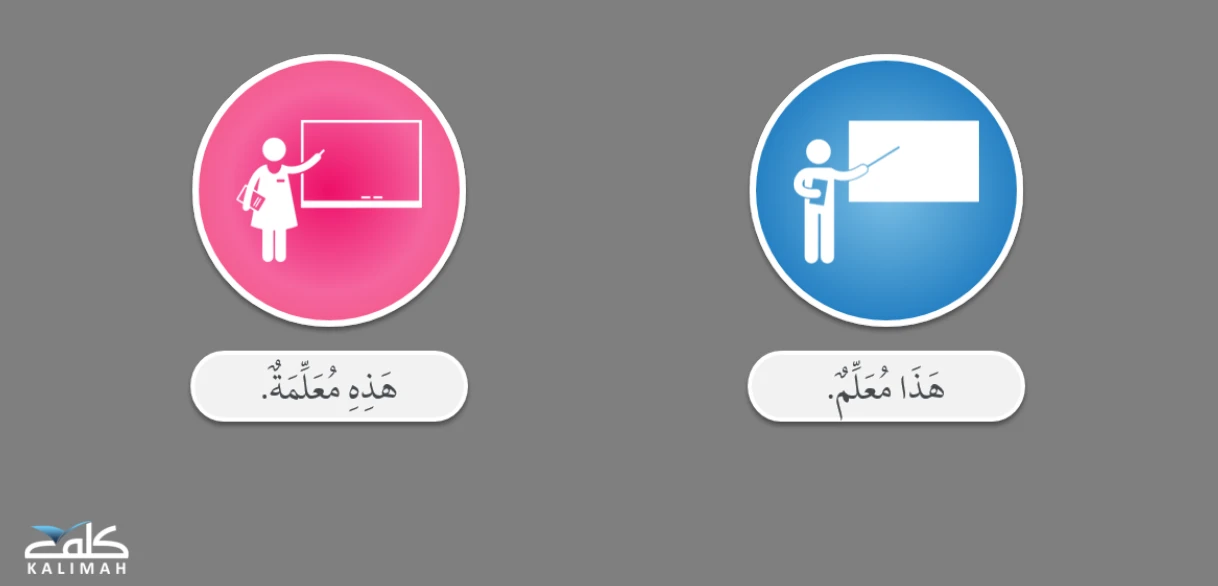
* Excerpted From Kalimah’s online Arabic course curriculum.
Examples:
- To a male friend: أراكَ لاحقًا يا صديقي (Araka lahiqan ya sadiqi): See you later, my friend.
- To a female colleague: أراكِ لاحقًا في العمل (Araki lahiqan fi al-‘amal): See you later at work.
3. أراكَ قريبًا (Araka Qariban)
Araka qariban means “see you soon,” and it signals that the next meeting is close. It fits friends you meet weekly or colleagues you will see at the next meeting.
- To a man: أراكَ قريبًا (Araka qariban): See you soon.
- To a woman: أراكِ قريبًا (Araki qariban): See you soon.
- To a group: أراكم قريبًا (Arakum qariban): See you all soon.
Since every goodbye starts with a greeting, you can also read our guide on how to say hi in Arabic and its most common replies.
How to Say “Farewell” in Arabic
The most common way to say farewell in Arabic is وداعًا (Wada’an). It carries a heavier sense of parting than ma’a as-salama and suggests a long absence or even a final goodbye.
Because of this weight, avoid wada’an with someone you will see tomorrow. It sounds dramatic in daily talk, much like saying “farewell forever” to a coworker in English.
Example:
Imagine a close friend is moving to another country permanently.
- You: أتمنى لك كل التوفيق في حياتك الجديدة. وداعًا يا صديقي. (Atamanna laka kull at-tawfiq fi hayatika al-jadida. Wada’an ya sadiqi.): I wish you all the best in your new life. Farewell, my friend.
Casual Arabic Farewells for Friends and Family
Not every goodbye needs a formal phrase. With friends, siblings, and classmates, Arabic speakers prefer short and warm expressions that sound relaxed while still showing care for the other person.
Salam (سلام)
Salam literally means “peace,” and it works as a quick “bye” in most regions. Young speakers often say it at the end of a chat, a voice note, or a short phone call.
I’tani Bi-Nafsik (اعتنِ بنفسك)
This phrase means “take care of yourself,” and it adds warmth to any goodbye. Say اعتنِ بنفسك (I’tani bi-nafsik) to a man and اعتني بنفسكِ (I’tani bi-nafsiki) to a woman.
Tusbih Ala Khayr (تصبح على خير)
This is the classic Arabic farewell at night, and it means “may you wake up to goodness.” The natural reply is وأنت من أهله (Wa anta min ahlih), meaning “and you are worthy of it.”
- To a man: تصبح على خير (Tusbih ‘ala khayr).
- To a woman: تصبحين على خير (Tusbiheena ‘ala khayr).
- To a group: تصبحون على خير (Tusbihoona ‘ala khayr).
See Us in Action!
Curious about what our online classrooms look like? Watch the short clips below to see how our interactive, one-on-one sessions bring learning to life with real-time feedback and engaging teaching methods.
Master Arabic with Kalimah Center
Join our expert-led online classes and start your journey toward Arabic fluency today.
Book Your Free TrialReligious Expressions to Say Goodbye in Arabic
Arabic is deeply intertwined with Islam, and many goodbyes reflect spiritual or religious values. These phrases show respect and faith, and they are often used among Muslims.
1. Fi Amanillah (في أمان الله) – “In the protection of Allah”
This phrase is used when you want to leave someone with a heartfelt, religious blessing. It’s like saying, “May God keep you safe.”
Example:
- You are leaving a gathering with close friends or family:
- You: في أمان الله (Fi Amanillah): May Allah protect you!
- Friend: في أمان الله (Fi Amanillah): May Allah keep you safe!
2. Assalamu Alaikum (السلام عليكم) – “Peace be upon you”
Assalamu Alaikum is one of the most commonly used Arabic greetings, but did you know it can also be used as a farewell? It’s a beautiful way to leave someone with a wish of peace.
- You’re leaving your Arabic class at Kalimah Center:
- You: السلام عليكم (Assalamu Alaikum): Peace be upon you!
- Teacher: وعليكم السلام (Wa Alaikum Assalam): And peace be upon you too!
This phrase is deeply respectful and spiritual, and it’s used widely across the Arab world.
Saying salam when leaving is more than a polite habit. The Prophet ﷺ taught that the greeting on departure carries the same weight as the greeting on arrival, which is why many Muslims end visits with it.
إِذَا انْتَهَى أَحَدُكُمْ إِلَى الْمَجْلِسِ فَلْيُسَلِّمْ فَإِذَا أَرَادَ أَنْ يَقُومَ فَلْيُسَلِّمْ فَلَيْسَتِ الأُولَى بِأَحَقَّ مِنَ الآخِرَةِ
(Idha intaha ahadukum ilal-majlisi falyusallim, fa-idha arada an yaquma falyusallim, falaysatil-ula bi-ahaqqa minal-akhirah)
“When one of you comes to an assembly, he should give a salutation and if he feels inclined to get up, he should give a salutation, for the former is not more of a duty than the latter.”
3. Astawdi’uka Allah (أستودعك الله)
This beautiful farewell means “I entrust you to Allah,” and it is especially common before travel. Its meaning comes from the farewell the Prophet ﷺ used when his companions set out on a journey.
أَسْتَوْدِعُ اللَّهَ دِينَكَ وَأَمَانَتَكَ وَخَوَاتِيمَ عَمَلِكَ
(Astawdi’ullaha dinaka wa amanataka wa khawatima ‘amalik)
“I entrust to Allah your religion and your trusts and the last of your deeds.”
Learners who want to understand these prophetic supplications in their original wording can study them with a qualified teacher in our online Quran course, where Arabic meaning and correct pronunciation go together.
Goodbye in Arabic Across Popular Dialects
Modern Standard Arabic farewells work everywhere, but daily speech changes from one country to another. Knowing a few dialect phrases helps you sound natural when you visit or chat with native speakers.
Egyptian Arabic Farewells
Egyptians use مع السلامة (Ma’a as-salama) constantly, often stretched warmly as “ma’a s-salaama.” Friends also say أشوفك بعدين (Ashoofak ba’deen), meaning “see you later,” and the very casual يلا باي (Yalla bye).
Levantine Arabic Farewells
In Syria, Lebanon, Jordan, and Palestine, the person leaving says بخاطرك (Bkhatrak) to a man or بخاطرِك (Bkhatrik) to a woman. The usual reply is مع السلامة, which completes the exchange politely.
Gulf Arabic Farewells
Gulf speakers favor في أمان الله (Fi aman Allah) and the respectful مع السلامة يا طويل العمر (Ma’a as-salama ya taweel al-‘umr). The second phrase honors the listener with a wish for long life.
Moroccan Darija Farewells
In Morocco, بسلامة (Bslama) is the everyday goodbye, close to ma’a as-salama in meaning. Friends also say تهلا فراسك (Thalla f-rasek), meaning “take care of yourself,” when parting warmly.
If you want to practice these expressions with other learners in live conversation, our Arabic group classes give you regular speaking practice at an affordable price.

How to Say Goodbye in Arabic in Different Situations
Knowing how to say goodbye in Arabic is only half the skill. The other half is choosing the phrase that fits the moment, the relationship, and the place you are leaving.
Leaving a Business Meeting
In professional settings, keep your farewell polished and neutral. A short thank-you followed by إلى اللقاء or مع السلامة leaves a respectful final impression on clients and managers.
- You: شكرًا على وقتكم، إلى اللقاء. (Shukran ‘ala waqtikum, ila al-liqa’.): Thank you for your time, until we meet again.
- Client: مع السلامة. (Ma’a as-salama.): Goodbye.
Ending a Phone Call
Phone calls often end with a quick blessing. Arabic speakers rarely hang up with a single word, so a short exchange of two phrases sounds far more natural.
- Caller: طيب، أتركك الآن. مع السلامة. (Tayyib, atrukuka al-an. Ma’a as-salama.): Okay, I’ll let you go now. Goodbye.
- Friend: الله يسلمك، في أمان الله. (Allah yisallimak, fi aman Allah.): God keep you safe, in God’s protection.
What Do You Say Before a Long Trip?
Travel farewells are the most emotional and the most blessing-filled. Friends and family usually combine several phrases to wish safety on the road and a safe return home.
- Friend: أستودعك الله، توصل بالسلامة. (Astawdi’uka Allah, tawsal bis-salama.): I entrust you to Allah, arrive safely.
- Traveller: الله يسلمك، دعواتك. (Allah yisallimak, da’awatak.): God keep you safe, keep me in your prayers.
Leaving a Family Visit
Leaving a family home is rarely quick in Arab culture. Hosts usually insist you stay longer, so expect a warm exchange of blessings before you finally reach the door.
- Guest: بالإذن، شكرًا على الضيافة. (Bil-idhn, shukran ‘ala ad-diyafa.): With your permission, thank you for your hospitality.
- Host: نورتنا، مع السلامة. (Nawwartna, ma’a as-salama.): You honored us, goodbye.
Do Arabic Goodbyes Change for Men and Women?
Yes, many Arabic farewells change depending on who you are talking to. Arabic marks gender and number in verbs and pronouns, so one phrase can have three forms.
The table below shows the most common farewell phrases with their masculine, feminine, and plural forms. Phrases such as مع السلامة and في أمان الله stay the same for everyone.
| English Meaning | To a Man | To a Woman | To a Group |
|---|---|---|---|
| See you later | أراكَ لاحقًا (Araka lahiqan) | أراكِ لاحقًا (Araki lahiqan) | أراكم لاحقًا (Arakum lahiqan) |
| Good night | تصبح على خير (Tusbih ‘ala khayr) | تصبحين على خير (Tusbiheena ‘ala khayr) | تصبحون على خير (Tusbihoona ‘ala khayr) |
| Take care | اعتنِ بنفسك (I’tani bi-nafsik) | اعتني بنفسكِ (I’tani bi-nafsiki) | اعتنوا بأنفسكم (I’tanu bi-anfusikum) |
| I entrust you to Allah | أستودعكَ الله (Astawdi’uka Allah) | أستودعكِ الله (Astawdi’uki Allah) | أستودعكم الله (Astawdi’ukum Allah) |
| May God keep you safe | الله يسلمك (Allah yisallimak) | الله يسلمكِ (Allah yisallimik) | الله يسلمكم (Allah yisallimkum) |
Children pick up these forms quickly when they hear them in real routines. Our Arabic classes for kids teach polite greetings and farewells through games, stories, and short daily dialogues.
Common Mistakes When Saying Goodbye in Arabic
Most beginners understand the meaning of each farewell but still use it in the wrong place. In our experience at Kalimah Center, these five mistakes appear in almost every first-level class.
- Using wada’an in daily life: It sounds final, so save it for permanent partings.
- Ignoring gender: Saying Araka to a woman sounds unnatural, so switch to Araki.
- Saying ma’a as-salama while leaving: The person staying usually says it, while you say bil-idhn.
- Forgetting the reply: Answer ma’a as-salama with Allah yisallimak instead of staying silent.
- Mixing dialects randomly: Pick one dialect and stay consistent within the same conversation.
Avoiding these mistakes is the fastest route to mastering how to say goodbye in Arabic naturally. A farewell often follows a thank-you, so our guide on how to say thank you in Arabic completes the picture.
Chart of Phrases to Say Goodbye in Arabic
Here is a quick reference chart of every phrase covered in this guide. Save it, print it, or review it before your next conversation with an Arabic speaker
| Arabic Phrase | Transliteration | Translation | Context/Notes |
|---|---|---|---|
| مع السلامة | Ma’a as-salama | With peace/safety | The most common goodbye, used in almost every situation. |
| سلام | Salam | Peace/bye | Short, informal version of مع السلامة, like “bye.” |
| إلى اللقاء | Ila al-liqa’ | Until we meet again | Formal, used when you expect to see the person again. |
| أراكَ لاحقًا | Araka lahiqan | See you later (to a man) | Common and less formal than إلى اللقاء. |
| أراكِ لاحقًا | Araki lahiqan | See you later (to a woman) | Common and less formal than إلى اللقاء. |
| أراكَ قريبًا | Araka qariban | See you soon | Casual, used when the next meeting is close. |
| وداعًا | Wada’an | Farewell | Formal, used when you may not see the person again. |
| في أمان الله | Fi aman Allah | In the safety of God | Warm and respectful, used by both the person leaving and the one staying. |
| أستودعك الله | Astawdi’uka Allah | I entrust you to Allah | Religious farewell, common before travel. |
| بالإذن | Bil-idhn | With your permission | Said by the person leaving before the other says ma’a as-salama. |
| الله يسلمك | Allah yisallimak | May God keep you safe | The standard reply to ma’a as-salama. |
| تصبح على خير | Tusbih ‘ala khayr | Good night | Evening farewell, changes with gender. |
| اعتنِ بنفسك | I’tani bi-nafsik | Take care of yourself | Warm and personal, changes with gender. |
| بخاطرك | Bkhatrak | With your permission (Levantine) | Said by the person leaving in the Levant. |
| بسلامة | Bslama | Go in peace (Moroccan) | The everyday goodbye in Morocco. |
Inside Our Virtual Classrooms
We believe in full transparency and proven quality. Take a look at these actual snippets from our live classes to experience our modern learning platform, patient instructors, and interactive student participation.
Master Arabic with Kalimah Center
Join our expert-led online classes and start your journey toward Arabic fluency today.
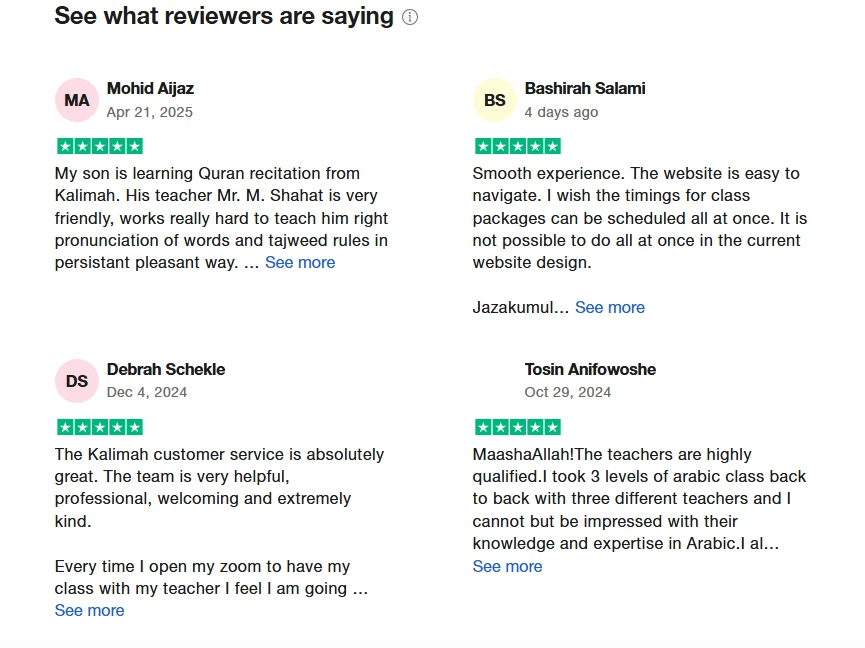
Book Your Free TrialWhat Our Students Say About Our Courses
Our students regularly praise the quality of our courses and the dedication of our instructors. You can read their full, verified reviews on Trustpilot through the button below.
Why Kalimah Center Is Your Best Option to Learn Arabic
At Kalimah Center, we help you understand Arabic words and use them with confidence. Our structured Arabic courses focus on real conversations, cultural context, and practical speaking skills from the first lesson.
Every class is led by our native Arabic teachers, who correct your pronunciation live and show you exactly when each phrase fits, from greetings to farewells.
What sets Kalimah Center apart:
- Certified native teachers with years of experience teaching non-Arabic speakers.
- Structured levels that take learners from complete beginner to advanced fluency.
- Live speaking practice built around real situations and cultural etiquette.
- Flexible one-on-one and group schedules that fit any time zone.
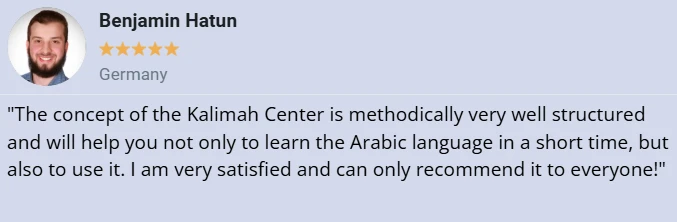
One of our former students said:
Book your free Arabic trial lesson today

Our Arabic Courses
- Online Arabic Course
- Arabic Group Classes
- Arabic Classes for Kids
- Online Quran Course
- Interactive Arabic Courses
- Free Arabic Trial Lesson
Conclusion
Learning how to say goodbye in Arabic goes far beyond memorizing one phrase. Ma’a as-salama works almost everywhere, while ila al-liqa’, araka lahiqan, and wada’an each match a different distance and level of formality.
Religious farewells such as fi aman Allah, astawdi’uka Allah, and leaving with salam carry deep cultural meaning. Dialect phrases like bkhatrak and bslama make your speech sound local and natural.
Pay attention to gender forms, learn the right replies, and practice each phrase in real situations. With steady practice, every conversation you have in Arabic will end as warmly as it began.