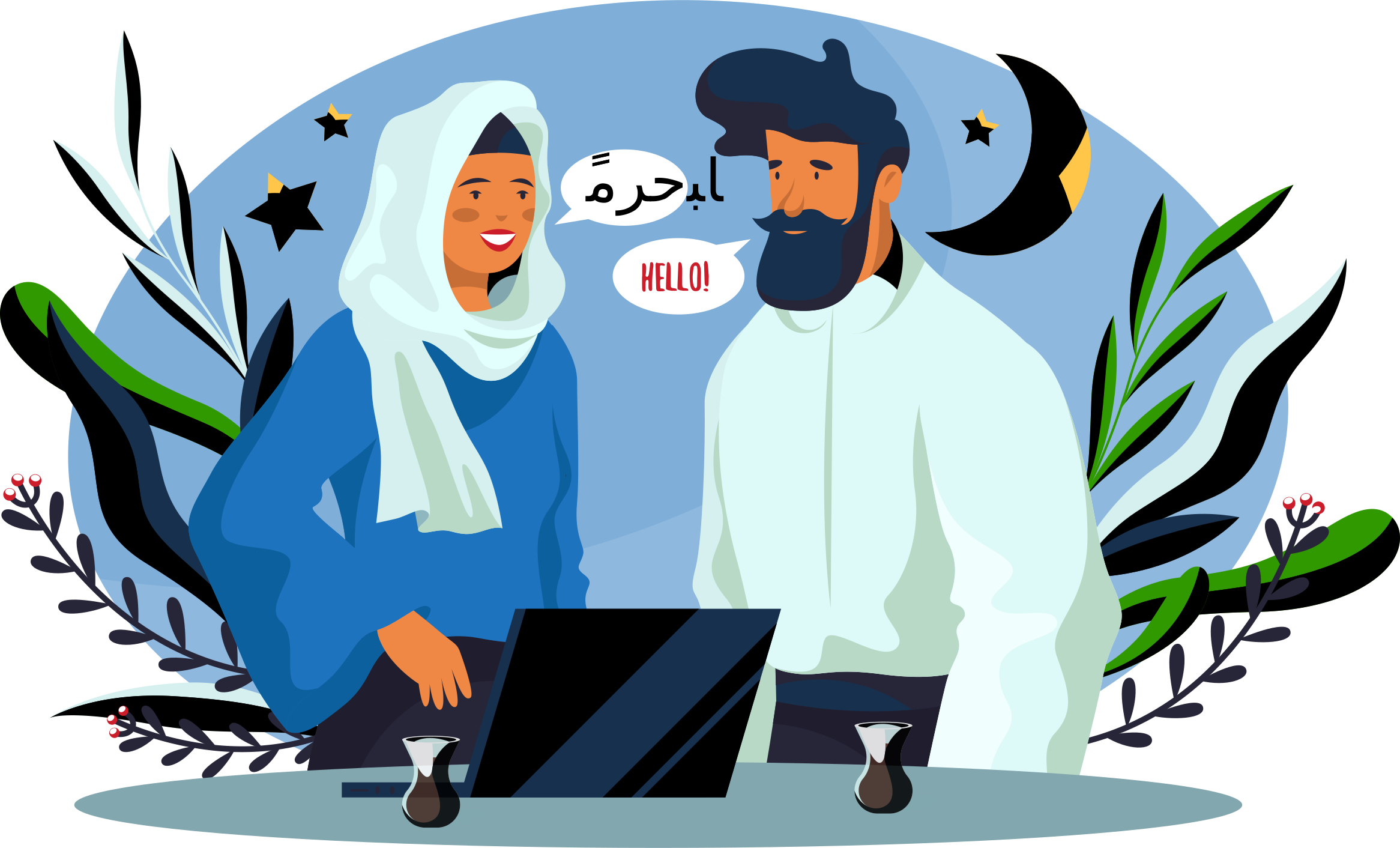
The most common way to say “hi” in Arabic is مرحبا (Marhaban) — pronounced “mar-ha-ban.” For a more formal or Islamic greeting, use السلام عليكم (As-salamu alaykum) — “Peace be upon you.” For a quick, casual “hi,” say أهلاً (Ahlan) — “ah-lan.”
Arabic greetings vary by region: Gulf speakers say “Hala Wallah,” Levantine speakers say “Kifak?” (How are you?), and Iraqi speakers say “Shlonak?” Different times of day have specific greetings: Sabah al-khair (good morning), Masaa al-khair (good evening).
Key Takeaway Table:
| Arabic Greeting | Script | Pronunciation | Meaning | Context |
|---|---|---|---|---|
| As-salamu alaykum | السلام عليكم | as-SA-la-mu a-LAY-kum | Peace be upon you | Universal, formal & informal |
| Marhaban | مرحبا | mar-HA-ban | Hello | All contexts, universal |
| Ahlan | أهلاً | AH-lan | Hi | Casual, quick greeting |
| Ahlan wa Sahlan | أهلا وسهلا | AH-lan wa SAH-lan | Welcome | Warm welcome |
| Sabah al-khair | صباح الخير | SA-bah al-KHAYR | Good morning | Morning |
| Masaa al-khair | مساء الخير | ma-SA al-KHAYR | Good evening | Evening/afternoon |
| Salam | سلام | sa-LAM | Peace/Hi | Casual, any time |
| Hala Wallah | هلا والله | HA-la WAL-lah | Welcome (emphatic) | Gulf dialects |
| Kifak? | كيفك؟ | KEE-fak | How are you? | Levant dialects |
| Shlonak? | شلونك؟ | SHLO-nak | How are you? | Iraqi/Gulf dialects |
| Labas? | لاباس؟ | la-BAS | Everything okay? | Moroccan Arabic |
As-salamu alaykum (السلام عليكم): The Most Common Arabic Greeting
The phrase “As-salamu alaykum” (السلام عليكم) is the most common greeting in Arabic. As-salamu alaykum is used across all Arab countries, regardless of dialect or context.
- Pronunciation: As-sa-laa-mu a-lay-kum
- Meaning: Peace be upon you.
Or the extended version: As-salamu alaykum wa rahmatullahi wa barakatuh (السلام عليكم ورحمة الله وبركاته), which translates to “Peace be upon you, and the mercy of Allah and His blessings.”
This greeting is often met with the reply:
- وعليكم السلام (Wa alaykum as-salam): And peace be upon you too.
This is the standard greeting used in both formal and informal settings. It’s also a great way to introduce yourself to Arabic speakers, as it shows respect and familiarity with their culture.

* Excerpted from Kalimah’s Online Arabic Course Curriculum
Marhaban (مرحبا): How to Say Hello in Arabic + Pronunciation
Marhaban (مرحبا) is versatile greeting widely understood across the Arab world. Pronounced “mar-ha-ban,” it’s equivalent to “hello” in English and suitable for most informal situations. You’ll hear it frequently in everyday conversations, whether you’re greeting friends, family, or even shopkeepers.
Ahlan wa Sahlan (أهلا وسهلا): How to Say Welcome in Arabic
Use Ahlan wa Sahlan (أهلا وسهلا) pronounced “ah-lan wa sah-lan” to say “welcome” in Arabic. Ahlan wa Sahlan is a warm greeting often used when someone enters your home or personal space. It conveys a sense of hospitality and puts people at ease.
Ahlan (أهلاً): How to Say Hi Casually in Arabic
أهلاً (Ahlan) is the most direct equivalent of “hi” in Arabic — casual, quick, and universally understood across all Arab countries.
Pronunciation: AH-lan (the “ah” is open like in “father,” the “lan” rhymes with “man”)
How to use it:
- With friends: أهلاً يا صديقي! (Ahlan ya sadeeqi!) — Hi, my friend!
- Passing someone in a hallway: أهلاً (Ahlan) — just like a quick “hi”
- As a response when someone greets you: أهلاً بك (Ahlan bik) — “Hi to you too” (masculine) / أهلاً بكِ (Ahlan biki) — “Hi to you too” (feminine)
The difference between Ahlan and Marhaban:
Both mean “hello/hi” but Ahlan feels more like a quick “hey” between people who know each other, while Marhaban is slightly more formal and works with strangers too.
| Expression | Formality | Best For |
|---|---|---|
| أهلاً (Ahlan) | Casual | Friends, family, people you know |
| مرحبا (Marhaban) | Neutral | Anyone — strangers to friends |
| السلام عليكم (As-salamu alaykum) | Formal/Religious | All contexts, especially with Muslims |
Time-Based Arabic Greetings: Good Morning, Afternoon, and Evening
Once you’ve mastered the essential Arabic greetings, you can expand your vocabulary with these additional expressions:
1. Sabah al-khair (صباح الخير)
Sabah al-khair translates to “good morning” and is a polite way to greet someone in the morning. Pronounced “sa-bah al-khayr,” it’s a common greeting used in both formal and informal settings.
2. Masaa al-khair (مساء الخير)
In the afternoon or evening, switch to “masaa al-khair,” meaning “good evening.” Pronounced “ma-saa al-khayr,” it’s a courteous way to greet people later in the day.

* Excerpted from Kalimah’s Online Arabic Course Curriculum
3. Salam (سلام)
While “as-salamu alaykum” is the full formal greeting, you can also use the shortened version “salam” (pronounced “sa-lam”) in more casual situations. It’s a versatile greeting that can be used throughout the day.
Experience Kalimah Center Classes
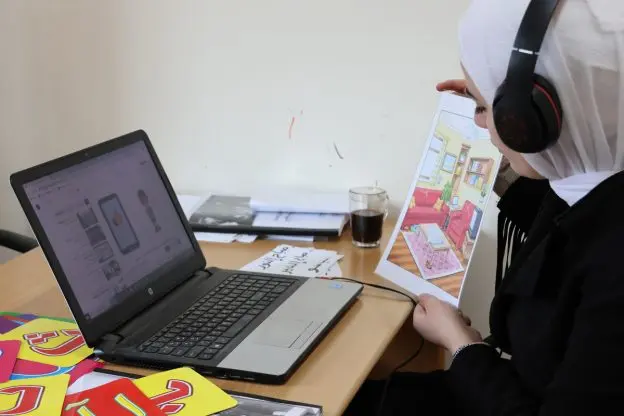
Watch real excerpts from our live sessions at Kalimah Center and see how we bring learning to life. These clips highlight our interactive, student-centered teaching approach across all our courses—designed to keep learners engaged, motivated, and actively involved every step of the way.
Master Arabic with Kalimah Center
Join our expert-led online classes and start your journey toward Arabic fluency today.
Book Your Free TrialArabic Greetings by Region: Egyptian, Gulf, Iraqi, Levantine, and Moroccan
Arabic is a rich and diverse language with many dialects. Each region has its unique way of greeting others. Here are some common ways to say “hi” or “hello” in various Arabic dialects:
1. Ya Ahlan (يا أهلاً)
This is an expressive variation of “ahlan” often used in the Levant and Egypt. Pronounced “ya ah-lan,” it conveys a sense of warmth and enthusiasm, especially when meeting someone after a long time.
2. Hala Wallah (هلا والله)
In Gulf countries, you’ll often hear “hala wallah,” a colloquial phrase that combines “welcome” (hala) and “by Allah” (wallah) to emphasize a warm greeting. Pronounced “ha-la wa-lah,” it’s commonly used among friends and family.
3. Kifak? (كيفك؟)
In the Levant, greetings often include questions about well-being. “Kifak?” (pronounced “kee-fak”) means “how are you?” for males, while “kifik?” (كيفكِ) is used for females. It’s a casual and friendly way to greet someone.
4. Shlonak? (شلونك؟)
In Iraqi and Gulf dialects, “shlonak?” (pronounced “shlo-nak”) is the equivalent of “how are you?” It’s an informal greeting used to check on someone’s well-being.
5. Labas? (لاباس؟)
In Moroccan and other North African dialects, “labas?” (pronounced “la-bas”) means “how are you?” or “is everything okay?” It’s a typical greeting used in everyday conversations.
Read more about: Hospital Vocabulary In Arabic
Chart of Common Arabic Greetings
Below is a handy chart summarizing the greetings discussed, along with their pronunciation, meaning, and common usage:
| Greeting | Arabic Script | Pronunciation | Meaning | Common Usage |
| As-salamu alaykum | السلام عليكم | As-sa-laa-mu a-lay-kum | Peace be upon you | Universal, formal, and informal |
| Wa alaykum as-salam | وعليكم السلام | Wa a-lay-kum as-sa-lam | And peace be upon you too | Response to As-salamu alaykum |
| Marhaban | مرحبا | Mar-ha-ban | Hello | Informal conversations |
| Ahlan wa Sahlan | أهلا وسهلا | Ah-lan wa sah-lan | Welcome | Formal and informal, conveys hospitality |
| Ahlan | أهلا | Ah-lan | Hi | Quick, casual encounters |
| Sabah al-khair | صباح الخير | Sa-bah al-khayr | Good morning | Morning greeting |
| Masaa al-khair | مساء الخير | Ma-saa al-khayr | Good evening | Evening greeting |
| Salam | سلام | Sa-lam | Peace | Casual, versatile |
| Ya Ahlan | يا أهلاً | Ya ah-lan | Warm hello | Informal, enthusiastic |
| Hala Wallah | هلا والله | Ha-la wa-lah | Welcome (emphasized) | Gulf countries, informal |
| Kifak? / Kifik? | كيفك؟ / كيفكِ؟ | Kee-fak / Kee-fik | How are you? | Levant, casual |
| Shlonak? | شلونك؟ | Shlo-nak | How are you? | Gulf, Iraq, informal |
| Labas? | لاباس؟ | La-bas | Is everything okay? | Morocco, casual |
How to Reply to Arabic Greetings: Complete Response Guide
Knowing the greeting is only half the conversation — you also need the correct response. Here are the proper replies to every major Arabic greeting:
| Greeting | Arabic | Your Response | Arabic Response | Meaning of Response |
|---|---|---|---|---|
| As-salamu alaykum | السلام عليكم | Wa alaykum as-salam | وعليكم السلام | And upon you be peace |
| As-salamu alaykum wa rahmatullah | السلام عليكم ورحمة الله | Wa alaykum as-salam wa rahmatullahi wa barakatuh | وعليكم السلام ورحمة الله وبركاته | And upon you peace, mercy, and blessings |
| Sabah al-khair | صباح الخير | Sabah an-nur | صباح النور | Morning of light |
| Masaa al-khair | مساء الخير | Masaa an-nur | مساء النور | Evening of light |
| Marhaban | مرحبا | Marhaban bik (m) / Marhaban biki (f) | مرحباً بك / بكِ | Welcome to you |
| Ahlan | أهلاً | Ahlan bik (m) / Ahlan biki (f) | أهلاً بك / بكِ | Welcome to you |
| Ahlan wa Sahlan | أهلا وسهلا | Ahlan bik / Ahlan wa sahlan | أهلاً بك | Welcome to you too |
| Kifak? (Levant) | كيفك؟ | Mnieh, shukran (m) / Mniehe (f) | منيح، شكراً | Good, thank you |
| Shlonak? (Iraqi/Gulf) | شلونك؟ | Zain, shukrak / Bi-kheir | زين، شكرك | Good/Fine, thank you |
| Labas? (Moroccan) | لاباس؟ | Labas, shukran | لاباس، شكراً | Fine, thank you |
| Tusbah ala khayr (goodnight) | تصبح على خير | Wa anta min ahliha (m) | وأنت من أهلها | And may you be of its people |
Cultural note: In Islamic tradition, it is required (wajib) to respond to the full “As-salamu alaykum” greeting with at least “Wa alaykum as-salam.” Using the full response with “wa rahmatullahi wa barakatuh” is considered more virtuous and respectful.
Read also: Learn how to introduce yourself in Arabic
Arabic Greetings Pronunciation Guide: How to Say Every Greeting Correctly
Pronunciation is the most searched aspect of Arabic greetings. Here is a detailed guide to pronouncing each greeting correctly:
As-salamu alaykum — Pronunciation
السلام عليكم | Pronunciation: as-sa-LAA-mu a-LAY-kum
- “As-salamu” — the “s” in “salamu” doubles slightly: as-SAA-la-mu
- “Alaykum” — a-LAY-kum (stress on “LAY”)
- Common shortening in speech: “salam alaykum” or simply “salam”
- Common mistake: Many non-native speakers say “a-SAL-a-mu” — the stress should be on the second syllable: as-SA-la-mu
Marhaban — Pronunciation
مرحبا | Pronunciation: mar-HA-ban
- The “r” in Arabic is a rolled/flapped “r” (like Spanish “pero,” not English “r”)
- The “h” is a regular English “h”
- Final “-an” is short and unstressed
- Dialect variation: In Egyptian Arabic, often said as “mar-HA-ba” (dropping the final n)
Ahlan — Pronunciation
أهلاً | Pronunciation: AH-lan
- The “ah” is open: like “father” not “cat”
- Stress on the first syllable: AH-lan
- The final “n” has a slight nasal quality
Ahlan wa Sahlan — Pronunciation
أهلا وسهلا | Pronunciation: AH-lan wa SAH-lan
- “Ahlan” = AH-lan (see above)
- “wa” = connecting “and,” very short
- “Sahlan” = SAH-lan (the “S” is a regular English S)
- Full phrase flows quickly: AH-lan-wa-SAH-lan
Sabah al-khair — Pronunciation
صباح الخير | Pronunciation: sa-BAH al-KHAYR
- “Sabah” = sa-BAH (stress on BAH; the “s” here is actually an emphatic ص Sad, giving the word a heavier quality)
- “Al-khair” = al-KHAYR (the “kh” is like the “ch” in Scottish “loch” — a throaty sound)
- Response: “Sabah an-nur” (sa-BAH an-NOOR) — “Morning of light”
Masaa al-khair — Pronunciation
مساء الخير | Pronunciation: ma-SA al-KHAYR
- “Masaa” = ma-SA (stress on SA; long “aa” sound)
- “Al-khair” = al-KHAYR (same throaty “kh” as above)
- Response: “Masaa an-nur” (ma-SA an-NOOR) — “Evening of light”
Shlonak — Pronunciation
شلونك | Pronunciation: SHLO-nak
- “Sh” = English “sh” as in “show”
- “lo” = rhymes with “low”
- “nak” = rhymes with “back”
- Feminine: Shlonich — SHLO-nij (Iraqi) or SHLO-nik (Gulf)
Master Arabic with Kalimah Center
Join our expert-led online classes and start your journey toward Arabic fluency today.
Book Your Free TrialInside Kalimah Center: Moments from Our Courses
Get a glimpse into the vibrant learning experience at Kalimah Center. These snapshots capture real moments from our live classes—where students engage deeply, connect with passionate instructors, and grow in a welcoming, supportive environment.
Here Are The Reviews On Our Courses:
Our students frequently commend the excellence of our courses and the commitment shown by our instructors. You can read their complete reviews on Trustpilot.

Want to Greet People in Arabic with Confidence?
You’ve learned some Arabic greetings – that’s great! But wouldn’t it be amazing to use them in real conversations, understand the nuances of each greeting, and pronounce them perfectly?
At Kalimah Center, we help you go beyond simple greetings and achieve fluency in Arabic.
Our online Arabic courses offer:
- Expert teachers: Our native Arabic speakers will guide you and help you perfect your pronunciation.
- Interactive lessons: We use engaging materials and real-life scenarios to make learning fun and effective.
- Focus on all skills: You’ll learn to read, write, listen, and speak Arabic confidently.
Join us for a FREE trial class.

AND.. our group classes offer:
- Small class sizes
- Native Arabic teachers
- Interactive learning
- Affordable prices
📚 Explore Our Courses:
Online Arabic Course: Tailored to your level, our comprehensive Arabic program includes 16 teaching levels and 400+ hours of personalized sessions.
Online Quran With Tajweed Course: Perfect for non-Arabic speakers, our course spans 13 levels and equips you with Tajweed mastery from beginner to advanced.
Online Arabic Course For Kids: Nurture your child’s love for Arabic with our engaging and structured program, available in 24 levels for primary, intermediate, and secondary stages.
🚀 Start Your Free Trial Today! 🚀
Don’t miss out on this life-changing opportunity to deepen your faith and knowledge. Sign up now for your free trial and take the first step towards becoming a better practicing Muslim with Kalimah Center!

Conclusion:
Arabic greetings are an essential part of the language, reflecting cultural values and promoting connection. The most common greeting, “As-salamu alaykum” (Peace be upon you), is widely used across the Arab world, suitable for both formal and informal settings.
Variations of this greeting include “Marhaban” (Hello) for informal situations and “Ahlan wa Sahlan” (Welcome), which conveys hospitality. Other greetings such as “Sabah al-khair” (Good morning) and “Masaa al-khair” (Good evening) are also commonly used in daily interactions.
Arabic dialects offer unique variations of greetings that reflect regional differences. For instance, in the Gulf, “Hala Wallah” is a warm greeting, while in the Levant, “Kifak?” (How are you?) is used informally. Other dialects use expressions like “Shlonak?” in Iraq and “Labas?” in Morocco to inquire about someone’s well-being.
FAQs about How to Say Hi in Arabic?
Q1: How do Muslims greet each other?
Muslims traditionally greet each other with “As-salamu alaykum” (السلام عليكم) — “Peace be upon you.” The proper response is “Wa alaykum as-salam” (وعليكم السلام) — “And upon you be peace.” For an even more complete exchange, the greeter may say “As-salamu alaykum wa rahmatullahi wa barakatuh” (adding “and the mercy of Allah and His blessings”), to which the response is “Wa alaykum as-salam wa rahmatullahi wa barakatuh.” This greeting is used between Muslims regardless of their nationality or dialect.
Q2: What is the difference between “Salam” and “As-salamu alaykum”?
“Salam” (سلام) is an informal, shortened version of the full Islamic greeting. “As-salamu alaykum” is the complete, formal version carrying full religious and cultural weight. Using “Salam” is like saying “Peace” instead of “Peace be upon you” — both convey the same sentiment, but “As-salamu alaykum” is the preferred form between Muslims and in formal contexts. “Salam” is typically used among close friends or in very casual settings.
Q3: What does “Ahlan wa Sahlan” mean and how do you pronounce it?
“Ahlan wa Sahlan” (أهلا وسهلا) means “Welcome” in Arabic — literally “you are among family and on easy ground.” Pronunciation: AH-lan wa SAH-lan. It’s used when welcoming someone into your home, office, or personal space. The response is typically “Ahlan bik” (أهلا بك) — “Welcome to you too” — for a male, or “Ahlan biki” (أهلا بكِ) for a female.
Q4: How do you say “good afternoon” in Arabic?
Arabic does not have a separate dedicated word for “good afternoon” the way English does. In practice, “Masaa al-khair” (مساء الخير) covers both afternoon and evening — it begins being appropriate from approximately midday onward. Some speakers use “Masaa al-khair” starting from early afternoon (around 12:00–13:00), while others reserve it for later afternoon and evening. The response is always “Masaa an-nur” (مساء النور) — “Afternoon/Evening of light.”
Q5: What does “Shlonak” mean in Arabic and where is it used?
“Shlonak” (شلونك) is an Iraqi and Gulf Arabic expression meaning “How are you?” It comes from the word “shloon” (شلون) meaning “how/what state” and the suffix “-ak” (ك) meaning “you” (masculine). For a female, the form is “Shlonich” (شلونج) in Iraqi Arabic. It’s the most common informal greeting in Iraq and parts of the Gulf. The typical response is “Zain” (زين) — “Good/Fine” — or “Bi-kheir” (بخير) — “In goodness.” In Iraqi Arabic, you may also hear “Hala Wallah” as a warm welcome greeting meaning “Welcome, by God.”