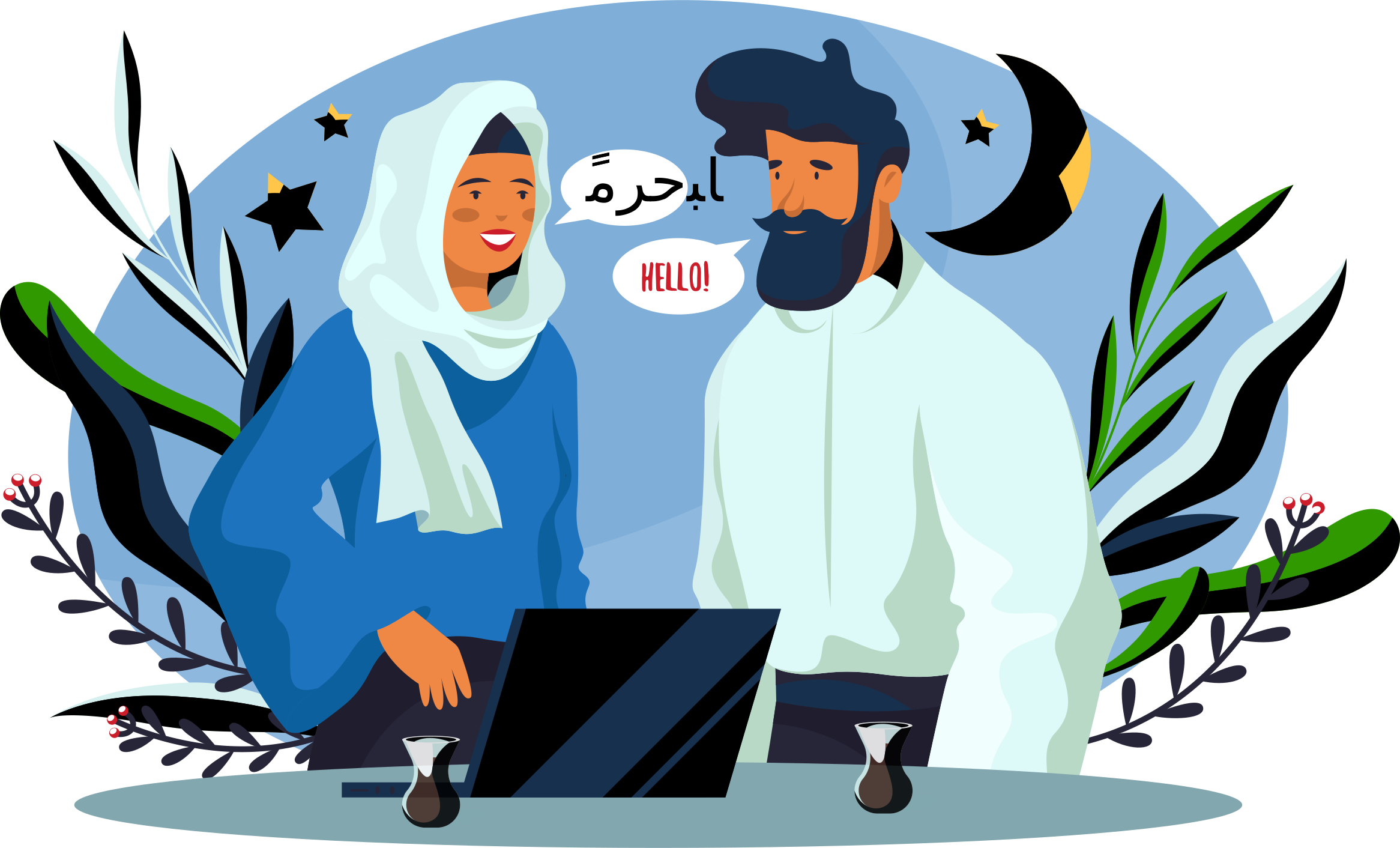
To introduce yourself in Arabic, start with the greeting السلام عليكم (As-salamu alaykum – Peace be upon you), then say اسمي [Your Name] (Ismi [Name] – My name is…). Share your age with عمري [Number] عامًا (Umri [Number] ‘aman), where you’re from using أنا من [Country] (Ana min [Country]), and your profession with أنا [Job] (Ana [Job]). Close politely with تشرفت بمقابلتك (Tasharraftu bimuqābalatik – Nice to meet you). This six-step formula works for both formal and casual introductions across all Arabic-speaking countries.
Quick Reference Introduction Template
| Step | Arabic Phrase | Transliteration | English Translation | Example |
|---|---|---|---|---|
| 1. Greeting | السلام عليكم | As-salamu alaykum | Peace be upon you | السلام عليكم |
| 2. Name | اسمي… | Ismi… | My name is… | اسمي سارة (Ismi Sarah) |
| 3. Age | عمري… عامًا | Umri… ‘aman | I am… years old | عمري 25 عامًا (Umri 25 ‘aman) |
| 4. Origin | أنا من… | Ana min… | I am from… | أنا من أمريكا (Ana min Amrika) |
| 5. Profession | أنا… | Ana… | I am a… | أنا طالبة (Ana taliba – student-f) |
| 6. Closing | تشرفت بمقابلتك | Tasharraftu bimuqābalatik | Nice to meet you | تشرفت بمقابلتك |
Complete Example:
السلام عليكم. اسمي سارة. عمري 25 عامًا. أنا من أمريكا. أنا طالبة. تشرفت بمقابلتك.
(As-salamu alaykum. Ismi Sarah. Umri khamsah wa-‘ishrun ‘aman. Ana min Amrika. Ana taliba. Tasharraftu bimuqābalatik.)
Peace be upon you. My name is Sarah. I am 25 years old. I am from America. I am a student. Nice to meet you.
Picture this: You’re at a mosque, language exchange meetup, or Arab friend’s gathering. Someone approaches with a warm smile and says السلام عليكم. Your heart races. You know this is your moment to speak Arabic, but… what do you say?
I’ve taught hundreds of Arabic beginners, and the most common fear is ‘I don’t know where to start speaking.’ Here’s the secret: master one complete self-introduction, and suddenly you can hold real conversations.
When I studied at Al-Azhar University, I watched non-Arab students transform from silent observers to confident speakers—all by learning this one foundational skill first. Today, I’ll give you the exact same six-step formula that unlocked Arabic fluency for them. By the end of this guide, you’ll have a complete, memorizable introduction ready to use tomorrow.
How to Introduce Yourself in Arabic Step by Step?
When introducing yourself in Arabic, there are a few key pieces of information you need to include:
- Greet the person (Say hello).
- Say your name (Who you are).
- Say your Age.
- Mention where you are from.
- Talk about what you do (Job or studies).
- Add a nice closing sentence.
Let’s go through these steps one by one.
Step 1: Arabic Greetings – How to Say Hello (السلام عليكم)
In Arabic culture, how you greet someone sets the tone for the entire conversation. A proper greeting shows respect, warmth, and cultural awareness—essential for making a positive first impression.
The Universal Arabic Greeting:
السلام عليكم (As-salamu alaykum)
Pronunciation: As-sa-LAA-mu ah-LAY-kum
Meaning: Peace be upon you
Why this greeting is special:
- Used by Muslims worldwide (1.8 billion people)
- Appropriate in all contexts (formal, informal, religious, secular)
- Shows cultural respect even if you’re not Muslim
- Opens hearts—Arabs deeply appreciate when non-natives use it
The Extended Version (More Formal/Religious):
السلام عليكم ورحمة الله وبركاته
(As-salamu alaykum wa rahmatullahi wa barakatuh)
Peace be upon you, and Allah’s mercy and blessings
Use this in:
- Mosque settings
- With religious scholars or elders
- Formal Islamic gatherings
- When you want to show extra respect
How to Respond:
When someone greets you with السلام عليكم, reply:
وعليكم السلام (Wa alaykum as-salam)
Pronunciation: Wa ah-LAY-kum as-sa-LAAM
Meaning: And peace be upon you too
Or the extended response:
وعليكم السلام ورحمة الله وبركاته
(Wa alaykum as-salam wa rahmatullahi wa barakatuh)
Alternative Greetings (Casual/Secular Contexts):
| Arabic | Transliteration | Meaning | When to Use |
|---|---|---|---|
| مرحبا | Marhaban | Hello | Casual, any time |
| أهلا وسهلا | Ahlan wa sahlan | Welcome | Welcoming someone |
| صباح الخير | Sabah al-khayr | Good morning | Morning greetings |
| مساء الخير | Masa’ al-khayr | Good evening | Evening greetings |
Response to time-based greetings:
صباح الخير → Reply: صباح النور (Sabah an-nur – Morning of light)
مساء الخير → Reply: مساء النور (Masa’ an-nur – Evening of light)
Pro Tip: When unsure which greeting to use, السلام عليكم is always safe and appreciated. It works in 100% of Arabic-speaking contexts.
* Excerpted from Kalimah’s Online Arabic Course Curriculum
rself.

* Excerpted from Kalimah’s Online Arabic Course Curriculum
Step 2: How to Say ‘My Name Is’ in Arabic (اسمي)
After your greeting establishes respect, your name creates the personal connection. Arabic has multiple ways to share your name, each with subtle differences in formality.
The Standard Formula (Most Common):
اسمي [Your Name]
Pronunciation: ISS-mee [Name]
Literal meaning: My name [is]…
Usage: Universal – works in all contexts
Examples:
- اسمي خالد (Ismi Khalid) – My name is Khalid
- اسمي فاطمة (Ismi Fatima) – My name is Fatima
- اسمي جون (Ismi John) – My name is John
Grammar note: اسم (ism) means ‘name,’ and the ي (i) suffix means ‘my.’ Arabic omits the verb ‘is’—the structure implies it.
Alternative Introduction Styles:
More Formal/Complete:
أنا اسمي [Name]
(Ana ismi [Name])
I, my name is [Name]
Use in: Job interviews, formal presentations
Very Casual (Common in Dialects):
أنا [Name]
(Ana [Name])
I am [Name]
Use with: Friends, peers, informal settings
Asking Someone’s Name:
To a Male:
ما اسمك؟ (Ma ismuka?)
Pronunciation: Maa iss-MOO-ka
What is your name?
To a Female:
ما اسمكِ؟ (Ma ismuki?)
Pronunciation: Maa iss-MOO-ki (note the shorter ‘i’ at end)
What is your name?
Gender-Neutral (Formal):
ما اسمك الكريم؟ (Ma ismuka al-karim?)
What is your noble/honored name?
(Extremely polite, used with VIPs or elders)
Cultural Note: Arabic Names Structure
Traditional Arabic names follow a pattern:
[First Name] + [Father’s Name] + [Grandfather’s Name] + [Family Name]
Example: محمد بن عبد الله بن عبد المطلب القرشي
(Muhammad son of Abdullah son of Abdul-Muttalib from Quraysh tribe)
In modern introductions:
- Informal: Use first name only (اسمي محمد)
- Formal/Professional: First + Family name (اسمي محمد الأحمد)
- Very formal: Full name chain
For non-Arabic names:
Simply say your name clearly: اسمي سارة (Ismi Sarah). Arabs will appreciate you keeping your original name—no need to ‘Arabize’ it unless you prefer.
Making Your Introduction Warmer:
After stating your name, add:
تشرفت بمعرفتك (Tasharraftu bima’rifatik)
Honored to know you / It’s a pleasure to meet you
Complete warm introduction:
السلام عليكم. اسمي خالد. تشرفت بمعرفتك.
(As-salamu alaykum. Ismi Khalid. Tasharraftu bima’rifatik.)
Peace be upon you. My name is Khalid. It’s a pleasure to meet you.
This three-sentence combination is perfect for first meetings and instantly marks you as culturally aware.

Let us practice introducing your name in Arabic:
- Say the greeting: As-salamu alaykum.
- Say your name: ismī …
- Say it is nice to meet the person: Tasharraftu bima’rifatik.
For example:
As-salamu alaykum. ismī Sarah. Tasharraftu bima’rifatik.
Experience Kalimah Center Classes
Watch real excerpts from our live sessions at Kalimah Center and see how we bring learning to life. These clips highlight our interactive, student-centered teaching approach across all our courses—designed to keep learners engaged, motivated, and actively involved every step of the way.
Master Arabic with Kalimah Center
Join our expert-led online classes and start your journey toward Arabic fluency today.
Book Your Free TrialStep 3: How to Say Your Age in Arabic (عمري)
Sharing your age in Arabic is straightforward, but requires learning Arabic numbers 1-100. Don’t worry—the formula itself is simple.
The Age Formula:
عمري [Number] عامًا
(Umri [Number] ‘aman)
Pronunciation: OOM-ree [Number] AA-man
Literal meaning: My age [is] [Number] years
Breaking it down:
- عمري (umri) = my age
- [Number] = any number (see chart below)
- عامًا (‘aman) = years (accusative case marker)
Common Ages with Arabic Numbers:
| Age | Arabic | Transliteration |
|---|---|---|
| 18 | عمري ثمانية عشر عامًا | Umri thamāniyata ‘ashara ‘aman |
| 20 | عمري عشرون عامًا | Umri ‘ishrūn ‘aman |
| 25 | عمري خمسة وعشرون عامًا | Umri khamsah wa-‘ishrūn ‘aman |
| 30 | عمري ثلاثون عامًا | Umri thalāthūn ‘aman |
| 35 | عمري خمسة وثلاثون عامًا | Umri khamsah wa-thalāthūn ‘aman |
| 40 | عمري أربعون عامًا | Umri arba’ūn ‘aman |
| 50 | عمري خمسون عامًا | Umri khamsūn ‘aman |
Pattern for 21-99:
[Ones digit] + و (wa = and) + [Tens digit]
Example: 27 = سبعة وعشرون (seven and twenty)
Asking Someone’s Age:
To a Male:
كم عمرك؟ (Kam umruka?)
Pronunciation: Kam OOM-roo-ka
How old are you?
To a Female:
كم عمركِ؟ (Kam umruki?)
Pronunciation: Kam OOM-roo-ki
How old are you?
Cultural Context: When to Share Your Age
Appropriate contexts:
- Among students or peers
- Language exchange partners
- Casual social gatherings
- When someone asks directly
Less common to volunteer:
- First business meeting (unless relevant)
- Formal professional introductions
- With much older/younger people (age gap makes it less relevant)
General rule: If you’re under 40 and in a social/educational context, mentioning age is normal and builds rapport. Over 40, it’s optional unless specifically asked.
Simplified Beginner Version:
If Arabic numbers feel overwhelming at first, you can say:
أنا طالب/طالبة (Ana talib/taliba)
I am a student
(Implies you’re likely 18-25)
Or:
أنا شاب/شابة (Ana shab/shabba)
I am a young man/woman
(Implies under 30)
Then learn numbers gradually as your Arabic improves.

Step 4: Saying Where You’re From (أنا من)
After introducing your name, you might want to share where you are from. In Arabic, the phrase is:
(أَنَا مِن [البلد])
Ana min [your country]
I am from [your country].
Here are some examples:
- أنا من أمريكا (Ana min Amrika.) – “I am from America.”
- أنا من بريطانيا (Ana min Britanya.) – “I am from Britain.”
- أنا من مصر (Ana min Misr.) – “I am from Egypt.”
- أنا من كشمير (Ana min Kashmir) – “I am from Kashmir.”
Cultural Tip: Arabs often ask where you are from as a way of getting to know you better. It is seen as polite and friendly.

Step 5: Introducing Your Job or Profession in Arabic
You can also share what you do for a living when introducing yourself in Arabic. In Arabic, you say:
أنا [Your Profession]
Ana [Your Profession]
“I am a [Your Profession].”
Some common examples include:
- أنا معلم (Ana mu’allim.) – “I am a teacher.”
- أنا مهندس (Ana muhandis.) – “I am an engineer.”
- أنا طالب (Ana talib.) – “I am a student.”

If you are female, the endings of these words change slightly:
- أنا معلمة (Ana mu’allimah.) – “I am a teacher (female).”
- أنا طالبة (Ana talibah.) – “I am a student (female).”
Step 6: Polite Closing Phrases (تشرفت بمقابلتك)
You can close your introduction with a kind phrase like:
- Tasharraftu bimuqābalatik (تشرفت بمقابلتك) – Nice to meet you.
Full Example of Self Introduction in Arabic
Now that you have learned the parts of a basic introduction in Arabic, let’s put it all together.
السلام عليكم. اسمي خالد، أنا من مصر، أنا معلم، عمري 30 عامًا. تشرفت بمقابلتك.
As-salamu alaykum. Ismi Khalid. Ana min Misr. Ana mu’allim. Umri thalathun ‘aman. Tasharraftu bimuqābalatik
Peace be upon you. My name is Khalid. I am from Egypt. I am a teacher. I am 30 years old. Nice to meet you.
Master Arabic with Kalimah Center
Join our expert-led online classes and start your journey toward Arabic fluency today.
Book Your Free TrialAdding Details to Your Introduction in Arabic
Now that you know the basics, let’s add more depth to your introduction in Arabic.
Talking About Your Hobbies in Arabic
هوايتي [Your Hobby].
Hiwāyatī [Your Hobby].
My hobby is [Your Hobby].
Example:
هوايتي قراءة الكتب
Hiwāyatī qirā’at al-kutub
My hobby is reading books.
Sharing Your Goals in Arabic
هدفي أن [Your Goal].
Hadafī an [Your Goal].
My goal is to [Your Goal].
Example:
هدفي أن أتعلم اللغة العربية
Hadafī an ata‘allam al-lughah al-‘Arabiyyah
My goal is to learn the Arabic language.
Complete Self-Introduction Example in Arabic (With Pronunciation Guide)
Let’s put all six steps together into a complete, natural-sounding introduction you can memorize and use immediately.
Full Formal Introduction:
السلام عليكم. اسمي سارة جونسون. عمري خمسة وعشرون عامًا. أنا من أمريكا، من مدينة نيويورك. أنا طالبة في الجامعة، أدرس اللغة العربية. تشرفت بمقابلتك.
Transliteration (Pronunciation Guide):
As-salamu alaykum. Ismi Sarah Johnson. Umri khamsah wa-‘ishrun ‘aman. Ana min Amrika, min madinat New York. Ana taliba fi al-jami’a, adrusu al-lugha al-‘arabiyya. Tasharraftu bimuqābalatik.
English Translation:
Peace be upon you. My name is Sarah Johnson. I am twenty-five years old. I am from America, from New York City. I am a university student, studying the Arabic language. It’s a pleasure to meet you.
Breakdown with Pronunciation Tips:
| Arabic Section | Pronunciation | Meaning | Tips |
|---|---|---|---|
| السلام عليكم | As-sa-LAA-mu ah-LAY-kum | Peace be upon you | Stress on LAA and LAY |
| اسمي سارة | ISS-mee Sarah | My name is Sarah | ISS rhymes with “kiss” |
| عمري خمسة وعشرون عامًا | OOM-ree KHAM-sa wa-ISH-roon AA-man | I am 25 years old | Numbers are hardest—practice separately |
| أنا من أمريكا | AH-na min Am-REE-ka | I am from America | Clear “ka” at end |
| أنا طالبة | AH-na TAA-li-ba | I am a student (f) | Final “a” sound for feminine |
| تشرفت بمقابلتك | Ta-shar-RAF-tu bi-mu-QAA-ba-la-tik | Nice to meet you | Hardest phrase—break into syllables |
Audio Practice Recommendation:
- Listen to native pronunciation on Forvo.com (search each phrase)
- Record yourself saying the full introduction
- Compare your recording to native audio
- Repeat daily for 7 days until it feels natural
Male Version (Key Changes):
السلام عليكم. اسمي جون سميث. عمري ثلاثون عامًا. أنا من بريطانيا. أنا مهندس. تشرفت بمقابلتك.
As-salamu alaykum. Ismi John Smith. Umri thalathun ‘aman. Ana min Britanya. Ana muhandis. Tasharraftu bimuqābalatik.
Peace be upon you. My name is John Smith. I am thirty years old. I am from Britain. I am an engineer. Nice to meet you.
What changed: طالبة (female student) → مهندس (male engineer)
Casual/Short Version (For Informal Settings):
مرحبا! أنا سارة. أنا من أمريكا. أنا طالبة.
Marhaban! Ana Sarah. Ana min Amrika. Ana taliba.
Hello! I’m Sarah. I’m from America. I’m a student.
This 15-second version works for:
- Quick meetups
- Language exchange apps
- Casual social events
- Instagram/social media bios
How to Ask Others About Themselves (Conversation Starters)
After introducing yourself, you can ask the other person about themselves. Here are some useful questions:
- Ma ismuk? ما اسمك؟ (What is your name?)
- Min ayna anta? من أين أنت؟ (Where are you from?)
- Maa ‘amaluk? ما عملك؟ (What do you do for a living?)
- Kam ‘umruk? كم عمرك؟ (How old are you?)
- Ma hiwayatuk? ما هوايتك؟ (What are your hobbies?)
Formal vs Informal Introductions in Arabic: When to Use Each
Knowing when to use formal vs casual Arabic makes the difference between sounding natural vs awkward. Here’s your context guide.
Formal Introductions (Use Full 6-Step Formula):
When:
- First meeting with elders or authority figures
- Professional/business contexts
- Academic settings (meeting professors, classmates initially)
- Religious gatherings (mosque, Islamic events)
- Government offices or official situations
- When someone introduces themselves formally to you
Key Markers of Formality:
- Opening with السلام عليكم (not مرحبا)
- Using complete phrases: اسمي not just أنا
- Including all six steps (greeting through closing)
- Adding polite closings: تشرفت بمقابلتك
- Avoiding slang or dialect
Informal Introductions (Shortened, Casual):
When:
- Meeting peers your own age
- Social gatherings among friends
- Language exchange partners online
- Casual community events
- After initial formal introduction (relationship established)
Key Markers of Informality:
- Opening with مرحبا (hello) or أهلا (hey)
- Shortened structure: أنا [name] instead of اسمي [name]
- Skipping age unless relevant
- Omitting formal closing phrases
- Using some dialect words (if comfortable)
Example Informal Introduction:
مرحبا! أنا خالد. أنا من مصر. شو أخبارك؟
Marhaban! Ana Khalid. Ana min Misr. Shu akhbarak?
Hello! I’m Khalid. I’m from Egypt. What’s up?
(Note: شو أخبارك is Levantine dialect for “What’s up?”)
The Middle Ground (Semi-Formal):
When:
- First meeting with peers in professional setting
- Networking events
- University group projects
- Community volunteer work
Structure:
Formal greeting + name + origin/profession (skip age)
Example:
السلام عليكم. اسمي سارة. أنا من أمريكا، أدرس الطب.
As-salamu alaykum. Ismi Sarah. Ana min Amrika, adrusu al-tibb.
Peace be upon you. My name is Sarah. I’m from America, studying medicine.
Regional Variation Guide:
| Region | Greeting Preference | Formality Level | Notes |
|---|---|---|---|
| Gulf (UAE, Saudi) | السلام عليكم strongly preferred | More formal overall | Even casual contexts use formal greetings |
| Egypt | مرحبا or السلام عليكم both common | Moderate formality | Egyptians warm up quickly to casual |
| Levant (Syria, Lebanon) | مرحبا, أهلا common | Less formal | Friendly, casual culture |
| North Africa | Mix of Arabic + French greetings | Varies widely | May hear “Bonjour” + Arabic |
Meeting someone new?
↓
Are they significantly older OR in authority?
├→ YES → Use FORMAL (full 6 steps)
└→ NO → Continue
↓
Is this a professional/academic context?
├→ YES → Use SEMI-FORMAL (skip age)
└→ NO → Continue
↓
Are you in a mosque or religious setting?
├→ YES → Use FORMAL
└→ NO → Use INFORMAL (short version OK)
When in doubt: Start formal. Arabs will signal if casual is appropriate by using informal language back. You can then mirror their level.
Common Mistakes When Introducing Yourself in Arabic (And How to Fix Them)
Even with the right phrases, beginners make these frequent errors. Avoid them to sound more natural and confident.
Mistake #1: Wrong Greeting Response
❌ Wrong: Someone says السلام عليكم, you reply السلام عليكم back
✅ Correct: Reply وعليكم السلام (Wa alaykum as-salam)
Why it matters: Wa alaykum (“and upon you”) is grammatically required for the response. Repeating the same phrase sounds like you’re greeting a third person, not responding.
Fix: Memorize the response separately from the greeting.
Mistake #2: Gender Mismatch in Job Titles
❌ Wrong (Female saying): أنا مهندس (Ana muhandis – engineer-masculine)
✅ Correct: أنا مهندسة (Ana muhandisa – engineer-feminine)
❌ Wrong (Male saying): أنا طالبة (Ana taliba – student-feminine)
✅ Correct: أنا طالب (Ana talib – student-masculine)
Why it matters: Gender agreement is fundamental in Arabic. Mismatching sounds jarring to native ears.
Fix: Learn job titles in pairs: مهندس/مهندسة, طبيب/طبيبة, طالب/طالبة
Mistake #3: Forgetting “عامًا” When Stating Age
❌ Wrong: عمري عشرون (Umri ‘ishrun – My age twenty)
✅ Correct: عمري عشرون عامًا (Umri ‘ishrun ‘aman – My age twenty years)
Why it matters: عامًا (‘aman – years) is grammatically required. Without it, the sentence is incomplete.
Fix: Always add عامًا after the number, no exceptions.
Mistake #4: Incorrect Question Gender Forms
❌ Wrong (asking a woman): ما اسمكَ؟ (Ma ismuka? – masculine form)
✅ Correct: ما اسمكِ؟ (Ma ismuki? – feminine form)
Why it matters: The suffix changes: ـكَ (ka – your-m) vs ـكِ (ki – your-f). Using wrong gender can seem disrespectful.
Fix:
- Asking males: ما اسمكَ؟ (ismuka), كم عمركَ؟ (umruka)
- Asking females: ما اسمكِ؟ (ismuki), كم عمركِ؟ (umruki)
Mistake #5: Mispronouncing “السلام عليكم”
❌ Wrong: “Salaam ah-LAY-koom” (heavy American pronunciation)
✅ Correct: “As-sa-LAA-mu ah-LAY-kum” (soft ‘m’, clear ‘u’)
Common errors:
- Pronouncing final “kum” like English “come” → should be “kum” with ‘u’ as in “put”
- Dropping the initial “As” → always include it
- Saying “Salamaleikum” too fast → enunciate each part
Fix: Listen to native pronunciation 10 times before practicing. Record yourself and compare.
Mistake #6: Overusing English Words in Arabic Sentences
❌ Wrong: أنا من America (mixing languages mid-sentence)
✅ Correct: أنا من أمريكا (Ana min Amrika – fully Arabic)
Why it matters: While Arabs understand English, mixing languages mid-sentence sounds unpolished.
Fix: Learn country names in Arabic:
- America = أمريكا (Amrika)
- Britain = بريطانيا (Britanya)
- Canada = كندا (Canada)
- Australia = أستراليا (Ustralya)
Mistake #7: Not Adjusting Formality to Context
❌ Wrong: Using مرحبا (casual hello) when meeting a sheikh or professor
✅ Correct: Always use السلام عليكم in formal/religious contexts
Why it matters: Formality shows respect. Too casual can seem rude; too formal among peers seems stiff.
Fix: Follow the flowchart in the “Formal vs Informal” section above. When unsure, default to formal.
Mistake #8: Skipping the Closing Phrase
❌ Wrong: اسمي خالد. أنا من مصر. [then silence]
✅ Correct: …تشرفت بمقابلتك (add polite closing)
Why it matters: Abrupt endings feel incomplete. The closing phrase signals “your turn to speak” and shows social grace.
Fix: Memorize تشرفت بمقابلتك as the automatic ending to every introduction.
Mistake #9: Saying “أنا اسمي” Redundantly
❌ Wrong: أنا اسمي خالد (Ana ismi Khalid – “I my-name Khalid”)
✅ Correct: اسمي خالد (Ismi Khalid) OR أنا خالد (Ana Khalid)
Why it matters: أنا اسمي is grammatically redundant—”I” and “my” together is overkill.
Fix: Choose ONE structure:
- Formal: اسمي (ismi)
- Casual: أنا (ana)
- Never combine them
Mistake #10: Mispronouncing “تشرفت بمقابلتك”
❌ Wrong: “Tash-RAF-too bim-ka-BAL-tek” (too fast, wrong stress)
✅ Correct: “Ta-shar-RAF-tu bi-mu-QAA-ba-la-tik” (clear syllables, correct stress)
Why it’s hard: This is the longest phrase in basic introductions—7 syllables with unfamiliar sounds.
Fix:
- Break into chunks: تشرفت / بمقابلتك
- Practice each chunk 10 times
- Combine slowly, then speed up
- Listen to Forvo.com pronunciation
Or use simpler alternative:
فرصة سعيدة (Fursa sa’ida – Happy opportunity to meet)
Master Arabic with Kalimah Center
Join our expert-led online classes and start your journey toward Arabic fluency today.
Book Your Free TrialInside Kalimah Center: Moments from Our Courses
Get a glimpse into the vibrant learning experience at Kalimah Center. These snapshots capture real moments from our live classes—where students engage deeply, connect with passionate instructors, and grow in a welcoming, supportive environment.
Here Are The Reviews On Our Courses:
Our students frequently commend the excellence of our courses and the commitment shown by our instructors. You can read their complete reviews on Trustpilot.

Learn Arabic the Right Way with Kalimah Center
If you want to master Arabic introductions and speak Arabic confidently, Kalimah Center is the perfect place for you. At Kalimah Center, we offer:
- Structured Arabic courses tailored for non-Arabic speakers.
- Expert native Arabic teachers who make learning easy and effective.
- Practical lessons to use Arabic in real-life situations.
Many of our students have said:

Start your Arabic journey with us today, and step by step, you will see amazing progress.
📚 Explore Our Courses:
Online Arabic Course: Tailored to your level, our comprehensive Arabic program includes 16 teaching levels and 400+ hours of personalized sessions.
Online Quran With Tajweed Course: Perfect for non-Arabic speakers, our course spans 13 levels and equips you with Tajweed mastery from beginner to advanced.
Online Arabic Course For Kids: Nurture your child’s love for Arabic with our engaging and structured program, available in 24 levels for primary, intermediate, and secondary stages.
🚀 Start Your Free Trial Today! 🚀
Don’t miss out on this life-changing opportunity to deepen your faith and knowledge. Sign up now for your free trial and take the first step towards becoming a better practicing Muslim with Kalimah Center!

Want learn Arabic faster, cheaper? Join Kalimah group classes!
- More sessions, less money!
- Better learning with friends!
- Small groups, more practice!

Conclusion:
Introducing yourself in Arabic is a foundational skill that boosts confidence when learning the language. Starting with common greetings like “As-salamu alaykum” (Peace be upon you) or “Marhaban” (Hello), you can begin conversations smoothly.
From there, you’ll learn how to share key details such as your name (Ismi [name]), age (Umri [number] ‘aman), where you’re from (Ana min [country]), and what you do for a living (Ana [profession]). This basic structure helps in forming a comprehensive introduction while allowing you to connect with others by asking them similar questions.
To deepen your introductions, you can share personal information like your hobbies (Hiwayati [hobby]) or goals (Hadafi an [goal]). This opens the door for engaging conversations, where you can ask about someone’s name, age, profession, and interests.
Polite phrases like “Tasharraftu bima’rifatik” (It is an honor to meet you) help close your introduction gracefully. With practice, these conversational elements build your confidence and fluency in Arabic, whether you’re speaking to native speakers or fellow learners.
Frequently Asked Questions: Introducing Yourself in Arabic
Q1: What’s the difference between formal and informal Arabic introductions?
Formal introductions use السلام عليكم (As-salamu alaykum) and complete sentences: اسمي خالد (Ismi Khalid). Use these in business, with elders, or first meetings. Informal/casual introductions among friends use مرحبا (Marhaban – Hi) or أهلا (Ahlan – Hey) and may skip titles: أنا خالد (Ana Khalid – I’m Khalid). Age and profession are optional in casual settings. When in doubt, start formal—Arabs appreciate respect and will invite informality if appropriate.
Q2: How do I pronounce “ma ismuka” and “kam umruka” correctly?
ما اسمك؟ (Ma ismuka?) = “What is your name?”
Pronunciation: Maa iss-moo-ka (stress on “iss”)
ما (ma) = “what” (like “Ma” in “Mama”)
اسمك (ismuka) = “your name” (iss-MOO-ka)
كم عمرك؟ (Kam umruka?) = “How old are you?”
Pronunciation: Kam OOM-roo-ka (stress on “OOM”)
كم (kam) = “how much/many”
عمرك (umruka) = “your age” (OOM-roo-ka)
Gender note: For females, اسمكِ (ismuki) and عمركِ (umruki) with shorter “i” ending.
Q3: Is it rude to ask someone’s age in Arabic culture?
Generally no—age questions (كم عمرك؟) are common and acceptable in Arabic culture, especially when building rapport. However, context matters: asking a middle-aged or elderly woman’s age in formal settings may be considered less polite. Among peers, students, or in professional contexts (networking, language exchange), age questions are normal and expected. If unsure, wait for the other person to volunteer their age first, or ask indirectly: أنت طالب؟ (Are you a student?).
Q4: Should I use different phrases when introducing myself to men vs women in Arabic?
When YOU are speaking: Your phrases stay mostly the same, but job titles and adjectives change based on YOUR gender:
Male: أنا طالب (Ana talib – I’m a student-m)
Female: أنا طالبة (Ana taliba – I’m a student-f)
When ADDRESSING someone: The question forms change:
To a man: ما اسمكَ؟ (Ma ismuka?)
To a woman: ما اسمكِ؟ (Ma ismuki?)
Closing phrases also change:
To a man: تشرفت بمقابلتك (Tasharraftu bimuqābalatika)
To a woman: تشرفت بمقابلتكِ (Tasharraftu bimuqābalatiki)
This precision shows respect and proper Arabic grammar.
Q5: Can I use these introduction phrases in all Arabic-speaking countries?
Yes! The phrases in this guide use Modern Standard Arabic (MSA), understood across all 22 Arabic-speaking countries from Morocco to Iraq. However, regional dialects have variations:
Egypt: إزيك (Izzayak – How are you?) instead of كيف حالك
Levant (Syria/Lebanon): كيفك (Kifak) or شو اسمك (Shu ismak)
Gulf: Similar to MSA but with accent differences
For formal situations, business, education, or when unsure of someone’s dialect, MSA (as taught here) is always appropriate and respected. Locals will appreciate your effort even if you use formal Arabic in casual settings.
Q6: What if I forget part of my introduction? Can I skip steps?
Absolutely! The six-step structure is a complete introduction, but you can adapt:
Minimal intro: Greeting + Name = السلام عليكم. اسمي أحمد (sufficient for quick meetings)
Professional intro: Greeting + Name + Profession = common in business cards/networking
Social intro: Greeting + Name + Origin + Age = typical among students/travelers
Never skip: The greeting (shows respect) and your name (essential information). Everything else is optional based on context and comfort level.
Q7: How do I respond when someone introduces themselves to me in Arabic?
Standard response pattern:
Return the greeting: وعليكم السلام (Wa alaykum as-salam)
Express pleasure: تشرفنا (Tasharrafna – Honored to meet you) or فرصة سعيدة (Fursa sa’ida – Happy opportunity)
Introduce yourself: Use the same structure they used
Ask a follow-up question: من أين أنت؟ (Where are you from?) or ما عملك؟ (What do you do?)
Example dialogue:
Person A: السلام عليكم. اسمي خالد. أنا من مصر.
You: وعليكم السلام. تشرفنا يا خالد. اسمي سارة. أنا من أمريكا. من أي مدينة في مصر؟ (Which city in Egypt?)