In a nutshell: Learn Hospital Vocab in Arabic like مستشفى (Mustashfa) for “hospital,” طبيب (Tabeeb) for “doctor,” and ممرضة (Mumarrida) for “nurse.” Familiarize yourself with phrases such as أنا ذاهب إلى المستشفى (I am going to the hospital) and المريض يحتاج إلى الراحة (The patient needs rest). Knowing medical departments like غرفة العمليات (Operating Room) and قسم الطوارئ (Emergency Room) will help you communicate effectively.
Today, we will learn important vocabulary related to hospitals in Arabic, important words with examples in Arabic sentences for when we go to the hospital. If you want to talk about hospitals or medical settings in Arabic, memorize these essential terms.
How Do You Say “Hospital” in Arabic?
The Arabic word for “hospital” is مستشفى (mustashfā). Say it with me: mus-tash-fā. This term refers to any hospital in the private sector ot the public sector.
أنا ذاهب إلى المستشفى
‘Anā dhāhib ilā al-mustashfā.
I am going to the hospital.
You might also encounter the plural form: مستشفيات (mustashfayāt), meaning “hospitals.”
هناك العديد من المستشفيات في المدينة
Hunāka al-‘adīd min al-mustashfayāt fī al-madīnah.
There are many hospitals in the city.
You might also hear the word مَشفى (mashfa), which is also used and means the same thing.
أنا ذاهب إلى المَشفى
ʾanā dhāhib ʾilā al-mashfa
I am going to the hospital.
Now, let’s break down the key vocabulary you’ll encounter in a hospital setting.
* Excerpted from Kalimah’s Online Arabic Course Curriculum
Experience Kalimah Center Classes
Watch real excerpts from our live sessions at Kalimah Center and see how we bring learning to life. These clips highlight our interactive, student-centered teaching approach across all our courses—designed to keep learners engaged, motivated, and actively involved every step of the way.
Master Arabic with Kalimah Center
Join our expert-led online classes and start your journey toward Arabic fluency today.
Book Your Free TrialFirst: Vocabulary of Medical Staff at the Hospital
When you go to the مستشفى (Mustashfa), you will meet the medical staff, so let’s learn what they are called in Arabic.
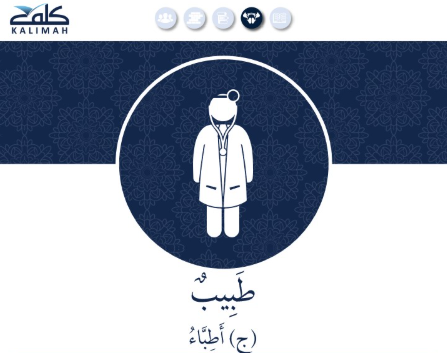
1. Doctor in Arabic: طبيب (Tabeeb)
طبيب (Tabeeb) is the general word for “doctor.” The feminine form is طبيبة (Tabeeba). In Arab countries, doctors are highly respected and often addressed formally with دكتور (Doktoor) before their name, even outside medical contexts..
هو طبيب ماهر
Huwa tabeeb mahir
He is a skilled doctor.
هي طبيبة لطيفة
Hiya tabeeba latifa
She is a kind doctor.
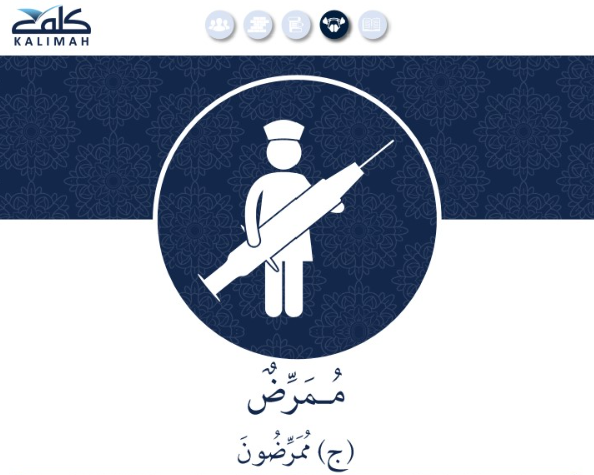
2. Nurse in Arabic: ممرض (Mumarrid)
ممرض (Mumarrid) is the male nurse in Arabic, and ممرضة (Mumarrida) is the female nurse in Arabic.
الممرض يعتني بالمرضى
Al-mumarrid ya’tani bil-marda
The nurse cares for the patients.
الممرضة تساعد الطبيب
Al-mumarrida tusa’id al-tabeeb.
The nurse helps the doctor.
3. Surgeon in Arabic: جراح (Jarrah)
جراح (Jarrah) in Arabic means surgeon. This word comes from the verb “جرح” (jaraha), meaning “to wound” or “to cut,” referring to the nature of surgical work.
الجراح أجرى العملية بنجاح
Al-jarrah ajra al-‘amaliyya binajah.
The surgeon performed the operation successfully.
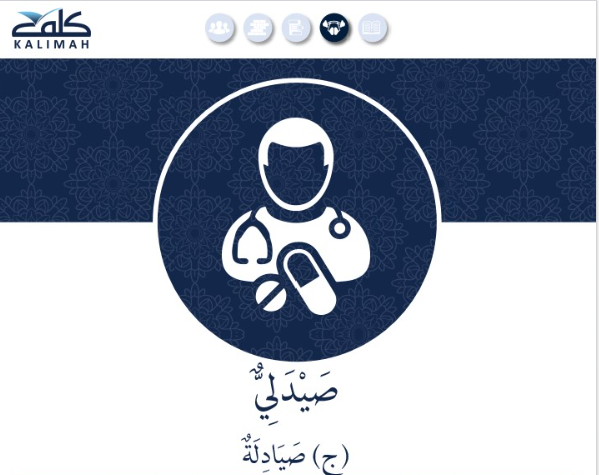
4. Pharmacist in Arabic: صيدلي (Saydali)
صيدلي (Saydali) in Arabic is the pharmacist. They work in the pharmacy, which we’ll learn about later.
الصيدلي يعطي الدواء
As-saydali yu’ti ad-dawa’.
The pharmacist gives the medicine.
Second: Vocabulary of Places and Departments in the Hospital
Now, let’s learn about the different places you might find inside the مستشفى (Mustashfa).
1. Emergency Room in Arabic: قسم الطوارئ (Qism at-Tawari’)
قسم الطوارئ (Qism at-Tawari’) in Arabic is the emergency room. “قسم” (Qism) means “department,” and “الطوارئ” (at-Tawari’) means “emergencies.”
ذهبنا إلى قسم الطوارئ بسرعة
Dhahabna ila qism at-tawari’ bisur’a.
We went to the emergency room quickly.
2. Clinic in Arabic: عيادة (ʿIyada)
عيادة (ʿIyada) in Arabic means clinic. This is where you usually go for regular check-ups or less urgent medical issues.
لدي موعد في العيادة غدًا
Ladai maw’id fi al-‘iyada ghadan.
I have an appointment at the clinic tomorrow.
3. Pharmacy in Arabic: صيدلية (Saydaliyya)
صيدلية (Saydaliyya) is the pharmacy, where you get your medicine.
اشتريت الدواء من الصيدلية
Ishtaraytu ad-dawa’ min as-saydaliyya.
I bought the medicine from the pharmacy.
4. Operating Room in Arabic: غرفة العمليات (Ghurfat al-‘Amaliyyat)
غرفة العمليات (Ghurfat al-‘Amaliyyat) is the operating room. This is where surgeries are performed.
العملية ستجرى في غرفة العمليات
Al-‘amaliyya satujra fi ghurfat al-‘amaliyyat.
The operation will be performed in the operating room.
5. Waiting Room: غرفة الانتظار (Ghurfat Al-Intidhar)
The waiting room is referred to as غرفة الانتظار (Ghurfat Al-Intidhar) in Arabic.
المريض ينتظر في غرفة الانتظار.
Al-mareed yantadhir fi ghurfat al-intidhar.
The patient is waiting in the waiting room.
Third: Essential Hospital Vocabulary in Arabic
We’ve covered the basics, but there are many other important words you might encounter in a مستشفى (Mustashfa). Let’s learn some more.
1. Blood in Arabic: دم (Dam)
دم (Dam) in Arabic means blood. This is a very important word in medical contexts.
أخذوا عينة من الدم
Akhadhu ‘ayina min ad-dam.
They took a blood sample.
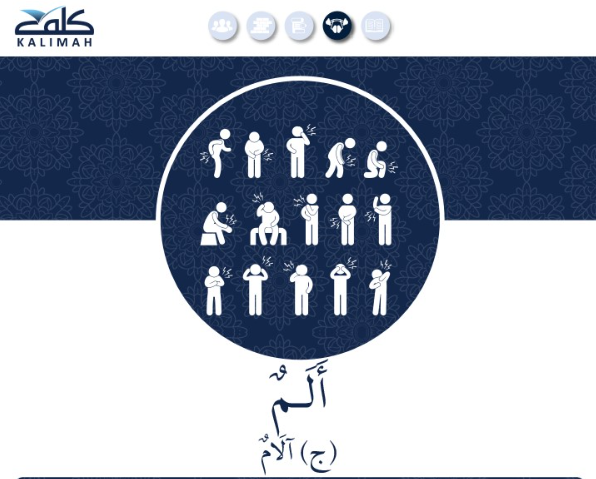
2. Pain in Arabic: ألم (Alam)
ألم (Alam) in Arabic means pain. It’s a general word for any kind of pain.
أشعر بألم حاد في صدري
Ash’ur bi’alam hadd fi sadri.
I feel a sharp pain in my chest.
* Excerpted from Kalimah’s Online Arabic Course Curriculum
Understanding the intensity of pain is important. You might hear words like:
- خفيف (Khafif): Light/Mild
- متوسط (Mutawassit): Moderate
- شديد (Shadeed): Severe
3. Injection in Arabic: حقنة (Huqna)
حقنة (Huqna) means injection or shot.
أعطاني الطبيب حقنة
A’tani at-tabeeb huqna
The doctor gave me an injection.
4. Medicine/Medication in Arabic: دواء (Dawa’)
دواء (Dawa’) in Arabic means medicine or medication.
يجب أن تأخذ هذا الدواء بعد الأكل
Yajib an ta’khudh hadha ad-dawa’ ba’d al-‘akl
You should take this medicine after eating.

5. Operation/Surgery in Arabic: عملية (Amaliyya)
عملية (Amaliyya) in Arabic means operation or surgery.
خضع لعملية جراحية
Khada’a li’amaliyya jiraahiya.
He underwent surgery.
This word is related to the جراح (Jarrah), the surgeon.
6. Diagnosis in Arabic: تشخيص (Tashkhees)
تشخيص (Tashkhees) in Arabic means diagnosis. This is what the طبيب (Tabeeb) does after examining you.
التشخيص كان التهابًا رئويًا
At-tashkhees kan iltihaban ri’awiyan.
The diagnosis was pneumonia.
7. Treatment in Arabic: علاج (Ilaj)
علاج (Ilaj) in Arabic means treatment. This is what the طبيب (Tabeeb) prescribes to cure your illness.
العلاج يستغرق أسبوعًا
Al-‘ilaj yastaghriq ‘usbua’.
The treatment takes a week.
8. Patient in Arabic: مريض (Mareed) / مريضة (Mareeda)
مريض (Mareed) is a male patient, and مريضة (Mareeda) is a female patient.
المريض يحتاج إلى الراحة
Al-mareed yahtaj ila ar-raha.
The patient needs rest.
المريضة تشعر بتحسن
Al-mareeda tash’ur bitahassun.
The female patient feels better.

9. Bed in Arabic: سرير (Sarir)
سرير (Sarir) in Arabic means bed.
المريض يرقد على السرير
Al-mareed yarqud ‘ala as-sarir.
The patient is lying on the bed.
10. Wheelchair in Arabic: كرسي متحرك (Kursi mutaharrik)
كرسي متحرك (Kursi mutaharrik) means wheelchair. “كرسي” (Kursi) means chair, and “متحرك” (Mutaharrik) means moving.
يحتاج إلى كرسي متحرك
Yahtaj ila kursi mutaharrik.
He needs a wheelchair.
11. X-ray in Arabic: أشعة سينية (Ashi’a Siniyya)
أشعة سينية (Ashi’a Siniyya) in Arabic means X-ray.
أجرى فحصًا بالأشعة السينية
Ajra fahs’an bil-ashi’a as-siniyya.
He had an X-ray examination.
12. Bandage in Arabic: ضمادة (Dimada)
ضمادة (Dimada) in Arabic means bandage.
وضعوا ضمادة على الجرح
Wada’u dimada ‘ala al-jurh.
They put a bandage on the wound.
Fourth: Vocabulary of Common Diseases in Arabic
Finally, let’s learn some common diseases in Arabic. This is important for explaining your symptoms to the doctor.
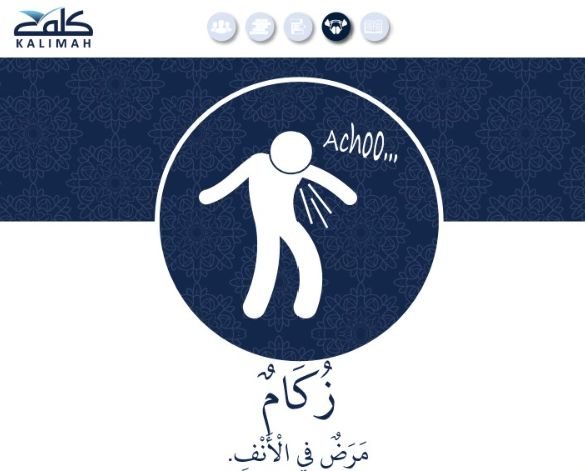
1. Cold/Flu in Arabic: زكام/انفلونزا (Zukam/Influenza)
زكام (Zukam) is a common cold, and انفلونزا (Influenza) is the flu.
أشعر بزكام شديد
Ash’ur bizukam shadeed
I feel a bad cold.
عندي انفلونزا هذا الأسبوع
‘Indi influenza hadha al-‘usbu’.
I have the flu this week.
2. Headache in Arabic: صداع (Sudaa’)
صداع (Sudaa’) in Arabic means headache.
أعاني من صداع مستمر
U’ani min sudaa’ mustamir.
I suffer from a continuous headache.

3. Stomachache in Arabic: ألم في المعدة (Alam fi al-ma’ida)
ألم في المعدة (Alam fi al-ma’ida) means stomachache. “ألم” (Alam) means pain, and “المعدة” (al-ma’ida) means stomach.
لدي ألم شديد في المعدة
Ladai alam shadeed fi al-ma’ida.
I have severe stomach pain.
4. Fever in Arabic: حمى (Huma)
حمى (Huma) in Arabic means fever.
لديه حمى مرتفعة
Ladaihi huma murtafi’a.
He has a high fever.
5. Cough in Arabic: سعال (Su’al)
سعال (Su’al) in Arabic means cough.
أعاني من سعال جاف
U’ani min su’al jaff.
I suffer from a dry cough.
Arabic Medical Emergency Phrases
This table contains essential phrases for communicating urgency, symptoms, and critical medical information in an Arabic-speaking hospital or emergency situation.
| English Phrase | Arabic Phrase | Transliteration (Simplified) | Notes / Usage |
|---|---|---|---|
| This is an emergency! | هذه حالة طارئة! | Hādhihi ḥāla ṭāri’a! | Use to get immediate attention. |
| Call an ambulance. | اتصل بالإسعاف. | Ittaṣil bil-isʿāf. | Essential request for transport. |
| I need a doctor. | أحتاج طبيباً. | Aḥtāj ṭabīban. | Direct request for medical personnel. |
| I need help! | أحتاج مساعدة! | Aḥtāj musāʿada! | General call for assistance. |
| I am in pain. | أنا أتألم. | Anā ata’allam. | Basic statement of discomfort. |
| Where does it hurt? | أين الألم؟ | Ayna al-alam? | Question for the patient. |
| The pain is severe. | الألم شديد جداً. | Al-alam shadīd jiddan. | Describing high pain level. |
| I have trouble breathing. | لدي صعوبة في التنفس. | Ladī ṣuʿūba fī at-tanaffus. | Critical symptom. |
| I can’t move. | لا أستطيع الحركة. | Lā astaṭīʿ al-ḥaraka. | Suggests injury/paralysis. |
| I am allergic to… | لدي حساسية من… | Ladī ḥasāsiyya min… | Crucial for medication safety. |
| Do you have a fever? | هل لديك حمى؟ | Hal ladayka ḥummā? | Checking for infection/illness. |
| What happened? | ماذا حدث؟ | Mādhā ḥadath? | Questioning witnesses or conscious patient. |
| Stop the bleeding. | أوقف النزيف. | Awqif an-nazīf. | Instruction for first aid. |
| I feel dizzy. | أشعر بالدوار. | Ashʿur bi-d-duwwār. | Symptom of shock or low blood pressure. |
| I am going to faint. | سأفقد الوعي. | Sa-afqid al-waʿy. | Warning of impending collapse. |
| Hurry! | بسرعة! | Bisurʿa! | General expression of urgency. |
Chart of Hospital Vocabulary in Arabic
This chart organizes the key hospital vocabulary we’ve discussed, providing the English translation, the Arabic word, and its transliteration for easier pronunciation.
| English Translation | Arabic Word | Transliteration |
| Hospital | مستشفى | Mustashfa |
| Doctor | طبيب | Tabeeb |
| Doctor (Female) | طبيبة | Tabeeba |
| Nurse | ممرض / ممرضة | Mumarrid / Mumarrida |
| Surgeon | جراح | Jarrah |
| Pharmacist | صيدلي | Saydali |
| Emergency Room | قسم الطوارئ | Qism at-Tawari’ |
| Clinic | عيادة | ʿIyada |
| Pharmacy | صيدلية | Saydaliyya |
| Operating Room | غرفة العمليات | Ghurfat al-‘Amaliyyat |
| Ward | جناح | Janah |
| Cold/Flu | زكام/انفلونزا | Zukam/Influenza |
| Headache | صداع | Sudaa’ |
| Stomachache | ألم في المعدة | Alam fi al-ma’ida |
| Fever | حمى | Huma |
| Cough | سعال | Su’al |
| Blood | دم | Dam |
| Pain | ألم | Alam |
| Injection/Shot | حقنة | Huqna |
| Medicine/Medication | دواء | Dawa’ |
| Operation/Surgery | عملية | Amaliyya |
| Diagnosis | تشخيص | Tashkhees |
| Treatment | علاج | Ilaj |
| Patient | مريض / مريضة | Mareed / Mareeda |
| Bed | سرير | Sarir |
| Wheelchair | كرسي متحرك | Kursi mutaharrik |
| X-ray | أشعة سينية | Ashi’a Siniyya |
| Bandage | ضمادة | Dimada |
| Health | الصحة | As-Sihha |
| Healthy | صحي / صحية | Sahi / Sahiya |
| Illness/Disease | مرض | Marad |
| Prevention | وقاية | Wiqaaya |
| Recovery | شفاء / تعافي | Shifa’ / Ta’afi |
| Wellness/Well-being | عافية | ‘Afia |
| Symptoms | أعراض | A’rad |
| Contagious/Infectious | مُعْدٍ / مُعْدِيَة | Mu’di / Mu’diya |
| Immunity | مناعة | Mana’a |
Common Arabic Words Used in Hospital pdf
Master Arabic with Kalimah Center
Join our expert-led online classes and start your journey toward Arabic fluency today.
Book Your Free TrialInside Kalimah Center: Moments from Our Courses
Get a glimpse into the vibrant learning experience at Kalimah Center. These snapshots capture real moments from our live classes—where students engage deeply, connect with passionate instructors, and grow in a welcoming, supportive environment.
Here Are The Reviews On Our Courses:
Our students frequently commend the excellence of our courses and the commitment shown by our instructors. You can read their complete reviews on Trustpilot.

Learn Hospital Vocabulary and More at Kalimah Center
These are just a few of the many hospital-related words in Arabic. At Kalimah Center, we offer structured Arabic courses designed to help you master Arabic for real-world situations.
Our native Arabic teachers provide cultural insights, practical examples, and engaging lessons tailored to your needs.
My advice: if you want learn “hospital vocabulary,” start with the basic courses first. Learn alphabet first, then basic words. This will make it easier to learn “hospital” words later.
We teach you how to make sentences, how to understand when someone talks about health.
- We start with alphabet. Very important first step.
- Then, basic words, how to make simple sentences. Like “hello,” “how are you?”
- We also teach how to talk about everyday life. This includes many things, like family, food, places, health.
📚 Explore Our Courses:
Online Arabic Course: Tailored to your level, our comprehensive Arabic program includes 16 teaching levels and 400+ hours of personalized sessions.
Online Quran With Tajweed Course: Perfect for non-Arabic speakers, our course spans 13 levels and equips you with Tajweed mastery from beginner to advanced.
Online Arabic Course For Kids: Nurture your child’s love for Arabic with our engaging and structured program, available in 24 levels for primary, intermediate, and secondary stages.
🚀 Start Your Free Trial Today! 🚀
Don’t miss out on this life-changing opportunity to deepen your faith and knowledge. Sign up now for your free trial and take the first step towards becoming a better practicing Muslim with Kalimah Center!

Want learn Arabic faster, cheaper? Join Kalimah group classes!
- More sessions, less money!
- Better learning with friends!
- Small groups, more practice!

Conclusion
Acquiring specialized terminology, particularly Hospital Vocabulary in Arabic, is essential for effective communication in medical settings across Arabic-speaking regions. We have covered key terms, from identifying the medical staff like the tabeeb (doctor) and mumarrida (nurse), to understanding common departmental names such as qism at-tawari’ (Emergency Room) and ghurfat al-‘amaliyyat (Operating Room). By memorizing these practical words and phrases, you equip yourself with the confidence to discuss symptoms, understand diagnoses like tashkhees, and follow treatment plans involving dawa’ (medicine) or amaliyya (surgery).
Ultimately, mastering this specific Hospital Vocabulary in Arabic is a critical step in building fluency that works in real-life, high-stakes situations. While self-study and charts are helpful starting points, consistent practice within a structured curriculum ensures you learn correct pronunciation and proper usage in conversational Arabic. Whether you are traveling, working, or residing in an Arabic-speaking country, investing in comprehensive language learning will allow you to confidently navigate any health-related interaction, transforming a potentially stressful experience into one you can manage with ease.
FAQs about Hospital Vocabulary In Arabic
Q1: What is the Arabic word for hospital and how is it pronounced?
The general Arabic word for hospital is مستشفى, which is transliterated and pronounced as mustashfā. You may also encounter the alternative term مَشفى (mashfa), which carries the exact same meaning. The plural form for multiple hospitals is مستشفيات (mustashfayāt).
Q2: How do you say doctor and nurse in Arabic?
A male doctor is called طبيب (Tabeeb), while a female doctor is طبيبة (Tabeeba). In professional and everyday speech, doctors are often formally addressed using the loanword دكتور (Doktoor). A male nurse is ممرض (Mumarrid), and a female nurse is ممرضة (Mumarrida).
Q3: What are the Arabic terms for the Emergency Room and Operating Room?
The Emergency Room is called قسم الطوارئ (Qism at-Tawari’), which literally translates to “Emergencies Department.” The Operating Room where surgeries are performed is called غرفة العمليات (Ghurfat al-‘Amaliyyat). The general waiting area is غرفة الانتظار (Ghurfat Al-Intidhar).
Q4: How do you ask for immediate medical assistance or an ambulance in Arabic?
To state an emergency, say “هذه حالة طارئة!” (Hādhihi ḥāla ṭāri’a!). To request an ambulance, use the phrase “اتصل بالإسعاف” (Ittaṣil bil-isʿāf). If you need a doctor immediately, say “أحتاج طبيباً” (Aḥtāj ṭabīban).
Q5: What are the Arabic words for common medical symptoms like fever and headache?
A fever is called حمى (Huma), a headache is صداع (Sudaa’), and a cough is سعال (Su’al). If you are experiencing a stomachache, the phrase is ألم في المعدة (Alam fi al-ma’ida), and a generic pain is referred to as ألم (Alam).