Have you ever tried to say “my first day” or “the third floor” in Arabic and stopped halfway through the sentence? You’re not the only one. Ordinal numbers in Arabic change shape with gender and position, and that surprises most new learners.
The good news is that these words follow a small set of clear patterns. Once you see how الأول, الثاني and الثالث are built, the rest of the list up to one hundred falls into place faster than you expect.
At Kalimah Centre, our tutors teach ordinals early because learners need them everywhere: dates, school grades, building floors, rankings and even the names of Islamic months. This guide puts that classroom experience into one friendly reference.
Below you’ll find complete lists with transliteration and the rules behind every form. You’ll also see the real difference between counting numbers and ordering numbers, plus free tools that help these words stay in your memory.
What you will learn in this article:
- The full list of Arabic ordinals from 1st to 100th with pronunciation.
- How one simple pattern builds most ordinals from their roots.
- Masculine and feminine forms and when to use each.
- The clear difference between cardinal and ordinal numbers.
- Everyday uses for dates, floors, grades and Islamic months.
1. Ordinal Numbers In Arabic 1 To 10 – First, Second, Third And Beyond
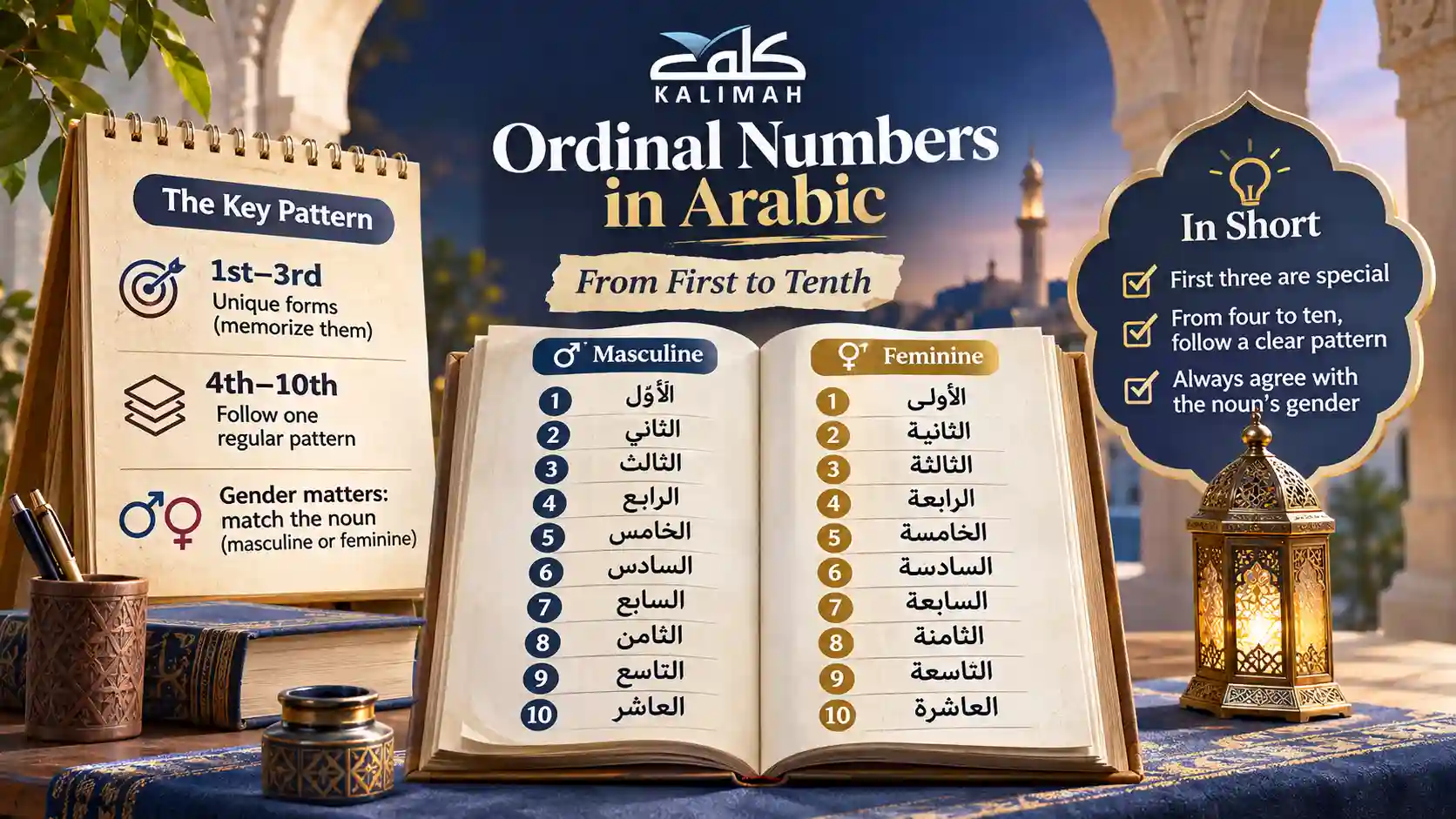
The first ten ordinal numbers in Arabic are the base for every ordinal you’ll learn later, because the numbers from 11 to 99 reuse them. Here is the full list in both genders, with an easy transliteration for each form.
| Number | English | Masculine | Feminine | Pronunciation (m / f) |
| 1 | First | الأوَّل | الأولى | al-awwal / al-ūlā |
| 2 | Second | الثاني | الثانية | ath-thānī / ath-thāniya |
| 3 | Third | الثالث | الثالثة | ath-thālith / ath-thālitha |
| 4 | Fourth | الرابع | الرابعة | ar-rābiʿ / ar-rābiʿa |
| 5 | Fifth | الخامس | الخامسة | al-khāmis / al-khāmisa |
| 6 | Sixth | السادس | السادسة | as-sādis / as-sādisa |
| 7 | Seventh | السابع | السابعة | as-sābiʿ / as-sābiʿa |
| 8 | Eighth | الثامن | الثامنة | ath-thāmin / ath-thāmina |
| 9 | Ninth | التاسع | التاسعة | at-tāsiʿ / at-tāsiʿa |
| 10 | Tenth | العاشر | العاشرة | al-ʿāshir / al-ʿāshira |
Reading the table once is a good start, but knowing why each word looks the way it does is what makes it stick. Let’s look more closely at the three words you’ll use most, the pattern behind the rest, and how gender shapes every form.
First, Second, Third In Arabic
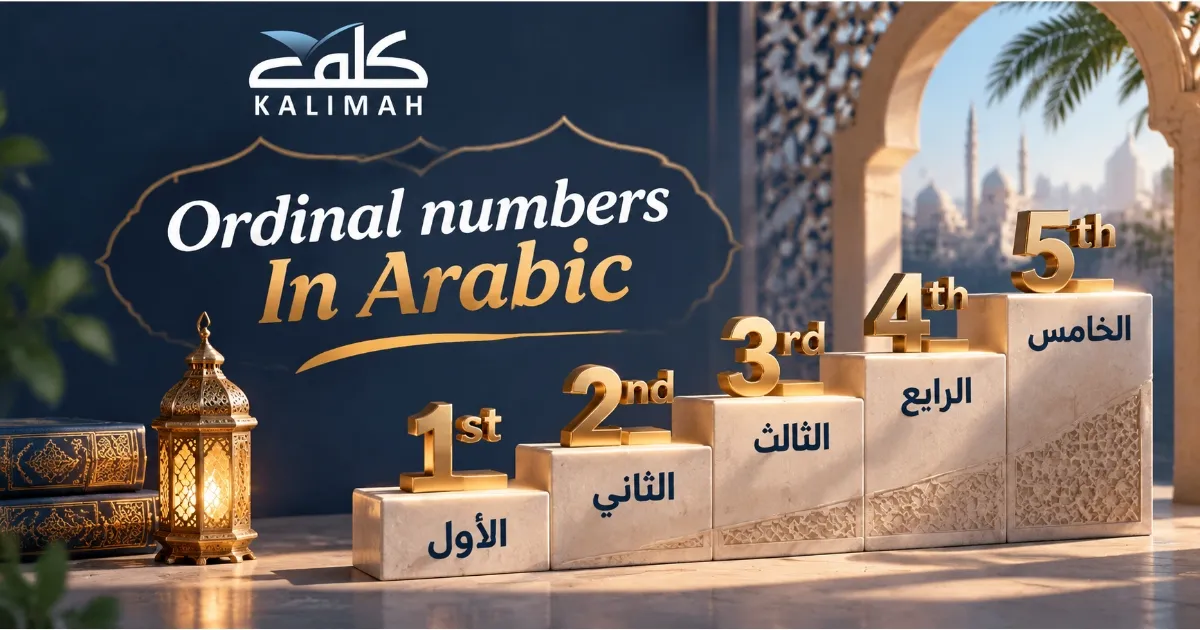
First, second and third in Arabic are al-awwal (الأول), ath-thānī (الثاني) and ath-thālith (الثالث). You’ll see these three in any textbook you open: “the first lesson” (الدرس الأول), “the second time” (المرة الثانية) and “the third chapter” (الفصل الثالث).
Al-awwal is the odd one out. It doesn’t come from wāḥid (one). It has its own root, and its feminine form is al-ūlā (الأولى), not a form ending in tā’ marbūṭa. Learn it as a separate word and you’ll avoid the most common beginner mistake.
Ath-thānī has a small twist too. Without the definite article it becomes thānin (ثانٍ), because its final yā’ drops in the indefinite form. You’ll meet it in phrases like “a second reason” (سببٌ ثانٍ), so it helps to recognize it early.
How The Fāʿil Pattern Builds Ordinals From Four To Ten
From the fourth onward, almost every ordinal follows the fāʿil (فاعل) pattern. You take the three root letters of the cardinal number and put them into the shape C-ā-C-i-C. Arbaʿa (four) gives rābiʿ, khamsa (five) gives khāmis, and sabʿa (seven) gives sābiʿ.
This is why learners who memorize first, second, third and fourth in Arabic usually find five to ten easy afterward. Each ordinal sounds close to its cardinal, so ثمانية becomes ثامن and تسعة becomes تاسع with only a vowel change in the middle of the word.
Sixth is the one exception worth pointing out. Sitta (ستة) gives sādis (سادس) because both go back to an older root, s-d-s. If you want to compare cardinals and ordinals side by side up to twenty, Omniglot’s Arabic numbers table lays out both lists clearly.
Masculine And Feminine Forms Of The First Ten Ordinals
Arabic ordinals work like adjectives, so they match the noun in gender and definiteness. A masculine noun takes the plain form, as in al-bāb ar-rābiʿ (the fourth door). A feminine noun adds tā’ marbūṭa, as in as-sayyāra ar-rābiʿa (the fourth car).
This is simpler than the cardinal system, where the numbers three to ten take the opposite gender of the noun. Ordinals never reverse. Masculine always goes with masculine and feminine with feminine, in speech and in writing.
To hear both forms spoken aloud, paste a word into Google Translate’s listening feature with Arabic as the source language and press the speaker icon. Repeating الخامس and الخامسة trains your ear to catch the soft final “a” of the feminine.
Read Also: Read and Write Arabic Numbers – With Free Worksheets
2. Ordinal Numbers In Arabic 1 To 20 – Completing The List From 11 To 20
The ordinals from 11 to 19 combine two words, and the twentieth is your first step into the tens. This block completes the ordinal numbers in Arabic 1 to 20, which cover most daily needs such as dates, book chapters and class levels.
| Number | English | Masculine | Feminine |
| 11 | Eleventh | الحادي عشر | الحادية عشرة |
| 12 | Twelfth | الثاني عشر | الثانية عشرة |
| 13 | Thirteenth | الثالث عشر | الثالثة عشرة |
| 14 | Fourteenth | الرابع عشر | الرابعة عشرة |
| 15 | Fifteenth | الخامس عشر | الخامسة عشرة |
| 16 | Sixteenth | السادس عشر | السادسة عشرة |
| 17 | Seventeenth | السابع عشر | السابعة عشرة |
| 18 | Eighteenth | الثامن عشر | الثامنة عشرة |
| 19 | Nineteenth | التاسع عشر | التاسعة عشرة |
| 20 | Twentieth | العشرون | العشرون |
If you already know the first ten, most of this table will look familiar, because each of these numbers just adds the word for ten. Three details still need attention: the two-word structure, the special eleventh, and the way the twentieth works.
The Two-Word Structure Of Ordinals 11 To 19
Each ordinal from 11 to 19 has two parts: the ordinal of the unit, then the word for ten. So the thirteenth is ath-thālith ʿashar (الثالث عشر), literally “the third ten,” and the seventeenth is as-sābiʿ ʿashar (السابع عشر).
Both parts agree with the noun’s gender. With a masculine noun you write عشر, and with a feminine noun you write عشرة. Compare al-yawm ath-thālith ʿashar (the thirteenth day) with al-layla ath-thālitha ʿashra (the thirteenth night).
In formal Arabic, both words always end in a fatḥa, whatever their role in the sentence, which makes them easier than many other numbers. In everyday speech, most people drop the case endings and say the words exactly as they look on the page.
Why The Eleventh Uses Al-Ḥādī Instead Of Al-Awwal
The eleventh is al-ḥādī ʿashar (الحادي عشر), not “al-awwal ʿashar.” Al-ḥādī is an old form linked to wāḥid (one), with its letters rearranged. Arabic keeps it only for compound ordinals such as the 11th, 21st and 31st.
Its feminine form is al-ḥādiya ʿashra (الحادية عشرة), which you’ll hear in as-sāʿa al-ḥādiya ʿashra (eleven o’clock). Arabic uses ordinals to tell the time, so this word comes up in conversation much more often than you might expect.
Here’s a quick memory trick: al-awwal stands alone, but al-ḥādī always needs a partner. Whenever another number word follows it, such as ʿashar or wa-l-ʿishrūn, you know you’re reading a compound ordinal.
The Twentieth And How The Tens Become Ordinals
The twentieth is simply al-ʿishrūn (العشرون), the cardinal number with the definite article. The tens don’t have a separate ordinal form. Al-ʿishrūn means “twenty” when you count and “the twentieth” after a noun, as in al-ʿīd al-ʿishrūn (the twentieth anniversary).
The tens also stay the same for both genders, which saves you a step. Ad-dars al-ʿishrūn (the twentieth lesson) and al-ḥiṣṣa al-ʿishrūn (the twentieth class) use the same word, although formal grammar changes it to al-ʿishrīn in some positions in the sentence.
Do your ordinals still live in your notebook instead of your conversations? In the Learn Arabic With Online Course at Kalimah Centre, a native tutor practices these forms with you live until you use them naturally in real sentences.

Recommended reading: Arabic Numbers 1 to 1000: Complete Guide With Charts, PDF & Pronunciation
Inside Kalimah Center: Moments from Our Courses
Get a glimpse into the vibrant learning experience at Kalimah Center. These snapshots capture real moments from our live classes—where students engage deeply, connect with passionate instructors, and grow in a welcoming, supportive environment.
Master Arabic with Kalimah Center
Join our expert-led online classes and start your journey toward Arabic fluency today.
Book Your Free Trial3. Ordinal Numbers In Arabic 1 To 100 – Compound Ordinals And The Tens
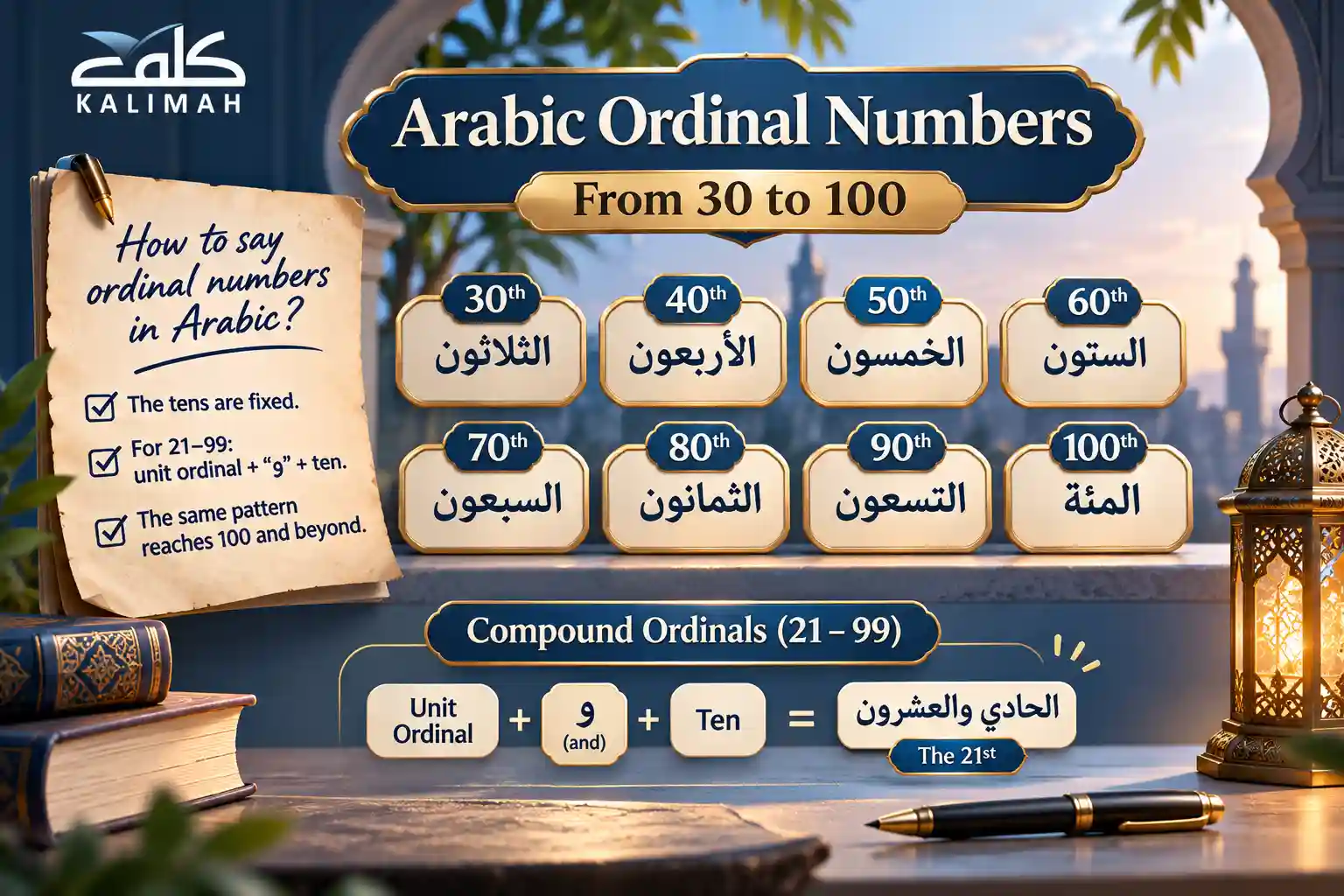
After twenty, ordinal numbers in Arabic follow one formula: the unit ordinal, then “wa” (and), then the ten. Once you’ve got it, you can learn the whole range up to one hundred in a single focused study session.
| Number | English | Arabic | Pronunciation |
| 30 | Thirtieth | الثلاثون | ath-thalāthūn |
| 40 | Fortieth | الأربعون | al-arbaʿūn |
| 50 | Fiftieth | الخمسون | al-khamsūn |
| 60 | Sixtieth | الستون | as-sittūn |
| 70 | Seventieth | السبعون | as-sabʿūn |
| 80 | Eightieth | الثمانون | ath-thamānūn |
| 90 | Ninetieth | التسعون | at-tisʿūn |
| 100 | Hundredth | المئة | al-mi’a |
The tens are the fixed points of this range, and every number between them combines a ten with a unit ordinal. Below you’ll see how compound ordinals work, how the tens behave, and what happens at one hundred.
Building Compound Ordinals Like The Twenty-First
For 21 to 99, say the unit ordinal first, then wa (و), then the ten. The twenty-first is al-ḥādī wa-l-ʿishrūn (الحادي والعشرون), the thirty-fifth is al-khāmis wa-th-thalāthūn (الخامس والثلاثون), and the ninety-ninth is at-tāsiʿ wa-t-tisʿūn.
Only the unit part changes for gender. The twenty-second floor is aṭ-ṭābiq ath-thānī wa-l-ʿishrūn. The twenty-second class uses a feminine noun, so it’s al-ḥiṣṣa ath-thāniya wa-l-ʿishrūn. The ten stays exactly the same in both cases.
The order is the same as for cardinal numbers, where Arabic also says “one and twenty” instead of “twenty-one.” If you already read cardinal numbers this way, compound ordinals will feel familiar from your first try, because only the unit word changes.
Learning goes faster with company. Join the Arabic Group Classes at Kalimah Centre, where small groups quiz each other on numbers, dates and rankings in a friendly setting that keeps motivation high every week.

The Tens From The Thirtieth To The Ninetieth
Like the twentieth, each round ten uses its cardinal form with al-: ath-thalāthūn (30th), al-arbaʿūn (40th), al-khamsūn (50th), and so on up to at-tisʿūn (90th). One word does two jobs, and you don’t need to worry about gender.
You’ll see these forms in anniversaries and official events, such as ad-dawra al-khamsūn (the fiftieth session) or al-ʿīd as-sittūn (the sixtieth anniversary). Reading Arabic news headlines is an easy way to spot them in real use.
When ordinals are written as digits, Arabic texts may use Western digits or Eastern Arabic digits such as ٣٠ and ٤٠. Wikipedia’s page on Eastern Arabic numerals shows each digit next to its Western form, which helps with signs, calendars and printed books.
The Hundredth And Ordinals Beyond It
The hundredth is al-mi’a (المئة), sometimes written المائة with an extra alif that isn’t pronounced. As with the tens, the cardinal word works as the ordinal, as in aṣ-ṣafḥa al-mi’a (the hundredth page) or al-ḥalqa al-mi’a (the hundredth episode).
For anniversaries, Arabic often uses the adjective mi’awī (مئوي), so a centenary is adh-dhikrā al-mi’awiyya (الذكرى المئوية). The thousandth works the same way with al-alf (الألف), as in az-zā’ir al-alf (the thousandth visitor).
Above one hundred, a common formal pattern links the unit with baʿda (after): al-ḥādī baʿda al-mi’a (الحادي بعد المئة) means “the hundred and first.” You’ll rarely need it in conversation, but it appears in book titles, laws and formal reports.
Further reading: Days of the Week in Arabic: Names, Meanings, and Pronunciation Guide
4. Cardinal And Ordinal Numbers In Arabic – The Key Differences
Cardinal and ordinal numbers in Arabic share the same roots, so learners often mix them up. Knowing how they differ in meaning, word order and agreement keeps your sentences correct. The Quran even gives a clear example of both used together.
Meaning And Function Of Each Number Type
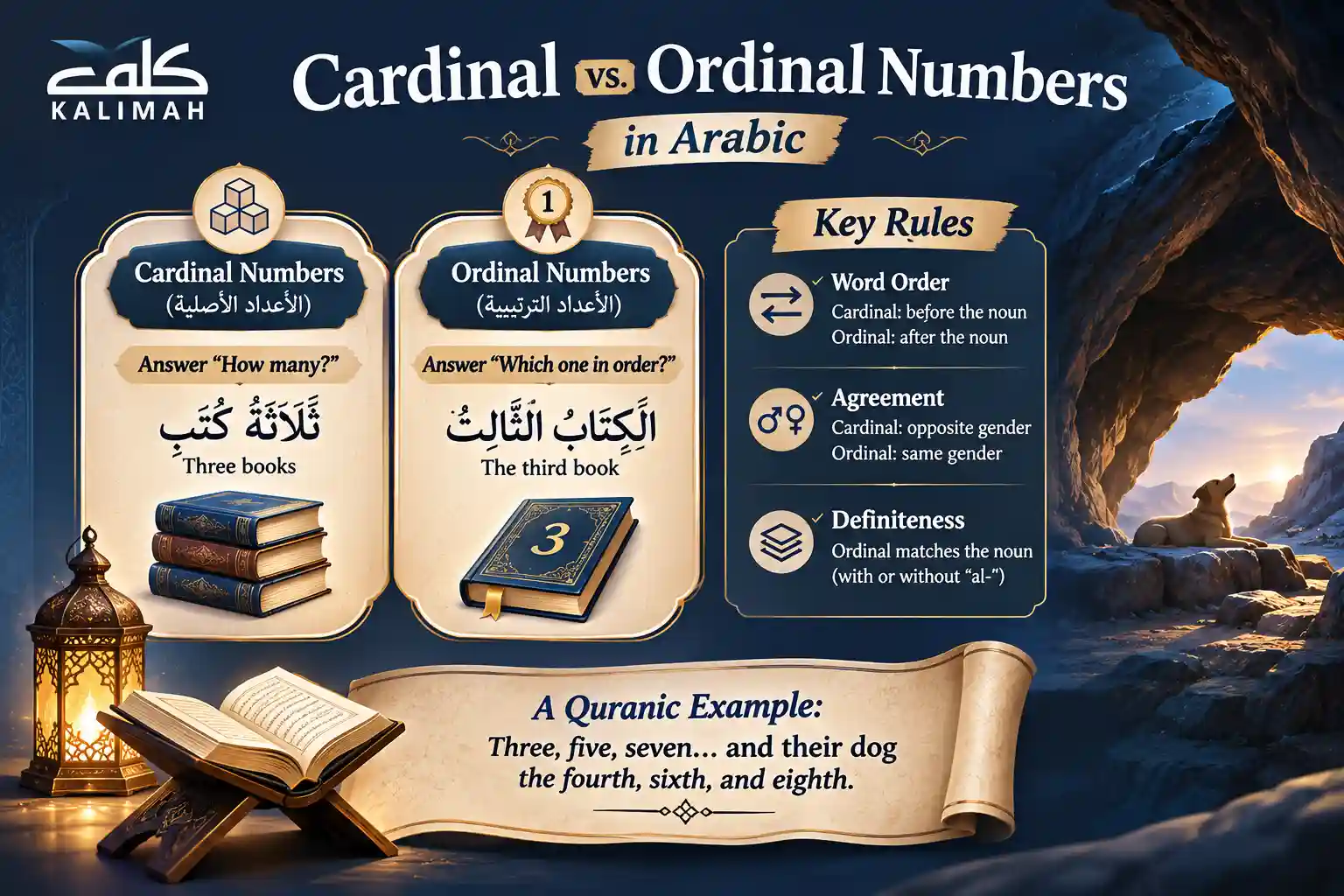
Cardinal numbers (الأعداد الأصلية) answer “how many?”: thalāthat kutub means “three books.” Ordinal numbers (الأعداد الترتيبية) answer “which one in the order?”: al-kitāb ath-thālith means “the third book.” They share a root but do completely different jobs.
A simple test helps. If the word fits after “how many,” you need a cardinal. If it fits after “which,” you need an ordinal. This one question clears up most mix-ups when you translate from English into Arabic.
If your cardinals still feel shaky, the University of Wisconsin–Madison self-study page on numbers 0 to 10 lists each one in Arabic script with its spelling. It also links to a pronunciation video.
Word Order And Agreement Rules
Cardinals from three to ten usually come before the noun and take the opposite gender: thalāthat awlād (three boys) but thalāth banāt (three girls). Ordinals come after the noun as adjectives and match its gender: al-walad ath-thālith, al-bint ath-thālitha.
Ordinals also match definiteness. Say dars thālith (a third lesson) without al-, and ad-dars ath-thālith (the third lesson) with al- on both words. Mixing these up is a small slip, but native speakers notice it right away.
One exception is common in speech and writing. Awwal and ākhir (last) often come before the noun in a possessive phrase, as in awwal marra (the first time) and ākhir yawm (the last day). Both styles are correct, but this one sounds more conversational.
How The Quran Uses Cardinal And Ordinal Numbers Together
Surah Al-Kahf has a clear example of both number types in one sentence, in the story of the People of the Cave. People argued about how many sleepers there were, and the verse records their guesses using cardinals and ordinals together.
Allah (Glory be to Him) says:
“سَيَقُولُونَ ثَلَاثَةٌ رَّابِعُهُمْ كَلْبُهُمْ وَيَقُولُونَ خَمْسَةٌ سَادِسُهُمْ كَلْبُهُمْ رَجْمًا بِالْغَيْبِ ۖ وَيَقُولُونَ سَبْعَةٌ وَثَامِنُهُمْ كَلْبُهُمْ”
“Some will say, ‘They were three, their dog was the fourth,’ while others will say, ‘They were five, their dog was the sixth,’ ˹only˺ guessing blindly. And others will say, ‘They were seven and their dog was the eighth.'” — Surah Al-Kahf 18:22, The Clear Quran
Look at how the numbers are paired. The cardinals thalātha, khamsa and sabʿa (three, five, seven) count the sleepers. The ordinals rābiʿ, sādis and thāmin (fourth, sixth, eighth) name the one who completes the group. The verse then reminds us that only Allah knows their true number.
The verse also shows a structure you’ll hear in modern Arabic: an ordinal with an attached pronoun. Rābiʿuhum means “the fourth of them.” In the same way, you can say thālithunā (the third of us) about someone who joins a group of two.
5. Using Ordinal Numbers In Arabic In Daily Life
Ordinal numbers in Arabic stop being textbook material as soon as you start using the language every day. Here are the situations where you’ll use them most, followed by practical tips and free tools that make daily practice quick and fun.
Dates, Months, Times And Centuries
Several Islamic months have ordinals in their names: Rabīʿ al-Awwal and Rabīʿ ath-Thānī, then Jumādā al-Ūlā and Jumādā al-Ākhira. Al-ūlā is feminine because Jumādā is treated as a feminine noun, which is a real-world example of gender agreement.
Centuries always use ordinals: al-qarn al-ḥādī wa-l-ʿishrūn (القرن الحادي والعشرون) is “the twenty-first century.” Formal dates may also use ordinals for days, as in al-yawm al-khāmis min shahr Ramaḍān (the fifth day of Ramadan).
Telling the time works the same way: as-sāʿa ath-thālitha is three o’clock, and as-sāʿa al-ʿāshira is ten o’clock. Because sāʿa is feminine, the ordinal is always feminine here, so one rule covers every hour on the clock.
Floors, Rankings And School Grades
Building floors use masculine ordinals because ṭābiq (floor) is masculine: aṭ-ṭābiq al-awwal, aṭ-ṭābiq ath-thānī. In Egypt and many other Arab countries, the ground floor is aṭ-ṭābiq al-arḍī, and the counting starts from the floor above it.
Rankings and competitions use the same forms: al-markaz al-awwal (first place) and al-markaz ath-thānī (second place). School grades use aṣ-ṣaff, so aṣ-ṣaff ar-rābiʿ means fourth grade, a phrase parents across the Arab world hear every day.
Is your child learning Arabic too? The Learn Arabic For Children Course at Kalimah Centre turns numbers, grades and rankings into playful lessons. It’s taught by native tutors who know how to keep kids curious and engaged.

Practical Tips And Free Tools To Memorize Arabic Ordinals
Make a flashcard deck with the number on one side and both gender forms on the other. The free Anki flashcard app works on computers and Android. Its spaced repetition shows you the cards you find hard more often until you know them.
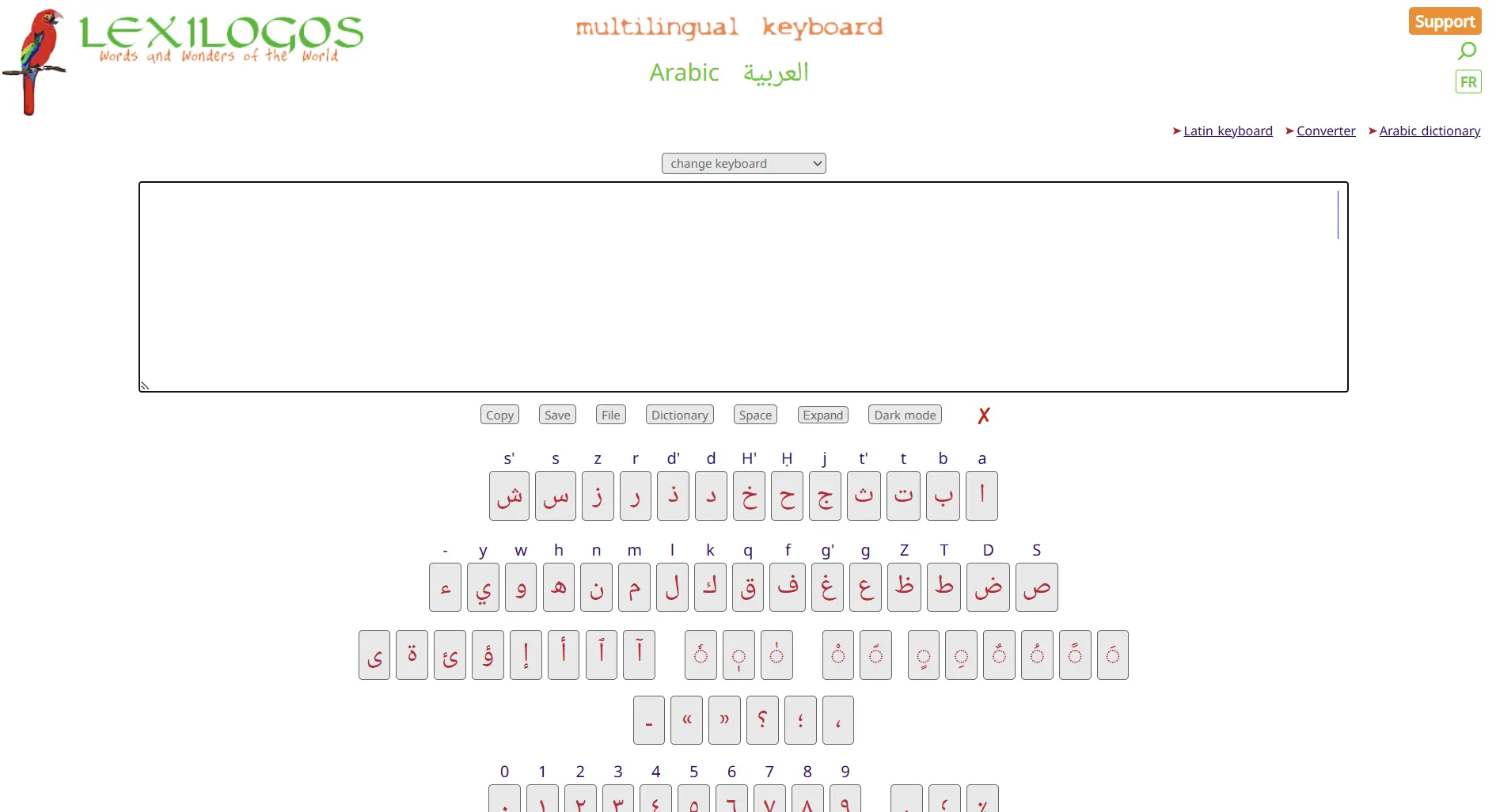
Typing also helps your memory. If you don’t have an Arabic keyboard layout, the Lexilogos online Arabic keyboard lets you type الثالث or الحادية عشرة with your mouse. You can then copy the words into your notes or flashcards.
Finally, use ordinals as adverbs when you plan your day. Awwalan (أولًا), thāniyan (ثانيًا) and thālithan (ثالثًا) mean “firstly, secondly, thirdly.” List three tasks this way each morning, and ten minutes a day will do more for you than one long session a week.
Don’t miss: Islamic and Arabic Months in Order
Learn Arabic Numbers Step By Step With Kalimah Centre
Ordinal numbers in Arabic look simple in a table, but they test your grammar, gender agreement and pronunciation all at once. That’s why Kalimah Centre teaches them as part of a structured path, not as a list to memorize. Every rule comes back later in real conversations and texts.
Our adult program has sixteen levels and more than 400 one-on-one study hours. It’s built on trusted books such as Al-Arabiyya Bayna Yadayka. Numbers come up early in the everyday-topics levels and return in the grammar levels, where the agreement rules are explained in depth.
You won’t start at the wrong level. Right after you sign up, you take a placement test with your teacher that shows exactly what you already know. A learner who can already count to one hundred moves straight on to ordinals, dates and time instead of repeating old material.
Our tutors are certified native speakers who speak mostly Arabic in class, so you hear al-ūlā and al-ḥādiya ʿashra used correctly from day one. Kalimah Centre has taught learners from around the world since 2011, and that experience shapes every lesson.

Experience Kalimah Center Classes
Watch real excerpts from our live sessions at Kalimah Center and see how we bring learning to life. These clips highlight our interactive, student-centered teaching approach across all our courses—designed to keep learners engaged, motivated, and actively involved every step of the way.
Master Arabic with Kalimah Center
Join our expert-led online classes and start your journey toward Arabic fluency today.
Book Your Free TrialBook Your Free Trial Class At Kalimah Centre Today!
You now have the full list, the patterns and the rules. The next step is to say these words out loud with someone who can correct you on the spot, and a live lesson gives you exactly that.
Sign up for a free trial at Kalimah Centre and take your placement test. You’ll meet a native tutor who builds a plan around your goals, whether that’s travel, work, Quranic study or helping your children.
???? Explore Our Courses:
Online Arabic Course: Tailored to your level, our comprehensive Arabic program includes 16 teaching levels and 400+ hours of personalized sessions.
Online Quran With Tajweed Course: Perfect for non-Arabic speakers, our course spans 13 levels and equips you with Tajweed mastery from beginner to advanced.
Online Arabic Course For Kids: Nurture your child’s love for Arabic with our engaging and structured program, available in 24 levels for primary, intermediate, and secondary stages.
Don’t wait for the “perfect” moment, because your first lesson can be today. Book your free trial now and start turning al-awwal, ath-thānī and ath-thālith from words on a page into confident speech you can use anywhere.

Master Arabic with Kalimah Center
Join our expert-led online classes and start your journey toward Arabic fluency today.
Book Your Free TrialConclusion
Arabic ordinals rest on a few clear ideas. Al-awwal and al-ūlā have their own forms, and most other units follow the fāʿil pattern. The numbers 11 to 19 add ʿashar or ʿashra, and the tens reuse their cardinal forms with al-. Compound ordinals join the unit and the ten with wa.
You also saw that cardinals count while ordinals show order, and that ordinals agree with nouns in gender and definiteness. They appear in a Quranic verse, Islamic month names, centuries, the time, floors and school grades. Free tools such as flashcard apps and online keyboards make daily review easy.
The main thing to remember is that ordinal numbers in Arabic follow a system rather than forming a random list. Learn the patterns once, practice them for a few minutes each day and use them in real sentences. Soon you’ll talk about dates, rankings and order with confidence.
Frequently Asked Questions
How Do You Say First, Second, And Third In Arabic?
They are al-awwal (الأول), ath-thānī (الثاني) and ath-thālith (الثالث), and the feminine forms are al-ūlā, ath-thāniya and ath-thālitha. Kalimah Centre tutors help you practice them in live sentences.
What Is The Difference Between Cardinal And Ordinal Numbers In Arabic?
Cardinal numbers count how many there are, while ordinal numbers show position in an order. At Kalimah Centre, native tutors use clear examples so you won’t confuse the two again.
Do Arabic Ordinal Numbers Change With Gender?
Yes, ordinals match the noun’s gender, as in ad-dars al-awwal and al-ḥiṣṣa al-ūlā. Kalimah Centre’s structured lessons cover every agreement rule step by step, with feedback from your tutor.
How Do You Say The Twenty-First In Arabic?
The twenty-first is al-ḥādī wa-l-ʿishrūn (الحادي والعشرون), or al-ḥādiya wa-l-ʿishrūn with feminine nouns. Kalimah Centre classes practice compound ordinals like this until they feel natural.
How Long Does It Take To Learn Arabic Ordinal Numbers?
Most learners memorize ordinals 1 to 20 within one or two weeks of daily practice. With a personal Kalimah Centre tutor, you also learn to use them confidently when you speak.