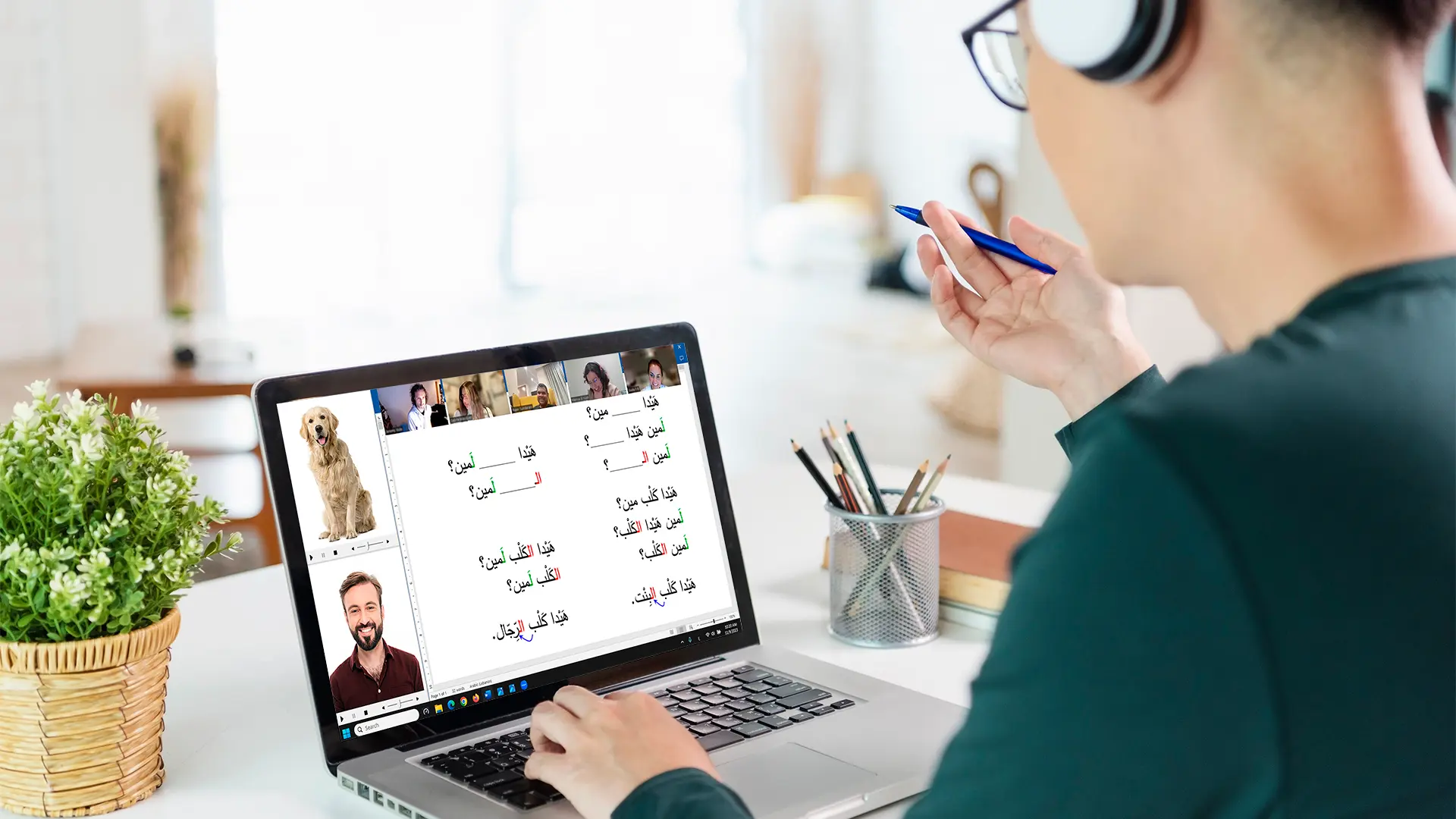
Kalimah Center offers fun, interactive Arabic classes for elementary kids, focusing on language basics like reading, writing, and speaking. With a blend of games, songs, and visuals, children aged 6-12 engage with the language in a way that feels natural and exciting. Expert native-speaking teachers provide personalized support, ensuring every child thrives in a friendly, supportive online environment.
Learning Arabic early gives children a strong foundation in one of the world’s most important languages. Kalimah Center offers interactive online Arabic classes designed specifically for elementary kids ages 6–12. Through games, songs, visuals, and guided support from native-speaking teachers, children build real skills in reading, writing, speaking, and listening—while having fun every step of the way.
What Are Online Arabic Classes for Elementary Kids?
Online Arabic classes for elementary kids are structured language lessons created for young learners who are just starting their Arabic journey. The best programs teach the Arabic alphabet, phonics, Tashkeel, vowel marks, simple vocabulary, and short sentences in a child-friendly way. These lessons build a strong foundation in Modern Standard Arabic while helping children improve reading, listening, speaking, and writing step by step.
Arabic classes for elementary kids often use games, songs, and stories to make learning fun. Kids love to play, and when they are having fun, they learn better!
For example, good Arabic classes for elementary kids use أغاني أطفال (aghani atfal) (children’s songs) and أناشيد (anasheed) (chants). These rhythmic tunes, often accompanied by playful animations, will capture their attention and make the language feel familiar and inviting.
Popular choices like قناة أسرتنا (Osratouna tv) songs are perfect for their catchy melodies and simple lyrics (This is one of our plentiful resources we depend on in our Arabic course for kids at Kalimah).

Why Elementary Kids Should Start Learning Arabic Early
Elementary school is an ideal time to begin learning Arabic because children are naturally good at recognizing patterns, sounds, and visual shapes. Early exposure helps them build stronger pronunciation, memory, and reading confidence. It also makes it easier to develop a long-term connection with the language through consistent practice and age-appropriate lessons.
How We Teach Arabic Online to Elementary Kids at Kalimah Center
At Kalimah Center, we use a child-centered teaching method that matches the way elementary kids learn best. Our classes combine visual learning, storytelling, songs, flashcards, and interactive games so children stay focused and motivated. Each lesson is age-appropriate, engaging, and designed to make Arabic feel natural, enjoyable, and easy to remember.
Our method in teaching Arabic for elementary kids is simple and fun:
1. We Introduce the Alphabet in an Easy, Fun Way for Elementary Kids
We begin with the Arabic alphabet and teach it in small groups so children can recognize, pronounce, and write each letter with confidence. To make memorization easier, we use alphabet songs, tracing activities, and visual examples that help young learners connect the shape, sound, and use of each letter.
- Group 1: From Alif (أ) to Kha (خ)
- Group 2: From Dal (د) to Dad (ض)
- Group 3: From Ta (ط) to Kaf (ك)
- Group 4: From Lam (ل) to Ya (ي)
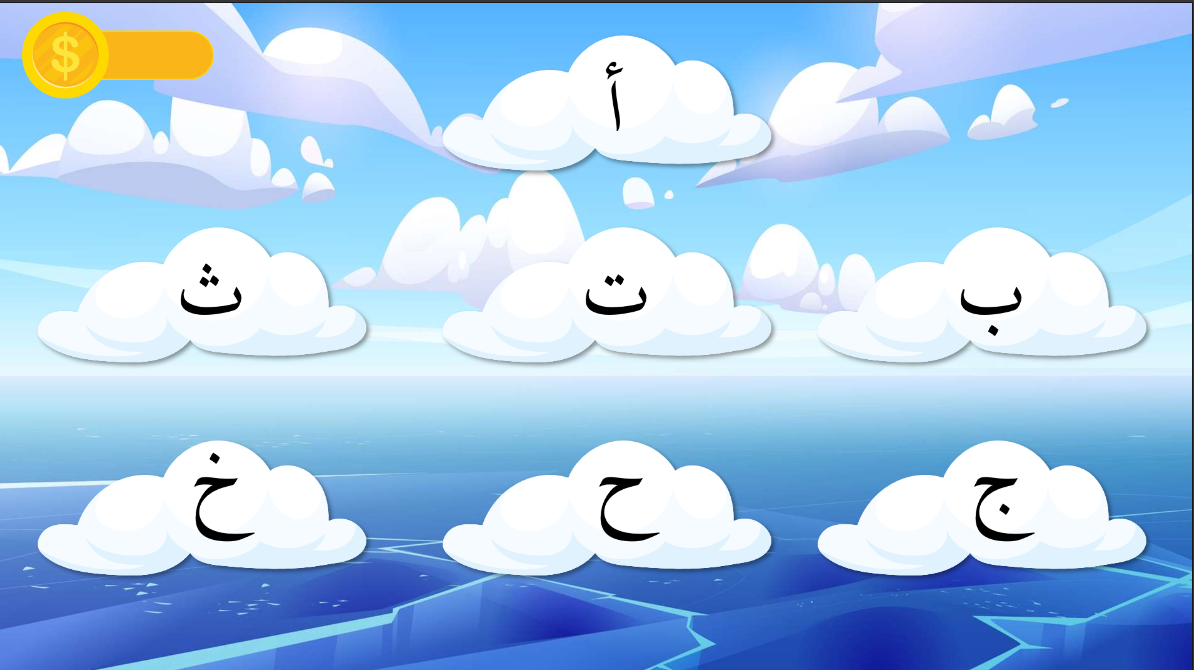
*From Kalimah’s Arabic Course for Kids.
Singing along to catchy Arabic alphabet songs helps children memorize the letters effortlessly. There are many versions available, or you can create your own with simple, catchy tunes.
You can find Arabic Alphabet Kids Nasheed here.

Sign up for a free trial class for your kid today
2. We Make Arabic Learning Visual for Elementary Kids
Children learn faster when lessons are visual, so we use pictures, animated slides, and real-life examples to teach Arabic vocabulary. For example, when a child learns the word تفاحة (tuffaha), meaning “apple,” we show a clear image of an apple to strengthen memory and understanding.
For example, if we teach the word “Tuffaha” (تفاحة) which means “Apple,” we show them a big, red apple on the screen.

3. We Make Arabic Learning Interactive for Elementary Kids
Our lessons are interactive, not passive. Instead of only listening, children answer questions, identify objects, and respond to simple prompts like ما هذا؟ (Maa hadha?), meaning “What is this?” This approach helps children build confidence and develop active Arabic speaking skills from the beginning.

4. We Introduce Arabic Grammar Through Stories and Games for Elementary Kids
We teach Arabic grammar through stories, games, and guided practice so children can understand the language without feeling overwhelmed. Elementary learners are introduced to simple grammar concepts such as masculine and feminine nouns, adjectives, and basic verb forms in a fun and age-appropriate way.
For example, the children have to decide whether the verb conjugation matches the subject and indicate whether it is true or false. This reinforces not only verb identification but also subject-verb agreement, a crucial aspect of Arabic grammar.
5. We Teach Arabic Numbers With Fun for Elementary Kids
We also teach Arabic numbers through songs, flashcards, counting games, and simple activities. Children learn to recognize, write, and use numbers in Arabic while practicing counting in a way that is memorable and enjoyable.
For example:
- Number: ١ (Wahid) – 1
- Task: Practice writing the number “١” and count from 1 to 5 in Arabic.

Sign up for a free trial class for your elementary kid today
6. We Use a lot of Games to Make Arabic Learning Fun for Elementary Kids
Games are a key part of our Arabic program because they help children stay motivated while learning. For example, matching similar-looking letters, arranging words in order, or sorting vocabulary by category helps children strengthen memory, reading accuracy, and sentence recognition.
For example, there is a game where kids match similar-looking letters, like “ذ” (dgal) and “د” (daal). This helps them remember better.
Here is a link to one of our games, it helps elementary kids practice similar-looking letters.
Here are some other online games developed by Kalimah Center teachers:
The Unjumble لعبة ترتيب الكلمات is perfect for helping elementary kids learn the days of the week in Arabic.
How to Play Unjumble: Drag and drop words to rearrange the sentence into the correct order.
Learning Focus: This game strengthens the child’s understanding of sentence structure while reinforcing their knowledge of the days of the week in Arabic.
The Group Sort لعبة تصنيف المجموعات helps elementary kids learn Arabic demonstratives, a crucial part of basic language skills.
How to Play: Drag and drop each item into its correct group.
Learning Focus: This game focuses on teaching the correct use of أسماء الإشارة (asmā’ al-ishāra) – Translation: “Demonstrative Pronouns,” such as ذلك – تلك.
Read Also: How to Speak Arabic for Kids?
The Open the Box لعبة افتح الصندوق has a focus on animals and birds, making it an exciting way to learn Arabic vocabulary related to the natural world.
How to Play: Tap each box in turn to open it and reveal the item inside. The challenge is to correctly identify the name of the animal or bird in Arabic.
Learning Focus: This game helps elementary kids learn and remember the names of various animals and birds in Arabic.
Sign up for a free trial class for your kid today
Master Arabic with Kalimah Center
Join our expert-led online classes and start your journey toward Arabic fluency today.
Book Your Free TrialRead also: Online Arabic classes for middle schoolers
The 4 Core Arabic Skills: Reading, Writing, Speaking, and Listening
We build the four core Arabic language skills step by step so children can progress with confidence. First, they learn reading with vowel marks and letter connections. Then they practice speaking through short dialogues, writing through tracing and word-building activities, and listening through songs, stories, and teacher-led exercises.
1. We Teach Arabic Reading Step-by-Step for Elementary Kids
First, we teach the vowels for elementary kids – Fatha (ـَ), Kasra (ـِ), Damma (ـُ). Then, we introduce Sukoon (ـْ), Shadda (ـّ), and Tanween (ـًـٍـٌ). We also teach the difference between Shamsiya and Qamariya letters.

2. We Make Sure Elementary Kids Practice Arabic Speaking
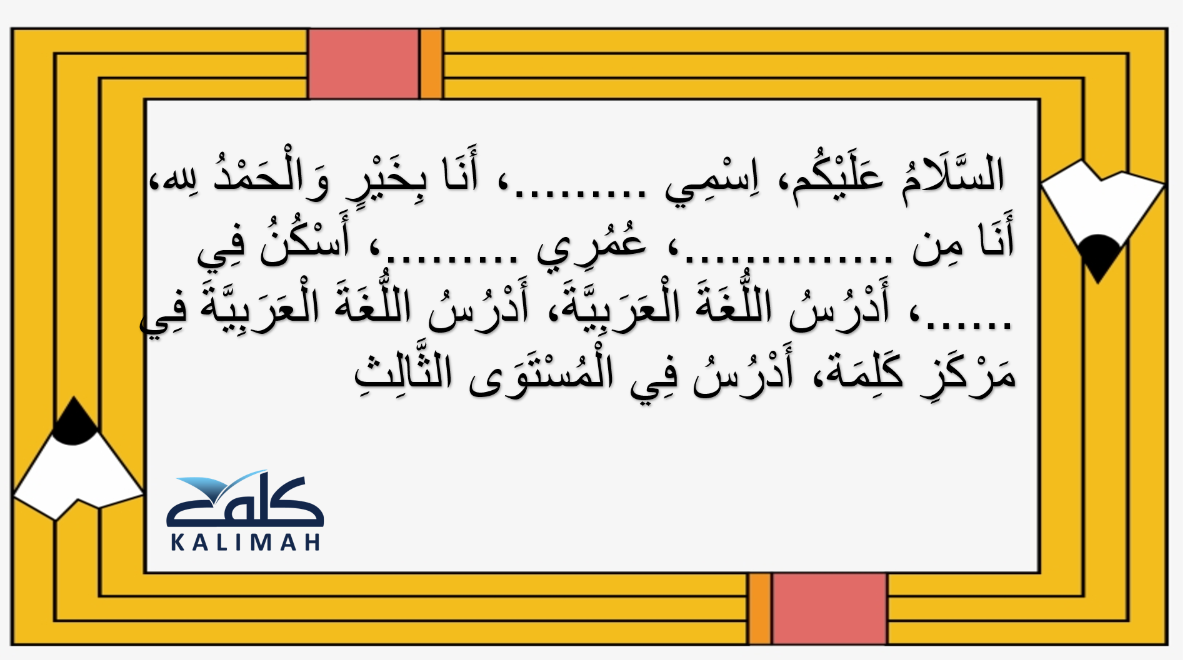
We start with simple phrases like, “Ismi…” (اسمي…), which means “My name is…”. Then, we move to small dialogues. We also ask kids to describe a picture or retell a story in their own words.
And here’s a sample, provided by the Arabic language course for children at the Kalimah Center, that kids can use to introduce themselves in a very simple and brief way, as a start.
3. We Teach Arabic Writing Gradually for Elementary Kids
First, elementary kids learn to write each letter alone. Then, they learn to connect them. We also teach them the difference between writing a Waaw (و) and a Damma (ـُ).
For example:
Task: Write the word “Batta” (بطة) – duck.
- Step 1: Write each letter independently: ب (ba), ط (‘ta), ة (ta).
- Step 2: Practice connecting the letters to form the word.

Sign up for a free trial class for your kid today
What Parents Should Look for in an Online Arabic Class
Parents should look for a program that offers native-speaking teachers, interactive lessons, clear progress tracking, and a child-friendly curriculum. A strong Arabic class for kids should teach the alphabet, pronunciation, reading, listening, and basic speaking in a way that feels fun and manageable. A free trial class is also helpful because it lets parents see whether the teaching style suits their child.
Why Parents Choose Kalimah Center for Online Arabic Classes
Kalimah Center is built specifically for young learners who need a safe, supportive, and interactive online environment. Our native Arabic teachers understand how children learn, use simple explanations, and adapt lessons to each child’s pace. We also keep parents informed so they can follow progress and support learning at home.
1. We Are Experts in Teaching Arabic to Elementary Kids
We do not just take an adult curriculum and try to make it work for elementary kids. No. We built our curriculum just for elementary kids. We know how they learn, what they enjoy, and what they need to succeed.
2. Our Teachers Are Native Speakers AND Experienced Online Educators
Our Arabic native teachers know how to teach Arabic effectively, and they know how to do it in an online setting. They keep the kids engaged, even through the computer screen. Our teachers are trained to recognize when a child might be struggling, even in an online environment. They can adapt their teaching to help each child individually.
You can book an appointment for a free lesson with any of these experienced tutors or directly through the plan selection page. Give your child the opportunity to learn Arabic from some of the most qualified and passionate educators available.

3. We Make Learning Arabic FUN for Elementary Kids
This is so important for kids. If they enjoy learning, they will learn better and faster. Our games, songs, stories, and interactive activities make learning Arabic an adventure, not a chore.
4. We provide a supportive and encouraging environment
We create a safe space where kids feel comfortable making mistakes and learning from them. We celebrate their progress, no matter how small.
5. We Maintain Strong Parent-Teacher Communication
We keep you updated on your child’s progress. You can talk to the teachers anytime. We believe that parents and teachers should work together.
What Your Child Will Learn in the First Month
In the first month, most children begin with the Arabic alphabet, letter sounds, simple vocabulary, and basic greetings. As they gain confidence, they move into short words, number recognition, and simple speaking practice. This early stage is important because it builds a solid foundation for future reading and conversation.
Parent Reviews and Student Feedback
Families appreciate the friendly teaching style, interactive lessons, and clear progress their children make at Kalimah Center. Parent feedback highlights how the classes keep children engaged while building confidence in Arabic reading, speaking, and writing.


Book a Free Trial Arabic Class for Your Child
A free trial class is a simple way for your child to experience our teaching style before enrolling. During the trial, they meet a teacher, try fun Arabic activities, and see how our online classroom works. It is a risk-free opportunity for parents to decide whether Kalimah Center is the right fit.
Your child can try our online Arabic class for FREE. No need to pay anything. Just sign up, and they can experience the Kalimah Method for themselves.
In the free trial, your child will:
- Meet one of our expert teachers.
- Play some of our fun learning games.
- Learn a few Arabic words and phrases.
- See how our online classroom works.
It is a great way to see if Kalimah Center is right for your child. No risk, no obligation. Just a chance to try something new and exciting.
Sign up for a free trial class for your kid today!
Master Arabic with Kalimah Center
Join our expert-led online classes and start your journey toward Arabic fluency today.
Book Your Free TrialFinal Thoughts: Building a Strong Arabic Foundation Early
Kalimah Center offers dynamic online Arabic classes for elementary kids, designed to make learning engaging and enjoyable. Catering to children aged 6-12, these classes teach essential Arabic skills like reading, writing, and speaking through fun, interactive methods such as games, songs, and stories.
The curriculum focuses on the basics—like the alphabet, grammar, and numbers—using visuals, simple explanations, and activities that appeal to different learning styles. Whether it’s practicing with flashcards or enjoying catchy children’s songs, the lessons create an immersive environment that fosters language retention and confidence.
What sets Kalimah Center apart is its expert teachers who are native Arabic speakers and experienced in online education. The center crafts a tailored approach to teaching, ensuring each child progresses at their own pace while having fun.
With strong parent-teacher communication and a focus on individualized support, kids learn in a safe, supportive atmosphere. Plus, parents can sign up for a free trial class, giving their children the chance to experience the fun and effective Kalimah Method firsthand.
Frequently Asked Questions About Online Arabic Classes for Elementary Kids
1. What age can children start online Arabic classes?
A: Most children can start learning Arabic online at around ages 6 to 12, depending on attention span and reading readiness. The best beginner classes use the Arabic alphabet, phonics, visuals, and short interactive activities to keep learning simple and fun.
2. Are online Arabic classes effective for elementary kids?
A: Yes. Online Arabic classes can be very effective for elementary children when they include native-speaking teachers, games, songs, storytelling, and regular speaking practice. These methods help kids remember letters, words, and sentence patterns more easily.
3. What will my child learn first in Arabic classes?
A: Children usually start with the Arabic alphabet, letter sounds, basic vocabulary, and simple greetings. As they progress, they learn vowel marks, short words, reading practice, speaking prompts, and beginner writing skills.
4. How do teachers keep elementary kids engaged during Arabic lessons?
A: Good Arabic teachers keep kids engaged through visuals, flashcards, songs, movement, interactive questions, and short games. These methods support attention, memory, and confidence while making the lesson feel enjoyable rather than overwhelming.
5. How long does it take for a child to read Arabic?
A: With consistent classes and practice, many children begin recognizing Arabic letters within a few weeks and can read simple words in a few months. Progress depends on lesson frequency, home practice, and the child’s learning pace.