Arabic sayings about family have a way of sticking with you. You hear one from your grandmother while she pours the tea. You hear another from your dad when two brothers finally stop arguing. Years later, you might catch yourself saying the same words.
Finding them in English is harder than it should be. Most lists online give you a translation and nothing else. No Arabic, no help saying it, and sometimes not even the right meaning.
So this guide does the work for you. Each saying has the Arabic script, a simple way to say it, what it really means, and a link to where it comes from.
They’re sorted by theme, so you can go straight to love, strength, parents, or everyday wisdom. New to the spelling marks? There’s a quick guide right after the lists.
1. Arabic Sayings About Family Love and Unity
These sayings talk about the warm side of family: love, comfort, and the feeling of being at home. Most are modern lines in standard Arabic, so people in any Arab country will understand them.
a. Sayings That Call Family a Treasure
These sayings reflect the importance of family.
المال قد يُشبع الجيوب، لكن العائلة وحدها تُشبع الروح
al-mālu qad yushbiʿu l-juyūb, lākinna l-ʿā’ilata waḥdahā tushbiʿu r-rūḥ
“Money can fill your pockets, but only family can fill your soul.”
This modern line is easy to remember. It works well on a card for your parents or in a thank-you note after a family visit.
مهما كان الرجل فقيراً، فإن كانت لديه أسرة فهو غني
mahmā kāna r-rajulu faqīran, fa-in kānat ladayhi usratun fa-huwa ghaniyy
“No matter how poor a man is, if he has a family, he is rich.”
This popular saying means love at home is worth more than money in the bank. People often share it when times are hard but the family is still together.
العائلة هي الكنز الحقيقي الذي لا يفنى
al-ʿā’ila hiya l-kanzu l-ḥaqīqiyyu lladhī lā yafnā
“Family is the real treasure that never fades.”
The same collection lists this line too. It fits well under a family photo, and the word kanz (treasure) is one of the first Arabic words many learners pick up.
b. Sayings That Call Family Home
These sayings highlight the warm of family.
عائلتي وطن، وأنا من دونهم غربة
ʿā’ilatī waṭan, wa-anā min dūnihim ghurba
“My family is my homeland. Without them, I’m a stranger.”
The word ghurba means the lonely feeling of living far from home. That’s why families who live in different countries share this modern line so often.
خيرُكم خيرُكم لأهلِه، وأنا خيرُكم لأهلي
khayrukum khayrukum li-ahlihi, wa-anā khayrukum li-ahlī
“The best of you are the best to their families, and I am the best of you to my family.”
These are the words of the Prophet ﷺ, found in Sunan al-Tirmidhi. They teach that how you treat people at home shows who you really are.
آخر العنقود سكّر معقود
ākhir il-ʿunqūd sukkar maʿqūd
“The last grape on the bunch is the sweetest sugar.”
This folk proverb from the Levant is about the youngest child. Families say it with love, because the baby of the house is often the most spoiled.
Want to read lines like these on your own, without a translator? The Online Arabic Course at Kalimah Center takes you from the first letter to reading full texts, with a native teacher in one-on-one lessons.
2. Arabic Sayings About Family Strength
These proverbs come from everyday speech, and they are honest. They don’t say family is perfect. They say the bond stays, even when things go wrong.
a. Proverbs That Compare Family to Your Body
These sayings indicate that family is as part of body.
يدُك منك وإن كانت شلّاء
yaduka minka wa-in kānat shallā’
“Your hand is yours, even if it can’t move.”
This is an old Arabic proverb. It means a relative is still part of you, even if they are weak, sick, or can’t help you. You wouldn’t cut off your own hand just because it stopped working.
إصبعتي منّي ولو انقطعت، وعيني منّي ولو انقلعت
iṣbaʿtī minnī w-law inqaṭaʿat, w-ʿaynī minnī w-law inqalaʿat
“My finger is mine even if it’s cut off, and my eye is mine even if it’s lost.”
This Levantine proverb goes one step further. The first proverb talks about a weak relative. This one talks about a relative you’ve lost touch with, maybe after a big fight. Even then, the bond is still yours.
Both proverbs pick body parts on purpose. A hand, a finger, and an eye are things you were born with. You didn’t choose them, and you can’t swap them. Arabic speakers see family the same way.
Master Arabic with Kalimah Center
Join our expert-led online classes and start your journey toward Arabic fluency today.
Book Your Free Trialb. Proverbs About Loyalty After a Fight
These sayings talk about what ever happens you still have your family.
أهلك أهلك ولو رموك عالمهلك
ahlak ahlak w-law ramūk ʿal-mahlak
“Your family is your family, even if they throw you into trouble.”
This Levantine proverb admits that family can hurt you. Still, it asks you not to cut them off. People often say it to a friend who is ready to walk away from a brother or a parent after a fight.
أنا وأخي على ابن عمي، وأنا وابن عمي على الغريب
anā w-akhūy ʿala ibn ʿammī, w-anā w-ibn ʿammī ʿal-gharīb
“My brother and I against my cousin, and my cousin and I against a stranger.”
This famous folk saying shows loyalty in circles. The closer the relative, the stronger you stand together. Be careful with it, though. Many Arabs use it to criticize tribal thinking, where people take sides by blood instead of by what’s right. So it doesn’t belong on a sweet family card.
Inside Kalimah Center: Moments from Our Courses
Get a glimpse into the vibrant learning experience at Kalimah Center. These snapshots capture real moments from our live classes—where students engage deeply, connect with passionate instructors, and grow in a welcoming, supportive environment.
3. Arabic Sayings About Respect for Parents
In Arabic, being good to your parents is called birr al-wālidayn (برّ الوالدين). Many of the best sayings on this topic come from the Quran and hadith, so the exact words matter a lot.
a. What the Quran Says About Parents
The Quran highlights the significance of taking care of parents.
وَقَضَىٰ رَبُّكَ أَلَّا تَعْبُدُوا إِلَّا إِيَّاهُ وَبِالْوَالِدَيْنِ إِحْسَانًا
wa-qaḍā rabbuka allā taʿbudū illā iyyāhu wa-bil-wālidayni iḥsānā
“Your Lord has ordered that you worship none but Him, and that you be kind to your parents.”
This verse is from Surah al-Isra, verse 23. Notice the order. Kindness to parents comes right after worshipping God alone. That shows how high Islam places it.
The same verse goes on to say you should never say even “uff” to your parents. That’s a tiny sound people make when they feel annoyed, and the Quran says to hold even that back.
وَقُل رَّبِّ ارْحَمْهُمَا كَمَا رَبَّيَانِي صَغِيرًا
wa-qul rabbi rḥamhumā kamā rabbayānī ṣaghīrā
“And say: My Lord, have mercy on them, as they raised me when I was small.”
This comes from the very next verse, 17:24. Many Muslims say it every day as a prayer for their mom and dad.
b. What the Prophet ﷺ Said About Mothers
The Prophet mentions mothers in several hadiths.
أمُّك، ثم أمُّك، ثم أمُّك، ثم أبوك
ummuk, thumma ummuk, thumma ummuk, thumma abūk
“Your mother, then your mother, then your mother, then your father.”
A man once asked the Prophet ﷺ who deserved his kindness most. He named the mother three times before the father. You can read it in Sahih al-Bukhari 5971. Many scholars explain the three times this way: the mother carries the baby, gives birth, and nurses the child, and the father shares none of those three hard jobs.
فالزمها، فإنَّ الجنةَ تحتَ رجليها
fa-lzamhā, fa-inna l-jannata taḥta rijlayhā
“Stay with her, for Paradise is under her feet.”
The Prophet ﷺ said this to a man who wanted to go to battle while his mother was alive. It’s in Sunan al-Nasa’i 3104.
You may have seen the line “Paradise lies under the feet of mothers.” Hadith scholars say the Nasa’i wording is the one to quote, since it has a strong chain of narrators.
c. What Arab Poets Wrote About Mothers
Poets as well could not forget mothers while writing their poetry.
وأعطِ أباكَ النَّصْفَ حَيّاً ومَيّتاً … وفَضّلْ عليهِ من كَرامَتها الأُمّا
wa-aʿṭi abāka n-naṣfa ḥayyan wa-mayyitan, wa-faḍḍil ʿalayhi min karāmatihā l-ummā
“Give your father his fair share, alive or gone, but honor your mother even more.”
The blind poet Abu al-ʿAla al-Maʿarri wrote this about a thousand years ago. His words match the hadith above, only in the form of a poem.
الأمُّ مدرسةٌ إذا أعددتَها … أعددتَ شعباً طيّبَ الأعراقِ
al-ummu madrasatun idhā aʿdadtahā, aʿdadta shaʿban ṭayyiba l-aʿrāqi
“A mother is a school. If you prepare her well, you prepare a whole nation of good people.”
The Egyptian poet Hafez Ibrahim wrote this in the early 1900s, in his poem about knowledge and good character. Today, people quote it on Mother’s Day across the Arab world.
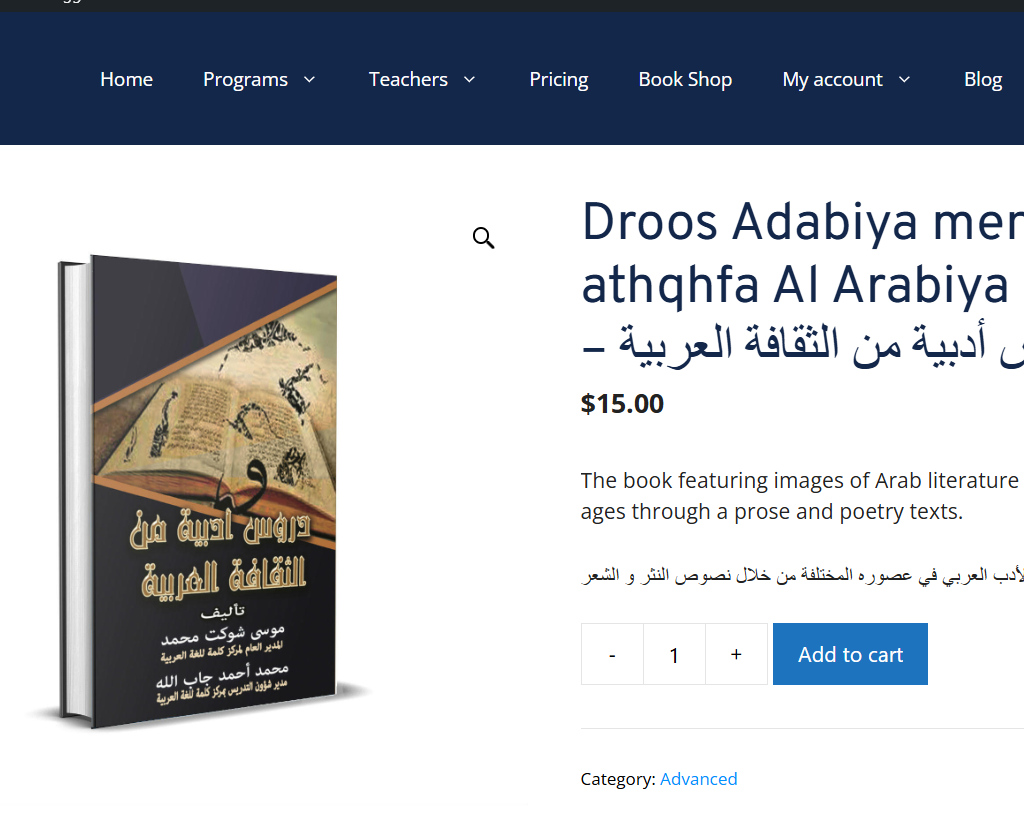
If you enjoy old poems like these, the book Droos Adabiya mena Ath-Thaqafa Al-Arabiya (Literary Lessons From Arabic Culture) from the Kalimah Center bookshop is a good next step. It was written by the Kalimah Center team for learners who want to read Arabic literature.
You may also like: Best Websites to Learn Arabic Online for All Levels
4. Arabic Wisdom About Family Life
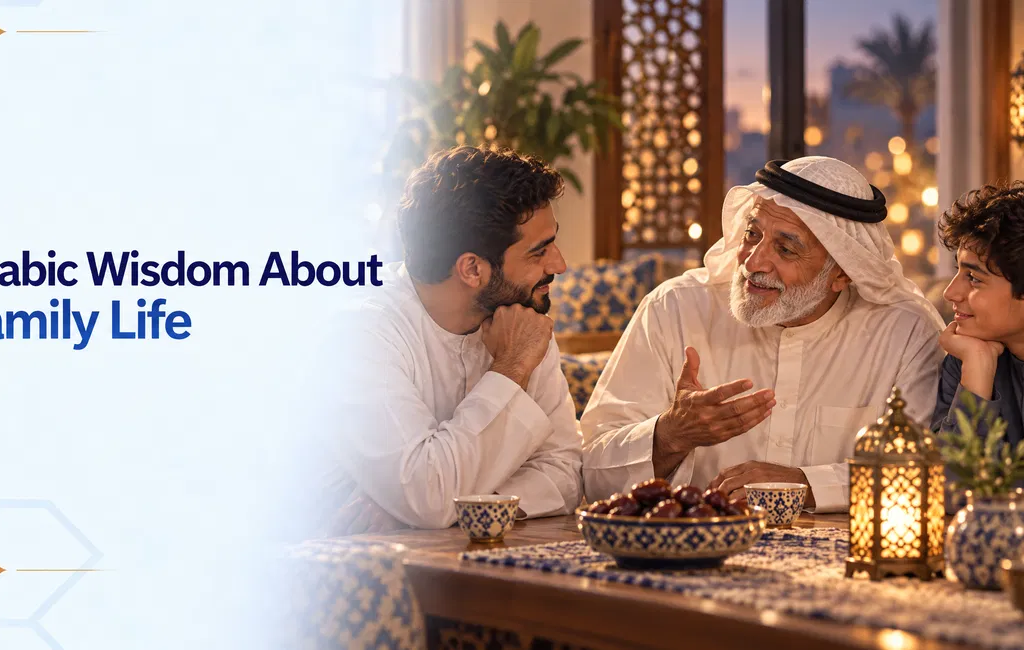
These sayings give real advice. They come from people who lived in big families and learned what works.
a. Sayings About Staying Close to Relatives
Relatives were also mentioned in some sayings.
مَن أحبَّ أن يُبسطَ له في رزقِه، ويُنسأَ له في أثرِه، فليصلْ رحمَه
man aḥabba an yubsaṭa lahu fī rizqihi, wa-yunsa’a lahu fī atharihi, fal-yaṣil raḥimahu
“Whoever wants more blessing in his income and a longer life should keep in touch with his relatives.”
The Prophet ﷺ said this, and it’s in Sahih al-Bukhari 5986. In Arabic, keeping family ties is called ṣilat ar-raḥim. Visiting, calling, and helping relatives all count. A short phone call to an aunt, or a weekend visit to a grandparent, is an easy way to live by this hadith.
إذا مالك أهل ناسِب
iza mālak ahl, nāsib
“If you have no family, marry into one.”
This Levantine proverb shows how much people value a family network. The word nāsib means to become related through marriage. If you have no relatives to lean on, a new family can give you that support.
b. Sayings With Advice for Parents
Sayings sometimes give you advice as a parent.
إذا كبر ابنك خاويه
iza kibir ibnak khāwīh
“When your son grows up, treat him like a brother.”
The word khāwīh comes from akh, which means brother. This proverb gives simple advice. Small children need rules, but grown children need a friend. So if your teen starts to pull away, the answer is more talking, not more rules. The proverb names a son, but parents use the same advice with grown daughters too.
أم واحد حيّرها، وأم عشرة دبّرها
umm wāḥid ḥayyarha, w-umm ʿashara dabbarha
“One child keeps his mother worried. With ten, she learns to manage.”
A mom with just one child often worries about every little thing. A mom with many kids learns to stay calm, because she’s seen it all before. Like the first one, this proverb is Levantine. Together, they show that good parenting grows with time.
c. A Saying About Marrying Far From Home
The sayings mention hardships of gettting away of family.
إذا بدك تتعب حمارك وولدك، تجوّز من غير بلدك
iza baddak tittʿib ḥmārak w-waladak, tjawwaz min ghayr baladak
“If you want to wear out your donkey and your son, marry someone from another town.”
This Levantine proverb comes from village life. Back then, people traveled by donkey. If your wife’s family lived far away, you and your children spent a lot of time on the road to visit them.
The advice is about more than travel. When two families live far apart, the kids grow up away from one set of grandparents. Holidays get split, and help is harder to reach.
Today, people still say it with a laugh when a couple from two cities plans a wedding. It’s a gentle warning, not a rule. Many happy families started with a long-distance marriage.
Read also: Common Arabic Names For Boys and Girls
Where These Sayings Come From and How to Read Them
Now that you’ve seen the sayings, here’s a short guide to their sources and the spelling marks used in this article. Not every saying in this guide carries the same weight. A verse from the Quran and a line from Instagram can both talk about family, but people treat them very differently. Here’s a quick look at where each one comes from.
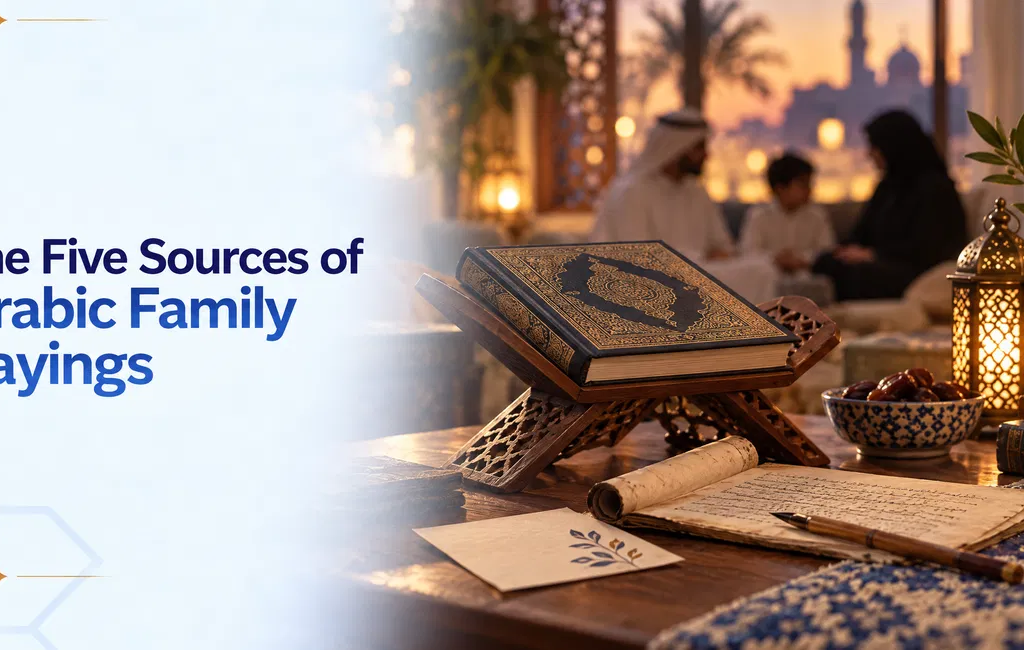
- The Quran. This is the holy book of Islam, so its words are quoted exactly as they are, never changed. Example from this guide: “Be kind to your parents.”
- The hadith. These are the sayings of the Prophet Muhammad ﷺ, collected in books like Sahih al-Bukhari. Muslims treat them with deep respect and always try to quote them with a source. Example: “Your mother, then your mother, then your mother.”
- Classic poetry. These lines were written by famous poets in formal Arabic, some of them a thousand years ago. Example: al-Maʿarri’s verse about honoring your mother.
- Folk proverbs. These come from everyday speech in places like Syria, Lebanon, Palestine, and Jordan. They use local dialect words, so they sound like real talk at home. Example: “The last grape on the bunch is the sweetest sugar.”
- Modern sayings. These are new lines in standard Arabic that people share on social media and in cards. Most don’t have a famous author. People love them because they’re short, clear, and easy to share. Example: “Family is the real treasure that never fades.”
Knowing the source helps you choose well. A hadith fits a Friday message. A folk proverb fits a family chat. A modern line fits a photo caption.
How to Read the Spelling Guide Out Loud
Under every Arabic saying, you’ll find an English-letter version to help you say it. It looks a little odd at first, but there are only four signs to learn. Once you know them, you can read every saying in this guide.
- Stretch the vowels with a line on top. When you see ā, ī, or ū, hold that sound a little longer. So ā sounds like the “a” in “father,” just drawn out.
- Use your throat for ʿ. This mark stands for the Arabic letter ع. It’s a deep sound that comes from the back of your throat, and English has nothing quite like it. If it feels hard at first, that’s normal. Most learners need a few tries.
- Pause for ‘. This mark means a quick stop in your voice, like the little break in “uh-oh.”
- Press on double letters. When you see two of the same letter, like the mm in ʿammī, lean on that sound a bit harder.
One more thing to keep in mind: folk proverbs are spelled the way people actually say them at home, not the way a textbook would write them. So if a word looks a little different from formal Arabic, don’t worry. That’s on purpose, and it’s exactly how you’d hear it in a family kitchen in Damascus or Beirut.
How to Pick the Right Saying for the Moment
A saying can be beautiful and still feel wrong in the wrong place. A few quick steps will help you get it right every time. Before you copy any line, walk through these steps. They only take a minute.
- Think about who will read it. If it’s family who grew up speaking the same dialect as you, a folk proverb will feel warm and familiar. If the group is mixed, stick to standard Arabic. A Syrian proverb might leave a friend from Morocco or the Gulf scratching their head.
- Think about the occasion. For Ramadan, Eid, or a Friday message, a Quran verse or a hadith fits best. For a birthday card or a photo caption, go with a modern line. For a chat around the dinner table, a folk proverb is perfect.
- Check the tone. Some proverbs are blunt or half-joking, like “My brother and I against my cousin.” Those work when you’re talking, but they can sound harsh in writing.
- Write it with care. If you share a Quran verse or a hadith, add the vowel marks if you can, and put the source right under it.
- Say it out loud once. If it feels heavy or strange for the moment, pick a lighter one.
Still not sure? Here’s a shortcut. For a wedding or a new baby, a short modern line is the safest choice. For a mom’s or dad’s birthday, try the Quran prayer for parents or Hafez Ibrahim’s line about mothers. Both are loved across the Arab world, and both fit a card perfectly.
Mistakes to Avoid When You Share a Saying
Avoid these mistakes to say a saying correctly.
- The first mistake is reading Arabic without its vowel marks. Without them, a word like shallā’ is easy to say wrong, because the double l isn’t shown.
- The second mistake is mixing spelling styles. Some people write “3” for ع in one line and “ʿ” in the next. Pick one style and use it all the way through.
- The third mistake is putting a folk proverb into a free online translator. Dialect words often come out as nonsense. A proverb about loyalty can turn into a strange line about donkeys or fingers.
- The fourth mistake is sharing a hadith with no reference. Readers can’t check it, and some popular lines are not real hadith at all.
- If you’re not sure about a line, ask a native speaker to read it before you post it.
Learning even basic Arabic fixes most of these problems. You’ll see the vowels, know the sounds, and catch the real meaning yourself.
Watch a real lesson before you book
Not sure what online Arabic classes look like? This short clip gives you a feel for our teaching style and how each class is built around the student.
Master Arabic with Kalimah Center
Join our expert-led online classes and start your journey toward Arabic fluency today.
Book Your Free TrialStart Learning Arabic With Kalimah Center Today
Reading these sayings in Arabic feels very different from reading a translation. You hear the rhyme. You catch the wordplay. You understand why your grandmother smiles when she says them.
Kalimah Center has taught Arabic and Quran online for more than 14 years. Here’s what you get when you learn with us:
- Native Arabic teachers, including Azhari scholars, who are trained and certified
- Male and female teachers, so you can choose who you feel comfortable with
- One-on-one lessons or group classes, at times that fit your week
- A full Arabic course with 16 levels and more than 400 hours of lessons
- Lessons built on Kalimah Center’s own books and curriculum
- Course materials you can open any time, day or night
- A certificate each time you pass a level
- A free trial lesson, so you can try before you pay
Try one lesson for free today, and read your first Arabic proverb on your own.
Explore Our Courses:
- Online Arabic Course: Tailored to your level, our comprehensive Arabic program includes 16 teaching levels and 400+ hours of personalized sessions.
- Online Quran With Tajweed Course: Perfect for non-Arabic speakers, our course spans 13 levels and equips you with Tajweed mastery from beginner to advanced.
- Online Arabic Course For Kids: Nurture your child’s love for Arabic with our engaging and structured program, available in 24 levels for primary, intermediate, and secondary stages.
Conclusion
Arabic sayings about family cover every part of home life. Some are sweet lines for a card. Some are blunt proverbs from the village. Some are holy words that Muslims have repeated for more than 1,400 years.
What ties them together is one idea: family comes first. The Quran puts kindness to parents right after worship. The proverbs say you stay loyal even after a fight. The modern lines say a family is worth more than money.
These sayings also show how Arabic works. A single word, like ghurba or ahl, can carry a whole feeling that takes a full English sentence to explain. That’s why reading them in Arabic, with the right sounds, makes such a difference.
If you want to start using them, keep it simple. Pick one saying from this guide that fits someone you love. Practice saying it out loud with the spelling guide. Then send it to them this week, in Arabic, with the meaning underneath.
Small steps like this build real Arabic. Today it’s one line for your mom or your brother. With time and a good teacher, you’ll read whole poems and proverbs on your own, and you’ll share Arabic sayings about family that mean exactly what you want them to say.
FAQs
People who search for Arabic family sayings often have a few extra questions. Here are quick answers, along with a few more sayings you won’t find above.
How Do You Say “Family” in Arabic?
You can say “family” in Arabic with ʿā’ila (عائلة) or usra (أسرة), which both mean the household. A third word, ahl (أهل), means your wider family, including relatives by marriage.
What Is a Good Arabic Saying for a Mother’s Day Card?
A good choice is “حب الأم لا يشيخ أبداً” (ḥubbu l-ummi lā yashīkhu abadan). It means “A mother’s love never grows old,” and it’s short enough for any card.
What Is an Arabic Saying About Fathers?
A well-known Arabic saying about fathers is “لا نعرف حب آبائنا لنا حتى نصبح آباء.” It means “We don’t know how much our fathers love us until we become fathers ourselves.”
What Is an Arabic Saying About Brothers?
One Arabic saying about brothers is “الأخ الصالح خير من نفسك” (al-akhu ṣ-ṣāliḥu khayrun min nafsik). It means “A good brother is better than your own self,” because he only pushes you toward good.
How Do You Say “I Love My Family” in Arabic?
You say “I love my family” in Arabic as “أحب عائلتي” (uḥibbu ʿā’ilatī). In Egyptian and Levantine dialects, people often say baḥibb ʿēlti instead.
What Is a Short Arabic Saying About Family for Instagram?
A short Arabic saying about family for Instagram is “العائلة هي الحياة” (al-ʿā’ila hiya l-ḥayāh). It means “Family is life,” and it fits neatly in a caption.
What Is an Arabic Saying About a Happy Family?
A sweet Arabic saying about a happy family is “أجمل الأصوات صوت العائلة عندما يضحك الجميع في نفس اللحظة.” It means “The most beautiful sound is the family laughing all at once.”