In Arabic, the word for “color” is لون (lawn) and “colors” is ألوان (alwān). Arabic colors have masculine and feminine forms — the masculine typically begins with أ (hamza) while the feminine ends in اء or ية. Basic colors include أحمر (red), أزرق (blue), أصفر (yellow), أخضر (green), أبيض (white), أسود (black), بنفسجي (purple), وردي (pink), بني (brown), and برتقالي (orange).
Key Takeaway Table:
| Color | Masculine (MSA) | Feminine (MSA) |
|---|---|---|
| Red | أحمر (aḥmar) | حمراء (ḥamrāʾ) |
| Blue | أزرق (azraq) | زرقاء (zarqāʾ) |
| Yellow | أصفر (aṣfar) | صفراء (ṣafrāʾ) |
| Green | أخضر (akhḍar) | خضراء (khaḍrāʾ) |
| White | أبيض (abyaḍ) | بيضاء (bayḍāʾ) |
| Black | أسود (aswad) | سوداء (sawdāʾ) |
| Purple | بنفسجي (banafsajī) | بنفسجية (banafsajiyya) |
| Pink | وردي (wardī) | وردية (wardiyya) |
| Orange | برتقالي (burtuqālī) | برتقالية (burtuqāliyya) |
| Brown | بني (bunnī) | بنية (bunniyya) |
| Teal | أزرق مائل للأخضر | زرقاء مائلة للخضرة |
| Grey | رمادي (ramādī) | رمادية (ramādiyya) |
| Violet | بنفسجي غامق | بنفسجية غامقة |
How Do You Say “Color” in Arabic?
The Arabic word for “color” is لون (lawn). Say it with me: law-n. This word encompasses all shades and hues!
هذا لون جميل
hādhā lawn jamīl
This is a beautiful color.
You might also hear the plural form ألوان (ʾalwān), which simply means “colors.”
أحب الألوان الزاهية
ʾuḥibbu al-ʾalwān al-zāhiyah
I love bright colors.
If you’re describing a specific shade of a color, you can say لون (lawn) followed by a descriptive word. For example:
هذا لون أزرق سماوي
hādhā lawn ʾazraq samāwī
This is a sky blue color.

* Excerpted from Kalimah’s Online Arabic Course Curriculum
Colors in Arabic Masculine and Feminine
One of the most important things to understand about Arabic is the concept of gendered words. Arabic nouns, adjectives (including colors), and even verbs have masculine and feminine forms.
This means the word for “red,” for example, changes depending on whether you’re describing a masculine noun (like a car) or a feminine noun (like a rose).
This is a fundamental aspect of the Arabic language, and understanding it will greatly improve your fluency.
Experience Kalimah Center Classes
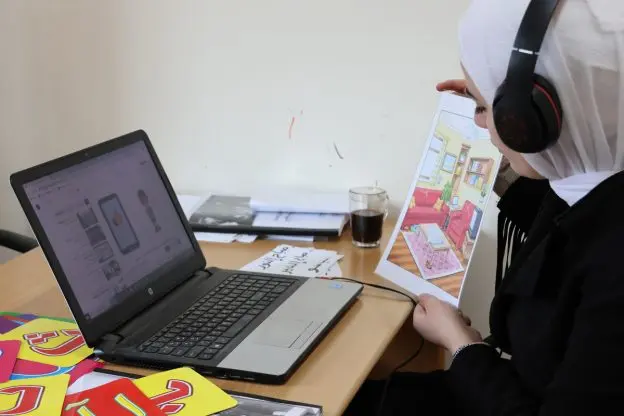
Watch real excerpts from our live sessions at Kalimah Center and see how we bring learning to life. These clips highlight our interactive, student-centered teaching approach across all our courses—designed to keep learners engaged, motivated, and actively involved every step of the way.
Master Arabic with Kalimah Center
Join our expert-led online classes and start your journey toward Arabic fluency today.
Book Your Free TrialGeneral Color-Related Terms in Arabic
Before we dive into specific color names, let’s learn some general color-related terms in Arabic:
1. Light (Color) in Arabic: لون فاتح (lawn fātiḥ)
The term for “light (color)” in Arabic is لون فاتح (lawn fātiḥ), which literally means “light color.”
القميص لونه فاتح
al-qamīṣ lawnuhu fātiḥ (masculine)
The shirt is light-colored.
2. Dark (Color) in Arabic: لون غامق (lawn ghāmiq)
“Dark (color)” in Arabic is لون غامق (lawn ghāmiq), meaning “dark color.”
السروال لونه غامق
al-sirwāl lawnuhu ghāmiq (masculine)
The trousers are dark-colored.
3. Shade/Hue in Arabic: درجة لون (darajat lawn)
“Shade/Hue” is expressed as درجة لون (darajat lawn), meaning “degree of color.”
هذه درجة لون مختلفة من الأحمر
hādhihi darajat lawn mukhtalifah min al-ʾaḥmar
This is a different shade of red.
Basic Colors in Arabic: Masculine and Feminine Forms With Examples
Now, let’s explore the names of some common colors in Arabic, paying close attention to their masculine and feminine forms:
It’s crucial to understand that in Arabic, adjectives agree in gender with the nouns they describe. Most color words follow this rule. The feminine form is usually created by adding a tāʾ marbūṭah (ة) at the end of the word, or created by removing the first hamza أ, then adding an alif and hamza (اء) at the end of the word.
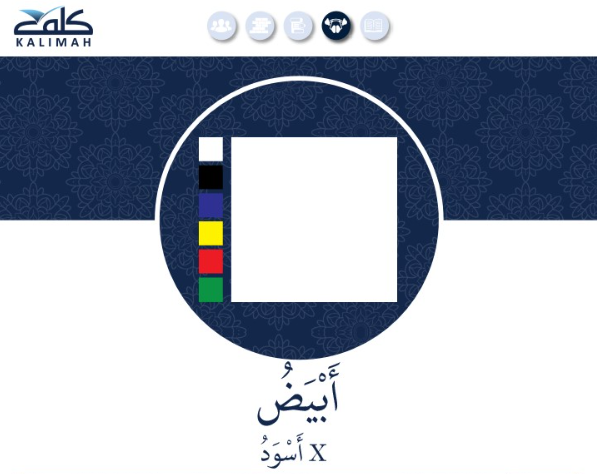
1. White in Arabic: أبيض (ʾabyaḍ) (Masculine), بيضاء (bayḍāʾ) (Feminine)
White in Arabic has two forms: أبيض (ʾabyaḍ) for masculine nouns and بيضاء (bayḍāʾ) for feminine nouns.
الثلج أبيض
al-thalj ʾabyaḍ
The snow (masculine) is white.
الورقة بيضاء
al-waraqah bayḍāʾ
The paper (feminine) is white
* Excerpted from Kalimah’s Online Arabic Course Curriculum
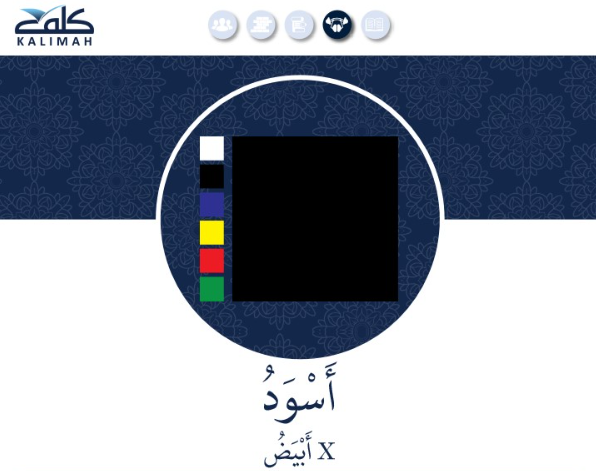
2. Black in Arabic: أسود (ʾaswad) (Masculine), سوداء (sawdāʾ) (Feminine)
Black in Arabic has two forms: أسود (ʾaswad) for masculine nouns and سوداء (sawdāʾ) for feminine nouns.
الليل أسود
al-layl ʾaswad
The night (masculine) is black.
القطة سوداء
al-qiṭṭah sawdāʾ
The cat (feminine) is black.
3. Red in Arabic: أحمر (ʾaḥmar) (Masculine), حمراء (ḥamrāʾ) (Feminine)
Red in Arabic has two forms: أحمر (ʾaḥmar) for masculine nouns and حمراء (ḥamrāʾ) for feminine nouns.
الكتاب أحمر
al-kitāb ʾaḥmar
The book (masculine) is red.
السيارة حمراء
al-sayyārah ḥamrāʾ
The car (feminine) is red.

4. Blue in Arabic: أزرق (ʾazraq) (Masculine), زرقاء (zarqāʾ) (Feminine)
Blue in Arabic has two forms: أزرق (ʾazraq) for masculine nouns and زرقاء (zarqāʾ) for feminine nouns.
البحر أزرق
al-baḥr ʾazraq
The sea (masculine) is blue.
السماء زرقاء
al-samāʾ zarqāʾ
The sky (feminine) is blue.

5. Yellow in Arabic: أصفر (ʾaṣfar) (Masculine), صفراء (ṣafrāʾ) (Feminine)
Yellow in Arabic has two forms: أصفر (ʾaṣfar) for masculine nouns and صفراء (ṣafrāʾ) for feminine nouns.
الموز أصفر
al-mawz ʾaṣfar
The banana (masculine) is yellow.
الشمس صفراء
al-shams ṣafrāʾ
The sun (feminine) is yellow.

6. Green in Arabic: أخضر (ʾakhḍar) (Masculine), خضراء (khaḍrāʾ) (Feminine)
Green in Arabic has two forms: أخضر (ʾakhḍar) for masculine nouns and خضراء (khaḍrāʾ) for feminine nouns.
العشب أخضر
al-ʿushb ʾakhḍar
The grass (masculine) is green.
الشجرة خضراء
al-shajarah khaḍrāʾ
The tree (feminine) is green.

7. Orange in Arabic: برتقالي (burtuqālī) (Masculine), برتقالية (burtuqāliyyah) (Feminine)
Orange in Arabic has two forms: برتقالي (burtuqālī) for masculine nouns and برتقالية (burtuqāliyyah) for feminine nouns.
البرتقال برتقالي
al-burtuqāl burtuqālī
The orange (masculine fruit) is orange.
الحقيبة برتقالية
al-ḥaqībah burtuqāliyyah
The bag (feminine) is orange.

8. Purple in Arabic: بنفسجي (banafsajī) (Masculine), بنفسجية (banafsajiyyah) (Feminine)
Purple in Arabic has two forms: بنفسجي (banafsajī) for masculine nouns and بنفسجية (banafsajiyyah) for feminine nouns.
الباذنجان بنفسجي
al-bādhinjān banafsajī
The eggplant (masculine) is purple.
الزهرة بنفسجية
al-zahrah banafsajiyyah
The flower (feminine) is purple.

9. Pink in Arabic: وردي (wardī) (Masculine), وردية (wardiyyah) (Feminine)
Pink in Arabic has two forms: وردي (wardī) for masculine nouns and وردية (wardiyyah) for feminine nouns.
القميص وردي
al-qamīṣ wardī
The shirt (masculine) is pink.
الوسادة وردية
al-wisādah wardiyyah
The pillow (feminine) is pink.

10. Brown in Arabic: بني (bunnī) (Masculine), بنية (bunniyyah) (Feminine)
Brown in Arabic has two forms: بني (bunnī) for masculine nouns and بنية (bunniyyah) for feminine nouns.
الخشب بني
al-khashab bunnī
The wood (masculine) is brown.
الأرض بنية
al-ʾarḍ bunniyyah
The ground (feminine) is brown.

11. Violet in Arabic: بنفسجي غامق
In Arabic, violet and purple share the same root word — بنفسج (banafsaj), the violet flower. The distinction between violet and purple is expressed through shade modifiers:
| Color | Arabic | Transliteration | Notes |
|---|---|---|---|
| Purple (general) | بنفسجي | Banafsajī | Standard term for purple/violet |
| Violet (bluish-purple) | بنفسجي مائل للأزرق | Banafsajī māʾil lil-azraq | “Purple tending toward blue” |
| Dark violet | بنفسجي غامق | Banafsajī ghāmiq | Deep violet shade |
| Light violet | بنفسجي فاتح | Banafsajī fātiḥ | Light violet/lavender shade |
Example sentences:
الزهرة بنفسجية مائلة للأزرق
al-zahrah banafsajiyya māʾila lil-azraq
The flower is violet (bluish-purple). (feminine)
القماش بنفسجي غامق
al-qumāsh banafsajī ghāmiq
The fabric is dark violet. (masculine)
Cultural note: The violet/purple family of colors is called الألوان البنفسجية (al-alwān al-banafsajiyya) in Arabic — collectively named after the flower, just as in English.
Read also: Body parts in Arabic
More Colors in Arabic: Grey, Indigo, Lavender, Maroon, and More
Beyond the basic colors, here are additional color vocabulary words frequently searched in Arabic:
| Color | Arabic (Masculine) | Arabic (Feminine) | Transliteration | Notes |
|---|---|---|---|---|
| Grey | رمادي | رمادية | Ramādī / Ramādiyya | From رماد (ramād) = ash/ashes |
| Indigo | نيلي | نيلية | Nīlī / Nīliyya | From نيل (Nile) — the indigo plant grew along the Nile |
| Lavender | بنفسجي فاتح | بنفسجية فاتحة | Banafsajī fātiḥ | Literally “light purple” |
| Maroon | أحمر داكن / كستنائي | حمراء داكنة | Aḥmar dākin / Kastanāʾī | Dark red; chestnut color |
| Navy Blue | كحلي | كحلية | Kuḥlī / Kuḥliyya | From كحل (kuḥl) = kohl eyeliner |
| Khaki | كاكي | كاكية | Kākī / Kākiyya | Arabized from Persian/English |
| Turquoise | فيروزي | فيروزية | Fayrūzī / Fayrūziyya | From فيروز (fayrūz) = turquoise gem |
| Beige | بيج | بيج | Bēj | Arabized from French/English |
| Cyan | سماوي | سماوية | Samāwī / Samāwiyya | Literally “sky-colored” |
| Lilac | ليلكي | ليلكية | Laylakī / Laylakiyya | From ليلك (laylak) = lilac plant |
| Amber | عنبري | عنبرية | ʿAnbarī / ʿAnbariyya | From عنبر (ʿanbar) = ambergris |
Key notes:
- رمادي (grey) literally means “ash-colored” — a beautiful etymology reflecting the grey of wood ash
- نيلي (indigo) is named after the Nile River, where the indigo plant was historically cultivated for blue-purple dye
- كحلي (navy blue) shares its root with “kohl” eyeliner — the dark blue-black shade of kohl eye makeup
- فيروزي (turquoise) shares its name with the precious gemstone فيروز (fayrūz), which is turquoise-colored
Teal in Arabic: How to Describe This Color
Teal is one of the few colors that does not have a single standardized word in Modern Standard Arabic. Unlike primary colors such as أحمر (red) or أزرق (blue), teal — a blue-green shade — is typically described using a combination of words.
The most common ways to say “teal” in Arabic MSA:
| Expression | Arabic | Transliteration | Literal Meaning |
|---|---|---|---|
| Most common description | أزرق مائل للأخضر | Azraq māʾil lil-akhḍar | “Blue tending toward green” |
| Alternative (fashion/design) | أخضر مائل للأزرق | Akhḍar māʾil lil-azraq | “Green tending toward blue” |
| Arabized term | تيل | Tīl | Borrowed from “teal” |
| Regional variant | أزرق بتروليّ | Azraq batrūlī | “Petroleum blue” |
Masculine example:
الجدار لونه أزرق مائل للأخضر
al-jidār lawnuhu azraq māʾil lil-akhḍar
The wall is teal (blue-green).
Feminine example:
الستارة لونها أزرق مائل للأخضر
al-sitāra lawnuhā azraq māʾil lil-akhḍar
The curtain is teal.
Shades in Arabic: How to Describe Light, Dark, and Specific Shades
Arabic uses two key modifier words to describe color shades:
- فاتح (fātiḥ) = light (pale shade)
- غامق (ghāmiq) = dark (deep shade)
Place these after the color word to create shade descriptions:
| Shade | Arabic | Transliteration | Example Use |
|---|---|---|---|
| Light blue | أزرق فاتح | Azraq fātiḥ (m) / زرقاء فاتحة (f) | السماء زرقاء فاتحة (The sky is light blue) |
| Dark blue | أزرق غامق | Azraq ghāmiq (m) | البحر أزرق غامق (The sea is dark blue) |
| Navy blue | كحلي | Kuḥlī | الزي كحلي (The uniform is navy blue) |
| Sky blue | أزرق سماوي | Azraq samāwī | لون أزرق سماوي (A sky blue color) |
| Light pink | وردي فاتح | Wardī fātiḥ (m) / وردية فاتحة (f) | الفستان وردي فاتح (The dress is light pink) |
| Dark green | أخضر غامق | Akhḍar ghāmiq (m) | الغابة خضراء غامقة (The forest is dark green) |
| Light brown | بني فاتح | Bunnī fātiḥ (m) | الرمل بني فاتح (The sand is light brown) |
| Dark brown | بني غامق | Bunnī ghāmiq (m) | الشوكولا بنية غامقة (The chocolate is dark brown) |
| Dark red / Maroon | أحمر غامق / كستنائي | Aḥmar ghāmiq | اللون أحمر غامق (The color is dark red) |
| Light yellow | أصفر فاتح | Aṣfar fātiḥ | الضوء أصفر فاتح (The light is pale yellow) |
Grammar note: The shade modifier (فاتح or غامق) must also agree in gender with the noun:
- Masculine: أزرق فاتح (light blue, describing a masculine noun)
- Feminine: زرقاء فاتحة (light blue, describing a feminine noun)
Complete Arabic Colors Chart: All Colors, Masculine and Feminine
This chart summarizes the Arabic color vocabulary discussed in this article, providing English translations, the Arabic script, and transliteration for easy learning:
| English Translation | Arabic Word (Masculine) | Arabic Word (Feminine) | Transliteration (Masculine) | Transliteration (Feminine) |
| Red | أحمر | حمراء | ʾaḥmar | ḥamrāʾ |
| Blue | أزرق | زرقاء | ʾazraq | zarqāʾ |
| Yellow | أصفر | صفراء | ʾaṣfar | ṣafrāʾ |
| Green | أخضر | خضراء | ʾakhḍar | khaḍrāʾ |
| Orange | برتقالي | برتقالية | burtuqālī | burtuqāliyyah |
| Purple | بنفسجي | بنفسجية | banafsajī | banafsajiyyah |
| Pink | وردي | وردية | wardī | wardiyyah |
| Brown | بني | بنية | bunnī | bunniyyah |
| Black | أسود | سوداء | ʾaswad | sawdāʾ |
| White | أبيض | بيضاء | ʾabyaḍ | bayḍāʾ |
Read also: Fruits in Arabic
What Do Colors Mean in Arabic Culture? Color Symbolism in the Arab World
Colors carry deep cultural and symbolic meaning in Arabic-speaking cultures. Understanding color symbolism helps you use these words in culturally appropriate contexts.
| Color | Arabic | Cultural Significance |
|---|---|---|
| Green أخضر | Sacred in Islam | Represents paradise (الجنة), life, and prosperity. The Prophet Muhammad’s banner was green. Many Islamic flags prominently feature green. |
| White أبيض | Purity, peace | Worn at celebrations and religious occasions. Associated with cleanliness and righteousness in Islamic tradition. |
| Black أسود | Strength, formality, mourning | Worn for formal occasions and, in some cultures, for mourning. Also associated with power and elegance. |
| Red أحمر | Passion, celebration, danger | Used in celebration (henna, wedding decorations) but also signals warning or danger in signage. |
| Blue أزرق | Protection from evil eye | The “blue eye” amulet (العين الزرقاء) is worn across many Arab cultures for protection. Blue is considered protective and calming. |
| Yellow أصفر | Caution, illness | In some Arab cultures, yellow carries slightly negative connotations — associated with illness, weakness, or jealousy in certain contexts. However, golden yellow (ذهبي) symbolizes wealth and prosperity. |
| Purple بنفسجي | Royalty, spirituality | Associated with luxury and spiritual depth, similar to its Western connotation. Less culturally loaded than in Western traditions. |
| Gold ذهبي | Wealth, divine light | نور (light) and ذهب (gold) are deeply intertwined in Islamic artistic tradition — mosque domes, calligraphy, and decorative arts frequently use gold to represent divine presence. |
Master Arabic with Kalimah Center
Join our expert-led online classes and start your journey toward Arabic fluency today.
Book Your Free TrialInside Kalimah Center: Moments from Our Courses
Get a glimpse into the vibrant learning experience at Kalimah Center. These snapshots capture real moments from our live classes—where students engage deeply, connect with passionate instructors, and grow in a welcoming, supportive environment.
Here Are The Reviews On Our Courses:
Our students frequently commend the excellence of our courses and the commitment shown by our instructors. You can read their complete reviews on Trustpilot.

How Kalimah Can Help You in Learning Colors in Arabic and More?
Colors are one of the first vocabulary categories you master in Arabic — and they are the perfect gateway into understanding one of Arabic’s most important grammar features: adjective gender agreement. Every time you use a color word correctly — matching it to the masculine or feminine noun it describes — you are practicing a grammatical rule that applies to all Arabic adjectives.
At Kalimah Center, our structured Arabic courses build vocabulary in exactly this way: through real contexts, cultural examples, and grammar patterns that make words stick. Our students don’t just memorize lists — they learn to use words confidently in sentences, conversations, and written Arabic.
What you’ll gain in our courses:
- Vocabulary taught in context — not isolated word lists
- Native Arabic teachers who correct gender agreement errors in real time
- Grammar foundations that make every new word easier to use correctly
- Progression from basic vocabulary (like colors) to complex sentence construction
Start with a FREE trial class and see how quickly structured learning accelerates your Arabic vocabulary.
Join us for a FREE trial class and see for yourself.

Want to learn Arabic faster, with friends, and for good price (x4 cheaper than one-on-one classes)? Try Kalimah Arabic Group Classes!

Conclusion
Learning colors in Arabic is a vital step toward achieving fluency, as it equips you to describe the world around you with precision. This article has highlighted the critical importance of understanding the dual masculine and feminine forms (such as ʾabyaḍ vs. bayḍāʾ), a concept fundamental to correct adjective usage in the language. By memorizing these key terms, from the basic ʾaḥmar (red) to the more nuanced banafsajī (purple), and practicing their use in full sentences, you lay a solid foundation for more complex Arabic communication.
The journey to mastering the rich vocabulary of colors in Arabic is an enjoyable and rewarding one, greatly enhancing your descriptive abilities. For continued progress beyond simple memorization, integrating this knowledge into a structured learning environment is key. Resources like the courses offered by Kalimah Center ensure that you not only learn the words but also practice using them naturally in real-life contexts, building confidence and accelerating your path to becoming a fluent Arabic speaker.
FAQs about Colors in Arabic
Q1: What is “teal” in Arabic?
Teal does not have a single standardized word in Modern Standard Arabic. The most commonly used expression is أزرق مائل للأخضر (azraq māʾil lil-akhḍar), meaning “blue tending toward green.” In more casual or contemporary usage, the Arabized term تيل (tīl) is sometimes used in design and fashion contexts. The color is also sometimes described as أزرق بحري (azraq baḥrī — sea blue) or أزرق سماوي داكن (dark sky blue). Teal is one of the few colors without a fully settled single MSA term.
Q2: What does “banafsaji” (بنفسجي) mean in Arabic?
بنفسجي (banafsajī) is the Arabic word for purple. It derives from بنفسج (banafsaj), the Arabic word for the violet flower (viola). So the color purple in Arabic is literally named after the violet plant — similar to how the English word “violet” (as a color) also comes from the flower name. The pronunciation is: ba-naf-sa-jī. The feminine form is بنفسجية (banafsajiyya).
Q3: What is “bambi” (بمبي) in Egyptian Arabic?
بمبي (bambi) is the Egyptian Arabic slang word for pink. Unlike MSA’s وردي (wardī), which literally means “rose-colored,” بمبي is thought to derive from the word “bomb” or possibly from the Disney film “Bambi” — the exact etymology is debated. What is certain is that بمبي is the most commonly used word for pink in everyday Egyptian spoken Arabic, and it is understood across many other Arabic dialects as well.
Q4: Is “purple” masculine or feminine in Arabic?
In MSA, بنفسجي (purple, masculine) and بنفسجية (purple, feminine) follow the standard adjectival gender pattern — add ية to make it feminine. Unlike the primary colors (أحمر/حمراء, أزرق/زرقاء) which have distinct root-form changes, purple’s gender change is a simple suffix addition. Example: الفستان بنفسجي (the dress — masculine grammatically — is purple) vs. السيارة بنفسجية (the car — feminine — is purple).
Q5: What do colors symbolize in Arabic culture?
Colors carry cultural significance in Arabic-speaking cultures: أخضر (Green) is the most sacred color in Islam — associated with paradise (الجنة) and the Prophet Muhammad. أبيض (White) symbolizes purity and peace. أسود (Black) represents strength and formality, but also mourning in some contexts. أحمر (Red) symbolizes passion, danger, or celebration depending on context. أزرق (Blue) is associated with protection from the evil eye in many Arab cultures — the “blue eye” amulet (العين الزرقاء) is worn for this purpose. أصفر (Yellow) can carry negative connotations in some dialects, sometimes associated with illness or jealousy.