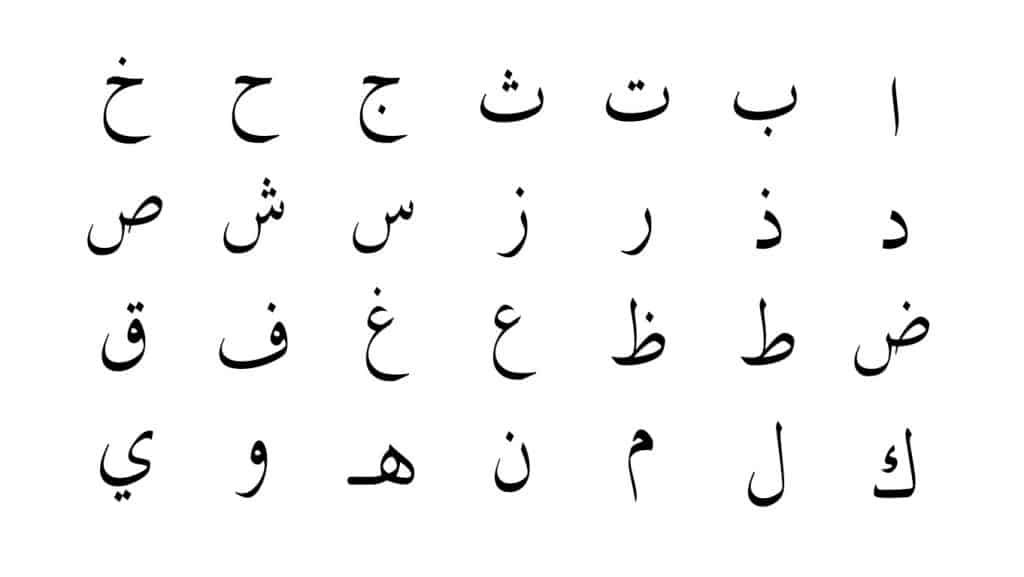
Arabic is a beautiful language, but its pronunciation can feel challenging for English speakers at the beginning. The reason is simple: Arabic has several letters and sounds that do not exist in English. Some of these sounds come from the throat, others are produced deep in the mouth, and some are “heavy” versions of sounds that English speakers already know.
For example, letters like ح, ع, and غ can feel unusual because they use the throat more than English does. Letters like ص, ض, ط, and ظ are also difficult because they are emphatic sounds, which means they are pronounced with a deeper and heavier quality. Even a letter like ق can be confusing because it may sound close to “k” for beginners, but it is actually produced farther back in the mouth.
That is why this guide focuses on the most difficult Arabic letters for English speakers in a clear and practical way. Instead of giving you a long alphabet lesson, it explains the letters that usually cause the biggest problems, shows you how they sound, and gives you simple examples to help you practice.
What Are the Most Difficult Arabic Letters for English Speakers?
The most difficult Arabic letters for English speakers are usually:
ح، خ، ص، ض، ط، ظ، ع، غ، ق
These letters are challenging because some of them are pronounced from the throat, some are heavy or emphatic sounds, and some have no direct equivalent in English.
Here is a quick overview:
| Arabic Letter | Arabic Name | Transliteration | Closest English Idea | Why It Is Difficult |
| ح | حاء | ḥā’ | deep “h” | Strong throat sound |
| خ | خاء | khā’ | “ch” in loch | Rough back-mouth sound |
| ص | صاد | ṣād | heavy “s” | Deeper than normal “s” |
| ض | ضاد | ḍād | heavy “d” | Unique Arabic heavy sound |
| ط | طاء | ṭā’ | heavy “t” | Stronger than English “t” |
| ظ | ظاء | ẓā’ | heavy “th/z” | Deep emphatic sound |
| ع | عين | ʿayn | no English equivalent | Deep voiced throat sound |
| غ | غين | ghayn | French “r” / gargle | Guttural voiced sound |
| ق | قاف | qāf | deep “k/q” | Produced farther back than “k” |
Why Are Arabic Letters Difficult for English Speakers?
Arabic pronunciation feels difficult for many English speakers because Arabic uses sounds that English does not normally use. English mostly depends on sounds made with the lips, teeth, and front part of the tongue. Arabic uses these areas too, but it also uses the throat and the back of the mouth more strongly.
For example, English has an “h” sound, but it does not have the Arabic throat sound ح. English has “s,” “d,” and “t,” but it does not have the heavy Arabic sounds ص، ض، ط in the same way.
This is why the most difficult Arabic letters for English speakers are not always difficult to recognize, but they are difficult to pronounce correctly. A learner may see the letter, know its name, and still struggle to produce the sound naturally.
The goal is not to force your throat or sound perfect immediately. The goal is to understand where the sound comes from and practice slowly.
Letter ح — Haa: The Deep Throat H Sound
The Arabic letter ح is called ḥā’. It is one of the first letters that English speakers find difficult.
It may look like a kind of “h,” but it is not the same as the English “h” in “hello.” The English “h” is light. Arabic ح is deeper and comes from the throat.
How to Pronounce ح
Think of ح as a strong, breathy sound from the throat. It should not sound like coughing, and it should not hurt. It is a controlled breathy sound.
Common English Speaker Mistake
Many learners pronounce ح like a normal English “h.” This makes the pronunciation too light.
For example, حلال should not sound like a simple “halal” with a weak English h. The first sound should be deeper.
Examples
حلال — ḥalāl — permissible
حب — ḥubb — love
صباح — ṣabāḥ — morning
Pronunciation Tip
Open your mouth slightly and let the air come from the throat. Practice softly. If your throat hurts, you are forcing it too much.
Letter خ — Khaa: The Rough Kh Sound
The Arabic letter خ is called khā’. It is usually written as kh in English transliteration.
This sound is close to the “ch” in the Scottish word “loch” or the German word “Bach.” It does not exist in standard English, so English speakers often replace it with “k.”
How to Pronounce خ
The sound خ comes from the back of the mouth. It is rough, but it should not be aggressive. Imagine gently clearing your throat, but in a softer and more controlled way.
Common English Speaker Mistake
The most common mistake is pronouncing خ like ك.
For example, خبز should be khubz, not “kubz.”
Examples
خبز — khubz — bread
خمسة — khamsa — five
أخ — akh — brother
Pronunciation Tip
Do not push too hard. A smooth خ sounds better than a forced one.
Master Difficult Arabic Letters with Kalimah Center’s Arabic Course
Pronouncing Arabic letters correctly is one of the biggest challenges for English speakers, especially when learning sounds such as ح، خ، ع، غ، ق، and the emphatic letters ص، ض، ط، and ظ. While understanding the theory is important, real progress comes from guided practice and expert feedback.
Kalimah Center’s Arabic Course is designed specifically for non-native speakers, helping students develop accurate pronunciation, improve listening skills, and build confidence in speaking Arabic through structured lessons and personalized instruction. Whether you are learning Arabic for daily communication, academic purposes, or Islamic studies, our experienced teachers will help you overcome pronunciation challenges and achieve steady progress.
Enroll in Kalimah Center’s Arabic Course today and take the next step toward speaking Arabic with confidence, clarity, and accuracy.
Letter ص — Saad: The Heavy S Sound
The Arabic letter ص is called ṣād. It is a heavy version of the normal “s” sound.
Arabic has a light س and a heavy ص. English speakers often pronounce both as “s,” but native Arabic speakers hear a clear difference.
How to Pronounce ص
To pronounce ص, start with an “s” sound, then make it deeper and darker. The middle of the tongue lowers slightly, and the sound becomes heavier.
Common English Speaker Mistake
Many learners pronounce ص exactly like س. This removes the heavy sound.
Examples
صباح — ṣabāḥ — morning
صديق — ṣadīq — friend
صحيح — ṣaḥīḥ — correct
Pronunciation Tip
Heavy does not mean loud. Do not shout the letter. Just make it deeper.
Letter ض — Daad: The Famous Arabic Letter
The Arabic letter ض is called ḍād. It is one of the most famous Arabic letters because Arabic is sometimes called “the language of ض.”
For English speakers, ض is difficult because it is not just a normal “d.” It is heavier, deeper, and more emphatic.
How to Pronounce ض
Start with a “d” sound, then make it heavier. The tongue should feel broader and lower than with a normal English “d.”
Common English Speaker Mistake
The most common mistake is pronouncing ض like the English “d.”
For example, أرض should have a heavy ض sound at the end, not a simple “d.”
Examples
ضوء — ḍaw’ — light
أرض — arḍ — land / earth
ضرب — ḍaraba — he hit
Pronunciation Tip
Practice د and ض together. First say the light sound, then the heavy sound. This helps your ear notice the difference.
Letter ط — Taa: The Heavy T Sound
The Arabic letter ط is called ṭā’. It is a heavy version of the “t” sound.
Arabic has a light ت and a heavy ط. English speakers often pronounce ط like an ordinary “t,” but the Arabic sound is stronger and deeper.
How to Pronounce ط
The tongue is firmer, and the sound is produced with more pressure than a light ت. It should feel deeper in the mouth.
Read also: Is The Arabic Alphabet The Same For All Dialects?
Common English Speaker Mistake
Many learners say ط as a normal English “t.” This makes words sound less Arabic.
Examples
طالب — ṭālib — student
طريق — ṭarīq — road
طيب — ṭayyib — good / okay
Pronunciation Tip
English “t” often releases a small puff of air. Arabic ط is firmer and heavier, with less air.
Experience Kalimah Center Classes
Watch real excerpts from our live sessions at Kalimah Center and see how we bring learning to life. These clips highlight our interactive, student-centered teaching approach across all our courses—designed to keep learners engaged, motivated, and actively involved every step of the way.
Master Arabic with Kalimah Center
Join our expert-led online classes and start your journey toward Arabic fluency today.
Book Your Free TrialLetter ظ — Zaa: The Heavy Th / Z Sound
The Arabic letter ظ is called ẓā’. It is one of the harder letters because it is both heavy and unfamiliar.
It can be described as a heavy version of the “th” sound in “this,” but with deeper Arabic quality. In some dialects, it may sound closer to “z,” but in standard Arabic it should keep its emphatic sound.
How to Pronounce ظ
Start with the “th” sound in “this.” Then make it heavier and deeper. The tongue touches near the front teeth, but the sound has more weight.
Common English Speaker Mistake
Some learners pronounce ظ like “z,” while others pronounce it like a light “th.” Both can miss the heavy Arabic sound.
Examples
ظلم — ẓulm — injustice
ظاهر — ẓāhir — apparent / clear
نظر — naẓar — sight / view
Pronunciation Tip
Listen to native speakers carefully. ظ is hard to learn from written explanation only.
Letter ع — Ayn: The Letter with No English Equivalent
The Arabic letter ع is called ʿayn. For many learners, it is the hardest Arabic letter.
The reason is simple: English does not have this sound. It comes from deep in the throat and is voiced, which means your vocal cords vibrate.
How to Pronounce ع
To pronounce ع, start with a short “ah” sound. Then gently tighten the throat while keeping the sound voiced. It should not be a cough, and it should not be painful.
Common English Speaker Mistake
Many English speakers remove ع completely or replace it with a simple vowel.
For example, عربي should not start like a normal “a.” It begins with ع, a deep throat sound.
Examples
عربي — ʿarabī — Arabic
عين — ʿayn — eye / spring
مع — maʿa — with
Pronunciation Tip
Do not rush this letter. ع often takes weeks or months to feel natural.
Master Arabic Sounds with Kalimah Center’s Online Quran Course
Learning difficult Arabic letters is an important step toward accurate Quran recitation. Sounds such as ح، خ، ع، غ، ق، and the emphatic letters ص، ض، ط، and ظ require proper guidance and consistent practice to pronounce correctly.
Kalimah Center’s Online Quran Course helps students develop strong pronunciation skills through structured Quran reading and Tajweed lessons taught by experienced Ijazah-certified teachers. By learning the correct articulation of Arabic letters, students can improve their recitation, avoid common pronunciation mistakes, and recite the Quran with greater confidence and precision.
Enroll in Kalimah Center’s Online Quran Course and take your Quran recitation and Arabic pronunciation to the next level.
Letter غ — Ghayn: The Guttural Gh Sound
The Arabic letter غ is called ghayn. It is usually written as gh.
This sound is similar to a French “r” or a soft gargling sound. It comes from the back of the mouth and throat area.
How to Pronounce غ
Make a gentle gargling sound without water. Unlike خ, the letter غ is voiced, so your vocal cords should vibrate.
Common English Speaker Mistake
Many learners pronounce غ like a hard English “g,” as in “go.” This is not correct in standard Arabic.
Examples
غرفة — ghurfa — room
غالي — ghālī — expensive / dear
لغة — lugha — language
Pronunciation Tip
Compare خ and غ. The first is voiceless; the second is voiced.
Letter ق — Qaaf: The Deep Q Sound
The Arabic letter ق is called qāf. It is usually written as q in transliteration.
This letter is deeper than the English “k.” It is produced farther back in the mouth.
How to Pronounce ق
Start with a normal “k.” Then move the sound deeper toward the back of your mouth. The result should be a firm, deep “q” sound.
Common English Speaker Mistake
Many learners pronounce ق like ك. But Arabic has both letters, so the difference is important.
Examples
قلم — qalam — pen
قلب — qalb — heart
قهوة — qahwa — coffee
Pronunciation Tip
In some Arabic dialects, ق changes pronunciation. But for Modern Standard Arabic, learn the deep qāf sound first.
Read also: Arabic Letters With No English Equivalent
Arabic Letter Pairs English Speakers Often Confuse
Some Arabic letters are difficult because they sound similar to English speakers. These pairs need special practice.
| Light Letter | Heavy / Difficult Letter | Difference |
| ه | ح | ه is light, ح is deeper |
| ك | خ | ك is like k, خ is rough kh |
| ك | ق | ق is deeper than ك |
| س | ص | ص is a heavier s |
| د | ض | ض is a heavier d |
| ت | ط | ط is a heavier t |
| ذ | ظ | ظ is heavier than ذ |
Learning these pairs helps you understand why difficult Arabic letters for English speakers require both listening and mouth training.
How to Practice Difficult Arabic Letters Correctly?
The best way to practice is not to repeat isolated letters forever. Practice letters inside real words.
For example:
Do not only repeat: ق، ق، ق
Practice: قلم، قلب، قهوة
Do not only repeat: ع، ع، ع
Practice: عربي، عين، مع
A simple practice method:
- Choose one difficult letter.
- Listen to a native speaker pronounce it.
- Repeat three short words with that letter.
- Record your voice.
- Compare your pronunciation.
- Practice again the next day.
Short daily practice is better than long practice once a week.
Common Mistakes to Avoid
The first mistake is forcing throat sounds. Letters like ح، ع، خ، غ should not hurt. If your throat hurts, stop and relax.
The second mistake is replacing Arabic letters with English sounds. For example, replacing ق with “k,” خ with “k,” or ع with nothing.
The third mistake is ignoring heavy letters. Letters like ص، ض، ط، ظ need a deeper sound. They are not just normal s, d, t, and th.
The fourth mistake is practicing without listening. Written explanations are useful, but pronunciation needs sound. Listen to native speakers as much as possible.
Inside Kalimah Center: Moments from Our Courses
Get a glimpse into the vibrant learning experience at Kalimah Center. These snapshots capture real moments from our live classes—where students engage deeply, connect with passionate instructors, and grow in a welcoming, supportive environment.
Here Are The Reviews On Our Courses:
Our students frequently commend the excellence of our courses and the commitment shown by our instructors. You can read their complete reviews on Trustpilot.
Read more reviews on Trustpilot

Improve Difficult Arabic Pronunciation with Kalimah Center
Mastering difficult Arabic letters takes more than reading explanations—it requires listening, guided practice, and feedback from experienced teachers. At Kalimah Center, students learn how to pronounce challenging sounds such as ح، خ، ع، غ، and ق correctly through structured lessons designed specifically for non-native speakers.
Whether you are learning Arabic for communication, Quran reading, or Islamic studies, our qualified instructors can help you build accurate pronunciation and greater confidence step by step.
Join Kalimah Center today and start speaking Arabic with clearer, more authentic pronunciation.
📚 Explore Our Courses:
Online Arabic Course: Tailored to your level, our comprehensive Arabic program includes 16 teaching levels and 400+ hours of personalized sessions.
Online Quran With Tajweed Course: Perfect for non-Arabic speakers, our course spans 13 levels and equips you with Tajweed mastery from beginner to advanced.
Online Arabic Course For Kids: Nurture your child’s love for Arabic with our engaging and structured program, available in 24 levels for primary, intermediate, and secondary stages.
🚀 Start Your Free Trial Today! 🚀
Don’t miss out on this life-changing opportunity to deepen your faith and knowledge. Sign up now for your free trial and take the first step towards becoming a better practicing Muslim with Kalimah Center!
Master Arabic with Kalimah Center
Join our expert-led online classes and start your journey toward Arabic fluency today.
Book Your Free TrialConclusion
The most difficult Arabic letters for English speakers are challenging because they use sounds that English does not normally use. Letters like ح، خ، ع، غ، ق، ص، ض، ط، ظ need special practice because they come from the throat, the back of the mouth, or use a heavy emphatic sound.
The best way to improve is to practice slowly, listen carefully, and use real words instead of isolated letters only. Start with one letter at a time. Compare similar sounds, such as ه / ح, ك / ق, س / ص, and د / ض.
With patience, these letters will become easier. Arabic pronunciation is not impossible for English speakers; it simply needs training, repetition, and a good ear for sound.
FAQs
What is the hardest Arabic letter for English speakers?
Many English speakers find ع the hardest because it has no direct English equivalent. Other difficult letters include ح، خ، غ، ق، ص، ض، ط، ظ.
Why is ع difficult to pronounce?
ع is difficult because it comes from deep in the throat and English does not have the same sound. It needs slow practice and listening.
What is the difference between ح and ه?
ه is a light “h” sound, similar to English. ح is a deeper throat sound.
What is the difference between ق and ك?
ك is close to the English “k.” ق is deeper and produced farther back in the mouth.
What are emphatic Arabic letters?
Emphatic Arabic letters are heavy letters, such as ص، ض، ط، ظ. They sound deeper than their light versions.
Can English speakers pronounce Arabic letters correctly?
Yes. English speakers can pronounce Arabic letters correctly with listening, repetition, recording, and regular practice.