Learning Arabic for free is genuinely possible in 2026 — not as a compromise, but as a complete learning strategy. The most effective free Arabic learning stack combines: Language Transfer (free grammar foundations), ArabicPod101 on YouTube (structured video lessons), Anki with a free Arabic deck (vocabulary retention), and HelloTalk (free speaking practice with native speakers).
This combination covers every core Arabic skill — reading, writing, listening, and speaking — at zero cost. The resources below are organised by skill so you can build a complete learning plan without paid tools.
Master Free Resource Table:
| Resource | Type | Skill | Level | Truly Free? |
|---|---|---|---|---|
| Language Transfer | Audio course | Grammar + listening | Beginner | ✅ 100% free |
| ArabicPod101 (YouTube) | YouTube channel | All skills | Beginner–Int | ✅ YouTube free |
| Learn Arabic with Maha | YouTube channel | Vocabulary + pronunciation | Beginner–Int | ✅ 100% free |
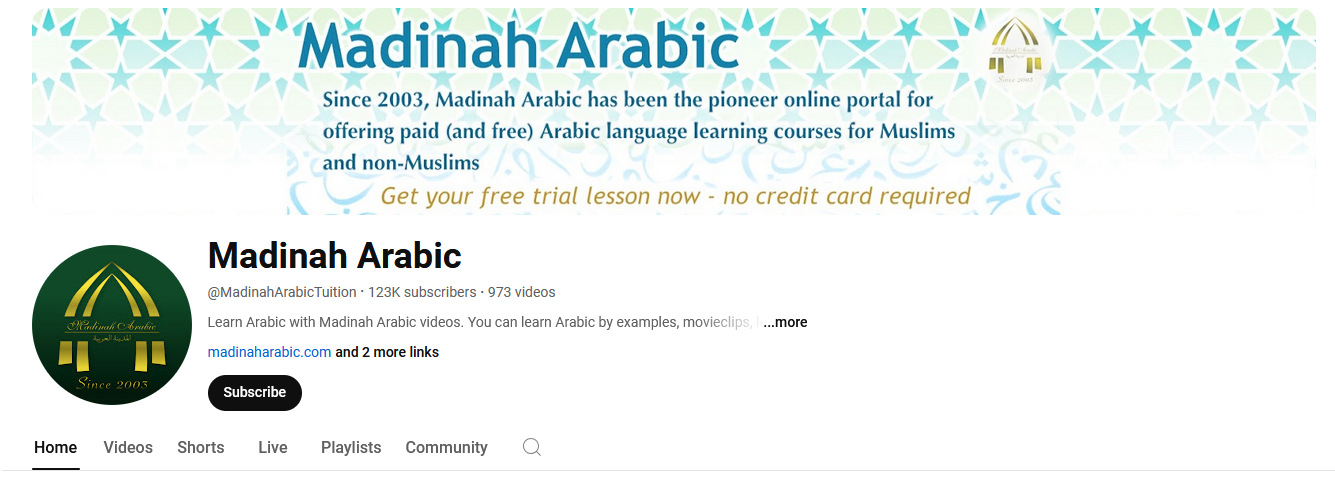
| Madinah Arabic (YouTube) | YouTube channel | Reading + grammar | Beginner–Int | ✅ 100% free |
| Arabic with Sam | YouTube channel | Levantine speaking | Beginner–Int | ✅ 100% free |
| Anki | App | Vocabulary retention | All levels | ✅ Free (Android/Web) |
| HelloTalk | App | Speaking + listening | Intermediate | ✅ Free tier genuine |
| Duolingo | App | Reading + vocabulary | Beginner | ✅ Free tier genuine |
| Mango Languages | App/Web | Structured MSA course | Beginner | ✅ Free with library card |
| Madinah Arabic (website) | Website | Reading + grammar | Beginner–Int | ✅ 100% free |
| Alison Arabic for Beginners | Online course | All skills | Beginner | ✅ Free (certificate paid) |
| EdX Arabic courses | Online course | All skills | Various | ✅ Audit free |
| Quizlet | Flashcard tool | Vocabulary | All levels | ✅ Basic free |
| Busuu | App | Grammar + conversation | Beginner–Int | ⚠️ Limited free tier |
| LingQ | App/Web | Reading | Int–Advanced | ⚠️ 20 LingQs free only |
| Drops | App | Vocabulary | Beginner | ⚠️ 5 min/day free only |
| Glossika | Platform | Speaking | Intermediate | ❌ Paid only |
| Udemy Arabic courses | Online course | Various | Various | ⚠️ Occasionally free |
| IReadArabic (kids) | App | Kids reading | Kids 4–12 | ⚠️ Limited free |
| Lamsa (kids) | App | Kids all skills | Kids 2–8 | ⚠️ Limited free |
Key: ✅ Genuinely free | ⚠️ Freemium — limited free tier | ❌ Paid only
How can I learn Arabic for free?
To learn Arabic for free, follow a structured roadmap: first, master the Arabic alphabet using visual tools like Arabic With Toqa; second, build Modern Standard Arabic (MSA) vocabulary via apps like Busuu or Drops; and third, immerse yourself in native phonology through YouTube channels like ArabicPod101.
By utilizing free MOOCs on Udemy and practicing daily with spaced-repetition tools like Anki, learners can achieve functional fluency in Arabic without financial investment.
Mastering Arabic Pronunciation: Free Speaking & Conversation Tools
The Arabic language has a lot of unique sounds. These don’t exist in English, but you can learn them. There are a lot of tips for how to speak Arabic out there. But, there’s one ultimate advice: practice a lot.
Mastering Arabic phonology is a common hurdle for English speakers due to unique phonetic sounds like the ‘ع’ (Ayn) and ‘ح’ (Haa). To overcome language learning anxiety, it is vital to engage in active recall and verbal output from day one. Rather than focusing solely on passive listening, use free interactive platforms to simulate real-world conversations. This neurological reinforcement helps bridge the gap between theoretical knowledge and conversational fluency.
Here are some free resources to practice and speak Arabic:
1. 4 Hours Of Arabic Conversation Practice
2. Speak Arabic, Free Course By Udemy
3. Learn To Speak Arabic Through Conversation
Before You Start: The 3-Step Roadmap for Free Arabic Learning
Most people who fail at learning Arabic for free do not fail because of the resources — they fail because they do not know what order to use them in. This roadmap fixes that.
Step 1 — The Script (Weeks 1–2)
Learn the Arabic alphabet before touching any other resource. Without the script, you are dependent on transliteration — a crutch that actively slows progress by preventing direct connection between sounds and their written forms.
Free resources for Step 1:
- Arabic Alphabet video series — any of the YouTube channels below
- Write It! Arabic — $3.99 one-time for handwriting (the only recommended paid item for beginners)
- Arabic101 on YouTube — single-letter focus, zero assumptions
Target: Recognise all 28 letters in all positions within 10–14 days of daily 30-minute practice.
Step 2 — Core Vocabulary (Weeks 3–8)
Learn the 500 most common Arabic words. Research on Arabic corpus linguistics shows these 500 words cover approximately 65–75% of everyday Arabic text and speech. Learning them first gives you maximum comprehension return per hour of study.
Free resources for Step 2:
- Anki with the free “Arabic Frequency” deck (500 most common words — download free from AnkiWeb)
- Duolingo for gamified vocabulary reinforcement
- ArabicPod101 YouTube for vocabulary in context
Target: 500 words actively known (can produce, not just recognise) by end of Week 8 at 30 words per week.
Step 3 — Comprehensible Input + Speaking (Week 9 onward)
Once you have the script and core vocabulary, begin immersion. The goal is content where you understand approximately 70–80% — challenging enough to force learning, accessible enough to stay engaged.
Free resources for Step 3:
- Language Transfer (complete the full audio course)
- HelloTalk (speaking with native speakers — free)
- Simple & Easy Arabic Podcast (Levantine) or Bilmasri (Egyptian) for listening
- Real Arabic (Syrian) for authentic slow-speech immersion
Target: 30 minutes of comprehensible input daily + 2 speaking sessions per week minimum.

What “Free” Actually Means for Arabic Learning Resources
The word “free” is used loosely in language learning. Before investing time in any resource, understand which category it falls into:
Truly Free — No payment required at any point. No time limits. No paywalled content.
Examples: Language Transfer, ArabicPod101 on YouTube, Learn Arabic with Maha, Madinah Arabic website, Anki (Android/Web), HelloTalk basic tier, Duolingo basic tier, Mango Languages with library card.
Freemium — A free tier exists but is genuinely limited. You will hit the paywall relatively quickly if you use the resource seriously.
Examples: LingQ (20 LingQs maximum free), Drops (5 minutes per day), Busuu (limited lesson access), Anki iOS ($24.99 one-time).
“Free” with conditions — Free only under specific circumstances.
Examples: Mango Languages (free only with a public library card), Udemy Arabic courses (occasionally reduced to free during promotions — not permanently), Coursera/EdX (free to audit, paid for certificate).
Paid despite claims — Sometimes listed as free in older articles but now require payment.
Examples: Glossika (paid subscription), some Udemy courses that were free at time of publication.
Our policy in this guide: Every resource marked ✅ in the table above is genuinely free with no artificial time limit or paywall blocking meaningful progress. Resources marked ⚠️ have real limitations that will affect serious learners.
Free Resources for the Arabic Alphabet — Start Here
The Arabic alphabet (technically an abjad — a consonant-based writing system) consists of 28 letters, each with up to four positional forms depending on where it appears in a word. Learning this properly from the beginning — not through transliteration — is the single most important investment of your first two weeks.
Free YouTube Channels for the Alphabet:
1. ArabicPod101 — Arabic Alphabet Series
ArabicPod101’s alphabet playlist covers all 28 letters systematically with native speaker pronunciation, visual letter forms, and example words. Each video is 5–10 minutes — appropriate for daily single-letter focus. Fully free on YouTube.
🎬 Search: “ArabicPod101 Arabic alphabet” → watch the complete alphabet playlist in order.
2. Arabic with Toqa — Alphabet Lessons
Toqa’s alphabet series covers all 28 letters with positional forms (isolated, initial, medial, final) — the critical next step after basic letter recognition. Her clear pronunciation and on-screen visual aids make this one of the most accessible free alphabet resources available.
🎬 Search: “Arabic with Toqa alphabet” → the 20+ alphabet lesson playlist.
3. Learn Arabic with Maha — Alphabet and Pronunciation
Maha’s alphabet content includes explicit pronunciation guidance — where in the mouth each sound is produced — which is rarely covered in text-based resources. Particularly valuable for sounds like ع (ayn), ح (haa), and غ (ghayn).
🎬 Search: “Learn Arabic with Maha alphabet.”
Free Apps and Websites for the Alphabet:
4. Write It! Arabic
The most rigorous free handwriting tool — covering all positional forms with stroke-order guidance and accuracy feedback. Note: the app is $3.99 one-time on iOS and Android. This is the only resource in this guide we recommend paying for at beginner level — the handwriting foundation it builds is difficult to develop any other way.
5. Madinah Arabic Website (free)
The Madinah Arabic website provides free alphabet charts, pronunciation audio, and beginner reading exercises — all downloadable, all free, no registration required. One of the most underrated free Arabic resources online.
🔗 Visit: MadinahArabic.com
Master Arabic with Kalimah Center
Join our expert-led online classes and start your journey toward Arabic fluency today.
Book Your Free TrialFree Arabic Grammar Resources
1. Language Transfer — The Best Free Arabic Grammar Course
Language Transfer is the most effective completely free Arabic grammar resource available in 2026 — and it is used by serious Arabic learners worldwide. Created by Mihalis Eleftheriou, the course teaches Arabic grammar through a Socratic method: the instructor guides a real beginner student through Arabic concepts by prompting them to derive answers through logic rather than memorisation.
The course consists of approximately 40 audio episodes, each 10–20 minutes, covering the core grammatical structures of MSA: verb patterns, sentence construction, definiteness, pronoun suffixes, and more. By the end, learners have a working understanding of Arabic grammar that many months of textbook study struggle to match.
Completely free — no registration, no payment, no premium tier. Available on LanguageTransfer.org, Spotify, Apple Podcasts, and YouTube.
✅ Best for: Analytical learners who want to understand how Arabic works — not just memorise it.
⚠️ Limitation: Audio-only — minimal script practice. Complete the course alongside an alphabet and vocabulary resource simultaneously.
2. ArabicPod101 Grammar Playlist (YouTube)
structured grammar explanations within a video format. Particularly clear on verb conjugation and sentence structure. Free on YouTube.
3. Madinah Arabic Book Series (free PDF)
the complete Madinah Arabic Book 1, 2, and 3 are available as free PDFs online. These are the most widely used Arabic grammar textbooks in the world. Search “Madinah Arabic Book 1 PDF free” — the official materials are publicly available.
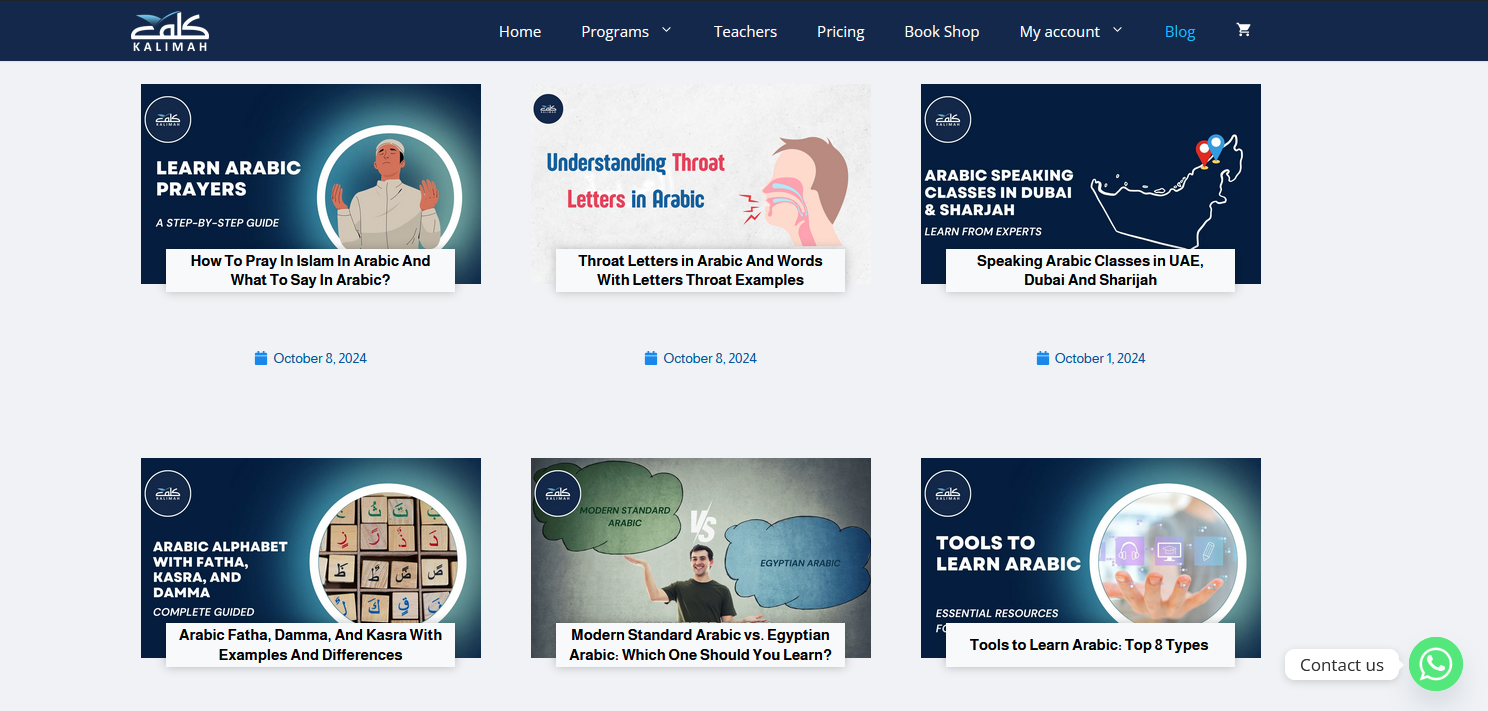
4. Kalimah Blog
the Kalimah Center blog contains articles on specific Arabic grammar points, Quranic vocabulary, and Arabic learning methodology — searchable by topic and useful as a supplementary reference.
Free Arabic Vocabulary Resources
1. Anki — The Most Effective Free Vocabulary Tool
Anki is a spaced repetition flashcard system — not an Arabic app, but the most powerful vocabulary retention tool available to Arabic learners. It shows you each word at precisely the moment your brain is about to forget it, which is the most efficient mechanism for long-term memory consolidation.
Cost: Free on Android and Web. $24.99 one-time on iOS (the only paid version).
Free Arabic decks to download from AnkiWeb:
- Arabic Frequency List — the 5,000 most common Arabic words by frequency
- Quranic Arabic Vocabulary — the 500 most common Quranic words (covers ~75% of Quran text)
- Madinah Arabic Book 1 vocabulary — aligned to the Madinah curriculum
✅ Best for: Any Arabic learner at any level. 15–20 minutes of daily Anki practice consistently outperforms hours of traditional vocabulary study.
2. Quizlet (Free)
Quizlet allows you to create or access pre-made Arabic flashcard sets — with the ability to add audio recordings, images, and Arabic script input. Numerous free Quranic vocabulary and MSA vocabulary sets are available without registration. The free tier is genuinely useful for vocabulary drilling and self-testing.
🔗 Visit: Quizlet.com → search “Arabic vocabulary”
3. Drops (Free with limitations)
Drops offers visual word-association games for Arabic vocabulary — 5 minutes per day completely free, unlimited with paid subscription. The 5-minute daily cap is genuinely restrictive for serious learners, but as a daily warm-up routine it provides real vocabulary reinforcement.
⚠️ Honest assessment: Use Drops for 5 minutes daily as a warm-up. Use Anki for serious vocabulary study.
Free Arabic Speaking and Listening Resources
1. HelloTalk — Free Speaking Practice With Native Speakers
HelloTalk is a social network for language exchange — connecting you with native Arabic speakers who want to learn your language, in return for helping you with Arabic. The exchange is direct, human, and free. Built-in tools allow your partner to annotate corrections on your messages directly, voice messages can be slowed for listening practice, and translations are available inline.
Free tier: Genuinely useful — basic language exchange features, unlimited messaging and voice messages.
Paid tier (VIP): Unlimited corrections and advanced features — worth it for serious daily users.
✅ Best for: Intermediate learners (alphabet + 150 words minimum) who are ready for authentic conversation practice.
⚠️ Limitation: Requires a foundation before use — absolute beginners will not have enough Arabic to exchange meaningfully. Partner quality varies — finding a compatible, reliable exchange partner takes time.
Free Arabic YouTube Channels for Listening:
The YouTube channels listed in the Alphabet and Grammar sections above are equally valuable for listening practice. For authentic listening exposure beyond structured lessons, the following provide native-speed Arabic:
- Bilmasri — Egyptian Arabic cultural discussions at natural speed (intermediate)
- Speak Like An Egyptian — Egyptian dialect conversations (intermediate)
- Al Jazeera Arabic — formal MSA at broadcast standard (advanced)
Free Arabic Podcasts:
- Language Transfer (free, grammar-focused, beginner)
- ArabicPod (beginner episodes free, intermediate+ paid)
- Real Arabic (Syrian dialect, intermediate, free with transcripts)
- Simple & Easy Arabic (Levantine, beginner–intermediate, free)
- Coffee Break Arabic (MSA, all levels, free basic episodes)

Free Online Arabic Courses — Structured Learning Paths
Completely Free Courses:
1. Language Transfer — Introduction to Arabic
40 audio episodes. Complete MSA grammar foundations. No registration. No payment. The best completely free structured Arabic course available.
🔗 LanguageTransfer.org
2. Alison — Arabic for Beginners
A structured beginner Arabic course covering the alphabet, basic vocabulary, greetings, numbers, and essential phrases. Completely free to study — a paid fee applies only if you want to download a verified certificate. The course itself is free.
🔗 Alison.com → search “Arabic for Beginners”
3. Mango Languages — Modern Standard Arabic
A complete structured MSA course — free with a public library card. Most public libraries in the US, UK, Canada, and Australia provide free Mango Languages access. Check your library’s digital resources page. If your library has Mango access, this is one of the best structured free Arabic courses available — covering MSA, Egyptian, Levantine, and Iraqi dialects.
🔗 Check your library’s digital resources, or MangoLanguages.com
Free Audit Courses (Knowledge Free, Certificate Paid):
4. EdX — Arabic Language Courses
EdX hosts Arabic language courses from universities including MIT and other institutions. Free to audit — meaning you access all course materials and lectures at no cost. A certificate costs money but is not required to learn from the content.
🔗 EdX.org → search “Arabic language”
5. Coursera — Arabic Language Courses
Similar to EdX — university-affiliated Arabic courses free to audit. Financial aid available for certificates if needed.
🔗 Coursera.org → search “Arabic”
Occasional Free Courses (Check Current Status):
6. Udemy Arabic Courses
Udemy Arabic courses are occasionally reduced to free during promotional periods — this is unpredictable and not permanent. When a relevant course is free, it is worth enrolling to lock in access. Recommended courses to check: “Arabic for Beginners (A0),” “Arabic Language for Non-Natives,” “Arabic Language Reading and Writing.”
⚠️ Important: Do not rely on Udemy as a permanent free resource. The free availability changes without notice.
Master Arabic with Kalimah Center
Join our expert-led online classes and start your journey toward Arabic fluency today.
Book Your Free TrialFree Egyptian Arabic Resources
Egyptian Arabic is the most widely understood spoken dialect — due to Egypt’s dominant position in Arabic film, television, and music. These are the best genuinely free resources:
1. Speak Like An Egyptian — YouTube Channel
A dedicated YouTube channel teaching Egyptian colloquial Arabic through conversational lessons, slang explanations, and cultural context. Entirely free on YouTube. Appropriate for beginners entering Egyptian dialect after completing MSA alphabet foundations.
✅ Completely free | 🎯 Beginner–Intermediate
2. Bilmasri — Podcast
An Egyptian Arabic podcast covering culture, society, and everyday topics — entirely in Egyptian Arabic at natural conversational speed. Full transcripts are not available, making it a listening immersion tool rather than a structured lesson resource.
✅ Completely free | 🎯 Intermediate
3. Linguamid — Spoken Egyptian Arabic
Linguamid provides free Egyptian Arabic lessons through a website-based format — vocabulary, grammar explanations, and audio. A more structured approach to Egyptian dialect than most free resources provide.
✅ Free | 🔗 Linguamid.com
4. Udemy — Egyptian Arabic for Beginners
Check for free promotional availability. When free, this is a solid structured beginner Egyptian Arabic course.
⚠️ Occasionally free | Check Udemy.com current pricing
Free Arabic Resources for Kids
1. Rayan Arabic TV — YouTube
Rayan Arabic TV provides free Arabic educational content for children on YouTube — covering letters, numbers, colours, and basic vocabulary through animated videos and songs. Suitable for ages 3–8. One of the most viewed free Arabic children’s channels on YouTube.
✅ Completely free | 🎯 Ages 3–8
2. Digital Dialects — Arabic Alphabet Games
Digital Dialects offers free browser-based Arabic alphabet games — no download, no registration. Children can practice letter recognition and vocabulary through interactive clicking games. The design is dated but the content is functional and genuinely free.
✅ Completely free | 🔗 DigitalDialects.com/Arabic | 🎯 Ages 5–10
3. Kalam Kids — Arabic and Islamic Learning
Kalam Kids provides free Arabic and Islamic educational content for children — combining language instruction with Islamic cultural and religious content. Appropriate for Muslim families who want Arabic learning integrated with Islamic education.
✅ Free tier available | 🎯 Ages 4–10
4. AlifBee Kids — Arabic Course (Paid)
AlifBee is one of the most comprehensive Arabic learning apps for children — structured curriculum, games, stories, and progression tracking. It requires a paid subscription.
⚠️ Paid subscription | Included here for completeness — not a free resource
5. Read Along by Google — Arabic
Google’s Read Along app is completely free and uses speech recognition to listen to children read Arabic stories aloud. Appropriate for children aged 5–10 who already know the Arabic alphabet and need to develop reading fluency.
✅ Completely free | 🎯 Ages 5–10 | Available on iOS and Android
6. Siraj — Arabic Learning Series (YouTube)
Siraj is a free animated Arabic educational series on YouTube — teaching vocabulary and comprehension through stories and songs. One of the most engaging free Arabic children’s video resources available.
✅ Completely free | 🎯 Ages 4–10
Master Arabic with Kalimah Center
Join our expert-led online classes and start your journey toward Arabic fluency today.
Book Your Free TrialModern Standard Arabic (MSA) vs Dialect: Which Should You Learn Free?
This is the most important decision a new Arabic learner makes — and most free resources make it for you by defaulting to MSA without explanation. Here is an honest breakdown:
Modern Standard Arabic (MSA / الفصحى al-Fusha)
MSA is the formal, written, and broadcast form of Arabic — used in newspapers, books, the Quran, official documents, television news, and formal speeches. No one speaks MSA natively as a first language in casual conversation, but educated Arabs across all regions understand it.
Choose MSA if:
- Your goal is to read the Quran or Islamic texts
- You want to read Arabic literature, news, or academic writing
- You want one form of Arabic understood across all Arab countries
- You are planning a structured, long-term Arabic study path
Best free MSA resources: Language Transfer, ArabicPod101 (YouTube), Madinah Arabic, Alison Arabic for Beginners
Egyptian Arabic (العامية المصرية al-Ammiya al-Masriya)
Spoken by 100+ million Egyptians and widely understood across the Arab world due to Egypt’s dominant film and television industry. The most practical dialect for general communication.
Choose Egyptian Arabic if:
- You want to speak with people — not just read
- You are travelling to Egypt or interacting with Egyptian communities
- You want maximum dialect comprehension across Arab countries
Best free Egyptian Arabic resources: Bilmasri (podcast), Speak Like An Egyptian (YouTube), Udemy Egyptian Arabic for Beginners (when free)
Levantine Arabic (الشامي al-Shami)
Spoken in Syria, Lebanon, Palestine, and Jordan. Widely regarded as one of the most melodic and beautiful Arabic dialects. Increasingly well-resourced for learners.
Choose Levantine if:
- You are connecting with Levantine-speaking family or communities
- You are travelling to or living in the Levant region
- You prefer the sound and rhythm of this dialect
Best free Levantine Arabic resources: Arabic with Sam (YouTube), Simple & Easy Arabic Podcast, Learn Levantine With Livi (podcast), Real Arabic (podcast)
Our recommendation for most free learners:
Start with MSA basics (alphabet + 300–500 core vocabulary words) — this takes 6–8 weeks. Then branch into your target dialect. The MSA foundation transfers directly to any dialect, making dialect acquisition faster. Jumping into dialect-only learning from zero is not wrong, but you will encounter grammatical patterns you cannot explain, which slows intermediate progress.
Experience Kalimah Center Classes
Watch real excerpts from our live sessions at Kalimah Center and see how we bring learning to life. These clips highlight our interactive, student-centered teaching approach across all our courses—designed to keep learners engaged, motivated, and actively involved every step of the way.
Affordable group classes designed to fit your budget
At Kalimah Center, you can take advantage of affordable group classes that provide exceptional value. These classes offer a cost-effective way to learn Arabic while benefiting from a collaborative and supportive learning environment. By joining these group sessions, you can access quality education without exceeding your budget.
It’s a great opportunity to explore the language in a social setting, where the cost is kept low, making it an ideal choice for those looking to balance high-quality instruction with financial practicality.
“Join our affordable group classes today and start your Arabic learning journey with us!”
Master Arabic with Kalimah Center
Join our expert-led online classes and start your journey toward Arabic fluency today.
Book Your Free TrialHere Are The Reviews On Our Courses:
Our students frequently commend the excellence of our courses and the commitment shown by our instructors. You can read their complete reviews on Trustpilot.

Read more reviews on Trustpilot
Unlock Your Potential in Arabic and Quran with Kalimah Center!
Ready to deepen your connection with the Quran and enhance your understanding of Arabic? Join Kalimah Center today and embark on a transformative journey of learning and growth! Our professional, handpicked Online Arabic and Quran Tutors are dedicated to helping you master these essential skills with ease and expertise.
📚 Explore Our Courses:
Online Arabic Course: Tailored to your level, our comprehensive Arabic program includes 16 teaching levels and 400+ hours of personalized sessions.
Online Quran With Tajweed Course: Perfect for non-Arabic speakers, our course spans 13 levels and equips you with Tajweed mastery from beginner to advanced.
Online Arabic Course For Kids: Nurture your child’s love for Arabic with our engaging and structured program, available in 24 levels for primary, intermediate, and secondary stages.
🚀 Start Your Free Trial Today! 🚀
Don’t miss out on this life-changing opportunity to deepen your faith and knowledge. Sign up now for your free trial and take the first step towards becoming a better practicing Muslim with Kalimah Center!
Conclusion: Your Complete Free Arabic Learning Plan
Learning Arabic for free is not about compromise — it is about choosing the right free tools in the right order. The resources in this guide, used systematically, provide everything you need to reach functional intermediate Arabic without spending money.
Your complete free starting stack:
| Week | Focus | Free Resource |
|---|---|---|
| 1–2 | Arabic alphabet | ArabicPod101 YouTube + Arabic with Toqa |
| 3–8 | Core vocabulary (500 words) | Anki (Arabic Frequency deck) + Duolingo |
| 4–8 | Grammar foundations | Language Transfer (complete the full course) |
| 6+ | Speaking practice | HelloTalk (language exchange) |
| 8+ | Listening immersion | Bilmasri (Egyptian) or Real Arabic (Syrian) |
| 8+ | Reading practice | Madinah Arabic website + LingQ (20 free LingQs) |
The most important resource is not on this list: consistency. Twenty minutes of daily Arabic practice using free tools will take you further than weekly 2-hour sessions using expensive paid courses.
Start with the alphabet. Add vocabulary through Anki. Complete Language Transfer. Speak with native speakers through HelloTalk.
That is how you learn Arabic for free — and it works.
FAQs about How To Learn Arabic For Free?
What is the best free app to learn Arabic for beginners?
The single best completely free app is Anki — not because it is the most engaging, but because it is the most effective for long-term vocabulary retention. Download the free Android or web version, then download the “Arabic Frequency List” deck from AnkiWeb. Study 15–20 minutes daily.
For a more structured, lesson-based experience, Duolingo is the most accessible free entry point — covering the Arabic script and foundational vocabulary with gamified daily lessons. The free tier is genuinely useful without artificial limitations.
For speaking specifically, HelloTalk is the only free app that connects you with real native Arabic speakers for genuine conversation practice.
The most effective free combination: Anki (vocabulary) + Duolingo (structure) + HelloTalk (speaking). All three are free. Together they cover reading, vocabulary, and speaking without any paid tools required.
Can I learn Arabic by myself for free?
Yes — with important nuance. Self-teaching Arabic for free is possible and thousands of learners have done it. The realistic outcome of 12–18 months of daily free self-study (1–2 hours per day) is functional intermediate Arabic — the ability to read basic texts, hold simple conversations on familiar topics, and understand Arabic media with effort.
The specific limitations of free self-teaching are:
– Pronunciation errors — apps and YouTube cannot correct your specific pronunciation mistakes. Even one monthly session with a native Arabic teacher or language exchange partner prevents fossilised pronunciation errors.
– Grammar gaps — free resources vary in grammatical depth. Language Transfer fills this gap better than any other free resource.
– Speaking anxiety — self-study without human interaction often produces learners who can read Arabic but freeze when speaking. HelloTalk addresses this, but structured conversation practice accelerates speaking confidence faster.
The honest recommendation: Self-teach using the free resources in this guide for your first 3–6 months to build a foundation. Then add even one hour per week of live instruction or conversation exchange. The combination dramatically outperforms either approach alone.
Is it better to learn Modern Standard Arabic (MSA) or a dialect first?
If your goal is reading the Quran or formal media, start with MSA. However, if you plan to travel or speak with locals, starting with a free Egyptian Arabic course is highly recommended.
How long does it take to learn Arabic for free?
According to the FSI, Arabic is a Category IV language. With free daily practice, a dedicated learner can reach basic conversational fluency in approximately 12–18 months.
Where can I find free Arabic courses with certificates?
Platforms like Coursera, EdX, and Alison offer free Arabic language audits. While the knowledge is free, some platforms require a small fee only if you wish to download a verified certificate.