Effective Arabic language practice covers six core skill areas: alphabet and handwriting, conversation and speaking, listening comprehension, reading passages, sentence construction, and verb conjugation. This guide provides structured exercises with answers for each skill, from beginner letter tracing to intermediate reading comprehension and conjugation tables. For consistent progress, combine 15–20 minutes of daily skill-specific practice with weekly conversation sessions.
Key Takeaway Table:
| Practice Area | Exercise Type | Difficulty | Time Needed |
|---|---|---|---|
| Alphabet & Handwriting | Letter tracing, connection practice | Beginner | 10 min/day |
| Conversation | Dialogue drills, role-play | Beginner–Intermediate | 15 min/session |
| Listening | Audio comprehension, Q&A | Beginner–Intermediate | 20 min/session |
| Reading | Passage comprehension with questions | Beginner–Advanced | 20 min/session |
| Sentences | Vocabulary in context, sentence building | Beginner–Intermediate | 10 min/day |
| Verb Conjugation | Conjugation tables, tense practice | Intermediate | 15 min/day |
| Grammar | Exercise sets with answers | Intermediate | 20 min/session |
Arabic fluency is built through practice — not passive study. Reading about Arabic grammar is different from actually conjugating verbs, building sentences, and engaging in conversations. This guide provides structured practice exercises for every Arabic skill level, complete with example answers so you can verify your own work.
Whether you are just starting with the alphabet or working on intermediate reading comprehension, the exercises here give you the practical drills that transform theoretical knowledge into active ability. Each section targets a specific skill — use them individually for focused practice or work through them systematically as a complete study session.
Arabic Language Practice
To truly master the Arabic language, practice is essential. Let’s dive into various aspects of Arabic practice, each accompanied by exercises that will engage and challenge you.
Daily Arabic Practice Schedule: 20-Minute Routine for Consistent Progress
Consistency beats intensity. A focused 20-minute daily practice session produces faster progress than 3-hour weekend marathons. Here is a structured daily routine you can follow:
The 20-Minute Daily Arabic Practice Plan
| Minutes | Activity | Skill | What to Do |
|---|---|---|---|
| 0–5 min | Vocabulary review | Reading + Memory | Review 10 words from previous sessions using flashcards or your vocabulary notebook |
| 5–10 min | Writing practice | Writing | Write 5 sentences using today’s vocabulary, or trace/copy 1 paragraph from a text |
| 10–15 min | Reading or listening | Reading/Listening | Read one short Arabic passage OR listen to 3 minutes of Arabic audio and answer 2 comprehension questions |
| 15–20 min | Speaking or conjugation | Speaking/Grammar | Conjugate 2 verbs in all pronouns, OR record yourself reading today’s passage aloud |
Weekly Practice Focus
| Day | Primary Focus | Secondary |
|---|---|---|
| Monday | Vocabulary (10 new words) | Writing sentences |
| Tuesday | Verb conjugation | Grammar exercises |
| Wednesday | Conversation / dialogue | Pronunciation |
| Thursday | Reading comprehension | Vocabulary review |
| Friday | Listening practice | Speaking practice |
| Saturday | Writing (paragraph or essay) | Grammar review |
| Sunday | Free practice / review | Anything you enjoy |
Pro tip: Practice at the same time every day. Language acquisition research consistently shows that a regular daily habit — even 15 minutes — produces better long-term retention than irregular longer sessions.
Arabic Alphabet Practice: Letter Tracing and Writing Exercises
The Arabic alphabet is the cornerstone of the language. Each letter has its own unique shape and sound, and learning them is the first step towards reading and writing in Arabic.
Arabic Alphabet Tracing
Take a moment to trace the following letters on a piece of paper. This will help you get a feel for their shapes and improve your handwriting.
You can print this practice image excerpted from our course curriculum at Kalimah Center and trace the letters to practice writing them.
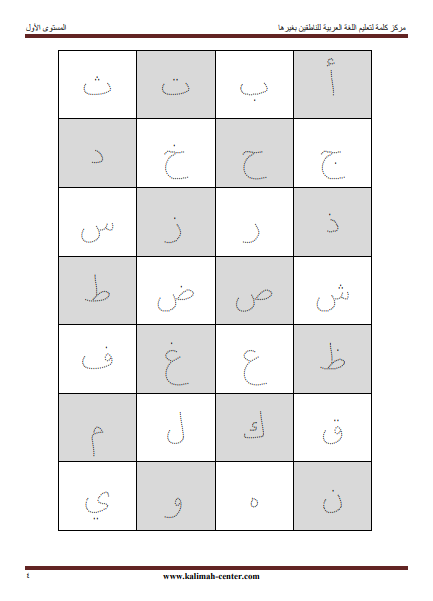
Practice tracing these letters and saying them aloud as you write.
Example:
- ب – (Ba) – Pronounced as “b” in “bat”
- ت – (Ta) – Pronounced as “t” in “top”
Arabic Pronunciation Practice Exercises
Arabic has sounds that do not exist in English. These require deliberate, targeted practice to produce correctly. Here are exercises for the most challenging Arabic sounds:
Exercise 1: Distinguishing Similar Sounds
Arabic has several pairs of letters that sound similar to non-native ears. Practice saying each pair aloud until you can hear and produce the difference:
| Letter Pair | Sound 1 | Sound 2 | Practice Words |
|---|---|---|---|
| ح vs. هـ | ح = deep throat “h” (pharyngeal) | هـ = regular English “h” | حال (hal) vs. هال (hal) |
| س vs. ص | س = regular “s” | ص = emphatic “s” (heavier) | سار (sar) vs. صار (sar) |
| ك vs. ق | ك = regular “k” | ق = uvular “k” (deep in throat) | كال (kal) vs. قال (qal) |
| ع vs. أ | ع = voiced pharyngeal (unique) | أ = glottal stop | عين (ayn) vs. أين (ayn) |
| ز vs. ظ | ز = regular “z” | ظ = emphatic “z” (heavier) | زل (zal) vs. ظل (zhal) |
Exercise 2: Minimal Pair Reading
Read these word pairs aloud — the only difference is one letter’s pronunciation. Can you hear the difference?
- قلب (qalb — heart) vs. كلب (kalb — dog)
- سار (sar — he walked) vs. صار (sar — he became)
- حال (hal — state/condition) vs. هال (hal — cardamom)
Exercise 3: Shadowing Practice
Shadowing is the most effective pronunciation technique: listen to a native Arabic speaker and repeat their speech immediately, matching rhythm, stress, and intonation.
How to shadow:
- Choose a short Arabic audio clip (2–3 sentences)
- Listen once without speaking
- Listen again and repeat simultaneously — don’t wait for them to finish
- Record yourself and compare to the original
- Repeat 5 times per session
Best shadowing sources: Al Jazeera news clips (MSA), Quranic recitation, Kalimah Center audio exercises
Arabic Handwriting Practice Sheets
Handwriting is an art, and Arabic script is particularly beautiful. Regular practice with handwriting sheets can help you write more fluidly and confidently.
Interactive Exercise: Writing Practice
Download a basic Arabic handwriting practice sheet and spend 10 minutes each day copying the letters. Focus on the flow of the pen and the connections between the letters.
Example Sheet:
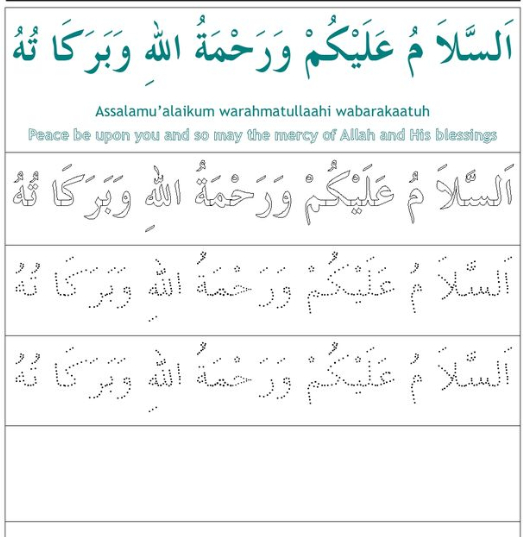
Write each letter multiple times, focusing on maintaining a consistent size and shape.
Arabic Conversation Practice: Dialogue Exercises With Fill-in-the-Blanks
Speaking is one of the most enjoyable parts of learning a new language. Engaging in conversations helps solidify your understanding and builds your confidence.
Arabic Conversation Starters
Start simple with everyday phrases and greetings. Practice with a partner or record yourself to track your progress.
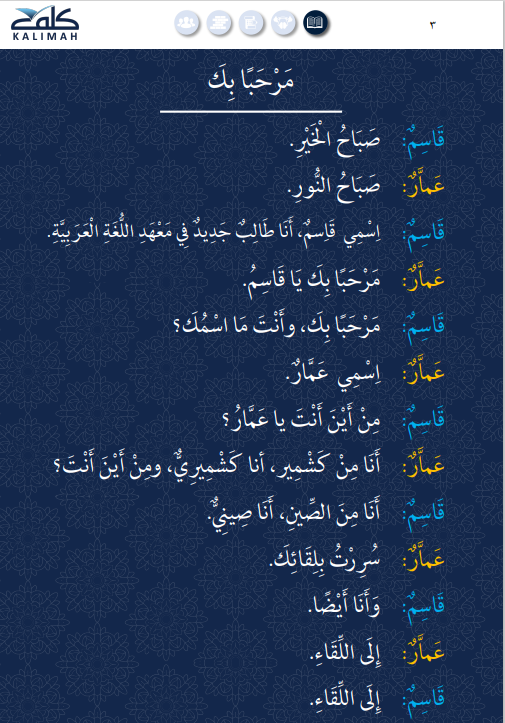
The following exercise reflects Kalimah‘s method of using interactive dialogues to teach Arabic conversation. By engaging learners in active practice, they can better internalize the language and gain confidence in their speaking abilities. This example is just a glimpse of the many interactive exercises Kalimah employs in its curriculum in Online Arabic Learning Courses For Adults & Online Arabic Learning Courses For Children.
Interactive Dialogue Practice
Instructions:
- Partner Up: Find a classmate or friend to practice with.
- Assign Roles: Decide who will be Qasim (the new student) and who will be Ammar (the current student).
- Fill in the Blanks: Take turns reading the dialogue out loud, filling in the blanks with the appropriate Arabic words or phrases. Use the English translations as a guide.
- Switch Roles: Repeat the exercise, switching roles.
Dialogue:
Qasim: صباح الخير (sabah al-khayr) (Good morning)
Ammar: صباح النور (sabah an-noor) (Good morning)
Qasim: اسمي قاسم، أنا طالب جديد في معهد اللغة العربية (ismii qasim, ana talib jadid fi ma’had al-lughah al-‘arabiyyah) (My name is Qasim, I’m a new student at the Arabic Language Institute)
Ammar: ________________ (Welcome!)
Qasim: ________________ (Nice to meet you, and you, what’s your name?)
Ammar: اسمي عمار (ismii ‘ammar) (My name is Ammar)
Qasim: ________________ (Where are you from, Ammar?)
Ammar: أنا من كشمير، أنا كشميري، ومن أين أنت؟ (ana min kashmir, ana kashmiri, wa min ayna ant?) (I’m from Kashmir, I’m Kashmiri, and where are you from?)
Qasim: أنا من الصين، أنا صيني (ana min as-sin, ana sini) (I’m from China, I’m Chinese)
Ammar: ________________ (Pleased to meet you.)
Qasim: ________________ (Me too.)
Ammar: إلى اللقاء (ila al-liqaa) (Goodbye)
Qasim: إلى اللقاء (ila al-liqaa) (Goodbye)
Challenge: Once you’ve completed the dialogue, try adding a few more lines of your own. Maybe Qasim asks Ammar about his favorite class, or Ammar suggests a place for lunch. Be creative and have fun!
Tips for Effective Practice:
- Pronunciation: Pay attention to the correct pronunciation of each word and phrase. Listen to native speakers for reference.
- Vocabulary: Try to incorporate new vocabulary from the dialogue into your conversation.
- Fluency: Practice the dialogue multiple times to improve your fluency and confidence.
- Cultural Context: Be mindful of cultural norms and greetings when engaging in conversations in Arabic.
Experience Kalimah Center Classes
Watch real excerpts from our live sessions at Kalimah Center and see how we bring learning to life. These clips highlight our interactive, student-centered teaching approach across all our courses—designed to keep learners engaged, motivated, and actively involved every step of the way.
Master Arabic with Kalimah Center
Join our expert-led online classes and start your journey toward Arabic fluency today.
Book Your Free TrialArabic Listening Practice: Comprehension Exercises With Questions and Answers
Listening is crucial for understanding the nuances and rhythms of Arabic. It also helps you improve your pronunciation and comprehension.
Listening to Arabic Dialogues and Podcasts
Immerse yourself in Arabic by listening to Arabic dialogues and podcasts. This not only enhances your listening skills but also introduces you to different dialects and cultural contexts.
Here in the video is an interactive exercise you can use to engage in listening practice based on the content of Kalimah‘s curriculum in Online Arabic Learning Courses For Adults:
Instructions: Listen to the conversation between Ahmed and the landlord and answer the questions below.
Watch the first part of the video, then come back here you will find some questions below, then the conversation text, and finally the answers.
Please don’t look at our reference answers until you have completed your own.
Questions:
- What is Ahmed looking for?
- Does the landlord have an apartment for rent?
- How many rooms does the apartment have?
- On which floor is the apartment?
Conversation:
Ahmed: أبحث عن شقه للإيجار فهل لديك شقة من فضلك؟ (I am looking for an apartment to rent. Do you have an apartment for rent?)
Landlord: نعم لدينا شقه جميله جدا (Yes, we have a very beautiful apartment)
Ahmed: كم غرفه في الشقه (How many rooms are in the apartment?)
Landlord: في الشقه غرفه نوم وغرفه أطفال وغرفه جلوس (The apartment has a bedroom, a children’s room, and a living room)
Ahmed: في أي دور الشقة؟ (On which floor is the apartment?)
Landlord: الشقه في الدور الثالث (The apartment is on the third floor)
Answers:
- Ahmed is looking for an apartment to rent.
- Yes, the landlord has a very beautiful apartment for rent.
- The apartment has three rooms: a bedroom, a children’s room, and a living room.
- The apartment is on the third floor.
Challenge:
- Listen to the conversation again and see if you can find out any additional information about the apartment.
- Can you write a short dialogue between two people where one person is looking for an apartment and the other person is the landlord?
Arabic Reading Practice: Comprehension Passages With Questions (Beginner to Intermediate)
Reading enhances your vocabulary and helps you understand sentence structures. Start with simple texts and gradually move to more complex ones.
Arabic Reading Practice Worksheets
Worksheets with short passages and questions can help you practice reading comprehension.
Interactive Reading Exercise
For example, Kalimah uses interactive exercises to help learners practice their Arabic reading comprehension. Here’s an interactive exercise based on the following image of our curriculum in Online Arabic Learning Courses For Adults:
Instructions:
- Read the passage carefully. (Use the transliteration and transliteration below to help you if needed).
- Answer the questions below in Arabic.
- Check your answers against the provided solutions.
Passage:
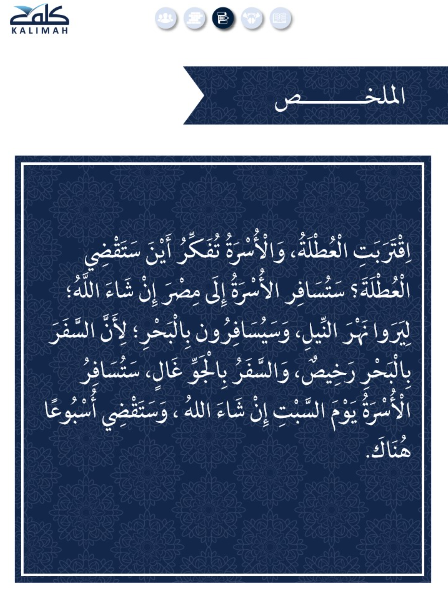
Transliteration:
iqtarabat al-‘utlah, wa al-usrah tufakkiru ayna sataqdee al-‘utlah. satusaafir al-usrah ila misr in shaa’a allah; liyaraw nahra al-nil, wa sayusafiruna bil-bahr; li’anna al-safar bil-bahr rakhees, wa al-safar bil-jaw ghal, satusaafir al-usrah yawma al-sabt in shaa’a allah, wa sataqdee usbu’an hunak.
Translation:
The vacation is approaching, and the family is thinking about where they will spend the vacation. The family will travel to Egypt, God willing, to see the Nile River, and they will travel by sea because travel by sea is cheap, and air travel is expensive. The family will travel on Saturday, God willing, and will spend a week there.
Questions:
- ما الذي تفكر فيه الأسرة؟ (What is the family thinking about?)
- إلى أين ستسافر الأسرة؟ (Where will the family travel?)
- لماذا سيسافرون بالبحر؟ (Why will they travel by sea?)
- متى ستسافر الأسرة؟ (When will the family travel?)
- كم يوما ستقضي الأسرة في مصر؟ (How many days will the family spend in Egypt?)
Answers:
- تفكر الأسرة اين ستقضي العطلة (tufakkir al-usrah ayna sataqdi al-‘utlah) (The family is thinking about where they will spend the vacation.)
- ستسافر الأسرة إلى مصر (satusaafir al-usrah ila misr) (The family will travel to Egypt.)
- سيسافرون بالبحر لأن السفر بالبحر رخيص (sayusafirun bil-bahr li’anna al-safar bil-bahr rakhees) (They will travel by sea because travel by sea is cheap).
- ستسافر الأسرة يوم السبت. (satusaafir al-usrah yawm al-sabt) (The family will travel on Saturday.)
- ستقضي الأسرة اسبوعا في مصر. (sataqdi al-usrah usbu’an fi misr) (The family will spend a week in Egypt.)
Arabic Reading Comprehension Exercise 2 (Intermediate Level)
Read the following passage and answer the questions:
النص (The Passage):
محمد طالب في كلية الطب في القاهرة. هو يستيقظ كل يوم في الساعة السادسة صباحاً، ثم يتناول الفطور مع عائلته. بعد ذلك، يذهب إلى الجامعة بالمترو، لأن المترو أسرع من السيارة في المدينة. في المساء، يدرس محمد لمدة ثلاث ساعات ويقرأ الكتب الطبية. في نهاية الأسبوع، يلتقي بأصدقائه ويلعبون كرة القدم معاً.
Transliteration:
Muhammad talibun fi kulliyyat al-tibb fil-Qahira. Huwa yastayqidhu kull yawm fi al-sa’a al-sadisa sabahan, thumma yatanawalu al-futur ma’a ‘a’ilitih. Ba’da dhalika, yadhhab ila al-jami’a bil-metro, li’anna al-metro asra’u min al-sayyara fil-madina. Fil-masa’, yadrus Muhammad li-muddat thalath sa’at wa yaqra’ al-kutub al-tibbiyya. Fi nihayat al-usbu’, yaltaqi bi-asdiqa’ih wa yal’aboona kurat al-qadam ma’an.
Translation:
Muhammad is a medical student in Cairo. He wakes up every day at 6 AM, then has breakfast with his family. After that, he goes to university by metro because the metro is faster than a car in the city. In the evening, Muhammad studies for three hours and reads medical books. At the weekend, he meets his friends and they play football together.
Questions (أسئلة):
- ماذا يدرس محمد؟ (What does Muhammad study?)
- في أي ساعة يستيقظ محمد؟ (At what time does Muhammad wake up?)
- كيف يذهب محمد إلى الجامعة؟ (How does Muhammad go to university?)
- كم ساعة يدرس محمد في المساء؟ (How many hours does Muhammad study in the evening?)
- ماذا يفعل محمد في نهاية الأسبوع؟ (What does Muhammad do on weekends?)
Answers (إجابات):
- يدرس محمد الطب. (He studies medicine.)
- يستيقظ في الساعة السادسة صباحاً. (He wakes up at 6 AM.)
- يذهب إلى الجامعة بالمترو. (He goes to university by metro.)
- يدرس ثلاث ساعات. (He studies for three hours.)
- يلتقي بأصدقائه ويلعبون كرة القدم. (He meets his friends and they play football.)
Know more about Syllable Structure In Arabic
Arabic Practice Sentences: Sentence Construction Exercises With Examples
Constructing sentences is a great way to practice grammar and vocabulary. Start with simple sentences and gradually build more complex ones.
Creating Sentences with New Vocabulary
Choose new words you have learned and use them in sentences. This reinforces your memory and understanding of their usage.
Interactive Exercise: Sentence Construction
Using the following words, create your own sentences:
- كتاب (Kitab) – Book
- مدرسة (Madrasa) – School
- مدينة (Madina) – City
Examples:
- أحب قراءة الكتاب. (Uhibu qira’at al-kitab.) – I love reading the book.
- المدرسة قريبة من المنزل. (Al-madrasa qariba min al-manzil.) – The school is near the house.
- أسكن في مدينة كبيرة. (Askunu fi madina kabira.) – I live in a big city.
Exercise 1: Translate These Sentences into Arabic
Practice constructing Arabic sentences by translating these English sentences:
- I read the book every day.
- She studies at the university.
- We go to the mosque on Friday.
- The students are in the classroom.
- He drinks coffee in the morning.
Answers:
- أنا أقرأ الكتاب كل يوم. (Ana aqra’ al-kitab kull yawm.)
- هي تدرس في الجامعة. (Hiya tadrus fil jami’a.)
- نحن نذهب إلى المسجد يوم الجمعة. (Nahnu nadhhab ila al-masjid yawm al-jum’a.)
- الطلاب في الفصل. (Al-tullab fil fasl.)
- هو يشرب القهوة في الصباح. (Huwa yashrab al-qahwa fil sabah.)
Exercise 2: Complete the Sentence
Fill in the blank with the correct Arabic word:
- أنا _______ في لندن. (I live in London.) [اسكن / يسكن]
- الكتاب _______ الطاولة. (The book is on the table.) [على / في]
- هي _______ اللغة العربية. (She studies the Arabic language.) [تدرس / يدرس]
Answers: 1. أسكن | 2. على | 3. تدرس
Arabic Verb Conjugation Practice: Complete Conjugation Tables for 5 Common Verbs
Arabic verbs conjugate for 14 different subject forms across three tenses. Here are complete conjugation tables for the five most important verbs for beginners:
Verb: كَتَبَ (kataba) — To Write
Past Tense (الماضي):
| Pronoun | Arabic | Transliteration | Meaning |
|---|---|---|---|
| أنا | كَتَبْتُ | katabtu | I wrote |
| أنتَ | كَتَبْتَ | katabta | You wrote (m) |
| أنتِ | كَتَبْتِ | katabti | You wrote (f) |
| هو | كَتَبَ | kataba | He wrote |
| هي | كَتَبَتْ | katabat | She wrote |
| نحن | كَتَبْنا | katabna | We wrote |
| أنتم | كَتَبْتُم | katabtum | You wrote (m. plural) |
Present Tense (المضارع):
| Pronoun | Arabic | Transliteration | Meaning |
|---|---|---|---|
| أنا | أَكْتُبُ | aktub | I write |
| أنتَ | تَكْتُبُ | taktub | You write (m) |
| أنتِ | تَكْتُبِينَ | taktubeen | You write (f) |
| هو | يَكْتُبُ | yaktub | He writes |
| هي | تَكْتُبُ | taktub | She writes |
| نحن | نَكْتُبُ | naktub | We write |
| أنتم | تَكْتُبُونَ | taktuboona | You write (m. plural) |
Verb: ذَهَبَ (dhahaba) — To Go
Present Tense (المضارع):
| Pronoun | Arabic | Transliteration |
|---|---|---|
| أنا | أَذْهَبُ | adhhab |
| أنتَ | تَذْهَبُ | tadhhab |
| أنتِ | تَذْهَبِينَ | tadhhabeen |
| هو | يَذْهَبُ | yadhhab |
| هي | تَذْهَبُ | tadhhab |
| نحن | نَذْهَبُ | nadhhab |
Verb: قَرَأَ (qara’a) — To Read
Present Tense (المضارع):
| Pronoun | Arabic | Transliteration |
|---|---|---|
| أنا | أَقْرَأُ | aqra’ |
| أنتَ | تَقْرَأُ | taqra’ |
| أنتِ | تَقْرَئِينَ | taqra’een |
| هو | يَقْرَأُ | yaqra’ |
| هي | تَقْرَأُ | taqra’ |
| نحن | نَقْرَأُ | naqra’ |
Conjugation Practice Exercise
Conjugate the verb أَكَلَ (akala — to eat) in the present tense for:
- أنا (I)
- هو (He)
- هي (She)
- نحن (We)
Answers:
- أنا آكُلُ (Ana akulu)
- هو يَأْكُلُ (Huwa ya’kul)
- هي تَأْكُلُ (Hiya ta’kul)
- نحن نَأْكُلُ (Nahnu na’kul)
Arabic Grammar Exercises With Answers
Exercise 1: Identify the Grammatical Role (I’rab)
For each sentence, identify whether the underlined word is the Subject (مبتدأ/فاعل), Object (مفعول به), or Predicate (خبر):
- الطالبُ مجتهدٌ. (Al-talibu mujtahidun — The student is hardworking.)
- قرأَ أحمدُ الكتابَ. (Qara’a Ahmadu al-kitaba — Ahmed read the book.)
- الكتابُ جميلٌ. (Al-kitabu jamilun — The book is beautiful.)
Answers:
- الطالب = Subject (مبتدأ — nominative, Mubtada)
- الكتاب = Direct Object (مفعول به — accusative)
- جميل = Predicate (خبر — nominative, Khabar)
Exercise 2: Masculine or Feminine?
Classify each noun as masculine (مذكر) or feminine (مؤنث):
| Noun | Arabic | Masculine or Feminine? |
|---|---|---|
| School | مدرسة | |
| Student (male) | طالب | |
| City | مدينة | |
| Book | كتاب | |
| Teacher (female) | مُعَلِّمة |
Answers: مدرسة = Feminine | طالب = Masculine | مدينة = Feminine | كتاب = Masculine | مُعَلِّمة = Feminine
Exercise 3: Definite Article (الـ) with Sun and Moon Letters
Add the correct form of “الـ” (the) to these nouns, applying assimilation rules for sun letters:
- شمس (sun) → _______ شمس
- قمر (moon) → _______ قمر
- رجل (man) → _______ رجل
- كتاب (book) → _______ كتاب
Answers:
- الشَّمس (al-shams → ash-shams — ش is a sun letter, ل assimilates)
- القمر (al-qamar — ق is a moon letter, no assimilation)
- الرَّجل (al-rajul → ar-rajul — ر is a sun letter)
- الكتاب (al-kitab — ك is a moon letter)
Basic Arabic Workbook for Revision and Practice
Having a dedicated workbook helps consolidate your learning through structured exercises and revision.
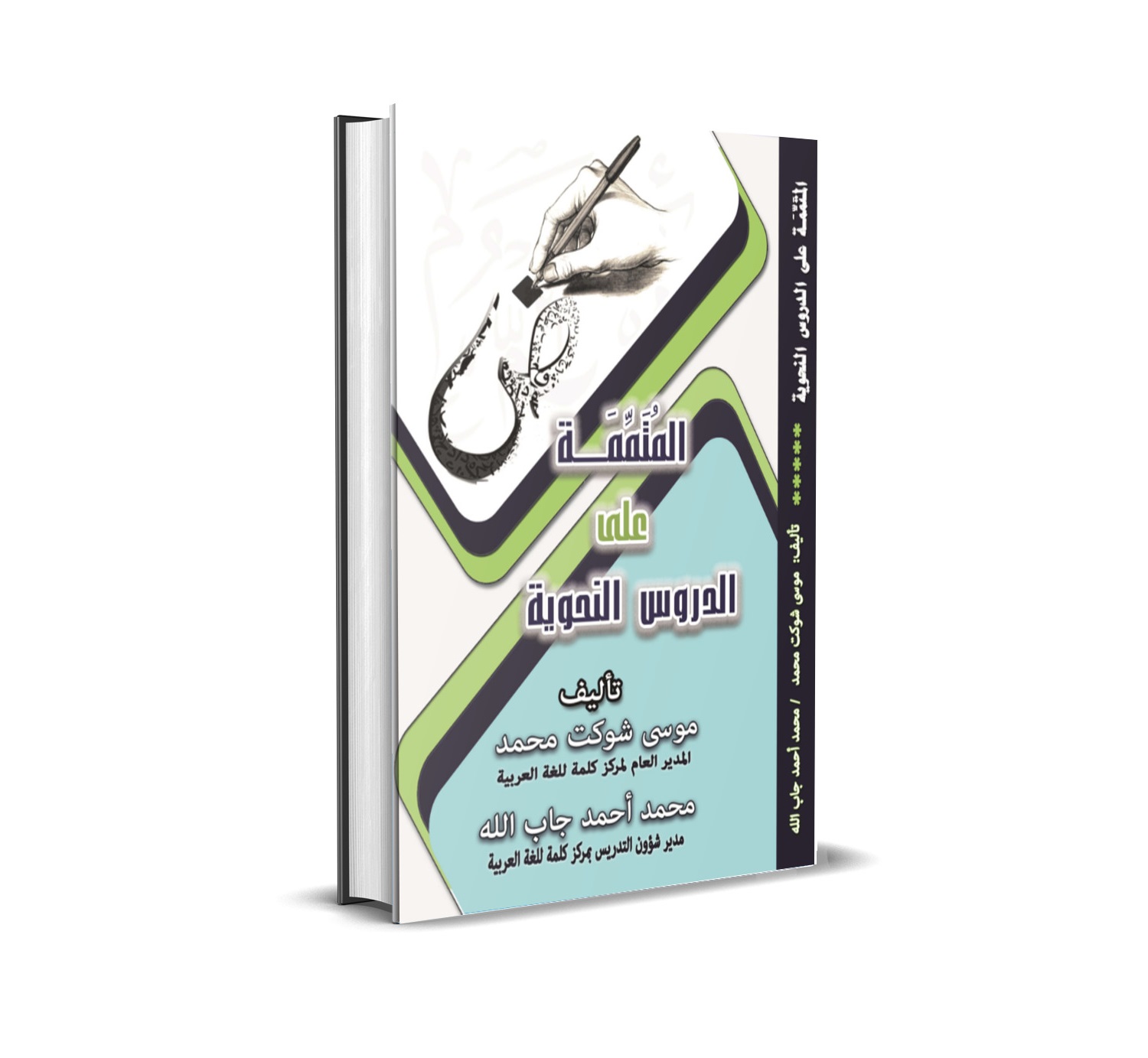
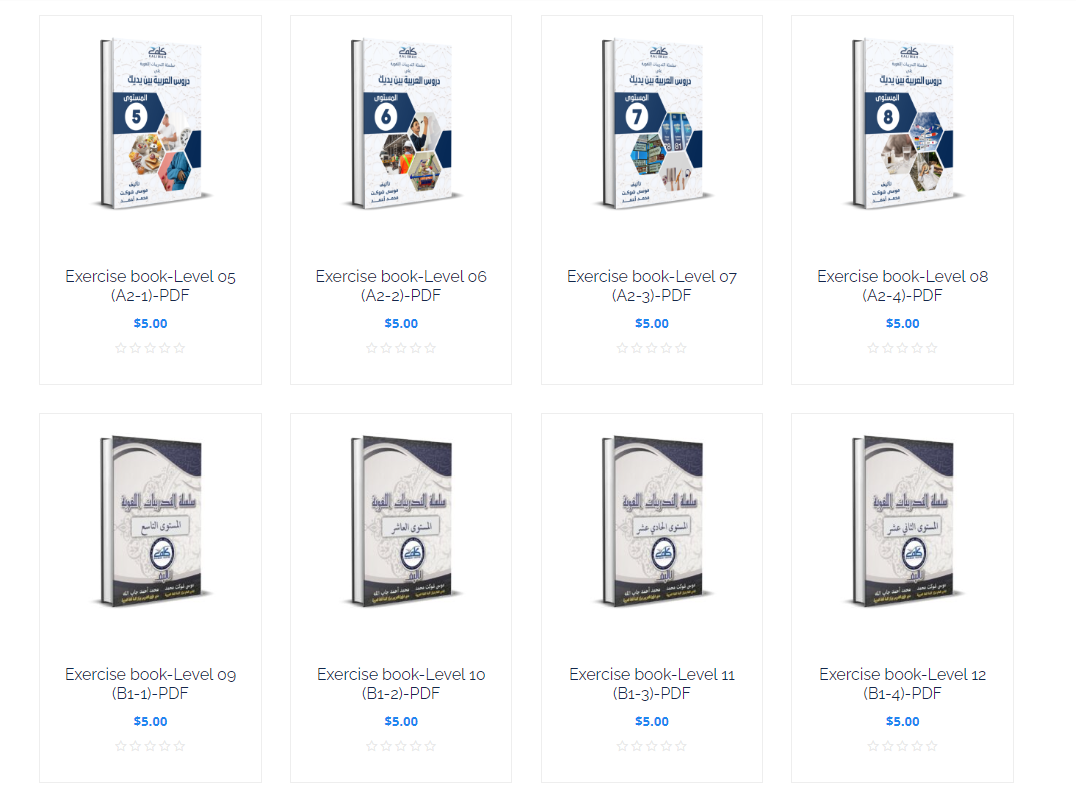
You can find workbooks for different levels in our book shop here.
Using Workbooks Effectively
Set aside time each day to work through exercises in your Arabic workbook. Focus on different skills, such as reading, writing, and grammar.
Master Arabic with Kalimah Center
Join our expert-led online classes and start your journey toward Arabic fluency today.
Book Your Free TrialInside Kalimah Center: Moments from Our Courses
Get a glimpse into the vibrant learning experience at Kalimah Center. These snapshots capture real moments from our live classes—where students engage deeply, connect with passionate instructors, and grow in a welcoming, supportive environment.
Here Are The Reviews On Our Courses:
Our students frequently commend the excellence of our courses and the commitment shown by our instructors. You can read their complete reviews on Trustpilot.

Ready to Transform Your Arabic Practice into Mastery?
You’ve got the exercises, now it’s time to level up your skills! Kalimah Center‘s online Arabic courses offer the perfect complement to your hands-on practice, whether you’re a beginner or an advanced learner.
Why Kalimah? Because our courses provide the guidance and structure you need to take your skills to the next level:
- Guided Practice: Don’t just practice blindly. Our expert teachers will correct your mistakes and provide feedback so you can improve faster.
- Structured Curriculum: Our courses are carefully designed to build your skills step-by-step, so you can make consistent progress.
- Hands-On Learning: Our courses go beyond drills, immersing you in authentic conversations, texts, and cultural experiences.
- Personalized Guidance: Whether you’re a beginner or advanced learner, our expert teachers tailor lessons to your individual needs and goals.
- Complete Arabic Mastery: We don’t just focus on one skill. Kalimah develops your reading, writing, listening, AND speaking abilities, giving you the confidence to navigate real-life Arabic scenarios.
Imagine what you could do with fluent Arabic:
- Kids? Enroll them in our specialized children’s courses and watch them blossom into confident Arabic speakers.
- Adults? Choose from beginner to advanced levels and explore topics from everyday life to complex societal issues in the Adults’ courses.
- Want to read Arabic literature? We’ll unlock the classics for you.
Kalimah isn’t just a course, it’s your Arabic language partner. Click here to discover our programs and take the next step on your path to Arabic mastery.
📚 Explore Our Courses:
Online Arabic Course: Tailored to your level, our comprehensive Arabic program includes 16 teaching levels and 400+ hours of personalized sessions.
Online Quran With Tajweed Course: Perfect for non-Arabic speakers, our course spans 13 levels and equips you with Tajweed mastery from beginner to advanced.
Online Arabic Course For Kids: Nurture your child’s love for Arabic with our engaging and structured program, available in 24 levels for primary, intermediate, and secondary stages.
🚀 Start Your Free Trial Today! 🚀
Don’t miss out on this life-changing opportunity to deepen your faith and knowledge. Sign up now for your free trial and take the first step towards becoming a better practicing Muslim with Kalimah Center!
Conclusion:
To excel in Arabic language practice, focus on key areas: alphabet tracing, handwriting, conversation, listening, reading, and sentence construction. Start with tracing Arabic letters to master their shapes and sounds, using practice sheets to improve your writing skills. Engage in daily conversation exercises to build speaking confidence, using interactive dialogues to enhance fluency.
Boost listening comprehension by tuning into Arabic dialogues and podcasts, which also aid in pronunciation. Incorporate reading exercises to expand vocabulary and understand sentence structures. Construct sentences with new words and practice verb conjugations to strengthen grammar. For comprehensive skill development, integrate structured online Arabic courses that offer expert feedback, guided practice, and a well-rounded curriculum to advance your proficiency in Arabic.
FAQs about Arabic Language Practice
Q1: What does “أسكن” (askunu) mean in Arabic?
أسكن (askunu) means “I live” or “I reside” in Arabic. It is the first-person singular present tense form of the verb سكن (sakana) — “to live/reside/dwell.” Example: أسكن في مدينة كبيرة (Askunu fi madina kabira) — “I live in a big city.” The root of this verb is س-ك-ن (s-k-n), which carries the meaning of stillness, residence, and dwelling. Related words: مسكن (maskan) = dwelling/home, ساكن (sakin) = resident/quiet.
Q2: How many minutes a day should I practice Arabic to make real progress?
Research in language acquisition consistently shows that daily practice — even 20 minutes — outperforms longer but infrequent sessions. For Arabic specifically, the recommended daily practice minimum is: 10 minutes of reading or vocabulary review + 10 minutes of writing or conjugation practice + (3x per week) 30–45 minutes of speaking with a native speaker or structured dialogue practice. At this pace, beginner learners typically achieve basic reading fluency in 4–8 weeks and conversational ability in 6–12 months.
Q3: What is the best way to practice Arabic speaking at home?
The five most effective home speaking practice methods are: (1) shadowing — listen to native Arabic speech and repeat it immediately, matching rhythm and pronunciation; (2) dialogue memorization — memorize short dialogues and recite them with expression; (3) self-narration — describe what you’re doing in Arabic as you do it (“أنا أشرب القهوة” — I am drinking coffee); (4) language exchange — find a native Arabic speaker who wants to practice your language via apps like Tandem or HelloTalk; (5) live online sessions with a native Arabic teacher — the most effective option for pronunciation correction.
Q4: How do I practice Arabic reading without a teacher?
Effective self-study Arabic reading practice follows this progression: (1) start with fully vowelled (harakāt) text — children’s Arabic books, Iqraa workbooks; (2) practice the same passage multiple times until you can read it fluently without stopping; (3) use the reading comprehension exercises in this article — read the passage, answer the questions without looking at answers, then check; (4) gradually move to partially vowelled text (some harakāt); (5) challenge yourself with unvowelled text only after achieving fluency with vowelled passages. Daily 15-minute reading sessions produce visible improvement within 4–6 weeks.
Q5: How do I practice Arabic verb conjugation effectively?
The most effective verb conjugation practice method: (1) start with the most common verbs — ذهب (go), قرأ (read), كتب (write), أكل (eat), شرب (drink); (2) conjugate in all 14 pronouns (I, you-m, you-f, he, she, you dual, we, you-plural m/f, they-plural m/f); (3) use conjugation in real sentences, not just isolated forms; (4) practice all three tenses — past (الماضي), present (المضارع), imperative (الأمر) for each verb; (5) create your own sentences using conjugated forms to reinforce contextual memory. Spending 10–15 minutes daily on 1–2 verbs produces excellent retention within 2–3 weeks.