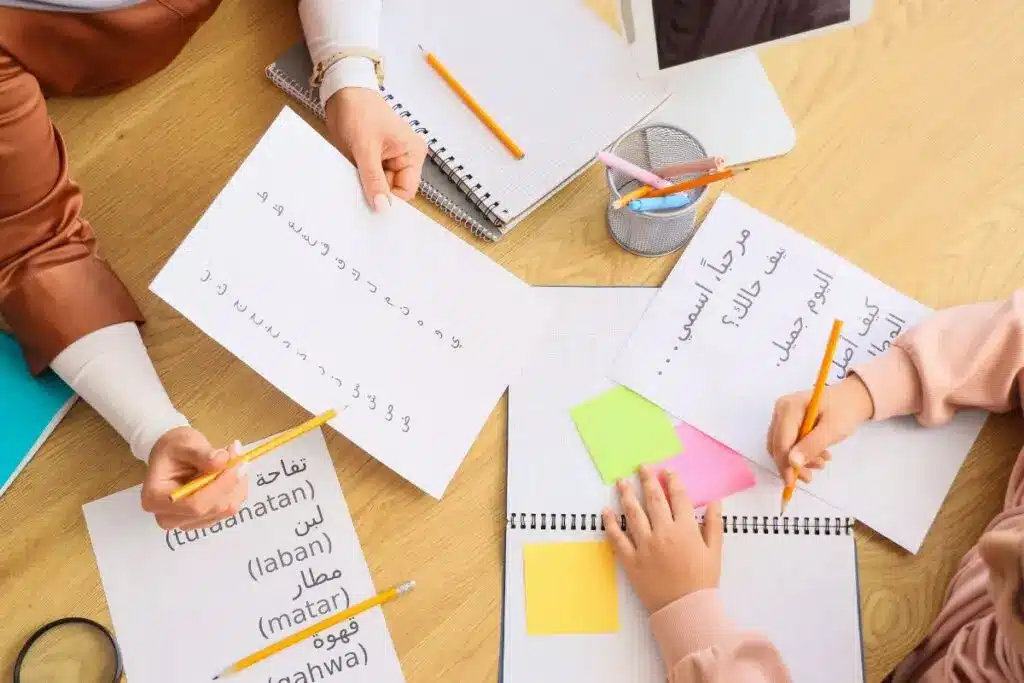
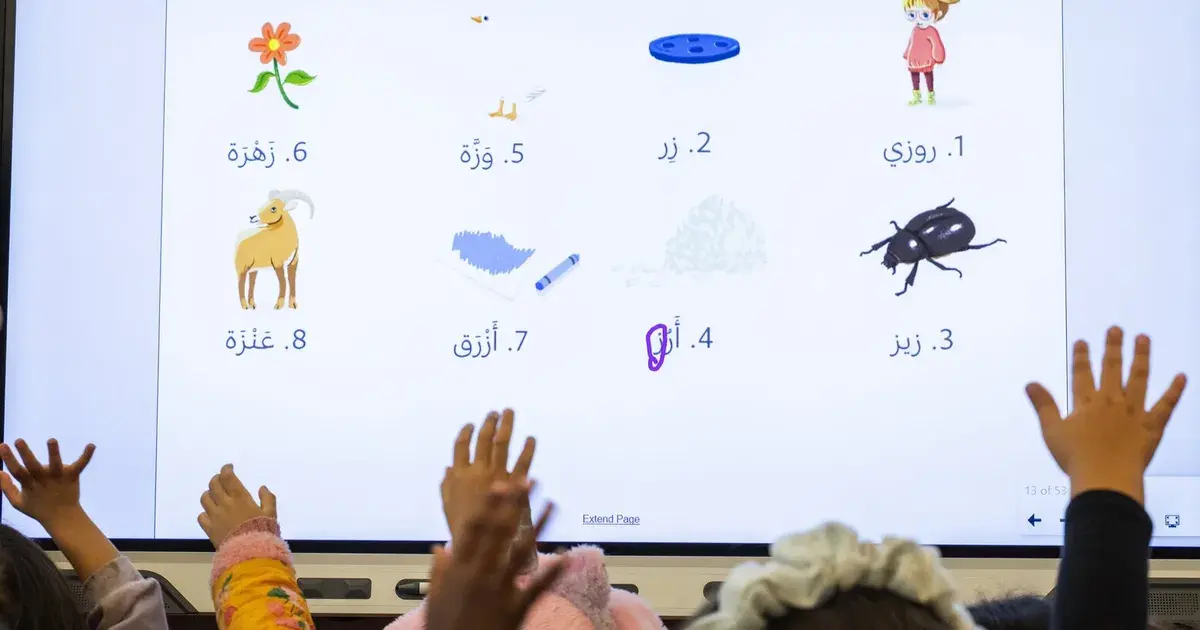
The Arabic alphabet — الأبجدية العربية (al-Abjadiyya al-Arabiyya) — consists of 28 letters, all consonants, written right to left. Each letter has up to four positional forms (isolated, initial, medial, final) and can change sound based on diacritical marks called harakat.
Six letters are non-connecting. Three letters double as long vowels. Understanding these characteristics — through structured practice and exercises — is the foundation of Arabic reading and writing fluency.
✅ Quick Answer Table:
| Question | Direct Answer |
|---|---|
| How many letters in the Arabic alphabet? | 28 |
| What is the Arabic alphabet called? | الأبجدية العربية (al-Abjadiyya al-Arabiyya) |
| How many forms does each letter have? | Up to 4 (isolated, initial, medial, final) |
| How many letters don’t connect? | 6 (ا د ذ ر ز و) |
| What are the types of Arabic letters? | Connecting/non-connecting, consonants/long vowels, sun/moon, emphatic/non-emphatic |
| Is Arabic written left to right? | No — right to left |
| What are harakat? | Diacritical marks showing short vowels (Fatha, Kasra, Damma) |
| Is the Arabic alphabet hard to learn? | The alphabet is learnable in 2–4 weeks with daily practice |
What Is the Arabic Alphabet?
The Arabic alphabet, known as “الأبجدية العربية” (al-abjadiyyah al-‘arabiyyah), is the set of letters used to write the Arabic language. The Arabic alphabet or Arabic abjad has 28 letters, all of which stand for consonants. Alif (ا), waw (و), and yaa (ي) are three letters that, in some instances, can also stand in for long vowels. The alphabet does not include short vowels.
I asked Ustadh Hamada, “How do you define the Arabic alphabet when explaining it to new students?”
He said, “I tell them that the Arabic alphabet is not just a set of symbols. Each letter has a unique identity and function. Some letters can change form depending on their position in a word. This adds complexity, but it also makes the language dynamic.”
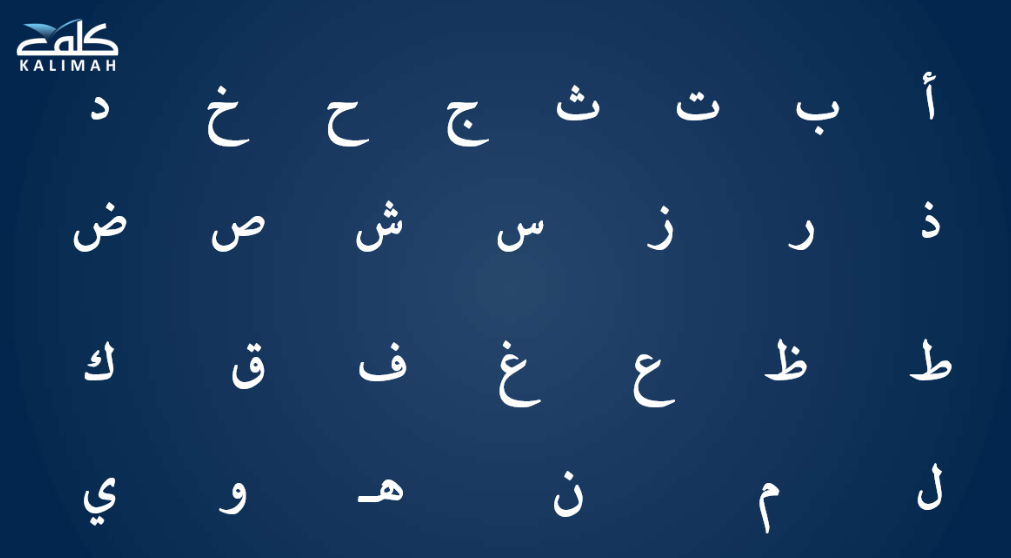
Detailed Breakdown of Each Arabic Letter (with pronunciation)
Now, we will study the Arabic letters in detail with their pronunciation in Arabic and English language
| The isolated letter | Pronunciation in English | Transliteration | Pronunciation in Arabic |
| ا | Like A in ant | Āalif | أَلِف |
| ب | Like B in Boy | bāĀ | بَاء |
| ت | Like T in Tall | tāĀ | تَاء |
| ث | Like the Th in Three | ThāĀ | ثَاء |
| ج | like the G in Good or like the G in engine | Jīm | جِيم |
| ح | Like the h in he but light in pronunciation | HāĀ | حَاء |
| خ | Like the Ch in the of name Bach | ḰāĀ | خَاء |
| د | Like the D in Door | dāl | دَال |
| ذ | Like the Th in The | ḏāl | ذَال |
| ر | Like the R in Rat | rāĀ | رَاء |
| ز | Like the Z in zoo | zāy | زَاي |
| س | Like the S in Sea | sīn | سِين |
| ش | Like the Sh in She | šīn | شِين |
| ص | Like the S in Sad but heavier in pronunciation | Sād | صَاد |
| ض | Like the D in Dead but heavier in pronunciation | Dād | ضَاد |
| ط | Like the T in Dead but heavier in pronunciation | TāĀ | طَاء |
| ظ | Like the Z in Zorro but heavier in pronunciation | DhāĀ | ظَاء |
| ع | Like A sound in the name Ali | 3ayn | عَينٍ |
| غ | Like the Gh in Ghandi | ğhayn | غَين |
| ف | Like the F in Foot | fāĀ | فَاء |
| ق | Like the Q in Queen | qāf | قَاف |
| ك | Like the C in Cat | kāf | كَاف |
| ل | Like the L in Life | lām | لاَم |
| م | Like the M in Moon | mīm | مِيم |
| ن | Like the N in No | nūn | نُون |
| ه | Like the H in Hat | hāĀ | هَاء |
| و | Like the W in WAW! | wāw | وَاو |
| ي | Like the Y in You | yāĀ | يَاء |
Read more about what are Sun and Moon Letters
How Many Letters are in the Arabic Alphabet?
The Arabic alphabet has 28 letters, each with its own distinct identity. This set form the foundation of the Arabic language. But, as Ustadh Hamada pointed out, it’s not just about the number.
“Each letter in Arabic can take up to three different forms, depending on whether it’s at the beginning, middle, or end of a word, or standing alone,” he explained. “This means that even though there are only 28 letters, students need to learn many variations.”
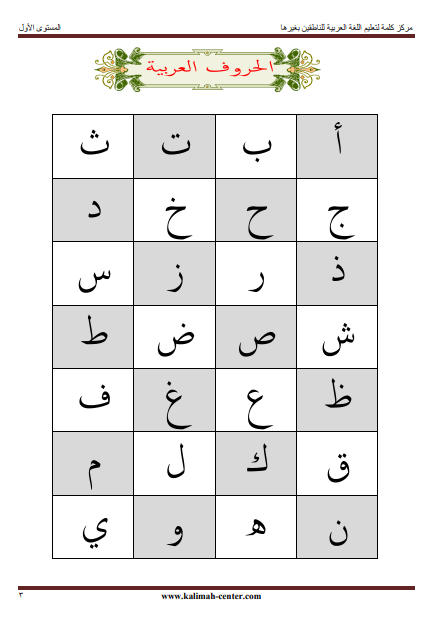
*From Kalimah’s curriculum for the online Arabic Course.
In his classes within our online Arabic course, Ustadh Hamada also emphasizes the importance of understanding that every Arabic letter is made up of three main aspects: name, sound, and shape.
- Name: The name of each letter is how you refer to it when saying the alphabet. For instance, the first letter “أ” is called “Alif.”
- Shape: Each letter in the Arabic alphabet can appear in different forms depending on its position in the word.
- Sound: The sound of each letter can change depending on the diacritical marks (harakat) placed above or below it.
Why Learn the Arabic Alphabet?
The Arabic alphabet is not merely the starting point of Arabic learning — it is the key that unlocks everything else. Without it, you are dependent on transliteration (writing Arabic sounds in English letters), which is a crutch that actively slows long-term progress by preventing direct sound-to-symbol connection from forming.
Specific reasons to prioritise the alphabet first:
- Quran access: The Quran is written entirely in Arabic script. Even learners who do not yet understand Arabic meaning can read the Quran with correct pronunciation once the alphabet and harakat are mastered — a milestone that holds profound spiritual significance for Muslim learners.
- Independent reading: Once you know the alphabet, you can sound out any vowelled Arabic word — even one you have never seen before. Arabic is phonetically consistent — what you see is what you say.
- Vocabulary acceleration: Reading words in Arabic script is faster and more reliable than reading transliteration, where different systems use different conventions for the same sounds.
- Writing ability: Communication in Arabic — with native speakers, in academic contexts, in professional settings — requires the Arabic script. Transliteration is not accepted in any formal Arabic context.
- Cultural access: Arabic calligraphy, street signs, menus, books, social media posts, and news articles are all in Arabic script. The alphabet is the entry point to authentic engagement with the Arabic-speaking world.
Read also: Arabic letter jeem
The Arabic Alphabet in Order: All 28 Letters With Positional Forms
To help our readers, we decided to include a table of the Arabic alphabet in order. Each letter is presented with its isolated form, and we added examples of how the letter might look in different positions within a word.
| Letter | Name | Initial Form | Medial Form | Final Form | Example | Translation | Transliteration |
| ا | Alif | ا | ـا | ـا | كتاب | Book | Kitaab |
| ب | Baa | بـ | ـبـ | ـب | بيت | House | Bayt |
| ت | Taa | تـ | ـتـ | ـت | كُتب | books | Kuttub |
| ث | Thaa | ثـ | ـثـ | ـث | ثعلب | Fox | Tha’lab |
| ج | Jeem | جـ | ـجـ | ـج | جمل | Camel | Jamal |
| ح | Haa | حـ | ـحـ | ـح | حصان | Horse | Hisan |
| خ | Khaa | خـ | ـخـ | ـخ | خبز | Bread | Khubz |
| د | Dal | د | ـد | ـد | دجاج | Chicken | Dajaj |
| ذ | Dhal | ذ | ـذ | ـذ | ذهب | Gold | Dhahab |
| ر | Raa | ر | ـر | ـر | بئر | Well | Bi’r |
| ز | Zaay | ز | ـز | ـز | زرافة | Giraffe | Zarafa |
| س | Seen | سـ | ـسـ | ـس | سمك | Fish | Samak |
| ش | Sheen | شـ | ـشـ | ـش | شمس | Sun | Shams |
| ص | Saad | صـ | ـصـ | ـص | صقر | Falcon | Saqr |
| ض | Daad | ضـ | ـضـ | ـض | ضفدع | Frog | Difda’ |
| ط | Ta’ | طـ | ـطـ | ـط | طائر | Bird | Ta’ir |
| ظ | Dha’ | ظـ | ـظـ | ـظ | ظرف | Envelope | Zarf |
| ع | A’yen | عـ | ـعـ | ـع | نعل | Shoe | Naa’l |
| غ | Ghayen | غـ | ـغـ | ـغ | غزال | Gazelle | Ghazal |
| ف | Faa | فـ | ـفـ | ـف | فاكهة | Fruit | Fakha |
| ق | Qaf | قـ | ـقـ | ـق | قمر | Moon | Qamar |
| ك | Kaf | كـ | ـكـ | ـك | سكر | Sugar | Sukkar |
| ل | Laam | لـ | ـلـ | ـل | ليمون | Lemon | Laymun |
| م | Meem | مـ | ـمـ | ـم | مفتاح | Key | Miftah |
| ن | Noon | نـ | ـنـ | ـن | نمر | Tiger | Nimr |
| هـ | Haa’ | هـ | ـهـ | ـه | سهل | Easy | Sahl |
| و | Waw | و | ـو | ـو | ورد | Rose | Ward |
| ي | Yaa’ | يـ | ـيـ | ـي | يدي | My Hand | Yady |
As you can see, the Arabic alphabet in order reveals the versatility and beauty of each letter.
As you progress in your journey to learn Arabic, it’s essential to choose the right place to study. One of our students, Hasan Rahman from the UK, shared his experience with Kalimah Center, highlighting how our Arabic course have helped him transform his Arabic skills:

Hasan’s journey is a testament to the effectiveness of our teaching methods. Whether you are starting from scratch or looking to advance your Arabic skills, our courses are designed to guide you through each step, ensuring that you not only learn the language but also gain the confidence to use it in real-life conversations.
Read also: Letter kh in Arabic
Types of Arabic Alphabet Letters: A Complete Classification
In our conversation, we also touched on the different types of Arabic alphabets. Ustadh Hamada explained that while there is only one Arabic alphabet, the letters have different forms depending on their position in a word.
However, Arabic letters can be categorized in several ways, each classification highlighting a specific aspect of their form or function.
1. Types of Arabic Alphabet Based on Connectivity
- Connecting Letters: Most Arabic letters connect to the letters following them, creating a continuous flow of script.
- Non-Connecting Letters: Six letters do not connect to the letters after them, causing breaks in the flow of words. These are:
- ا (alif)
- د (daal)
- ذ (dhaal)
- ر (raa)
- ز (zay)
- و (waaw)
2. Types of Arabic Alphabet Based on Shape Changes
- Letters with up to Three Forms: Some letters have distinct shapes depending on their position within a word:
- Initial form: When the letter starts a word.
- Medial form: When the letter is in the middle of a word.
- Final form: When the letter ends a word.
B. Letters with only one Form: A few letters have only one form.
3. Types of Arabic Alphabet Based on Phonetic Function
- Consonants: The majority of Arabic letters represent consonants.
- Long Vowels: Three letters can also represent long vowels:
- ا (alif) – represents the long vowel ‘ā’
- و (waaw) – represents the long vowel ‘ū’
- ي (yaa’) – represents the long vowel ‘ī’
4. Types of Arabic Alphabet Based on Dots
- Letters with Dots: Some letters have dots above or below them to distinguish them from similar-looking letters.
- Letters without Dots: Other letters lack any diacritical marks.
5. Other Classifications
- Sun Letters: Letters that cause the definite article ‘al’ to assimilate and be pronounced as the same sound as the letter itself.
- Moon Letters: Letters that do not cause assimilation of the definite article ‘al.’
- Emphatic Letters: Letters pronounced with a constriction in the pharynx, giving them a “heavy” or “emphatic” quality.
- Guttural Consonants: These consonants are produced in the back of the throat and include sounds like “h,” “kh,” and “gh.”
- Sibilant Consonants: These consonants produce a hissing sound, such as “s,” “sh,” and “z.”
Read Also: Arabic Alphabet for Kids
Experience Kalimah Center Classes
Watch real excerpts from our live sessions at Kalimah Center and see how we bring learning to life. These clips highlight our interactive, student-centered teaching approach across all our courses—designed to keep learners engaged, motivated, and actively involved every step of the way.
Master Arabic with Kalimah Center
Join our expert-led online classes and start your journey toward Arabic fluency today.
Book Your Free TrialHow Arabic Letters Connect: Positional Forms and Combinations
Next, we discussed how Arabic letters connect to form words. Unlike English, where letters are usually separate, Arabic letters connect in fluid combinations, creating a cursive script.
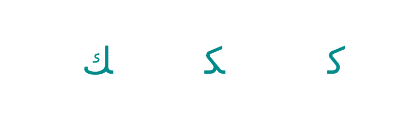
For example, the letter ك (Kaf) changes its shape depending on where it appears in a word: كـ at the beginning, ـكـ in the middle, and ـك at the end.
Ustadh Hamada said, “Arabic is a language that flows. And this is reflected in the way the letters are combined. The beauty of the language lies in these connections.”
This connection is not merely aesthetic; it is a fundamental aspect of Arabic writing that ensures clarity and readability.
Arabic Alphabet in All Positions (Initial, Medial, Final)
ِAs we mentioned, each Arabic letter can have up to 3 different forms:
- Initial: This form is used when the letter begins a word and connects to the following letter.
- Medial: When a letter is positioned in the middle of a word, connecting to both the preceding and following letters, it takes on its medial form.
- Final: The final form is used when the letter ends a word and connects to the preceding letter.
| هـ | ـهـ | ـه |
Arabic Alphabet Combination
The connection between Arabic letters is achieved through a continuous baseline. Letters are joined seamlessly, creating a flowing script that is both beautiful and functional. The connection can influence the shape of the letters, sometimes dramatically.
For example, the letters ل (Lām) and ا (Alif) combine to form لا, a common combination that appears frequently in Arabic words.
We also discussed the art of combining letters to create words, which is a critical step in learning Arabic.
For example, the letter “Jeem – Jaa” (ج) connects smoothly with the letter “Meem – Maa” (م), the the letter (meem) connects with the letter “Laam – Laa” (ل) to form the word “جَمَل” (Jaml), meaning “Camel”
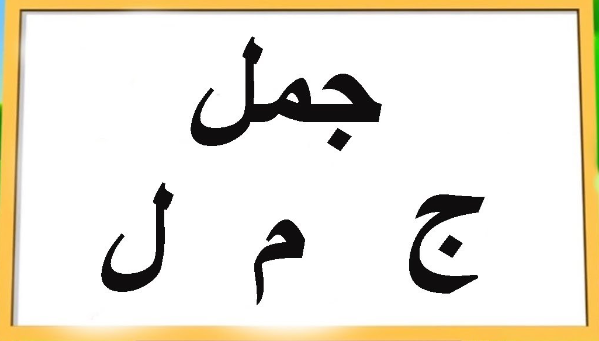
Mastering these combinations allows learners to begin forming words and sentences, which is an exciting milestone in their language journey.
Read also: Arabic letter alif
How to Learn the Arabic Alphabet: The 3-Component Method
During our conversation, Ustadh Hamada shared some practical tips that I found extremely valuable, especially for beginners:
1. Learning the Names of the Letters
The first thing a student should do is memorize the names of the letters. Ustadh Hamada suggested writing out the names in large letters, even using the student’s native language for transliteration if needed. For example, “ألف” (Alif) could be written as “Alef” in English.
Breaking this down into small steps is key. Learn the first 7 letters on the first day, the next six on the second day, and so on, reviewing all the letters as you go.
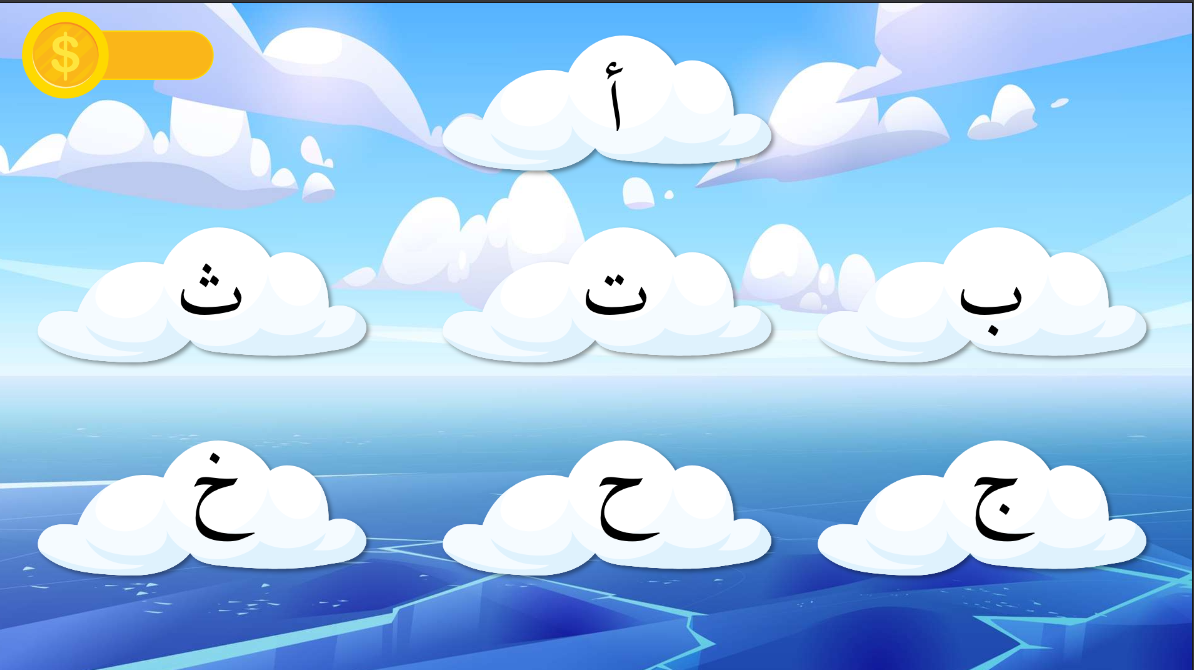
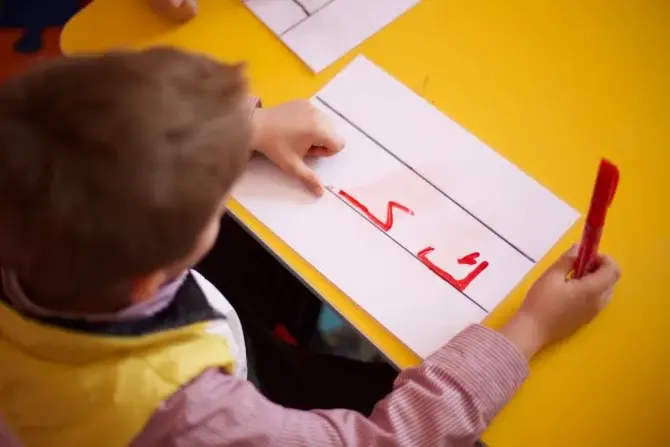
*From Kalimah’s Arabic Course for Kids.
2. Understanding the Shapes of the Letters
As we mentioned, Arabic letters either stand alone or connect with other letters. If they connect, they have different shapes depending on whether they are at the beginning, middle, or end of a word.
Ustadh Hamada suggested learning these in stages too. Don’t try to memorize all the forms at once. Start with isolated forms, then move on to how they look when connected.
You can use Kalimah Center’s tracing paper to practice writing each letter accurately.
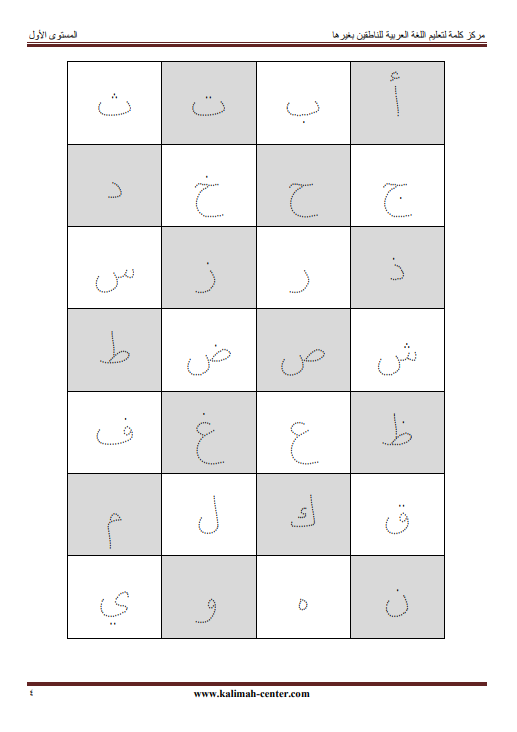

* Taken from Kalimah’s online Arabic course curriculum.
3. Learning the Sounds of the Letters
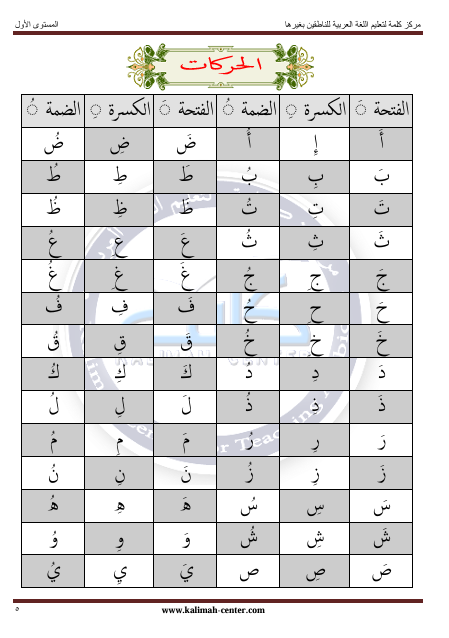
Each letter has a sound, which can change depending on the harakat (short vowels) that are applied. The three main harakat are:
- Fatha (َ), which gives the letter a short “a” sound.
- Kasra (ِ), which gives a short “i” sound.
- Damma (ُ), which gives a short “u” sound.
Ustadh Hamada recommends starting with the Fatha sound, as it is the easiest. Practice reading and writing the letters with Fatha before moving on to Kasra and Damma.
Arabic Letters Without an English Equivalent
There are some letters in the Arabic language that have no equivalent in the English language:
- The a’ (3ayn ع)
It is created by repositioning the epiglottis so that it is nearly touching the back of the throat. This sound is always light so do not mix between the (ع) and the (ء) as,
Aziz عزيز
Samie سميع
- The ha’ (Hā ح)
It is created, though not as much as in the (ع), by bringing the epiglottis to the rear wall of the throat. As a result, the epiglottis will not make contact with the throat’s back wall. we notice that the sound of the (ح)is different because the sound of the (ح) is produced by the air coming out as,
Halim حليم
Rahim رحيم
- The a’ (ghayn غ)
It is created by touching the tongue’s root against the soft palate, especially the uvula as,
Ghafur غفور
Almaghdub المغضوب
- The kha’ (khā خ)
It is also created by placing the tongue’s root against the soft palate. We do not apply as much pressure to the uvula as we do in the (غ) because the (خ)is a little lower than the (غ).
Khaliq خالق
‘akhadh أخذ
- The (ص Sād):
Do not raise your lower lip like some readers do; instead, make the (ص) heavy and give it its hams and whistles as,
Alsala الصلاة
Sarf صرف
- The (ض Dhād)
It is made by pressing on the left, right, or both sides of the tongue’s margins as they touch the gum of the upper molars as,
aldaraa’ الضراء
Alard الأرض
The Fourth Essential Tool: An Experienced Arabic Teacher
Ustadh Hamada’s three tools for learning the Arabic alphabet are a pen, a notebook, and a teacher. The first two you have. The third is available to you free — for your first lesson.
At Kalimah Center, qualified native Arabic teachers guide students through exactly this alphabet foundation — with real-time pronunciation correction, personalised pacing, and the expert feedback that makes the difference between learning the alphabet in 2 weeks versus 2 months.
Your first lesson is completely free. No payment. No commitment.
Master Arabic with Kalimah Center
Join our expert-led online classes and start your journey toward Arabic fluency today.
Book Your Free TrialArabic Letter Names and Sounds: How to Say Each Letter
Spelling Arabic letters is another topic that came up in our conversation. When teaching beginners, it’s important to focus on the correct pronunciation and formation of each letter. Arabic is a phonetic language, meaning that each letter has a distinct sound.
Spelling Arabic letters involves learning the names of each letter and understanding their individual sounds. Here’s how you can spell out the Arabic letters:
- أ (Alif) – Alif: This is the first letter of the Arabic alphabet and represents a glottal stop. It has no distinct sound by itself but often carries a vowel sound.
- ب (Ba) – Bā’: Pronounced like the English “B” but softer.
- ت (Ta) – Tā’: Pronounced like the English “T.”
- ث (Tha) – Thā’: Similar to the “th” sound in “think.”
- ج (Jeem) – Jīm: Pronounced like the English “J” in “jam.”
- ح (Ha) – Ḥā’: A deep, breathy “h” sound, similar to the “h” in “ha.”
- خ (Kha) – Khā’: A throaty “kh” sound, like in the Scottish “loch.”
- د (Dal) – Dāl: Pronounced like the English “D.”
- ذ (Dhal) – Dhāl: Similar to the “th” in “that.”
- ر (Ra) – Rā’: Rolled “r” sound, similar to the Spanish “r.”
- ز (Zay) – Zāy: Pronounced like the English “Z.”
- س (Seen) – Sīn: Pronounced like the English “S.”
- ش (Sheen) – Shīn: Pronounced like the English “Sh.”
- ص (Sad) – Ṣād: A hard, emphatic “s” sound, unique to Arabic.
- ض (Dad) – Ḍād: A hard, emphatic “d” sound, unique to Arabic.
- ط (Ta) – Ṭā’: A hard, emphatic “t” sound, unique to Arabic.
- ظ (Za) – Ẓā’: A hard, emphatic “z” sound, unique to Arabic.
- ع (Ayn) – ‘Ayn: A guttural sound, deep in the throat, without an equivalent in English.
- غ (Ghain) – Ghāyn: A guttural “gh” sound, similar to the French “r.”
- ف (Fa) – Fā’: Pronounced like the English “F.”
- ق (Qaf) – Qāf: A deep “k” sound, pronounced at the back of the throat.
- ك (Kaf) – Kāf: Pronounced like the English “K.”
- ل (Lam) – Lām: Pronounced like the English “L.”
- م (Meem) – Mīm: Pronounced like the English “M.”
- ن (Noon) – Nūn: Pronounced like the English “N.”
- هـ (Ha) – Hā’: Pronounced like the English “H.”
- و (Waw) – Wāw: Pronounced like the English “W.”
- ي (Ya) – Yā’: Pronounced like the English “Y.”
Each of these letters has a name that often gives you clues about its pronunciation. When spelling out words in Arabic, it’s essential to understand these names and the sounds they represent. This knowledge will help you connect letters to form words, enhancing your reading and writing skills in Arabic.
In this video, you will find the way to pronounce each Arabic letter, explaining the sounds that non-native speakers find difficult to distinguish.
Key Characteristics of the Arabic Alphabet: What Makes It Unique
In our conversation, we couldn’t overlook the unique characteristics of Arabic letters. Some letters have distinct features that set them apart. For example, ح (Ha) has a deep, throaty sound that is different from the softer هـ (Ha).
“Understanding these subtle differences is key,” Hamada remarked. “It’s what makes Arabic such a rich language to learn.”
So, Arabic letters possess unique characteristics that distinguish them from letters in other languages. These characteristics influence pronunciation, recitation, and even the aesthetics of Arabic calligraphy. Here are some key features:
1. Contextual Shapes
As we mentioned, Arabic letters change their shape depending on their position within a word (initial, medial, final, or isolated). This connectedness creates a flowing script, vital for calligraphy.
2. Diacritical Marks
Short vowels are represented by diacritical marks placed above or below letters. These are crucial for accurate pronunciation but often omitted in everyday writing.
Other diacritical marks indicate additional sounds or modifications like doubling a consonant or emphasizing a vowel.
* Taken from Kalimah’s online Arabic course curriculum.
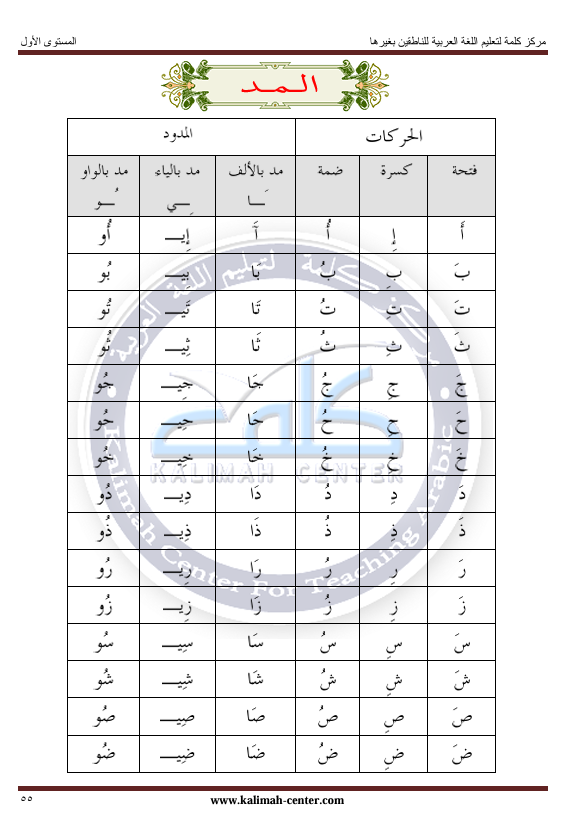
3. Long Vowels
Three consonants also represent long vowels:
- Alif (ا) can represent the long “a” sound.
- Waw (و) can represent the long “u” or “oo” sound.
- Ya (ي) can represent the long “i” or “ee” sound.
4. Absence of Capitalization
Arabic doesn’t differentiate between uppercase and lowercase letters. This contributes to the visual uniformity of the script.
5. Right-to-Left Direction
Arabic is written and read from right to left, impacting word order and sentence structure.
6. Phonetic Richness
The Arabic alphabet represents a wide range of sounds, including several not found in many other languages. This requires specific articulation techniques for proper pronunciation.
7. Characteristics for Recitation
In Quranic recitation, additional characteristics become crucial, such as:
- Tajweed Rules: These govern proper pronunciation, including elongation of certain sounds, nasalization, and subtle variations in articulation.
- Makharij: The specific points of articulation within the mouth and throat for each letter.
- Sifat: Attributes like “heaviness” or “lightness” associated with certain letters, affecting their pronunciation and sound quality.
You can delve into these aspects in more details through our Quran course, we offer you a complete Quran Course to master the Quran recitation and learn the Tajweed rules by heart.
8. Calligraphic Beauty
The fluidity and connectedness of Arabic letters lend themselves to elaborate calligraphy, considered a high art form in Islamic culture.
Various calligraphic styles have evolved, each with its own distinct aesthetic and characteristics.
How to Write Arabic Letters: Direction, Connections, and Forms
The writing system for Arabic and several other Asian and African languages is known as the Arabic script. After the Latin alphabet, it is the second most extensively used alphabetic writing system worldwide.
here’s a video list of how to write letters in Arabic
Arabic Alphabet Direction: Why Arabic Is Written Right to Left
Arabic is written and read horizontally from right to left — the opposite direction from English. This is true of all Semitic writing systems, including Hebrew and Aramaic, and reflects the historical origins of these scripts.
Practical implications for learners:
- Starting position: Always begin a new word at the right side of the page and write toward the left
- Page direction: In Arabic books and documents, pages are also read right to left — what feels like the back of a book in English is the front of an Arabic book
- Number exception: Numerals in Arabic are typically written left to right (even in otherwise right-to-left text) — a source of confusion for beginners who do not expect the switch
- Mixed text (Arabic and English): When Arabic and English appear together in the same document, the direction shifts based on which language is being written — word processors handle this automatically through bidirectional text algorithms
How long does it take to adjust?
Most learners develop automatic right-to-left reading direction within 2–3 weeks of consistent practice. The initial confusion is normal — your visual system has decades of left-to-right habit to overcome. Writing by hand, rather than only reading, accelerates this adjustment significantly.
The Cursive Nature of Arabic Writing
Depending on where they are in the word and whether they are connected to a letter before them, Arabic letters take on distinct shapes. All letters can join from the right side, or to the letter that comes before them, but some cannot connect from the left side, or to the letter that comes after them.
Every letter can therefore be categorized as either a connector—a letter that connects on both sides—or a non-connector—a letter that does not connect to the letter after it. Only six letters are non-connectors, the majority of which are connectors. In the middle of a word, they create a pause.
- alif ( أ )
- waw ( و )
- dal ( د )
- dhal ( ذ )
- raa ( ر )
- zay ( ز )
Read More: THE COMPREHENSIVE GUIDE TO ARABIC CONNECTING LETTERS
Different Forms of Arabic Letters (Isolated, Initial, Medial, and Final)
Each letter of the Arabic letters has four forms:
- when it is written Isolated by itself
- When it comes in the word-initial position
- When it comes in the word-medial position
- When it comes in the word-final position
| Transliteration of the Arabic letter | When it is written Isolated | When it comes in the word-initial position | When it comes in the word-medial position | When it comes in the word-final position |
| Āalif | ا | – | – | ـا |
| bāĀ | ب | بـ | ـبـ | ـب |
| tāĀ | ت | تـ | ـتـ | ـت |
| ThāĀ | ث | ثـ | ـثـ | ـث |
| Jīm | ج | جـ | ـجـ | ـج |
| HāĀ | ح | حـ | ـحـ | ـح |
| ḰāĀ | خ | خـ | ـخـ | ـخ |
| dāl | د | – | – | ـد |
| ḏāl | ذ | – | – | ـذ |
| rāĀ | ر | – | – | ـر |
| zāy | ز | – | – | ـز |
| sīn | س | سـ | ـسـ | ـس |
| šīn | ش | شـ | ـشـ | ـش |
| Sād | ص | صـ | ـصـ | ـص |
| Dād | ض | ضـ | ـضـ | ـض |
| TāĀ | ط | طـ | ـطـ | ـط |
| DhāĀ | ظ | ظـ | ـظـ | ـظ |
| 3ayn | ع | عـ | ـعـ | ـع |
| ğhayn | غ | غـ | ـغـ | ـغ |
| fāĀ | ف | فـ | ـفـ | ـف |
| qāf | ق | قـ | ـقـ | ـق |
| kāf | ك | كـ | ـكـ | ـك |
| lām | ل | لـ | ـلـ | ـل |
| mīm | م | مـ | ـمـ | ـم |
| nūn | ن | نـ | ـنـ | ـن |
| hāĀ | ه | هـ | ـهـ | ـه |
| wāw | و | – | – | ـو |
| yāĀ | ي | يـ | ي | ـي |
Arabic Alphabet in Practice: Forming Words for Beginners
It is the time to learn how to apply the Arabic letters and start to form words. In Arabic, word formation is the process and way of creating words from letters by adding suffixes, prefixes, and infixes to the root of the word. Forming new words may also by changing the diacritical marks which are like Arabic short vowels.
Forming Words in Arabic
Take the Arabic word root (لَعَبَ he plays) which is a verb.
By adding the prefix مَـ to it and changing the diacritical marks, it becomes(مَلْعَبٌ) which is a noun.
By adding the infix ـا to it and changing the diacritical marks, it becomes (لَاعِبٌ player) which is a noun.
Common Arabic Words for Practice
What would be the first thing you learn in a new language, as you presumably already know? The greetings, goodbyes, thank-yous, and so forth. To help you get started learning, we’ve put up a collection of brief and frequently used Arabic words.
English | Transliteration | Arabic |
| Hello | marhaban | مرحبًا |
| Welcome | ahlan | أهلًا |
| Ok | hasanan | حسنًا |
| Sorry | alma’thirah | المعذرة |
| Yes | ‘ajal | نعم |
| No | Laa | لا |
| Father | Ab | أب |
| Mother | Um | أم |
| Brother | Akh | أخ |
| Sister | ukht | أخت |
| Baby | tifl | طفل |
| Life | hayaah | حياة |
| Good | jayid | جيد |
| Bad | sayi | سيئ |
| Happy | sa’eed | سعيد |
| Help | musaa’dah | مساعدة |
Arabic Alphabet Exercises and Practice: Test Your Knowledge
These exercises are designed to reinforce letter recognition, pronunciation, writing, and word formation — the four core skills for Arabic alphabet mastery. Complete them in order for best results.
Exercise 1: Letter Recognition — Circle What You Know
Circle every Arabic letter you can name without help:
ا ب ت ث ج ح خ د ذ ر ز س ش ص ض ط ظ ع غ ف ق ك ل م ن هـ و ي
Score yourself:
- 1–10 letters: Beginning — focus on the first 7 letters
- 11–20 letters: Progressing — you are past the halfway point
- 21–28 letters: Advanced beginner — near full alphabet recognition
Exercise 2: Letter Name Match
Match the Arabic letter to its correct name:
| Letter | Options | Correct Answer |
|---|---|---|
| ا | a) Baa b) Alif c) Taa | b) Alif |
| ب | a) Baa b) Noon c) Laam | a) Baa |
| ع | a) Faa b) Ayn c) Ghayn | b) Ayn |
| ق | a) Kaaf b) Qaaf c) Kha | b) Qaaf |
| ش | a) Seen b) Sheen c) Saad | b) Sheen |
| م | a) Noon b) Meem c) Laam | b) Meem |
Exercise 3: Positional Forms — Write the Missing Form
| Letter | Isolated | Initial | Medial | Final |
|---|---|---|---|---|
| ب | ب | بـ | ـبـ | ـب |
| ج | ج | جـ | ـجـ | ـج |
| م | م | مـ | ـمـ | ـم |
| ن | ن | نـ | ـنـ | ـن |
Practice: Write each letter in all four positions in your notebook before checking answers.
Exercise 4: Non-Connecting Letters — True or False
Which of these letters connects to the following letter?
| Letter | Connects to following? | Answer |
|---|---|---|
| ب | Yes or No? | Yes |
| ر | Yes or No? | No |
| س | Yes or No? | Yes |
| و | Yes or No? | No |
| ك | Yes or No? | Yes |
| د | Yes or No? | No |
Exercise 5: Pronunciation Practice — Read Aloud
Read each word aloud before checking the answer:
| Arabic Word | Transliteration | Meaning |
|---|---|---|
| بَيت | bayt | house |
| كِتاب | kitaab | book |
| شَمس | shams | sun |
| قَمَر | qamar | moon |
| مَدرَسة | madrasa | school |
Exercise 6: Word Formation — Connect the Letters
Connect these letters to form a word (write in Arabic script):
| Letters | Connected Word | Meaning |
|---|---|---|
| ب + ا + ب | باب | door |
| م + ا + ء | ماء | water |
| ك + ت + ا + ب | كتاب | book |
| ش + م + س | شمس | sun |
Exercise 7: Fill in the Missing Letter
| Incomplete Word | Hint | Missing Letter | Complete Word |
|---|---|---|---|
| _يت | A place to live | ب | بيت (house) |
| شم_ | It shines in the sky | س | شمس (sun) |
| _تاب | You read it | ك | كتاب (book) |
| قم_ | It shines at night | ر | قمر (moon) |
Is the Arabic Alphabet Hard to Learn?
Ustadh Hamada’s answer — “No, if you approach it correctly” — is both honest and encouraging. But it deserves unpacking.
The Arabic alphabet is genuinely challenging for English speakers — but the difficulty is specific and addressable, not general and overwhelming.
What is actually difficult:
| Challenge | Why It’s Hard | How Long It Takes to Overcome |
|---|---|---|
| New script direction (right to left) | Your eye has decades of left-to-right habit | 1–2 weeks of consistent practice |
| Unfamiliar letter shapes | No visual similarity to Latin letters | 1–2 weeks to recognise all 28 |
| Four positional forms per letter | Each letter looks different in different positions | 2–4 additional weeks |
| Arabic-specific sounds (ع، ح، غ، ق) | These sounds do not exist in English | 1–3 months of pronunciation practice |
| Reading without vowels (unvowelled text) | Requires vocabulary knowledge to supply missing sounds | Months to years — beyond the alphabet stage |
What makes it easier than it looks:
- The Arabic alphabet is phonetically consistent — each letter almost always makes the same sound. Unlike English, where “ough” can be pronounced six different ways, Arabic letter-sound correspondence is reliable.
- There are only 28 letters — fewer than many writing systems.
- The pattern of dots distinguishes similar-looking letters: ب (one dot below), ت (two dots above), ث (three dots above) — once you see the pattern, distinguishing letters becomes systematic.
Ustadh Hamada’s three tools
- An experienced teacher: The teacher is not just for correction — it is for the moments when you cannot hear the difference between ح and ه, or between ص and س. A teacher who has taught non-native speakers knows exactly where English speakers get confused and how to address it.
- A pen: Writing by hand is not optional — it is the most effective tool for letter shape memorisation. Tracing activates muscle memory that purely visual study cannot produce.
- A notebook: Review is what converts recognition into permanent memory. Write each day’s letters at least 5 times each. Review the previous day’s letters before adding new ones.
Master Arabic with Kalimah Center
Join our expert-led online classes and start your journey toward Arabic fluency today.
Book Your Free TrialSo, you’ve finished reading about the Arabic alphabet… But do you really feel confident?
Our conversation made it clear that the Arabic alphabet, with its 28 letters and many forms, is both a challenge and a joy to learn. As experienced teachers at Kalimah, we’ve seen how students light up when they finally grasp the connections between the letters, and we know that anyone can do it with patience and practice.
So, if you’re interested in learning the Arabic alphabet, take it step by step. Practice each letter in its various forms, learn how to spell words, and enjoy the journey of discovering a script that has been in use for over a thousand years.
Our online Arabic course takes you from “knowing ABOUT” the alphabet to truly MASTERING it.
- We’ll break down each letter, with clear illustrations and practice exercises.
- You’ll hear the correct pronunciation, so you sound like a native speaker.
- We’ll build your confidence with reading and writing, step-by-step.
- Soon, you’ll be chatting in Arabic, even introducing yourself!
Inside Kalimah Center: Moments from Our Courses
Get a glimpse into the vibrant learning experience at Kalimah Center. These snapshots capture real moments from our live classes—where students engage deeply, connect with passionate instructors, and grow in a welcoming, supportive environment.
Here Are The Reviews On Our Courses:
Our students frequently commend the excellence of our courses and the commitment shown by our instructors. You can read their complete reviews on Trustpilot.

📚 Explore Our Courses:
Online Arabic Course: Tailored to your level, our comprehensive Arabic program includes 16 teaching levels and 400+ hours of personalized sessions.
Online Quran With Tajweed Course: Perfect for non-Arabic speakers, our course spans 13 levels and equips you with Tajweed mastery from beginner to advanced.
Online Arabic Course For Kids: Nurture your child’s love for Arabic with our engaging and structured program, available in 24 levels for primary, intermediate, and secondary stages.
🚀 Start Your Free Trial Today! 🚀
Don’t miss out on this life-changing opportunity to deepen your faith and knowledge. Sign up now for your free trial and take the first step towards becoming a better practicing Muslim with Kalimah Center!
Also, we have Arabic classes just for kids. Fun and easy, so they learn Arabic Alphabet fast.
Try Kalimah Center, it’s FREE to start! See how your child loves Arabic with us.
Conclusion:
The Arabic alphabet consists of 28 letters, each with distinct forms depending on their position within a word (initial, medial, final, or isolated). Learning these letters involves understanding their names, shapes, and sounds, with variations influenced by diacritical marks.
This script, written from right to left, is known for its connectedness, which not only adds to the aesthetic appeal but also plays a crucial role in the language’s clarity and functionality.
To effectively learn the Arabic alphabet, students should break down the process into stages, starting with memorizing letter names, followed by mastering the shapes and sounds. Practical tools like a pen, notebook, and guidance from an experienced teacher are essential.
Despite its initial complexity, the alphabet can be mastered with the right approach, leading to the ability to form words, read, and write confidently in Arabic.
FAQs about Arabic Alphabet
Q1: How many letters are in the Arabic alphabet?
The Arabic alphabet has 28 letters. All 28 represent consonants — Arabic does not use separate letters for short vowel sounds. Short vowels are indicated by optional diacritical marks called harakat (Fatha, Kasra, Damma). Three letters — Alif (ا), Waw (و), and Yaa (ي) — serve dual roles as consonants and long vowels. Some counting systems reach 29 by treating Hamza (ء) as a separate letter, but the standard educational count is 28.
Q2: What are the different types of Arabic alphabet letters?
Arabic letters can be classified in five ways:
(1) By connectivity — 22 connecting letters and 6 non-connecting letters (ا د ذ ر ز و).
(2) By phonetic function — consonants and long vowels (Alif, Waw, Yaa).
(3) By dots — 15 letters have dots (distinguishing similar shapes) and 13 do not.
(4) By sun/moon classification — 14 Sun Letters (cause ال assimilation) and 14 Moon Letters (do not).
(5) By phonetic quality — emphatic letters (ص ض ط ظ), guttural consonants (ع غ ح خ), and sibilant consonants (س ش ز).
Q3: How do Arabic letters change form?
Each Arabic letter has up to four positional forms: isolated (when the letter stands alone), initial (at the beginning of a word, connecting to the right), medial (in the middle, connecting to both sides), and final (at the end, connecting to the left only). Six letters — ا، د، ذ، ر، ز، و — are non-connecting: they only have isolated and final forms, connecting to the previous letter but not to the following one.
Q4: What are the Arabic letters that have no English equivalent?
Four Arabic letters have sounds that do not exist in English and resist accurate transliteration: ع (Ayn) — a voiced pharyngeal consonant produced deep in the throat. ح (Haa) — a voiceless pharyngeal fricative, like a very breathy H. غ (Ghayn) — a voiced uvular fricative, similar to the French “R.” ق (Qaaf) — a voiceless uvular stop, like a K produced at the back of the throat. Additionally, the four emphatic letters (ص ض ط ظ) have “heavier” versions of familiar sounds, affecting the surrounding vowels. These sounds require dedicated pronunciation practice — they cannot be learned from text alone.
Q5: What are Arabic alphabet exercises for beginners?
The most effective exercises for Arabic alphabet beginners are:
(1) Letter recognition — circle known letters from the full alphabet, measuring progress weekly.
(2) Name matching — match Arabic letter to its name without looking at a reference.
(3) Positional forms writing — write each letter in all four positions from memory.
(4) Non-connecting identification — identify which letters in a written word are non-connecting.
(5) Fill-in-the-blank words — words with one letter removed, testing contextual recognition.
(6) Word formation — given individual letters, connect them correctly to form simple words.
Q6: How long does it take to learn the Arabic alphabet?
With daily practice of 20–30 minutes: basic letter recognition (all 28 isolated forms) in 1–2 weeks, all four positional forms in 3–4 weeks, reading simple vowelled words in 4–6 weeks, and reading vowelled sentences in 2–3 months. Handwriting practice consistently accelerates these timelines. Learners who write letters by hand rather than only recognising them digitally typically reach alphabet fluency 30–40% faster.