Learning Arabic requires mastering four elements in sequence: the 28-letter alphabet (2–4 weeks), core vocabulary (200–500 words using spaced repetition), fundamental grammar (definite article, gender, verb conjugation, sentence structure), and daily practice combining listening, speaking, reading, and writing.
Arabic is a Category IV language (hardest for English speakers) requiring approximately 2,200 hours to professional proficiency — but basic conversational ability is achievable in 6–12 months with 30–60 minutes of daily focused study. This guide provides the complete roadmap, including a 30-day beginner plan, a 90-day progression plan, and resources for every stage.
Growing up in Egypt, I was always captivated by the way language could connect people from all walks of life. This passion led me to master my native language Arabic, then English, and to make some progress in German.
Now, as a translator and Arabic teacher, I’ve seen the joy and transformation that learning Arabic brings to students around the world. That’s why I created this guide – to share my passion for the language and to teach you how to learn Arabic.
I’ve seen many learners struggle to grasp the nuances of our beautiful language. Many get lost in the maze of grammar rules or find themselves overwhelmed by the unfamiliar sounds.
If this sounds like you, don’t worry! This guide will break down the most effective study tips for learning Arabic, plus a simple, detailed plan you can follow to finally master Arabic Inshaa’Allah إن شاء الله.
Is It Possible to Learn Arabic?
Absolutely! Learning Arabic is not only possible but also immensely rewarding. While it might seem challenging due to its unique script and structure, many non-native speakers have successfully mastered the language. With the right resources, consistent practice, and a positive mindset, you can become proficient in Arabic. Every language has its complexities, but dedication and enthusiasm make all the difference.
Is Learning Arabic and Becoming Fluent Possible?
Yes, you can learn Arabic and achieve fluency. Like any language, fluency in Arabic comes from immersion and practice. Begin with basic vocabulary and grammar, then gradually immerse yourself in Arabic media, conversations, and cultural experiences. Regular interaction with native speakers, either through language exchanges or online classes, will significantly enhance your speaking and comprehension skills.
How to Learn Arabic? Study Tips
First, I will go over tips to make learning Arabic fun and effective. ِAnd just to give you a hint: Start with simple steps, like the Arabic alphabet and common words. Practice often, using different tools like books, apps, and talking to native speakers. Mix it up with reading, writing, listening, and speaking. Let’s explore those tips in detail:
1. Immerse Yourself in the Language
One of the best ways to learn Arabic basics is to immerse yourself in the language as much as possible. This could mean listening to Arabic podcasts, watching Arabic shows, or practicing speaking with native speakers. Immersion helps you understand the cultural context of the language, making learning more intuitive and natural.
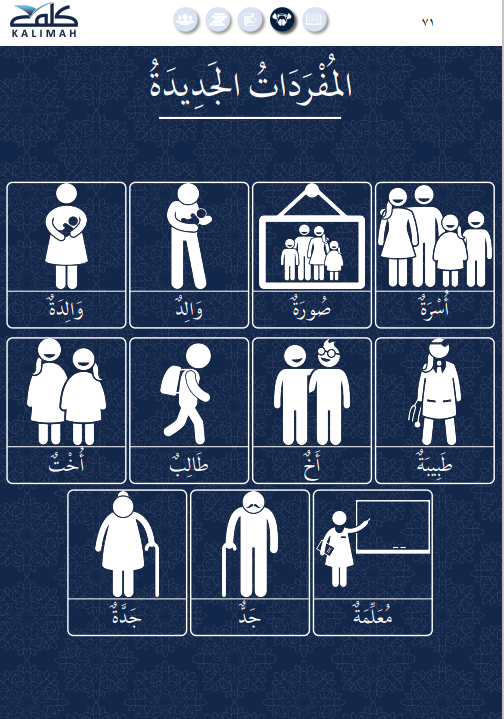
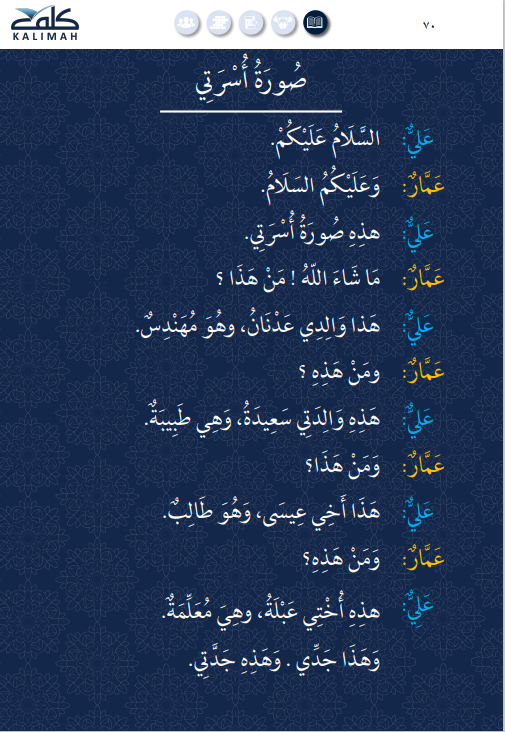
Tip: Label items in your home with their Arabic names, try thinking in Arabic, and practice speaking about daily activities. Courses that focus on everyday topics, such as shopping, family, and hobbies, can be very beneficial.
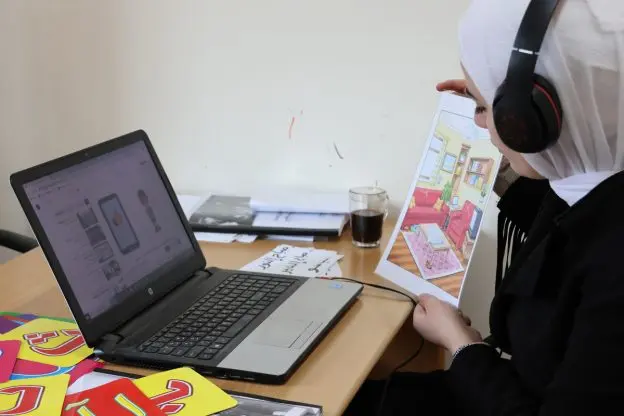
That’s why Kalimah’s Arabic courses focus on everyday topics, like the ones showcased in the image (family introductions), complements this approach by providing learners with the vocabulary and conversational structures needed to put these tips into practice.
By focusing on relevant and practical language use, Kalimah empowers learners to seamlessly integrate Arabic into their daily routines, thus accelerating language acquisition.
2. Start with the Basics
Begin your journey with the Arabic alphabet. Understanding the script is crucial as Arabic is a script-based language. Familiarize yourself with the letters, their sounds, and how they connect to form words. A course like “Learn The Whole Arabic Alphabet Online With Illustration” can be an excellent starting point.
3. Practice Regularly
Consistency is key when learning a new language. Regular practice helps reinforce what you’ve learned and keeps the language fresh in your mind.
Tip: Dedicate a specific time each day to studying Arabic. Even short, daily sessions are more effective than sporadic, long sessions. Use a mix of reading, writing, listening, and speaking exercises to keep your learning dynamic.
4. Use a Variety of Resources
Diversify your learning materials. Use textbooks, online courses, language apps, and interactive activities. Each resource can offer different perspectives and methods, which can help you grasp concepts more thoroughly.
5. Focus on All Language Skills
To become proficient in Arabic, you need to develop all four language skills: reading, writing, listening, and speaking. Engage in activities that enhance each skill. For example, read Arabic articles, write short essays, listen to Arabic podcasts, and practice speaking with peers or tutors.
6. Engage with Native Speakers
Interacting with native speakers will greatly improve your speaking and listening skills.
Tip: Find language exchange partners, join Arabic-speaking groups, or participate in online classes where direct dialogue is encouraged. Practicing with native speakers will help you gain confidence and improve your accent.
Consider joining Kalimah Intensive Group Classes, where you’ll not only engage with native Arabic speakers but also benefit from a structured learning environment. In our online group classes, you’ll practice your Arabic with fellow learners from around the world, gaining confidence and improving your accent in a supportive community.

An Easy Study Plan to Learn Arabic
Here, I am going to demonstrate a study plan to learn Arabic. You’ll start with the basics, like the alphabet, and then move on to harder things like grammar and culture. It’s like a journey. Start slow and enjoy the process!
1. Get Ready to Learn Arabic
Before you dive in, set clear goals. Why do you want to learn Arabic? Whether it’s for travel, work, or personal interest, having a clear purpose can keep you motivated. Gather your learning materials and find a comfortable, distraction-free study space.
Preparation Tips:
- Set Clear Goals: Decide whether you want to learn Arabic for travel, work, cultural interest, or another reason.
- Gather Resources: Choose a mix of textbooks, online courses, apps, and language exchange partners.
- Create a Study Plan: Outline your study schedule, including specific times for reading, writing, listening, and speaking practice.
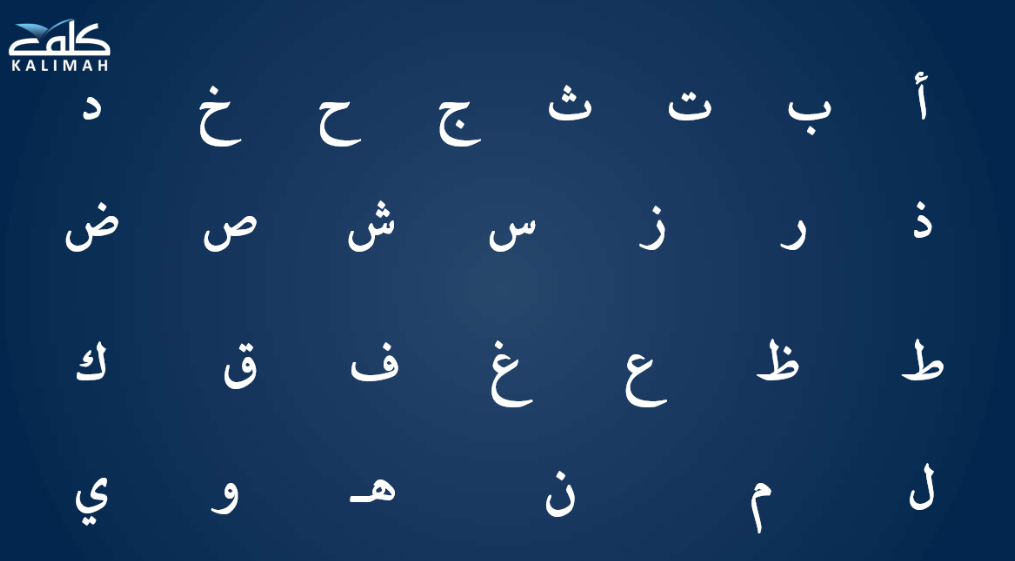
2. Learn the Alphabet
Start with learning the Arabic alphabet. Dedicate the first few weeks to mastering the letters, their sounds, and how they are written. Practice writing each letter and sounding them out loud. Online resources, like illustrated courses, can make this step more engaging and effective.
Learning Activities:
- Flashcards: Use flashcards to memorize the letters and their sounds.
- Writing Practice: Practice writing each letter in its initial, medial, and final forms.
- Alphabet Songs: Listen to songs or rhymes that help reinforce the sounds of the letters.
At Kalimah Center, we offer a course that introduces you to the Arabic alphabet through engaging illustrations and interactive sessions. This initial phase consists of two levels, where you’ll not only learn to recognize and write each letter but also begin to understand how they form words. Think of it as assembling the pieces of a puzzle. By the end of this stage, you’ll be able to read and write simple Arabic texts, paving the way for more complex language skills.
3. Basic Vocabulary and Phrases
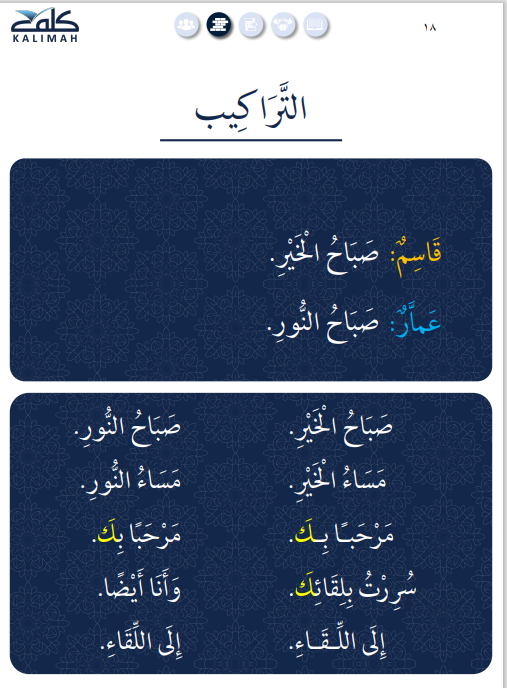
Once you’re comfortable with the alphabet, begin learning basic vocabulary and common phrases. Focus on everyday words and expressions that you can use in simple conversations. Topics like greetings, family, and daily activities are a good starting point.
Study Tips:
- Simple Sentences: Start forming simple sentences using basic vocabulary.
- Grammar Exercises: Use exercises to practice verb conjugations, noun-adjective agreement, and sentence structure.
- Daily Practice: Incorporate new words into your daily conversations and writing.
4. Practice Reading and Writing
Use your growing vocabulary to practice reading and writing. Start with short, simple sentences and gradually move to longer texts. Reading children’s books or beginner’s Arabic textbooks can be very helpful. Writing practice can include keeping a journal or composing short paragraphs.
Practice writing in Arabic daily. Start with simple sentences and gradually move to more complex structures. Writing helps reinforce grammar and vocabulary.
5. Listening and Speaking
Enhance your listening skills by exposing yourself to spoken Arabic. Listen to Arabic songs, watch videos, and try to understand the context. Practice speaking with native speakers or language partners. Don’t be afraid to make mistakes – they’re a natural part of the learning process.
6. Engage in Conversations
Start holding basic conversations in Arabic. You can talk about your day, ask and answer questions, or describe your surroundings. Real-life practice is crucial for gaining confidence and improving fluency.
Practice Techniques:
- Role-Playing: Engage in role-playing exercises to simulate real-life conversations.
- Language Partners: Practice speaking with a language partner or tutor.
- Recording: Record yourself speaking and listen to the playback to improve your pronunciation.
7. Deepen Your Grammar Knowledge
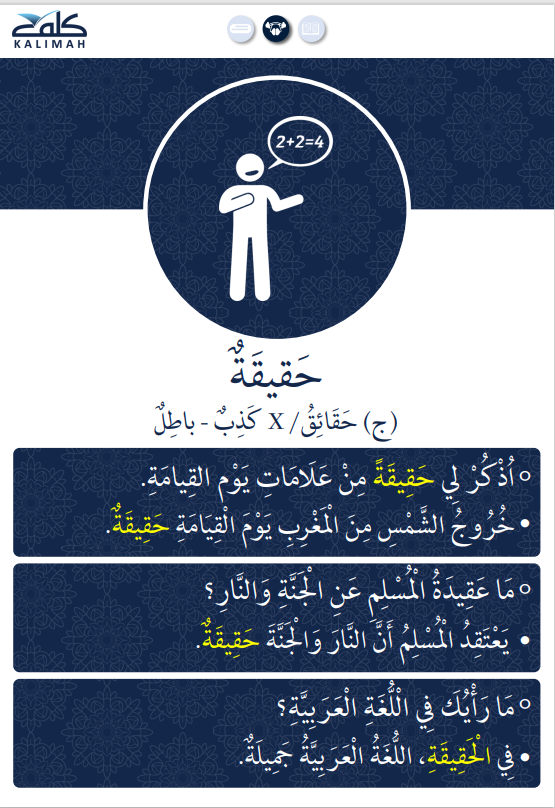
As you progress, delve into Arabic grammar. Understanding sentence structures, verb conjugations, and grammatical rules will help you construct more complex sentences. A course like “Learn To Speak About Societal Topics in Arabic & Learn Arabic Grammar (Nahu)” can guide you through this stage.
Presented in eight levels, this course covers a wide range of societal topics and introduces you to Arabic grammar. Each level, taking 1-2 months to complete, enhances your ability to understand and discuss more sophisticated subjects. By the end of this stage, you’ll be able to participate in in-depth conversations and understand the nuances of Arabic grammar.
8. Advanced Reading and Writing
Move on to more advanced texts and writing exercises. Read Arabic newspapers, literature, or online articles. Practice writing detailed essays, stories, or reports. This stage will refine your skills and expand your vocabulary significantly.
9. Cultural Immersion
Understanding the cultural context of Arabic-speaking countries enriches your learning experience. Explore the history, traditions, and customs of the Arab world. Engaging with cultural content, like films, music, and festivals, can make your language skills more relevant and meaningful.
Immersion Activities:
- Media Consumption: Watch Arabic movies, listen to Arabic podcasts, and read Arabic books and newspapers.
- Cultural Events: Attend Arabic cultural events, festivals, or community gatherings.
- Travel: If possible, travel to an Arabic-speaking country to practice your language skills in a natural setting.
10. Continuous Practice and Improvement
Learning Arabic is a lifelong journey. Continue practicing, immersing yourself in the culture, and seeking opportunities to use Arabic in real-life situations. This will help you maintain and improve your skills over time.
I Know what’s going through your mind right now: Learning Arabic while balancing a demanding career seems impossible. But Dr. Anas proves otherwise. He went from struggling to understand the Quran to fluent conversations in just one year with Kalimah Center.
“I’ve had an incredible experience with Kalimah. I highly recommend them to anyone serious about learning Arabic.” – Dr. Anas
Want a Teacher to Guide You Through This Plan?
The 30-day and 90-day plans above work for self-study. A Kalimah Center teacher makes them work faster — providing pronunciation correction, grammar feedback, and the accountability that keeps learners on track.
Dr. Anas went from struggling with the Quran to fluent conversations in one year with Kalimah Center:
“I’ve had an incredible experience with Kalimah. I highly recommend them to anyone serious about learning Arabic.”
Master Arabic with Kalimah Center
Join our expert-led online classes and start your journey toward Arabic fluency today.
Book Your Free TrialArabic Study Plans: 30-Day, 90-Day, and 12-Month Roadmaps
30-Day Arabic Beginner Plan
Goal: Complete alphabet recognition + 100 core vocabulary words + basic greetings
| Week | Daily Focus (30 min) | By End of Week |
|---|---|---|
| Week 1 | Arabic alphabet — letters 1–14 | Recognise first 14 letters |
| Week 2 | Arabic alphabet — letters 15–28 | Recognise all 28 letters |
| Week 3 | Alphabet positional forms + core vocabulary 1–50 | Read simple vowelled words |
| Week 4 | Vocabulary 51–100 + basic phrases | Greet in Arabic, introduce yourself |
Daily 30-minute session structure:
- 10 min — Anki vocabulary review (spaced repetition)
- 10 min — New letter or vocabulary (YouTube lesson or textbook)
- 10 min — Writing practice (trace letters, write words)
Free resources for Days 1–30:
- ArabicPod101 YouTube — alphabet series
- Anki + free Arabic frequency deck (AnkiWeb)
- Kalimah4Arabic YouTube — alphabet foundation
90-Day Arabic Progression Plan
Goal: Basic conversational ability — introduce yourself, ask questions, understand slow Arabic
| Month | Focus | Daily Time | Milestone |
|---|---|---|---|
| Month 1 | Alphabet + 200 core words + basic phrases | 30 min | Read simple vowelled Arabic text |
| Month 2 | Grammar basics + 200 more words + listening practice | 45 min | Understand slow Arabic audio on familiar topics |
| Month 3 | Speaking practice + reading + grammar expansion | 60 min | Hold a 5-minute conversation on familiar topics |
Month-by-month resource stack:
| Month | Primary Resource | Vocabulary | Speaking |
|---|---|---|---|
| 1 | Language Transfer (audio) + ArabicPod101 | Anki — 10 words/day | HelloTalk exchanges — 2x/week |
| 2 | Madinah Arabic Reader + Arabic podcasts | Anki — 15 words/day | HelloTalk + 1 italki session |
| 3 | LingQ (beginner content) + speaking focus | Anki — 20 words/day | 2 italki sessions/week |
12-Month Arabic Learning Roadmap
Goal: Intermediate Arabic — read news, hold extended conversations, write paragraphs
| Phase | Months | Focus | Expected Outcome |
|---|---|---|---|
| Foundation | 1–3 | Alphabet, 500 core words, basic grammar | Basic conversations |
| Consolidation | 4–6 | Grammar depth, reading practice, speaking fluency | Follow Arabic audio at slow speed |
| Expansion | 7–9 | Authentic content, writing practice, vocabulary to 1,000 words | Read simple Arabic articles |
| Intermediate | 10–12 | Extended conversations, complex grammar, cultural immersion | B1 level proficiency |
Key milestones to track:
- Week 2: All 28 letters recognised
- Month 1: 100 words active vocabulary
- Month 3: First full conversation in Arabic
- Month 6: Follow a slow Arabic news broadcast with 50% comprehension
- Month 12: Read a short Arabic news article with occasional dictionary use
Read also: Arabic language study scholarships
How Long Does It Take to Learn Arabic?
The US Foreign Service Institute estimates 2,200 hours to professional Arabic proficiency for English speakers — making it one of the hardest languages for English speakers to learn. But meaningful progress comes much sooner:
| Milestone | Daily 30 min | Daily 60 min | Daily 2 hrs |
|---|---|---|---|
| Alphabet mastered | 2–4 weeks | 1–2 weeks | 1 week |
| Basic conversation | 6–9 months | 3–5 months | 6–8 weeks |
| Intermediate (B1) | 18–24 months | 10–14 months | 6–8 months |
| Advanced (C1) | 4–5 years | 2–3 years | 1.5–2 years |
The most important variable is not hours but consistency. 30 minutes daily for 12 months produces more Arabic fluency than 10 hours one weekend per month. The brain needs distributed exposure to consolidate language into long-term memory.
How to Learn Arabic on Your Own?
To learn Arabic on your own, start with the basics: learn the Arabic alphabet using resources like YouTube videos or Kalimah Center’s online course. Build your vocabulary using flashcards or language learning apps like Duolingo and Memrise. Practice listening to Arabic podcasts, news, and films, even if you don’t understand everything at first. Don’t be afraid to speak, even if you make mistakes, by finding a language exchange partner or joining Kalimah Intensive Group Classes.
Immerse yourself in the language by changing your phone’s language setting to Arabic, following Arabic social media accounts, and reading Arabic news articles. Explore Arabic culture through art, food, and stories to make the language come alive and deepen your understanding.
Read more about What age is best to learn Arabic?
What Arabic Should You Learn First? MSA vs Dialect vs Quranic Arabic
This decision shapes every resource choice that follows. Make it explicitly before starting.
| Your Goal | Learn This | Why |
|---|---|---|
| Read and understand the Quran | Quranic/Classical Arabic | The Quran is in classical Arabic — MSA is the closest modern form |
| Communicate across the Arab world | Modern Standard Arabic (MSA) | Understood everywhere, used in news and formal contexts |
| Speak with Egyptians | Egyptian Arabic | Most widely understood spoken dialect globally |
| Work or live in the Gulf | Gulf Arabic | Saudi Arabia, UAE, Kuwait, Qatar |
| Levant region (Syria, Lebanon, Jordan) | Levantine Arabic | Syrian, Lebanese, Palestinian, Jordanian |
| Undecided | MSA first | Transfers to any dialect or Quranic Arabic |
Our recommendation for most learners: Start with MSA. It provides the grammatical foundation that makes learning any dialect or Quranic Arabic significantly faster. MSA first — then branch to your target variety after month 3.
Full comparison: Is Quranic Arabic Different From Modern Standard Arabic?
How to Learn the Arabic Alphabet?
Learning the Arabic alphabet is your first step to mastering the language. Start by familiarizing yourself with the 28 letters and their various forms (initial, medial, and final). Practice writing each letter and pronouncing its sound. Utilize online resources, flashcards, and alphabet apps to reinforce your learning.
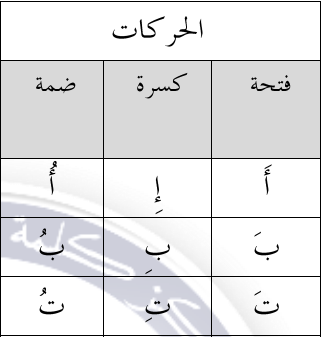
Be sure to learn the diacritical marks—harakat—for short vowels, which help you get the pronunciation right.
How to Learn Arabic Grammar?
Arabic grammar can be intricate, but breaking it down into manageable parts helps.
Begin with the basics:
- Nouns: Learn about gender (masculine and feminine), number (singular, dual, and plural), and cases (nominative, accusative, and genitive).
- Verbs: Familiarize yourself with verb forms, tenses, and moods.
- Sentence structure: Arabic sentences follow a Verb-Subject-Object (VSO) word order, which can be quite different from other languages.
Online courses, textbooks, and language exchange partners can assist you in your grammar learning journey.
Is Madinah Arabic Online a Good Way to Learn Arabic?
Madinah Arabic is a well-respected free curriculum originally developed by the Islamic University of Madinah. It is particularly effective for learners targeting Quranic and classical Arabic. Free PDF textbooks and accompanying apps are available online. It suits disciplined self-learners with a grammar-forward learning style — learners who prefer conversation-first approaches may find it less engaging initially.
Why Is It Hard to Learn Arabic Online?
The challenges of online Arabic learning — lack of immediate feedback and pronunciation correction — are addressed by combining self-study tools with at least one weekly live session with a native speaker.
Arabic Books for Beginners?
Choosing the right Arabic books for beginners is crucial for effective learning. Look for books that offer clear explanations, practical exercises, and engaging content. Some recommended titles include:
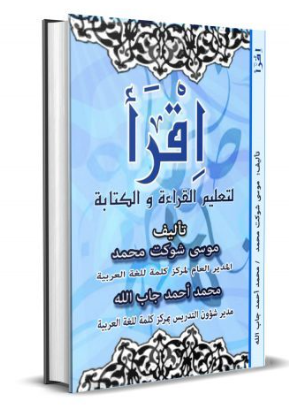
- Iqra: is specifically designed to teach reading and writing to non-Arabs, including children and those who are illiterate. It uses a unique permutation method to help students learn letters and sounds effectively.
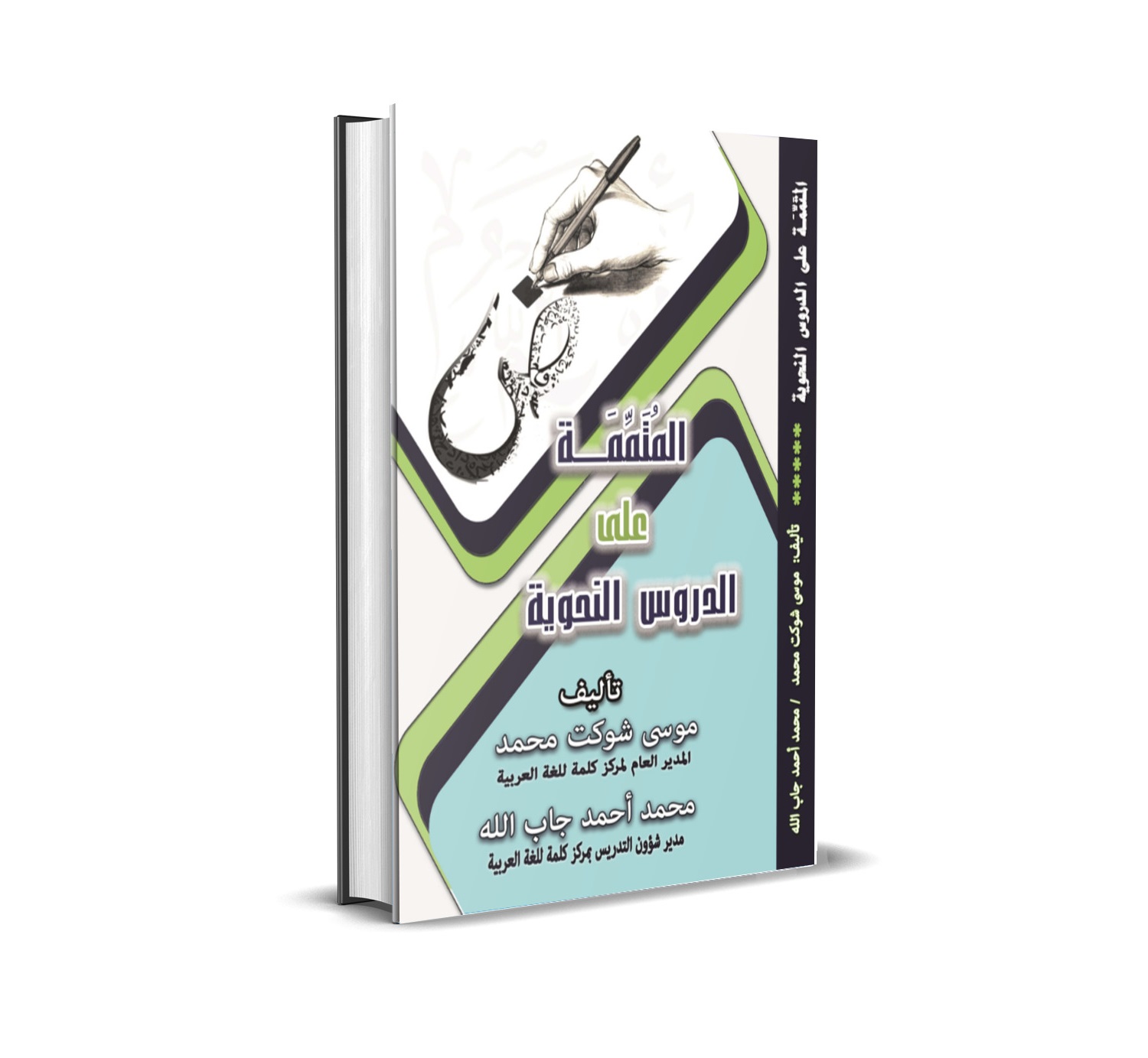
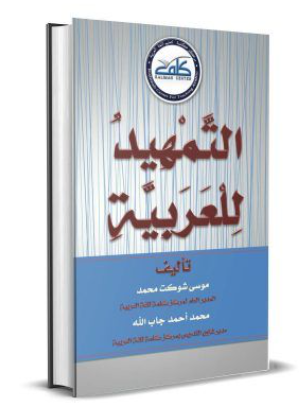
- Altamheed: is an excellent choice for beginners who have already mastered the alphabet and are ready to dive into vocabulary and simple grammar structures. It takes a communicative approach, helping learners build practical language skills.
- Alif Baa: A classic textbook often used in formal Arabic classes.
- Arabic for Dummies: A user-friendly guide covering the basics of the language.
- Complete Arabic: A comprehensive textbook suitable for self-study.
How to Speak Arabic for Beginners?
To start practicing speaking Arabic, focus on common phrases and daily conversations. Practice pronunciation and intonation with language partners or through language learning apps. Engage in role-playing exercises to simulate real-life situations. Consistent speaking practice, even at a basic level, will build your confidence and fluency over time.
How to Read Arabic for Beginners?
Reading Arabic begins with mastering the alphabet and understanding vowel markers. Start with simple texts, such as children’s books or beginner’s readers. Practice reading aloud to improve fluency and comprehension. Gradually progress to more complex texts as your reading skills develop. Use resources like graded readers and online articles to enhance your practice.
Where Can I Learn Arabic?
You can learn Arabic through various platforms, including language schools, online courses, and language exchange programs. Institutions like Kalimah Center offer comprehensive courses tailored to different proficiency levels. Online resources, such as Duolingo, Memrise, and YouTube channels, provide flexible learning options. Additionally, community centers and cultural organizations often offer Arabic classes.
Master Arabic with Kalimah Center
Join our expert-led online classes and start your journey toward Arabic fluency today.
Book Your Free TrialInside Kalimah Center: Moments from Our Courses
Get a glimpse into the vibrant learning experience at Kalimah Center. These snapshots capture real moments from our live classes—where students engage deeply, connect with passionate instructors, and grow in a welcoming, supportive environment.
Here Are The Reviews On Our Courses:
Our students frequently commend the excellence of our courses and the commitment shown by our instructors. You can read their complete reviews on Trustpilot.
Read more reviews on Trustpilot

Ready to Turn your Arabic Learning Plan into Reality?
Stop just reading about how to learn Arabic and start actually learning it! Kalimah Center’s structured courses and supportive teachers will transform your study tips into real-world communication skills.
- Reading: Master the art of reading Arabic texts, from short articles to long stories.
- Writing: Develop the skills to write clear, cohesive texts, emails, and detailed descriptions.
- Listening: Enhance your ability to understand spoken Arabic in various contexts.
- Speaking: Achieve fluency and confidence in face-to-face conversations and presentations.
Your Arabic study plan starts here – with Kalimah Center.
Conclusion:
Learning Arabic can be a transformative experience, and this guide aims to make it accessible and enjoyable. You’ll start with basics like the alphabet, progress through vocabulary and grammar, and ultimately immerse yourself in the language and culture.
To begin, focus on immersive practices such as listening to Arabic media and engaging with native speakers. Start with learning the Arabic alphabet free online, then build up your vocabulary and sentence structure. Regular practice, using diverse resources like apps and textbooks, is key.
Engage in conversations, deepen your grammar knowledge, and explore Arabic culture to enhance your understanding. Continuous practice and exposure will lead to fluency, making Arabic a rewarding and achievable goal. For personalized guidance and structured learning, consider courses from institutions like Kalimah Center.
FAQs about How to Learn Arabic
Q1: How do I start learning Arabic as a complete beginner?
Start with the Arabic alphabet — 28 letters, written right to left, with each letter having up to 4 positional forms. Most beginners recognise all letters within 2–4 weeks of daily 20–30 minute practice. Then add core vocabulary using spaced repetition (Anki with a free Arabic frequency deck), essential phrases (greetings, questions, polite expressions), and basic grammar (definite article ال, gender, basic verb conjugation). Begin speaking practice from week two — do not wait until grammar feels complete.
Q2: What is the best way to learn Arabic?
The most effective Arabic learning approach combines: structured grammar input (Language Transfer audio course — free), vocabulary via spaced repetition (Anki — free), daily listening (ArabicPod101 YouTube, Arabic podcasts), and speaking practice with native speakers (HelloTalk — free, or italki — paid per session). This combination covers all four language skills simultaneously. The 30-day and 90-day plans above provide a concrete schedule for implementing this approach.
Q3: How long does it take to learn Arabic for beginners?
With 30 minutes of daily focused study: 2–4 weeks to master the alphabet, 6–9 months to hold basic conversations, 18–24 months to reach intermediate level (B1). These timelines compress significantly with more daily study time or structured instruction with a native teacher. The FSI estimates 2,200 hours to professional proficiency — but you do not need professional proficiency to communicate meaningfully in Arabic. Basic conversational ability is achievable in under a year.
Q4: Is Arabic hard to learn for English speakers?
Arabic is classified by the US Foreign Service Institute as a Category IV language — the hardest category for English speakers. The challenges are specific: an unfamiliar script (learnable in 2–4 weeks), sounds without English equivalents (ع، ح، غ، ق — require dedicated audio practice), and a root-based grammar system (complex initially, then becomes a vocabulary accelerator). With the right resources and daily practice, most motivated learners reach basic conversational ability within 6–12 months.
Q5: Can I learn Arabic for free?
Yes — the following free resources cover the complete Arabic learning journey: Language Transfer (free grammar audio course), ArabicPod101 on YouTube (free video lessons), Anki (free vocabulary spaced repetition on Android/web), HelloTalk (free speaking practice with native speakers), Madinah Arabic website and app (free structured curriculum), and Duolingo (free gamified daily practice). For a complete free-resources guide, see: Learn Arabic for Free.