Top Arabic language scholarships include the fully-funded Fulbright Program (U.S. citizens, covers tuition + living expenses), Critical Language Scholarship/CLS (intensive summer immersion), and Chevening Scholarships (UK government, graduate level). Universities like American University in Cairo and Qatar University offer institutional scholarships for international students. Application deadlines typically fall between October-February for programs starting the following academic year. Most require language proficiency proof, academic transcripts, recommendation letters, and statement of purpose.
Scholarship Quick Reference Table:
| Scholarship | Funding Level | Eligibility | Duration | Typical Deadline |
|---|---|---|---|---|
| Fulbright Program | Full (tuition + living) | U.S. citizens, bachelor’s degree | 1 academic year | October |
| Critical Language Scholarship (CLS) | Full | U.S. citizens/residents, 18+ | 8-10 weeks (summer) | November |
| Chevening Scholarships | Full | International, bachelor’s degree | 1 year (Master’s) | November |
| AUC Scholarships | Varies (partial to full) | International students | Degree duration | Rolling |
| Qatar University | Partial to full | International students | Degree duration | Varies by program |
Studying Arabic opens doors to diplomatic careers, Middle Eastern business opportunities, translation work, and academic research—but language programs abroad can cost $10,000-$50,000 annually. Fortunately, dozens of scholarships make Arabic study accessible, from fully-funded government programs to university tuition waivers.
The challenge? Each scholarship has different eligibility criteria, application deadlines, and coverage levels. Some require U.S. citizenship; others accept international students. Some fund summer intensives; others cover multi-year degree programs. Some demand Arabic proficiency; others welcome complete beginners.
This comprehensive guide covers 11 top Arabic language scholarships, organized by provider type (government, university, nonprofit). You’ll discover exactly what each scholarship covers, who qualifies, when to apply, and how to maximize your chances of acceptance. Whether you’re a high school graduate planning your first Arabic course or a professional seeking advanced fluency, there’s a scholarship here for you.
What you’ll learn:
- What scholarships actually cover (and what they don’t)
- Fully-funded government scholarships (Fulbright, CLS, Chevening)
- University scholarships for international students
- Specialized programs by language level (beginner to advanced)
- Application timelines and deadlines
What Is An Arabic Language Study Scholarship?
Arabic language scholarships are competitive financial awards that fund your Arabic education—from intensive summer courses to multi-year degree programs. Unlike loans, scholarships don’t require repayment, making them the most cost-effective way to achieve Arabic fluency.
Three Main Types of Arabic Scholarships
1. Fully-Funded Scholarships (100% coverage)
Cover tuition, housing, meals, airfare, health insurance, and monthly stipend. Total value: $20,000-$50,000+ annually.
Examples: Fulbright Program, Critical Language Scholarship (CLS), Chevening Scholarships
Best for: Committed students ready for full immersion; competitive (5-15% acceptance rates)
2. Partial Scholarships (25-75% tuition coverage)
Reduce educational costs significantly but require personal funding for remaining expenses.
Examples: University scholarships at AUC, Qatar University, University of Jordan
Best for: Students with some financial resources who need supplemental support; moderately competitive (20-40% acceptance rates)
3. Merit-Based Stipends ($500-$5,000)
Smaller awards for course materials, exam fees, or short-term study programs.
Examples: Middle East Institute grants, Arab American Institute fellowships
Best for: Supplementing other funding sources; accessible (higher acceptance rates)
What Do Arabic Scholarships Typically Cover?
| Expense Category | Fully-Funded | Partial | Stipend-Only |
|---|---|---|---|
| Tuition fees | ✅ 100% | ✅ 25-75% | ❌ |
| Housing | ✅ Included | ⚠️ Sometimes | ❌ |
| Meals | ✅ Stipend provided | ❌ | ❌ |
| Airfare | ✅ Round-trip | ⚠️ Sometimes | ❌ |
| Health insurance | ✅ Comprehensive | ⚠️ Sometimes | ❌ |
| Books/materials | ✅ Usually | ⚠️ Sometimes | ✅ |
| Visa fees | ✅ Usually | ❌ | ❌ |
| Monthly allowance | ✅ $500-2,000 | ❌ | ❌ |
Important: Always verify exact coverage with each program—details vary significantly.
There are several scholarships available for studying the Arabic language, offered by various organizations, institutions, and governments. Here’s a list of potential opportunities you might explore:
Government Arabic Language Scholarship for Non-Native Speakers:
Government scholarships are financial awards provided by national or regional governments to support students in pursuing their education. These scholarships can cover tuition fees, living expenses, and other educational costs. They are often aimed at encouraging study in specific fields, supporting international exchange programs, or helping students from disadvantaged backgrounds.
Government scholarships can be highly competitive and usually require an application process involving academic records, personal statements, and sometimes interviews.
1. Fulbright Program (Fully-Funded)
Overview:
The premier U.S. government scholarship for international educational exchange. Fulbright funds Arabic study in 20+ countries including Jordan, Morocco, Egypt, Oman, and Tunisia. Recipients engage in intensive language study while conducting cultural immersion projects.
Funding Coverage:
- ✅ Full tuition for academic year
- ✅ Round-trip airfare from U.S.
- ✅ Housing allowance (varies by country: $800-$1,500/month)
- ✅ Monthly stipend for meals and incidentals
- ✅ Health insurance
- ✅ Pre-departure orientation
- ✅ In-country support staff
Total value: $25,000-$45,000 depending on host country
Eligibility Requirements:
- U.S. citizenship (required)
- Bachelor’s degree by program start
- No PhD degree
- Proficiency in English
- Arabic level: All levels accepted (beginner to advanced)
- Age: No restrictions
Application Timeline:
- Deadline: Early October (for programs starting following September)
- Notification: March-May
- Program duration: 1 academic year (9-10 months)
Competitive: ~15% acceptance rate
Application Components:
- Personal statement (2-3 pages)
- Study/research proposal
- 3 recommendation letters
- Academic transcripts
- Language self-assessment
Pro Tips:
- Clearly articulate how Arabic aligns with career goals
- Demonstrate cultural sensitivity and adaptability
- Propose specific, feasible study plans
- Contact program alumni for insights
2. Chevening Scholarships:
UK government-funded scholarships for international students, which may include Arabic language courses.
3. DAAD Scholarships:
For study or research in Germany, some of which may include Arabic language studies or programs in Arabic-speaking countries.
Master Arabic with Kalimah Center
Join our expert-led online classes and start your journey toward Arabic fluency today.
Book Your Free TrialTop University Scholarships for Arabic Language Study
Many universities offer scholarships specifically for language studies, including Arabic.
Look into universities with strong Middle Eastern or
Arabic programs such as:
1. American University in Cairo (AUC)
The American University in Cairo (AUC) offers scholarships to support both undergraduate and graduate students in pursuing their studies. These scholarships are designed to aid students with academic merit, financial need, or specific talents and achievements.

They can cover a range of expenses, including tuition, fees, and sometimes living costs. AUC provides various scholarship opportunities to attract diverse students and enhance educational access, and the application process typically involves submitting academic records, recommendations, and personal statements.
2. University of Jordan
The University of Jordan offers scholarships to assist students with their educational expenses, including tuition and sometimes living costs. These scholarships are available for both undergraduate and graduate programs and aim to support academic excellence, financial need, and specific talents.

The university provides various types of scholarships, including merit-based and need-based awards, often requiring students to submit academic records, recommendations, and other application materials. These scholarships help make education more accessible and attract talented students to the university.
3. Qatar University
Qatar University offers scholarships to support students in their academic pursuits, covering tuition fees and sometimes additional costs. These scholarships are available for undergraduate and graduate programs and are designed to assist students based on merit, financial need, or specific achievements.
The application process typically involves submitting academic records, recommendations, and other required documents. The aim of these scholarships is to enhance educational access and attract talented students to Qatar University.
Language Institute & Organization Scholarships for Arabic
Language institutes and organizations offer scholarships to support individuals studying foreign languages, including Arabic. These scholarships can help cover tuition, course materials, and sometimes living expenses. They are typically available to students, researchers, and professionals seeking to improve their language skills or engage in immersive language programs.
The scholarships aim to promote language acquisition and cultural understanding, and the application process often includes submitting academic records, personal statements, and proof of language proficiency or study plans.
1. The Arab American Institute (AAI):
The Arab American Institute (AAI) provides scholarships to support students of Arab American heritage pursuing higher education. These scholarships are intended to assist with tuition and educational expenses and are awarded based on academic achievement, community involvement, and personal essays.

The AAI aims to encourage and support students who contribute to their communities and demonstrate leadership potential.The Arab American Institute also offers fellowships and scholarships for Arabic language study.
2. The Middle East Institute:
The Middle East Institute offers scholarships to support students pursuing studies related to the Middle East, including fields like international relations, history, and Arabic language. These scholarships help cover educational costs and are aimed at fostering a deeper understanding of the region. Applicants are typically evaluated based on academic performance, relevance of their studies to Middle Eastern issues, and potential impact in the field.

The Middle East Institute also provides resources and sometimes funding opportunities for Arabic language and Middle Eastern studies.
Experience Kalimah Center Classes
Watch real excerpts from our live sessions at Kalimah Center and see how we bring learning to life. These clips highlight our interactive, student-centered teaching approach across all our courses—designed to keep learners engaged, motivated, and actively involved every step of the way.
Master Arabic with Kalimah Center
Join our expert-led online classes and start your journey toward Arabic fluency today.
Book Your Free TrialPrivate & Nonprofit Arabic Language Scholarship Programs
The Critical Language Scholarship (CLS) Program: U.S. government program that offers fully-funded summer language programs in Arabic.
The Arabic Language Foundation offers various programs and grants for Arabic study.
Online platforms and Course Providers Of Arabic Language Study
Online platforms and course providers offer a range of scholarships to support individuals pursuing language studies, including Arabic. These scholarships are often aimed at making educational resources more accessible and affordable for learners around the world. They may cover course fees, provide financial aid, or offer free or discounted access to language courses.
1. Coursera and EdX
Coursera and EdX are prominent online learning platforms that offer a wide range of courses, including language courses like Arabic. Both platforms provide access to high-quality education from top universities and institutions around the world.

2. Kiva
Kiva is a nonprofit organization that provides a platform for individuals to lend money to entrepreneurs and small businesses around the world. Its primary goal is to alleviate poverty by supporting people in underserved communities who need capital to start or expand their businesses. Occasionally offers educational microloans that can be used for language studies.
Detailed Scholarship Comparison: Eligibility, Deadlines & Coverage
Use this comprehensive table to quickly identify scholarships matching your profile:
| Scholarship | Citizenship Required | Arabic Level | Degree Needed | Deadline | Duration | Coverage | Acceptance Rate |
|---|---|---|---|---|---|---|---|
| Fulbright | U.S. only | All levels | Bachelor’s | Early Oct | 9-10 months | Full | ~15% |
| CLS | U.S. citizen/resident | All levels | None (18+) | Early Nov | 8-10 weeks | Full | ~10% |
| Chevening | Non-U.S. (UK eligible countries) | Intermediate+ | Bachelor’s | Early Nov | 1 year Master’s | Full | ~3% |
| DAAD | German residents | Varies | Varies by program | Varies | Varies | Full to partial | ~20% |
| AUC Scholarships | International | All levels | Varies | Rolling | Degree duration | Partial to full | ~30% |
| Qatar University | International | All levels | High school diploma | Varies | Degree duration | Partial to full | ~40% |
| University of Jordan | International | All levels | High school diploma | Spring/Fall cycles | Degree duration | Partial | ~35% |
| AAI Fellowship | Arab American preferred | Intermediate+ | Bachelor’s | Spring annually | Project-based | Stipend | ~25% |
| MEI Grants | All | Advanced preferred | Graduate level | Varies | Research period | Stipend | ~30% |
| Kiva Education Loans | All | All levels | None | Rolling | Course duration | Microloan | ~80% approval |
How to use this table:
- Filter by citizenship: Find rows matching your nationality
- Check Arabic level: Match your current proficiency
- Verify degree requirements: Ensure you meet education criteria
- Note deadlines: Calendar applications 2-3 months before deadline
- Assess competition: Lower acceptance rates require stronger applications
Common Scholarship in Arabic Features And The Types Of Recipients:
Scholarships typically share several common features, including criteria for eligibility, financial support structures, and application processes. These awards often aim to support students based on merit, need, or specific achievements, and they usually cover tuition, fees, and sometimes living expenses.
Here are some common features of such scholarships:
Types of Recipients:
Scholarships may be aimed at undergraduate and graduate students, as well as professionals seeking to enhance their language skills for career advancement or academic research.
Funding Coverage:
They often cover tuition fees, course materials, and sometimes living expenses. Some might also include travel grants for studying abroad.
Providers:
Scholarships can be offered by various organizations, including universities, government agencies, private foundations, and cultural institutions. For instance, institutions in Arabic-speaking countries or those with strong language programs might offer such scholarships.
Eligibility Criteria:
Eligibility can vary widely but may include academic performance, financial need, or specific career goals related to Arabic language use.
Application Process:
The application process usually involves submitting academic transcripts, letters of recommendation, a personal statement, and sometimes proof of language proficiency or a study plan.
These scholarships can be invaluable for those looking to develop their proficiency in Arabic, a language spoken by millions and integral to understanding diverse cultures and regions.
Read Also: Best Colleges And University To Learn Arabic With Degrees
How to Apply for Arabic Language Scholarships (Step-by-Step Guide)
12-18 Months Before Program Start
✅ Research & Self-Assessment
- Identify 8-10 scholarships matching your profile
- Assess current Arabic level (take placement test if needed)
- Clarify your goals: Why Arabic? Why this program? Career objectives?
- Calculate total funding needed including hidden costs
✅ Academic Preparation
- Maintain strong GPA (most require 3.0+)
- Enroll in Arabic courses if possible (demonstrates commitment)
- Document any Middle East travel or cultural engagement
6-9 Months Before Deadline
✅ Gather Documents
- Transcripts: Request official copies (allow 2-3 weeks)
- Recommendation letters: Identify 3-4 recommenders who know you well
- Professors who taught you (academic strength)
- Employers (professional skills)
- Arabic teachers (language aptitude)
- Passport: Ensure validity extends 12+ months beyond program end
- Standardized tests: If required (TOEFL, GRE, etc.)
✅ Draft Application Essays
Start with these common prompts:
- Why do you want to learn Arabic?
- How will Arabic advance your career/academic goals?
- Describe a cross-cultural experience
- What will you contribute to the host community?
Writing tips:
- Be specific: “I want to work in refugee resettlement serving Syrian families” beats “I want to help people”
- Show, don’t tell: Use concrete examples, not generic statements
- Connect dots: Link Arabic to your unique background and future plans
- Demonstrate cultural humility: Avoid savior complex language
3-4 Months Before Deadline
✅ Refine Application Materials
- Revise essays through 5-7 drafts
- Request feedback from:
- Writing center tutors
- Previous scholarship recipients
- Professors in relevant fields
- Proofread meticulously (typos = instant rejection)
✅ Secure Strong Recommendations
- Provide recommenders with:
- Your resume/CV
- Draft essays (so they can reinforce themes)
- Specific scholarship requirements
- Deadline reminders (send 2 weeks and 3 days before due date)
✅ Prepare for Interviews (if applicable)
- Research common questions
- Practice Arabic phrases (shows enthusiasm)
- Prepare questions for interviewers
- Test video call setup and lighting
1 Month Before Deadline
✅ Final Review
- Triple-check all requirements met
- Verify document formats (PDF vs Word)
- Test file uploads on application portal
- Screenshot confirmation pages
✅ Submit Early
- Aim for 3-5 days before deadline
- Avoid last-minute technical issues
- Confirm receipt (check email, spam folder)
After Submission
✅ If Accepted:
- Send thank-you notes to recommenders immediately
- Begin visa process (can take 2-4 months)
- Connect with program alumni on LinkedIn
- Start pre-departure Arabic study (free resources: Duolingo, YouTube)
✅ If Rejected:
- Request feedback (some programs provide it)
- Identify weaknesses in application
- Apply again next cycle with improvements
- Consider alternative scholarships from backup list
Success Rate Boosters
What selection committees look for:
- Clear motivation: Specific, authentic reasons for learning Arabic
- Realistic goals: Achievable plans post-scholarship
- Cultural sensitivity: Awareness of complexities in Arab world
- Commitment signals: Prior Arabic study, relevant coursework, regional travel
- Strong academics: Proven ability to handle rigorous programs
- Unique perspective: What you specifically bring to cohort
Common mistakes that kill applications:
- ❌ Generic essays (could apply to any language/scholarship)
- ❌ Savior complex (“I want to save the Middle East”)
- ❌ Treating Arab world as monolith
- ❌ Weak Arabic study plan (“I’ll just immerse and pick it up”)
- ❌ No connection between Arabic and stated goals
- ❌ Typos, grammatical errors, formatting issues
- ❌ Missing supplemental materials
- ❌ Submitting on deadline day (risks technical issues)
Arabic Scholarships by Country: Best Options by Your Location
For U.S. Citizens/Residents
Top choices:
- Critical Language Scholarship (CLS) — Best for summer intensive immersion
- Fulbright Program — Best for year-long academic study
- Boren Scholarships — Best for students interested in national security careers
Application strategy: Apply to all three; they have overlapping but not identical criteria.
For UK Citizens & Commonwealth
Top choices:
- Chevening Scholarships — Prestigious Master’s-level funding
- GREAT Scholarships — For specific UK universities offering Arabic programs
Application strategy: Strong emphasis on leadership potential and UK return commitment.
For European Residents
Top choices:
- DAAD Scholarships (Germany) — Extensive network of Arabic programs
- Erasmus+ Program (EU) — Exchange programs to Arab universities
- Swedish Institute Scholarships — For study in Sweden with Arabic focus
Application strategy: Emphasize European integration and cultural diplomacy goals.
For International Students (Non-U.S./UK/EU)
Top choices:
- University of Jordan Scholarships — Accepts students from 50+ countries
- Qatar University Scholarships — Strong funding for international students
- American University in Cairo (AUC) — Diverse international community
Application strategy: Target university-specific scholarships with broader geographic eligibility.
For Students in Arab Countries
Top choices:
- King Salman Global Academy Scholarships — For Arabic as second language
- Qatar Foundation Scholarships — For residents of Qatar
- University scholarships — Check your local institutions first
Application strategy: Demonstrate how advanced Arabic skills benefit professional development.
Common Mistakes to Avoid When Applying for Arabic Scholarships
Mistake #1: Applying Only to Most Prestigious Programs
Why it’s wrong: Fulbright and Chevening have <15% acceptance rates. Putting all eggs in this basket leaves you unfunded.
Fix: Create tiered application strategy:
- Reach: 2-3 highly competitive (Fulbright, CLS, Chevening)
- Target: 3-4 moderately competitive (university scholarships)
- Safety: 2-3 accessible (smaller organization grants, partial scholarships)
Mistake #2: Generic “Why Arabic?” Essays
Why it’s wrong: Committees read hundreds of applications saying “Arabic is important for global communication.”
Fix: Get specific:
- ❌ “Arabic will help my career”
- ✅ “As a social worker in Dearborn, Michigan (largest Arab American community), Arabic will allow me to directly serve Iraqi refugee families navigating healthcare systems”
Mistake #3: Ignoring Smaller, Specialized Scholarships
Why it’s wrong: Everyone applies to famous programs; niche scholarships have less competition.
Fix: Research:
- Professional association scholarships (if you’re in specific field)
- Heritage-based scholarships (Arab American Institute for diaspora)
- University-specific awards (many unknown outside institution)
Mistake #4: Last-Minute Applications
Why it’s wrong: Rushed applications have typos, weak essays, poor recommendations.
Fix: Start 12-18 months early. Timeline:
- 12 months out: Research scholarships
- 9 months out: Draft essays
- 6 months out: Request recommendations
- 3 months out: Revise and refine
- 1 month out: Final review and submit
Mistake #5: Neglecting Arabic Study Before Applying
Why it’s wrong: “I have zero Arabic but want to learn” is weaker than “I completed Arabic I and want immersion.”
Fix: Demonstrate commitment:
- Enroll in at least one Arabic course
- Complete Duolingo Arabic tree (free)
- Attend cultural events, film screenings
- Show evidence of self-directed learning
Mistake #6: Underestimating Application Complexity
Why it’s wrong: Some applications require 10+ components across multiple portals.
Fix: Create tracking spreadsheet with:
- Scholarship name
- Deadline date
- Required documents checklist
- Recommender status
- Submission confirmation
Master Arabic with Kalimah Center
Join our expert-led online classes and start your journey toward Arabic fluency today.
Book Your Free TrialInside Kalimah Center: Moments from Our Courses
Get a glimpse into the vibrant learning experience at Kalimah Center. These snapshots capture real moments from our live classes—where students engage deeply, connect with passionate instructors, and grow in a welcoming, supportive environment.
Here Are The Reviews On Our Courses:
Our students frequently commend the excellence of our courses and the commitment shown by our instructors. You can read their complete reviews on Trustpilot.

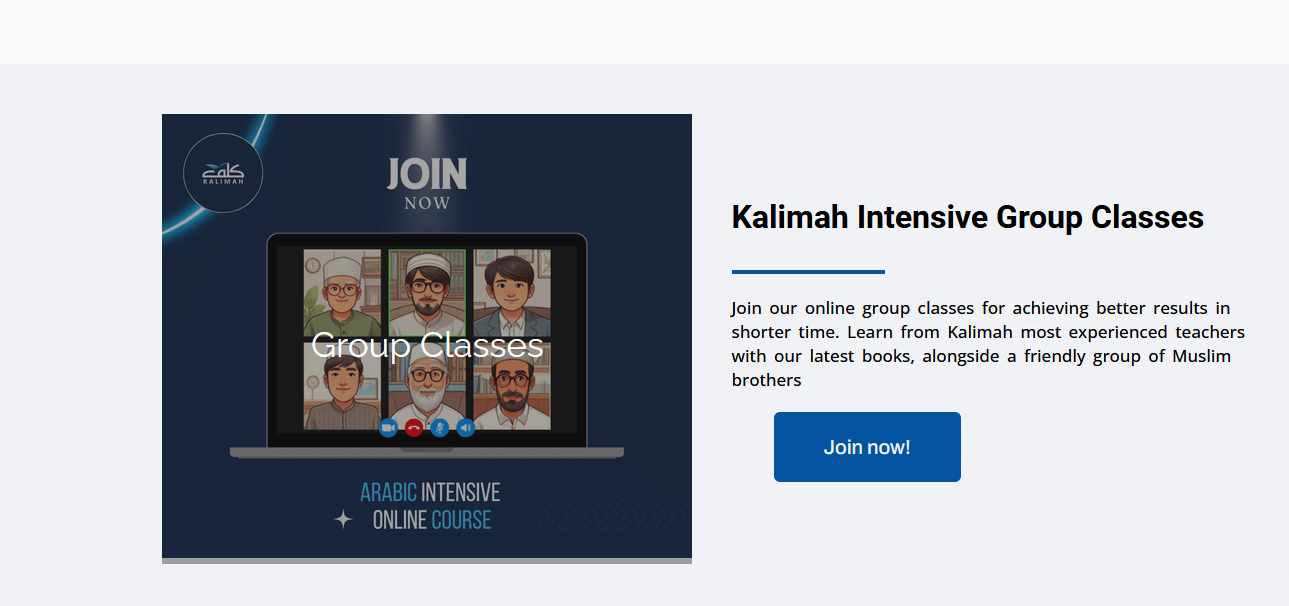
Unlock the World of Arabic with Kalimah Center’s Group Classes!
Are you ready to immerse yourself in the rich and vibrant Arabic language? At Kalimah Center, we offer dynamic group classes designed to suit learners of all levels. Whether you’re a beginner eager to start your Arabic journey or an advanced student looking to refine your skills, our expert instructors are here to guide you every step of the way.
Why Choose Kalimah Center?
- Interactive Learning: Engage in lively, interactive classes that make learning Arabic both effective and enjoyable.
- Experienced Instructors: Learn from highly qualified teachers with extensive experience in teaching Arabic to diverse groups.
- Flexible Schedules: Choose from a variety of class times to fit your busy lifestyle.
- Cultural Insights: Gain a deeper understanding of Arab cultures and traditions as part of your language learning experience.
- Supportive Community: Join a vibrant community of fellow learners and practice your Arabic in a collaborative environment.
Special Offer! Sign up now and enjoy a free trial class to experience our teaching approach firsthand!
🚀 Get Started Today! Visit Kalimah Center’s Group Classes to learn more and reserve your spot.
Transform your Arabic skills and open doors to new opportunities with Kalimah Center’s engaging group classes. We can’t wait to welcome you to our learning community! 🌍📚✨
📚 Explore Our Courses:
Online Arabic Course: Tailored to your level, our comprehensive Arabic program includes 16 teaching levels and 400+ hours of personalized sessions.
Online Quran With Tajweed Course: Perfect for non-Arabic speakers, our course spans 13 levels and equips you with Tajweed mastery from beginner to advanced.
Online Arabic Course For Kids: Nurture your child’s love for Arabic with our engaging and structured program, available in 24 levels for primary, intermediate, and secondary stages.
🚀 Start Your Free Trial Today! 🚀
Don’t miss out on this life-changing opportunity to deepen your faith and knowledge. Sign up now for your free trial and take the first step towards becoming a better practicing Muslim with Kalimah Center!
Conclusion
Arabic language study scholarships play a vital role in making language education more accessible and affordable for students and professionals. By providing financial support, these scholarships enable learners to immerse themselves in Arabic, gain valuable skills, and foster greater cultural understanding.
Whether through academic institutions, government programs, or private organizations, these scholarships help bridge the gap between aspiration and opportunity, empowering individuals to excel in their language studies and contribute meaningfully to global dialogues.
Frequently Asked Questions About Arabic Language Scholarships
What is the easiest Arabic scholarship to get for beginners?
The Critical Language Scholarship (CLS) program accepts beginners with no prior Arabic experience for their summer intensive courses. It’s fully funded and designed specifically for U.S. students starting their language journey. Application requires only academic transcripts, essays, and recommendation letters—no Arabic proficiency test needed for beginner track.
Do I need to already speak Arabic to get an Arabic language scholarship?
No. Many scholarships like CLS, Fulbright, and university programs accept complete beginners. Some scholarships have beginner, intermediate, and advanced tracks. However, graduate-level scholarships (like Chevening) may prefer candidates with some Arabic background. Always check specific program requirements—most clearly state accepted proficiency levels.
How much funding do Arabic language scholarships typically provide?
Fully-funded scholarships (Fulbright, CLS, Chevening) cover tuition, housing, meals, airfare, and health insurance—valued at $20,000-$50,000+ annually. Partial scholarships from universities typically cover 25-75% of tuition only. Some provide stipends ($500-$2,000/month). Check each program’s specific coverage—some cover books and visa fees; others don’t.
When should I apply for Arabic language scholarships?
Most major scholarships have deadlines 8-12 months before program start. For fall 2026 programs, apply between October 2025-February 2026. CLS (summer programs) deadline is typically November for following summer. University scholarships often have rolling admissions. Start preparing 12-18 months early to gather documents, secure recommendations, and write strong essays.
Can non-U.S. citizens get scholarships to study Arabic?
Yes. While Fulbright and CLS are U.S.-only, many options exist for international students: Chevening (UK citizens/eligible countries), DAAD (German residents), university scholarships at AUC/Qatar University/University of Jordan (open to most nationalities), and country-specific government scholarships. Check eligibility criteria carefully—some require citizenship; others accept residents or specific regions.