The Arabic script is rich and varied, with every letter presenting distinct phonetic and visual features. One such letter is the letter “ف” (Faa), which is a core sound in Arabic and also occurs in most loan words in various languages. Mastering its pronunciation, forms, and usage is crucial for learners of Arabic seeking fluency.
Understanding The Faa Arabic Letter “ف”
The Arabic letter “ف” (Faa) is the 20th letter of the Arabic alphabet. It is a voiceless labiodental fricative, similar to the English “f” sound.

Learning and recognizing this letter is extremely crucial for proper Arabic pronunciation. Unlike some Arabic letters that don’t have a corresponding letter in English, “ف” is relatively easy for non-native speakers to learn.
Visually, “ف” is distinguished by having one dot on top of its curved body, distinguishing it from other letters similar to it, like “ق” (Qaaf). The shape of “ف” changes depending on its position in a word: isolated, initial, medial, or final.
How “ف” (Faa) Appears When Written
Writing is cursive in Arabic, so letters do not have a fixed shape but rather change based on position within a word. Here are the ways in which “ف” appears in different contexts:

- Isolated: ف
- Initial: فـ (e.g., فجر)
- Medial: ـفـ (e.g., سفر)
- Final: ـف (e.g., خف)
Learning these forms is important to read and write Arabic comfortably.
Pronouncing “ف” (Faa) Correctly
The letter “ف” is sounded by placing the upper teeth on the lower lip and allowing the air to escape, creating a soft, frictional sound—the identical sound as English “f.” Unlike some Arabic consonants that are sounded way back in the throat, “ف” is sounded at the front of the mouth, so it’s easier for beginners.
To improve its pronunciation, students should practice it with words where “ف” is put in different positions. Listening to native speakers and reciting words aloud can also help in acquiring this sound.
Master Arabic with Kalimah Center
Join our expert-led online classes and start your journey toward Arabic fluency today.
Book Your Free TrialCommon Words And Sentences Featuring “ف”
A great way to internalize “ف” is by learning words where it appears in various placements:

Words with “ف” in the Initial Position:
- فجر (fajr) – dawn
- فكرة (fikra) – idea
- فراشة (farasha) – butterfly
Words with “ف” in the Medial Position:
- سفر (safar) – travel
- تحف (tuhaf) – artifacts
- مفتاح (moftah) – key
Words with “ف” in the Final Position:
- خروف (kharoof) – sheep
- حرف (harf) – letter (of the alphabet)
- لطيف (latief) – Nice
Practical Sentences Using “ف”
Here are some example sentences that include the letter “ف” in different placements:
- فاز الفريق في المباراة (The team won the match)
- تحف المتحف جميلة جدًا (The museum’s artifacts are very beautiful)
- الفلاح يقطف الثمار (The farmer picks the fruits)
Challenges And Tips For Mastering “ف”
Like with any other letter in Arabic, “ف” also has difficulties in learning. Here are a few tips on how to make it easier:

- Recognize it from Similar Letter: Some of the students get confused between “ف” and “ق” due to the similarity in appearance. Remember, “ف” has a dot above it whereas “ق” has two dots.
- Practice the Writing in Multiple Forms: Practicing handwriting trains the brain for recognition of “ف” in all its variations.
- Improve Pronunciation with Listening Exercises: Repeating words from Arabic audio materials can enhance pronunciation skills.
- Expand Vocabulary: The more words learned with “ف”, the more familiar one will become with its sound and position.
Master Arabic with Kalimah Center
Join our expert-led online classes and start your journey toward Arabic fluency today.
Book Your Free TrialInside Kalimah Center: Moments from Our Courses
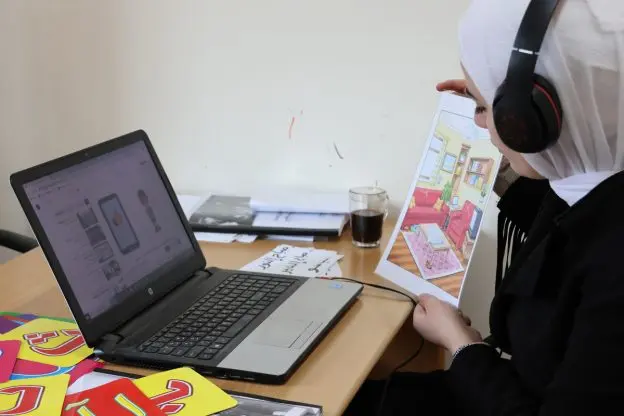
Get a glimpse into the vibrant learning experience at Kalimah Center. These snapshots capture real moments from our live classes—where students engage deeply, connect with passionate instructors, and grow in a welcoming, supportive environment.
Here Are The Reviews On Our Courses:
Our students frequently commend the excellence of our courses and the commitment shown by our instructors. You can read their complete reviews on Trustpilot.

Unlock Your Potential in Arabic and Quran with Kalimah Center!
Ready to deepen your connection with the Quran and enhance your understanding of Arabic? Join Kalimah Center today and embark on a transformative journey of learning and growth! Our professional, handpicked Online Arabic and Quran Tutors are dedicated to helping you master these essential skills with ease and expertise.
📚 Explore Our Courses:
Online Arabic Course: Tailored to your level, our comprehensive Arabic program includes 16 teaching levels and 400+ hours of personalized sessions.
Online Quran With Tajweed Course: Perfect for non-Arabic speakers, our course spans 13 levels and equips you with Tajweed mastery from beginner to advanced.
Online Arabic Course For Kids: Nurture your child’s love for Arabic with our engaging and structured program, available in 24 levels for primary, intermediate, and secondary stages.
🚀 Start Your Free Trial Today! 🚀
Don’t miss out on this life-changing opportunity to deepen your faith and knowledge. Sign up now for your free trial and take the first step towards becoming a better practicing Muslim with Kalimah Center!
Conclusion
The letter “ف” (Faa) is one of the Arabic letters in the regular alphabet and appears in many common daily words and phrases. Its simplicity in pronunciation makes it one of the easier Arabic letters to learn. Through practice in pronunciation, exposure to its multiple written forms, and use in common words, students are able to gain good control over Arabic literacy.
By consistently incorporating “ف” into your learning routine, you’ll find it an enjoyable and essential component of your Arabic language journey.
FAQs about Arabic Letter “ف” (Faa)
What is the Arabic letter Faa (“ف”) and how is it pronounced?
The Arabic letter Faa (“ف”) is the 20th letter of the Arabic alphabet. It is pronounced as a voiceless labiodental fricative, which is the exact phonetic equivalent of the English letter “f” sound. It is produced by placing the upper front teeth against the inside of the lower lip.
What are the four written forms of the Arabic letter Faa?
Because Arabic script is cursive, the letter Faa (“ف”) changes its visual shape based on its position in a word. The four forms are: Isolated (ف), Initial (فـ) as in dawn (فجر), Medial (ـفـ) as in travel (سفر), and Final (ـف) as in cap/slippers (خف).
What is the difference between the Arabic letters Faa (ف) and Qaaf (ق)?
The primary visual difference between the two letters is their dots and body shape. The letter Faa (“ف”) has a flatter, elongated body resting on the line with a single dot on top. The letter Qaaf (“ق”) has a deeper, rounded tail that dips below the line and features two dots on top.
What are some common examples of Arabic words using the letter Faa?
The letter Faa appears across all word positions in Arabic vocabulary. Examples include initial position words like “fikra” (فكرة – idea), medial position words like “moftah” (مفتاح – key), and final position words like “kharoof” (خروف – sheep) and “harf” (حرف – letter).
Why is the Arabic letter Faa easy for English speakers to learn?
Unlike guttural Arabic letters that originate deep in the throat (like Haa or ‘Ayn), Faa (“ف”) is sounded at the front of the mouth. Because its phonetic sound is identical to the English “f,” non-native English speakers can master its pronunciation immediately without vocal strain.