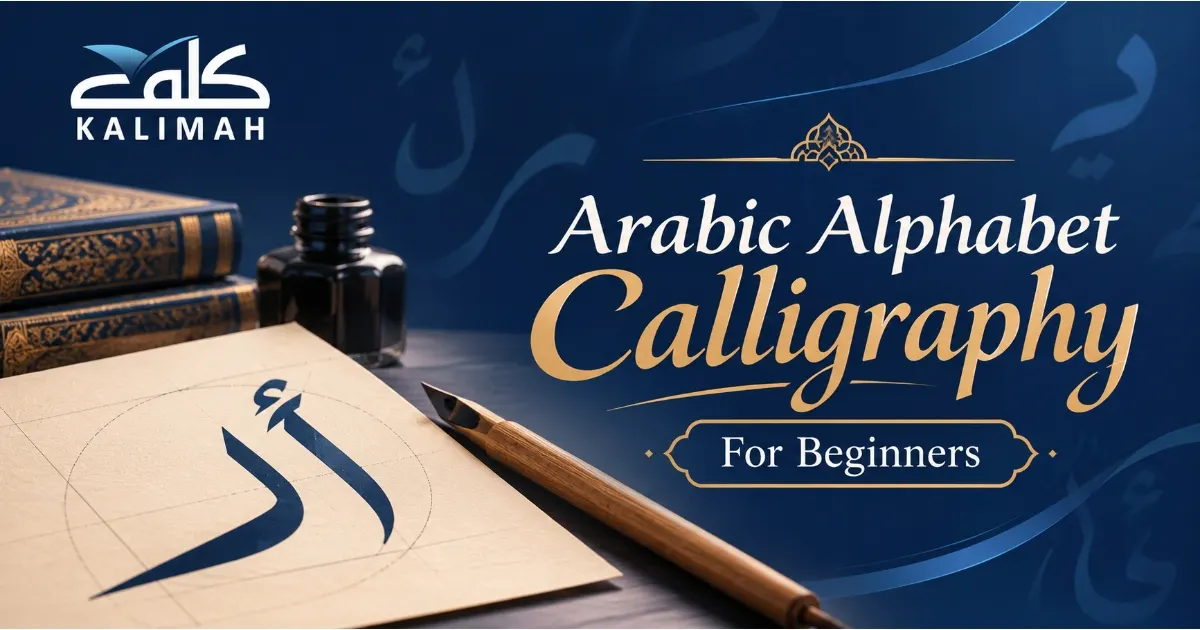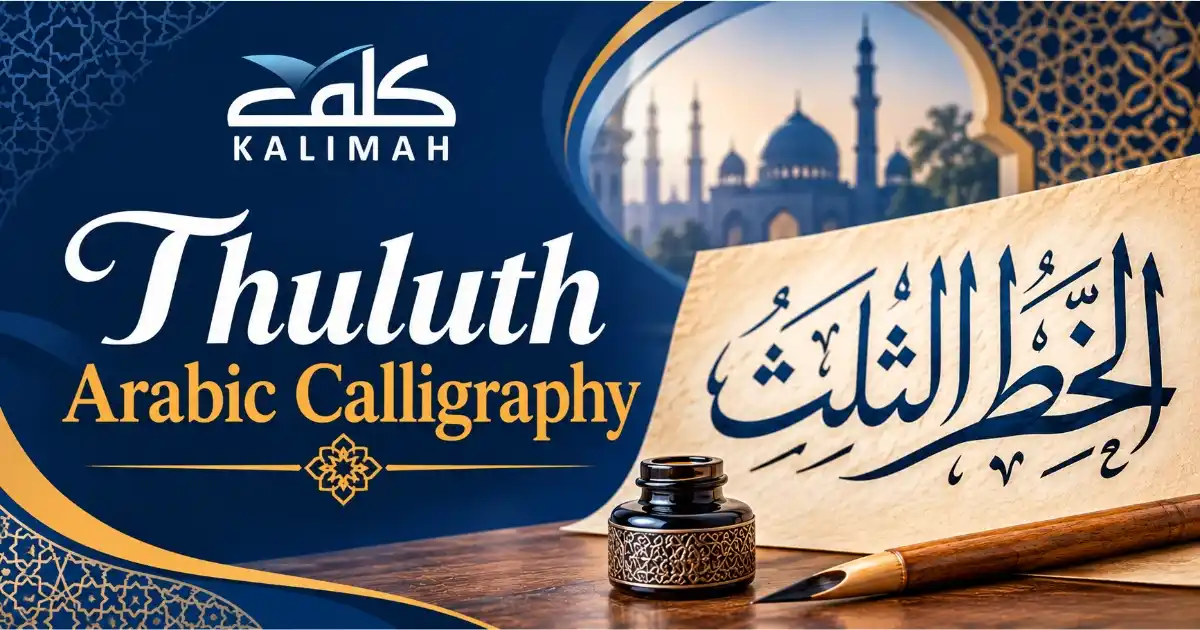
Have you ever stood in front of a mosque doorway and felt the letters above it almost rise and dance? That graceful movement often belongs to thuluth Arabic calligraphy, a script that calligraphers have long treated as the crown of their craft.
Many learners fall in love with these sweeping curves but don’t know where to begin. They ask which pen to buy, how letters are measured, and whether they need fluent Arabic first. Those are fair questions, and every one of them has a clear answer.
At Kalimah Centre, we help learners around the world build a strong relationship with the Arabic script, from the first letter to confident writing. This guide brings that same friendly, step-by-step approach to one of the most admired styles in Islamic art.
You’ll travel through the script’s history, meet the masters who shaped it, and see where it still shines today. Then you’ll get a practical roadmap, with tools and free resources, so your first strokes feel exciting.
What You Will Learn in This Article:
- What thuluth is, what its name means, and how it differs from other scripts.
- The masters and milestones behind the script’s development.
- The traditional and digital tools you need to start practicing.
- A clear, step-by-step path for learning thuluth, even as a beginner.
What Is Thuluth Arabic Calligraphy?
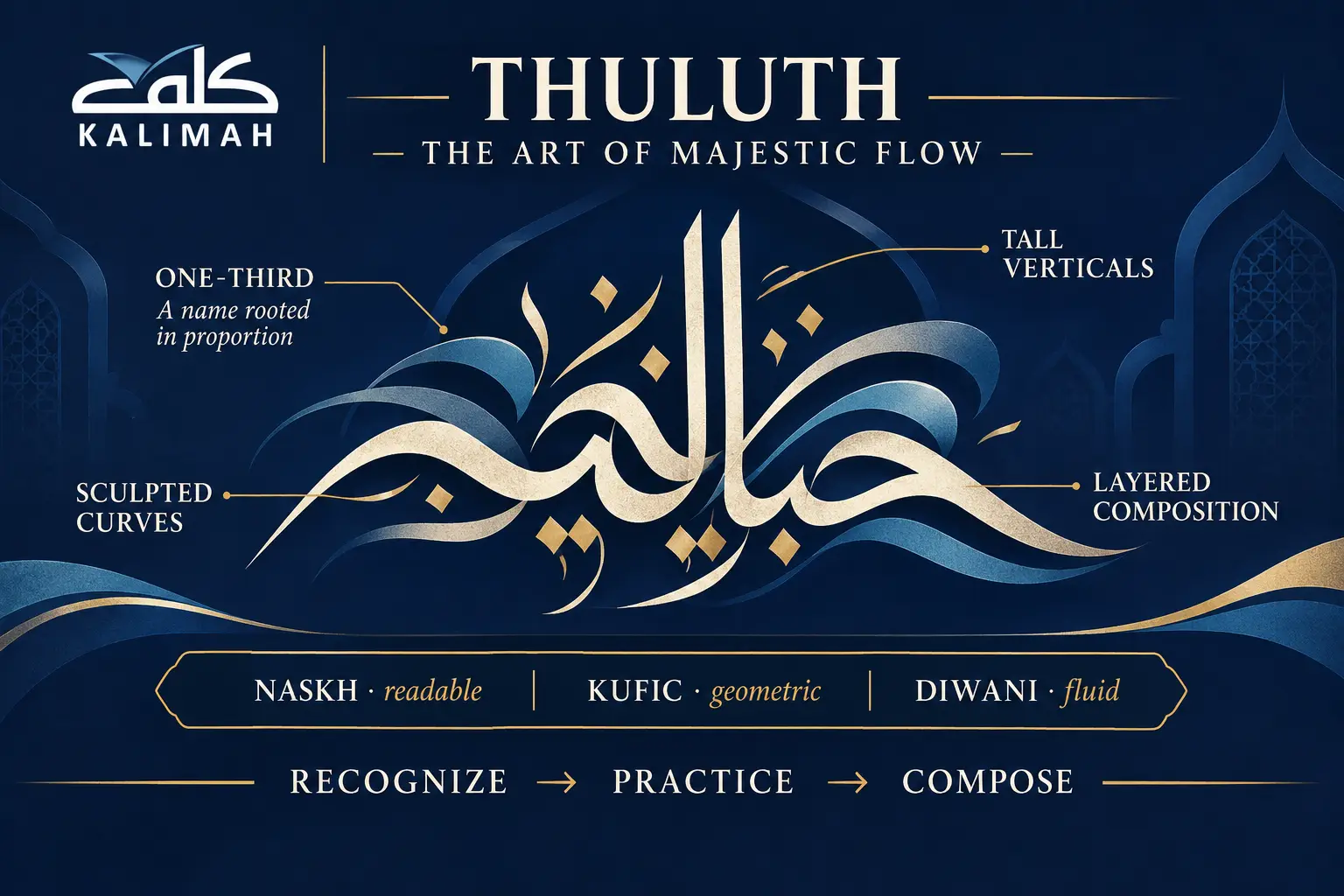
Thuluth Arabic calligraphy is a large, cursive script known for tall verticals, deep curves, and layered compositions. Calligraphers have used it for centuries on Quran chapter headings, mosque walls, and monumental inscriptions. This section covers its name, its look, and how it compares with other major Arabic scripts.
Before you pick up a pen, it helps to know what makes this script different. Once you can recognize its features, you’ll start noticing thuluth everywhere, from old manuscripts to modern logos. Let’s start with the name.
The Meaning Behind The Name Thuluth
The word thuluth (ثُلُث) means “one-third” in Arabic. Historians offer more than one explanation for the name. The most widely quoted one is that about a third of each letter slopes, while the rest stays straight or gently curved.
A second theory ties the name to pen size. According to this view, the nib used for thuluth was one-third the width of the larger pen used for official scrolls in early Islamic chancelleries. Both explanations point to a script built on careful, measured proportions.
If you’d like a concise scholarly summary, the Encyclopaedia Britannica entry on the thuluth script explains the “one-third” rule. It also describes how the script was used for chapter headings and religious inscriptions, which is useful context as you study its features.
Key Visual Features Of The Thuluth Script
Thuluth letters are tall, rounded, and full of motion. Vertical strokes such as the alif stand proud, while descending letters curve into wide, bowl-like shapes. The overall effect feels majestic and calm, like a piece of music written in ink.
A defining feature of thuluth Arabic calligraphy is its layered composition. Calligraphers stack words and letters on top of one another, then fill the remaining spaces with vowel marks and small ornamental signs. That makes every panel look balanced and complete.
This density takes practice to read, even for native Arabic speakers. Beginners usually learn single letters first, then simple words, and only later attempt full compositions. Understanding that progression early will save you a lot of frustration down the road.
How Thuluth Differs From Naskh, Kufic, And Diwani
Compared with naskh, thuluth is larger, more decorative, and slower to write. Naskh became the everyday book hand because it is compact and highly readable. Thuluth, by contrast, was reserved for titles, inscriptions, and moments that called for visual grandeur.
Kufic is older and angular, with straight lines and geometric corners. Thuluth replaced much of that rigidity with curves and oblique strokes. Diwani, which developed later in the Ottoman chancery, is even more fluid, with tightly packed letters that flow without strict baselines.
Knowing these differences helps you choose your learning path. Many traditional teachers pair thuluth with naskh, since the two share letter logic but differ in scale and spirit. Practicing them side by side sharpens your eye for proportion in both scripts.
Read Also: Arabic Writing Styles
The History And Great Masters Of The Thuluth Script
The story of thuluth Arabic calligraphy is the story of master calligraphers who refined it over roughly a thousand years. Each generation added precision, elegance, or new rules. This section introduces the most influential names and what each one contributed.
Knowing this history isn’t just trivia. When you copy a model by a classical master, you join a teaching chain that stretches back centuries. Let’s meet the key figures in order.
1. Ibn Muqla And The Proportioned Script System
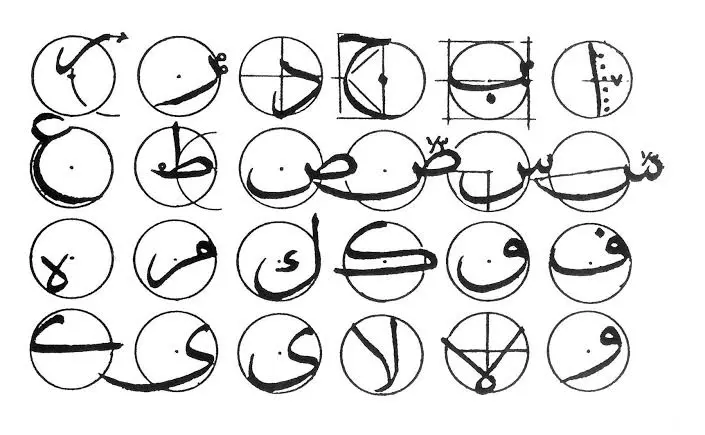
Ibn Muqla, an Abbasid vizier who died in 940 CE, is widely credited with codifying thuluth. His biggest contribution was a system of proportions that let calligraphers measure every letter against fixed units, instead of relying only on instinct.
His system rested on three elements: the rhombic dot made by the pen’s nib, the height of the alif, and a circle based on that alif. Every letter could then be described in relation to these units, which turned calligraphy into a teachable discipline.
This framework still guides students today. When a teacher asks you to measure a letter in dots, you’re using a method that goes back to Ibn Muqla. It’s a reminder that beautiful script is built on structure, not luck.
2. Yaqut Al-Musta’simi And The Angled Reed Pen
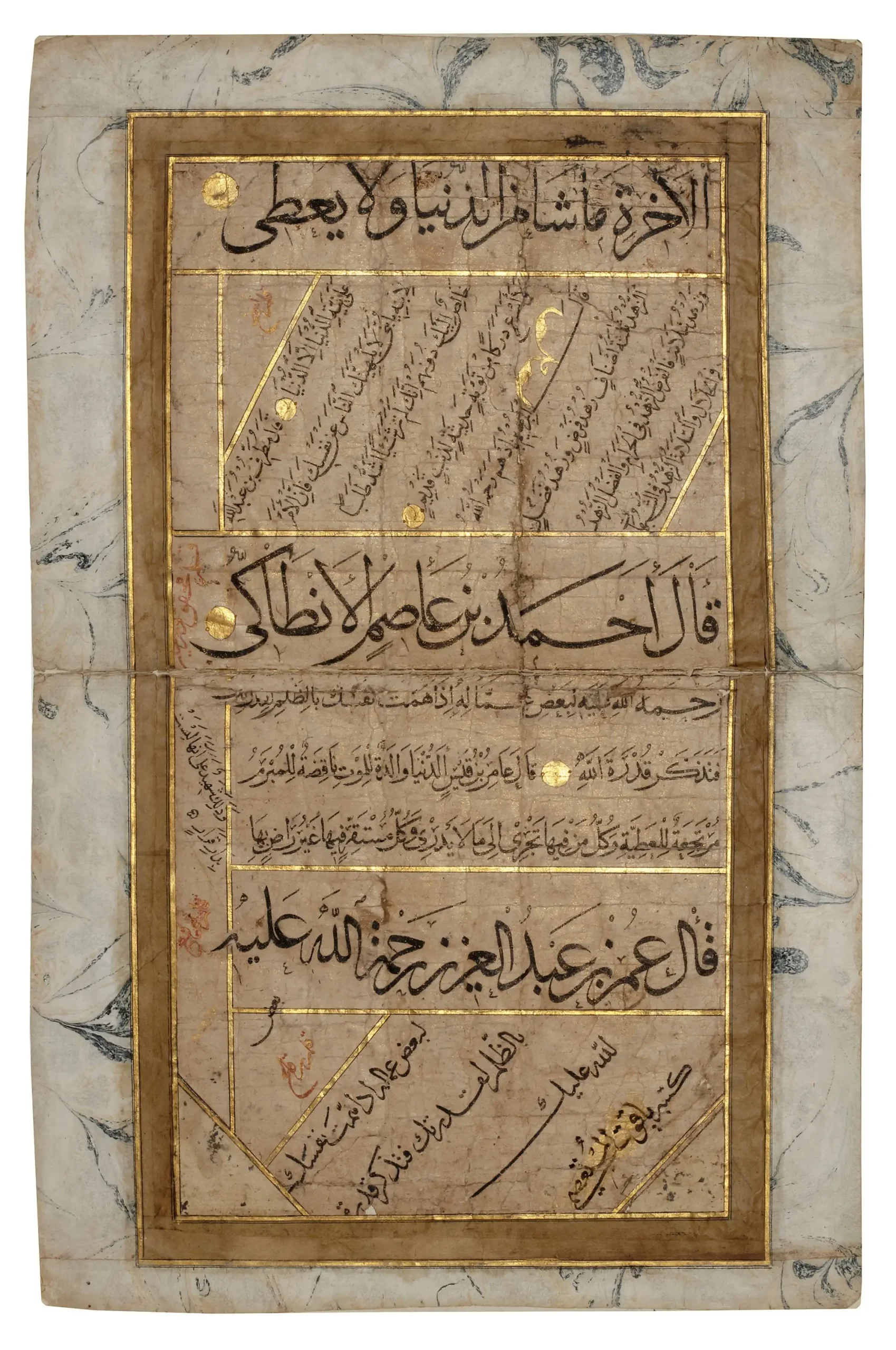
Yaqut al-Musta’simi, who died in 1298, was one of the most celebrated calligraphers of the late Abbasid era. He’s often credited with cutting the reed pen’s nib at an angle, which gave strokes a sharper, more elegant transition between thick and thin.
Yaqut also refined the “six pens,” the classical group of scripts that includes thuluth, naskh, muhaqqaq, rayhani, tawqi, and riqa. His work became the standard that calligraphers across the Islamic world studied and imitated for generations after him.
For a beginner, his legacy has a practical lesson: the way you cut your pen shapes every stroke. A clean, angled nib makes thuluth’s curves look smooth. A careless cut makes even a correct letter look clumsy.
3. Ottoman Calligraphers Who Shaped Modern Thuluth
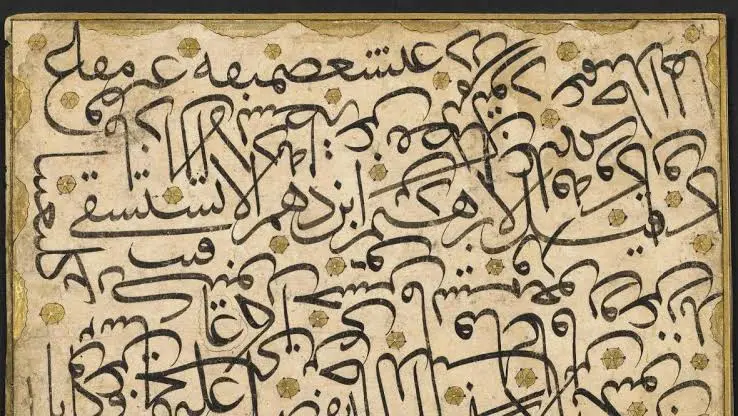
In the Ottoman era, thuluth reached new heights. Sheikh Hamdullah (1436–1520) reworked Yaqut’s models and founded a school that dominated for centuries. Later, Hafiz Osman (1642–1698) refined those forms further, giving letters greater clarity and balance.
Mustafa Rakim (1757–1826) is often considered the peak of thuluth, especially in large-scale jali thuluth panels. In the late nineteenth century, Mehmed Shevki Efendi gave the script much of its modern classical form, which teachers still use as a model today.
You can explore objects linked to these traditions through Google Arts & Culture’s thuluth collection. It gathers museum pieces and online exhibits, including works connected to Sheikh Hamdullah. It’s a free way to train your eye before you start copying.
Where Thuluth Calligraphy Appears In Islamic Art
Thuluth has decorated sacred texts, buildings, fabrics, and national symbols for centuries. Seeing where it appears shows why calligraphers value it so highly. This section walks you through its most important settings, from manuscripts to modern design.
Each setting asks something different of the calligrapher. A surah heading needs clarity, a dome inscription needs legibility from far away, and a textile needs flexibility. Let’s look at each one.
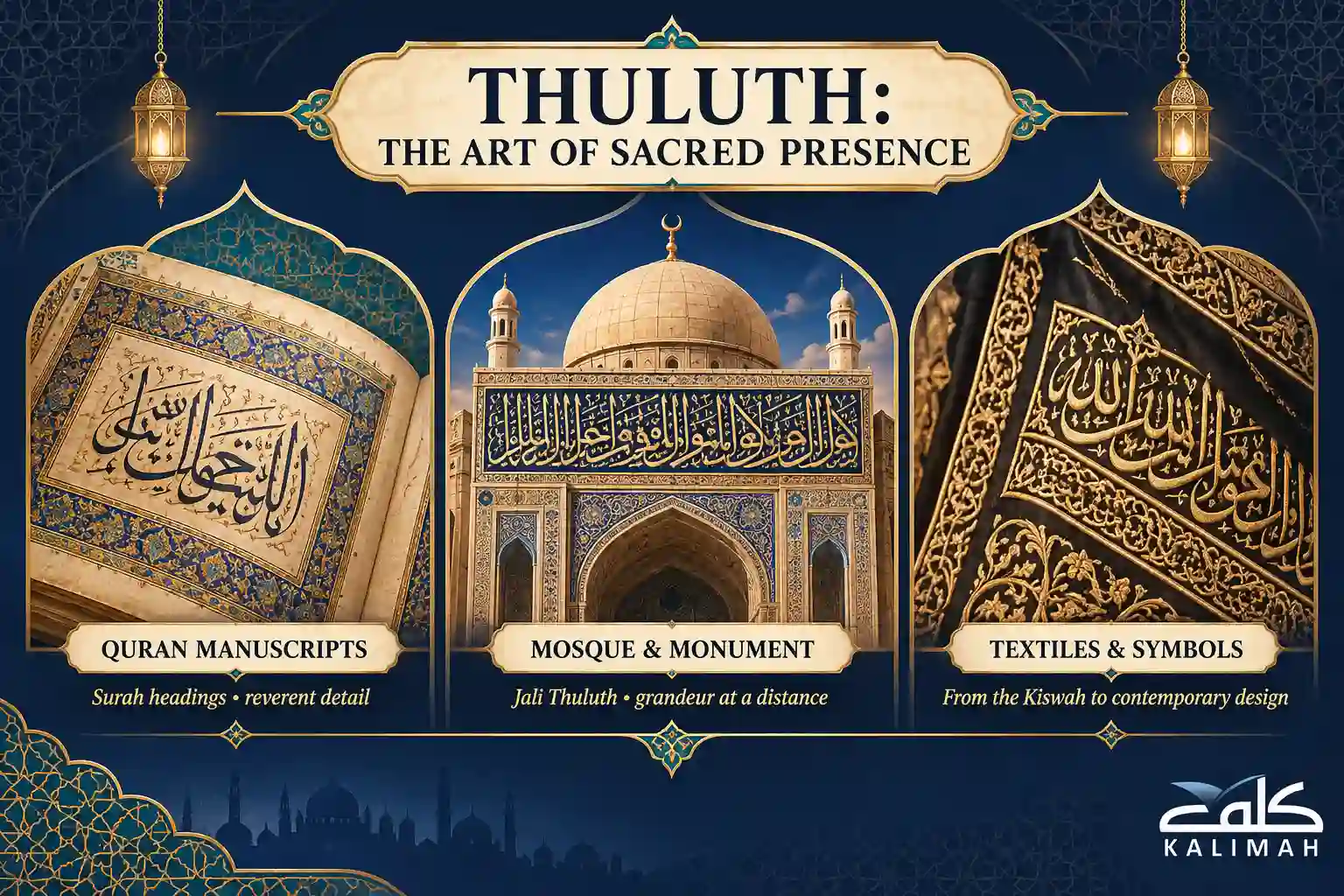
1. Quran Manuscripts And Surah Headings
Some of the earliest large Quran copies were written partly or fully in thuluth. Over time, scribes used naskh for the main text and kept thuluth for surah headings, where its grandeur signals the start of a new chapter.
This reverence for writing has deep roots in the Quran itself. Allah (Glorified and Exalted be He) says:
“نٓۚ وَٱلۡقَلَمِ وَمَا يَسۡطُرُونَ”
“Nũn. By the pen and what everyone writes!” Surah Al-Qalam, 68:1
In this verse, Allah swears by the pen and by what is written with it, which raises the status of writing itself. Muslim calligraphers saw this as an honor and a responsibility. That’s why they gave Quranic text their most careful and beautiful work.
If reading the Quran’s script beautifully is your dream, the Online Quran Course at Kalimah Centre takes you from the letters of Noorani Qaida to confident recitation. Ijazah-certified tutors guide every step.
2. Mosques And Monumental Inscriptions
Thuluth is the classic script for mosque interiors, domes, and doorways. Its tall letters and strong curves stay readable from far below. Calligraphers often designed these bands to wrap around a whole building in one continuous line.
A famous example is the Taj Mahal in India. Its southern portal carries Quranic verses in monumental thuluth, designed by the calligrapher Amanat Khan Shirazi in the 1630s. The letters were carefully scaled so they look the same size when viewed from the ground.
For monumental work, calligraphers use jali thuluth, an enlarged version of the script. It keeps the same letter logic but adds extra attention to spacing and visual weight. Studying photos of these inscriptions is an excellent way to understand composition on a grand scale.
3. Flags, Textiles, And Modern Design
Thuluth Arabic calligraphy also lives on fabrics and national symbols. The Shahada on the flag of Saudi Arabia is written in thuluth. The gold-embroidered verses on the Kiswah, the cloth covering the Kaaba, follow the same majestic tradition.
Historical textiles tell a similar story. Royal workshops once wove inscriptions into silk, sometimes in regional versions of thuluth adapted to local taste. These pieces show how flexible the script is when it moves from paper to thread.
Today, designers bring thuluth into logos, posters, and contemporary exhibitions. You can see this mix of classical and modern styles in this YouTube walkthrough of a calligraphy exhibition in Madinah, which features many styles and new media side by side.
Recommended Reading: Learn to Read and Write Arabic: Complete Beginner’s Guide (+ Speaking)
Experience Kalimah Center Classes
Watch real excerpts from our live sessions at Kalimah Center and see how we bring learning to life. These clips highlight our interactive, student-centered teaching approach across all our courses—designed to keep learners engaged, motivated, and actively involved every step of the way.
Master Arabic with Kalimah Center
Join our expert-led online classes and start your journey toward Arabic fluency today.
Book Your Free TrialEssential Tools For Practicing Thuluth Calligraphy
The right tools make your first weeks of practice smoother and much more enjoyable. You don’t need an expensive kit, but you do need to understand what each tool does. This section covers the pen, the ink and paper, and the free digital options.
Traditional calligraphers prepared most of their tools by hand, and preparing them was part of the training. You can start simply and upgrade as your skills grow. Let’s begin with the most important tool of all.
1. The Qalam And How To Cut It
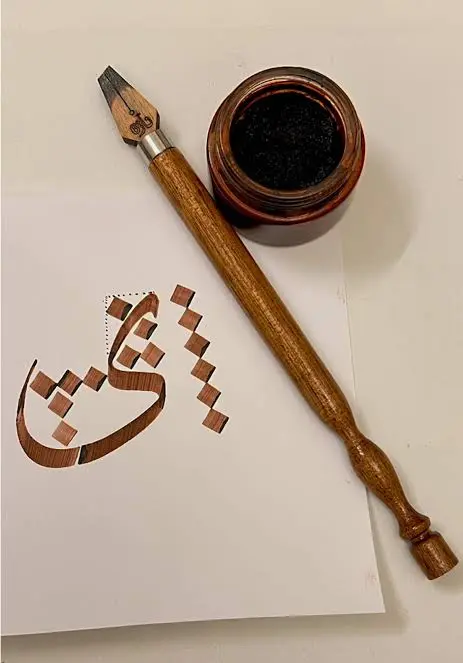
The qalam is a reed or bamboo pen that has been the calligrapher’s main tool for centuries. You cut its tip into a broad, angled nib. Each stroke’s thick and thin parts come from that edge, not from pressing harder.
Cutting a qalam involves shaving the tip, splitting it slightly down the middle, and trimming the nib at an angle on a hard surface. Beginners usually ruin a few reeds first, and that’s completely normal. Patience here pays off in every stroke you make later.
To appreciate the living tradition behind these tools, see UNESCO’s listing of Arabic calligraphy as intangible cultural heritage. It describes reed and bamboo pens, natural inks, and treated paper, and it notes that the art was inscribed in 2021.
2. Ink, Liqa, And Paper For Beginners
Traditional calligraphy ink is rich, black, and slightly matte. Calligraphers often place a small tuft of silk fibers, called liqa, in the inkwell. The liqa controls how much ink the qalam picks up and stops blots on your strokes.
Paper matters just as much. Classical calligraphers used ahar paper, coated with a starch-based mixture and polished until smooth. That surface lets the qalam glide and allows small mistakes to be gently scraped away, which is a real gift for learners.
If you’re just starting, smooth, heavy, non-absorbent paper is a good substitute. Avoid rough or very thin sheets, which make ink spread and edges look fuzzy. Good paper won’t fix technique, but bad paper can hide your real progress.
3. Free Digital Tools For Practice
Digital tools can’t replace the qalam, but they help with planning and studying. Krita, a free and open-source painting program, works with drawing tablets. You can use it to trace classical models and test letter spacing on a grid.
When you want to clean up or digitize a finished piece, Inkscape’s free vector design tool is a practical choice. You can scan your work, convert it into scalable shapes, and prepare it for printing or framing without losing sharpness.
Use these tools to support your practice, not replace it. A good routine is to plan your composition digitally, write it by hand with a real pen, and then compare the two. This back-and-forth quickly shows you where your proportions drift.
Further Reading: How to Write in Arabic: Step-by-Step Guide for Beginners
How To Learn Thuluth Arabic Calligraphy Step By Step
Learning thuluth Arabic calligraphy works best as a gradual climb rather than one big leap. Each step builds a skill the next one depends on. This section gives you a clear roadmap, from letter basics to copying masterpieces and teaching young learners.
Don’t rush through the early stages. Strong foundations make the advanced compositions feel natural rather than forced. Here’s how to move forward with confidence.
1. Master Arabic Letters And Connections First
Before thuluth, you need to know the Arabic alphabet well. That means each letter’s shape in its initial, medial, final, and isolated forms, plus how letters connect. Calligraphy amplifies these forms, so any gap in your basics will show clearly.
Reading Arabic fluently helps too. When you understand the words you’re writing, you space them better and avoid joining letters that shouldn’t connect. Many calligraphy errors are really reading errors that appear on paper in beautiful ink.
Build the letter foundation every calligrapher needs with Kalimah Centre’s Online Arabic Course. Native tutors assess your writing assignments one-on-one, so your letters grow stronger with every lesson.
2. Measure Proportions With The Rhombic Dot System
The rhombic dot is the calligrapher’s ruler. You make it by pressing the full width of your nib diagonally onto the paper, which leaves a small diamond shape. Stacking these dots shows how tall or wide a letter should be.
In thuluth, the alif is usually around seven to nine dots tall, depending on the tradition your teacher follows. Other letters are measured against that alif. Beginners should draw dot ladders beside each practice letter until the proportions become second nature.
This system turns vague advice like “make it taller” into precise feedback. When your letter looks off, count the dots and compare them with the model. Most of the time you’ll find the exact spot where your proportion slipped.
3. Copy Classical Models And Practice Daily
Traditional students learn by copying exercise sheets called mashq, written by their teachers. They repeat single letters, then letter pairs, then full words. Short daily sessions are far more effective than one long session each week, because muscle memory builds through repetition.
For fresh models to study, browse The Met’s online collection search for thuluth, which returns around 600 objects. Zoom in on letter endings and spacing. Then try to recreate one word at a time in your practice notebook.
Learning feels lighter when you practice alongside others. Kalimah Centre’s Arabic Group Classes keep groups to three to six students, so you get personal attention, peer motivation, and a lower cost per session.

4. Introducing Thuluth To Children And Young Learners
Children can enjoy thuluth when you introduce it in a playful, low-pressure way. Start with big, simple letters using a wide marker. Let them trace curves and dots before expecting full words. The goal at this stage is love for the script, not perfection.
Keep sessions short, around fifteen to twenty minutes, and celebrate small wins. Turning a child’s name into a simple thuluth-style design is a great motivator. Kids often feel proud when they see their own name looking like art.
Give your child a strong start with Kalimah Centre’s Arabic Classes For Kids, where native tutors teach reading and writing through engaging lessons. Their love for the Arabic script begins with the very first letter.
Don’t Miss: Arabic Writing Practice for Kids: Expert Tips With 3 Worksheets
Kalimah Centre Is A Smart First Step For Aspiring Calligraphers
Every graceful curve in thuluth Arabic calligraphy rests on one thing: a solid command of the Arabic letters. Calligraphers who rush past the basics hit a wall sooner or later. That’s exactly where Kalimah Centre helps, by giving you a structured, supportive foundation in reading and writing Arabic.
Our tutors don’t just hand you worksheets and hope for the best. They review your writing assignments, point out letter-form issues, and help you fix them early. That personal feedback mirrors the traditional teacher-student relationship that calligraphy has always depended on.
Our program is also clearly organized. The Arabic curriculum runs across sixteen levels and more than 400 one-on-one study hours. A free placement test makes sure you start at the right level, so you never waste time on material you already know.
Flexibility matters when you’re building a daily practice habit. With online one-on-one classes and the option of male and female tutors, you can fit lessons around work, family, and your calligraphy sessions. Passing each level also earns you a certificate that marks your progress.

Inside Kalimah Center: Moments from Our Courses
Get a glimpse into the vibrant learning experience at Kalimah Center. These snapshots capture real moments from our live classes—where students engage deeply, connect with passionate instructors, and grow in a welcoming, supportive environment.
Master Arabic with Kalimah Center
Join our expert-led online classes and start your journey toward Arabic fluency today.
Book Your Free TrialStart Your Arabic Writing Journey With Kalimah Centre Today!
You’ve seen how thuluth was born, where it shines, and how to start practicing it. The next step is building the Arabic foundation that makes every stroke confident. Don’t let your admiration for this script stay at the “someday” stage.
Book your free trial class with Kalimah Centre and meet a native tutor who will assess your level and design a clear plan. You’ll leave your first session knowing exactly what to practice next, and why.
???? Explore Our Courses:
Online Arabic Course: Tailored to your level, our comprehensive Arabic program includes 16 teaching levels and 400+ hours of personalized sessions.
Online Quran With Tajweed Course: Perfect for non-Arabic speakers, our course spans 13 levels and equips you with Tajweed mastery from beginner to advanced.
Online Arabic Course For Kids: Nurture your child’s love for Arabic with our engaging and structured program, available in 24 levels for primary, intermediate, and secondary stages.
Thousands of learners have already turned curiosity about Arabic into real skill with us. Join them today, sharpen your letters, and take the first real step toward writing the script you love. Your journey starts with one click.

Master Arabic with Kalimah Center
Join our expert-led online classes and start your journey toward Arabic fluency today.
Book Your Free TrialFinal Thoughts
Thuluth began with Ibn Muqla’s proportions, grew through Yaqut’s angled pen, and reached its classical peak with the Ottoman masters. Along the way it decorated Quran chapter headings, mosque domes, flags, and textiles. Each setting showed how well the script balances majesty and clarity.
Learning it takes the right tools, a reliable method, and steady practice. A well-cut qalam, smooth paper, and the rhombic dot system give you structure. Copying classical models every day then turns that structure into graceful, confident letters you can be proud of.
The key takeaway is simple: thuluth Arabic calligraphy rewards patience and strong foundations far more than talent. Master the Arabic letters first, practice a little every day, and let a skilled teacher guide your eye. With Kalimah Centre beside you, that path becomes clear and enjoyable.
Frequently Asked Questions
Is Thuluth Calligraphy Hard For Beginners?
Yes, it’s considered one of the most demanding scripts, but steady practice makes it achievable. Kalimah Centre helps you master the Arabic letters first, so thuluth’s rules feel far less intimidating.
How Long Does It Take To Learn Thuluth?
Basic letters can take a few months, while full mastery traditionally takes years of guided practice. Kalimah Centre’s structured levels help you build the reading and writing base that speeds up that progress.
Should I Learn Naskh Before Thuluth?
Many teachers recommend learning naskh alongside thuluth, because both share letter logic at different scales. Kalimah Centre’s Arabic lessons strengthen your letter recognition, which supports both scripts from day one.
Can I Practice Thuluth Without A Traditional Qalam?
Yes, you can start with a broad-edge calligraphy marker or a wide nib before moving to the reed qalam. Pair that early practice with Kalimah Centre’s writing feedback to make sure your letter shapes stay accurate.
Can Non-Arabic Speakers Learn Thuluth Calligraphy?
Absolutely, many accomplished calligraphers started without speaking Arabic, though reading skills help a lot. Kalimah Centre’s native tutors teach non-Arabic speakers to read and write confidently, which is the ideal first step.