Learning to read, write, and speak Arabic starts with mastering the 28-letter alphabet and its short vowel marks (harakāt). Reading fluency builds through short words, root recognition, and daily practice. Writing requires learning each letter’s three positional forms. Speaking improves fastest through daily phrases, thinking directly in Arabic, and practicing with native speakers. Most beginners can read basic Arabic within 4–8 weeks of consistent study.
Key Takeaway Table:
| Skill | Starting Point | Key Challenge | Time to Basic Proficiency |
|---|---|---|---|
| Reading | Alphabet + harakāt | Letters look different by position | 4–8 weeks (with daily practice) |
| Writing | Letter forms + connection rules | Right-to-left flow, connecting letters | 6–10 weeks |
| Speaking | Common phrases + pronunciation | Unique sounds (ع, غ, ق) | 3–6 months for basic conversation |
| Alphabet | 28 letters in groups | Shape changes by word position | 2–4 weeks |
This article serves as your comprehensive guide to the world of Arabic, providing you with the tools and knowledge to learn to speak Arabic, learn to write Arabic, and how to read Arabic.
We’ll begin by demystifying the Arabic alphabet, breaking down how to read and write Arabic letters and their unique sounds. Step-by-step, you’ll gain confidence in forming letters and recognizing their various forms. From there, we’ll explore the fundamentals of how to read Arabic texts, equipping you with pronunciation techniques and essential grammar rules.
How to Learn the Arabic Alphabet: Letters, Positions, and Short Vowels
Learning the Arabic alphabet is the first step in mastering the language. Many people think Arabic is hard, but really, it’s about practice and understanding the small details.
First, you must know that Arabic has 28 letters, and each one changes shape depending on where it is in the word. This is very important! For example, ب (Ba) at the start of a word looks different than ب in the middle or at the end. This is something that only practice will help you understand better.
Here are some practical tips for learning to read and write the alphabet like an expert:
1. Focus on Letter Groups
Instead of trying to memorize all the letters at once, start with small groups. It’s useful to learn the letters in groups that are similar in shape. For example:
- ب (Ba), ت (Ta), and ث (Tha) look alike but have different dots. This helps you recognize them quickly.
When you focus on similar-looking letters, it becomes easier to remember them. Try practicing writing ب, ت, and ث in different positions in words:
- باب (bāb) — door
- بيت (bayt) — house
By repeating small words like these, you get used to how the letters change shape.
2. Practice Writing by Hand
Take a pen and practice writing words slowly. Try to say the sound of the letter as you write it. This will help you remember both the sound and shape at the same time.
For example, write سلام (Salām) — peace — and say each letter as you write:
- س (Sīn) — S
- ل (Lām) — L
- ا (Alif) — A
- م (Mīm) — M
This connection between writing and speaking is very powerful.
3. Learn the Short Vowels (Harakāt)
One thing that makes reading Arabic tricky is the short vowels, which are not full letters but marks above or below the letters. These are called harakāt (حركات), and they change the sound of the letter.
For example:
- بَ (Ba) — with a short “a” sound
- بِ (Bi) — with a short “i” sound
- بُ (Bu) — with a short “u” sound
You don’t see these short vowels in most Arabic books or newspapers, but in the beginning, they are important for learning. That’s why at Kalimah Center, we use these vowels in every lesson until the students feel confident.
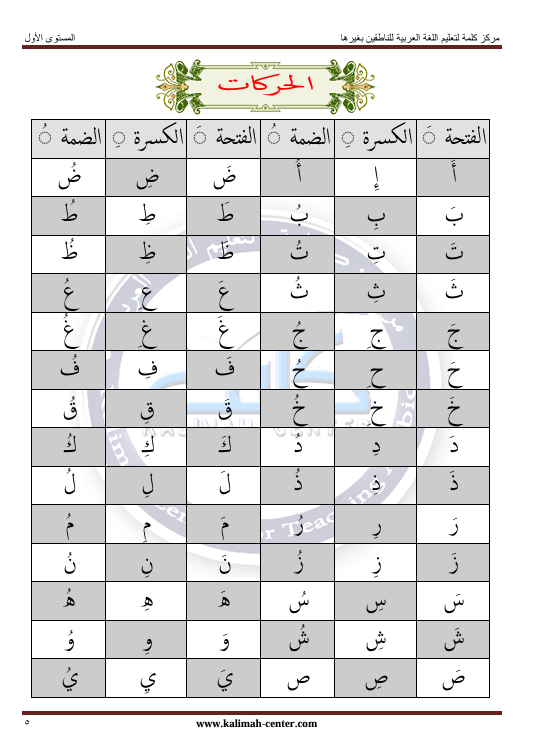
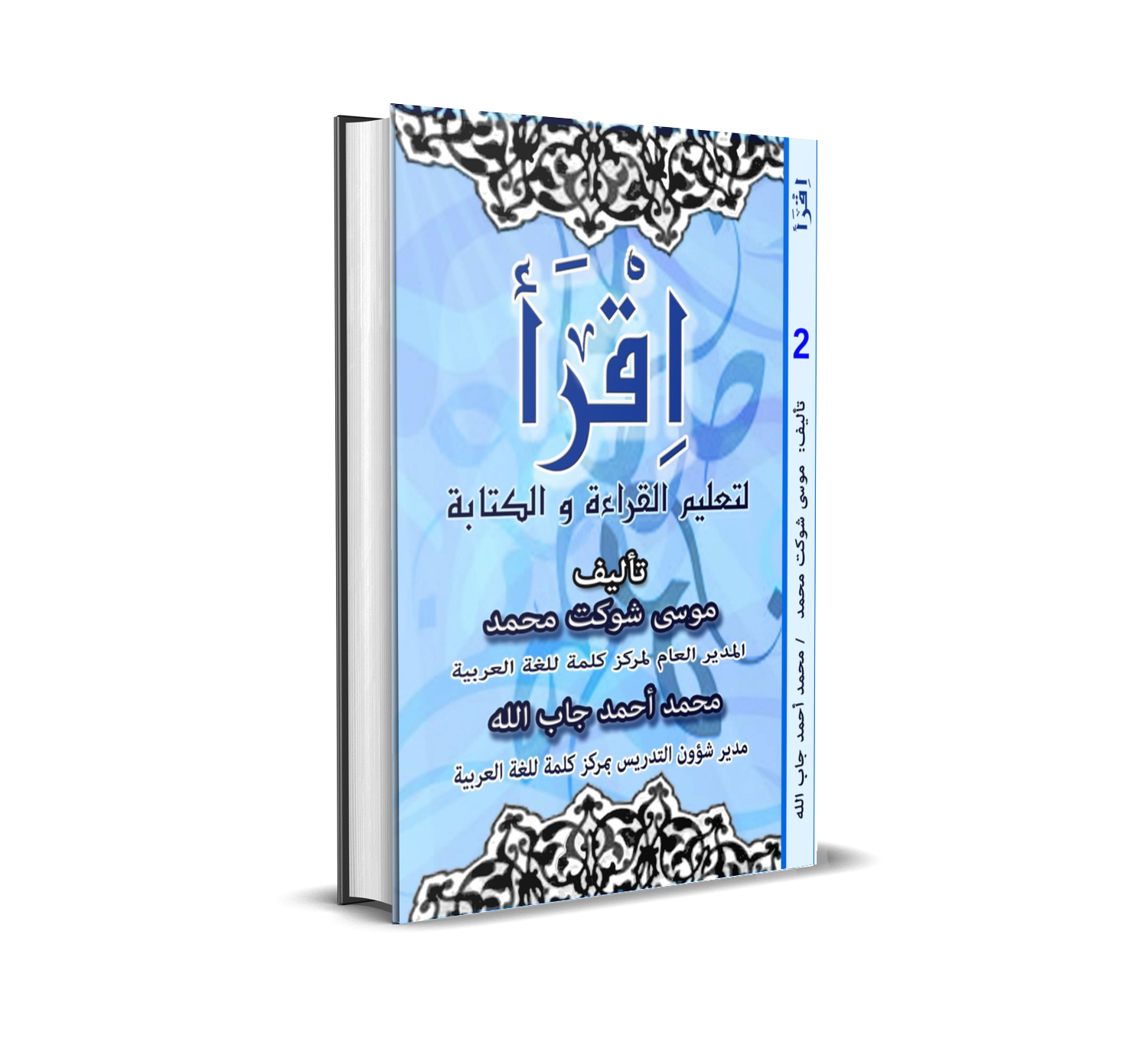
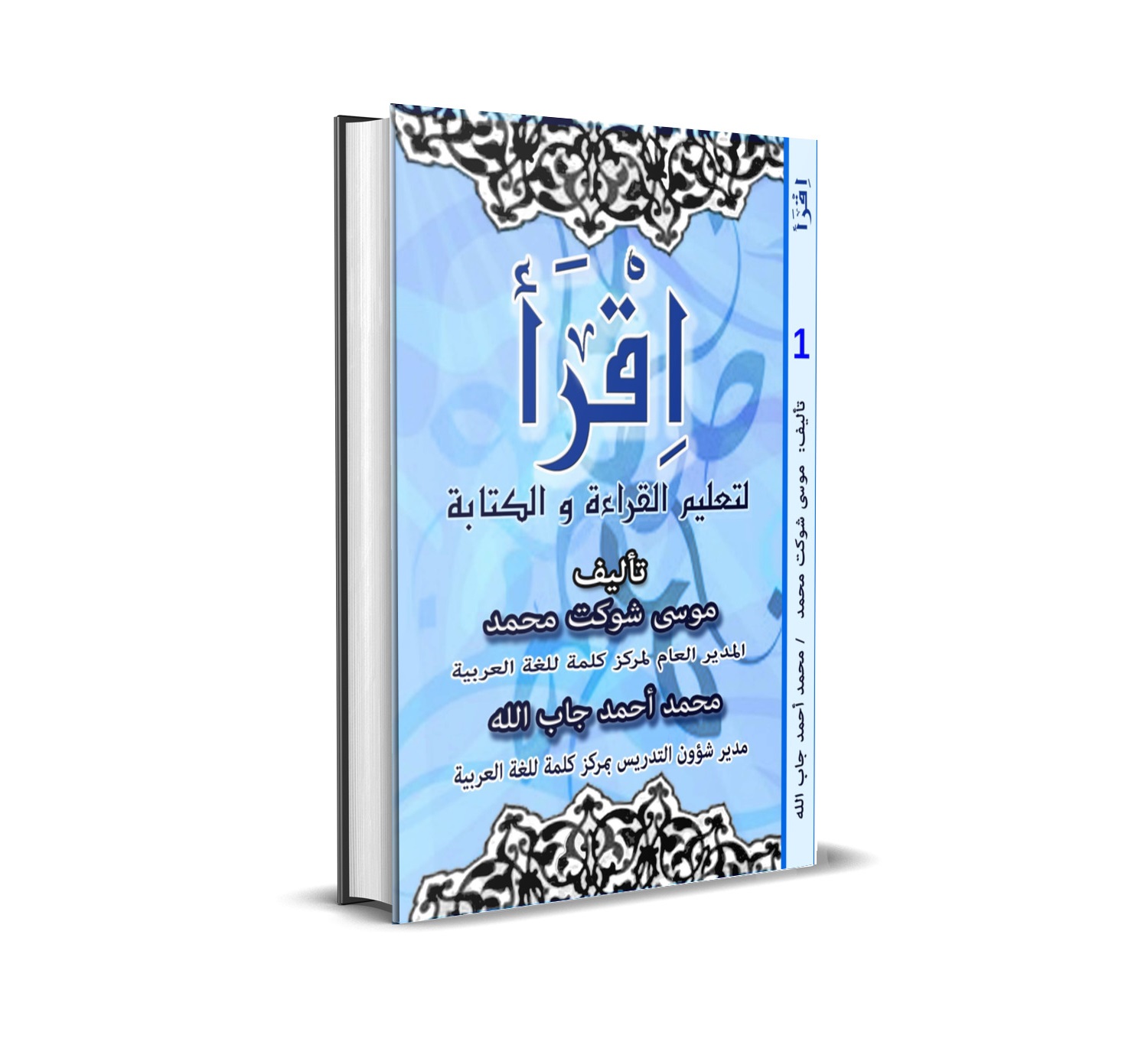
* From Kalimah’s Iqraa book, the key resource we use in our online Arabic course.
How to Read Arabic: Step-by-Step Guide for Beginners
Reading Arabic is like opening a door to a new world. But, many students feel scared at first. With the right steps, you can learn to read Arabic.
Here is some steps:
1. Start with Small Words
Many people try to read long sentences too fast. This is not good. In Arabic, every word is like a small puzzle. First, you learn to read small words, then you move to bigger ones. For example, start with words like:
- قلم (Qalam) — pen
- كتاب (Kitāb) — book
When you focus on these short words, you see how the letters connect and how the short vowels work. This will make reading long sentences easier later.
2. Practice Reading with Harakāt
In the beginning, you will see short vowels (harakāt) on top or below the letters. These vowels help you know how to pronounce the words correctly. But as you read more Arabic texts, you will notice that these harakāt disappear. Arabic writing doesn’t always show the short vowels, especially in newspapers or books.
So, first, practice reading with the vowels. For example:
- بَاب (Bāb) — door
- كِتَاب (Kitāb) — book
After some time, try reading without them. This will help you read like native speakers.
3. Break Words into Parts
When you see a long word, don’t panic! Arabic words are often built from a root word and added letters (prefixes and suffixes). A trick I give my students is to break the word into parts. For example, let’s take the word:
- المكتبة (Al-Maktaba) — the library
First, look at the root word كتب (K-T-B), which means “to write.” Then, notice the ال (Al) in the beginning. This is “the.” Now, the word becomes easier to understand. This is something only experienced teachers will know — breaking down words like this helps students read faster.
4. Read Out Loud
Many students feel shy to read out loud. But, this is very important. When you read out loud, you can hear your mistakes and correct them. I tell my students to read even the simplest sentences with a loud voice:
- أنا أدرس العربية (Ana adrusu al-‘Arabiyya) — I am studying Arabic.
By doing this, your brain and mouth work together. You will read faster and speak better at the same time.
5. Practice Reading Everyday Texts
Once you can read short words and sentences with harakāt, it is time to apply your skills to real-world Arabic content. Here is a progressive reading ladder — start at the level that matches your current ability:
| Stage | What to Read | Why It Helps |
|---|---|---|
| Beginner | Arabic children’s books, Iqraa textbook passages | Fully vowelled (harakāt), simple vocabulary |
| Elementary | Arabic app content, simple social media captions | Short sentences, visual context clues |
| Intermediate | Al Jazeera headlines, BBC Arabic short articles | Real MSA, some harakāt removed |
| Upper-Intermediate | Full Arabic news articles, Wikipedia in Arabic | Unvowelled, academic vocabulary |
| Advanced | Arabic novels, Quranic tafsir, classical literature | Full linguistic complexity |
Practical tip: Every time you read a headline or short text, do not try to understand every word. Instead, try to extract the main idea — who, what, where. This is how native Arabic readers process text, and it builds reading speed alongside comprehension.
Master Arabic with Kalimah Center
Join our expert-led online classes and start your journey toward Arabic fluency today.
Book Your Free TrialHow to Write Arabic Letters and Words: Beginner’s Writing Guide
Writing Arabic is one of the most beautiful things. When you see the letters flow together on paper, it feels like art. But for beginners, it can look difficult. Don’t worry, I will guide you through the steps to make it easier.
1. Start with Correct Form of Letters
The first thing to know is that each Arabic letter has a different form depending on where it is in the word. The letter changes if it’s at the beginning, middle, or end of a word. This is something you must practice a lot.
So, when you write, always think about where the letter is in the word. Practice writing these forms until it becomes natural.
2. Focus on Connecting Letters
One thing that makes Arabic special is how the letters connect with each other in words. Most Arabic letters connect from both sides, but some letters only connect from the right. For example, ا (Alif) does not connect from the left, so you will see a space after it:
Knowing when and how to connect the letters is important. I always tell my students to practice writing full words, not just letters. This helps to get used to how letters look when they connect.
3. Practice Writing by Hand: Why It Works and How to Do It
Research in language learning consistently shows that handwriting produces stronger letter memory than typing — your brain’s motor memory encodes the shapes as you write them. This is especially important in Arabic, where letter shapes are intricate and position-dependent.
A simple handwriting practice routine (10 minutes/day):
- Minutes 1–3: Write each letter of your current study group in all three positions (initial, medial, final)
- Minutes 4–7: Write 5 simple words that use those letters, saying each letter aloud as you write
- Minutes 8–10: Write 2–3 sentences using the vocabulary you know
Words to practice (copy and write 5 times each):
| Arabic Word | Transliteration | Meaning |
|---|---|---|
| بيت | Bayt | House |
| كتاب | Kitab | Book |
| مدرسة | Madrasa | School |
| سلام | Salam | Peace |
| قلم | Qalam | Pen |
Use grid paper in the early stages — it helps maintain consistent letter sizing and proportions, which directly affects legibility.
Write these words many times until your hand gets used to the flow of the letters. You will notice that the more you write, the more natural it feels.
4. Write Sentences, Not Just Words
When you feel comfortable with writing words, start practicing sentences. Sentences will help you learn how letters connect and how the words flow together. Start with easy sentences like:
- أنا أحب العربية (Ana uḥibbu al-‘Arabiyya) — I love Arabic
- هو يدرس في المدرسة (Huwa yadrusu fī al-madrasa) — He studies at the school
By writing sentences, you also practice your grammar and vocabulary. This way, you are learning more than just writing; you are also improving your overall language skills.
Read more about: How To Write A Letter In Arabic?
Common Mistakes Beginners Make When Learning to Read and Write Arabic
Knowing what not to do is just as valuable as knowing what to do. Here are the mistakes most Arabic learners make — and how to avoid them:
Mistake 1: Trying to learn all 28 letters at once
The result is overwhelm and rapid forgetting. Fix: Learn 4–5 letters per week in shape-based groups (ب، ت، ث together; then ج، ح، خ together).
Mistake 2: Skipping harakāt practice
Learners who skip straight to unvowelled text develop pronunciation guessing habits that are very hard to break. Fix: Use only fully-vowelled texts for your first 2–3 months.
Mistake 3: Only typing, never handwriting
Typing autocorrects and doesn’t build letter shape memory. Fix: Dedicate 10 minutes per day to handwriting practice, even after you start typing Arabic regularly.
Mistake 4: Learning letters in isolation, not in words
Letters look very different when connected. Fix: From week one, practice letters inside real words — not just as standalone characters.
Mistake 5: Waiting to speak until reading and writing are “good enough”
Speaking, reading, and writing reinforce each other. Waiting to speak delays all three skills. Fix: Start with 5 spoken phrases from day one, regardless of your reading level.
Mistake 6: Giving up after the first plateau
Almost every Arabic learner hits a plateau around weeks 4–6, when the novelty wears off and the work gets harder. Fix: This is normal — it means you are at the edge of your current knowledge and about to make a breakthrough.
How to Speak Arabic: Pronunciation, Phrases, and Practice Tips
Speaking Arabic is the part most students are excited about. But it’s also the part where many feel shy or afraid of making mistakes. I always tell my students: Don’t be afraid! Making mistakes is normal, and it’s how you improve.
1. Start with Common Phrases
When learning any language, it is important to start speaking with phrases that are used every day. This will help you communicate quickly and make you feel successful from the beginning. Start with greetings and basic sentences like:
- السلام عليكم (As-salāmu ‘alaykum) — Peace be upon you (Hello)
- كيف حالك؟ (Kayfa ḥāluka/ḥāluki?) — How are you? (For a male/female)
- أنا بخير، الحمد لله (Ana bikhayr, al-ḥamdu lillāh) — I am fine, thanks to God
Practice these phrases with your teacher, your friends, or even by yourself in the mirror. The more you repeat them, the more comfortable you will feel.
2. Don’t Translate, Think in Arabic
One mistake I see students make is they try to translate every word from their language into Arabic. But Arabic grammar is different from English, and the sentence order is not the same. Instead of translating, I encourage my students to think in Arabic. For example:
- Instead of thinking, “I am going to the market,” try thinking in Arabic directly: أنا ذاهب إلى السوق (Ana dhāhib ilā as-sūq) — I am going to the market.
It takes practice, but when you start thinking in Arabic, you will find speaking becomes faster and easier.
3. Focus on Pronunciation
Arabic has some sounds that are not in other languages. For example, letters like ع (‘Ayn), غ (Ghayn), and ق (Qāf) can be hard to pronounce for beginners. But don’t worry. The key is to practice slowly and repeat. I often recommend that students listen to native speakers carefully and try to imitate the sounds.
For example:
- عربي (Arabī) — Arabic
- غريب (Gharīb) — strange
- قلب (Qalb) — heart
4. Practice with a Native Speaker
The best way to learn to speak Arabic is by practicing with someone who speaks it fluently. This helps you learn the rhythm of the language, how words are used in conversation, and how to improve your accent. If you don’t have someone around you, we offer one-on-one speaking sessions with native Arabic teachers at Kalimah Center.
Even short conversations like:
- ماذا تريد أن تشرب؟ (Mādhā turīdu an tashrab?) — What do you want to drink?
- أريد ماءً، من فضلك (Urīdu mā’an, min faḍlik) — I want water, please.
These small talks can help build your confidence and improve your speaking ability over time.
At Kalimah Center, we offer group classes where you’ll have many opportunities to practice speaking in a supportive environment. You’ll be amazed at how fast your fluency improves when you regularly interact with others who are also learning Arabic.
Our group classes offer a fun and effective way to learn Arabic quickly. Here’s why you should join:
- Affordable: Group classes are more affordable than private lessons.
- Proven Results: Students learn better in groups through shared insights and collaboration.
- Small Class Size: Everyone gets plenty of chances to participate and ask questions.
- Engaging Materials: Learn with Kalimah’s latest books and online exercises.
- Study from Anywhere: All you need is a laptop and internet connection.
- Connect with Learners Worldwide: Make new friends and learn about different cultures.

5. Speak Arabic Every Day — Even for Just 10 Minutes
Consistency beats intensity when it comes to speaking a new language. Ten minutes of Arabic speaking practice every day produces better results than one hour once a week. Here is a simple daily speaking habit you can build immediately:
The “Arabic Narration” technique: As you go through your day, narrate simple actions to yourself in Arabic. For example:
| Situation | Arabic | Transliteration |
|---|---|---|
| Getting up in the morning | أنا أستيقظ الآن | Ana astayqidhu al-an |
| Drinking coffee | أنا أشرب القهوة | Ana ashrabu al-qahwa |
| Going to work | أنا ذاهب إلى العمل | Ana dhahibun ila al-amal |
| Reading a book | أنا أقرأ كتاباً | Ana aqra’u kitaban |
You do not need an audience. Speaking to yourself, narrating your day, or repeating phrases while commuting all count as practice. The goal is to make Arabic a daily presence in your life, not a scheduled lesson.
Over time, this habit rewires your brain to access Arabic words faster — which is exactly what fluency feels like.
How Long Does It Take to Learn to Read and Write Arabic?
This is the question every beginner asks — and deserves an honest, specific answer.
| Milestone | Realistic Timeframe | Conditions |
|---|---|---|
| Recognize all 28 letters | 1–2 weeks | 20 min/day practice |
| Read simple vowelled words aloud | 3–4 weeks | Daily alphabet + harakāt practice |
| Read short vowelled sentences | 6–8 weeks | Structured curriculum with daily reading |
| Write basic words by hand | 6–10 weeks | Daily handwriting practice |
| Read unvowelled headlines | 4–6 months | Consistent reading + grammar study |
| Hold a basic spoken conversation | 3–6 months | Regular speaking practice with native speakers |
| Read a full news article | 8–12 months | Intermediate grammar + daily reading habit |
What makes the biggest difference:
- Daily practice — even 15–20 minutes — beats longer, infrequent sessions
- Starting with harakāt prevents pronunciation habits that are hard to correct later
- Speaking from day one — not “after I finish the alphabet” — produces faster overall progress
- A structured curriculum prevents the gaps and plateaus that self-study creates
Arabic is classified by the Foreign Service Institute (FSI) as requiring approximately 2,200 hours for English speakers to reach professional proficiency. But basic functional literacy — reading signs, simple texts, and short conversations — is achievable within 6–12 months for dedicated learners.
Master Arabic with Kalimah Center
Join our expert-led online classes and start your journey toward Arabic fluency today.
Book Your Free TrialExperience Kalimah Center Classes
Watch real excerpts from our live sessions at Kalimah Center and see how we bring learning to life. These clips highlight our interactive, student-centered teaching approach across all our courses—designed to keep learners engaged, motivated, and actively involved every step of the way.
Here Are The Reviews On Our Courses:
Our students frequently commend the excellence of our courses and the commitment shown by our instructors. You can read their complete reviews on Trustpilot.
Read more reviews on Trustpilot

Want to Read, Speak, and Write Arabic? Kalimah Center Can Help!
To truly master it, you need more than just information. You need a structured approach, expert guidance, and lots of practice.
That’s what Kalimah Center offers.
Our online Arabic courses are designed to help you achieve fluency in all aspects of the language:
- Reading: Start with our Arabic Alphabet course and learn to read any Arabic text confidently.
- Writing: Develop your writing skills with our structured courses and personalized feedback from experienced teachers.
- Speaking: Gain confidence in speaking Arabic through interactive lessons and conversation practice.
We have courses for all levels:
- Beginners: Master the fundamentals with our alphabet and basic linguistics courses.
- Intermediate: Engage in conversations about everyday life and societal topics.
- Advanced: Refine your skills with specialized programs and advanced Arabic courses.
Join us for a FREE trial class today!

Conclusion:
Learning Arabic encompasses mastering reading, writing, and speaking, and begins with understanding the Arabic alphabet. This involves recognizing its 28 letters, which change shape depending on their position in words.
Starting with letter groups, practicing by hand, and mastering short vowels (harakāt) are key techniques for learning to read and write. Reading becomes easier by focusing on small words, breaking down longer words into root forms, and practicing out loud with daily texts.
Speaking Arabic requires starting with common phrases, thinking in Arabic rather than translating, and focusing on tricky pronunciations. Regular practice, ideally with a native speaker, builds fluency and confidence.
Kalimah Center offers structured courses for all levels, providing expert guidance and a supportive environment to help learners achieve fluency in reading, writing, and speaking Arabic.
FAQs about Learn to Read, Speak, and Write Arabic
Q1: Which direction do you read and write Arabic?
Arabic is read and written from right to left — the opposite direction of English. This applies to both reading text and writing letters. When you open an Arabic book, you start from what looks like the “back” of an English book. Lines of text run from right to left, but numbers within Arabic text are still read left to right.
Q2: What are harakāt in Arabic and why are they important?
Harakāt (حركات) are the short vowel marks written above or below Arabic letters to indicate pronunciation. The three main harakāt are: Fatha (َ) — a short “a” sound, Kasra (ِ) — a short “i” sound, and Damma (ُ) — a short “u” sound. They are essential for beginners because most Arabic books and newspapers omit them, assuming the reader already knows how to pronounce words from context. Learning with harakāt first makes the transition to unvowelled text much smoother.
Q3: How long does it take to learn to read Arabic?
Most beginners can recognize and sound out all 28 Arabic letters within 2–4 weeks of daily practice (20–30 minutes/day). Reading simple vowelled (harakāt) texts fluently typically takes 4–8 weeks. Reading unvowelled Arabic text — as found in newspapers and books — requires 6–12 months of consistent practice. The speed depends on how much daily reading practice you do and whether you have a structured curriculum.
Q4: Can I learn to read Arabic without learning to speak it?
Yes — reading and speaking are separate skills in Arabic. Many learners, particularly those studying the Quran, focus on reading fluency without developing conversational speaking. However, learning pronunciation alongside reading significantly improves both skills. Understanding how letters sound makes reading faster, and reading practice reinforces the sounds needed for speaking.
Q5: What are the most common mistakes beginners make when learning Arabic?
The five most common beginner mistakes are: (1) trying to memorize all 28 letters at once instead of learning in similar-shaped groups; (2) skipping harakāt practice and moving to unvowelled text too soon; (3) neglecting to practice writing by hand, which reinforces letter shapes; (4) avoiding speaking because of fear of mistakes — speaking from day one is essential; (5) translating from their native language word-for-word instead of learning to think directly in Arabic sentence patterns.