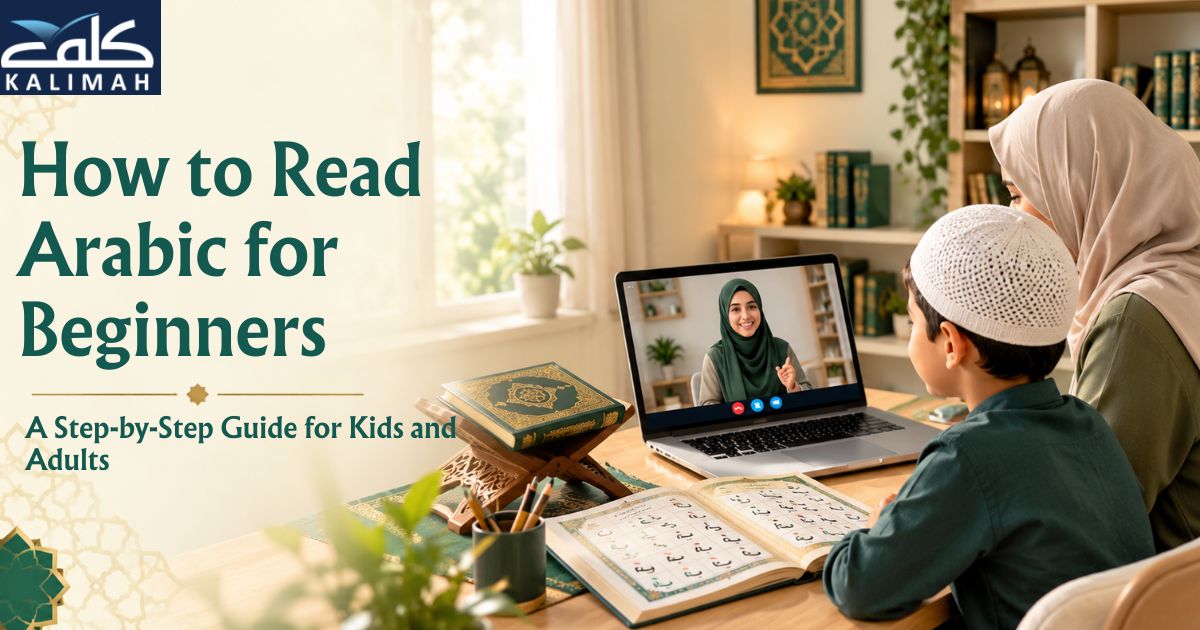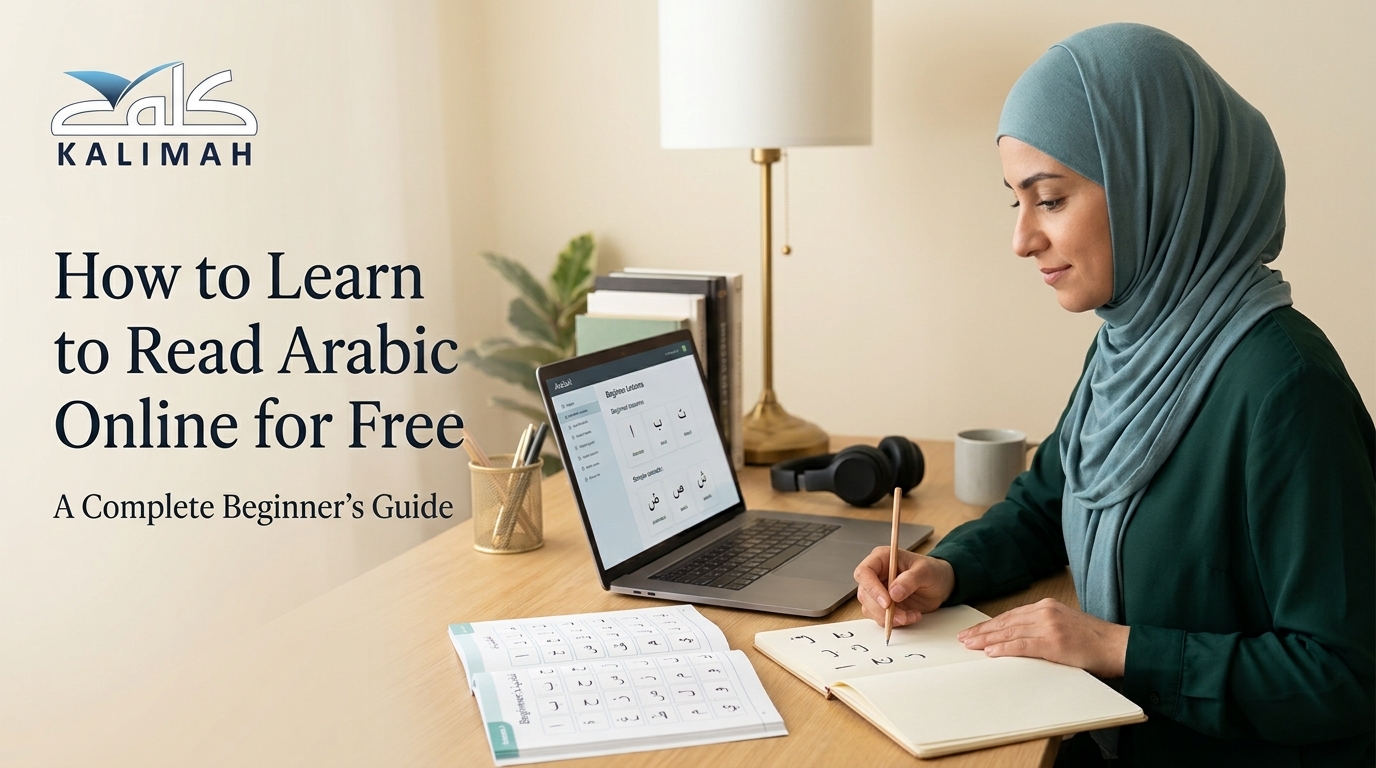
Have you ever wanted to read Arabic words or recite the Quran but felt unsure where to begin? You do not need to speak Arabic fluently or pay for expensive lessons to start learning. With the right free resources, a clear learning plan, and regular practice, you can gradually develop your Arabic reading skills.
Learning how to read Arabic online for free begins with understanding the Arabic alphabet, recognizing letter sounds, and mastering short vowel marks. From there, you can progress to connected words, simple sentences, and Quranic verses.
This guide explains how to learn at home, which free online resources to use, how to practice as a beginner or adult, and when a qualified teacher can help you improve your pronunciation and Quran recitation.
1. Learn the Arabic Alphabet and Letter Sounds
The most effective approach is to follow a step-by-step learning sequence instead of jumping between unrelated videos, apps, and lessons. Free resources can help you build a strong foundation when you use each one for a specific learning goal.
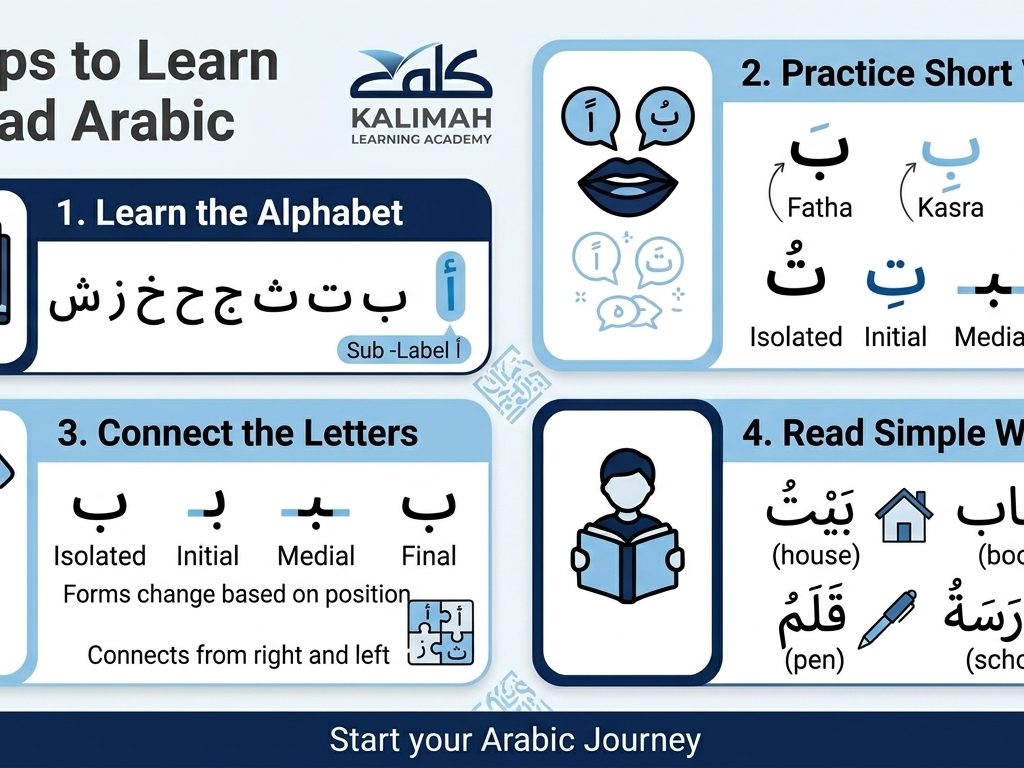
The Arabic alphabet contains 28 commonly recognized letters and is written from right to left. Begin by learning each letter’s name, sound, and basic shape.
Pay special attention to letters that look similar but have different dots, such as ب، ت، and ث. Practice hearing and pronouncing each sound instead of memorizing letter names alone. If you are wondering how to learn to read Arabic online for free, begin with a few letters at a time rather than trying to memorize the entire alphabet in one sitting. Short, repeated practice sessions can help you recognize letter shapes and connect each symbol with its correct sound.
Use Kalimah Center’s Complete Arabic Alphabet Guide to review letter shapes, pronunciation, and connected forms.
2. Master Short Vowels and Other Reading Marks
Short vowel marks help readers understand how Arabic letters should sound when they appear in words. Without these marks, beginners may find it difficult to distinguish between similar word patterns or pronounce unfamiliar vocabulary correctly.
After recognizing the letters, learn the three short vowel marks, known as harakat:
- Fatha (َ): A short “a” sound, as in بَ (ba).
- Kasra (ِ): A short “i” sound, as in بِ (bi).
- Damma (ُ): A short “u” sound, as in بُ (bu).
When practicing, combine one letter with each vowel mark and read the resulting sounds aloud. For example, repeat بَ، بِ، بُ several times, then practice the same pattern with other letters until recognizing the vowel sounds becomes easier.
Next, practice sukoon (ْ), which indicates that a consonant has no following short vowel, and shadda (ّ), which marks a doubled consonant. These marks are especially important when learning to read Quranic Arabic accurately.
3. Practice Connected Letters and Simple Words
Arabic letters can change shape depending on their position in a word. Learn to recognize isolated, initial, medial, and final forms before moving on to longer passages.
One important skill is recognizing which Arabic letters connect to the letters that follow them and which do not. Learning these joining patterns will help you identify familiar letters even when their shapes look different from their isolated forms.
Use short reading exercises to compare the same letter in different positions within a word. Rather than memorizing each form separately, notice how the letter changes while keeping its identity and basic sound, and revisit difficult examples regularly.
Start with short, vowelized words such as بَيْت (bayt, house) and كِتَاب (kitaab, book). Read each word aloud, listen to its pronunciation, and repeat it until you can recognize it without relying on transliteration.
4. Read Short Sentences and Beginner Texts
Once you can decode individual words, begin reading short sentences and simple stories. Choose beginner materials that include vowel marks, clear audio, and familiar vocabulary.
Choose texts that match your current reading level instead of starting with long or unfamiliar passages. Reading a few lines accurately and understanding how the words connect is more valuable than rushing through a full page without recognizing the letters and vowel marks.
For additional practice, visit Quran.com, where you can read Quranic text and listen to recitations. If your goal is Quran reading, start with short surahs and work with a qualified teacher when you need help correcting pronunciation.
If you are unsure whether your reading is accurate, Kalimah Center’s Arabic Reading Course offers a structured path from the alphabet to connected text, with teacher guidance to help you build confidence.
Experience Kalimah Center Classes
Watch real excerpts from our live sessions at Kalimah Center and see how we bring learning to life. These clips highlight our interactive, student-centered teaching approach across all our courses—designed to keep learners engaged, motivated, and actively involved every step of the way.
Master Arabic with Kalimah Center
Join our expert-led online classes and start your journey toward Arabic fluency today.
Book Your Free TrialHow To Learn To Read Arabic Online For Free For Beginners
Complete beginners should focus on accuracy before speed. A simple learning plan makes it easier to understand what to practice next and prevents you from feeling overwhelmed by unfamiliar words.
For anyone learning how to read Arabic online for free for beginners, the best approach is to build one skill at a time. Start with letter recognition, move on to vowel marks, and then practice reading short words before attempting longer texts.
Follow a Four-Week Starter Plan
Use the following four-week plan as a flexible guide, adjusting the pace to your reading level and the amount of time you can practice each day.
| Week | Learning goal | Daily practice |
| 1 | Recognize the Arabic alphabet | Learn a few letters and their sounds |
| 2 | Understand short vowels | Read syllables such as بَ، بِ، بُ |
| 3 | Read connected words | Practice short, vowelized words |
| 4 | Read simple sentences | Read aloud and listen to examples |
This is a flexible starting plan, not a guaranteed deadline. Some learners need more time to distinguish similar letters or pronounce unfamiliar sounds correctly. For a broader learning pathway, explore Kalimah Center’s Beginner Arabic Roadmap and Guide to Reading, Writing, and Speaking Arabic.
Use Free Online Exercises
Choose resources that offer clear explanations, audio examples, and progressive lessons. You can also use a notebook to record difficult letters and words for daily revision.
Kalimah Center’s Arabic Alphabet Exercises can help you review letter forms and practice recognition. Repeat challenging exercises until you can identify and pronounce the letters consistently.
How to Learn to Read Arabic Online for Free in English
English-language explanations can make Arabic reading more accessible to learners who do not speak Arabic. Look for lessons that explain pronunciation and reading rules in English while displaying the Arabic script clearly.
Learners looking for how to learn to read Arabic online for free in English should choose resources that explain Arabic pronunciation clearly and provide examples in the original Arabic script.
Choose Resources That Teach Arabic Script Directly
Avoid relying exclusively on transliteration, such as writing Bismillah in English letters instead of بِسْمِ الله. Transliteration can be useful as a temporary aid, but reading Arabic script directly is essential for developing independent reading skills.
For Quran-focused practice, Quran.com provides Arabic text and recitation tools. You can listen to a passage, follow the words, and repeat it slowly to connect written forms with their sounds.
The Quranic Arabic Corpus is another useful reference for exploring Quranic words and grammatical information as your knowledge develops.
Inside Kalimah Center: Moments from Our Courses
Get a glimpse into the vibrant learning experience at Kalimah Center. These snapshots capture real moments from our live classes—where students engage deeply, connect with passionate instructors, and grow in a welcoming, supportive environment.
Master Arabic with Kalimah Center
Join our expert-led online classes and start your journey toward Arabic fluency today.
Book Your Free TrialHow to Learn to Read Arabic Online for Free for Adults
Adults can learn Arabic reading through self-study, even without previous experience. The key is to establish realistic goals and practice consistently rather than expecting immediate fluency. Adults exploring how to learn to read Arabic online for free can begin with short daily lessons and gradually increase their reading practice as their confidence grows.
Adult learners may have different goals, such as reading Arabic for prayer, understanding Quranic text, or developing a new language skill. Identifying your main goal will help you choose appropriate lessons, track your progress, and focus your practice on the reading skills you need most.
Build a 15–20-Minute Daily Routine
Divide your study time into three manageable activities:
- Five minutes: Review letters, sounds, or vowel marks.
- Five minutes: Practice reading words and connected letters.
- Five to ten minutes: Read a short passage aloud and check your pronunciation.
Keep a record of the sounds and words you find difficult. Revisit them regularly instead of moving to more advanced material before you are ready.
Know When to Seek Teacher Feedback
Free materials are useful for independent practice, but they cannot always identify mistakes in your pronunciation. This matters particularly for Arabic sounds such as ع، ح، خ، and ق, which may be unfamiliar to English speakers.
A qualified teacher can listen to your recitation, explain how to produce difficult sounds, and correct mistakes before they become habits. If you are learning Arabic to read the Quran, guided practice can also help you develop accurate recitation and progress toward studying Tajweed.
Start Learning Arabic and Quran Reading with Kalimah Center
You can begin your learning journey at home with free lessons, online exercises, and regular reading practice. A clear plan helps you build the essential skills before moving to more advanced Arabic texts.
At Kalimah Center, learners can explore structured Arabic instruction with native Arabic teachers.
- The Arabic Reading Course progresses from letter recognition and vowel marks to connected words, sentences, and reading practice.
- If your goal is to recite the Quran, the Online Quran Course offers instruction in Quran reading and Tajweed with Ijazah-certified teachers.
- For broader language development, the Online Arabic Course provides a structured route through different Arabic learning levels.
Choose the learning path that matches your current ability and goals. With regular practice and appropriate guidance, you can build reading confidence without rushing through the foundations.
Conclusion
Learning how to read Arabic online for free is achievable when you follow the right sequence: master the alphabet, understand vowel marks, recognize connected letters, and gradually progress to words and sentences. Use free resources to reinforce each skill and practice aloud every day.
Remember that progress often comes from reviewing familiar material as much as learning something new. Return to difficult letters, read short words aloud, and gradually increase the length of your practice texts as your confidence improves.
Your Takeaway Message is simple: consistency matters more than speed. Even 15–20 minutes of focused daily practice can help you build a stronger foundation, although the time needed to read comfortably varies by learner.
If your long-term goal is to read the Quran with accurate pronunciation, combine independent study with feedback from a qualified teacher when possible. Explore Kalimah Center’s Arabic and Quran courses to find structured support for your next learning stage.
FAQs
Here are answers to common questions about learning Arabic reading online, including how long it takes, whether free resources are sufficient, and how beginners can improve their pronunciation.
Can I learn to read Arabic online for free?
Yes. Free alphabet lessons, pronunciation videos, reading exercises, and Quran reading platforms can help you develop foundational skills. Consistent practice and reliable learning materials are essential, and teacher feedback can help you identify pronunciation errors.
How can a beginner learn to read Arabic at home?
Start with the 28 Arabic letters, then learn the short vowels and other reading marks. Practice connected letters and simple vowelized words before progressing to short sentences and longer passages.
How long does it take to learn to read Arabic?
The time varies depending on your starting level, practice frequency, and pronunciation challenges. With regular daily practice, some learners develop basic decoding skills within weeks, while comfortable reading and accurate Quran recitation may require considerably longer.
Can adults learn to read Arabic without a teacher?
Yes. Adults can use free online resources to learn the alphabet, vowel marks, and basic reading. However, teacher feedback is particularly helpful for correcting pronunciation and developing accurate Quran recitation.
What is the best free resource for learning to read Quranic Arabic?
Quran.com is a useful resource for reading Quranic text and listening to recitation. Beginners should combine it with structured alphabet and vowel lessons, and seek qualified guidance when they need help with pronunciation or Tajweed.
Should I learn Arabic grammar before learning to read?
No. Begin with letter recognition, sounds, vowel marks, and word decoding. Basic grammar becomes more useful as you progress to sentences and want to understand how Arabic words work together.