The letter “خ” (Khaa) is one of the unique Arabic sounds that can be difficult for new learners. it contains a distinctive throaty sound that adds depth to the speech and enhances its phonological structure. In this guide, we will reveal the importance of “خ”, how to pronounce it, its qualities in writing, and how to do it correctly.
Arabic Letter “خ” (Khaa)
The Arabic letter “خ” (Khaa) is a distinctive and essential part of the Arabic alphabet. Known for its unique throaty sound, it plays a vital role in shaping the richness of Arabic phonetics. Positioned as the seventh letter in the Arabic alphabet, “خ” follows “ح” (Haa) and precedes “د” (Daal). Its curved shape, complemented by a dot above, differentiates it from the dotless “ح.”
In writing, “خ” adapts its form based on its position within a word: isolated (“خ”), initial (“خـ”), medial (“ـخـ”), and final (“ـخ”). Pronunciation demands mastering the voiceless velar fricative sound, similar to clearing one’s throat, a challenge for non-native speakers.
Examples such as “خدمة” (service), “مخبز” (bakery), and “خوخ” (peach) illustrate its usage in different positions. Sentences like “تتساقط الأوراق في الخريف” (Leaves fall in autumn) further highlight practical applications.
Understanding The Letter “خ” (Khaa).
“خ” is one of the most well-known Arabic letters and has a different pronunciation compared to all other letters. Let us examine the said letter in more detail.

Shape And Structure
The letter “خ” is represented by a curved shape resembling a half-circle with a dot placed above it. This dot helps differentiate “خ” from similar letters, like “ح” (Haa), which lacks a dot.
Alphabet Placement:
“خ” is the seventh letter in the Arabic alphabet, standing right after “ح” Haa, and before “د” Daal.
The Various Shapes Of “خ” When Writing In Arabic
Like many of the Arabic letters, “خ” has various shapes, each to be used according to its position in the word. Let’s break this down:

- Isolated Form: When written by itself, the form “خ”
- Initial Form: At the start of a word, it connects to the next letter, as in “خـ.”
- Medial Form: Inside a word, it connects to the preceding and following letters, as in “ـخـ.”
- Final Form: The shape of a letter when the letter is at the end of a word, in which it is connected to the previous letter, as in “ـخ.”
Master Arabic with Kalimah Center
Join our expert-led online classes and start your journey toward Arabic fluency today.
Book Your Free TrialPronunciation Of “خ”
The pronunciation of “خ” needs good articulation because of its unique throat sound. It is a voiceless velar fricative sound, almost like lightly clearing your throat. It doesn’t exist in many languages, so it is difficult for learners to pronounce correctly.
Examples Of “خ” In Words And Sentences
To truly master the letter “خ,” it’s important to practice with real words. Here are examples of “خ” in different positions:

Initial Position:
- خدمة (khidmah) – service
- خاتم (khatim) – ring
- خيار (khiyar) – cucumber
Medial Position:
- مخبز (mukhbaza) – bakery
- مخلوق (makhlooq) – creature
- يختار (yakhtar) – he chooses
Final Position:
- صاروخ (sarokh) – rocket
- خوخ (khokh) – peach
- تاريخ (tariekh) – history
- تتساقط الاوراق في الخريف (Leaves fall in autumn)
- قام أحمد بشراء خروف سمين (Ahmed bought a fat sheep)
- قام الخطاط بزخرفة الحروف (The calligrapher decorated the letters)
Tips To Master The Letter “خ”
Mastering “خ” involves more than just recognizing the letter—it’s about getting comfortable with its sound and forms. Here are a few tips:

- Writing Practice: Write “خ” in various positions to get used to its forms.
- Pronunciation Drills: Focus on making the throaty sound by listening to native speakers and mimicking them.
- Building Vocabulary: Memorize and practice words with “خ” to improve fluency.
Common Issues With The Letter “خ”
There are some issues that usually come up with the letter “خ.” Here are a few common ones:
1. Dot Confusion: The “خ” has a dot above it, so learners might mix it up with “ح” (Haa) or other “ج” (jeem).
2. Throaty Pronunciation: ‘خ’ presents a special ‘kh’ sound not easily pronounceable for those languages which don’t provide similar sounds right from the learner’s childhood.
3. Recognition Problems: ‘خ’ produces an uncommon enough sound to pose some difficulty, especially in case of those language groups which contain no velar fricative phonemes, like Chinese and Japanese.
Read also: Arabic letter ghain
Master Arabic with Kalimah Center
Join our expert-led online classes and start your journey toward Arabic fluency today.
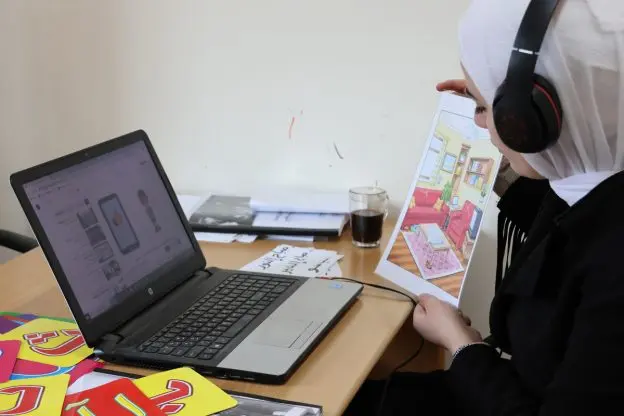
Book Your Free TrialInside Kalimah Center: Moments from Our Courses
Get a glimpse into the vibrant learning experience at Kalimah Center. These snapshots capture real moments from our live classes—where students engage deeply, connect with passionate instructors, and grow in a welcoming, supportive environment.
Here Are The Reviews On Our Courses:
Our students frequently commend the excellence of our courses and the commitment shown by our instructors. You can read their complete reviews on Trustpilot.

Unlock Your Potential in Arabic and Quran with Kalimah Center!
Ready to deepen your connection with the Quran and enhance your understanding of Arabic? Join Kalimah Center today and embark on a transformative journey of learning and growth! Our professional, handpicked Online Arabic and Quran Tutors are dedicated to helping you master these essential skills with ease and expertise.
📚 Explore Our Courses:
Online Arabic Course: Tailored to your level, our comprehensive Arabic program includes 16 teaching levels and 400+ hours of personalized sessions.
Online Quran With Tajweed Course: Perfect for non-Arabic speakers, our course spans 13 levels and equips you with Tajweed mastery from beginner to advanced.
Online Arabic Course For Kids: Nurture your child’s love for Arabic with our engaging and structured program, available in 24 levels for primary, intermediate, and secondary stages.
🚀 Start Your Free Trial Today! 🚀
Don’t miss out on this life-changing opportunity to deepen your faith and knowledge. Sign up now for your free trial and take the first step towards becoming a better practicing Muslim with Kalimah Center!
Conclusion
The Arabic letter “خ” is the very reason behind the language’s distinctive phonetic beauty. This requires continuous practice in mastering this letter of its different forms or perfecting its pronunciation. As you continue with Arabic studies, a solid understanding of “خ” will further deepen your appreciation of the language’s rich sound system.
FAQs about Arabic Letter “خ” (Khaa)
Q1: How do you pronounce the Arabic letter Khaa (خ)?
A: The Arabic letter “خ” (Khaa) is pronounced as a voiceless velar fricative. To articulate this sound correctly, you must produce a deep, throaty sound similar to gently clearing your throat. This distinct phonetic sound does not exist in English, making it a primary focal point for non-native Arabic learners.
Q2: What are the four written forms of the Arabic letter Khaa (خ)?
A: The letter “خ” (Khaa) changes its graphic shape depending on its position within an Arabic word. It features four distinct contextual forms: isolated (خ), initial (خـ) at the word’s start, medial (ـخـ) when connected in the middle, and final (ـخ) at the end of a word.
Q3: How do you tell the difference between the Arabic letters Khaa (خ), Haa (ح), and Jeem (ج)?
A: While sharing an identical baseline structural stroke, these three letters are distinguished exclusively by diacritic dots. “خ” (Khaa) features a single dot above the curved body. In contrast, “ح” (Haa) is completely dotless, and “ج” (Jeem) contains a single dot placed inside or below the curve.
Q4: What position is Khaa (خ) in the Arabic alphabet?
A: The letter “خ” (Khaa) is officially the seventh letter in the standard Arabic alphabet. In the sequence of Arabic phonology, it directly follows the letter “ح” (Haa) and immediately precedes the letter “د” (Daal).
Q5: What are some common word examples using the Arabic letter Khaa (خ)?
A: Practical vocabulary examples for “خ” (Khaa) include “خدمة” (khidmah) for the initial position meaning service, “مخبز” (mukhbaza) for the medial position meaning bakery, and “خوخ” (khokh) for the final position meaning peach, which uniquely demonstrates both the initial and final written forms.