The Arabic letter “ظ” (Zah) is one of the more distinctive sounds of the language, which makes Arabic stand out from most other languages of the world. It is a forceful, emphatic sound and a striking visual sound. Because it occurs so infrequently in Arabic words, it is often difficult for many students to master. Let’s have a closer look at its sound, forms, and usage.
The Role And Pronunciation Of “ظ” In Arabic
“ظ” is the seventeenth letter of the Arabic alphabet and represents an emphatic “Z” sound, which cannot be accurately approximated in English.
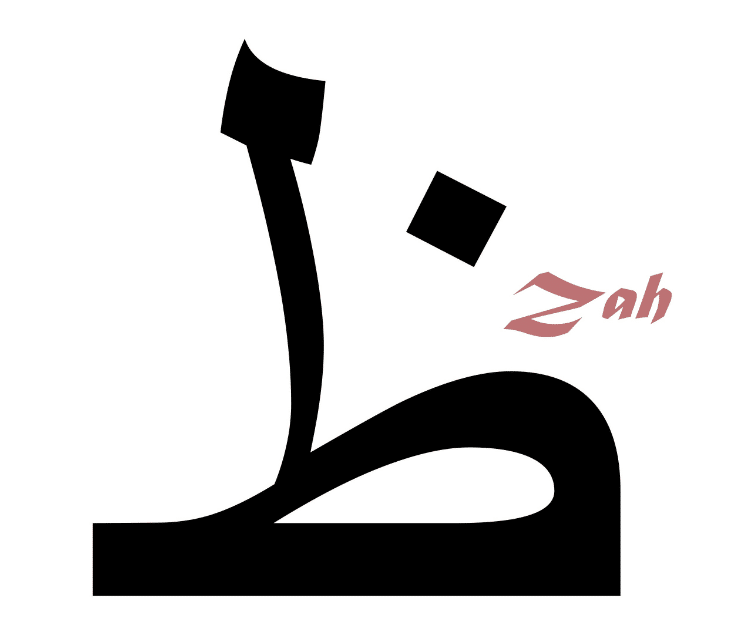
It is produced by lightly touching the tip of the tongue to the upper teeth with added emphasis from the throat. The closest approximation in English is the “th” sound in “this,” but with more depth.
Compared to more common Arabic letters, “ظ” appears in a relatively small number of words. It should be distinguished from “ز” (Zay), which is a softer “z” sound, because mispronunciation will lead to confusion.
Recognizing “ظ” By Its Unique Visual Form
Visual, “ظ” resembles “ط” (Ta) but is distinguished by having a dot placed on top of it. The dot alone makes it unmistakable. Like all the other Arabic letters, its shape changes depending on where it occurs in a word.
Forms Of “ظ” In Different Positions
Depending on its location in a word, “ظ” takes different forms:
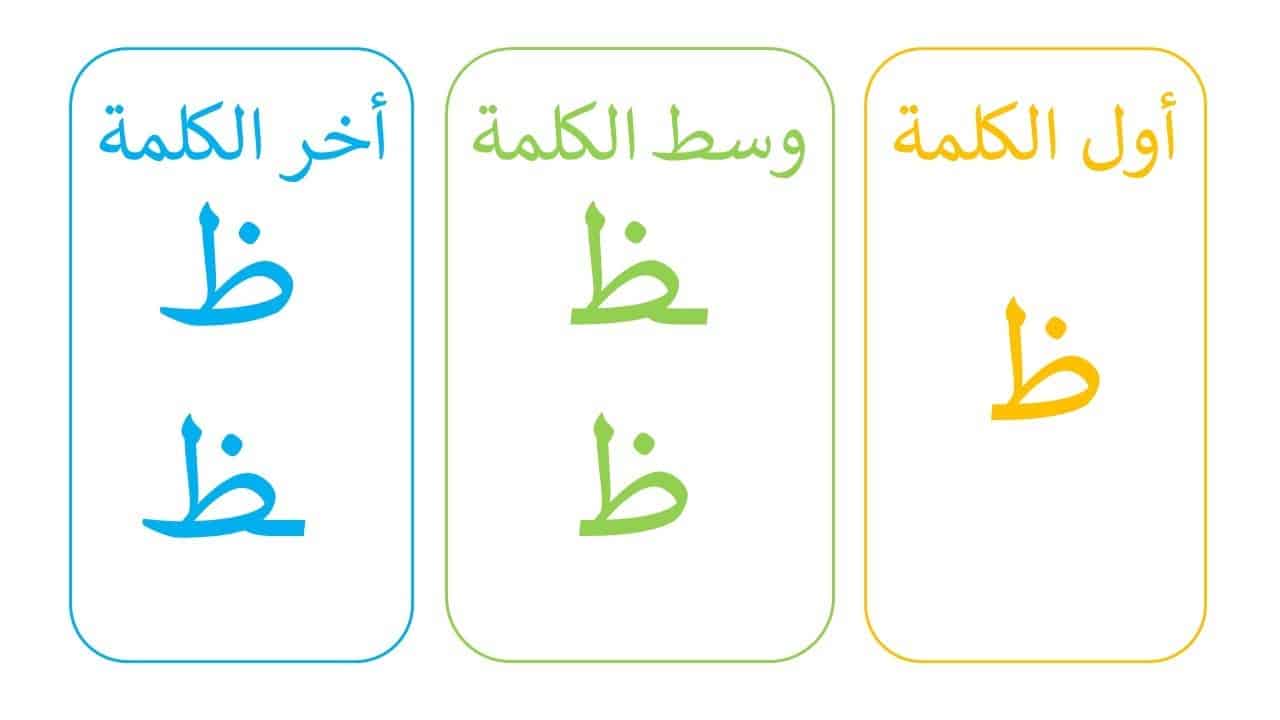
Isolated: ظ
Initial: ظـ
Medial: ـظـ
Final: ـظ
This difference in form takes some practice to recognize and write smoothly.
How To Properly Pronounce “ظ”
Learning the pronunciation of “ظ” involves understanding its emphatic quality. To do this:
- Position your tongue against the top front teeth.
- Use the back of your throat to add stress.
- Make a heavy “th” sound, like in “this,” but with deep resonance.
Repeating this sound with native speakers or recordings can refine your pronunciation.
Experience Kalimah Center Classes
Watch real excerpts from our live sessions at Kalimah Center and see how we bring learning to life. These clips highlight our interactive, student-centered teaching approach across all our courses—designed to keep learners engaged, motivated, and actively involved every step of the way.
Master Arabic with Kalimah Center
Join our expert-led online classes and start your journey toward Arabic fluency today.
Book Your Free TrialCommon Arabic Words with ظ
Although “ظ” is not as common as other Arabic letters, it appears in several important words:
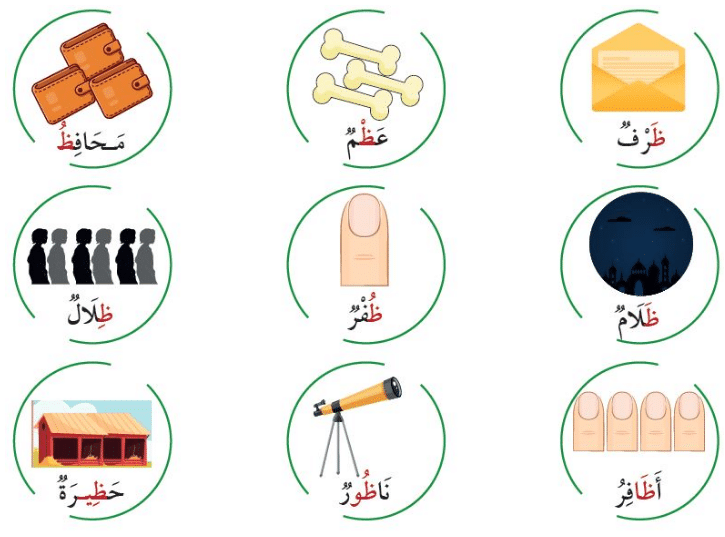
Initial Position:
- ظلام (zalam) – darkness
- ظاهر (zahir) – obvious
- ظرف (zarf) – envelope/container
Medial Position:
- مظلة (mazallah) – umbrella
- محافظة (muhafaza) – governorate
- نظيف (nazif) – clean
Final Position:
- حظ (hazz) – luck
- لفظ (lafz) – pronunciation
- استيقاظ (Istikuaz) – wake up
Example Sentences:
- محفوظ يرسم غزالاً جميلاً – ( Mahfouz draws a beautiful gazelle )
- هذه المدينة مكتظة بالسكان – ( This city is crowded )
- نظم المحافظ مؤتمر عظيم ( The governor organized a great conference )
Challenges Confronted By Students With “ظ”
Many students struggle with “ظ” due to its unique pronunciation and limited use in daily vocabulary. Proper tongue placement and differentiating it from similar letters require extra practice and attention.

Confusion with “ز” (Zay): The majority of students incorrectly pronounce “ظ” as “ز” due to their identical shape and sound. However, “ظ” is heavier in pronunciation.
Difficulty in Emphasizing the Sound: Since “ظ” is an emphatic letter, students must train their throats to achieve the appropriate resonance.
Lesser Words: Since relatively fewer words contain “ظ,” students have less opportunity to practice it naturally while speaking.
Tips For Mastering “ظ”
Consistent practice, active listening, and proper articulation techniques are key to mastering the letter “ظ” effectively.

- Practice Listening: Listen to native Arabic content such as news, poetry, and audiobooks to get to hear “ظ” in context.
- Use Mnemonics: Associate “ظ” words with images or stories to help memorize them.
- Write And Speak Daily: Practice written and spoken Arabic every day to memorize the letter.
Read also: Arabic Letter “ز” (Zayin)
Master Arabic with Kalimah Center
Join our expert-led online classes and start your journey toward Arabic fluency today.
Book Your Free TrialInside Kalimah Center: Moments from Our Courses
Get a glimpse into the vibrant learning experience at Kalimah Center. These snapshots capture real moments from our live classes—where students engage deeply, connect with passionate instructors, and grow in a welcoming, supportive environment.
Here Are The Reviews On Our Courses:
Our students frequently commend the excellence of our courses and the commitment shown by our instructors. You can read their complete reviews on Trustpilot.

Unlock Your Potential in Arabic and Quran with Kalimah Center!
Ready to deepen your connection with the Quran and enhance your understanding of Arabic? Join Kalimah Center today and embark on a transformative journey of learning and growth! Our professional, handpicked Online Arabic and Quran Tutors are dedicated to helping you master these essential skills with ease and expertise.
📚 Explore Our Courses:
Online Arabic Course: Tailored to your level, our comprehensive Arabic program includes 16 teaching levels and 400+ hours of personalized sessions.
Online Quran With Tajweed Course: Perfect for non-Arabic speakers, our course spans 13 levels and equips you with Tajweed mastery from beginner to advanced.
Online Arabic Course For Kids: Nurture your child’s love for Arabic with our engaging and structured program, available in 24 levels for primary, intermediate, and secondary stages.
🚀 Start Your Free Trial Today! 🚀
Don’t miss out on this life-changing opportunity to deepen your faith and knowledge. Sign up now for your free trial and take the first step towards becoming a better practicing Muslim with Kalimah Center!
Conclusion
While the Arabic character “ظ” may be tough for non-speakers, when practiced regularly along with focus on pronunciation, it is much easier to master. Studying its sound, forms, and common words will help you incorporate it into your proficiency in Arabic smoothly.
With diligence, you shall learn to read and pronounce “ظ” effectively in speech as well as in writing in the near future.
FAQs about The Arabic Letter “ظ” (Zah – dha)
Q1: How do you pronounce the Arabic letter “ظ” (Zah)?
To properly pronounce the Arabic letter “ظ” (Zah), lightly touch the tip of your tongue to the edges of your upper front teeth while constricting your throat to add a heavy, emphatic resonance. It sounds similar to a deep, voiced English “th” (like in the word “this”), but with significantly more depth and breath pressure.
Q2: What is the difference between the Arabic letters “ظ” (Zah) and “ز” (Zay)?
The main difference lies in their phonetic weight and articulation. While “ز” (Zay) produces a soft, sharp, frontal “z” sound similar to the English letter Z, “ظ” (Zah) is an emphatic, velarized letter. Mispronouncing “ظ” as a soft “ز” can completely alter the meaning of an Arabic word.
Q3: What are the visual forms of the Arabic letter “ظ” in a word?
The letter “ظ” changes its visual shape depending on its position in a word:
Isolated: ظ
Initial (Start): ظـ
Medial (Middle): ـظـ
Final (End): ـظ Visually, it shares the same base shape as the letter “ط” (Ta) but is uniquely distinguished by a single dot placed on top.
Q4: What are some common Arabic words that use the letter “ظ”?
Although “ظ” is one of the rarest letters in the Arabic language, it appears in essential vocabulary across different positions:
Initial: ظلام (zalam – darkness), ظاهر (zahir – obvious)
Medial: نظيف (nazif – clean), مظلة (mazallah – umbrella)
Final: حظ (hazz – luck), لفظ (lafz – pronunciation)
Q5: Why do students struggle with learning the Arabic letter “ظ”?
Students primarily face three challenges with “ظ”: its unique emphatic articulation requires throat muscle memory unfamiliar to English speakers, its visual similarity to other dotted letters causes reading confusion, and its low frequency in daily vocabulary limits natural immersion and practice opportunities.