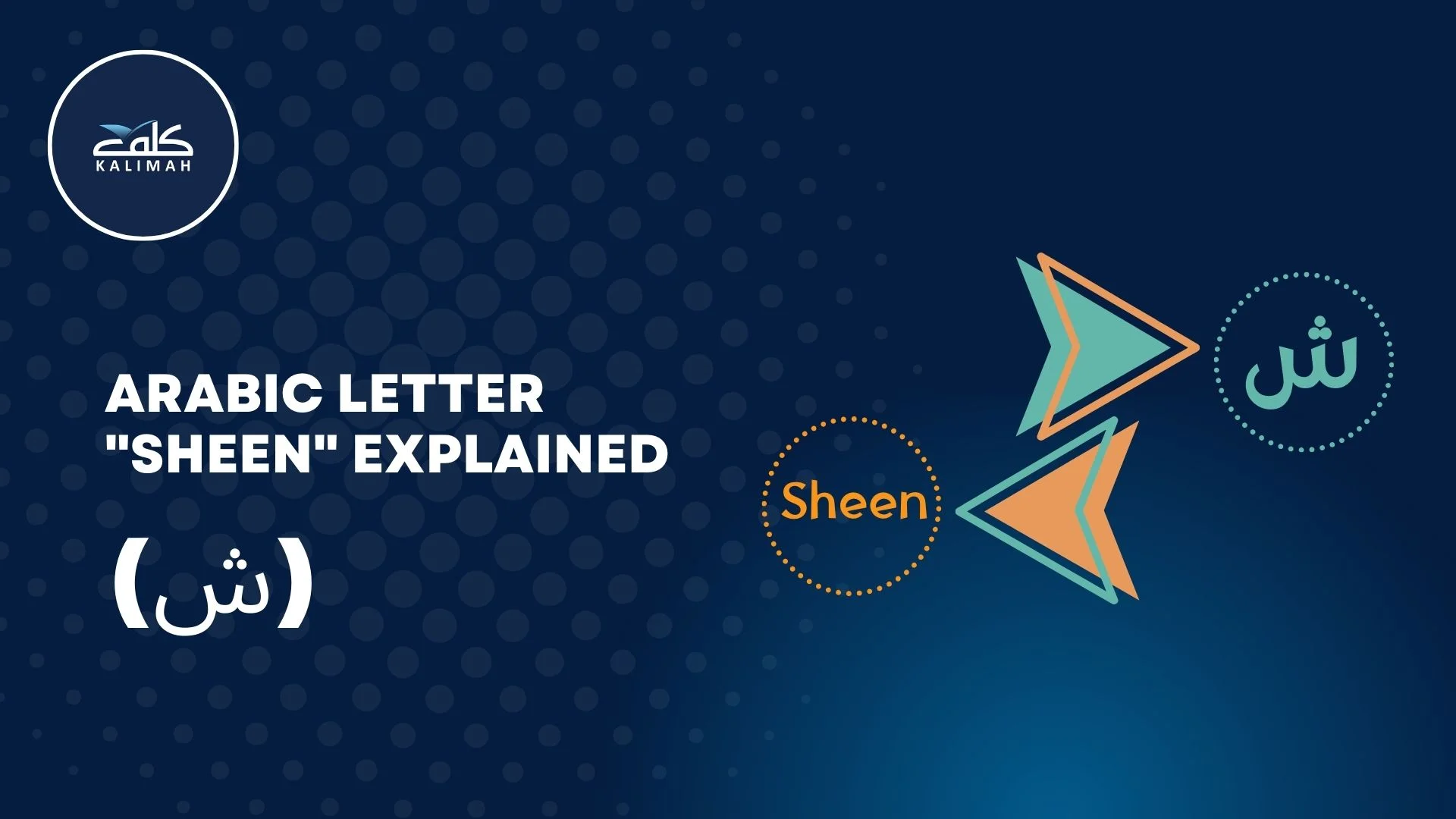
The Arabic letter “ش” holds a peculiar position in the language, characterized by its unique sound and elegant visual form. It is easily recognizable by its soft, shushing sound, which plays a great role in pronunciation and meaning.
Understanding “ш” is essential for anyone looking to master the nuances of the Arabic language. Let’s dive into its forms, sound, and usage.
Introducing The Arabic Letter “ش” (Sheen)
The “ش” is the thirteenth letter of the Arabic alphabet. It gives a soft hissing “sh” sound. This is close to the sound of “sh” in such English words as “show” or “sheep.”

That letter is significant not only with its sound, but it comes into many of the common words in Arabic, thus mastering it will increase your fluency and understanding tremendously.
The “sh” sound of “ش” is not completely foreign to an English speaker, but the Arabic pronunciation requires awareness of the subtleties involved in correct placement of the tongue and airflow.
The Shape And Aesthetics Of Sheen Arabic Letter “ش”
ش” is a beautiful letter visually, which has a wavy sweeping form. It is considered by many to be one of the more beautiful letters in the Arabic script. Among the distinguishing features of “ش” is that it carries three dots above it, making it immediately distinguishable from similar letters like “س” (Seen) which does not have any dots.
Forms Of Sheen in Arabic “ش” Across Different Word Positions
Like other Arabic letters, “ش” assumes different shapes in its various word positions: in isolation, at the beginning, middle, and end. Below are the forms it takes on:

Isolated Form: In an isolated position, “ش” takes the shape “ش”.
Initial Form: If “ش” is at the beginning of a word, then it connects with the following letter and takes the shape “شـ”.
Medial Form: In the middle of a word, it connects both from the front and back, as in “ـشـ”.
Final Form: At the end of a word, it connects only from the front, like “ـش”.
Master Arabic with Kalimah Center
Join our expert-led online classes and start your journey toward Arabic fluency today.
Book Your Free TrialPronunciation Of Sh in Arabic “ش” (Sheen)
The letter “ش” sounds like the English “sh,” as in “Shiny” or “Shirt” It is a voiceless sound, which means that it is made without letting the vocal cords vibrate. To make this sound, put the tip of your tongue close to the roof of your mouth just about where the top teeth are and blow the air out, allowing it to pass.

Unlike other Arabic sounds, “ش” does not use the throat, so it should be rather easy to pronounce for a non-native speaker. Getting its exact pronunciation in rapid speech, however, requires attention to nuance.
Examples Of “ش” In Words And Sentences
Practicing how “ش” appears in different positions within words is crucial for fluency. Here are some examples:

Initial Position:
- شمس (shams) – sun
- شتاء (shita’) – winter
- شجرة (shajarah) – tree
Medial Position:
- خشب (khashab) – wood
- نشاط (nashat) – activity
- مشهور (mash-hor) – famous
Final Position:
- جيش (Gaysh) – army
- مدهش (modhesh) – amazing
- خفاش (khofash) – bat
Example Sentences:
- شجرة المشمش هذه تبدو رائعة (shajarah elmishmish hazehe tabdo ra’aa.) – This apricot tree looks great.
- الشمعة لونها بيضاء (Ashamaa lawnaha bida’.) – The candle is white.
- الشمس مشرقة (Ashams moshrqah.) – The sun is shining.
Practical Tips To Mastering Arabic Letter Sheen”ش”
Consistency is the key behind mastering the letter “ش” and its usage. Following are some helpful tips for mastering this letter:

- Practice Writing: Write “ش” in its different forms until you feel comfortable with its shape and flow. Pay particular attention to the way it connects with adjacent letters.
- Listen and Imitate: Try to listen to native speakers, either through conversations or media, and imitate how they pronounce the “ش” sound in various contexts.
- Vocabulary Building: Incorporate words containing “ش” into your daily practice. The more you use them in sentences, the quicker you’ll internalize its pronunciation and form.
Common Challenges Learners Face With “ش”
Even though the letter “ش” might seem straightforward, learners can face challenges:

1. Distinguishing from Similar Sounds: Beginners often mistake “ش” with the “س” sound of Seen because while both are fricative sounds, “ش” is pronounced with a “sh” sound, whereas “س” is pronounced with an “s” sound.
2. Writing Variation Based on Placement: Like many letters in Arabic, “ش” assumes various forms, depending on its position in a word, which can be perplexing for beginning learners.
3. Fast Speech: In quick conversations, “ش” can become indistinct from neighboring sounds, especially when spoken together. It can be overcome only by listening to natural Arabic speech.
Read also: Arabic letter meem
Master Arabic with Kalimah Center
Join our expert-led online classes and start your journey toward Arabic fluency today.
Book Your Free TrialInside Kalimah Center: Moments from Our Courses
Get a glimpse into the vibrant learning experience at Kalimah Center. These snapshots capture real moments from our live classes—where students engage deeply, connect with passionate instructors, and grow in a welcoming, supportive environment.
Here Are The Reviews On Our Courses:
Our students frequently commend the excellence of our courses and the commitment shown by our instructors. You can read their complete reviews on Trustpilot.

Unlock Your Potential in Arabic and Quran with Kalimah Center!
Ready to deepen your connection with the Quran and enhance your understanding of Arabic? Join Kalimah Center today and embark on a transformative journey of learning and growth! Our professional, handpicked Online Arabic and Quran Tutors are dedicated to helping you master these essential skills with ease and expertise.
📚 Explore Our Courses:
Online Arabic Course: Tailored to your level, our comprehensive Arabic program includes 16 teaching levels and 400+ hours of personalized sessions.
Online Quran With Tajweed Course: Perfect for non-Arabic speakers, our course spans 13 levels and equips you with Tajweed mastery from beginner to advanced.
Online Arabic Course For Kids: Nurture your child’s love for Arabic with our engaging and structured program, available in 24 levels for primary, intermediate, and secondary stages.
🚀 Start Your Free Trial Today! 🚀
Don’t miss out on this life-changing opportunity to deepen your faith and knowledge. Sign up now for your free trial and take the first step towards becoming a better practicing Muslim with Kalimah Center!
Conclusion
The letter “ش” has a crucial function in pronunciation and meaning in the Arabic language. Hence, it is important to know its sound, shape, and usage because it is often found in common vocabulary.
With constant practice, listening, and immersion, you would soon be very capable of pronouncing “ش” with ease and, consequently, using it fluently in written and spoken Arabic.
FAQs about Arabic Letter “ش” (Sheen)
What is the 13th letter of the Arabic alphabet?
The 13th letter of the Arabic alphabet is Sheen (ش). It represents the voiceless post-alveolar fricative sound, which is identical to the English “sh” sound found in words like “show” or “sheep.” Visually, it features a distinct wavy script topped with three dots.
How do you pronounce the Arabic letter Sheen (ش)?
To pronounce the Arabic letter Sheen (ش), place the tip of your tongue near the roof of your mouth—just behind your upper front teeth—and blow air out without vibrating your vocal cords. It sounds exactly like the English “sh” in “shirt” or “shiny” and does not require throat friction.
What are the four written forms of the Arabic letter Sheen?
The letter Sheen changes its shape based on its position in a word:
Isolated Form: $ش$ (written alone)
Initial Form: $شـ$ (connects to the next letter, e.g., شمس – shams)
Medial Form: $ـشـ$ (connects on both sides, e.g., خشب – khashab)
Final Form: $ـش$ (connects only to the preceding letter, e.g., جيش – Gaysh)
What is the difference between the Arabic letters Seen (س) and Sheen (ش)?
The main difference between Seen (س) and Sheen (ش) is their sound and diacritics. While they share the same base tooth-shaped script, Sheen (ش) has three dots above it and makes a “sh” sound. Seen (س) has no dots and makes a sharp “s” sound.
What are some common Arabic words that start with Sheen (ش)?
Common Arabic vocabulary starting with the initial form of Sheen ($شـ$) includes شمس (shams) meaning “sun,” شتاء (shita’) meaning “winter,” and شجرة (shajarah) meaning “tree.” Mastering these foundational words helps beginners build essential vocabulary and pronunciation skills.