Arabic audiobooks for kids provide an engaging, screen-free method for non-native speakers to develop listening comprehension, pronunciation, and vocabulary through immersive storytelling. The best Arabic audiobooks include “Arabic for Kids: A 4 Week Course” for Modern Standard Arabic fluency, “Learn the Arabic Alphabet” for foundational phonics, and “A Child’s Guide to Palestinian Levantine Arabic” for dialect exposure. These resources use native narration, repetition techniques, and cultural storytelling to make language learning accessible for children ages 3-12.
Key Takeaway Table:
| Aspect | Best Choice |
|---|---|
| Best for MSA fluency | Arabic for Kids: A 4 Week Course |
| Best for alphabet/phonics | Learn the Arabic Alphabet (2-in-1) |
| Best for dialects | A Child’s Guide to Palestinian Levantine Arabic |
| Best for counting | Tuffaha Counts to Ten |
| Age range | 3-12 years old |
| Key benefit | Native pronunciation modeling + hands-free learning |
As a native Arabic teacher with years of experience teaching non-native speakers, I’ve witnessed how Arabic audiobooks transform children’s language learning through native pronunciation modeling, engaging storytelling, and hands-free accessibility.
Unlike traditional textbooks, audiobooks allow children to absorb authentic Arabic during car rides, playtime, or bedtime—making daily exposure effortless and enjoyable. This curated list features the top-rated Arabic audiobooks that develop listening comprehension, vocabulary, and cultural understanding for children ages 3-12.
What Are Arabic Audiobooks for Kids?
Arabic audiobooks for kids are audio-based educational resources that teach children the Arabic language through narrated stories, structured lessons, songs, and interactive sound activities. Unlike print books, audiobooks provide:
- Native speaker pronunciation modeling that helps children develop authentic accents
- Hands-free learning during commutes, meals, or play
- Multi-sensory engagement through music, sound effects, and storytelling
- Repetition opportunities without the fatigue of re-reading
Whether focusing on Modern Standard Arabic (MSA) for literacy or regional dialects for conversation, audiobooks create an immersive language environment that mimics natural language acquisition—the same way children learn their first language.
Benefits of Arabic Audiobooks vs Traditional Books for Children
While both formats have value, audiobooks offer unique advantages for young Arabic learners:
Why Choose Audiobooks Over Print Books?
| Feature | Audiobooks | Print Books |
|---|---|---|
| Pronunciation modeling | ✅ Native speaker audio | ❌ Requires parent fluency |
| Learning during activities | ✅ Hands-free (car, play, meals) | ❌ Requires sitting & focus |
| Engagement for auditory learners | ✅ Music, sound effects, emotion | ⚠️ Dependent on illustrations |
| Accessibility for pre-readers | ✅ Ages 3+ can benefit | ❌ Requires reading ability |
| Repetition without fatigue | ✅ Easy replay | ⚠️ Re-reading feels tedious |
| Screen-free option | ✅ Audio-only devices available | ✅ Also screen-free |
When Audiobooks Work Best:
- Pre-readers (ages 3-5): Build listening vocabulary before literacy instruction
- Auditory learners: Children who struggle with visual reading but excel with listening
- Busy families: Maximize learning during commutes, chores, or transitions
- Pronunciation focus: Non-Arabic-speaking parents who can’t model correct sounds
- Cultural exposure: Dialects and regional stories not available in print
When to Supplement with Print Books:
- Teaching writing and letter recognition
- Building visual word recognition (orthography)
- Interactive reading with comprehension questions
- Learning formal grammar rules
Best approach: Combine audiobooks for listening/pronunciation with workbooks for writing practice and live classes for conversation.
Master Arabic with Kalimah Center
Join our expert-led online classes and start your journey toward Arabic fluency today.
Book Your Free TrialBest Arabic Audiobooks for Kids (Ages 3–12) – Expert Reviews
Here, I found some good audiobooks to help them learn. Some audiobooks teach Modern Standard Arabic, good for reading and writing. Others teach dialects, good for talking to people.
1. Arabic for Kids: A 4-Week Course – Modern Standard Arabic
Arabic for Kids: A 4 Week Course is an audiobook designed to teach Modern Standard Arabic (MSA) through short, engaging 20-minute lessons. The course focuses on high-frequency words and phrases, covering greetings, colors, animals, and food.
It also teaches language mastery techniques like daily repetition and practical application, with review sections to reinforce learning. This audiobook is ideal for children who want to start speaking Arabic quickly.
Your child will learn greetings, colors, and even how to talk about animals and food. It’s a complete course that can get your child speaking Arabic in just four weeks.
But it’s not just about words. This audiobook also teaches techniques for language mastery, like daily repetition and practical application.
The audiobook also includes review sections to help your child remember what they have learned. This way, learning becomes a journey, not a chore.

2. Learn the Arabic Alphabet – 2-in-1 Audiobook for Beginners
2 in 1: Learn the Arabic Alphabet is a foundational audiobook for beginners that breaks down the Arabic alphabet into easy-to-understand lessons. Children learn how to write each letter and how letters change form within words.
The audiobook includes 250 vowelized and transliterated English-to-Arabic words, helping kids understand pronunciation and context. It’s a hands-on, interactive resource perfect for building strong reading and writing skills.
This audiobook is very hands-on. Your child can trace the letters and practice writing their own sentences. It also comes with 250 English-to-Arabic words that are vowelized and transliterated.
This is very helpful for beginners because they can see how the words are pronounced and understand the context in which they are used. This audiobook is the perfect tool to build a strong foundation in Arabic.

3. A Child’s Guide to Palestinian Levantine Arabic – Dialect Audiobook
A Child’s Guide to Palestinian Levantine Arabic is an audiobook that introduces children to the Levantine dialect spoken in Palestine. It covers practical topics like numbers, greetings, and everyday phrases, using music and sound effects to enhance engagement and memory retention.
Designed for repetition, the sessions help children fully grasp the material while experiencing the cultural richness of the Arab world.
One of the unique features of this audiobook is the use of music and sound effects. These elements make learning more engaging and help with memory retention.
The sessions are designed to be repeated, which is an excellent way to ensure that your child fully grasps the material. This audiobook is more than just a language lesson; it’s a cultural experience that will bring your child closer to the heart of the Arab world.

4. Tuffaha Counts to Ten – Arabic Counting Story with Audio
Tuffaha Counts to Ten is a charming story that teaches children to count in Arabic. The main character, Tuffaha, learns to count with encouragement from Shams the sun, counting butterflies, sheep, and more. As one of the most beloved Arabic children’s books for teaching numbers, this story makes counting fun and memorable.
The audiobook comes with an audio CD and beautifully illustrated book, making it perfect for car rides or bedtime. Repeated listening helps children with pronunciation and comprehension in a fun, engaging way.
The story is simple, yet it is full of learning opportunities. It comes with an audio CD, which makes it perfect for car rides or bedtime.
Listening to the story over and over will help your child with pronunciation and comprehension. Plus, the beautifully illustrated book that comes with it will make the experience even more enjoyable.

Quick Comparison: Top Arabic Audiobooks for Kids
| Book Title | Best For | Age Range | Format |
|---|---|---|---|
| Uhebbo Al-Arabiyya | Complete curriculum | 6–12 | Print + Workbook |
| My First Book of Arabic Words | Vocabulary building | 3–7 | |
| Master the Arabic Alphabet | Handwriting practice | 5–10 | Print Workbook |
| Arabic for Kids: A 4 Week Course | Fast fluency (MSA) | 6–12 | Audiobook |
| Tuffaha Counts to Ten | Counting & numbers | 3–6 | Print + Audio |
Read Also: Is Assimil Good for Learning Arabic?
Why Arabic Audiobooks Are Essential for Young Learners
Arabic audiobooks are uniquely effective for young learners because they combine auditory learning with cultural immersion in ways print materials cannot replicate. Research shows children acquire language most effectively through listening and repetition—exactly what audiobooks provide.
Key advantages of Arabic audiobooks for children:
- Authentic pronunciation: Children hear native speakers, developing correct articulation from the start
- Accessibility: Perfect for pre-readers, struggling readers, or visual learners
- Engagement: Storytelling with music and sound effects maintains attention better than static text
- Flexibility: Learn during “dead time” (car rides, chores, bedtime) without screen exposure
- Confidence building: Children can listen repeatedly without embarrassment, unlike classroom settings
- Cultural context: Stories and dialects expose children to Arab culture, customs, and values
For non-native speakers growing up outside Arabic-speaking countries, audiobooks bridge the gap between formal lessons and natural language exposure.
How to Use Arabic Audiobooks Effectively: Parent’s Guide
Simply playing audiobooks in the background won’t create fluency. Here’s how to maximize learning:
Active Listening Techniques for Maximum Retention
Stage 1: First Listen (Comprehension Focus)
- Play the audiobook without interruptions
- Encourage your child to focus solely on listening (no toys, screens)
- Ask simple questions afterward: “What did you hear?” “Who was in the story?”
Stage 2: Interactive Listen (Repetition Practice)
- Replay the same audiobook
- Pause after new vocabulary words or phrases
- Have your child repeat the words aloud 3-5 times
- Use visuals (flashcards, objects) to connect sound with meaning
Stage 3: Passive Reinforcement (Background Listening)
- Play the audiobook during routine activities (car rides, meals, playtime)
- Repetition in relaxed settings improves long-term retention
- Listen to the same audiobook 5-10 times before moving to new content
Stage 4: Application (Real-World Use)
- Encourage your child to use new words/phrases during the day
- Role-play scenarios from the story
- Record your child repeating phrases for confidence building
Best Times to Use Arabic Audiobooks (Daily Routines)
Morning Commute (15-20 minutes)
Play structured lesson audiobooks like “Arabic for Kids: A 4 Week Course” when your child is alert and focused.
Mealtime (10-15 minutes)
Use story-based audiobooks like “Tuffaha Counts to Ten” during breakfast or lunch for passive listening.
Bath/Getting Ready (10 minutes)
Alphabet and vocabulary audiobooks work well during routine activities.
Bedtime (15-20 minutes)
Calming story audiobooks in Arabic create positive associations with the language and aid sleep routines.
Playtime/Art Activities
Background Arabic music or repeated story audiobooks during independent play.
Consistency Matters: 15-30 minutes daily yields better results than sporadic 2-hour sessions.
How to Choose the Right Arabic Audiobook for Your Child’s Level
When selecting Arabic books for your child, consider their age, current level, and learning goals. For beginners, choose books with simple vocabulary, clear illustrations, and bilingual support. Look for resources that teach the alphabet, basic words, and sentence structure. For intermediate learners, select books that introduce grammar, longer stories, and cultural context.
Always prioritize books that make learning fun through rhymes, games, or engaging characters. If your child responds well to audio, incorporate audiobooks to strengthen listening and pronunciation skills.
Combining Books with Live Arabic Classes for Best Results
While books and audiobooks provide a strong foundation, live interaction with native Arabic teachers accelerates fluency and confidence. At Kalimah Center, we integrate top-rated Arabic books like Uhebbo Al-Arabiyya into our structured online courses.
Children practice speaking, receive real-time pronunciation corrections, and engage in interactive activities that make the language come alive. Our teachers tailor lessons to each child’s level, ensuring progress is steady, enjoyable, and effective.
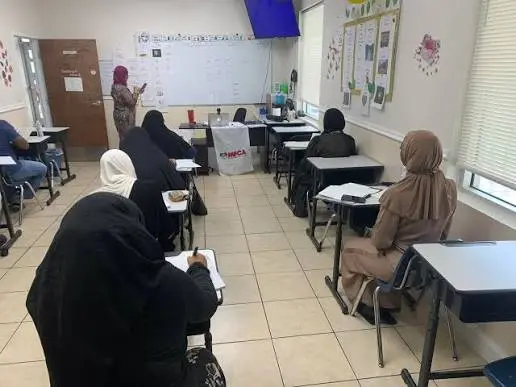
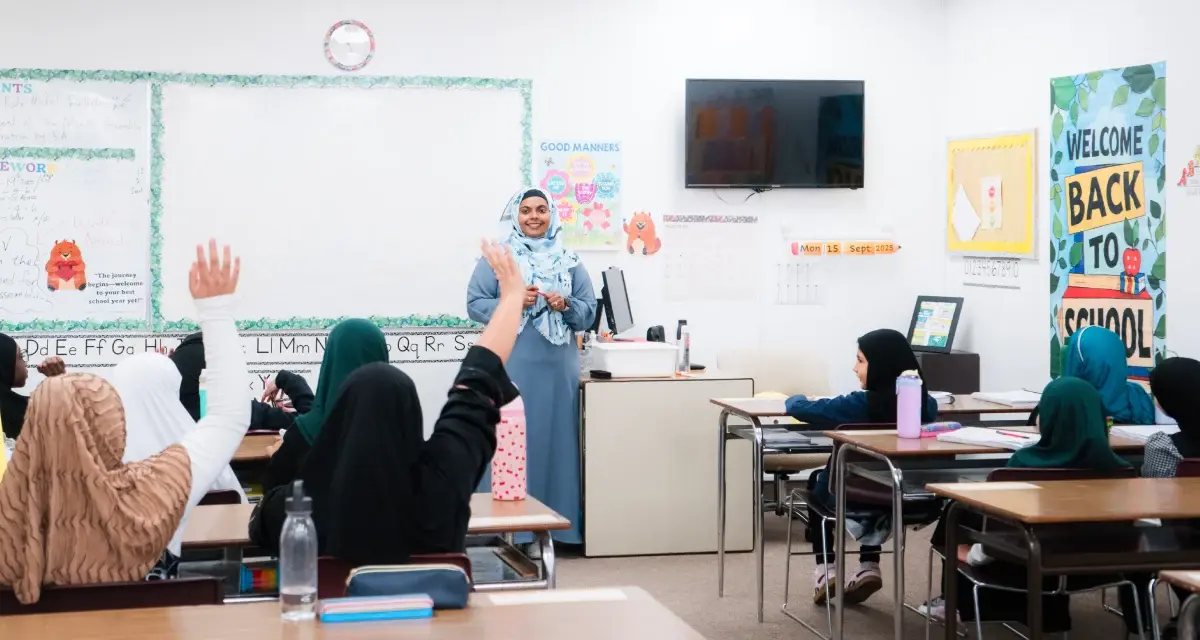
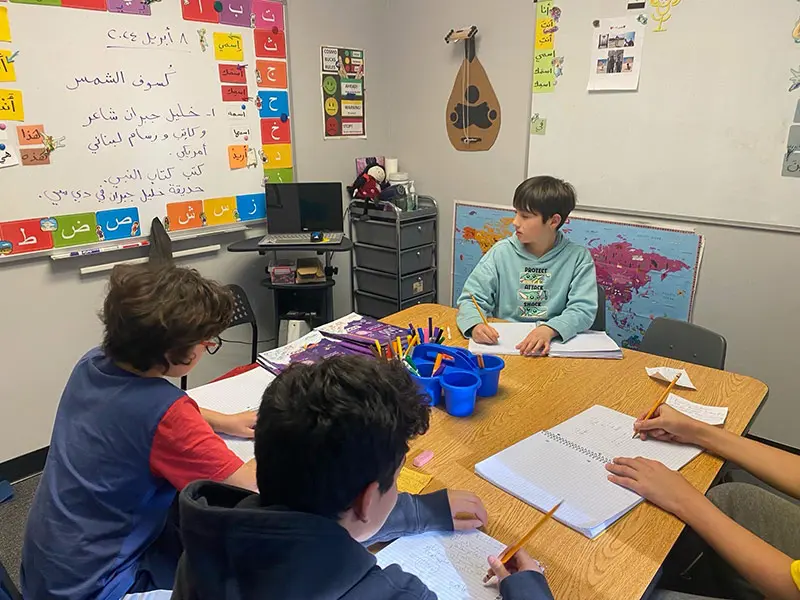
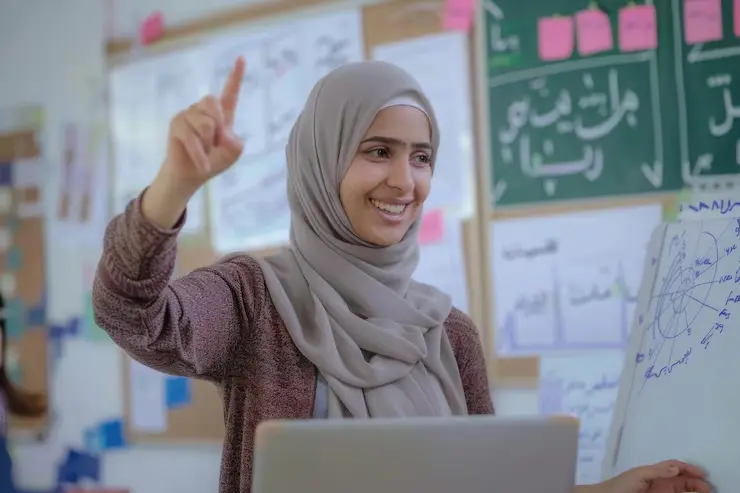
Inside Kalimah Center: Moments from Our Courses
Get a glimpse into the vibrant learning experience at Kalimah Center. These snapshots capture real moments from our live classes—where students engage deeply, connect with passionate instructors, and grow in a welcoming, supportive environment.
Here Are The Reviews On Our Courses:
Our students frequently commend the excellence of our courses and the commitment shown by our instructors. You can read their complete reviews on Trustpilot.
Read more reviews on Trustpilot

Enhance Learning with Kalimah Center’s Interactive Arabic Courses
While books and audiobooks are valuable tools, children learn best when they can practice speaking, playing, and interacting in Arabic. At Kalimah Center, we offer live online Arabic classes designed to make learning fun and engaging.
Our experienced native Arabic teachers use stories, games, visuals, and interactive activities to help children develop reading, writing, listening, and speaking skills. Each child is placed at the right level, ensuring they learn at their own pace while building confidence and fluency.
Why Kalimah Center is special:
- Excellent teachers: Our experienced native Arabic teachers know how to make Arabic fun for kids.
- Native speakers: Your kids will learn real Arabic, the way people speak it.
- Fun classes: We use pictures, games, and stories to keep your kids excited.
- Right level: We find the right class for your child, so they learn at their own pace.
Your kids will learn:
- Read Arabic: They will read stories and understand what they mean.
- Write Arabic: They will write about themselves and their ideas.
- Listen to Arabic: They will understand when people talk to them in Arabic.
- Speak Arabic: They will talk in Arabic with confidence!
Try Kalimah Center for FREE! It’s the best way for your kids to learn Arabic and have FUN.
Master Arabic with Kalimah Center
Join our expert-led online classes and start your journey toward Arabic fluency today.
Book Your Free TrialFrequently Asked Questions About Arabic Books and Audiobooks for Kids
Q: What makes audiobooks better than books for teaching Arabic to children?
Arabic audiobooks provide native pronunciation modeling that helps children develop authentic accents and listening comprehension. Unlike books, audiobooks allow hands-free learning during car rides, playtime, or bedtime routines. The combination of storytelling, music, and sound effects makes learning more engaging for auditory learners and children who struggle with traditional reading.
Q: At what age should children start using Arabic audiobooks?
Children as young as 3 years old can benefit from Arabic audiobooks with simple vocabulary, songs, and short stories (10-15 minutes). Ages 5-7 can handle structured lessons (20-30 minutes) like “Arabic for Kids: A 4 Week Course.” Older children (8-12) can follow longer narrative audiobooks and more complex dialect content.
Q: Where can I purchase or stream Arabic audiobooks for kids?
Arabic audiobooks for children are available on Audible, Google Play Books, Apple Books, and Spotify. Some titles are included with Audible Premium Plus subscriptions, while others require individual purchase ($10-25). Educational platforms like Kalimah Center also integrate audiobooks into structured learning programs with teacher support.
Q: Should I choose Modern Standard Arabic (MSA) or dialect audiobooks?
For literacy, formal education, and Quranic reading, prioritize Modern Standard Arabic (MSA) audiobooks like “Arabic for Kids: A 4 Week Course.” For conversational skills in specific regions, add dialect audiobooks like “Palestinian Levantine Arabic.” Most educators recommend starting with MSA, then supplementing with dialects for cultural exposure.
Q: How often should children listen to Arabic audiobooks for effective learning?
Daily exposure (15-30 minutes) yields the best results. Use active listening techniques: first listen without interruptions, then replay while pausing to repeat words/phrases, and finally listen during routine activities (car rides, bedtime) for passive reinforcement. Repetition of the same audiobook 5-10 times significantly improves retention.
Q: Can audiobooks alone make my child fluent in Arabic?
Audiobooks develop strong listening comprehension and vocabulary but should be combined with speaking practice for fluency. Programs like Kalimah Center integrate audiobooks with live conversation practice, pronunciation correction, and interactive activities. For best results, pair 20-30 minutes of audiobook listening with 2-3 weekly live sessions with native teachers.