The best books for learning Quranic Arabic depend on your current level. Complete beginners should start with “Learning Quranic Arabic for Complete Beginners” (includes transliterations) or “Iqraa” (for the Arabic alphabet). Intermediate learners benefit most from the 3-volume “Madinah Arabic” series (free PDF download) paired with Alan Jones’ “Arabic Through the Qur’an.” Advanced learners use “Fundamentals of Classical Arabic” by Shaykh Hamza Yusuf or classical tafsir texts. Most books are available as free PDF downloads — see the comparison table below for PDF availability.
Master Comparison Table:
| Book | Author | Level | Focus | PDF Free? | Best For |
|---|---|---|---|---|---|
| Learning Quranic Arabic for Complete Beginners | Abur-Rafē’ Muhammad | Absolute beginner | Quranic vocab + grammar | ✅ Yes | Zero-knowledge learners |
| Towards Understanding Quranic Arabic | Multiple authors (UK) | Beginner | Quranic grammar systematically | ✅ Yes (some versions) | Structured, classroom-style learners |
| Learning Arabic Language of the Quran | Izzath Uroosa | Beginner–Intermediate | Grammar through Quranic examples | ✅ Yes | Quran-only grammar approach |
| Arabic Through the Qur’an | Alan Jones | Beginner–Advanced | 40-lesson systematic Quranic grammar | ✅ Yes | Academic, patient learners |
| An Introduction to Koranic and Classical Arabic | W.M. Thackston (Harvard) | Intermediate | Classical Arabic grammar (academic) | ✅ Yes | Academic researchers, university students |
| Fundamentals of Classical Arabic (3 volumes) | Shaykh Hamza Yusuf | Intermediate–Advanced | Classical grammar mastery | ⚠️ Partially | Serious students of Islamic scholarship |
| Iqraa | Various | Absolute beginner | Arabic alphabet and reading | ✅ Yes | Starting the alphabet from scratch |
| Al-Arabiyya Bayna Yadayk (Arabic Between Your Hands) | Multiple authors | Beginner–Advanced | Comprehensive Arabic curriculum | ⚠️ Partial | Structured course supplementation |
| Madinah Arabic Books (3 volumes) | Dr. V. Abdur Rahim | Beginner–Intermediate | Classical Arabic grammar systematically | ✅ Yes (full PDFs) | Most widely recommended free curriculum |
| The Essential Book of Quranic Words | Various | Beginner–Intermediate | High-frequency Quranic vocabulary | ⚠️ Partial | Vocabulary-first learners |
Which Quranic Arabic Book Should You Start With? (Level Guide)
Your starting book depends on three factors: your current Arabic level, your learning style, and whether you want free resources or are willing to purchase.
| Your Situation | Start Here | Then Move To |
|---|---|---|
| Zero Arabic — can’t read the script | Iqraa (alphabet) → then “Learning Quranic Arabic for Complete Beginners” | Madinah Arabic Book 1 → Alan Jones |
| Know the alphabet but no grammar | “Learning Quranic Arabic for Complete Beginners” OR Madinah Arabic Book 1 | Alan Jones → Madinah Books 2–3 |
| Know basic grammar (some MSA) | Alan Jones’ “Arabic Through the Qur’an” | “Fundamentals of Classical Arabic” (Hamza Yusuf) |
| Intermediate Arabic student | “An Introduction to Koranic and Classical Arabic” (Thackston/Harvard) | Classical tafsir texts |
| Want completely free resources only | Madinah Arabic Books (free PDF + LQToronto YouTube) | Alan Jones (free PDF) |
| Want the most accessible beginner approach | “Learning Quranic Arabic for Complete Beginners” (has transliterations) | “Learning Arabic Language of the Quran” |
| Prefer structured video instruction | Madinah Arabic Books + LQToronto YouTube channel | Bayyinah TV (Dream Program) |
| Academic/scholarly approach | Thackston’s “An Introduction to Koranic and Classical Arabic” | “Fundamentals of Classical Arabic” (Hamza Yusuf) |
The recommended sequence for most non-Arabic learners:
- Iqraa (4–8 weeks) — alphabet mastery
- Al-Tamheedi (2–3 months) — basic sentence components
- Madinah Arabic Book 1 (3–5 months) — systematic grammar foundation (free PDF)
- Alan Jones / Madinah Books 2–3 (6–12 months) — intermediate grammar + Quranic focus
- Fundamentals of Classical Arabic / Thackston (ongoing) — advanced scholarly grammar
Quranic Arabic Books: Dedicated Learning Resources
I am going to start with some essential books dedicated exclusively to Quranic Arabic, designed to guide you step-by-step:
Book 1: Learning Quranic Arabic for Complete Beginners
| Detail | Information |
|---|---|
| Author | Abur-Rafē’ Muhammad |
| Level | Absolute beginner — no prior Arabic needed |
| Pages | ~180 |
| PDF available | ✅ Yes — free download (search title + PDF) |
| Physical copy | Available on Amazon, Islamic bookstores |
| Best for | Muslim converts, adults returning to Arabic study, non-Arab parents teaching children |
What makes it unique: This is the most accessible Quranic Arabic book available — every Arabic word includes transliteration (English letters showing pronunciation), which most books avoid. This makes it usable before you’ve fully mastered the Arabic script. Each chapter opens with a Quranic verse broken down into its grammatical components, then provides detailed explanation. The inclusion of classical tafsir excerpts means you learn the verse meaning in depth, not just the grammatical mechanics.
What it doesn’t cover: It doesn’t provide a comprehensive grammar curriculum. After completing it, you’ll have excellent foundational Quranic vocabulary and basic grammar awareness, but you’ll need the Madinah Books or Alan Jones for systematic grammatical depth.
Honest assessment: ⭐⭐⭐⭐☆ — The best starting book for complete beginners specifically because of the transliterations. The spiritual depth of the approach (tafsir included) is unusual and valuable. Slightly limited in grammar scope.

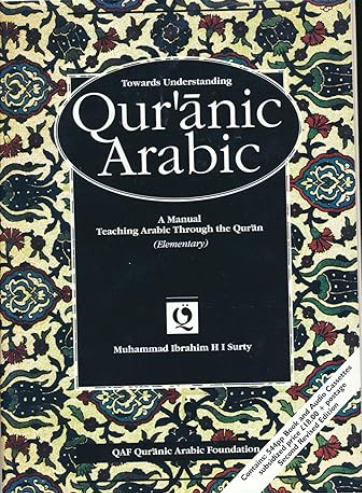
Book 2: Towards Understanding Quranic Arabic
| Detail | Information |
|---|---|
| Author | Multiple authors (developed in UK academic context) |
| Level | Beginner–Intermediate |
| Approach | Structured, lesson-by-lesson Quranic grammar with classroom-tested methodology |
| PDF available | ✅ Yes — search “Towards Understanding Quranic Arabic PDF” |
| Physical copy | Available through Islamic bookstores and Amazon |
| Best for | Learners who prefer a classroom-style structured progression and want results quickly without feeling overwhelmed |
What makes it unique: Developed directly from real teaching experience with UK Muslim communities, this book’s methodology was refined through years of classroom observation — meaning its lesson sequencing reflects what actual learners found difficult and what worked. Unlike some academic Quranic Arabic books that assume a studious, patient reader, this book is designed for busy adults who need to see results within weeks, not months. Each lesson is deliberately concise, building incrementally on the previous one without overwhelming the learner with too much grammar at once.
The exercises at the end of each chapter are directly tied to Quranic comprehension — not generic Arabic exercises — which gives learners an immediate sense of progress as they recognize words and patterns in verses they may have been reciting for years without understanding.
What it doesn’t cover: The book prioritizes speed and accessibility over depth. Advanced grammar topics — verb patterns (awzan), detailed morphology (Sarf), classical rhetorical structures — are either covered briefly or not at all. Learners who complete it will have functional beginner comprehension but will need to transition to the Madinah Books or Alan Jones for deeper grammatical mastery.
Honest assessment: ⭐⭐⭐⭐☆ — Excellent for its intended audience. The concise, practical approach makes it the most “beginner-friendly” structured book on this list after “Learning Quranic Arabic for Complete Beginners.” The classroom-tested methodology reduces wasted study time. Slightly limited in scope for serious long-term Quranic study.
Book 3: Learning Arabic Language of the Quran
| Detail | Information |
|---|---|
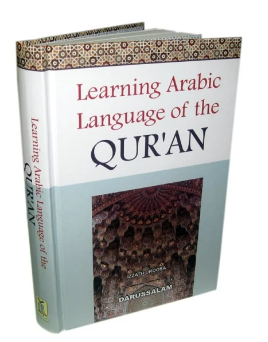
| Author | Izzath Uroosa Bint Riyadh |
| Level | Beginner–Intermediate |
| Approach | Grammar taught exclusively through Quranic verse examples; suitable for all ages |
| PDF available | ✅ Yes — multiple Islamic resource sites host the PDF |
| Physical copy | Available on Amazon and Islamic bookstores |
| Best for | Learners who want every grammar concept illustrated with a real Quranic example; parents teaching children; self-studiers of any age |
What makes it unique: The author’s dual expertise in Arabic linguistics and English instruction produces something rare — explanations of complex Arabic grammar that feel simple without being intellectually insulting. Written by a woman with deep roots in both Quranic scholarship and practical language teaching, the book approaches grammar not as an abstract academic exercise but as a tool for Quranic comprehension.
Every grammatical point — from basic noun-verb agreement to case ending changes — is illustrated with multiple examples drawn directly from the Quran. A learner studying noun gender doesn’t encounter contrived sentences; they encounter رَحمَة (mercy, feminine) from Surah Al-Baqarah and كِتَاب (book, masculine) from Surah Al-Baqarah 2:2. This constant Quranic grounding creates the “aha” moments that sustain motivation.
The language is deliberately simple — accessible to teenagers and adults alike — without sacrificing grammatical precision. This makes it one of the few Quranic Arabic books usable by parents who want to teach their children using the same resource they’re learning from.
What it doesn’t cover: The book does not include Tajweed (recitation rules), spoken Arabic practice, or a vocabulary-building system. Grammar is the focus. Complement it with the 80% Quran Words app for vocabulary and a reciter’s audio for pronunciation.
Honest assessment: ⭐⭐⭐⭐⭐ — One of the most underrated books on this list. The Quranic-grounding of every example, the clarity of explanation, and the accessibility across age groups make it exceptional value. Should be more widely recommended than it currently is.
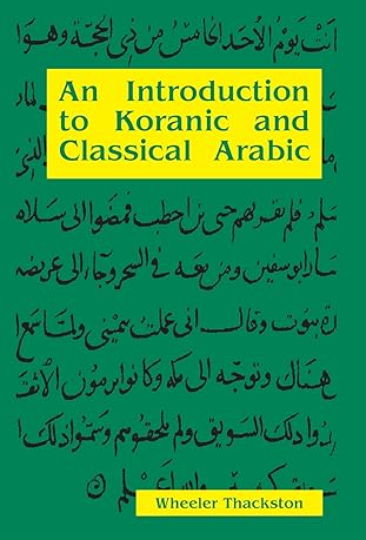
Book 4: An Introduction to Koranic and Classical Arabic
| Detail | Information |
|---|---|
| Author | W.M. (Wheeler McIntosh) Thackston, Harvard University |
| Level | Intermediate |
| Approach | Academic scholarly grammar of Classical Arabic from one of Harvard’s foremost Middle Eastern studies professors |
| PDF available | ✅ Yes — search “Thackston Koranic Arabic PDF” or “Introduction to Koranic Classical Arabic Thackston PDF” |
| Physical copy | Available through academic publishers, Amazon, and major bookstores |
| Best for | University students, academic researchers, serious self-studiers with prior Arabic exposure, those pursuing Islamic studies academically |
What makes it unique: Thackston writes as a Harvard professor of Arabic — and it shows in the best possible way. This book offers something that most “accessible” Quranic Arabic resources avoid: scholarly rigor. Grammar is explained with precision. Exceptions are noted, classical references are provided, and the treatment of morphological patterns reflects genuine expertise in Arabic linguistics rather than simplified pedagogical approximations
The book explicitly covers the broader context of Classical Arabic — its relationship to pre-Islamic poetry, the evolution of the language, and the linguistic environment in which the Quran was revealed. This historical-linguistic perspective gives learners a conceptual framework for understanding why Quranic Arabic is the way it is, not just what the rules are.
Exercises are demanding — they push learners to apply grammar rules in complex sentences from primary Islamic texts, not simple constructed exercises. This makes the learning harder but the resulting competency significantly deeper.
What it doesn’t cover: No beginner-friendly hand-holding. The book assumes the reader can handle academic prose and already has exposure to the Arabic script and basic vocabulary. Complete beginners will find it impenetrable. It also does not cover Tajweed or spoken Arabic in any form.
Honest assessment: ⭐⭐⭐⭐⭐ — The highest-quality academic Quranic/Classical Arabic grammar book available in English. Not suitable for beginners, but for intermediate learners willing to engage seriously with the material, it provides a depth of understanding that no popular beginner resource can match. Widely used in university Middle Eastern Studies and Islamic theology programs.
Book 5: The Essential Book of Quranic Words
| Detail | Information |
|---|---|
| Level | Beginner–Intermediate |
| Focus | High-frequency Quranic vocabulary |
| Approach | Vocabulary-first — learn the most repeated words before studying grammar |
| PDF available | ⚠️ Partially available online |
| Best for | Learners who want vocabulary comprehension before tackling grammar |
What makes it unique: While most Quranic Arabic books approach comprehension through grammar first, this resource takes the vocabulary-first approach — teaching the most frequently recurring words in the Quran before diving into grammatical structures. Given that just 500 root words account for approximately 80% of the Quran’s text, this approach allows learners to achieve partial comprehension significantly faster than the grammar-first approach.
Best used: As a supplement to a grammar-based course (Madinah Books or Alan Jones), not as a standalone resource. Learning 300–500 high-frequency Quranic words while simultaneously studying grammar creates a synergistic effect — grammatical rules become easier to internalize when you recognize the vocabulary they’re applied to.
Honest assessment: ⭐⭐⭐⭐☆ — Excellent supplement. Not a complete curriculum on its own, but accelerates comprehension when combined with a grammar resource.
Read Also about: Learn Quranic Arabic
Master Arabic with Kalimah Center
Join our expert-led online classes and start your journey toward Arabic fluency today.
Book Your Free TrialFoundational Arabic Books for Quranic Study
The following books are not exclusively Quranic Arabic resources — they teach Classical or Modern Standard Arabic, which forms the foundation for Quranic Arabic. If you have never studied Arabic before, these books build the grammatical and reading skills that make the Quranic-specific books above significantly easier to use.
Do you need these first? Only if you have zero Arabic background. Complete beginners should spend 3–6 months with Iqraa + Al-Tamheedi before attempting books like Alan Jones or the Madinah Arabic series. Learners who already know Arabic script and basic grammar can skip directly to the Quranic Arabic books above.
Foundational Books to Get You Started
To establish a solid foundation, consider these highly recommended books:
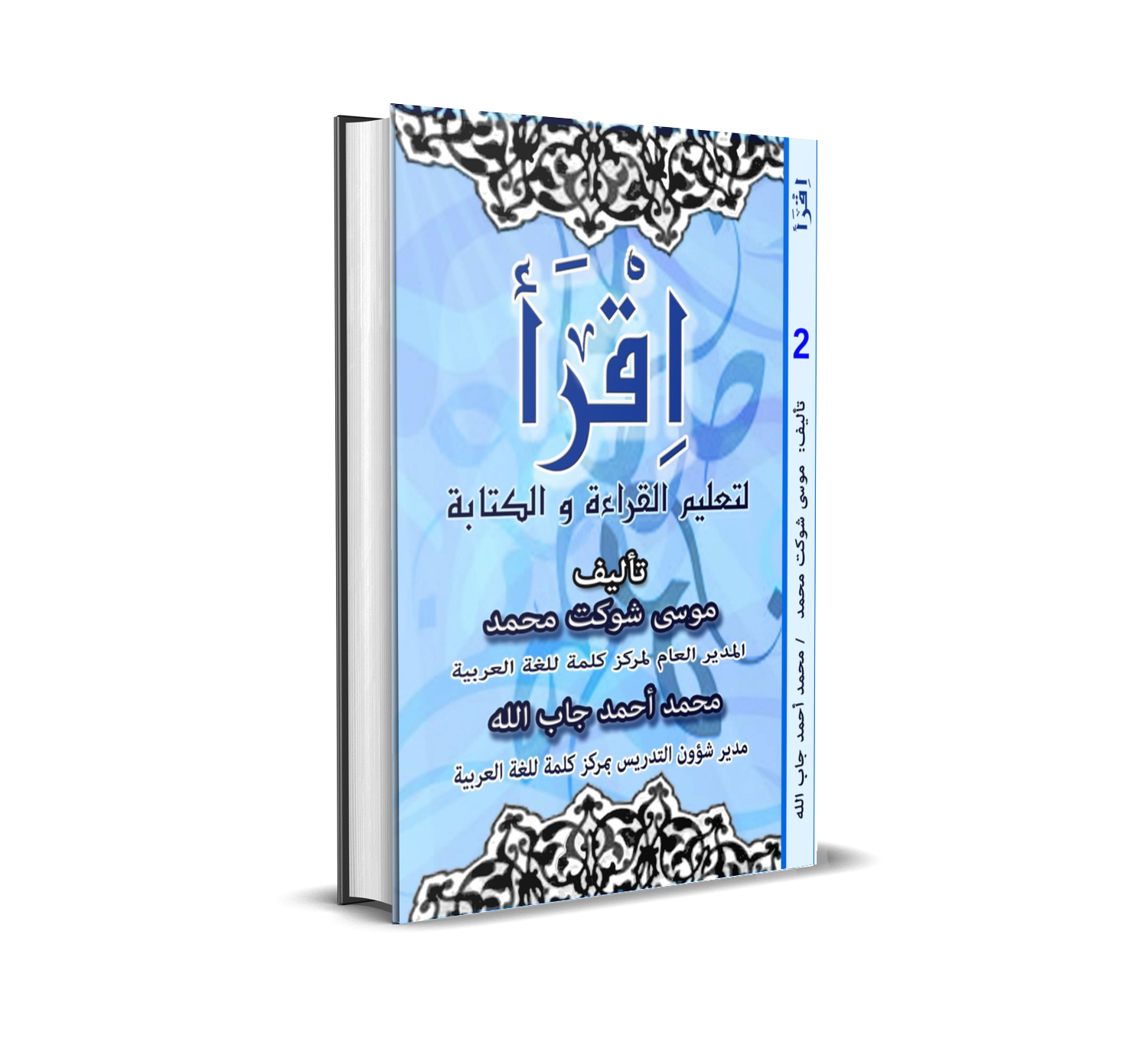
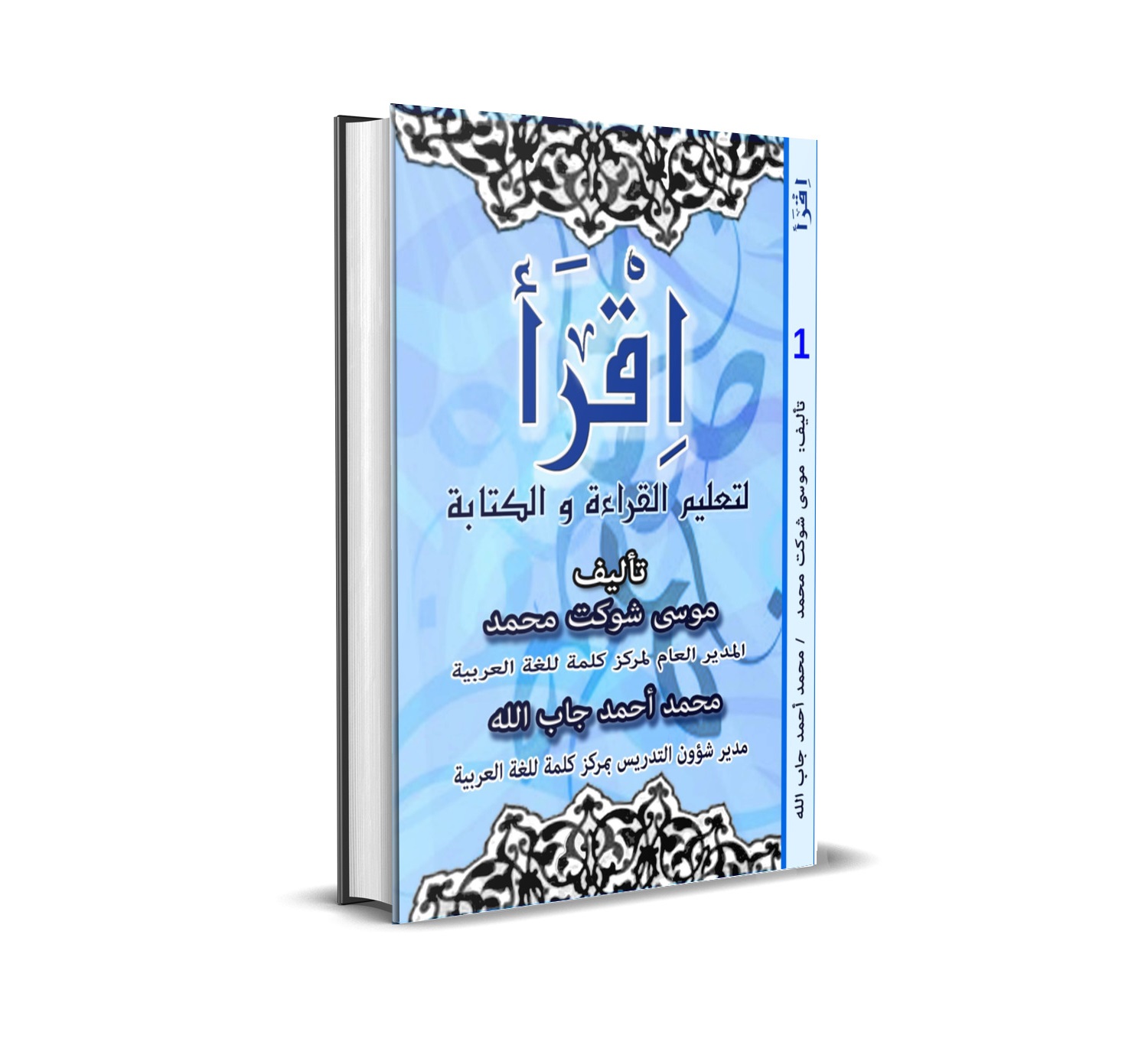
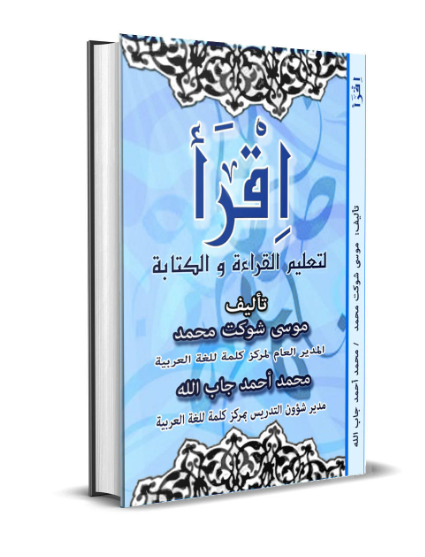
Foundational Book 1: Iqraa (اقرأ)
| Detail | Information |
|---|---|
| Author | Originally: Sheikh Ismail Abdel Khalil; Kalimah Center edition developed by experienced teachers |
| Level | Absolute beginner — zero Arabic knowledge required |
| Approach | Permutation-based methodology — letters are introduced in patterns, then combined systematically into syllables, words, and short sentences |
| PDF available | ✅ Yes — multiple versions available; Kalimah Center’s illustrated edition available through their platform |
| Physical copy | Available through Islamic bookstores; Kalimah’s edition through their bookshop |
| Best for | Complete beginners (children and adults); non-Arab Muslims learning to read the Quran; anyone who has never seen the Arabic alphabet |
What makes it unique: Iqraa’s fundamental insight is that the Arabic alphabet cannot be learned efficiently in alphabetical order. Instead, the book groups letters by visual similarity and phonetic proximity — preventing the confusion that arises when beginners encounter ب، ت، ث all at once and cannot distinguish between them. By teaching letters through their connecting patterns and systematically building from two-letter combinations to full words, the methodology creates reading fluency faster than most alternative approaches.
The dotted font pages (where students trace over printed letters) address a problem unique to Arabic learners: the script requires muscle memory that English speakers haven’t developed. Physical tracing in the early stages builds the motor pathways that make writing Arabic feel natural rather than labored.
Kalimah Center’s illustrated edition adds colorful imagery that connects each letter to a familiar object — making it particularly effective for visual learners and children, while remaining fully functional for adults.
What it doesn’t cover: Iqraa teaches you to read Arabic — it does not teach you to understand it. No vocabulary, grammar, or Quranic meaning is provided. It is strictly a reading-acquisition tool, which is exactly what it should be at the alphabet stage.
Honest assessment: ⭐⭐⭐⭐⭐ — The best starting point for anyone who cannot read Arabic. The permutation methodology is genuinely superior to random alphabetical teaching. Most beginners who complete Iqraa consistently can read basic Arabic within 4–8 weeks. Indispensable as the first step in any Quranic Arabic journey.
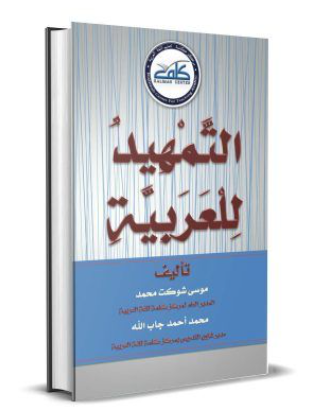
Foundational Book 2: Al-Tamheedi Lil-Arabiyyah (التمهيد للعربية)
| Detail | Information |
|---|---|
| Author | Developed by Kalimah Center’s experienced teaching team |
| Level | Post-alphabet beginner — assumes Arabic script literacy |
| Approach | Communicative method — introduces nouns, verbs, and particles through practical Arabic sentence construction |
| PDF available | ✅ Available through Kalimah Center’s platform |
| Physical copy | Through Kalimah Center’s bookshop |
| Best for | Students who have completed Iqraa or already know the Arabic alphabet and are ready to form their first Arabic sentences |
What makes it unique: Al-Tamheedi solves the most common crisis point in Arabic learning — the gap between knowing the alphabet and understanding how Arabic sentences actually work. After Iqraa, most learners can read Arabic words without understanding them. Al-Tamheedi bridges that gap by introducing the three fundamental building blocks of Arabic sentences: the noun (الاسم), the verb (الفعل), and the particle (الحرف) — not as abstract grammar categories but as practical tools for constructing meaning.
What distinguishes Al-Tamheedi from generic grammar introductions is its communicative approach. Rather than presenting grammar rules abstractly, it moves learners immediately into constructing real sentences. The exercises require learners to use new vocabulary and structures in context — building the habit of Arabic sentence formation from the first lesson.
The book was specifically developed for non-Arab adult learners at Kalimah Center, meaning its explanations are calibrated to the questions and confusions that English speakers actually encounter — not the theoretical challenges assumed by books written for Arabic speakers studying their own language.
What it doesn’t cover: Al-Tamheedi is a bridge book — intentionally limited in scope. It doesn’t cover advanced grammar (I’rab, complex verb forms, morphological patterns). Its role is to build sentence formation confidence before the learner transitions to Madinah Arabic Books or Droos Nahwiyah for systematic grammar.
Honest assessment: ⭐⭐⭐⭐⭐ — The ideal bridge between alphabet literacy and genuine grammar study. Its communicative approach produces faster practical competence than dry grammar introductions. Particularly well-suited to adult learners at Kalimah Center, but valuable for any beginner transitioning from reading to understanding.
Get Attamheed lelarabiyah Book Now
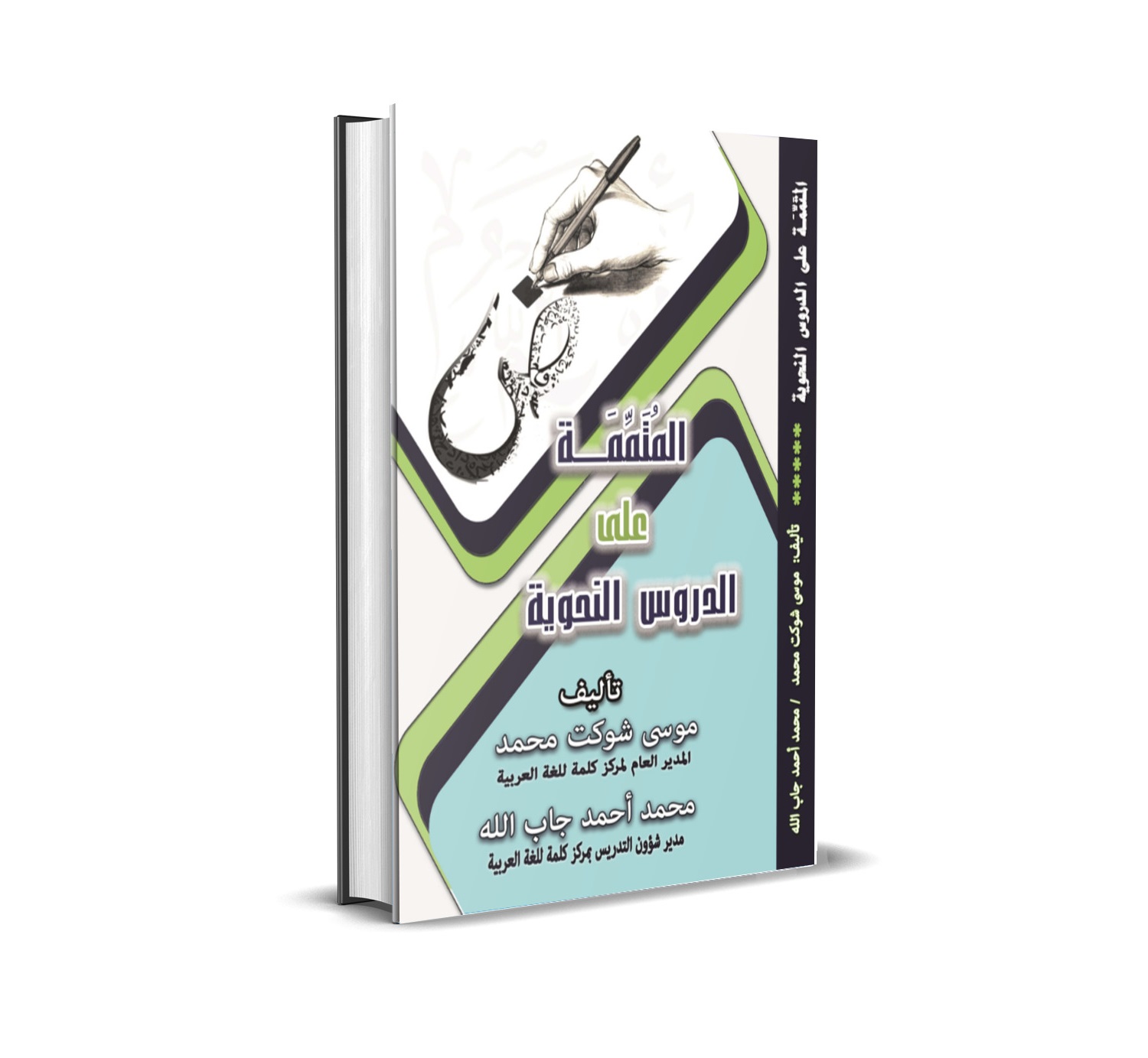
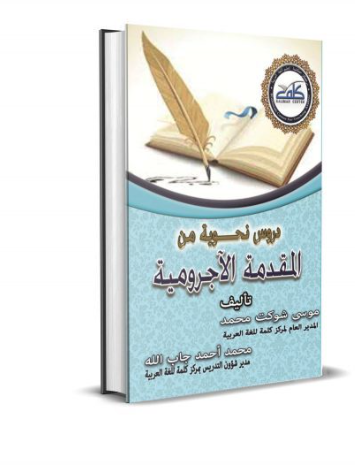
Foundational Book 3: Droos Nahwiyah min Al-Muqaddimah Al-Ajurrumiyyah (دروس نحوية من المقدمة الآجرومية)
| Detail | Information |
|---|---|
| Author | Based on Al-Ajurrumiyyah by Ibn Ajurrum (d. 1323 CE); modern Arabic grammar explanations by Kalimah Center teaching team |
| Level | Beginner–Intermediate (for grammar specifically) |
| Approach | Classical grammar methodology derived from the most widely used introductory Arabic grammar text in the Islamic world |
| PDF available | ✅ Available through Kalimah Center |
| Physical copy | Through Kalimah Center’s bookshop |
| Best for | Students ready for systematic grammar study; those interested in traditional Islamic methods of Arabic instruction |
What makes it unique: Al-Ajurrumiyyah (the source text) is not a modern creation — it is a 700-year-old Arabic grammar primer that has been taught in Islamic seminaries from Morocco to Malaysia without interruption since the 14th century. Its endurance is its endorsement. Every major Islamic scholar of the past 700 years learned their Arabic grammar foundation from this text or one of its commentaries.
Kalimah Center’s “Droos Nahwiyah” adapts this classical text into a modern, exercise-heavy format accessible to English-speaking learners. The result is an unusual combination: traditional grammatical rigor (the same conceptual framework used in Islamic scholarship for centuries) presented with modern clarity and practical exercises that non-Arab adult learners can actually navigate without a classroom setting.
Key grammatical concepts covered include the three grammatical cases (Raf’, Nasb, Jarr) and their markers, the distinction between definite and indefinite nouns, basic verb conjugation, and the fundamental categories of Arabic words. These are precisely the concepts that unlock Quranic Arabic comprehension — because the Quran applies these exact structures throughout.
What it doesn’t cover: Morphology (Sarf) — how words are built from roots — is a separate discipline from Nahw (syntax) and is not the focus of this book. For morphology, the Tayseer al-Sarf (also available through Kalimah Center) complements this text. Advanced syntactic topics beyond Al-Ajurrumiyyah (covered in Ibn Hisham’s Qatr al-Nada and Alfiyyat Ibn Malik) are also outside scope.
Honest assessment: ⭐⭐⭐⭐⭐ — For learners who want to engage with classical Islamic scholarship, not just Quranic comprehension, starting grammar study from Al-Ajurrumiyyah connects you to the same intellectual tradition through which Islamic civilization’s scholars learned their language. The Kalimah Center adaptation makes this 700-year-old resource accessible without compromising its precision. Pair with Tayseer al-Sarf for a complete classical grammar and morphology foundation.
Get Droos Nahwiyah mena Al Moqaddemah Al AAjourromiyah Now
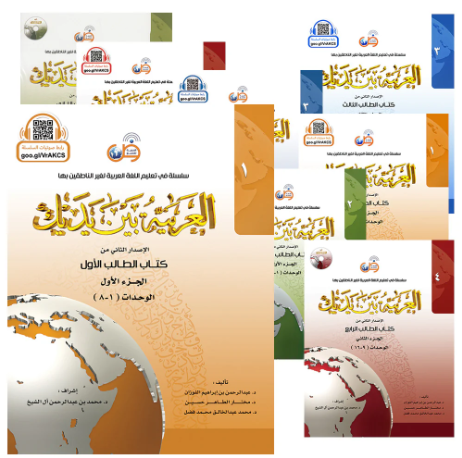
Foundational Book 4: Al-Arabiyya Bayna Yadayk — Arabic Between Your Hands (العربية بين يديك)
| Detail | Information |
|---|---|
| Author | Dr. Abdur Rahman ibn Ibrahim Al-Fawzan and team |
| Level | Beginner through Advanced (4-level series) |
| Approach | Communicative language teaching with dialogues, vocabulary, grammar, and exercises integrated at each level |
| PDF available | ⚠️ Partial — Volume 1 sometimes available; complete series is primarily paid |
| Physical copy | Wide availability — Amazon, Islamic bookstores, Arabic language institutes |
| Best for | Learners enrolled in structured Arabic courses; those who want a comprehensive series spanning from beginner to university-level Arabic; institutes and schools |
What makes it unique: “Arabic Between Your Hands” is the most widely used Arabic textbook in formal institutional settings — used in Gulf universities, Islamic institutes across Europe and North America, and language schools throughout the Arab world. It is the only book on this list designed for use in a formal classroom as the primary curriculum, rather than as a self-study supplement.
What sets it apart from other Arabic textbooks is its integrated approach: each unit simultaneously develops listening, speaking, reading, and writing through a combination of dialogues (in Arabic), vocabulary lists, grammar explanations, and varied exercises. The dialogues feature realistic modern Arabic conversations, meaning learners develop practical Arabic alongside the classical structures they need for Quranic study.
The visual production quality is also notably higher than most competing textbooks — full-color throughout, with photographs, illustrations, and culturally appropriate imagery that contextualizes Arabic learning within Arab and Islamic culture. This makes it the most engaging “textbook experience” of any resource on this list.
The 4-level series progression is systematic: Book 1 (beginner) through Book 4 (advanced) takes a committed learner from the alphabet through university-level Arabic proficiency capable of reading classical texts.
What it doesn’t cover: This is a general Classical/MSA Arabic curriculum — it does not focus specifically on Quranic vocabulary or Quranic examples. It is best used as a foundational Arabic curriculum alongside a Quranic-specific resource (like Alan Jones or the 80% Quran Words app) rather than as a standalone Quranic Arabic program. Self-studiers may find the dialogues are more useful with a teacher present, as some exercises assume classroom interaction.
Honest assessment: ⭐⭐⭐⭐⭐ — The highest-quality comprehensive Arabic series on this list for learners who want the full language, not just Quranic comprehension. If you’re enrolled in a formal Arabic course at a university, mosque, or language institute, there is a high probability this is your textbook — and for good reason. For self-studiers specifically focused on Quranic Arabic, the Madinah Books series (which is completely free and has full video support) may be more practical, but for comprehensive language acquisition with institutional support, “Arabic Between Your Hands” is unmatched.
Foundational Book 5: Fundamentals of Classical Arabic by Shaykh Hamza Yusuf
| Detail | Information |
|---|---|
| Author | Shaykh Hamza Yusuf (Hamza Yusuf Hanson) |
| Volumes | 3 volumes |
| Level | Intermediate–Advanced |
| Approach | Traditional scholarly Arabic grammar following classical methodology |
| PDF available | ⚠️ Volume 1 partially — Volumes 2–3 primarily paid |
| Physical copy | Sandala, Green Zaytuna, Amazon |
| Best for | Serious students of Islamic scholarship, seminary students, advanced learners |
What makes it unique: Written by one of the most respected Western Islamic scholars, Shaykh Hamza Yusuf, this series teaches classical Arabic grammar the way it was traditionally taught in Islamic seminaries — methodically, with focus on classical texts and traditional grammatical terminology. Volume 1 covers the alphabet through basic morphology. Volume 2 advances through verb patterns (the awzan system). Volume 3 addresses advanced syntax and complex sentence structures.
Unlike the Madinah Books (which have a conversational element) or Alan Jones (which focuses exclusively on the Quran), “Fundamentals of Classical Arabic” is closest to the traditional madrasa approach — the same method through which scholars like Ibn Khaldun and Al-Ghazali would have learned Arabic. For students serious about engaging with classical Islamic scholarship, not just Quranic comprehension, this is the most appropriate resource.
What it doesn’t cover: Very little spoken Arabic practice. This is a written grammar resource, not a conversational one. Best used alongside a live instructor for best results.
Honest assessment: ⭐⭐⭐⭐⭐ — For serious students. Not a beginner’s resource despite being placed in some beginner lists. Requires either prior Arabic grammar exposure or a teacher to guide through it.
Free PDF Downloads: Where to Get These Books
| Book | Free PDF Available | Download Source |
|---|---|---|
| Madinah Arabic Books 1–3 + exercises | ✅ Full free download | lqtoronto.com or search “Madinah Arabic PDF download” |
| Alan Jones — Arabic Through the Qur’an | ✅ Available | Search “Arabic Through the Quran Alan Jones PDF” |
| Learning Quranic Arabic for Complete Beginners | ✅ Available | Search title + PDF on major Islamic resource sites |
| Learning Arabic Language of the Quran (Izzath Uroosa) | ✅ Available | Search title + PDF |
| An Introduction to Koranic and Classical Arabic (Thackston) | ✅ Available | Search “Thackston Koranic Arabic PDF” |
| At-Tibyan Book | ✅ Available | Multiple Islamic education sites |
| Droos Nahwiyah (Al-Ajurrumiyyah derivation) | ✅ Available | Kalimah Center bookshop |
| Iqraa | ✅ Available | Multiple sources |
| Arabic Between Your Hands (partial) | ⚠️ Partial | Volume 1 sometimes available; complete set is paid |
| Fundamentals of Classical Arabic | ⚠️ Partial | Volume 1 partially; Volumes 2–3 purchase recommended |
Note: Always prefer purchasing books that are technically under copyright if you find them valuable — it supports the scholars and publishers who produce these resources. However, many of these are specifically made freely available by their publishers for da’wah purposes.
Inside Kalimah Center: Moments from Our Courses
Get a glimpse into the vibrant learning experience at Kalimah Center. These snapshots capture real moments from our live classes—where students engage deeply, connect with passionate instructors, and grow in a welcoming, supportive environment.
Here Are The Reviews On Our Courses:
Our students frequently commend the excellence of our courses and the commitment shown by our instructors. You can read their complete reviews on Trustpilot.
Read more reviews on Trustpilot

Master Arabic with Kalimah Center
Join our expert-led online classes and start your journey toward Arabic fluency today.
Book Your Free TrialTransform Your Reading into Wisdom: Kalimah Center’s Online Courses Await!
You’ve discovered the best books, and now bring their wisdom to life with Kalimah Center‘s transformative online courses!
Why Kalimah? Because reading alone isn’t enough. You need:
- Expert Guidance: Navigate the complexities of Quranic Arabic grammar, vocabulary, and pronunciation with certified teachers who understand your learning journey.
- Interactive Learning: Practice your recitation, pronunciation, and comprehension in live sessions designed to make learning enjoyable and effective.
- Spiritual Connection: Immerse yourself in the Quran’s divine language and deepen your understanding of its profound message.
Kalimah is the bridge between knowledge and embodiment:
- Quran and Tajweed Courses: Master the art of Quranic recitation, from the basics of Arabic pronunciation to advanced Tajweed rules.
- Arabic Language Courses: Expand your vocabulary, grammar, and comprehension skills to unlock the deeper meaning of the Quran.
- Supportive Community: Connect with fellow learners in our group classes, share insights, and build a lifelong relationship with the Quran.
Conclusion:
Learning Quranic Arabic is challenging, but several excellent books can guide you through the process. Key titles include “Learning Quranic Arabic for Complete Beginners,” which offers a user-friendly introduction with pronunciation guides and commentaries, and “Towards Understanding Quranic Arabic,” known for its structured approach and practical exercises.
Other notable books like “Learning Arabic Language of the Quran” and “An Introduction to Koranic and Classical Arabic” use Quranic verses to teach grammar and provide a comprehensive grounding in classical Arabic, respectively. These resources collectively make the journey of understanding Quranic Arabic more accessible and enriching.
FAQs about Quranic Arabic Books
Q1: What is the best book to learn Quranic Arabic for beginners?
For absolute beginners with no prior Arabic knowledge, start with two books in sequence: first, “Iqraa” (teaches the Arabic alphabet and reading script — typically 4–8 weeks) and then “Learning Quranic Arabic for Complete Beginners” (starts building Quranic vocabulary and grammar from letter one, with pronunciation guides and transliterations). If you prefer one unified resource, “Learning Arabic Language of the Quran” by Izzath Uroosa is beginner-friendly and uses Quranic examples throughout. For a completely systematic approach, the Madinah Arabic Books (free PDF) remain the gold standard used worldwide.
Q2: Can I download Quranic Arabic books for free as PDFs?
Yes — several major Quranic Arabic books are legally available as free PDFs. The Madinah Arabic Books (Books 1–3 plus exercise books) are freely available at lqtoronto.com and multiple Islamic education sites. Alan Jones’ “Arabic Through the Qur’an” is available as a PDF — search “Arabic Through the Quran Alan Jones PDF.” “Learning Quranic Arabic for Complete Beginners” and “Learning Arabic Language of the Quran” are also available as free downloads on multiple Islamic resource sites. The Madinah Books are the most widely downloaded and have video instruction on YouTube (LQToronto channel) making them the most complete free package.
Q3: What’s the difference between the Madinah Arabic books and Alan Jones’ “Arabic Through the Quran”?
Both teach Classical/Quranic Arabic grammar, but with different approaches. Madinah Arabic Books use general classical Arabic examples (conversations, exercises, dialogues) with a gradual, comprehensive grammar approach across 3 volumes. They were designed for the Islamic University of Madinah and have extensive video instruction available free online. Alan Jones’ book uses exclusively Quranic examples for every grammatical point — making it more spiritually focused but with less spoken-Arabic practice. Madinah Books are more widely used and have better free video support; Alan Jones is preferred by learners who want every example directly from the Quran.
Q4: Which Quranic Arabic book is best for someone who already knows some Modern Standard Arabic?
If you already know MSA fundamentals (basic grammar, can read Arabic script), you can skip beginner books and start with “Arabic Through the Qur’an” by Alan Jones (which quickly moves to Quranic-specific vocabulary and structures) or “Fundamentals of Classical Arabic” by Shaykh Hamza Yusuf (deeper classical grammar with traditional Arabic instruction). The key transition from MSA to Quranic Arabic involves learning classical case endings (I’rab) in full — which MSA speakers often haven’t mastered — and acquiring vocabulary specific to the Quran that isn’t in modern usage.
Q5: What is “Fundamentals of Classical Arabic” by Shaykh Hamza Yusuf?
“Fundamentals of Classical Arabic” is a 3-volume series written by Shaykh Hamza Yusuf, one of the most recognized Western scholars of Islamic studies. The series provides a rigorous grounding in classical Arabic grammar based on traditional texts, moving from alphabet through advanced morphology. Volume 1 covers the alphabet and basic grammar; Volume 2 and 3 advance through verb patterns (awzan), case analysis (I’rab), and complex sentence structures. The series is used in Western Islamic seminaries and by serious students who want the traditional scholarly approach to Arabic. The volumes are not all freely available as PDFs, though Volume 1 partial content circulates online. Physical copies are available through Sandala or major Islamic bookstores.