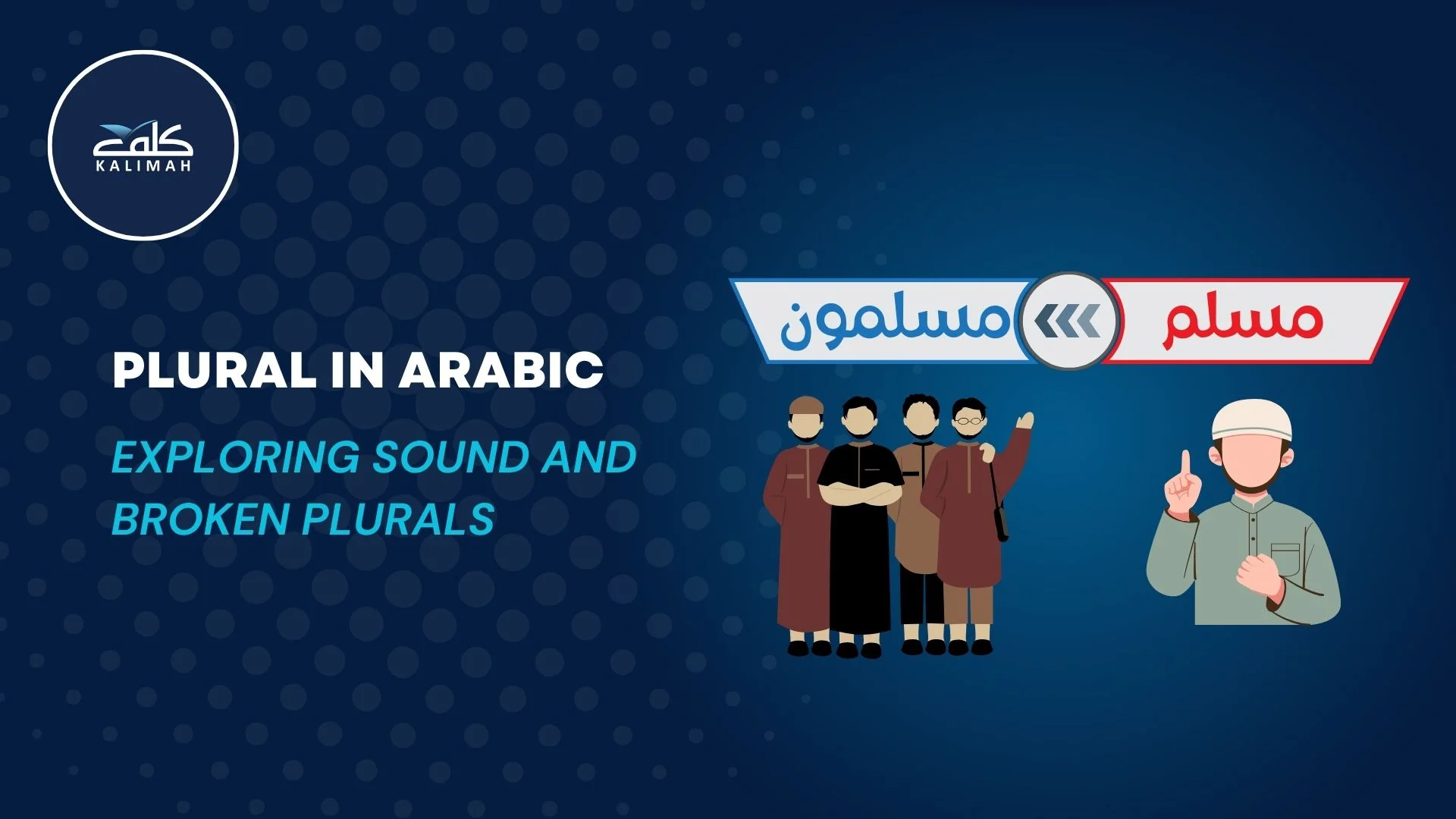
In a nutshell: Arabic plurals come in three types: sound masculine, sound feminine, and broken plurals. Sound plurals follow set patterns by adding suffixes, while broken plurals alter the internal structure of words. These plurals are governed by grammatical cases and use distinct patterns for quantities and advanced forms.
Plurals in Arabic (الجمع al-jam’) are deeply tied to two of the core sciences of the language: Nahw (النحو, syntax) and Sarf (الصرف, morphology). These disciplines provide the foundation for understanding how words change form and function in different contexts.
For example, while Nahw examines the grammatical rules that dictate how Arabic plurals behave in sentences, Sarf focuses on how plurals are constructed through specific patterns and transformations.
In this article, we will explore the types of plurals in Arabic, their formation, patterns, and their grammatical roles.
What Are Arabic Plurals?
Arabic plural الجمع (al-jam’) is simply a word that indicates more than two of something. Think of the difference between “book” and “books” in English. Simple, yes? But Arabic has not one, there are many types of plurals in Arabic.
Types of Plurals in Arabic
There are three main types of plurals in Arabic:
- Sound Masculine Plural (جمع المذكر السالم, jam‘ al-mudhakkar as-salim)
- Sound Feminine Plural (جمع المؤنث السالم, jam‘ al-mu’annath as-salim)
- Broken Plural (جمع التكسير, jam‘ at-taksir)
Each type has its rules and exceptions. Let’s look at them one by one.
Masculine Sound Plurals in Arabic
The Arabic Masculine Sound Plural (جمع المذكر السالم) is a grammatical construct used to denote more than two masculine entities. What makes it “sound” (سالمًا) is that the base form of the singular noun remains intact, with suffixes added to indicate plurality.
In this section I will explore the formation, conditions, nuances, and practical uses of the masculine sound plural.
Formation of the Masculine Sound Plural
The masculine sound plural is formed by adding the following suffixes:
- -ونَ (-ūn) for the nominative case.
- -ينَ (-īn) for the accusative and genitive cases.
For example:
- مسلم (Muslim) →
- مسلمونَ (Muslimūn) in the nominative case: The Muslims are kind → المسلمونَ طيبون.
- مسلمينَ (Muslimīn) in the accusative/genitive: I saw the Muslims → رأيتُ المسلمينَ.
Conditions for Using the Masculine Sound Plural in Arabic
Not all masculine nouns can form the masculine sound plural. The noun must meet specific criteria:
1. It must be a proper noun (name) or an adjective.
- Example of proper nouns:
أحمد (Ahmad) → أحمدونَ (Ahmadūn)
علي (Ali) → علِيّونَ (Aliyyūn) - Example of adjectives:
مجتهد (hardworking) → مجتهدونَ (hardworking people)
2. It must refer to masculine entities that are rational beings.
- مُعلِّم (teacher) → مُعلِّمونَ (teachers)
- Not applicable for inanimate objects like كتاب (book).
3. It must not end with a feminine marker (ة).
- حمزة cannot become حمزون, as it ends with a تاء التأنيث (feminine marker).
4. It cannot be compound names or irregular nouns.
- For example: سيبويه cannot form a masculine sound plural.
Examples of Arabic Masculine Sound Plural in Context
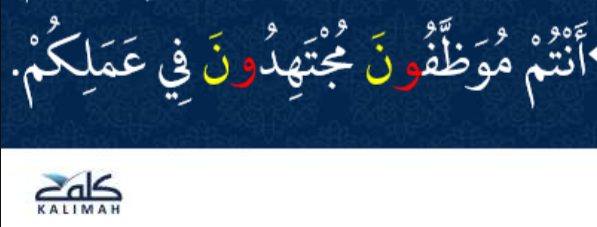
1. Example of Arabic Masculine Sound Plural in Nominative Case (رفع):
- موظفون مجتهدون
Hardworking employees.
2. Example of Arabic Masculine Sound Plural in Accusative Case (نصب):
- شكر الأستاذ الناجحين
The teacher thanked those who succeeded.

3. Example of Arabic Masculine Sound Plural in Genitive Case (جر):
- في الصادقين خير كثير
There’s a lot of good in honest people.

At Kalimah Center, we understand how to teach Arabic plurals. Our structured Arabic courses focus on step-by-step guidance. Former students say that our teaching methods make even the hardest grammar topics feel simple and fun.

Join us for a FREE trial class.
Experience Kalimah Center Classes
Watch real excerpts from our live sessions at Kalimah Center and see how we bring learning to life. These clips highlight our interactive, student-centered teaching approach across all our courses—designed to keep learners engaged, motivated, and actively involved every step of the way.
Master Arabic with Kalimah Center
Join our expert-led online classes and start your journey toward Arabic fluency today.
Book Your Free TrialFeminine Sound Plurals in Arabic
The Feminine Sound Plural (جمع المؤنث السالم – jam’ al-mu’annath al-salim) like its masculine counterpart, this plural follows a simple and predictable pattern. The feminine sound plural is formed by adding -ات (ʾāt) to the singular form of a noun or adjective.
For example:
- معلمة (muʿallimah – teacher) → معلمات (muʿallimāt – teachers).
- سيارة (sayyārah – car) → سيارات (sayyārāt – cars).
To use the feminine sound plural, the noun or adjective must fit one of the following categories:
1. Feminine Sound Plurals in Proper Nouns for Females
Commonly used with feminine names.
- زينب (Zaynab) → زينبات (Zaynabāt – group of women named Zaynab).
2. Feminine Sound Plurals in Words Ending in Tāʾ Marbūṭah (ة)
Most nouns ending in ة take this plural form.
- طالبة (ṭālibah – female student) → طالبات (ṭālibāt – female students).
Though there are exceptions like امرأة (imraʾah – woman), which forms نساء (nisāʾ).
3. Feminine Sound Plurals in Words with Feminine Alif Maqṣūrah (ى)
If the word is a tripartite root, the ى may revert to its original letter (either ي or و).
- Example: ذكرى (dhikrā – memory) → ذكريات (dhikrayāt – memories).
4. Feminine Sound Plurals in Words Ending in Feminine Alif Mamdūda (اء)
When اء is part of the feminine form, it often shifts to وات.
- صحراء (ṣaḥrāʾ – desert) → صحراوات (ṣaḥrāwāt – deserts).
Inflection of Feminine Sound Plurals in Arabic
The ending changes slightly depending on the grammatical case of the word.
| Case | Ending | Example (معلمة) | Translation |
| Nominative | -اتٌ | معلماتٌ (muʿallimātun) | Teachers (subject) |
| Accusative | -اتٍ | معلماتٍ (muʿallimātin) | Teachers (object) |
| Genitive | -اتٍ | معلماتٍ (muʿallimātin) | Teachers (after preposition) |
- Nominative: المعلماتُ محبوباتٌ (al-mu’allimātu maḥbūbātun) – “The teachers (female) are loved.”
- Accusative: رأيت المعلماتِ (raʾaytu al-mu’allimāti) – “I saw the teachers (female).”
- Genitive: سلمت على المعلماتِ (sallamtu ʿalā al-mu’allimāti) – “I greeted the teachers (female).”
Read Also: Arabic Grammar
Broken Plural in Arabic
Broken plurals in Arabic جمع التكسير (jamʿ at-taksīr) involve changes to the internal structure of the singular noun. These internal changes can involve adding, removing, or altering letters, as well as shifting the vowel patterns.
This flexibility gives Arabic broken plurals their name, as the singular form is metaphorically “broken” to form the plural.
A broken plural in Arabic is used for both animate and inanimate objects, and its formation often reflects rich linguistic nuances tied to the word’s root and meaning.
How Are Arabic Broken Plurals Formed?
Broken plurals in Arabic are formed through three primary mechanisms:
1. Broken plurals in Arabic are formed by Addition of Letters
Extra letters are added to the singular noun.
قلب (qalb, “heart”) → قلوب (qulūb, “hearts”).
2. Broken plurals in Arabic are formed by Removal of Letters
Some letters are removed from the singular noun.
رَسُولٌ (rasūl – messenger) becomes رُسُلٌ (rusul – messengers).
3. Broken plurals in Arabic are formed by Change in Vowel Pattern
The vowels within the word are altered.
أَسَد (asad, “lion”) → أُسُد (usud, “lions”).
Case Marking in Arabic Broken Plurals
Broken plurals in Arabic follow classical Arabic case marking:
- Nominative (الرفع): Ends in ضمة (Damma, ُ)
- Accusative (النصب): Ends in فتحة (Fatha, َ)
- Genitive (الجر): Ends in كسرة (Kasra, ِ)
For example:
| Pattern | Singular | Plural (Nominative) | Plural (Accusative) | Plural (Genitive) |
| فِعَال | جبل | جبالٌ (jibālun) | جبالًا (jibālan) | جبالٍ (jibālin) |
| فُعُول | قلب | قلوبٌ (qulūbun) | قلوبًا (qulūban) | قلوبٍ (qulūbin) |
Arabic Plural Patterns
Arabic Broken plurals are divided into Plural of Fewness (جمع القلة) and Plural of Abundance (جمع الكثرة). Additionally, the “Ultimate Plural” (منتهى الجموع) offers advanced linguistic structures. Below, we will explore these Arabic plural patterns.
1. Arabic Patterns for Plural of Fewness (جمع القلة)
The plural of fewness is used for quantities ranging from three to ten. It has four primary patterns:
| Pattern | Examples |
| أَفْعِلَة | أشرطة (ashriṭa, tapes), أقمصة (aqmiṣa, shirts) |
| أَفْعُل | أوجه (awjuh, faces), أنفس (anfus, souls) |
| أَفْعَال | أقفال (aqfāl, locks), أقلام (aqlām, pens) |
| فِعْلَة | صبية (ṣibya, young boys), فتية (fitya, youths) |
2. Arabic Patterns for Plural of Abundance (جمع الكثرة)
Arabic plural of abundance denotes numbers greater than three, extending indefinitely. It encompasses numerous patterns:
| Pattern | Examples |
| فُعْل | بُكْم (bukm, mute), حمر (ḥumr, red) |
| فُعُل | كتب (kutub, books), سفن (sufun, ships) |
| فُعَل | غُرَف (ghuraf, rooms), لُعب (luʿab, toys) |
| فِعَل | قِطَع (qiṭaʿ, pieces), حِجج (ḥijaj, arguments) |
| فَعَلَة | خدَمَة (khadama, servants), كتبة (kataba, scribes) |
| فُعَلَة | قضاة (quḍāt, judges), غزاة (ghuzāt, raiders) |
| فِعَلَة | دِبَبَة (dibaba, bears), قردة (qirada, monkeys) |
| فَعْلى | مَرْضى (marḍā, patients), جرحى (jarḥā, wounded) |
| فُعَّل | رُكَّع (rukkaʿ, bowing ones), خشع (khushʿ, humble ones) |
| فُعّال | قُرّاء (qurrāʾ, reciters), حُجّاج (ḥujjāj, pilgrims) |
| فِعَال | كرام (kirām, generous), جبال (jibāl, mountains) |
| فُعُول | قلوب (qulūb, hearts), عقول (ʿuqūl, intellects) |
| فَعِيل | حَجِيج (ḥajīj, pilgrims) |
| فِعْلان | غلمان (ghilmān, young boys), فتيان (fatīyān, lads) |
| فُعَلاء | بخلاء (bukhalaʾ, stingy ones), شرفاء (shurafāʾ, nobles) |
3. Arabic Patterns for Ultimate Plural (منتهى الجموع)
The “Ultimate Plural” includes patterns with specific characteristics.
| Pattern | Examples |
| مفاعل | مساجد (masājid, mosques), مخابز (makhābiz, bakeries) |
| مفاعيل | مصابيح (maṣābīḥ, lamps), مفاتيح (mafātīḥ, keys) |
| فواعل | جواهر (jawāhir, jewels), خواتم (khawātim, rings) |
| فعائل | رسائل (rasāʾil, letters), سحائب (saḥāʾib, clouds) |
| تفاعيل | تسابيح (tasābīḥ, praises), تقاسيم (taqāsīm, sections) |
Arabic Singular and Plural Words List
In Arabic, plurals are more complex than in English because they aren’t always formed by just adding a suffix. There are three main types: Sound Masculine, Sound Feminine, and the irregular Broken Plurals.
1. The Regular “Sound” Plurals
These are formed by keeping the singular word intact and adding a specific ending.
| Singular (Male) | Plural (Male) | Meaning | Singular (Female) | Plural (Female) | Meaning |
| Muslim (مسلم) | Muslimun | Muslims | Muslimah (مسلمة) | Muslimat | Muslims (f) |
| Mu’allim (معلم) | Mu’allimun | Teachers | Mu’allimah (معلمة) | Mu’allimat | Teachers (f) |
| Muhandis (مهندس) | Muhandisun | Engineers | Muhandisah (مهندسة) | Muhandisat | Engineers (f) |
| Tabbakh (طباخ) | Tabbakhun | Cooks | Tabbakhah (طباخة) | Tabbakhat | Cooks (f) |
2. Common Broken Plurals (Irregular)
Broken plurals change the internal structure of the word (like “man” becoming “men”). These are very common and usually have to be memorized.
| Singular | Plural | Meaning | Pattern Name (Ref) |
| Kitab (كتاب) | Kutub (كتب) | Books | Fu’ul |
| Qalam (قلم) | Aqlam (أقلام) | Pens | Af’al |
| Walad (ولد) | Awlad (أولاد) | Boys/Children | Af’al |
| Bayt (بيت) | Buyut (بيوت) | Houses | Fu’ul |
| Rajul (رجل) | Rijal (رجال) | Men | Fi’al |
| Madrasah (مدرسة) | Madaris (مدارس) | Schools | Mafa’il |
| Talib (طالب) | Tullab (طلاب) | Students | Fu’al |
| Qalb (قلب) | Qulub (قلوب) | Hearts | Fu’ul |
| Madinah (مدينة) | Mudun (مدن) | Cities | Fu’ul |
Master Arabic with Kalimah Center
Join our expert-led online classes and start your journey toward Arabic fluency today.
Book Your Free TrialInside Kalimah Center: Moments from Our Courses
Get a glimpse into the vibrant learning experience at Kalimah Center. These snapshots capture real moments from our live classes—where students engage deeply, connect with passionate instructors, and grow in a welcoming, supportive environment.
Here Are The Reviews On Our Courses:
Our students frequently commend the excellence of our courses and the commitment shown by our instructors. You can read their complete reviews on Trustpilot.

Why Learn Plurals with Kalimah Center?
At Kalimah Center, we offer online Arabic courses that make learning plurals easy and enjoyable.
Our experienced teachers will simplify the rules and patterns of Arabic plurals, making them easy to understand.
You’ll practice forming plurals through interactive activities and real-life examples, ensuring you grasp the concepts fully.
We’ll show you how to use plurals correctly in different contexts, building your confidence in speaking and writing.

And consider joining our group Arabic classes
Our small class sizes allow for individual attention and feedback, ensuring you progress at your own pace.
And they are 4x cheaper than private lessons.
📚 Explore Our Courses:
Online Arabic Course: Tailored to your level, our comprehensive Arabic program includes 16 teaching levels and 400+ hours of personalized sessions.
Online Quran With Tajweed Course: Perfect for non-Arabic speakers, our course spans 13 levels and equips you with Tajweed mastery from beginner to advanced.
Online Arabic Course For Kids: Nurture your child’s love for Arabic with our engaging and structured program, available in 24 levels for primary, intermediate, and secondary stages.
🚀 Start Your Free Trial Today! 🚀
Don’t miss out on this life-changing opportunity to deepen your faith and knowledge. Sign up now for your free trial and take the first step towards becoming a better practicing Muslim with Kalimah Center!

Conclusion:
Arabic plurals, or جمع (al-jam’), are formed through different types that are crucial to the language’s syntax and morphology. The three main types are the Sound Masculine Plural, Sound Feminine Plural, and Broken Plural.
Sound plurals follow predictable patterns where suffixes or endings are added to nouns or adjectives, such as -ūn for the masculine nominative plural and -āt for the feminine plural. In contrast, broken plurals involve altering the internal structure of the word by changing vowel patterns or adding/removing letters, making them more complex.
These forms are influenced by both grammatical cases (nominative, accusative, genitive) and their usage in different contexts.
The formation of plurals is governed by a range of patterns, especially in broken plurals, which are divided into “plural of fewness” and “plural of abundance,” depending on the quantity indicated.
FAQs about Plurals In Arabic
What are the three main types of plurals in Arabic?
The three main types of Arabic plurals (الجمع al-jam’) are Sound Masculine Plural (جمع المذكر السالم), Sound Feminine Plural (جمع المؤنث السالم), and Broken Plural (جمع التكسير). Sound plurals maintain their singular root and add suffixes, while broken plurals modify the internal letter or vowel structure of the original singular noun.
How do you form a Sound Masculine Plural in Arabic?
To form a Sound Masculine Plural (جمع المذكر السالم), add the suffix -ونَ (-ūn) in the nominative case (رفع), or -ينَ (-īn) in the accusative (نصب) and genitive (جر) cases. It is reserved exclusively for rational masculine entities, proper nouns, or adjectives, keeping the original singular stem completely intact.
What is the grammatical case ending rule for Sound Feminine Plurals?
Sound Feminine Plurals (جمع المؤنث السالم) are formed by adding the suffix -ات (-āt). Unlike other plurals, their inflection drops the standard Fatha marker. They take a Damma (-اتٌ -ātun) in the nominative case, but use a Kasra (-اتٍ -ātin) for both the accusative and genitive cases.
What is a broken plural in Arabic grammar and how is it formed?
An Arabic Broken Plural (جمع التكسير) is an irregular plural that alters the internal shape of a singular noun. It is formed through three morphology (Sarf) mechanisms: adding letters (e.g., qalb to qulūb), removing letters (e.g., rasūl to rusul), or changing the internal vowel patterns (e.g., asad to usud).
What is the difference between Plural of Fewness and Plural of Abundance?
In Arabic morphology, the Plural of Fewness (جمع القلة) applies strictly to quantities ranging from three to ten, utilizing four precise structural patterns like Af’āl. The Plural of Abundance (جمع الكثرة) denotes quantities greater than ten up to infinity, utilizing a vast array of internal patterns like Fu’ul and Fi’āl.