Harakat (حَرَكَات) are the short vowel marks of Arabic — small symbols placed above or below letters to show pronunciation. Tashkeel (تَشْكِيل) is the broader system that includes harakat plus other diacritical marks like Sukoon and Shadda.
Together, there are 8 tashkeel marks in Arabic. They appear in the Quran, children’s books, and learning materials — but are omitted in everyday writing, where readers supply pronunciation from vocabulary knowledge.
✅ Complete Harakat Reference Table:
| # | Name | Arabic | Mark | Sound | Position | Example |
|---|---|---|---|---|---|---|
| 1 | Fatha | فَتْحَة | ـَ | Short “a” | Above letter | بَ = “ba” |
| 2 | Kasra | كَسْرَة | ـِ | Short “i” | Below letter | بِ = “bi” |
| 3 | Damma | ضَمَّة | ـُ | Short “u” | Above letter | بُ = “bu” |
| 4 | Sukoon | سُكُون | ـْ | No vowel | Above letter | بْ = “b” (stopped) |
| 5 | Shadda | شَدَّة | ـّ | Doubled consonant | Above letter | بّ = “bb” |
| 6 | Tanwin Fath | تنوين فتح | ـً | “an” sound | Above final letter | كِتَابًا = “kitaban” |
| 7 | Tanwin Kasr | تنوين كسر | ـٍ | “in” sound | Below final letter | كِتَابٍ = “kitabin” |
| 8 | Tanwin Damm | تنوين ضم | ـٌ | “un” sound | Above final letter | كِتَابٌ = “kitabun” |
But what exactly are harakat, tashkeel, and diacritics? Are they the same thing? And why do they matter so much when learning Arabic?
I will break down these important aspects of the Arabic language. As a native Arabic speaker, I can tell you that harakat and tashkeel are the heart of reading Arabic fluently.
We will also explore insights from Ustadh Hamada Muhammad, the head of the Arabic teaching department at Kalimah Center, to give you the best tips for mastering these elements.
What are Harakat, Tashkeel, and Diacritics in Arabic?
Harakat (حَرَكَات) — literally meaning “movements” in Arabic — are the short vowel marks placed above or below Arabic letters to show how they should be pronounced. Without them, Arabic text shows only consonants, leaving readers to supply vowel sounds from vocabulary knowledge.
Tashkeel (تَشْكِيل) — meaning “formation” or “shaping” — is the broader system that includes harakat plus other marks like Sukoon (no vowel) and Shadda (doubled consonant).
The term diacritics is often used to refer to both harakat and tashkeel in a more general sense. But are they all the same? Let’s take a closer look.
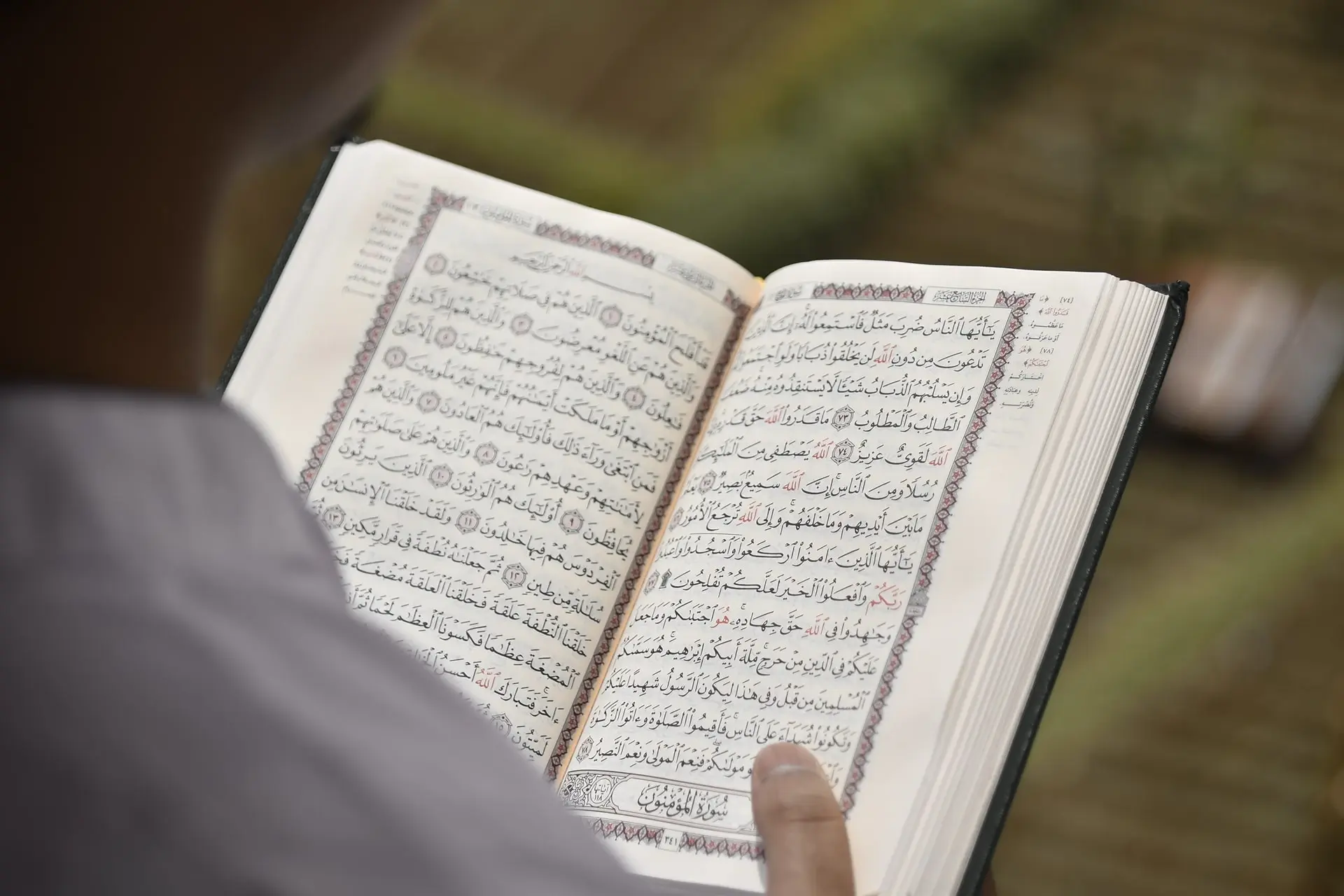
Together, these marks are what allow any reader — native or learner — to pronounce Arabic text exactly correctly. This is why the Quran, revealed in Arabic, uses complete tashkeel throughout: every word is marked precisely to preserve the exact pronunciation as it was revealed.
The Difference Between Arabic Harakat, Tashkeel, and Diacritics
Many people use the terms harakat, tashkeel, and diacritics as if they are the same. But let me explain the slight difference.
In simple terms, harakat are a part of tashkeel, and both are types of diacritics. So yes, they are unique but also related.
Harakat Meaning: What Does the Word “Harakat” Mean?
The word harakat (حَرَكَات) is the plural of haraka (حَرَكَة), which means “movement” or “motion” in Arabic. This name reflects the physical articulation of vowels — producing a vowel sound requires movement of the mouth, tongue, and lips, unlike producing a consonant with a sukoon (where the articulation stops).
In linguistic terms, harakat means: the diacritical vowel marks of the Arabic alphabet — specifically Fatha, Kasra, and Damma — that indicate short vowel sounds.
In everyday Arabic usage, “harakat” can mean both “movements” (as in political or social movements — حركات سياسية, harakat siyasiyya) and “vowel marks” depending on context. When Arabic speakers discuss language learning, “harakat” always refers to the diacritical marks.
Harakat meaning in different languages:
| Language | How “Harakat” is referenced | Translation |
|---|---|---|
| English | Harakat / diacritical marks / vowel marks | Movement → vowel marks |
| Urdu | حرکات (same term, adopted from Arabic) | Zabar/Zer/Pesh in Urdu usage |
| Persian | حرکات (same term) | Vowel marks |
| Turkish | Hareke (adapted form) | Vowel marks |
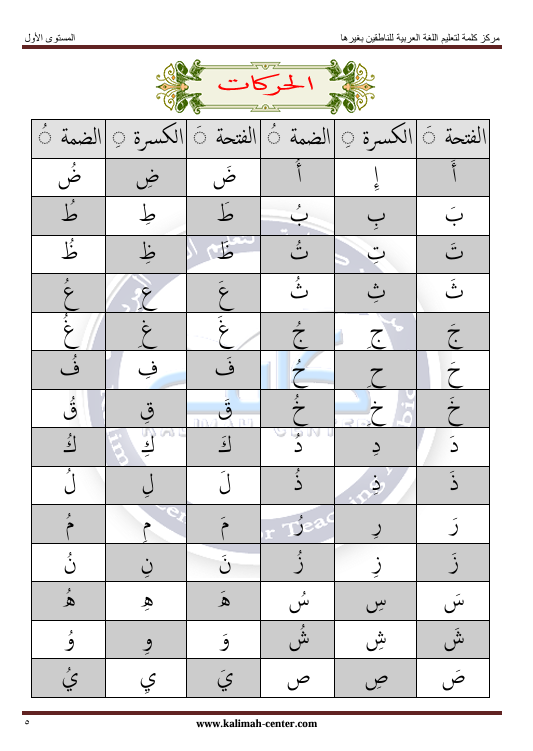
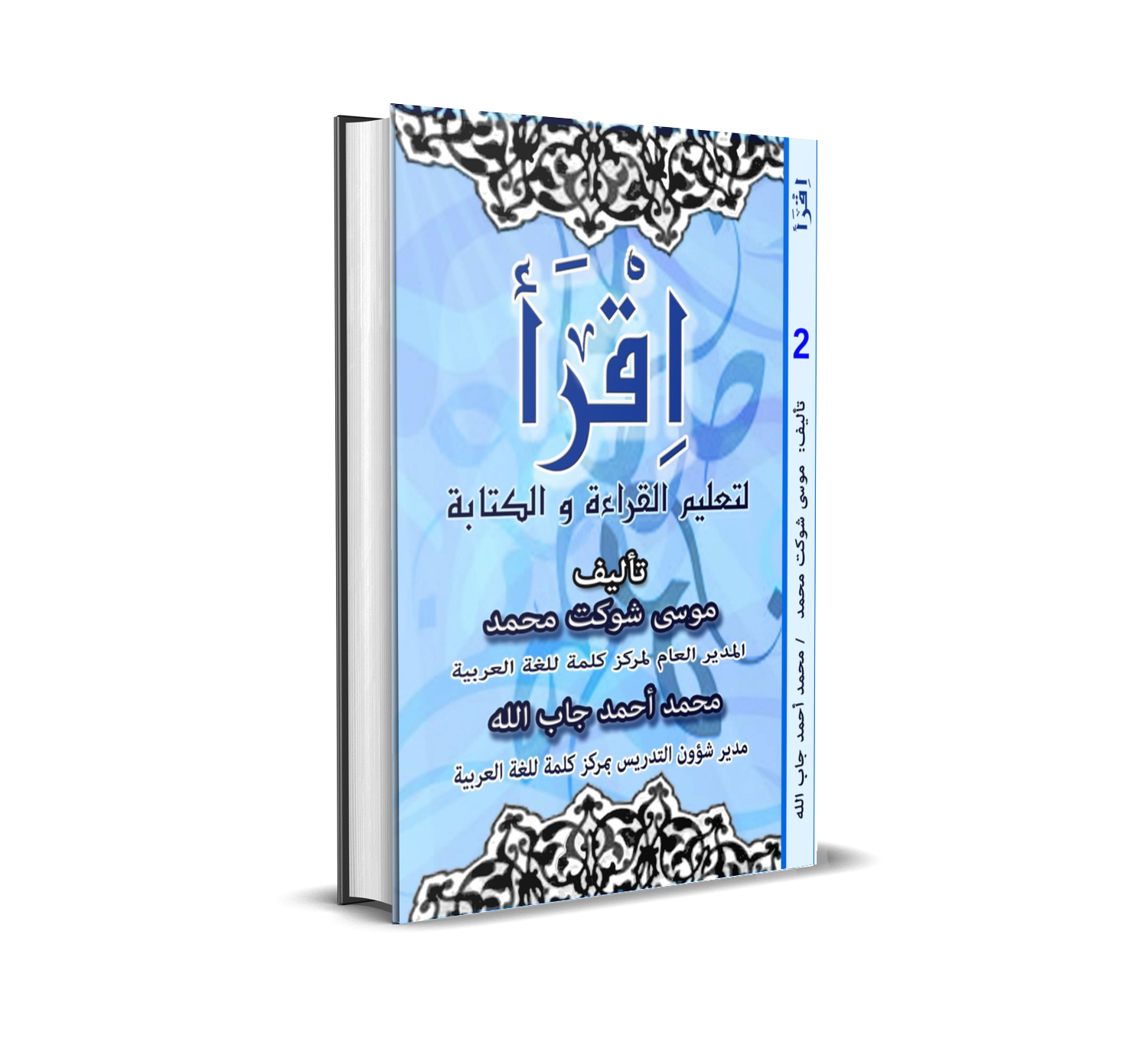
* From Kalimah’s Iqraa book, the key resource we use in our online Arabic course.
Listen and watch the Arabic alphabet Song from here.
How Many Harakat Are in Arabic?
The direct answer: Arabic has 3 main harakat (Fatha, Kasra, Damma) and 8 total tashkeel marks when the full diacritical system is counted.
| Count | What Is Included |
|---|---|
| 3 harakat | Fatha, Kasra, Damma — the short vowel marks only |
| 5 core tashkeel | Add Sukoon and Shadda to the 3 harakat |
| 8 total tashkeel | Add the 3 Tanwin forms (Tanwin Fath, Tanwin Kasr, Tanwin Damm) |
Why different sources give different numbers:
- Some sources say “3 harakat” — counting only the short vowel marks (Fatha, Kasra, Damma)
- Some say “5” — adding Sukoon and Shadda
- Some say “8” — adding all three Tanwin forms
- Some say “more” — when including Hamza variants and other specialised marks
For learners: Start with 3 (Fatha, Kasra, Damma). Add Sukoon and Shadda as step 2. Add Tanwin when studying Arabic grammar or Quranic recitation. This is the sequence Ustadh Hamada uses at Kalimah Center.
What Is Arabic Tashkeel?
Tashkeel (تشكيل) refers to the system of diacritical marks in Arabic, which include not just the harakat but also other marks that clarify pronunciation. Tashkeel helps readers know how to pronounce words, especially in classical texts like the Quran, where meanings change without proper tashkeel.
The most common tashkeel marks include:
- Sukun (سُكُون) – a small circle placed above a letter, indicating the absence of a vowel.
Example: مْ (m) – “m”. - Shadda (شَدَّة) – a small “w” shape placed above a letter, indicating that the letter is doubled or emphasized.
Example: مّ (mm) – “mm”.
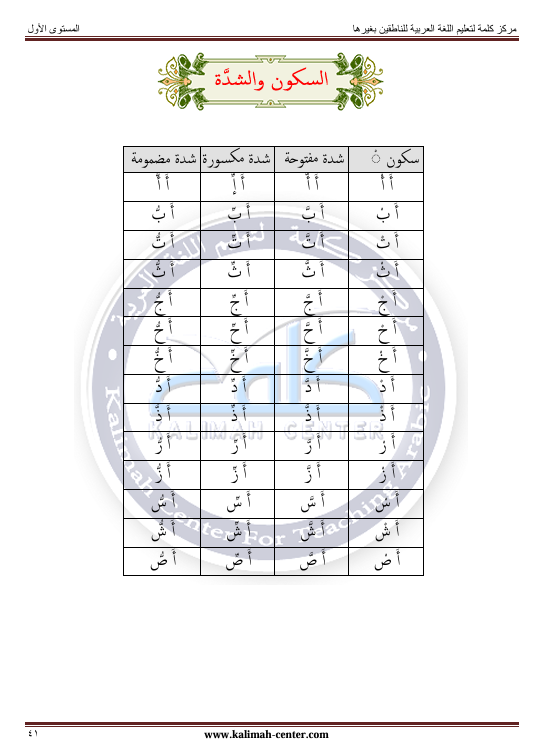
* From Kalimah’s Iqraa book that is used in our online Arabic course.
Tashkeel vs Harakat: What Is the Difference?
This is one of the most searched questions about Arabic diacritical marks — and the answer is simpler than it seems.
The relationship:
Tashkeel (التشكيل) — the full system
├── Harakat (الحركات) — short vowels [Fatha, Kasra, Damma]
├── Sukoon (السكون) — no vowel mark
├── Shadda (الشدة) — consonant doubling
└── Tanwin (التنوين) — indefinite noun markers
Simply: Harakat are a subset of tashkeel. All harakat are tashkeel, but not all tashkeel are harakat.
| Term | What It Covers | Example Marks |
|---|---|---|
| Harakat | Short vowels only | Fatha (ـَ), Kasra (ـِ), Damma (ـُ) |
| Tashkeel | All diacritical marks | Harakat + Sukoon + Shadda + Tanwin |
| Diacritics | General term (any language) | All Arabic tashkeel + diacritics in other languages |
In practice: Most Arabic teachers and learners use “harakat” and “tashkeel” interchangeably in conversation — both terms are understood to refer to the vowel marking system generally. The technical distinction matters in formal linguistic discussion and advanced grammar study.
Experience Kalimah Center Classes
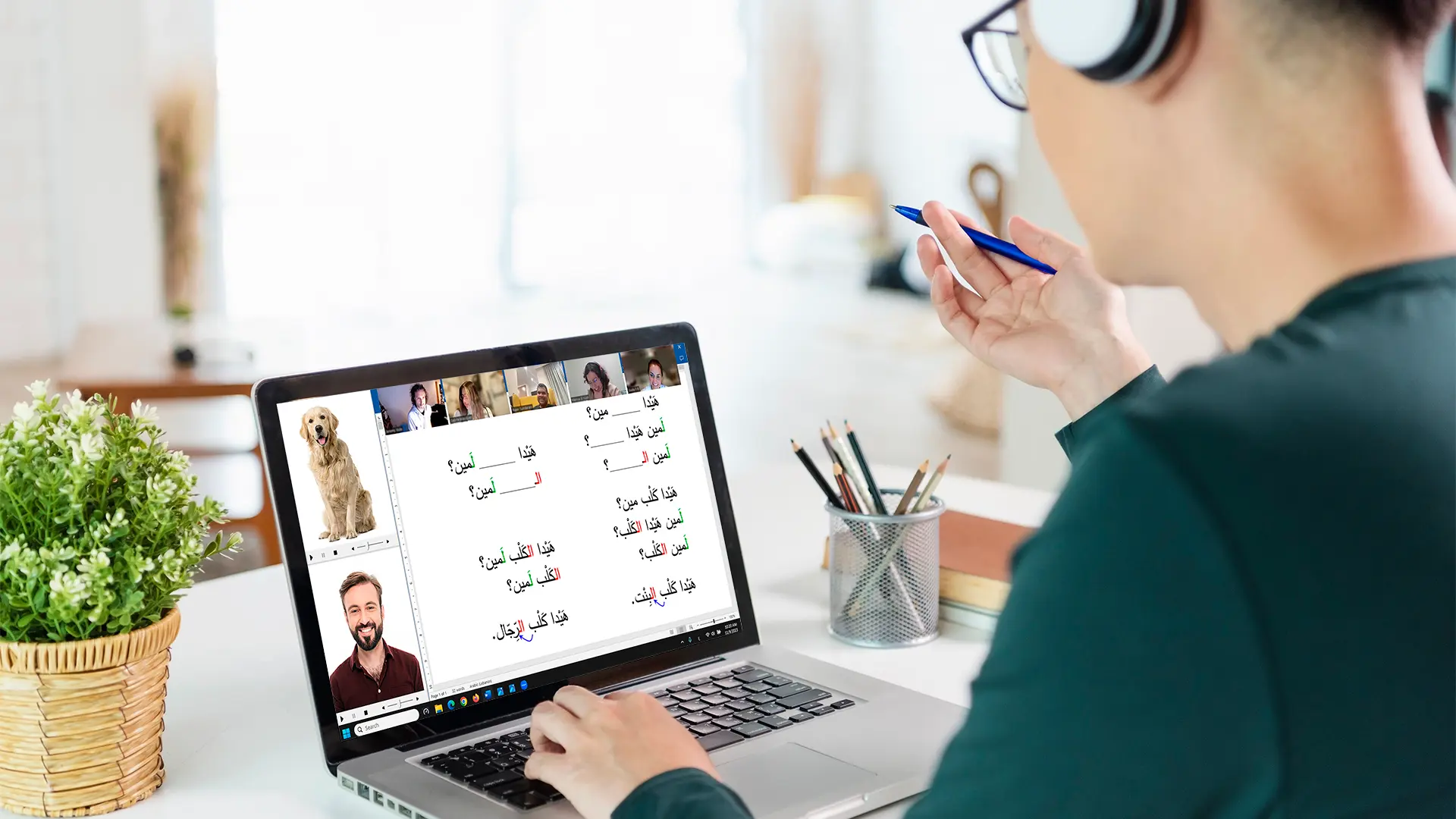
Watch real excerpts from our live sessions at Kalimah Center and see how we bring learning to life. These clips highlight our interactive, student-centered teaching approach across all our courses—designed to keep learners engaged, motivated, and actively involved every step of the way.
Master Arabic with Kalimah Center
Join our expert-led online classes and start your journey toward Arabic fluency today.
Book Your Free TrialWhat are Diacritics in Arabic?
In general, diacritics refer to any marks placed on or around letters to indicate pronunciation, not just in Arabic but in other languages too. In Arabic, diacritics include both harakat and tashkeel.
Arabic Diacritics: Are They Unique?
While harakat and tashkeel are specific to Arabic, diacritics (the general term for these symbols) are not unique to Arabic. Many languages, including French and Spanish, use diacritics to indicate different sounds. However, in Arabic, diacritics are far more critical because, without them, the meaning of a word can completely change.
For example:
- عَلِمَ (alima) – means “he knew.”
- عُلِمَ (ulima) – means “it was known.”
This is why diacritics in Arabic are essential, especially for beginners.
Harakat in English: What the Arabic Marks Are Called
Learners who encounter Arabic harakat in English-language resources may encounter several different terms for the same marks:
| Arabic Term | English Equivalents | What It Means |
|---|---|---|
| فَتْحَة (Fatha) | Fatha / Fathah / Short “A” | Short “a” vowel mark |
| كَسْرَة (Kasra) | Kasra / Kasrah / Short “I” | Short “i” vowel mark |
| ضَمَّة (Damma) | Damma / Dammah / Short “U” / Pesh (Urdu) | Short “u” vowel mark |
| سُكُون (Sukoon) | Sukoon / Sukun / Jazm | Absence of vowel |
| شَدَّة (Shadda) | Shadda / Shaddah / Tashdeed | Consonant doubling |
| تَشْكِيل (Tashkeel) | Tashkeel / Tashkil / Diacritics / Vocalization | The full marking system |
| حَرَكَات (Harakat) | Harakat / Harakaat / Vowel marks | Short vowel marks |
For the Quran: The system used in Quranic manuscripts is sometimes called tashkeel al-Quran (تشكيل القرآن) or vocalization of the Quran.
Why Harakat and Tashkeel Are Essential: How One Mark Changes Everything
Imagine you are reading a book in English with all the vowels removed. Could you understand it? Probably not. The same goes for Arabic. Arabic diacritics give clarity to the words and make it possible for beginners to pronounce them correctly. Without them, reading Arabic becomes much harder, especially for non-native speakers.
Here’s an example of the importance of diacritics:
- كتب
Without diacritics, this word can be read in many ways: kataba (he wrote), kutiba (it was written), or Kutub (books). - كَتَبَ (kataba) – He wrote
- كُتِبَ (kutiba) – It was written
- كُتُب (Kutub) – Books
As you can see, the harakat completely change the word’s meaning. Without diacritics, even advanced learners can misunderstand a sentence, especially if they are still practicing.
Learning to read Arabic with harakat gives you a solid foundation in the language.
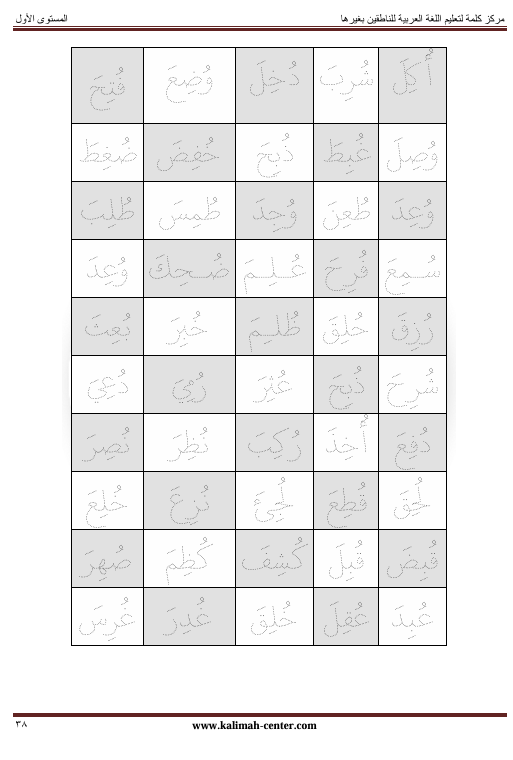
This is why we, at Kalimah Center, stress the importance of harakat from the very beginning. In our courses, we focus on building a solid foundation in understanding and using tashkeel and harakat through exercises and structured lessons, particularly in the Iqraa book. This book has been carefully chosen as it emphasizes harakat practice.
For example, this is an exercise from the Iqraa book to help students trace the 3 harakat in words while pronouncing it.
Join us for a FREE trial class and see if Kalimah is the right fit for you.
All 8 Arabic Tashkeel Marks: Vowels, Sukoon, Shadda, and Tanwin
Arabic tashkeel divides into four functional categories:
1. Short Vowel Marks (الحركات القصيرة) — 3 marks
These indicate which vowel sound follows a consonant:
- Fatha (ـَ) — short “a” sound — بَ = “ba”
- Kasra (ـِ) — short “i” sound — بِ = “bi”
- Damma (ـُ) — short “u” sound — بُ = “bu”
2. Absence of Vowel — 1 mark
- Sukoon (ـْ) — indicates no vowel follows the consonant — بْ = “b” (stopped)
3. Consonant Doubling — 1 mark
- Shadda (ـّ) — indicates the consonant is doubled/prolonged — بّ = “bb”
- Shadda combines with vowel marks: بَّ = “bba,” بِّ = “bbi,” بُّ = “bbu”
4. Tanwin (indefinite noun markers) — 3 marks
Tanwin adds an “n” sound to the end of indefinite nouns:
- Tanwin Fath (ـً) — “an” sound — كِتَابًا = “kitaban”
- Tanwin Kasr (ـٍ) — “in” sound — كِتَابٍ = “kitabin”
- Tanwin Damm (ـٌ) — “un” sound — كِتَابٌ = “kitabun”
Total: 8 tashkeel marks. The three main harakat (Fatha, Kasra, Damma) are the most common. Sukoon and Shadda are essential for correct pronunciation of consonant clusters and geminate consonants. Tanwin marks indefinite nouns in grammar.
How to Read Arabic With Harakat?
To read Arabic with Harakat, it’s important to know where each mark goes and how it affects the pronunciation of the letter. At Kalimah Center, we teach students step-by-step how to read Arabic using Harakat. We start by focusing on each letter of the Arabic alphabet and showing where the Harakat should be placed.
Arabic Alphabet Letters with Harakat
Learning the Arabic alphabet with harakat is the first step to becoming fluent. As Ustadh Hamada Muhammad, one of our expert native Arabic teachers and the supervisor of the Arabic for Adults department at Kalimah, suggests,
“Students should start by focusing on the three aspects of each letter: its name, its sound, and its shape.”
Hamada’s Expert Advice:
- Step 1: Names
Write the names of the letters in large letters, both in Arabic and in your native language. For example, ألف (Alif), باء (Baa), تاء (Taa). - Step 2: Shapes
Practice writing each letter in its different forms: isolated, at the beginning, in the middle, and at the end of words. - Step 3: Sounds
Start with the fatha, the easiest harakat, and practice pronouncing the letters with it. For example, بَ (ba), تَ (ta). This will help reinforce the letter’s shape and sound.
Practice Harakat With a Native Arabic Teacher — First Lesson Free
Ustadh Hamada’s method — learning letter names, shapes, and sounds in sequence while practicing with Fatha first — is the approach Kalimah Center uses with every new student.
Reading about harakat builds knowledge. Reading Arabic with harakat under a teacher who corrects your pronunciation in real time builds skill.
Kalimah Center’s free trial lesson applies exactly the method described in this article — in a live, interactive session with a qualified native Arabic teacher.
No payment required. No commitment. One free lesson.
Master Arabic with Kalimah Center
Join our expert-led online classes and start your journey toward Arabic fluency today.
Book Your Free TrialHow to Read Arabic Without Harakat?
Once you master reading Arabic with harakat, you will gradually move to texts without them. Native speakers often read without harakat because they know the words by context and familiarity. However, for beginners, reading without harakat can be challenging.
This is why starting with harakat is crucial for non-native speakers.
Over time, with practice, you will start recognizing words without needing the harakat. This is how native speakers and advanced learners read. It’s important to practice both, but always start with harakat as they are your training wheels.
What is Harakat in Tajweed?
In tajweed, the rules of pronunciation are precise. The harakat play a significant role here because they ensure every vowel and letter is pronounced correctly. For example, a small mistake in the fatha (َ) or damma (ُ) can change the meaning of a Quranic verse.
Example:
In Surah Al-Baqarah, verse 127,
“وَإِذْ يَرْفَعُ إِبْرَاهِيمُ الْقَوَاعِدَ مِنَ الْبَيْتِ وَإِسْمَاعِيلُ رَبَّنَا تَقَبَّلْ مِنَّا ۖ إِنَّكَ أَنتَ السَّمِيعُ الْعَلِيمُ”
Consider the phrase “وَإِسْمَاعِيلُ” (wa-ʾIsmāʿīlu) from Surah Al-Baqarah, verse 127. The word “ʾIsmāʿīlu” (Ishmael) concludes with a damma ( ُ ), indicating a nominative case. This grammatical marking signifies that Ishmael is the subject of the sentence, actively participating alongside Prophet Abraham in raising the foundations of the House (the Kaaba).
However, if the damma were mistakenly replaced with a fatha ( َ ), the word would become “إسماعيلَ” “ʾIsmāʿīla,” shifting its grammatical case to accusative. This alteration drastically changes the meaning, implying that Ismael is the object of the verb “raising,” suggesting that Abraham is raising both the foundations and Ismael himself.
This is why learning tajweed with harakat is essential for proper recitation.
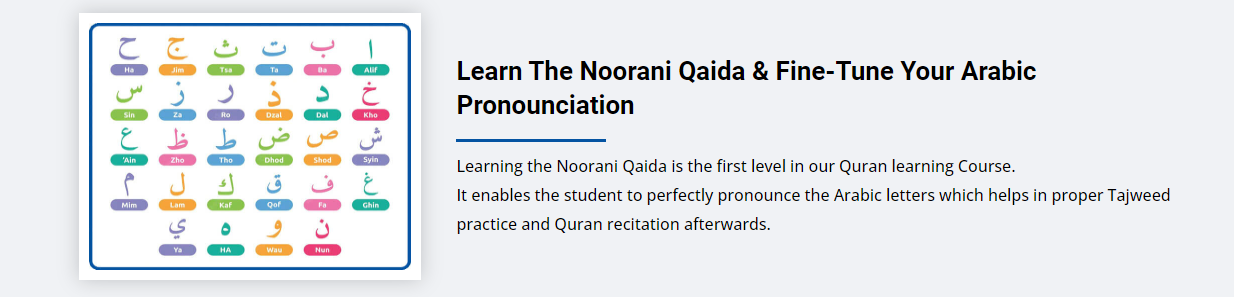
If you’re looking to perfect your pronunciation and build a strong foundation in Tajweed, consider our Online Quran & Tajweed Learning Courses. Our Noorani Qaida level is the perfect starting point, guiding you through the precise articulation of Arabic letters with the harakat, setting the stage for flawless Tajweed and beautiful Quran recitation.
Try a FREE trial class.
Who Put Harakat in the Quran?
Abu al-Aswad al-Du’ali was the first to introduce diacritical marks (including harakat) in the Quran. However, his system was primarily for pronunciation and grammatical guidance. The system of diacritical marks we see in the Quran today, including the specific shapes for harakat (fatha, kasra, damma) and dots for letter differentiation, was developed by al-Khalil ibn Ahmad al-Farahidi.
So, while Abu al-Aswad al-Du’ali pioneered the use of diacritical marks, al-Khalil ibn Ahmad al-Farahidi refined and standardized the system, including the harakat, that we use today.
Master Arabic with Kalimah Center
Join our expert-led online classes and start your journey toward Arabic fluency today.
Book Your Free TrialInside Kalimah Center: Moments from Our Courses
Get a glimpse into the vibrant learning experience at Kalimah Center. These snapshots capture real moments from our live classes—where students engage deeply, connect with passionate instructors, and grow in a welcoming, supportive environment.
Here Are The Reviews On Our Courses:
Our students frequently commend the excellence of our courses and the commitment shown by our instructors. You can read their complete reviews on Trustpilot.

Want to truly master Arabic harakat, tashkeel, and diacritics?
Reading about it is a great start, but at Kalimah Center, we’ll help you put that knowledge into action!
Through structured Arabic courses and the expert guidance of teachers like Hamada, you will be able to read, write, and speak Arabic with confidence.
At Kalimah Center, students in the first two levels of our Arabic courses are trained in recognizing the different shapes of letters and practicing them with harakat.
Our online Arabic courses will help you:
- Read and write Arabic with confidence.
- Understand how harakat change word meanings.
- Speak Arabic with correct pronunciation.
Our courses:
- Learn Arabic Online For adults. Talk Arabic easy!
- Learn Arabic for Kids: Fun way for kids to learn.
- Learn Quran & Tajweed Online: Read Quran right. Understand it better!
Join us for a FREE trial class today! You’ll see how Kalimah Center can help you learn Arabic with harakat and tashkeel quickly and easily.

Conclusion: Harakat and Tashkeel — The Voice of Written Arabic
Arabic written without harakat is a skeleton — grammatically present but phonetically silent. Harakat and tashkeel are what give it voice: the Fatha opens the vowel, the Kasra closes it, the Damma rounds it, the Sukoon stops it, and the Shadda doubles it.
The eight marks of tashkeel — mastered in sequence, practiced with structured exercises, applied first in the Quran and then in all Arabic reading — are the foundation of accurate Arabic pronunciation.
Your harakat learning sequence:
| Stage | Focus | Marks |
|---|---|---|
| Stage 1 | Short vowels | Fatha, Kasra, Damma |
| Stage 2 | Consonant control | Sukoon, Shadda |
| Stage 3 | Grammar markers | Tanwin Fath, Tanwin Kasr, Tanwin Damm |
| Stage 4 | Application | Reading Quran with full tashkeel |
Next step: See the practical reference for all 28 Arabic letters with Fatha, Kasra, and Damma.
FAQs about Arabic Harakat, Tashkeel, and Diacritics
Q1: What does harakat mean in Arabic?
Harakat (حَرَكَات) is the plural of haraka (حَرَكَة), which means “movement” in Arabic. In linguistic usage, harakat refers to the short vowel diacritical marks of the Arabic alphabet — specifically Fatha (ـَ, short “a”), Kasra (ـِ, short “i”), and Damma (ـُ, short “u”). The name “movements” reflects the physical articulation of vowel sounds, which require active movement of the mouth and tongue — unlike consonants with Sukoon, where articulation stops.
Q2: What is the difference between harakat and tashkeel?
Harakat are a subset of tashkeel. Harakat refers specifically to the three short vowel marks: Fatha, Kasra, and Damma. Tashkeel is the broader system that includes harakat plus Sukoon (no vowel), Shadda (doubled consonant), and the three Tanwin forms (Tanwin Fath, Tanwin Kasr, Tanwin Damm) — eight marks total. In everyday conversation, most Arabic teachers and learners use the two terms interchangeably.
Q3: How many harakat are in Arabic?
There are 3 main harakat (Fatha, Kasra, Damma) and 8 total tashkeel marks when the complete diacritical system is counted. The 8 marks are: Fatha, Kasra, Damma, Sukoon, Shadda, Tanwin Fath, Tanwin Kasr, and Tanwin Damm. Different sources give different numbers depending on which marks they include in the count — 3, 5, or 8 are all technically correct depending on the scope.
Q4: Who put harakat in the Quran?
The introduction of diacritical marks in Arabic is attributed to two scholars. Abu al-Aswad al-Du’ali (died 688 CE) was the first to introduce vowel marks into Arabic text — using coloured dots to indicate pronunciation. Al-Khalil ibn Ahmad al-Farahidi (died ~786 CE) refined and standardised the system into the shaped marks (Fatha, Kasra, Damma) used today. The motivation was preserving correct Quranic pronunciation as the language spread to non-Arab Muslims who might otherwise mispronounce the sacred text.
Q5: What is tashkeel meaning?
Tashkeel (تَشْكِيل) comes from the Arabic root ش-ك-ل meaning “to shape” or “to form.” In the context of language, tashkeel means “the forming of letters” — specifically, the system of diacritical marks that shape how Arabic letters are pronounced. Tashkeel is sometimes called “vocalization” in English, as it adds vowel information to a script that otherwise shows only consonants.
Q6: Why is Arabic sometimes written without harakat?
Everyday Arabic writing — newspapers, books, websites, social media — omits harakat because native speakers recognise words from context and vocabulary knowledge without needing vowel marks. This is similar to how English readers understand “ths sntc s rdbl wtht vwls” from context. Harakat are included in the Quran (where exact pronunciation is sacred), children’s books and learning materials (where readers are still building vocabulary), and classical poetry (where precision is required).
Q7: What are harakat in Tajweed?
In Tajweed — the rules governing correct Quranic recitation — harakat are not optional pronunciation guides but obligatory specifications. Every Fatha, Kasra, and Damma must be produced with the correct articulation point (makhraj), correct duration, and correct quality. A Damma indicating the nominative case in grammar also specifies the exact vowel quality in recitation. Incorrect harakat in Quranic recitation can change meaning — as demonstrated by the example from Surah Al-Baqarah verse 127 in this article.