Learning Arabic in Kuwait is a very unique opportunity to surround oneself with the Gulf dialect, which mingles traditional and modern influences. Arabic is the official language and is widely used in everyday life, so there will be ample opportunities for practice.
Structured courses in the country’s renowned educational institutions and language centers are provided at every level of learning. In this course, as you progress with each passing day, you will also get a chance to learn about customs, history, and society in Kuwait.
Arabic is the official language of Kuwait, with Kuwaiti Arabic (a Gulf dialect) used in everyday conversation and Modern Standard Arabic (MSA) used in education, media, and government. Kuwait offers Arabic learning through universities (Kuwait University, AUK, GUST), private language centers (Berlitz, Aware Center, Arabic House Institute), and online platforms.
Course fees range from free (some university programs for enrolled students) to $3,000+ per semester, and the total annual cost of living and studying in Kuwait is approximately $15,000–$25,000.
Key Takeaway Table:
| Factor | Details |
|---|---|
| Official language | Arabic (Modern Standard Arabic) |
| Spoken dialect | Kuwaiti Arabic (Gulf Arabic family) |
| Other common languages | English (widely spoken), Hindi, Urdu, Filipino, Persian |
| Best institutions | Kuwait University, AUK, GUST, Berlitz, Aware Center |
| Course types | University programs, private centers, 1-on-1 tutoring, online |
| Tuition range | $1,000–$3,000/semester (university); varies for private centers |
| Annual living + study cost | $15,000–$25,000 |
| Visa requirement | Student visa or residency permit required for non-GCC nationals |
| Best for | Gulf dialect immersion, formal MSA study, cultural immersion |
Best Places To Learn Arabic In Kuwait
Prestigious universities and specialized language institutes in Kuwait can be rated as one of the best options to learn Arabic.
Due to its privileged position in the Gulf region, Kuwait is considered an ideal place for studying both Modern Standard Arabic and the local dialect, Kuwaiti.
The students can choose between one of many available official study programs, such as Kuwait University and the American University of Kuwait, or explore some less rigid courses in one of numerous private language schools.
| Institution | Type | Arabic Taught | Levels | Format | Est. Cost | Best For |
|---|---|---|---|---|---|---|
| Kuwait University | Public university | MSA + conversational | Beginner–Advanced | In-person, full-time | Free–$2,000/semester (varies by enrollment status) | Students seeking academic credit + degree programs |
| American University of Kuwait (AUK) | Private university | MSA | Beginner–Advanced | In-person, small classes | $1,000–$3,000/semester | Structured academic programs with English-medium support |
| GUST | Private university | MSA + practical communication | Beginner–Advanced | In-person, intensive + regular pace | $1,500–$3,000/semester | Students wanting flexible pacing options |
| Arab Open University (AOU) | Semi-public university | MSA + cultural studies | Beginner–Advanced | Blended (in-person + online) | $500–$1,500/semester | Budget-conscious students wanting flexibility |
| Berlitz Kuwait | Private language center | MSA + business Arabic | All levels | In-person or online | $30–$60/hour | Professionals needing business Arabic or corporate training |
| Aware Center | Cultural/language center | MSA + Kuwaiti dialect | All levels | In-person + online | $200–$800/course | Cultural immersion + dialect exposure |
| Arabic House Institute | Private language school | MSA + regional dialects | All levels | In-person (group + private) | $15–$40/hour | Learners wanting flexible private tutoring |
| iTalki / Preply / Verbling | Online platforms | MSA + various dialects | All levels | Online 1-on-1 | $5–$50/hour | Supplementary practice + budget learners |
Note: Prices are approximate as of 2025–2026 and may vary. Contact institutions directly for current rates.
1. Learn Arabic In Kuwait University for Non- Native Speakers
Kuwait University stands out for its Language Centre specifically designed for non-native speakers, offering conversation clubs and cultural events alongside coursework. Students pursuing degrees can combine Arabic study with undergraduate or postgraduate programs in Arabic Language and Literature.

2. American University Of Kuwait (AUK)
AUK is ideal for students who want an American-style academic environment with small class sizes (typically 15–20 students) and English as the administrative language, making the transition easier for Western students.

3. Gulf University For Science And Technology (GUST)
GUST differentiates itself with both intensive and regular-paced tracks — students can choose an accelerated timeline or a steadier pace based on their schedule and learning goals.

4. Arab Open University – Kuwait Branch
AOU offers the most affordable university-level Arabic courses in Kuwait, with a blended learning model that combines in-person sessions with online resources.

5. Berlitz Language Center
Berlitz uses its proprietary immersion method where 80% of class time is active speaking. Best suited for professionals who need rapid conversational ability, especially for business contexts.

6. Aware Center
Aware Center is the strongest option for learners specifically interested in Kuwaiti dialect alongside MSA, with a cultural immersion approach that extends beyond the classroom.

7. Arabic House Institute
Arabic House Institute offers the most flexible private lesson scheduling, making it ideal for learners with irregular work schedules or specific learning goals.

8. Online platforms like iTalki, Verbling, or Preply
iTalki, Verbling, and Preply have created niches for themselves online in offering flexible and personalized modes of learning the Arabic language.

These websites provide a platform for matching students with native qualified tutors for one-on-one lessons to meet areas of need and proficiency level.
Students can select from a big pool of tutors based on expertise, teaching style, and even on time availability for custom learning paces.
Prices vary between $5 and $50 per hour or even more, depending on the tutor’s qualifications and experience.
Read more about Learn Arabic In Bahrain
What Language Is Spoken in Kuwait?
Arabic is the official language of Kuwait. In practice, two forms of Arabic coexist:
| Form | Usage | Where You’ll Hear It |
|---|---|---|
| Modern Standard Arabic (MSA) | Education, government, media, formal writing | Schools, news broadcasts, official documents, newspapers |
| Kuwaiti Arabic (Gulf dialect) | Daily conversation, social media, informal settings | Markets, restaurants, homes, casual conversation |
Kuwaiti Arabic belongs to the Gulf Arabic dialect family and shares features with dialects spoken in Bahrain, Qatar, and the UAE. It includes loanwords from Persian (due to geographic proximity), English (from British colonial influence and globalization), Hindi/Urdu (from the large South Asian expatriate community), and Turkish (from Ottoman-era influence).
Do Kuwaitis understand Classical/Standard Arabic?
Yes. All Kuwaitis study MSA in school from childhood and are exposed to it through media and religious education (the Quran is in Classical Arabic). However, no one speaks MSA in casual conversation — switching between MSA and Kuwaiti dialect depending on context is the norm.
Other languages in Kuwait: English is widely spoken, especially in business and among expatriates. Hindi, Urdu, Tagalog, and Persian are also common due to Kuwait’s large foreign workforce (expatriates make up approximately 70% of the population).
How to Learn Kuwaiti Arabic (Gulf Dialect)
While most formal Arabic courses in Kuwait teach Modern Standard Arabic, many learners come specifically to acquire the Kuwaiti dialect — the Arabic actually spoken in daily life. Here’s how to approach it:
What Makes Kuwaiti Arabic Different from MSA?
| Feature | MSA | Kuwaiti Arabic |
|---|---|---|
| Pronunciation of ق (qāf) | Uvular “q” | Often pronounced as “g” (e.g., قال → گال “gāl”) |
| Pronunciation of ك (kāf) | Always “k” | Sometimes “ch” (e.g., كلب → چلب “chelb”) |
| Question word “what” | ماذا (mādhā) | شنو (shinū) |
| “I want” | أريد (urīd) | أبي (abī) or أبغي (abghī) |
| Future tense marker | سوف (sawfa) | بـ (b-) prefix |
| Greeting | كيف حالك (kayfa ḥāluk) | شلونك (shlōnak) |
Where to Learn Kuwaiti Dialect in Kuwait:
- Aware Center — one of the few institutions that explicitly teaches Kuwaiti dialect alongside MSA
- Private tutors on iTalki/Preply — filter for Kuwaiti tutors specifically
- Language exchange meetups — several groups in Kuwait City pair Arabic and English speakers (check Meetup.com and Facebook groups)
- Daily immersion — shop at traditional souqs (markets) like Souq Mubarakiya, eat at local restaurants, and befriend Kuwaiti colleagues. Dialect acquisition happens primarily through social exposure, not textbooks
Recommended approach: Study MSA formally in your classes for grammar, reading, and writing foundations. Simultaneously absorb Kuwaiti dialect through social interaction, Kuwaiti YouTube channels, and local TV shows. The two reinforce each other — MSA gives you the grammatical framework, and dialect gives you real-world communication ability.
Useful Kuwaiti phrases to learn first:
| Kuwaiti Arabic | Transliteration | English |
|---|---|---|
| شلونك؟ | shlōnak? | How are you? |
| زين، الحمد لله | zayn, al-ḥamdu lillāh | Good, praise God |
| شنو هذا؟ | shinū hādhā? | What is this? |
| وين رايح؟ | wayn rāyiḥ? | Where are you going? |
| أبي هذا | abī hādhā | I want this |
| كم سعره؟ | kam siʿruh? | How much does it cost? |
| يعطيك العافية | yaʿṭīk al-ʿāfya | May God give you strength (common thank-you) |
| إن شاء الله | in shāʾ allāh | God willing |
| ما عليه | mā ʿalayh | No problem / Don’t worry |
| الله يسلمك | allāh yisallmak | May God keep you safe (response to greetings) |
Master Arabic with Kalimah Center
Join our expert-led online classes and start your journey toward Arabic fluency today.
Book Your Free TrialCost of Living in Kuwait for Arabic Students (Annual Breakdown)
The cost of living in Kuwait for a year while studying Arabic can vary based on lifestyle choices, but here’s a general breakdown:

Housing:
Monthly rent for a one-bedroom apartment in a city center can range from $600 to $1,200. If you choose shared accommodation, costs can be lower, around $300 to $600 per month.
Utilities:
Expect to spend about $100 to $200 monthly on electricity, water, and internet.
Food:
Monthly grocery expenses can range from $200 to $400, depending on your eating habits. Dining out occasionally may add another $50 to $100.
Transportation:
Public transport is relatively affordable, costing around $50 monthly. If you plan to use taxis or ride-sharing, factor in additional costs.

Tuition Fees:
Arabic language courses at AUK typically range from $1,000 to $3,000 per semester, depending on the course load.
Health Insurance:
Basic health insurance can cost around $300 to $600 annually.
Miscellaneous Expenses:
Consider budgeting around $100 to $200 monthly for entertainment, personal items, and other activities.
Total Estimated Annual Cost:
You might expect the total cost of living and studying in Kuwait for a year to range from $15,000 to $25,000, depending on your lifestyle and choices.
Read more about How to Move to Kuwait? Practical Steps
Student Visa and Logistics for Studying Arabic in Kuwait
If you’re planning to study Arabic in Kuwait as a foreign national, here’s what you need to know about logistics:
Visa Requirements:
- University programs (Kuwait University, AUK, GUST, AOU): These institutions typically sponsor student visas (Residency Permit – Article 17) for enrolled international students. You’ll need an acceptance letter, valid passport, medical clearance, and proof of financial means. Processing takes 4–8 weeks.
- Private language centers (Berlitz, Aware Center, Arabic House): Most private centers do not sponsor visas. You’ll need to enter Kuwait on a different visa type (tourist, business, or dependent visa) and study on the side. Tourist visas allow stays of 1–3 months.
- GCC nationals: Citizens of Bahrain, Oman, Qatar, Saudi Arabia, and UAE do not need a visa for Kuwait.
Practical Tips:
- Accommodation: Most universities do not provide student housing. Budget $600–$1,200/month for a one-bedroom apartment or $300–$600 for shared accommodation. Areas like Salmiya, Hawalli, and Farwaniya offer more affordable rent than Kuwait City center.
- Transportation: Kuwait lacks a metro system. Public buses exist but are limited. Most residents rely on cars. Budget for taxi apps (Careem, Uber) or consider renting a car ($200–$400/month).
- Climate: Kuwait has extreme summer heat (45–50°C / 113–122°F from June to August). Plan your arrival for September–November or February–April when weather is more manageable.
- Health insurance: Mandatory for all residents. University students are usually covered through institutional plans. Private coverage costs $300–$600/year.
- Cultural norms: Kuwait is a conservative Muslim country. Dress modestly in public, especially near mosques and government buildings. Ramadan affects business hours, restaurant availability, and daily routines — but also offers unique cultural immersion.
Kuwait vs. Other Countries for Learning Arabic: Pros and Cons
No single country is objectively “best” for learning Arabic — it depends on your goals, budget, and which dialect you want exposure to. Here’s how Kuwait compares:
| Factor | Kuwait 🇰🇼 | Egypt 🇪🇬 | Jordan 🇯🇴 | Morocco 🇲🇦 |
|---|---|---|---|---|
| Dialect exposure | Kuwaiti/Gulf Arabic | Egyptian Arabic (most widely understood) | Levantine Arabic | Darija (least similar to MSA) |
| Annual cost (living + study) | $15,000–$25,000 | $5,000–$10,000 | $8,000–$15,000 | $6,000–$12,000 |
| MSA program quality | High (university-level) | High (Al-Azhar, AUC) | High (Qasid, University of Jordan) | Moderate |
| English prevalence | Very high | Moderate | High in Amman | French dominant, less English |
| Safety/stability | Very high | Moderate | High | High |
| Immersion intensity | Moderate (English widely used) | Very high (less English outside Cairo) | High | Very high |
| Visa ease | Requires sponsor/student visa | Easy tourist visa | Easy tourist visa | Easy tourist visa |
Choose Kuwait if: You want Gulf dialect exposure, high living standards, strong university programs, and don’t mind a higher budget. Kuwait is especially strong for learners interested in Gulf business Arabic or who plan to work in the GCC.
Consider alternatives if: Budget is your priority (choose Egypt), you want the most widely understood dialect (choose Egypt), you want intensive immersion with minimal English (choose Morocco), or you want a balance of cost and quality (choose Jordan).
Free and Low-Cost Arabic Classes in Kuwait
Budget-friendly Arabic learning options do exist in Kuwait, though they require more research to find:
Free Options:
- Kuwait University Language Centre — some Arabic courses for non-native speakers are offered free or at reduced cost to students enrolled in degree programs. Check current eligibility requirements directly with the university.
- Aware Center workshops — periodically offers free introductory Arabic sessions and cultural events. Follow their social media for announcements.
- Mosque-based classes — several mosques in Kuwait offer free Arabic and Quran classes, particularly during Ramadan. These focus on Classical/Quranic Arabic rather than MSA or dialect.
- Language exchange (Tandem learning) — free practice by pairing with a Kuwaiti who wants to learn your language. Find partners through apps like Tandem, HelloTalk, or local Facebook groups.
Low-Cost Options:
- Arab Open University — the most affordable university-level option, with semesters starting around $500
- Online tutors via iTalki/Preply — Kuwaiti tutors available from $5–$15/hour for conversation practice
- Kalimah Center online classes — structured Arabic courses with native instructors available remotely, with a free trial lesson to start. Group classes are significantly more affordable than private sessions.
- YouTube and free apps — channels like ArabicPod101, Learn Arabic with Maha, and apps like Duolingo provide free supplementary learning (not substitutes for structured courses)
Tip: Combine a low-cost formal course (for grammar and structure) with free immersion (for dialect and fluency). The combination is more effective than spending heavily on either approach alone.
Online Alternatives: Learn Arabic Without Moving to Kuwait
If you’re unable to afford the expenses of traveling, living, and studying in Kuwait, there are several alternative solutions to consider:
Online Programs:
Look into online courses offered by institutions like Kalimah Center, which provides courses to learn Arabic and the Quran at good prices that can be completed remotely. This allows you to study without the costs associated with living abroad.
Scholarships:
Research scholarships specifically for international students. Some universities and organizations offer financial aid for those pursuing studies in Kuwait.
Part-time Work:
If you have the option, consider working part-time in your home country or online to save up for your study abroad expenses.
Crowdfunding:
You could create a crowdfunding campaign to share your educational goals with family, friends, and your community to seek financial support.
Exchange Programs:
Some universities have exchange programs that allow students to study abroad for a semester or year at a reduced cost. Check if your current institution has such partnerships.
Save and Budget:
Create a strict budget plan to save money over time. Small, consistent savings can add up significantly.
Financial Aid:
Look into financial aid options at your current institution or potential study programs that can help cover costs.
Exploring these options can provide you with more flexibility and opportunities to pursue your studies without the burden of financial constraints.
Master Arabic with Kalimah Center
Join our expert-led online classes and start your journey toward Arabic fluency today.
Book Your Free TrialInside Kalimah Center: Moments from Our Courses
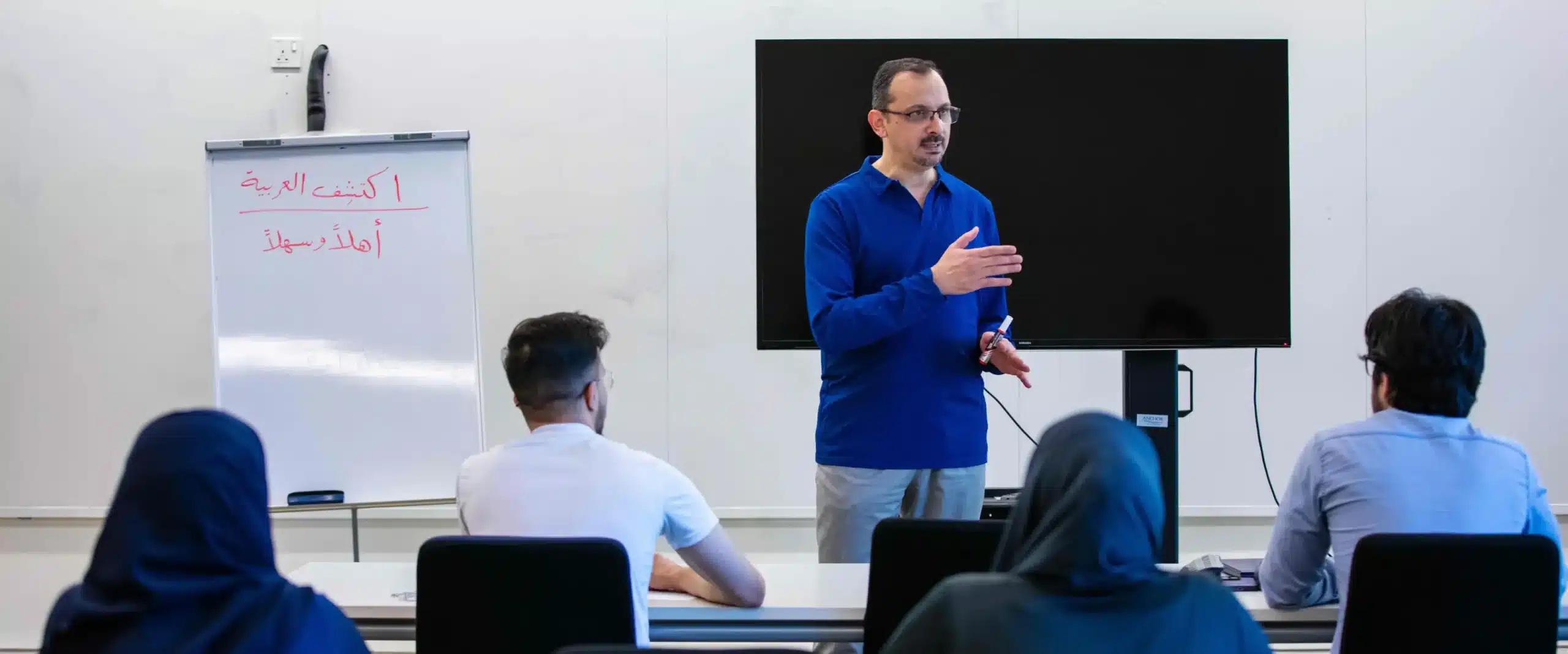
Get a glimpse into the vibrant learning experience at Kalimah Center. These snapshots capture real moments from our live classes—where students engage deeply, connect with passionate instructors, and grow in a welcoming, supportive environment.
Here Are The Reviews On Our Courses:
Our students frequently commend the excellence of our courses and the commitment shown by our instructors. You can read their complete reviews on Trustpilot.

Get Individual Private Online Classes At The Kalimah Center.
For the sake of meeting your personal needs and progress, one lesson will be distinctly different from another in your training Arabic curriculum. Our unique teaching methods, from absolute beginners to refinement students, focus on conversational fluency and eloquence, cultural understanding, and relevant practical usage.
The Kalimah Center will assure a stimulating and supportive learning environment so that you will enjoy each and every moment with full confidence and motivation. Schedules will be flexible, as will be the materials prepared in each case. So join us now and see how much fun it is to learn Arabic. Your journey to fluency starts here!
📚 Explore Our Courses:
Online Arabic Course: Tailored to your level, our comprehensive Arabic program includes 16 teaching levels and 400+ hours of personalized sessions.
Online Quran With Tajweed Course: Perfect for non-Arabic speakers, our course spans 13 levels and equips you with Tajweed mastery from beginner to advanced.
Online Arabic Course For Kids: Nurture your child’s love for Arabic with our engaging and structured program, available in 24 levels for primary, intermediate, and secondary stages.
🚀 Start Your Free Trial Today! 🚀
Don’t miss out on this life-changing opportunity to deepen your faith and knowledge. Sign up now for your free trial and take the first step towards becoming a better practicing Muslim with Kalimah Center!
Conclusion
Kuwait provides a balance of modern educational facilities combined with the study of Arabic in an authentic and immersive setting. Its strategic location in the Gulf provides students with a unique language learning experience, mastering both Modern Standard Arabic and the specific Kuwaiti dialect.
Pre-eminent universities to language institutions cater for all tastes and learning styles. Whether intensive academic programs or flexible one-on-one tutoring, learners can find options that suit their schedules and goals.
Besides learning a language, Arabic in Kuwait means acquiring specific insight into Arab culture and tradition, further into modern contemporary life in the Gulf.
The setting serves to whet any language skill one wishes to learn and engrains deeper knowledge into the Arab world.
FAQs about Learn Arabic in Kuwait
Q1: What language do they speak in Kuwait?
The official language of Kuwait is Arabic. In daily life, Kuwaitis speak Kuwaiti Arabic, a dialect within the Gulf Arabic family that includes loanwords from Persian, English, Hindi, and Turkish. Modern Standard Arabic (MSA) is used in schools, government, media, and formal settings. English is also widely spoken, especially in business and among the large expatriate community, which makes up roughly 70% of Kuwait’s population.
Q2: Can I learn Arabic in Kuwait for free?
Some options exist. Kuwait University occasionally offers subsidized Arabic courses for enrolled international students. Community organizations like the Aware Center sometimes run free or low-cost introductory Arabic workshops. Additionally, language exchange meetups in Kuwait City pair Arabic and English speakers for free practice. For structured free learning, online platforms like Kalimah Center offer free trial classes that can supplement your in-country experience.
Q3: Is Kuwait expensive for international students learning Arabic?
Kuwait is moderately expensive compared to other Arabic-learning destinations. Annual costs (tuition + living) range from $15,000 to $25,000, which is higher than Egypt ($5,000–$10,000) or Jordan ($8,000–$15,000) but lower than the UAE ($25,000–$40,000). Shared accommodation, public transport, and cooking at home can reduce costs significantly. Kuwait has no income tax, which benefits students who work part-time.
Q4: How long does it take to learn Arabic in Kuwait?
With full-time study (15–20 hours/week of classes plus daily immersion), most learners reach conversational ability in Kuwaiti dialect within 3–6 months and functional MSA proficiency (B1 level) within 9–12 months. The immersive environment accelerates learning compared to studying from abroad, as you practice Arabic in markets, restaurants, and social settings daily.
Q5: Should I learn Modern Standard Arabic or Kuwaiti dialect in Kuwait?
Start with MSA for your structured studies — it’s the foundation of all written Arabic and is understood across the Arab world. Simultaneously, pick up Kuwaiti dialect through daily life, local friends, and conversation practice. Most language centers in Kuwait teach MSA in the classroom while encouraging dialect exposure outside it. This dual approach gives you both formal competency and practical street-level communication.