An Arabic language curriculum is a structured learning roadmap that takes students from alphabet recognition to advanced reading, writing, speaking, and grammar.
For non-native speakers, an effective curriculum starts with Modern Standard Arabic (Fusha), progresses through everyday topics and dialogue, then advances into grammar (Nahu), classical texts, and societal discussion — typically spanning 5 structured stages over 2–4 years.
Key Takeaway Table:
| Stage | Focus | Level | Typical Duration |
|---|---|---|---|
| Stage 1 | Arabic Alphabet + Pronunciation | Beginner | 1–2 months |
| Stage 2 | Basic Grammar + Fundamental Linguistics | Beginner–Elementary | 2–3 months |
| Stage 3 | Everyday Topics + Basic Dialogue | Elementary (A2) | 5–10 months |
| Stage 4 | Societal Topics + Arabic Grammar (Nahu) | Intermediate (B1–B2) | 8–16 months |
| Stage 5 | MSA, Classical Arabic, Fusha Mastery | Advanced (C1–C2) | Ongoing |
A well-structured Arabic language curriculum is the difference between a learner who plateaus after six months and one who reaches genuine fluency.
Whether you are a parent choosing a program for your child, an educator building a school syllabus, or a beginner mapping your own learning journey — this guide breaks down exactly what an effective Arabic curriculum looks like at every level, from alphabet to advanced fluency.
What is the Arabic Language Curriculum?
An Arabic Language Curriculum is like a roadmap for learning Arabic. It tells us what to teach and when to teach it. It starts with the basics, like the alphabet and simple words, then it gradually gets harder, teaching grammar, reading, writing, and even literature.
A good curriculum is organized and clear so that students can follow along easily. It also includes lots of practice, so students can get better at using Arabic in real life.
What Does “Curriculum” Mean in Arabic? (المنهج)
The Arabic word for “curriculum” is منهج (Manhaj). It comes from the root ن-هـ-ج (n-h-j), which carries the meaning of “a clear path” or “a method to follow.”
In educational contexts, you will commonly see:
| Arabic Term | Transliteration | Meaning |
|---|---|---|
| منهج | Manhaj | Curriculum / Method |
| المنهج الدراسي | Al-manhaj al-dirasi | The academic curriculum |
| مناهج | Manahij | Curricula (plural) |
| منهج اللغة العربية | Manhaj al-lugha al-arabiyya | Arabic language curriculum |
| الخطة الدراسية | Al-khitta al-dirasiyya | Study plan / Syllabus |
In Arabic-speaking school systems, you will often hear teachers say “المنهج” when referring to the official course of study set by the Ministry of Education. Understanding this terminology is especially useful for educators and parents navigating Arabic-medium school systems.
Arabic Curriculum for Non-Arabic Speakers: A Tailored Approach
Non-Arabic speakers, or غير الناطقين باللغة العربية (ghayr al-natiqeen bil-lugha al-Arabiyya), have a special place in my heart. Teaching them is like opening a window to a whole new world. But it’s not easy. They come from different backgrounds, and their motivations can be very different.
A good Arabic curriculum for beginners should be built like steps, starting from the basics. It should focus on teaching الفصحى (Al-Fusha) — Modern Standard Arabic — which is understood by all Arabs, no matter their country.
At Kalimah Center, our curriculum is crafted with non-native speakers in mind. We know that learning a new language, especially one as unique as Arabic, can be challenging. Therefore, our courses are designed to build a strong foundation, starting with the very basics and gradually progressing to more advanced levels.
1. First Stage of a Good Arabic Curriculum: Learn the Arabic Alphabet with Ease
The first step in learning Arabic is mastering the alphabet. Our course, “Learn The Whole Arabic Alphabet Online With Illustration,” is designed to make this process as smooth as possible.
The curriculum at this stage starts by introducing you to the shapes and sounds of the Arabic letters, and how they connect to form words. This course is divided into two levels, allowing you to learn at your own pace. By the end, you’ll be able to read and write in Arabic, opening the door to deeper linguistic exploration.
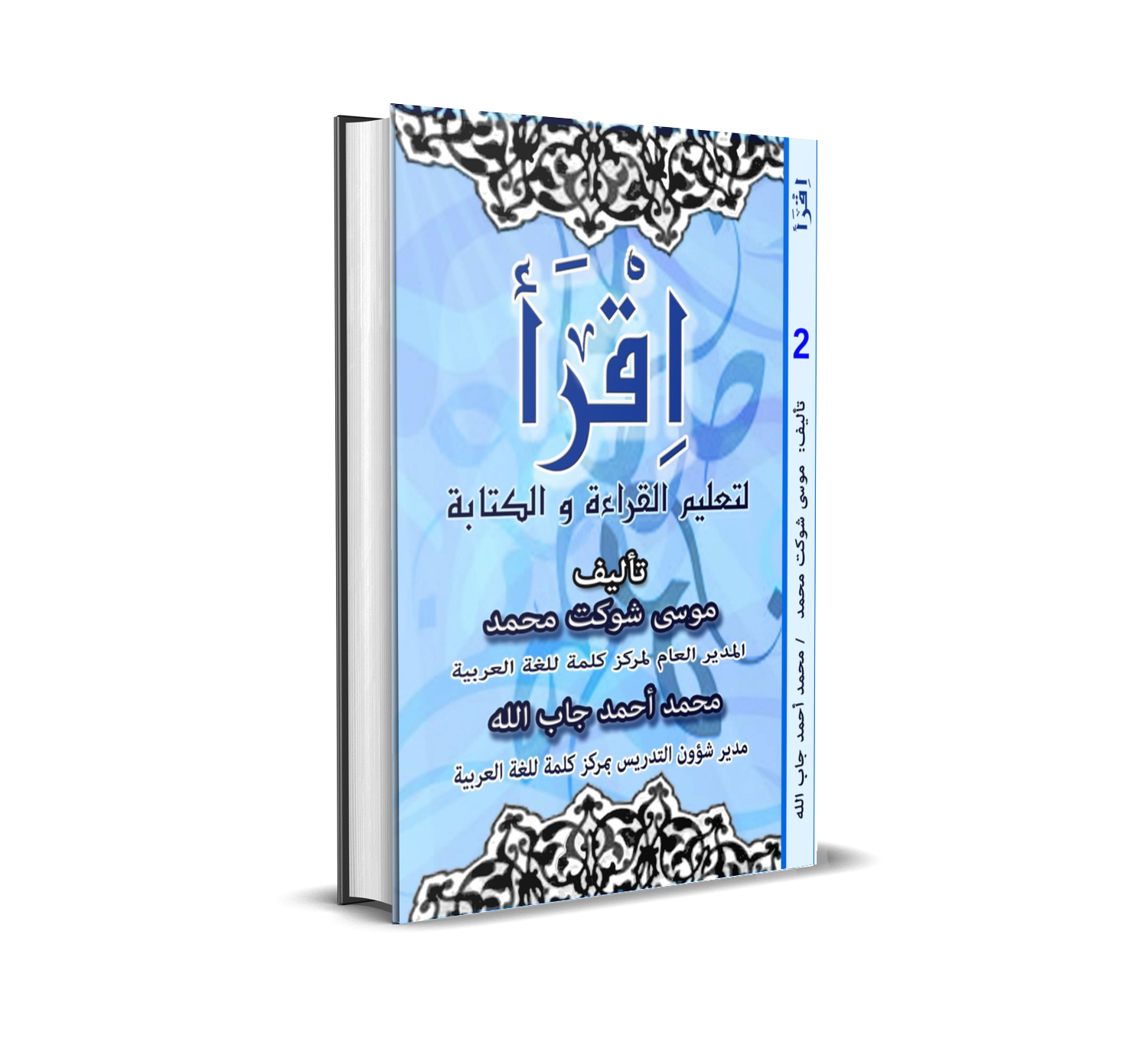
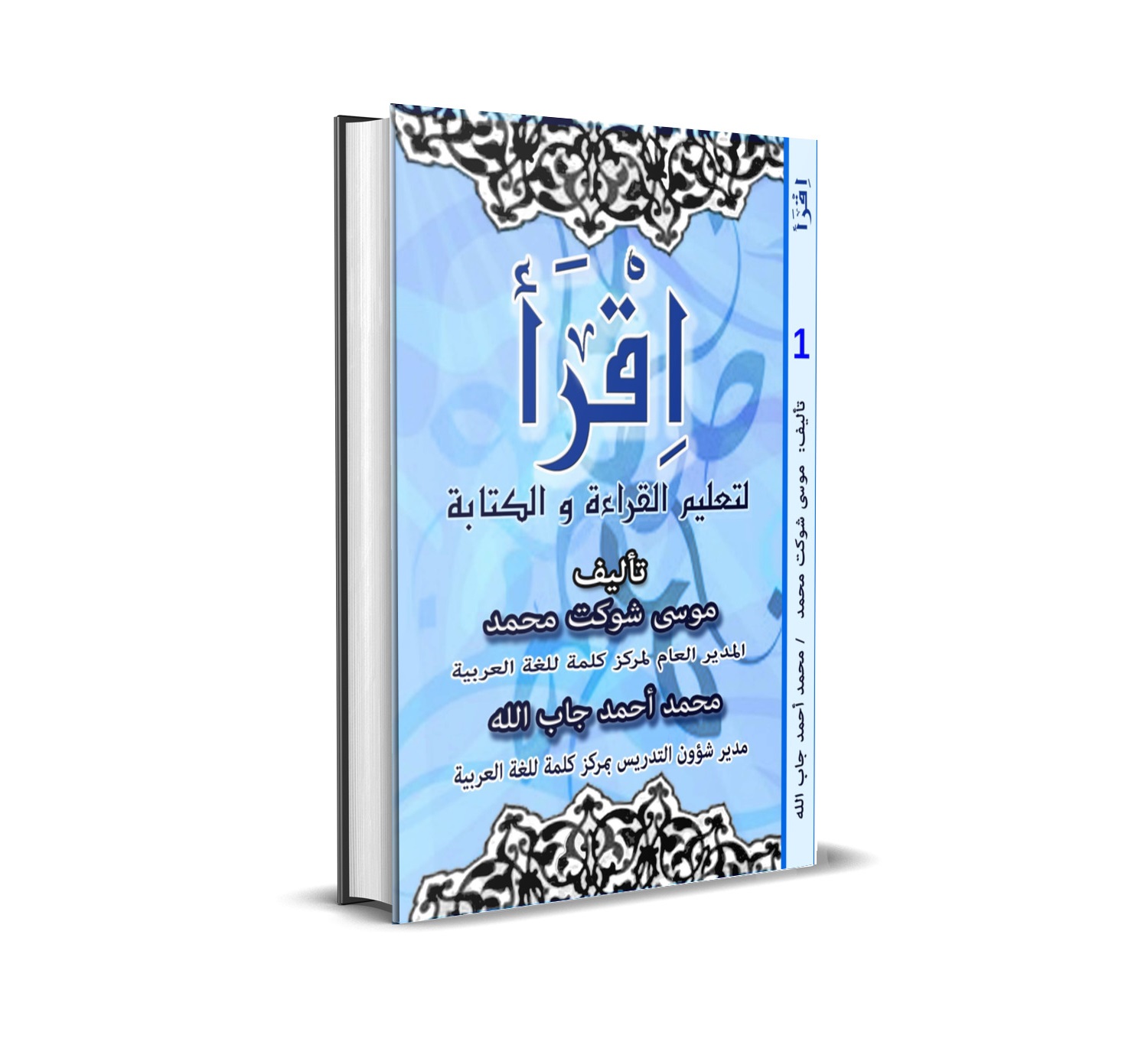
Materials Used: The course is based on the book ‘Iqraa’ (اقرأ), which is a special publication by Kalimah Center. It is designed for beginners to help them read and write Arabic efficiently.
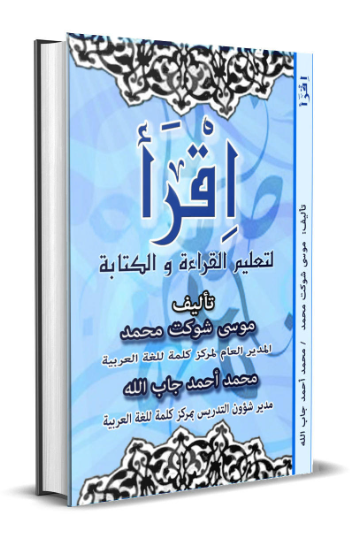
In the first two levels, you learn three things:
- How to read any Arabic word (with the little marks that help you say it right).
- How to write any Arabic word (with those same little marks).
- You learn important words for the lesson (like ‘read,’ ‘write,’ ‘repeat,’ ‘review,’ ‘complete’) and how to use them.
So, after the first two levels, you can:
- Understand the teacher’s instructions in Arabic.
- Introduce yourself in Arabic.
- Ask and answer basic questions to talk to people (like ‘Who are you?’, ‘What’s your name?’, ‘What do you do?’, ‘What are you studying?’, ‘How old are you?’, ‘How are you?’).
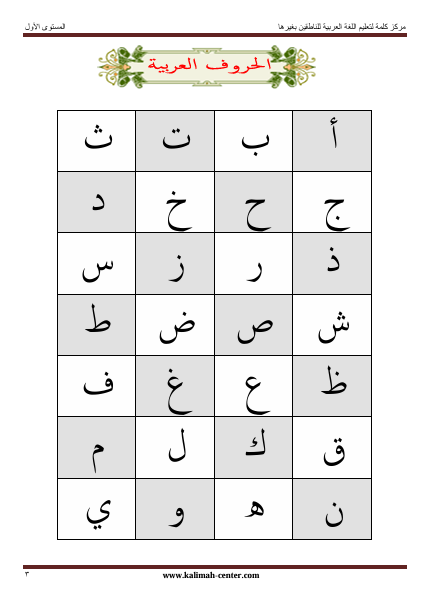
* Excerpted from Kalimah’s ‘Iqraa’ (اقرأ)
2. Second Stage of a Good Arabic Curriculum: Learn the Basics of Arabic & Fundamental Linguistics
Once you’re familiar with the alphabet, it’s time to dive into the basics of the language. Our course, “Learn The Basics of Arabic & The Fundamental Linguistics,” covers essential topics such as adjectives, adverbs, interrogatives, and indications.
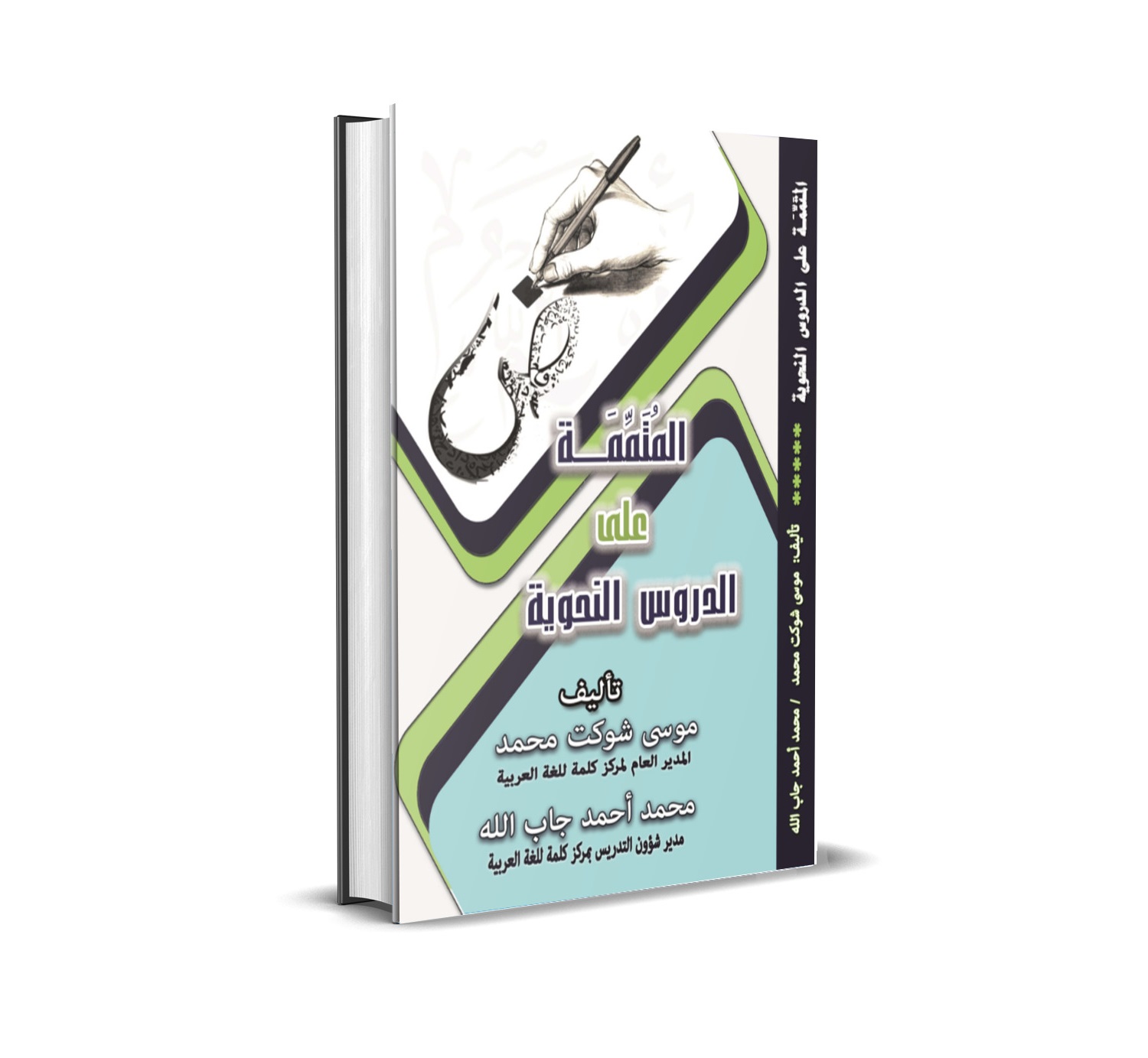
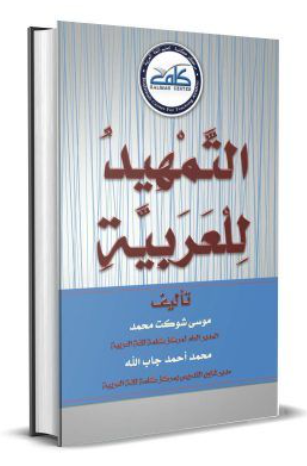
The course is based on the “Al-Tamheedi” book, which is exclusively available at Kalimah’s online bookstore. Duration: 2-3 months.
As we design the Arabic curriculum for beginners, we understand the importance of learning practical, everyday Arabic. That’s why we’ve designed our beginner-level courses to focus on topics that you’ll encounter in daily life.
3. Third Stage of a Good Arabic Curriculum: Learn Everyday Life Topics & Start a Dialogue in Arabic
This stage is perfect for non-Arabic speakers who want to start communicating in Arabic right away. We cover a wide range of topics, such as home, work, shopping, and family.
By the end of this course, you’ll be able to hold basic conversations in Arabic about everyday activities.
The course is presented in five levels and is based on the first volume of “Al-Arabiyya Bayna Yadayka.” Duration: 1-2 months per level.
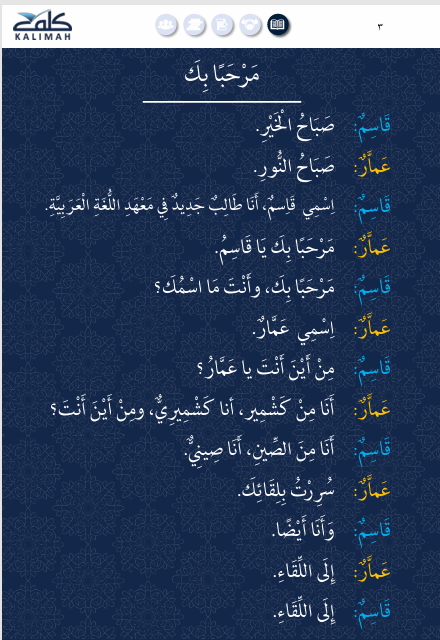
* A conversation from the “Al-Arabiyya Bayna Yadayka” book.
__________________________________________________________________
While we, at Kalimah Center, are proud of our meticulously structured curriculum and innovative teaching methods, nothing speaks louder than the voices of our students. Take Benjamin Hatun from Germany, who shared:
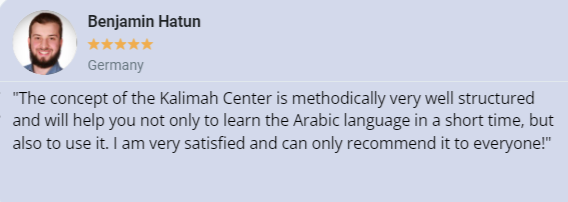
Benjamin’s words echo a core principle of our approach: language learning isn’t just about memorization, it’s about gaining the confidence and skills to apply that knowledge in real-world contexts. Our goal is to empower every student, like Benjamin, to bridge the gap between theory and practice.
___________________________________________________________________
Once you’ve mastered the basics, it’s time to move on to more complex topics. Our intermediate and advanced courses are designed to help you engage in deeper, more meaningful conversations and to understand the intricate grammar of the Arabic language.
4. Fourth Stage of a Good Arabic Curriculum: Learn to Speak About Societal Topics & Arabic Grammar (Nahu)
For students who are ready to tackle more advanced topics, this stage is the next step. You’ll learn to discuss societal issues like education, marriage, and city life, while also delving into the complexities of Arabic grammar (Nahu).
This course is divided into eight levels and is based on the second volume of “Al-Arabiyya Bayna Yadayka.”
Read also: Arabic language levels
5. Fifth Stage of a Good Arabic Curriculum: Advanced MSA, Classical Arabic, and Fusha Mastery
At the advanced stage, learners move beyond structured dialogue into genuine linguistic depth. This stage is designed for students who can already hold formal conversations and read intermediate-level texts, and are ready to engage with the full complexity of Arabic.
What advanced Arabic learners study:
| Focus Area | Content | Why It Matters |
|---|---|---|
| Modern Standard Arabic (MSA) | News media, academic writing, formal speeches | Professional and media communication |
| Classical Arabic (Fusha) | Pre-modern literature, historical texts, rhetoric | Cultural depth and literary appreciation |
| Quranic Arabic | Quranic vocabulary, grammar of the Quran, Tafsir language | Religious understanding for Muslim learners |
| Advanced Nahu (Grammar) | Complex sentence structures, case endings (I’rab), stylistics | Precision in reading and writing |
| Arabic Rhetoric (Balaagha) | Metaphor, eloquence, literary devices | Understanding classical and religious texts deeply |
By the end of this stage, learners can read literary texts, analyze classical Arabic prose and poetry, write formal documents, and understand Arabic media without assistance.
This stage corresponds to CEFR levels C1–C2 and typically requires 2–3 years of prior structured study to reach.
Ready to learn Arabic faster and cheaper? Our group classes are the perfect choice! You’ll learn with other students and our best teachers. Smaller groups mean you get more chances to practice speaking.
- Save Money: Group classes are 4x cheaper than private lessons!
- Learn Faster: Studies show students in groups learn better!
- Practice More: Small classes mean everyone gets to speak!
- Use Fun Materials: Our newest books and online exercises!
- Learn from Home: No travel needed, just your laptop and internet!
- Meet New People: Make friends with Muslims worldwide!
Spaces are limited, so don’t wait!
Choose your class time and start learning!
Experience Kalimah Center Classes
Watch real excerpts from our live sessions at Kalimah Center and see how we bring learning to life. These clips highlight our interactive, student-centered teaching approach across all our courses—designed to keep learners engaged, motivated, and actively involved every step of the way.
Master Arabic with Kalimah Center
Join our expert-led online classes and start your journey toward Arabic fluency today.
Book Your Free TrialArabic Curriculum for Primary School
We understand the importance of a structured yet flexible curriculum that helps children develop their language skills step by step. Let me explain our three stages of Arabic learning, each tailored to suit the needs of different age groups and proficiency levels.
1. Beginner Stage: Learn the Arabic Alphabet & Basic Words and Phrases
At the beginner stage, we focus on the very foundation of the Arabic language — the alphabet. This stage is designed for starting to learn Arabic for kids. We make it fun and interactive, so children enjoy every step of the journey.
What’s in This Stage?
- Arabic Alphabet (الأبجدية العربية): Your child will learn to recognize, pronounce, and write each letter of the Arabic alphabet (like أ، ب، ت). This is done through fun activities and visual aids.
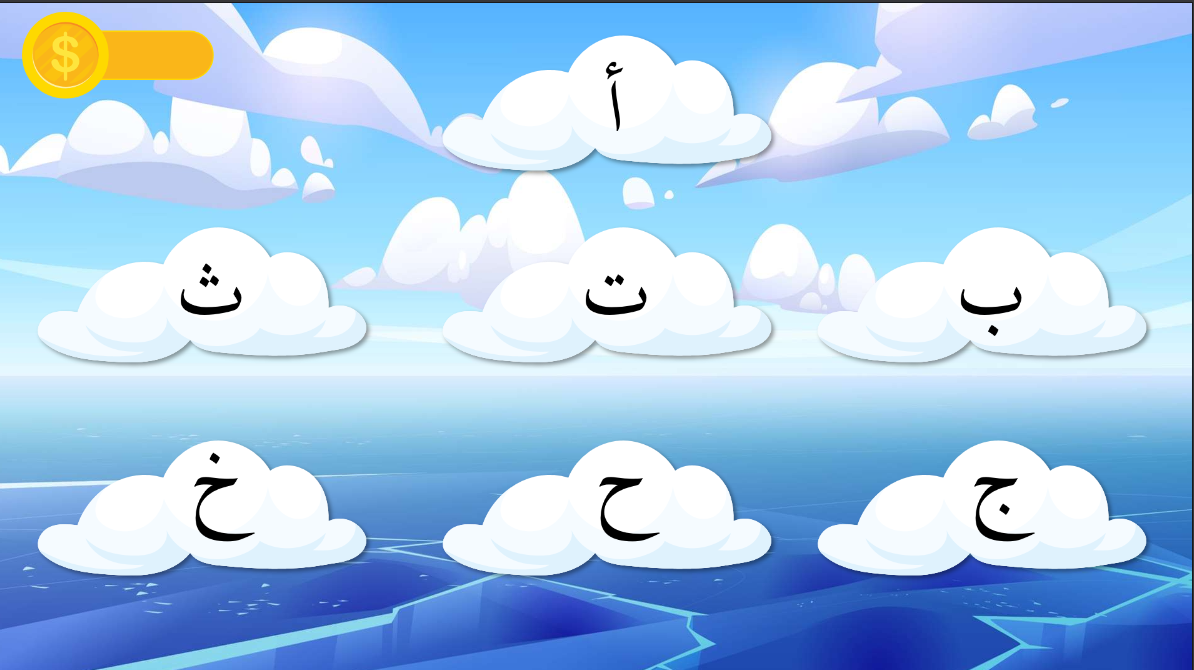
*From Kalimah’s Arabic Course for Kids.
- Basic Words and Phrases: Kids start with simple words like “بيت” (bayt – house) or “مدرسة” (madrasa – school), learning how to pronounce them correctly.
- Simple Conversations: By the end of this stage, your child will know how to introduce themselves in Arabic, say hello (السلام عليكم – As-salamu alaykum), and respond to simple questions.
This stage includes three volumes of our specially designed Arabic materials. We focus on correct pronunciation, reading, and writing, helping kids feel comfortable using the language in everyday situations.
2. Intermediate Stage: Learn the Basics of Arabic and Fundamental Linguistics
As children progress, we introduce them to more complex topics. In this intermediate stage, we use storytelling to engage young minds and keep their interest alive.
What Will Your Child Learn?
- Arabic Grammar (نحو): We begin introducing grammar concepts like nouns (الأسماء) and verbs (الأفعال). Kids start to understand the structure of sentences, making it easier to form their own sentences in Arabic.
- Engaging Topics Through Storytelling: We believe in the power of stories. Kids learn about various topics like general knowledge, science fiction, and moral values, all presented in simple Arabic. This method not only teaches the language but also opens their minds to new ideas.
This stage includes four different volumes of our Arabic material. By the end of this stage, your child will be able to have simple conversations on various topics, express opinions, and start forming more complex sentences.
3. Advanced Stage: Enrich Your Kid’s Arabic Linguistics with Advanced Topics
Now comes the advanced Arabic level, where the fun truly begins! At this stage, your child is ready to explore the depth and beauty of the Arabic language.
What’s in Store at This Stage?
- Advanced Topics: We dive into topics like scientific facts (حقائق علمية), social experiences (التجارب الاجتماعية), Islamic history (التاريخ الإسلامي), and contemporary world issues (القضايا العالمية المعاصرة). These topics encourage kids to think critically and express themselves fluently.
- Advanced Grammar Lessons (نحو): We cover more complex grammar rules, making sure your child knows how to construct sentences confidently.
- Dialogue Practice: Kids practice dialogues that are more detailed and nuanced, preparing them to communicate effectively in various real-life situations.
By the end of this stage, your child will be able to fluently read, write, and discuss complex topics in Arabic like a native speaker.
Read Also About: Fusha Arabic
Arabic Curriculum for High School Students
High school Arabic learners — whether in formal school settings or homeschool programs — require a curriculum that bridges everyday language with academic and classical Arabic. At this stage, students are typically at B1–B2 level and ready for more sophisticated content.
A strong Arabic high school curriculum covers:
| Skill Area | Content at Secondary Level |
|---|---|
| Reading | News articles, short stories, literary extracts in MSA |
| Writing | Essay writing, formal letters, opinion pieces in Arabic |
| Grammar (Nahu) | Advanced case endings (I’rab), complex sentence structures |
| Vocabulary | Academic and societal vocabulary — education, politics, environment |
| Listening | Al Jazeera broadcasts, formal speeches, documentary Arabic |
| Speaking | Debates, formal presentations, discussion of societal issues |
| Literature | Introduction to Arabic poetry, prose, and classical rhetoric |
Progression from primary to secondary: Students who complete a structured primary Arabic curriculum (covering alphabet, basic grammar, and everyday topics) should enter the secondary stage with A2–B1 ability. The secondary curriculum then pushes toward B2–C1, preparing students for academic Arabic use in higher education.
At Kalimah Center, our secondary-level curriculum aligns with Stages 4–5 of our adult program for students who began Arabic at primary level — ensuring seamless progression without gaps.
How to Structure Your Arabic Learning: Step-by-Step Roadmap
First, you need strong base. That’s the alphabet. Learn each letter, how it sounds.
Then, start collecting bricks – these are basic words. “Hello,” “thank you,” everyday things.
Now, put those bricks together, make simple sentences. Read easy stories, write a little bit every day.
Next, train your ears. Listen to Arabic podcasts, watch videos. Try to talk, even if it’s just a few words. Don’t be shy to make mistakes, it’s okay!
As you get better, learn grammar rules. It’s like the cement holding your house together. Now you can build bigger things – read news, write longer texts.
And don’t forget, language is about people! Learn about Arab culture, it’s beautiful. If you can, visit an Arab country. It’s the best way to learn!
Arabic Language Teaching Methods for Non-Native Learners
Different learners respond to different teaching approaches. Here are the most evidence-backed methods used in structured Arabic programs:
| Method | Description | Best For |
|---|---|---|
| Communicative Language Teaching (CLT) | Focus on real-life conversation and functional language use | Speaking confidence, everyday Arabic |
| Immersive Instruction | Arabic-only classroom environment to build intuitive thinking | Intermediate to advanced learners |
| Grammar-Translation | Explicit grammar rules with translation exercises | Learners who need reading/writing precision |
| Task-Based Learning | Completing real-world tasks (ordering food, writing an email) in Arabic | Applied, practical learners |
| Story-Based (Narrative) | Vocabulary and grammar taught through stories and narratives | Children and visual learners |
| Blended Learning | Combination of live instruction, digital tools, and self-study | Busy adult learners, online students |
At Kalimah Center, we use a blended communicative approach — combining live instruction with native teachers, structured curriculum materials, interactive exercises, and cultural immersion — to ensure learners develop all four skills: reading, writing, listening, and speaking.
For non-native speakers specifically, the most effective approach integrates:
- Fusha (MSA) as the foundation — universally understood across the Arab world
- Topic-based vocabulary that connects to the learner’s real life
- Regular speaking practice from the first lesson, not after “enough grammar” is learned
- Cultural context woven into language instruction, not treated as separate
Kalimah Center does something similar. We teach useful words for everyday life and have students practice conversations. We also make sure the lessons are about things students can relate to, which makes learning more interesting.
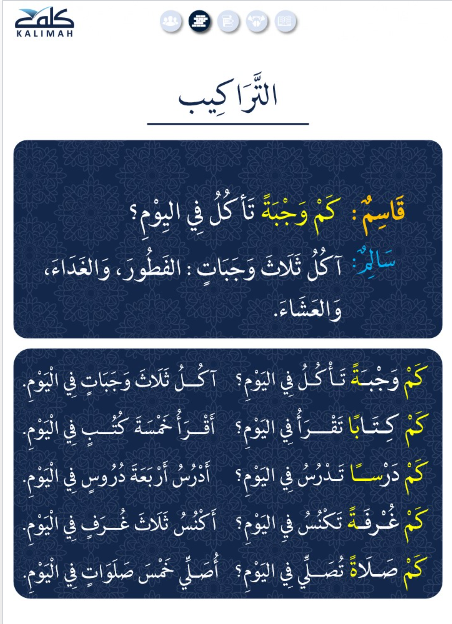
* Excerpted from Kalimah’s Arabic Course.
Arabic Language Proficiency Levels Explained (Beginner to Fluent)
Arabic proficiency is typically measured using the CEFR framework (Common European Framework of Reference for Languages), ranging from A1 (absolute beginner) to C2 (mastery). Here is how each level maps to real Arabic ability:
| CEFR Level | Arabic Proficiency Label | What You Can Do |
|---|---|---|
| A1 | Absolute Beginner | Recognize the alphabet, read basic words, introduce yourself |
| A2 | Elementary | Hold simple conversations, understand short texts, basic grammar |
| B1 | Intermediate | Discuss familiar topics, read news headlines, write short paragraphs |
| B2 | Upper-Intermediate | Engage in formal discussions, read newspapers, write formal emails |
| C1 | Advanced | Read literature and academic texts, speak fluently in formal settings |
| C2 | Mastery | Full professional and academic fluency, understand all Arabic varieties |
How Kalimah Center’s curriculum maps to these levels:
- Adult Program: 16 teaching levels covering A1 through C2
- Children’s Program: 24 levels across primary, intermediate, and secondary stages
It is important to note that Arabic proficiency is skill-specific — a learner may be at B1 in reading but A2 in speaking. A strong curriculum addresses each skill independently while ensuring overall balanced progression.
At Kalimah Center, we often break the levels into more specific categories as you see in the following picture, especially for students who need extra help in one area, such as speaking or reading. Some students may be at Level 5 in reading but Level 3 in writing. The goal is to help them grow steadily in all areas.

Take the first step today! Take Kalimah’s placement test and discover where your Arabic journey begins.
Master Arabic with Kalimah Center
Join our expert-led online classes and start your journey toward Arabic fluency today.
Book Your Free TrialInside Kalimah Center: Moments from Our Courses
Get a glimpse into the vibrant learning experience at Kalimah Center. These snapshots capture real moments from our live classes—where students engage deeply, connect with passionate instructors, and grow in a welcoming, supportive environment.
Here Are The Reviews On Our Courses:
Our students frequently commend the excellence of our courses and the commitment shown by our instructors. You can read their complete reviews on Trustpilot.

Start Your Arabic Journey: Finding the Right Program for Your Level
Kalimah Center’s online Arabic courses are designed to take you from beginner to advanced, step-by-step.
Why Kalimah Center? We make learning Arabic easy and effective:
- Clear structure: Our courses follow a proven curriculum, starting with the alphabet and building to advanced conversations.
- Focus on all skills: You’ll learn to read, write, listen, and speak Arabic confidently.
- Interactive lessons: Our classes are engaging and fun, with plenty of opportunities to practice your new skills.
- Personalized attention: Our experienced teachers will guide you every step of the way.
We have classes for everyone:
- Learn Arabic Online: For adults who want to speak Arabic fluently.
- Learn Arabic for Kids: Fun and easy way for kids to learn Arabic.
- Learn Quran Online: Learn to read Quran beautifully, with Tajweed.
Join for FREE today! Let Kalimah Center provide you with the tools, guidance, and support you need to achieve your Arabic language goals.

Conclusion:
A well-structured Arabic language curriculum is crucial for effective learning, particularly for non-native speakers. It serves as a roadmap, starting with the basics like the alphabet and progressing to grammar, reading, and writing. The curriculum should immerse students in both the language and the culture, with clear, step-by-step instruction that builds a strong foundation. This includes courses tailored to beginners, teaching Modern Standard Arabic (Fusha), and gradually advancing to more complex topics such as societal issues and Arabic grammar.
At Kalimah Center, the curriculum is designed to address the specific needs of non-native speakers, focusing on Arabic language practice use for everyday situations. It begins with mastering the alphabet, followed by essential linguistic structures, and moves towards enabling students to engage in meaningful conversations. The curriculum also includes intermediate and advanced stages, covering topics like societal issues and classical Arabic, ensuring a comprehensive and immersive learning experience for students of all levels.
FAQs about Arabic Language Curriculum For Non-Natives
Q1: What does “curriculum” mean in Arabic?
The word “curriculum” in Arabic is منهج (Manhaj) or المنهج الدراسي (Al-manhaj al-dirasi). “Manhaj” literally means “a path” or “a method,” and in educational contexts it refers to the structured plan of study — what is taught, in what order, and how it is assessed. You may also see مناهج (Manahij) as the plural form.
Q2: How many levels are there in Arabic language learning?
Most structured Arabic programs use 6–8 proficiency levels aligned with the CEFR framework (A1 to C2). At Kalimah Center, the adult curriculum spans 16 teaching levels, while the children’s program covers 24 levels across primary, intermediate, and secondary stages. Each level builds on the previous, ensuring no gaps in foundational knowledge.
Q3: What is the best Arabic curriculum for non-native speakers?
The most widely respected curricula for non-native Arabic learners include: Al-Arabiyya Bayna Yadayk (used in Stages 3–4 at Kalimah), Al-Kitaab (common in university programs), and Madinah Arabic Book Series (popular for self-study). For children, structured programs with visual aids, storytelling, and interactive games produce the strongest results. The best curriculum depends on the learner’s goal — conversational Arabic, Quranic reading, or academic study.
Q4: Is there an Arabic curriculum suitable for homeschooling?
Yes. Several structured Arabic curricula are designed for homeschool use, including the Madinah Arabic series, Iqraa books (used in Kalimah’s beginner stage), and Al-Arabiyya Bayna Yadayk. Effective homeschool Arabic programs combine structured textbooks with online live instruction for speaking practice and pronunciation correction — the two elements hardest to replicate through self-study alone.
Q5: How do you teach Arabic to non-Muslims or non-Arabic speakers?
Teaching Arabic to non-Muslims focuses on Modern Standard Arabic (MSA/Fusha) for communication, media, and cultural literacy — rather than religious instruction. The approach emphasizes practical vocabulary, everyday dialogues, cultural context, and grammar presented in secular, relatable topics. The same foundational curriculum applies; the framing and motivational context simply shifts from religious to cultural or professional goals.