Classical Arabic (الفصحى / al-Fuṣḥā) is the literary form of Arabic used in the Quran, Hadith, pre-Islamic poetry, and classical scholarly texts. It differs from Modern Standard Arabic (MSA) in grammar complexity, vocabulary range, and case-ending usage (I’rab).
Learning Classical Arabic involves mastering its 28-letter alphabet, studying grammar through two core disciplines — Nahw (syntax) and Sarf (morphology) — and building vocabulary rooted in Quranic and literary texts. Most learners achieve basic reading proficiency in 12–18 months and functional fluency in 3–5 years of consistent study.
Key Takeaway Table:
| Aspect | Details |
|---|---|
| Other names | Fusha (الفصحى), Quranic Arabic, Literary Arabic |
| Script | Arabic script, 28 letters, right-to-left |
| Core grammar disciplines | Nahw (النحو – syntax) and Sarf (الصرف – morphology) |
| Key difference from MSA | Full I’rab (case endings), richer vocabulary, stricter grammar |
| Primary uses today | Quran recitation, Islamic scholarship, classical literature study, academic linguistics |
| Time to basic proficiency | 12–18 months (consistent study) |
| Time to advanced reading | 3–5 years |
| Essential beginner texts | Al-Ajurrumiyyah (grammar), Quran, Al-Qaṣaṣ an-Nabawiyyah (stories) |
| Who should learn it | Muslims seeking Quran understanding, Arabic linguists, historians, scholars |
Are you ready for a linguistic journey that takes you to the roots of one of the world’s oldest and most beautiful languages?
At Kalimah Center, we believe that learning classical Arabic is not just about mastering a language; it’s about connecting with a rich cultural heritage, a profound history, and a way of life that has shaped civilizations for centuries.
Our programs are designed to help you discover the beauty, depth, and versatility of classical Arabic in an immersive and engaging way.
What Is Classical Arabic? History, Definition & Why It Matters
Classical Arabic (الفصحى — al-Fuṣḥā, meaning “the most eloquent”) is the literary and scholarly form of Arabic that emerged in the Arabian Peninsula during the 6th–7th centuries CE. It is the language of the Quran, the Hadith, pre-Islamic poetry (الشعر الجاهلي), and the vast corpus of classical Islamic scholarship spanning theology, philosophy, medicine, mathematics, and law.
Key characteristics that define Classical Arabic:
| Feature | Description |
|---|---|
| I’rab (الإعراب) | Full grammatical case-ending system — every noun, adjective, and verb ending changes based on its grammatical role in the sentence |
| Root system | Nearly every word derives from a 3-letter root (جذر), enabling systematic vocabulary building |
| Rhetorical precision | Classical Arabic has an extraordinarily large vocabulary with fine distinctions (e.g., over 100 words for “camel,” dozens for stages of love) |
| Standardized grammar | Codified by early grammarians like Sibawayh (سيبويه, 8th century) in his foundational work “Al-Kitab” |
| Preserved through the Quran | The Quran’s status as a divine text meant Classical Arabic was preserved with exceptional precision over 1,400+ years |
Historical context: Before Islam, Arabic existed primarily as an oral tradition among Bedouin tribes, with poetry serving as the highest art form. The revelation of the Quran in the 7th century elevated Arabic to a liturgical and scholarly language. Within two centuries, Classical Arabic became the language of a civilization stretching from Spain to Central Asia — the language in which algebra was invented, Greek philosophy was preserved and expanded, and medical texts that influenced European medicine for centuries were written.
Understanding Classical Arabic is not the same as learning a “dead language.” It is the direct ancestor of Modern Standard Arabic, and its grammar, root system, and core vocabulary remain the foundation of all Arabic used today.
Fundamentals of Classical Arabic
To truly understand Classical Arabic, you must grasp its core elements:
1. Classical Arabic Alphabet
The foundation of learning any language starts with its alphabet. In Classical Arabic, the alphabet consists of 28 letters, each with its own unique sound and form. Learning the script is essential for reading the Qur’an and other classical texts.
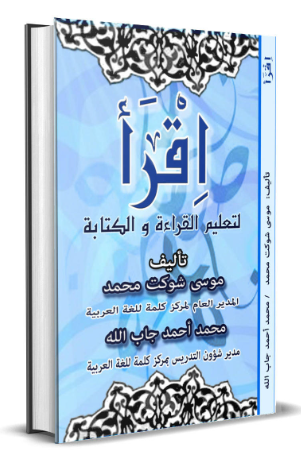
At Kalimah Center, we offer specialized courses that focus on mastering the Classical Arabic alphabet using unique resources like our book, Iqraa (اقرأ), which is designed to make learning efficient and enjoyable.
2. Classical Arabic Grammar
Grammar is the backbone of classical Arabic. Unlike spoken dialects or even Modern Standard Arabic, classical Arabic follows a strict grammatical structure that affects how sentences are constructed, how words are formed, and how meanings are conveyed. Key grammatical concepts include:
- Nahw (النحو): The rules governing sentence structure.
- Sarf (الصرف): The study of word forms and conjugations.
Our Arabic Language curriculum at Kalimah Center includes a comprehensive exploration of these topics ensuring you understand the deeper mechanics of the language.
Read Also: Arabic Grammar
3. Classical Arabic Books
To master classical Arabic, reading is essential. We introduce students to classic texts such as the Qur’an, Hadith collections, and works of early Islamic scholars.
These books are not only foundational to Islamic knowledge but also rich in linguistic variety, offering invaluable practice in understanding classical Arabic in its purest form.
4. Classical Arabic Vocabulary
When learning classical Arabic, it’s crucial to familiarize yourself with frequently used words and phrases. Examples include:
- Allah (الله): God
- Rasul (رسول): Messenger
- Salah (صلاة): Prayer
- Ilm (علم): Knowledge
- Quran (قرآن): The Holy Book of Islam
- Sunnah (سنة): The teachings and practices of Prophet Muhammad
- Hadith (حديث): A record of the sayings or actions of Prophet Muhammad
- Dunya (دنيا): This world, the temporal world
- Akhirah (آخرة): The Hereafter, the afterlife
- Jannah (جنة): Paradise
- Jahannam (جهنم): Hellfire
- Tawheed (توحيد): The oneness of God, monotheism
- Iman (إيمان): Faith, belief
- Ihsan (إحسان): Excellence, perfection in worship
- Taqwa (تقوى): God-consciousness, piety
- Dua (دعا): Supplication, prayer
- Sabr (صبر): Patience, forbearance
- Shukr (شكر): Gratitude, thankfulness
- Tawakkul (توكل): Reliance on God, trust in God
- Ummah (أمة): The Muslim community, the nation
By learning these core words, you build a solid foundation that supports further vocabulary expansion.
Read more about: Classical Arabic Course
Classical Arabic Grammar Explained: Nahw and Sarf for Beginners
Classical Arabic grammar is studied through two complementary disciplines: Nahw (النحو — syntax) and Sarf (الصرف — morphology). Together, they form the complete grammatical system of the language.
Nahw (النحو): How Sentences Work
Nahw governs how words relate to each other within a sentence. Its most distinctive feature is I’rab (الإعراب) — the system of case endings that marks the grammatical function of every noun, adjective, and (in some cases) verb.
The three grammatical cases:
| Case | Marker | Function | Example |
|---|---|---|---|
| Raf’ (الرفع) — Nominative | ـُ (damma) | Subject (فاعل), predicate (خبر) | جاءَ الطالبُ (the student came) |
| Nasb (النصب) — Accusative | ـَ (fatha) | Object (مفعول به), adverb of time/place | رأيتُ الطالبَ (I saw the student) |
| Jarr (الجر) — Genitive | ـِ (kasra) | After prepositions, in possessive constructions (إضافة) | ذهبتُ إلى الطالبِ (I went to the student) |
Notice how الطالب (the student) changes its ending based on its role in the sentence. This is I’rab in action — and it’s the single most important concept in Classical Arabic grammar.
Two sentence types in Classical Arabic:
| Type | Structure | Example | Translation |
|---|---|---|---|
| Verbal sentence (جملة فعلية) | Verb + Subject + Object | كَتَبَ الطالبُ الدرسَ | The student wrote the lesson |
| Nominal sentence (جملة اسمية) | Subject (مبتدأ) + Predicate (خبر) | الطالبُ مجتهدٌ | The student is hardworking |
Sarf (الصرف): How Words Are Built
Sarf studies how words are formed from their root letters. Most Arabic words derive from a 3-letter root (جذر ثلاثي), and different patterns (أوزان) applied to the root create different but related meanings.
Example with the root ع-ل-م (ʿ-l-m, meaning “knowledge”):
| Pattern (وزن) | Word | Meaning | Grammatical Type |
|---|---|---|---|
| فَعَلَ | عَلِمَ | He knew | Past tense verb |
| يَفْعَلُ | يَعْلَمُ | He knows | Present tense verb |
| فَاعِل | عَالِم | Scholar / Knowledgeable one | Active participle |
| مَفْعُول | مَعْلُوم | Known | Passive participle |
| فِعْل | عِلْم | Knowledge / Science | Verbal noun (masdar) |
| مُفَعِّل | مُعَلِّم | Teacher | Active participle (Form II) |
| تَفْعِيل | تَعْلِيم | Education / Teaching | Verbal noun (Form II) |
| مَفْعَل | مَعْلَم | Landmark / Feature | Noun of place/instrument |
From one 3-letter root, you generate 8+ words. This is why the Arabic root system is the most powerful vocabulary-building tool available to learners — and why Classical Arabic, despite having an enormous vocabulary, is more systematic and learnable than it initially appears.
Beginner grammar study path:
- Start with Al-Ajurrumiyyah — master basic sentence types, cases, and verb conjugations
- Progress to Qatr al-Nada — deeper syntax and more complex structures
- Advanced study with Alfiyyat Ibn Malik — comprehensive grammar covering virtually every rule
Master Arabic with Kalimah Center
Join our expert-led online classes and start your journey toward Arabic fluency today.
Book Your Free TrialClassical Arabic vs. Modern Standard Arabic: Key Differences Explained
Classical Arabic and Modern Standard Arabic are closely related but differ in significant ways. Understanding these differences helps you choose which to study first and what to expect.
| Feature | Classical Arabic (CA) | Modern Standard Arabic (MSA) |
|---|---|---|
| Time period | 6th–12th century CE (codified form) | 19th century CE–present |
| I’rab (case endings) | Fully applied on all words — mandatory | Often simplified or dropped, especially in speech |
| Vocabulary | Includes archaic terms, Quranic vocabulary, and words no longer in common use | Modern vocabulary for technology, politics, science added |
| Sentence structure | More complex; frequent use of verb-initial (VSO) sentences | Simpler; more flexibility in word order |
| Verb forms | All 10 verb forms (أوزان) actively used | Forms IX and XI rarely used |
| Dual form | Extensively used (المثنى) | Used but declining in practice |
| Energetic mood | Present (نون التوكيد) | Extremely rare in modern usage |
| Where used today | Quran, Hadith, Islamic scholarship, classical literature, traditional grammar study | News media, formal speeches, academic writing, government documents |
| Spoken? | Not in daily conversation; used in Quran recitation and formal religious discourse | Not in daily conversation; used in formal presentations and news broadcasting |
Example of the same meaning in both:
| # | Arabic | Transliteration | Note |
|---|---|---|---|
| CA | لَمْ يَكُنِ الَّذِينَ كَفَرُوا مِنْ أَهْلِ الْكِتَابِ مُنْفَكِّينَ | lam yakuni alladhīna kafarū min ahli al-kitābi munfakkīn | Full I’rab, classical vocabulary (منفكّين) |
| MSA | لم يكن الكفار من أهل الكتاب منفصلين | lam yakun al-kuffār min ahl al-kitāb munfaṣilīn | Simplified endings, modern synonym (منفصلين) |
The practical relationship: Think of Classical Arabic as the “root” and MSA as the “branch.” Learning Classical Arabic first gives you the complete grammatical system — MSA is essentially Classical Arabic with simplified grammar and modernized vocabulary. Many students who learn Classical Arabic find MSA surprisingly easy afterward, while the reverse transition (MSA → Classical) requires significant additional study.
Why Learn Classical Arabic? 7 Practical Benefits
Learning Classical Arabic opens doors to a deeper understanding of the Qur’an, Hadith, and classical literature. It allows you to connect with a rich cultural and religious heritage and engage with Islamic texts in their original language.
It also enhances your understanding of Modern Standard Arabic and many Arabic dialects, as they all have roots in Classical Arabic.
1. Understand the Quran directly.
The Quran was revealed in Classical Arabic. Translations convey meaning but inevitably lose the linguistic precision, rhetorical beauty, and layered meanings of the original. Reading the Quran in its original language transforms your relationship with the text.
2. Access 1,400 years of Islamic scholarship.
Tafsir (Quranic commentary), Hadith sciences, fiqh (jurisprudence), aqeedah (theology), and Sufism are all written primarily in Classical Arabic. Without it, you depend entirely on translations and intermediaries.
3. Master MSA faster.
Modern Standard Arabic is a simplified descendant of Classical Arabic. Students who learn Classical Arabic grammar find MSA significantly easier — the grammatical framework transfers directly, and much of the vocabulary overlaps.
4. Understand Arabic dialects at a deeper level.
Every Arabic dialect (Egyptian, Levantine, Gulf, Maghrebi) evolved from Classical Arabic. Knowing Classical Arabic helps you recognize root words, grammatical structures, and vocabulary across all dialects.
5. Academic and career opportunities.
Classical Arabic proficiency is valued in Islamic studies, Middle Eastern history, linguistics, diplomacy, and international law. Universities and research institutions worldwide seek scholars who can work with primary Arabic sources.
6. Appreciate Arabic literature and poetry.
Pre-Islamic poetry (المعلقات — the Mu’allaqat), the maqamat of Al-Hariri, the works of Al-Mutanabbi — these masterpieces can only be fully appreciated in their original Classical Arabic.
7. Cognitive benefits of learning a complex language.
Classical Arabic’s root-based morphology, case-ending system, and rhetorical structures exercise analytical thinking, pattern recognition, and memory in ways that simpler languages do not.
Read also: How to move to Saudi Arabia
Is Classical Arabic Still Spoken Today?
Classical Arabic is not typically spoken in daily conversations but is used in religious practices, academic discussions, and classical literature studies.
However, learning classical Arabic can greatly improve your understanding of MSA and various Arabic dialects.
How to Learn Classical Arabic?
Embarking on your journey to learn Classical Arabic requires dedication, passion, and the right resources. Here’s how you can get started:
1. Enroll in a Classical Arabic Course
At Kalimah Center, our Classical Arabic courses are designed to guide you step-by-step from the basics to advanced levels. Whether you’re a beginner or have some prior knowledge, our courses provide structured learning, tailored materials, and interactive sessions with native Arabic teachers. We offer online and in-person classes, so you can learn at your own pace, wherever you are.
2. Practice Classical Arabic Writing
Writing is an essential skill in learning Classical Arabic. Practice by copying texts from classical books, such as the Quran or Hadith collections. Pay special attention to the diacritical marks (harakat) that affect pronunciation and meaning. Our courses include writing exercises, dictation sessions, and regular feedback to help you improve your writing skills.
3. Study Classical Arabic Grammar and Vocabulary
Dedicate time daily to studying grammar rules and expanding your vocabulary. Use trusted grammar books such as ‘Sharh Ibn Aqil’ and vocabulary lists provided in our course materials. Practice reading aloud, repeating phrases, and engaging in conversation to reinforce your learning.
4. Immerse Yourself in Classical Texts
Immersion is key to mastering Classical Arabic. Read classic Arabic literature, listen to recitations of the Quran, and watch historical documentaries in Arabic. Engage with the language in its purest form through these mediums.
Read Also: Best Colleges And University To Learn Arabic With Degrees
How Long Does It Take to Learn Classical Arabic?
Timeline depends on your goal, study intensity, and starting point. Here are realistic benchmarks:
| Goal | Study Intensity | Estimated Timeline | What You’ll Be Able to Do |
|---|---|---|---|
| Read Arabic script fluently | 3–5 hrs/week | 1–3 months | Read any Arabic text aloud (without necessarily understanding it) |
| Basic Quranic comprehension | 5–7 hrs/week | 6–12 months | Understand common Quranic vocabulary, follow basic tafsir, grasp simple verses |
| Intermediate grammar (Nahw) | 5–10 hrs/week | 12–18 months | Parse sentence structures, identify grammatical cases, read graded classical texts |
| Read classical texts with dictionary | 7–10 hrs/week | 18–30 months | Work through Hadith collections, basic fiqh texts, and simplified classical literature with reference materials |
| Read classical texts independently | 10+ hrs/week | 3–5 years | Read tafsir, advanced fiqh, classical poetry, and historical texts with minimal assistance |
| Near-native classical fluency | Intensive study + immersion | 5–8+ years | Compose in classical style, analyze rhetorical devices, engage with advanced scholarly discourse |
Factors that accelerate progress:
- Consistency over intensity — 1 hour daily beats 7 hours on Saturday
- Prior MSA knowledge — reduces timeline by 30–40% since grammar foundations overlap
- Quran memorization — students who have memorized Quran have massive passive vocabulary
- Arabic script literacy — skipping the alphabet phase saves 1–3 months
- Structured study with a teacher — self-study is possible but a qualified instructor (especially for Nahw/Sarf) prevents foundational errors that become difficult to correct later
Where to Learn Classical Arabic: Online Courses, Universities & Self-Study Resources
Classical Arabic can be studied through multiple paths. Here are the main options, compared:
| Option | Format | Best For | Typical Cost | Examples |
|---|---|---|---|---|
| Online 1-on-1 courses | Live video with native instructor | Personalized pace, flexible schedule, speaking practice | $10–$40/hour | Kalimah Center, Qortoba Institute, Bayyinah TV tutoring |
| Online group courses | Live or pre-recorded with cohort | Community learning, lower cost, structured schedule | $50–$300/month | Kalimah Center group classes, Qalam Institute, Fawakih |
| Self-paced platforms | Pre-recorded videos + exercises | Self-motivated learners, supplementary study | Free–$20/month | Bayyinah TV, Arabic101, Madinah Arabic (free) |
| University programs | In-person or online degree/certificate | Academic credentials, comprehensive study | $2,000–$15,000/year | Al-Azhar (Egypt), Islamic University of Madinah, SOAS (London) |
| Traditional Islamic seminaries | In-person, immersive | Deep classical scholarship, traditional pedagogy | Often free (scholarship-based) | Mauritanian mahdhara system, Tarim (Yemen), various darul ulooms |
| Self-study with textbooks | Independent, textbook-guided | Budget learners, supplementary study | $10–$50 (book costs) | Al-Ajurrumiyyah, Madinah Books, Al-Kitaab series |
Kalimah Center’s approach fits learners who want structured 1-on-1 or group online classes with native Arabic-speaking instructors, covering Classical Arabic from alphabet to advanced grammar. The program spans 16 levels and includes over 400 hours of content. [Take a free trial lesson →]
Master Arabic with Kalimah Center
Join our expert-led online classes and start your journey toward Arabic fluency today.
Book Your Free TrialFree Resources for Learning Classical Arabic Online
You don’t need a large budget to start learning Classical Arabic. These free resources cover alphabet, grammar, vocabulary, and reading:
Video Courses (Free):
- Bayyinah TV (select content) — Nouman Ali Khan’s Arabic with Husna series teaches Quranic Arabic grammar through engaging explanations
- Madinah Arabic on YouTube — Full video course based on the Madinah University textbooks, taught in English
- Arabic Khatawaat — Step-by-step grammar lessons following the Al-Ajurrumiyyah text
- Miftaah Institute YouTube — Classical Arabic grammar explanations in clear, beginner-friendly format
Textbooks (Free PDFs):
- Madinah Arabic Reader (Books 1–3) — available as free PDFs on multiple Islamic education sites
- Al-Ajurrumiyyah — multiple free English translations and commentaries available online
Apps:
- Quran Companion / Quran Hive — vocabulary and memorization tools focused on Quranic Arabic
- Anki (flashcard app) — download pre-made Classical Arabic vocabulary decks for free
- 80% Quran Words — teaches the ~300 most frequent Quranic words
Dictionaries:
- Lane’s Lexicon (online) — the most comprehensive Classical Arabic-English dictionary, freely accessible
- Hans Wehr searchable — multiple free online versions available
Important caveat: Free resources are excellent for supplementary study but have limitations. Grammar (especially Nahw and I’rab) is difficult to self-teach correctly. Pronunciation and reading fluency require feedback from a qualified instructor. For most learners, combining free resources with structured classes — even at a minimal level like one session per week — produces significantly better results than self-study alone.
Best Books for Learning Classical Arabic (Beginner to Advanced)
Choosing the right textbooks can accelerate your Classical Arabic learning significantly. Here are the most recommended books, organized by level:
Beginner Level
| Book | Author | Why It’s Recommended |
|---|---|---|
| Al-Ajurrumiyyah (متن الآجرومية) | Ibn Ajurrum (d. 1323 CE) | The classic gateway to Arabic grammar — concise, systematic, used in Islamic seminaries for 700+ years. Covers basic sentence types, cases, and verb conjugation. |
| Madinah Arabic Reader (Series 1–3) | Dr. V. Abdur Rahim | Designed for non-native speakers at the Islamic University of Madinah. Teaches grammar inductively through reading passages, with Arabic-only instruction from Book 2 onward. Free PDF versions available online. |
| Al-Arabiyyah Bayna Yadayk (العربية بين يديك) | Multiple authors | A modern, comprehensive series for non-native speakers with full-color illustrations, audio, and integrated grammar. Used widely in Gulf universities. |
Intermediate Level
| Book | Author | Why It’s Recommended |
|---|---|---|
| Qatr al-Nada (قطر الندى) | Ibn Hisham (d. 1360 CE) | The natural next step after Al-Ajurrumiyyah. Covers intermediate syntax with detailed explanations and classical text examples. |
| Al-Kitaab fii Ta’allum al-Arabiyya (Parts 2–3) | Brustad, Al-Batal, Al-Tonsi | University-standard textbook series. Part 2–3 introduces classical text excerpts and more complex grammatical structures. |
| Tasrif al-‘Izzi (تصريف العزي) | Al-Zanjani | Classic morphology text — the standard Sarf reference after basic grammar is mastered. |
Advanced Level
| Book | Author | Why It’s Recommended |
|---|---|---|
| Alfiyyat Ibn Malik (ألفية ابن مالك) | Ibn Malik (d. 1274 CE) | 1,000 verses covering virtually every rule of Arabic grammar. The gold standard of advanced grammar study. Traditionally memorized by serious students. |
| Sharh Ibn Aqil (شرح ابن عقيل) | Ibn Aqil (d. 1367 CE) | The most popular commentary on Alfiyyat Ibn Malik — explains each verse with examples and analysis. |
| Mughni al-Labib (مغني اللبيب) | Ibn Hisham | An advanced reference for particles, connectors, and subtle grammatical points often missed in earlier study. |
Supplementary resources:
- Hans Wehr Arabic-English Dictionary — the standard reference for Classical and MSA vocabulary
- Lane’s Lexicon — the most comprehensive Classical Arabic-English dictionary, available free online
- Quranic vocabulary apps — “Quran Hive” and “80% Quran Words” focus specifically on high-frequency Quranic vocabulary
What Does a Classical Arabic Curriculum in Kalimah Cover?
Our Classical Arabic summer programs provide a comprehensive curriculum, meticulously crafted to cover everything from the fundamentals to advanced topics. Here’s what you can expect:
1. Master Classical Arabic Phonetics
Start with the basics by learning the unique sounds of classical Arabic. You’ll learn how to pronounce each letter correctly, understand its various forms, and practice through guided exercises.
Our teachers will provide you with valuable tips on mastering the pronunciation of letters such as “ث” (tha) and “ق” (qaaf), which are essential for accurate recitation and understanding of classical texts.
2. Grasp Classical Arabic Grammar
Dive into the rich grammar of classical Arabic, exploring structures like المفعول به (the object), المبتدأ والخبر (the subject and predicate), and other foundational rules.
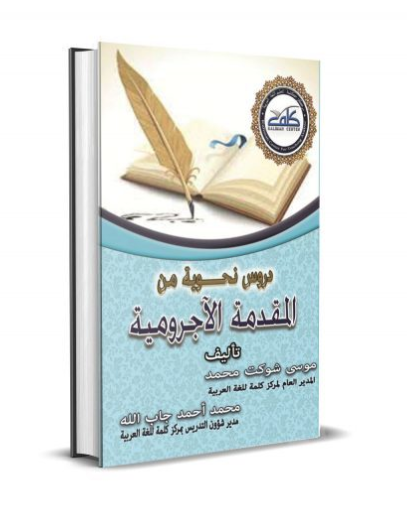
This course is based on the classical text “Ajurrumiyyah,” a time-honored guide that simplifies grammar in an accessible way. You’ll also learn how to construct sentences and understand their meanings deeply.
3. Read and Understand Classical Texts
Want to read and understand classical Arabic literature, Islamic texts, or poetry? Our course will guide you through these treasures step-by-step. We use carefully selected excerpts from classical works, including the Quran, to teach reading comprehension and contextual understanding.
Example: Surah Al-Fatiha (الفاتحة) You’ll learn the correct pronunciation, explore the linguistic beauty of its verses, and understand its profound meaning.
4. Develop a Rich Vocabulary
To master Classical Arabic, you need a strong vocabulary. Our program emphasizes learning the roots of words, which helps you understand their meanings and how they are used in various contexts. You’ll learn essential words such as “العلم” (al-ilm – knowledge) and “الحق” (al-haq – truth), words that appear frequently in classical literature and religious texts.
Read more about Should I Learn Arabic Or Farsi?
Why Choose Our Classical Arabic Learning Programs?
At Kalimah Center, we believe that learning Classical Arabic should be an enriching experience, filled with discovery and growth. Here’s what makes our programs stand out:
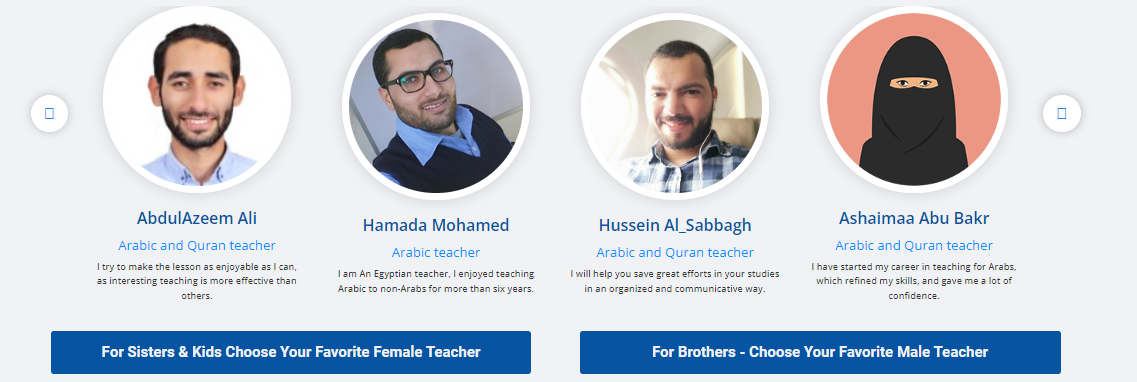
1. Expert Native Teachers
Our teachers are native Arabic speakers who bring a deep understanding of Classical Arabic to their teaching. They are well-versed in both the language and its cultural context, ensuring that you learn not just how to read and write, but also how to think and feel in classical Arabic. With their guidance, you’ll discover the beauty of this ancient language.
2. Comprehensive and Unique Curriculum
Our summer programs cover all aspects of classical Arabic: phonetics, grammar, reading, writing, and comprehension. You’ll start with the fundamentals and gradually build up to more complex topics. You’ll learn how to read classical texts fluently, understand complex sentences, and express yourself with confidence.
3. Bridge the Gap to Modern Arabic
While Classical Arabic may seem distant, it’s the foundation for all modern dialects. Our programs will equip you to understand and appreciate the rich tapestry of Arabic language and culture, opening doors to communication and connection across the Arab world.
Meet Our Passionate Teachers
Our teachers at Kalimah Center are not only experts in Classical Arabic but also passionate educators who bring this beautiful language to life. They will guide you through every step of your journey, ensuring that your learning experience is both challenging and rewarding.
Here are Some of Our Experienced Teachers that you can meet through your learning journey:
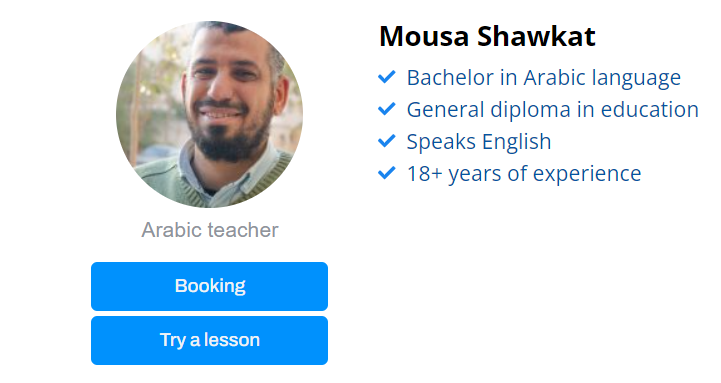
1. Mousa Shawkat
With over 18 years of experience teaching Arabic to non-native speakers, Mousa Shawkat is adept at tailoring his approach to suit your individual needs and learning style. His classes are known for their fun and engaging atmosphere, making learning Arabic a delightful experience.
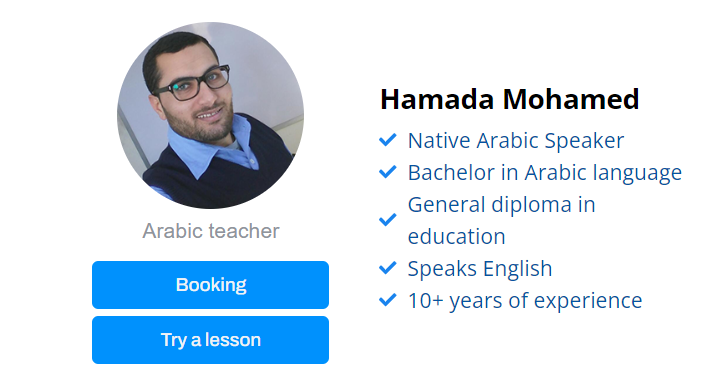
2. Hamada Mohamed
Hamada Mohamed is a passionate educator with over 10 years of experience, Hamada’s love for the Arabic language is contagious. He finds immense joy in witnessing his students’ progress and takes pride in helping them achieve fluency.
3. Hussein Al-Sabbagh
Hussein Al-Sabbagh‘s meticulous approach to teaching, honed over 8 years of experience, ensures a structured and communicative learning experience. He is committed to helping you save time and effort in your studies while achieving your language goals.
4. Angham Abdel Haleem
Angham Abdel Haleem is a versatile educator with a background in Arabic language, Islamic sciences, and educational counseling, Angham brings a holistic approach to her teaching. Her experience with diverse learners and innovative teaching methods ensures engaging and effective lessons tailored to your individual needs. She is particularly passionate about teaching children and fostering their love for the Arabic language and Islamic values.
5. Marwa Naser
Marwa Naser‘s passion for the Arabic language shines through in her teaching. She possesses a remarkable ability to simplify complex concepts, making Arabic accessible and enjoyable for learners of all levels. Her dedication to promoting classical Arabic understanding fuels her commitment to helping students achieve fluency.
6. Fatimah Jamal
Fatimah Jamal‘s background in Al-Azhar University, combined with her experience learning German as a foreign language, gives her unique insights into the challenges and joys of language acquisition. Her classes are interactive, fun, and utilize technology effectively.
Each lesson at Kalimah Center is carefully designed to be engaging, interactive, and tailored to your individual pace and learning style. Our teachers are committed to providing you with the support and guidance you need to succeed in your Arabic language journey.
Experience Kalimah Center Classes
Watch real excerpts from our live sessions at Kalimah Center and see how we bring learning to life. These clips highlight our interactive, student-centered teaching approach across all our courses—designed to keep learners engaged, motivated, and actively involved every step of the way.
Here Are The Reviews On Our Courses:
Our students frequently commend the excellence of our courses and the commitment shown by our instructors. You can read their complete reviews on Trustpilot.
Read more reviews on Trustpilot

Master Arabic with Kalimah Center
Join our expert-led online classes and start your journey toward Arabic fluency today.
Book Your Free TrialLearn Classical Arabic Writing: Script, Calligraphy & Practice Methods
Writing in Classical Arabic involves mastering the script and understanding its unique rules. At Kalimah Center, we provide exercises and resources that focus on handwriting, calligraphy, and textual analysis to help you develop this skill.
You’re drawn to the rich heritage of the language, but maybe you’re wondering where to begin.
This article on learning classical Arabic is a good start, but let Kalimah Center be your guide on this beautiful journey!
Why Kalimah Center? We make learning Classical Arabic achievable & enjoyable:
- Expert teachers, passionate about the language: Our teachers will inspire you with their deep knowledge and love for Classical Arabic.
- Comprehensive curriculum, step-by-step: Our courses are structured to build your skills gradually, from the alphabet to advanced grammar and literature.
- Focus on reading and understanding: You’ll learn to appreciate the intricate beauty of classical texts and poetry.
- Personalized Learning: We tailor our approach to your needs, ensuring you progress at your own pace.
Don’t just dream of reading classic texts – make it happen!
Join for FREE today!

Conclusion:
Learning Classical Arabic at Kalimah Center offers a journey into the heart of one of the world’s oldest languages, connecting you to a rich cultural and historical legacy. The center’s curriculum covers essential areas such as the Classical Arabic alphabet, grammar (including Nahw and Sarf), vocabulary, and immersion in texts like the Quran and classical literature.
Kalimah Center’s approach ensures a comprehensive learning experience with native expert teachers, who guide students through phonetics, grammar, and reading comprehension.
The structured courses, from beginner to advanced levels, make learning Classical Arabic enjoyable and personalized. Students gain fluency in the language while also bridging the gap to Modern Standard Arabic.
Whether learning for religious, cultural, or academic reasons, the program equips learners with the skills to engage with both historical and contemporary texts.
FAQs about Learn Classical Arabic
Q1: What is the difference between Classical Arabic and Quranic Arabic?
They are essentially the same language. “Quranic Arabic” refers specifically to the Arabic of the Quran (7th century CE), while “Classical Arabic” is the broader term covering all formal Arabic from roughly the 6th to 12th centuries, including pre-Islamic poetry, Hadith, and scholarly works. The grammar, syntax, and core vocabulary are identical. Some scholars make finer distinctions regarding vocabulary that is unique to the Quran, but for learning purposes, studying Classical Arabic gives you full access to Quranic Arabic.
Q2: Can I learn Classical Arabic without knowing Modern Standard Arabic first?
Yes, and many scholars recommend starting with Classical Arabic directly, especially if your primary goal is understanding the Quran and Islamic texts. Classical Arabic is actually the parent of MSA — once you learn Classical Arabic grammar, MSA becomes significantly easier because MSA is a simplified version of it. However, if your goal is modern communication first and classical texts second, starting with MSA and then transitioning to Classical Arabic is also a valid path.
Q3: What is the best book for learning Classical Arabic grammar?
For absolute beginners, Al-Ajurrumiyyah (متن الآجرومية) by Ibn Ajurrum is the traditional starting point — a concise text covering fundamental grammar rules used in Islamic seminaries for centuries. For intermediate learners, Qatr al-Nada (قطر الندى) by Ibn Hisham provides deeper syntactic analysis. For advanced students, Alfiyyat Ibn Malik (ألفية ابن مالك) is the definitive classical Arabic grammar reference, covering 1,000 verses of grammar rules. Modern textbooks like the Al-Kitaab series and Madinah Arabic books also introduce Classical Arabic structures.
Q4: Is Classical Arabic harder than Modern Standard Arabic?
Yes, Classical Arabic is more complex. It uses full I’rab (إعراب — grammatical case endings) on virtually every word, has a larger vocabulary with many archaic terms, employs more complex sentence structures, and follows stricter rhetorical conventions. However, the difficulty is manageable with structured study. Think of it as the difference between reading Shakespeare’s English and a modern newspaper — the grammar is richer, but the underlying language is the same.
Q5: How many words do I need to know to read the Quran in Classical Arabic?
The Quran contains approximately 77,000 total words but only about 14,870 unique words (including different grammatical forms). Of those, roughly 1,800 root words account for the vast majority of the text. Learning the 500 most frequent Quranic vocabulary words gives you comprehension of approximately 80% of the Quran’s text. Combined with basic Nahw (grammar) knowledge, this foundation allows meaningful engagement with most verses.