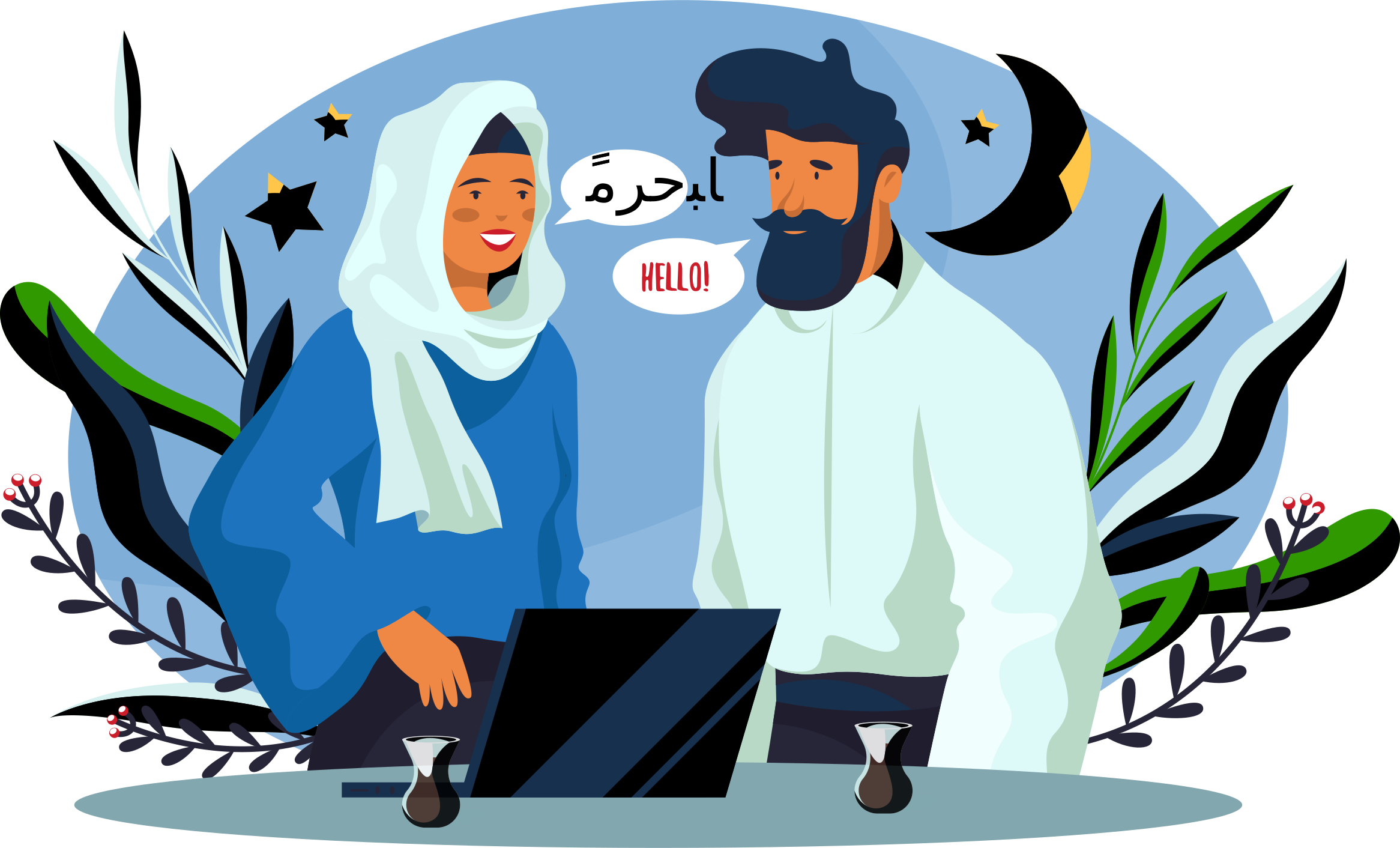
Arabic has five main dialect groups — Egyptian, Levantine, Gulf, Maghrebi, and Sudanese — plus Modern Standard Arabic (MSA), which is the formal written form used in media, education, and official settings. Egyptian Arabic is the most widely understood dialect due to Egypt’s media dominance. Maghrebi Arabic (Morocco, Algeria, Tunisia) is the hardest for other Arabic speakers to understand. For beginners, linguists and teachers recommend starting with MSA as the foundation before learning any dialect.
Key Takeaway Table:
| Dialect Group | Countries | Easiest To Understand? | Key Feature | Best For Learners? |
|---|---|---|---|---|
| Egyptian Arabic | Egypt | ✅ Most widely understood | “G” for ج, media dominance | ✅ Easiest to start with |
| Levantine Arabic | Syria, Lebanon, Jordan, Palestine | ✅ Widely understood | Melodic, moderate speed | ✅ Good for media/culture |
| Gulf Arabic | Saudi Arabia, UAE, Kuwait, Qatar | ✅ Moderate | Formal, close to Classical | ✅ Business/religious focus |
| Maghrebi Arabic | Morocco, Algeria, Tunisia | ❌ Hardest | French influence, fast, dropped vowels | ❌ Advanced learners only |
| Sudanese Arabic | Sudan | Moderate | Unique rhythm, African influences | Intermediate |
| MSA (Fusha) | All Arab countries (formal) | ✅ Universal | Written Arabic, formal speech | ✅ Best starting point |
All Arabic dialects — and Modern Standard Arabic (MSA) — share the same historical root: Classical Arabic, the language of the Quran and early Islamic scholarship. Both MSA and the spoken dialects diverged from this common ancestor, but through very different paths:
- MSA was deliberately standardized in the 19th–20th century as a formal written and broadcast language, closely aligned with Classical Arabic grammar
- Spoken dialects evolved organically over centuries as Arab populations spread across different regions, mixing with local Berber, Persian, Turkish, French, and other languages
What Are the Arabic Dialects?
When we talk about Arabic, we are actually talking about a whole family of languages and dialects. In Arabic, we call dialects “lahjat” or “ammiyyat“. These are the spoken versions of Arabic that vary from country to country, and even from city to city.
For example, in Egypt, we speak lahja maṣriya (Egyptian dialect), while in Morocco, they speak lahja maghribiyya (Moroccan dialect). Both are Arabic, but they can sound quite different from one another.
Each dialect has a group of its own unique pronunciation, vocabulary, and even grammar. But all these dialects come from the same source: the Arabic used in the Quran and classic texts, this form is called classical Arabic. Modern Standard Arabic (MSA) is the closest to classical Arabic, as we clarified in other articles, and it’s the foundation of all Arabic dialects.
How Many Arabic Dialects Are There?
We can classify Arabic into five primary dialect groups, but the number of the sub-dialects is far greater. Almost every Arab country has its own. The most common categories of dialects include:
| Dialect | Country/Region | Characteristics |
| Egyptian Arabic | Egypt | Widely understood due to Egyptian media |
| Levantine Arabic | Syria, Lebanon, Jordan, Palestine | Soft and melodic tone |
| Gulf Arabic | Saudi Arabia, UAE, Kuwait, Qatar | Close to Classical Arabic in some vocabulary |
| Maghrebi Arabic | Morocco, Algeria, Tunisia | Strong French influence, hardest for others to understand |
| Sudanese Arabic | Sudan | Unique rhythm and grammar |
But even within these regions, there are local variations. For example, the Arabic spoken in Cairo is a little bit different from the one spoken in Aswan. This makes it seem like there are many Arabic languages and dialects, but they are all still forms of Arabic.
Experience Kalimah Center Classes
Watch real excerpts from our live sessions at Kalimah Center and see how we bring learning to life. These clips highlight our interactive, student-centered teaching approach across all our courses—designed to keep learners engaged, motivated, and actively involved every step of the way.
Master Arabic with Kalimah Center
Join our expert-led online classes and start your journey toward Arabic fluency today.
Book Your Free TrialArabic Dialects Comparison: Pronunciation, Vocabulary, and Speed
In comparing Arabic dialects, Egyptian, Levantine, Gulf, and Maghrebi each differ in pronunciation, vocabulary, and speed. For example, the letter “ج” is pronounced as “g” in Egyptian, “j” in Levantine and Gulf, and “zh” in Maghrebi.
Vocabulary like “how are you?” varies: “izzayak” in Egyptian, “keefak” in Levantine, and “kidayr” in Maghrebi. Maghrebi is spoken very fast, often dropping vowels, while Gulf Arabic is slower and formal, making it easier for beginners. Levantine Arabic is melodic and moderate in speed, providing a balanced option for learners.
Now, let’s compare the most common dialects: Egyptian, Levantine, Gulf, and Maghrebi. Each dialect has its own sound, words, and style. Let me show you.
Comparison of Arabic Dialects In Pronunciation
In some dialects, the same letter can sound very different. For example, the letter ج (jeem) changes a lot between dialects:
- In Egyptian Arabic, it sounds like g, as in جميل (gamil), meaning “beautiful” (transliteration: gamil).
- In Levantine Arabic, it sounds like j, so جميل is pronounced jameel.
- In Gulf Arabic, it can also be j, so they say jameel too.
- In Maghrebi Arabic, it can be harder to hear because it mixes with other letters, but it’s usually pronounced zh.
Vocabulary Comparison Between Arabic Dialects
One of the main differences between dialects is how people use words and the vocabulary they use. Here’s a simple comparison of common words in different dialects:
| English | MSA | Egyptian | Levantine | Gulf | Moroccan |
|---|---|---|---|---|---|
| How are you? | كيف حالك؟ | إزيك؟ (izzayak?) | كيفك؟ (keefak?) | شلونك؟ (shloonak?) | كيداير؟ (kidayr?) |
| What? | ماذا؟ (madha?) | إيه؟ (eh?) | شو؟ (shoo?) | إيش؟ (eesh?) | أش؟ (ash?) |
| Yes | نعم (na’am) | أيوه (aywa) | إي (ee) | إي / أيه | إيه (eeh) |
| No | لا (la) | لأ (la’) | لا (la) | لا (la) | لا (la) |
| I want | أريد (ureed) | عايز (aayiz) | بدي (biddi) | أبي / ودي | بغيت (bghit) |
| Now | الآن (al-an) | دلوقتي (dilwa’ti) | هلق (hala’) | الحين (al-heen) | دابا (daba) |
| A lot | كثيراً (katheeran) | أوي (awi) | كتير (kteer) | وايد (wayd) | بزاف (bzaf) |
| Good | جيد (jayyid) | كويس (kwayyis) | منيح (mneeh) | زين (zayn) | مزيان (mzyan) |
| Where? | أين؟ (ayna?) | فين؟ (feen?) | وين؟ (ween?) | وين؟ (ween?) | فين؟ / وين؟ |
| Beautiful | جميل (jameel) | جميل/حلو (helw) | حلو (helw) | جميل (jameel) | زوين (zweeyn) |
| What’s your name? | ما اسمك؟ | اسمك إيه؟ | شو اسمك؟ | شو اسمك؟ | شنو اسمك؟ |
| I don’t understand | لا أفهم (la afham) | مش فاهم | مش فاهم | ما أفهم | ما فهمتش |
| House | بيت / منزل | بيت (bayt) | بيت (bayt) | بيت (bayt) | دار (dar) |
| Water | ماء (ma’) | مية (mayya) | مي (may) | ماء / مي | الما (lma) |
| Food | طعام (ta’am) | أكل (akl) | أكل (akl) | أكل (akl) | الماكلة (lmakla) |
Speed and Rhythm Comparison Between Arabic Dialects
Some dialects are spoken faster than others. For example, Maghrebi Arabic is very fast, and they often drop vowels. I always say, “Maghrebi Arabic is like a train, it doesn’t stop!” It’s not easy for learners because they speak Arabic quickly and mix Arabic with French.
On the other hand, Gulf Arabic is slower and more formal. They pronounce each letter clearly, which makes it easier to follow for new learners. Levantine Arabic is somewhere in between—soft and melodic, but not too fast.
Egyptian Arabic Dialect (العامية المصرية): Complete Profile
Spoken in: Egypt (population ~105 million)
Classification: Eastern Arabic
Global reach: Most widely understood Arabic dialect in the world
Key Phonological Features
| Sound | MSA | Egyptian Arabic | Example |
|---|---|---|---|
| ج (Jeem) | /j/ | /g/ | جميل (beautiful) → “gamil” |
| ق (Qaf) | /q/ | /ʔ/ (glottal stop) | قلب (heart) → “‘alb” |
| ث (Tha) | /θ/ (thin) | /t/ or /s/ | ثلاثة (three) → “talata” |
| ذ (Dhal) | /ð/ (this) | /d/ | ذهب (gold) → “dahab” |
Distinctive Vocabulary
- أيوه (aywa) = Yes (instead of MSA نعم)
- عايز (aayiz) = I want (instead of MSA أريد)
- إزيك؟ (izzayak?) = How are you? (instead of MSA كيف حالك؟)
- دلوقتي (dilwa’ti) = Now (instead of MSA الآن)
Why Egyptian Arabic Is So Widely Understood
Egypt produced the Arab world’s most influential cinema from the 1930s onward — Cairo was the “Hollywood of the Arab world.” Actors like Omar Sharif, Faten Hamama, and Adel Imam became pan-Arab icons. This media saturation means Arabs from Morocco to Iraq grew up hearing Egyptian Arabic in films and television, creating passive familiarity with the dialect even among non-Egyptians.
Levantine Arabic Dialect (الشامية): Syria, Lebanon, Jordan, and Palestine
Spoken in: Syria, Lebanon, Jordan, Palestine (combined ~35–40 million speakers)
Classification: Northern Semitic/Levantine Arabic
Tone: Melodic, moderate speed, widely understood across Arab world
Key Features
- ج (Jeem) pronounced as /j/ in most Levantine varieties (Lebanese sometimes /zh/)
- ق (Qaf) → glottal stop (ʔ) in most urban Levantine dialects
- Rich in borrowed words from Aramaic (ancient Levantine language), Turkish (Ottoman influence), and French (colonial influence in Lebanon/Syria)
Distinctive Vocabulary
| Levantine | MSA Equivalent | Meaning |
|---|---|---|
| شو؟ (shoo?) | ماذا؟ | What? |
| كيفك؟ (keefak?) | كيف حالك؟ | How are you? |
| بدي (biddi) | أريد | I want |
| هلق (hala’) | الآن | Now |
| كتير (kteer) | كثير | A lot |
Regional Sub-Variations
- Lebanese Arabic — French influence heavier; code-switching to French very common; most “international” Levantine variety
- Syrian Arabic — considered closest to MSA among Levantine dialects; Damascus dialect is prestigious
- Jordanian Arabic — some Bedouin influence; slight Gulf Arabic overlap
- Palestinian Arabic — distinct urban/rural variations; marked by unique vocabulary items
Gulf Arabic Dialect (الخليجية): Saudi Arabia, UAE, Kuwait, Qatar, Bahrain, Oman
Spoken in: Gulf Cooperation Council countries (combined ~50+ million speakers)
Classification: Arabian Peninsula Arabic
Key characteristic: Slower, more formal, retains some Classical Arabic features
Key Features
- ج (Jeem) → pronounced as /j/ in most Gulf areas, except some regions where it becomes /y/
- ق (Qaf) → full /q/ uvular pronunciation maintained (unlike Egyptian/Levantine glottal stop)
- ث (Tha) → maintained as /θ/ (unlike Egyptian where it becomes /t/)
- Persian loanwords common: “بستكي” (bastaki), “دوشك” (dooshak — mattress)
Distinctive Vocabulary
| Gulf Arabic | MSA Equivalent | Meaning |
|---|---|---|
| شلونك؟ (shloonak?) | كيف حالك؟ | How are you? |
| وايد (wayd) | كثير | A lot |
| الحين (al-heen) | الآن | Now |
| زين (zayn) | جيد | Good |
| هلا (hala) | أهلاً | Welcome |
Why Gulf Arabic Is Valuable for Learners
The Gulf region hosts enormous numbers of English-speaking expatriates in professional settings. The Gulf’s economic power means Gulf Arabic is valuable for business, particularly in oil, finance, technology, and construction sectors. Gulf Arabic’s slower pace and closer relationship to Classical Arabic grammar also makes it somewhat easier for MSA learners to understand than Egyptian or Maghrebi dialects.
Maghrebi Arabic (الدارجة المغربية): Morocco, Algeria, and Tunisia
Spoken in: Morocco, Algeria, Tunisia, Western Libya (combined ~80+ million speakers)
Classification: Western Arabic / Maghrebi
Key characteristic: Hardest Arabic dialect for eastern Arabic speakers to understand
Why Maghrebi Arabic Is So Different
Maghrebi Arabic developed in geographic and cultural isolation from eastern Arab dialects, absorbing massive influence from:
- Amazigh/Berber languages — the indigenous languages of North Africa, structurally very different from Arabic
- French — 19th–20th century colonial language, now deeply embedded in educated speech
- Spanish (especially Morocco) — Northern Morocco has significant Spanish influence
Key Features That Make It Hard to Understand
- Dramatic vowel reduction — many short vowels are dropped: “kitab” (book) → “ktab”
- Very fast speech rhythm — described by other Arabs as “the words come too fast to catch”
- Consonant clusters — Berber influence creates consonant clusters unusual in other Arabic dialects
- French code-switching — educated Moroccans and Algerians switch between Arabic and French mid-sentence
Distinctive Vocabulary
| Moroccan (Darija) | MSA Equivalent | Meaning |
|---|---|---|
| كيداير؟ (kidayr?) | كيف حالك؟ | How are you? |
| بزاف (bzaf) | كثير | A lot |
| دابا (daba) | الآن | Now |
| مزيان (mzyan) | جيد | Good |
| واش (wash) | هل | Question marker |
Master Arabic with Kalimah Center
Join our expert-led online classes and start your journey toward Arabic fluency today.
Book Your Free TrialAre Arabic Dialects Mutually Intelligible?
Can different Arabic dialects understand each other? Basically, yes. People who speak Arabic can usually understand each other to some degree, but it depends on the dialects involved.
Some dialects, like Egyptian Arabic, are widely understood across the Arab world because of Egyptian movies, TV shows, and music. But others, like Maghrebi Arabic, can be harder to understand even for native speakers from other regions.
For example, someone from Egypt might find it easier to understand Levantine Arabic than Moroccan Arabic because the Maghrebi dialects are quite different from the rest.
| Dialect Group | Mutually Intelligible With |
| Egyptian Arabic | Levantine, Gulf |
| Levantine Arabic | Egyptian, Gulf |
| Maghrebi Arabic | Very little with other dialects |
| Gulf Arabic | Levantine, Egyptian |
Arabic Dialects Map: Understanding the Geographic Spread
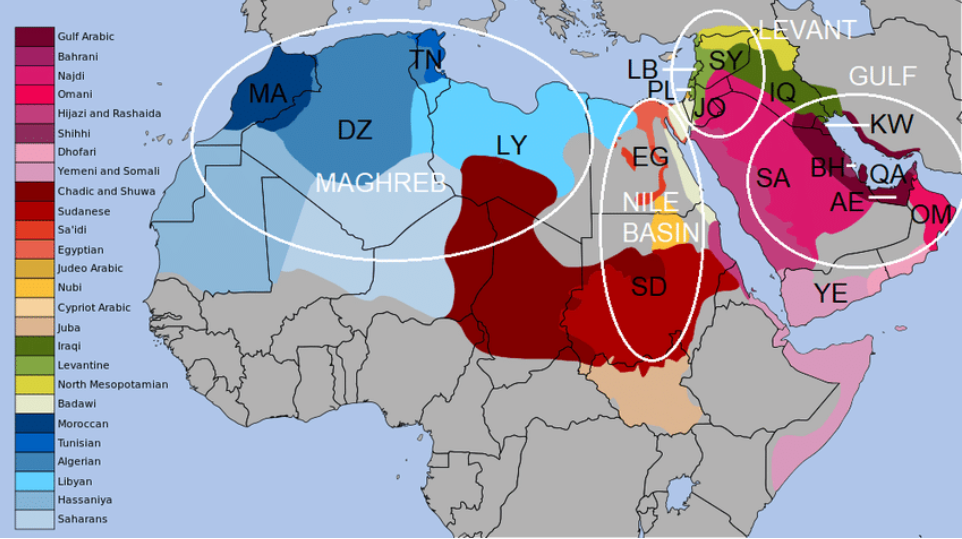
To visualize this, take a look at this map. The dialects span across a huge area from Morocco in the west to Iraq in the east, and from Yemen in the south to Syria in the north. On this Arabic dialects map, you’ll notice that the closer the countries are, the more their dialects tend to be similar.
For example, Jordanian Arabic and Palestinian Arabic are very close, while Moroccan and Gulf Arabic can feel worlds apart.
Why Are Arabic Dialects So Different?
Arabic dialects diverged over 14 centuries of geographic expansion, conquest, trade, and cultural contact. Here are the main forces that shaped each dialect group:
1. Geographic Separation
When Islam spread across the Middle East, North Africa, and Central Asia from the 7th century onward, Arabic speakers settled in regions with existing populations speaking very different languages. Over generations, Arabic absorbed vocabulary, sounds, and grammatical features from these local languages.
2. Substrate Language Influence
| Dialect Group | Primary Substrate Languages | Example Influence |
|---|---|---|
| Maghrebi | Berber (Amazigh), French, Spanish | Darija uses many Berber words; French words common in educated speech |
| Egyptian | Coptic, ancient Egyptian | Some Coptic words survive in Egyptian Arabic |
| Levantine | Aramaic, Turkish, French, Greek | Many Aramaic loanwords; Turkish influence from Ottoman era |
| Gulf | Persian, Swahili, Urdu | Persian words in Gulf vocabulary; coastal trade influence |
| Sudanese | African languages, Nubian | Unique vocabulary and tonal qualities |
3. Political and Cultural Isolation
Before mass media, Arab communities developed independently for centuries. A tribe in rural Morocco had no way to hear or interact with speakers from Baghdad. This isolation accelerated divergence.
4. The Role of Media in Recent Convergence
Modern media — particularly Egyptian cinema and Al Jazeera — has actually reduced dialect divergence over the past 50–70 years. Many Arabs have absorbed Egyptian vocabulary and speech patterns through entertainment, creating a degree of passive understanding that didn’t exist a century ago.
What Is the Easiest Arabic Dialect to Learn?
If you’re wondering which Arabic dialect is easiest to learn, Egyptian Arabic is usually the answer. Why? Because Egypt is the most spoken Arabic dialect and the heart of Arabic cinema and media, so Egyptian Arabic is widely understood across the Arab world. Many people will recognize Egyptian Arabic from movies, TV shows, and music.
What is the Hardest Arabic Dialect to Understand?
On the other hand, Maghrebi Arabic (spoken in Morocco, Algeria, Tunisia) is considered the hardest Arabic dialect to understand. This is because it has a lot of influence from other languages and sounds quite different from the Arabic you’ll learn in a book.
Which Arabic Dialect Should You Learn? MSA vs. Dialects Explained
I always tell my students to start with Modern Standard Arabic (MSA) before jumping into dialects. Here’s why:
- MSA is the foundation: It’s the formal version of Arabic, used in writing, news, literature, and formal speeches. If you know MSA, you’ll be able to read the Qur’an, newspapers, books, and official documents in any Arab country.
- MSA is universally understood: While dialects can be confusing, fus-ha (MSA) is like the common language that unites all Arabs. Arabs from Morocco to Iraq can understand it because they learn it in school and use it in formal settings.
Kalimah Center’s Arabic course is a great option if you’re interested in learning Arabic. Our comprehensive MSA courses will take you from beginner to advanced levels in speaking, listening, writing, and reading.
With expert native Arabic teachers and engaging lessons, you’ll gain the essential skills to smoothly transition into learning Egyptian Arabic.
By mastering MSA with Kalimah Center, you’ll build a strong foundation in Arabic grammar and vocabulary, develop the ability to read and comprehend Arabic texts, enhance your understanding of the structure and nuances of the Arabic language, and prepare yourself to dive into the world of Arabic dialects.
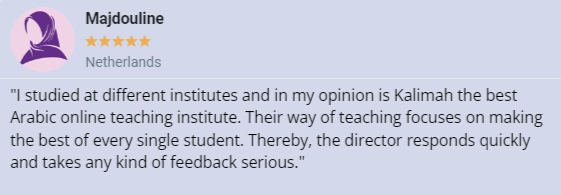
Don’t just take my word for it. Listen to the students!
Join us for a FREE trial class and see if Kalimah is the right fit for you.
How to Learn Arabic Dialects?
You want to learn a dialect, right? Good! But first, it’s better to start with Modern Standard Arabic (MSA). It’s like the foundation of a house. Once you have that, learning a dialect is easier.
Learning a dialect is not so hard if you have a plan. I’m an Arabic teacher from Egypt, and I have some tricks to help you learn fast. Here are some easy steps:
Step 1: Choose Your Dialect Based on Your Goal
Before you can learn a dialect, you need to pick one. Here’s a quick decision framework:
| Your Goal | Recommended Dialect |
|---|---|
| Understand Arabic media broadly | Egyptian Arabic |
| Travel or work in the Levant | Levantine Arabic |
| Business in the Gulf | Gulf Arabic (Saudi/Emirati) |
| Live in Morocco/Algeria/Tunisia | Moroccan Arabic (Darija) |
| Understand Quran / religious study | MSA + Classical Arabic |
| Academic or diplomatic Arabic | MSA |
Step 2: Build MSA Foundation First (Minimum 3–6 Months)
Every Arabic dialect learner who skips MSA eventually hits a wall — complex vocabulary, classical references, formal media, and religious texts all draw from MSA. Three to six months of MSA study gives you the grammatical framework to learn any dialect faster.
Step 3: Learn the Dialect-Specific Sound Changes
Every dialect modifies certain sounds from MSA. Learning these “rules” lets you understand and predict dialect vocabulary:
| Sound Change | MSA | Egyptian | Levantine | Gulf |
|---|---|---|---|---|
| ج (Jeem) | j | g | j | j or y |
| ق (Qaf) | q | glottal stop (‘) | glottal stop | q or g |
| ث (Tha) | th | t or s | t or s | th |
| ذ (Dhal) | dh | d or z | d | dh |
Step 4: Immerse in Dialect Media
- Egyptian: Watch Egyptian series on Netflix/YouTube — “Paranormal,” “Tash Ma Tash,” Egyptian films
- Levantine: Lebanese and Syrian TV dramas, Lebanese music
- Gulf: MBC Gulf channels, Saudi YouTube creators
- Moroccan: Moroccan YouTube channels, Darija Instagram content
Step 5: Learn High-Frequency Dialect Phrases First
Before grammar, learn the 20–30 phrases you’ll use every day in your target dialect. (See expanded vocabulary comparison below.)
Master Arabic with Kalimah Center
Join our expert-led online classes and start your journey toward Arabic fluency today.
Book Your Free TrialInside Kalimah Center: Moments from Our Courses
Get a glimpse into the vibrant learning experience at Kalimah Center. These snapshots capture real moments from our live classes—where students engage deeply, connect with passionate instructors, and grow in a welcoming, supportive environment.
Here Are The Reviews On Our Courses:
Our students frequently commend the excellence of our courses and the commitment shown by our instructors. You can read their complete reviews on Trustpilot.

Which Arabic Dialect Should I Learn to Understand the Quran?
This is a straightforward answer: You need to learn Modern Standard Arabic (MSA), which is very close to Classical Arabic—the language of the Quran.
This is the language the Quran was revealed in, and it hasn’t changed much since then. If your goal is religious, start with MSA, and you’ll be able to read and understand the Quran.
Master the Foundation: Learn Modern Standard Arabic at Kalimah Center
Our native Arabic teachers understand the unique connection between Modern Standard Arabic (MSA) and the diverse dialects spoken across the Arab world.
At Kalimah Center, we’ll give you the foundation in MSA you need to confidently explore and understand any Arabic dialect. Our online Arabic course for adults focuses on:
- Building a Strong Foundation in MSA: Learn essential grammar, vocabulary, and pronunciation to unlock the key to any dialect.
- Practice with Native Speakers: Our experienced teachers will help you develop your listening and speaking skills.
- Bridging the Gap to Dialects: While we focus on MSA, our experienced teachers will guide you in understanding how it connects to spoken varieties, making your transition to a specific dialect smoother.
Join us for a FREE trial class and start your journey towards mastering Arabic communication, no matter the dialect!
Our courses:
- Learn Arabic Online For adults. Talk Arabic easy!
- Learn Arabic for Kids: Fun way for kids to learn.
- Learn Quran Online: Read Quran right. Understand it better!
Join us for a FREE trial class today! You’ll see how Kalimah Center can help you learn MSA quickly and easily.
Conclusion:
Arabic dialects vary significantly across regions, but all share a foundation in Modern Standard Arabic (MSA). The primary dialect groups include Egyptian, Levantine, Gulf, Maghrebi, and Sudanese Arabic, each with unique pronunciation, vocabulary, and influences from local languages.
While Egyptian Arabic is widely understood due to media, Maghrebi dialects are among the hardest to understand because of their speed and blending with French. Despite these differences, Arabs can usually communicate across dialects, especially with familiarity in MSA, which serves as the formal, unifying version of the language.
When choosing which dialect to learn, MSA is a solid starting point as it provides access to formal communication, media, and religious texts like the Quran. After mastering MSA, learners can transition more easily to specific dialects.
Egyptian Arabic is often recommended for beginners due to its prevalence, while Maghrebi Arabic poses a greater challenge. Listening to native speakers, watching media, and practicing common phrases can help accelerate the learning process.
FAQs about Arabic Dialects
Q1: What Arabic dialect does Duolingo teach?
Duolingo teaches Modern Standard Arabic (MSA) — the formal, written form of Arabic used in news, literature, and official communication. This is the same Arabic used in the Quran and formal speeches. Duolingo does not teach any specific spoken dialect (Egyptian, Levantine, Gulf, etc.). This makes Duolingo useful for building reading vocabulary and basic grammar awareness, but its Arabic content does not prepare you for everyday conversation in most Arab countries, where local dialects are spoken.
Q2: Which Arabic dialect is closest to the Quran?
The Quran was revealed in Classical Arabic — specifically the Qurashi dialect of 7th-century Arabia. Of the modern Arabic varieties, Gulf Arabic (particularly the dialects of the Hejaz region in Saudi Arabia) and Yemeni Arabic retain some phonological features closest to Classical Arabic pronunciation. However, Modern Standard Arabic (MSA) — not any spoken dialect — is the closest living form to Quranic Arabic in terms of grammar and vocabulary. For Quranic understanding, studying MSA with classical Arabic grammar (Nahw) is the most direct path.
Q3: Are all Arabic dialects mutually intelligible?
Mutual intelligibility varies significantly between dialect pairs. Speakers of Egyptian and Levantine Arabic generally understand each other well, due to geographic proximity and shared media. Gulf Arabic speakers can understand Egyptian and Levantine with moderate effort. Maghrebi Arabic (Morocco, Algeria, Tunisia) is the major exception — its heavy Berber and French influence, fast speech, and dropped vowels make it very difficult for speakers of eastern Arabic dialects to understand. A Moroccan and a Syrian may struggle to communicate in dialect but can typically switch to MSA as a common language.
Q4: What is the most spoken Arabic dialect in the world?
Egyptian Arabic is the most widely spoken and understood Arabic dialect globally, with approximately 68–80 million native speakers in Egypt alone. It is also the most recognized dialect internationally due to Egypt’s enormous influence on Arabic cinema, television, music, and media throughout the 20th and 21st centuries. Even Arabs who don’t speak Egyptian Arabic natively can typically understand it because of this media saturation. After Egyptian, Levantine Arabic and Gulf Arabic have the next largest combined speaker populations.
Q5: How many Arabic dialects are there in total?
Linguists estimate there are between 25 and 30 distinct Arabic dialects if you count major national dialects — one per Arab country. When regional and city-level variations are included, the number can exceed 100 distinct varieties. Formally, Arabic dialects are classified into 5 primary groups: Egyptian, Levantine, Gulf, Maghrebi, and Sudanese/Yemeni. Within each group, significant sub-dialect variation exists — for example, within Levantine Arabic, Lebanese, Syrian, Jordanian, and Palestinian Arabic all have distinct features despite being mutually intelligible.