To learn Egyptian Arabic, start by mastering the Arabic alphabet (shared with MSA), then focus on Egyptian-specific pronunciation shifts — particularly the Qaf-to-glottal-stop and Jeem-to-hard-G sounds. Build vocabulary through Egyptian movies, podcasts, and apps like Anki and Bluebird. Practice the unique “Ma…sh” negation structure and present-tense “B” prefix. Conversational fluency typically takes 6–18 months with consistent daily practice. For kids, songs, cartoons, and role-play are the most effective methods.
Key Takeaway Table:
| Factor | Details |
|---|---|
| Alphabet | Same 28 letters as MSA — learn these first |
| Key Sound Shifts | ق (Qaf) → glottal stop; ج (Jeem) → hard “G” |
| Unique Grammar | “Ma…sh” negation; “B-” present tense prefix; no dual forms |
| Time to Conversational Level | 6–18 months (daily practice) |
| Best Resources | Anki, Bluebird app, Kallimni ‘Arabi books, Egyptian cinema |
| For Kids | Songs, cartoons (Bakar), flashcards, role-play |
| MSA Foundation Recommended? | Yes — helps with reading, writing, and cross-dialect comprehension |
As an Egyptian who has taught Arabic for many years, I can tell you that learning Egyptian Arabic is a great choice for anyone who wants to connect with the rich culture, people, and even the humor of Egypt.
Curious about Egyptian Arabic but don’t know where to begin? This comprehensive guide is your answer! I’ve packed it with practical tips, helpful resources, and even a section on teaching Egyptian Arabic to kids.
What Is Egyptian Arabic? (And How It Differs from MSA)
Egyptian Arabic (اللهجة المصرية, al-lahja al-masriyya) is the everyday spoken language of Egyptians. It’s not the formal Arabic you hear in news broadcasts or read in books. Instead, it’s what we use in our daily conversations, on TV shows, in movies, and on social media.
Egyptian Arabic is not a separate language but rather a dialect of Arabic, and it’s understood by many Arabs across the Middle East due to Egypt’s dominant cultural influence in the region.
This dialect has its own unique words, pronunciation, and sometimes even grammar rules, making it distinct from Modern Standard Arabic (اللغة العربية الفصحى المعاصرة, al-lugha al-‘arabiyya al-fuṣḥa), which is the formal version of Arabic used in writing, news, and official contexts.
This dialect has some influences from other languages, such as Turkish, French, and Italian. You will hear many words like “أوضة” (ʾūḍa) from Turkish, which means “room” in Egyptian Arabic.
Example:
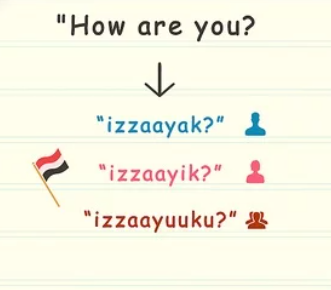
“إزيك؟” (izzayyak) means “How are you?”
- izzayyak (for males), izzayyik (for females)
In contrast, if you wanted to ask the same thing in MSA, you would say:
“كيف حالكَ؟” (kayfa ḥāluka) for a male and “كيف حالكِ؟” (kayfa ḥāluki) for a female.
In Egypt, Arabic isn’t just a language – it’s part of our identity. We say El-lugha el-Arabiyya (اللغة العربية), which means “the Arabic language,” with pride. Egyptians grow up hearing both MSA in school and Egyptian Arabic at home.
If you walk down the streets of Egypt, you’ll notice the language is alive, evolving, and connected to our daily lives. From the markets to the mosques, from the classrooms to the ahwa (قهوة), or traditional coffee shops, Egyptian Arabic is the pulse of our society.
In daily life, many Egyptians naturally code-switch between MSA and Egyptian Arabic depending on context. You’ll hear MSA in university lectures, religious sermons, and news broadcasts, while Egyptian Arabic dominates in homes, streets, cafés (known locally as ahwa, قهوة), and social media. Understanding this dynamic will help you know when to use which register as your skills develop.
How to Learn Egyptian Arabic: 10 Practical Steps
Now that you know what Egyptian Arabic is, how do you start learning it? My recommendation is always to begin with Modern Standard Arabic. Once you have the basics, you can transition into Egyptian Arabic for daily conversations.
Learning Egyptian Arabic is not difficult if you follow a good plan. As an Arabic teacher from Egypt, I know some smart ways to help you learn fast. Here, I will share simple steps that you can use to improve.
1. Learn Egyptian Arabic Alphabet
if it comes to Modern Standard Arabic vs. Egyptian Arabic, The Egyptian Arabic alphabet is the same as the Modern Standard Arabic alphabet, so if you already know MSA, you’re good to go. If not, start with the basics. The Arabic alphabet has 28 letters, and learning to write and recognize them is an essential first step.
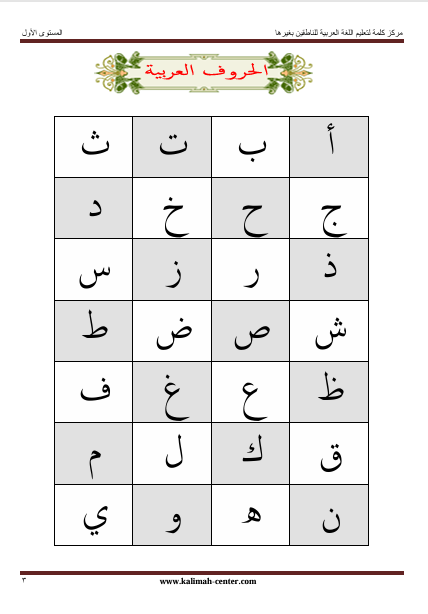
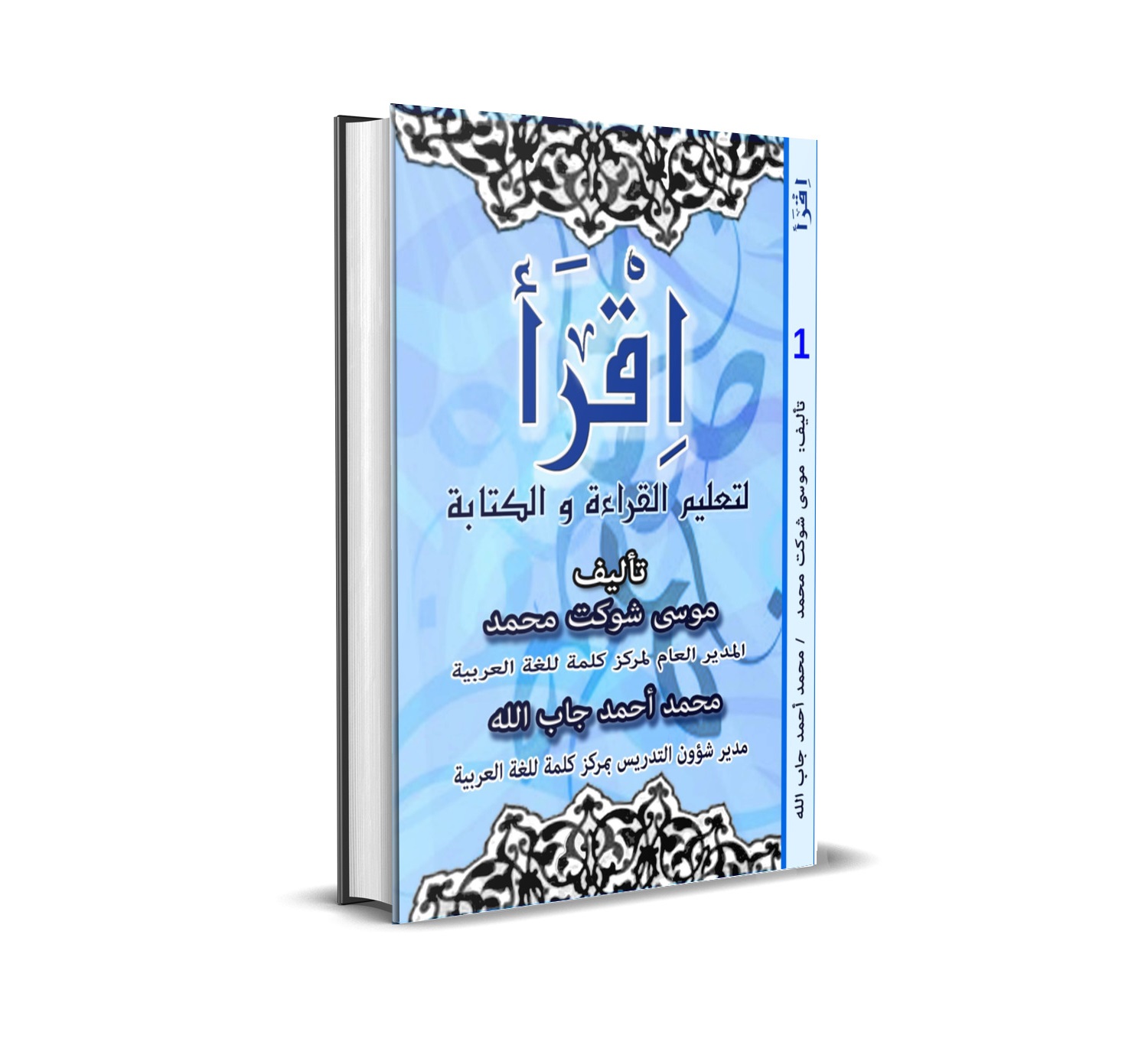
*From Kalimah’s curriculum for online Arabic Course.
This will make learning Egyptian Arabic much easier in the long run.
2. Listen to How Egyptians Talk
The first thing to do is listen to how Egyptians talk. Listen before you speak. This will help you understand the sounds and rhythm. You can watch Egyptian movies, shows, or YouTube videos.
- Example: “إزيك؟” (Izzayak?) – “How are you?”
This is a common way Egyptians greet each other. Try to repeat it after you hear it.
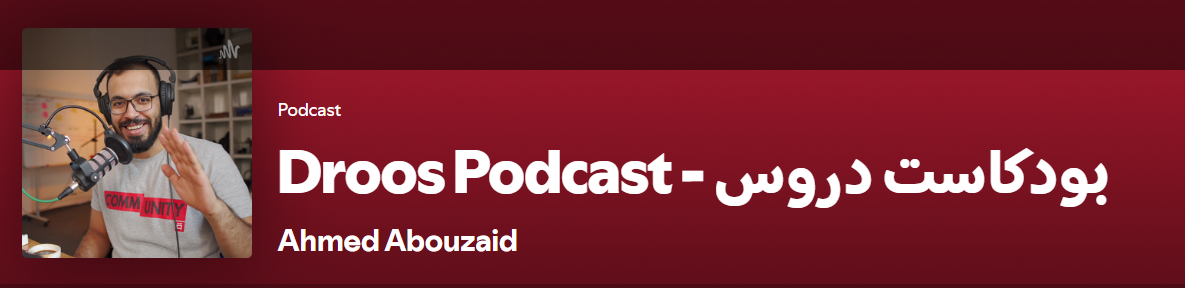
Another tip: listen to Egyptian podcasts. Podcasts help you learn new words in a fun way. I recommend بودكاست دروس – Droos Podcast.
3. Watch Egyptian Movies and TV Shows
Egyptian cinema is famous across the Arab world. Watching Egyptian movies and TV shows is one of the best ways to get used to the accent and slang of Egyptian Arabic. Try to follow along with subtitles and repeat common phrases. For example:
- “إزيك؟” (Izzayak?) – “How are you?”
- “أنا تمام” (Ana tamām) – “I’m fine.”
4. Learn Useful Phrases First
Do not start by learning grammar rules or reading books. Start by learning phrases that you can use in daily life. When you meet Egyptians, you can practice. Some useful phrases:
- “أنا جعان” (Ana ga‘an) – “I am hungry.”
- “فين الحمام؟” (Feen el-hammam?) – “Where is the bathroom?”
These phrases help you speak Arabic more quickly and give you confidence.
5. Learn Egyptian Arabic Grammar
Egyptian Arabic grammar is a testament to the language’s dynamic and evolving nature. It prioritizes ease of use and directness in communication, often simplifying the more intricate grammatical structures found in Modern Standard Arabic (MSA).
- Simplified Case Endings: While MSA relies heavily on case endings (الإعراب) to indicate grammatical functions, Egyptian Arabic often dispenses with these, leading to a less complex sentence structure.
- MSA: كتابٌ جميلٌ (kitābun jamīlun) – “A beautiful book.”
- Egyptian Arabic: كتاب جميل (kitāb gamīl) – “A beautiful book.”
- Flexible verb conjugation: Although Egyptian Arabic maintains some distinctions in verb conjugation, it tends to be less stringent than MSA, particularly concerning gender and number agreement.
- MSA: أنتِ تأكلين (anti ta’kulin) – “You (feminine) eat.”
- Egyptian Arabic: إنتي بتاكلي (inti btaakulī) – “You (feminine) eat.”
- Absence of Dual Forms: MSA employs a dedicated dual form for pronouns and verbs, but Egyptian Arabic generally avoids this, using the plural form instead for both two and more than two entities.
- MSA: هُما يَكتُبانِ (huma yaktubāni) – “They two (masculine) are writing”
- Egyptian Arabic: هُمَّ بيكتِبوا (humma beyiktíbu) – “They are writing” (Whether it’s two or more, we use the same plural form)
- Limited Use of Passive Voice: The passive voice, common in MSA, is far less prevalent in Egyptian Arabic, which favors active constructions or alternative phrasing for a more straightforward expression.
- MSA: كُتِبَ الكِتابُ (kutiba al-kitābu) – “The book was written”
- Egyptian Arabic: الكِتاب إتْكَتَب (el-kitāb itkatab) or حدّ كَتَب الكِتاب (ḥadd katab el-kitāb) – “The book got written” or “Someone wrote the book”
- Focus on “Filler” Words
- To sound natural, you need the words that fill the gaps in conversation. Egyptians use these constantly to add flavor or emphasis:
- Ya’ni: Means “it means” or “like/so.” Use it when you’re thinking of what to say next.
- Khalas: Means “finished,” “enough,” or “okay.”
- Mashi: Means “walking” but is used globally for “okay” or “fine.”
6. Speak from Day One
When you start learning Egyptian Arabic, speak from day one. Even if you only know two or three words, use them. For example, if you only know “شكراً” (shukran), which means “thank you,” try to say it whenever you can. Do not be shy to make mistakes. This is how you learn fast.
7. Use Egyptian Slang
To sound like a local, you need to learn some Egyptian slang. Here are some words that are fun to use:
- “تمام” (tamām) – “Perfect/Okay”
- “عادي” (‘adi) – “No problem/It’s fine”
Practice the “B” Prefix for Present Tense
In Egyptian Arabic, when you talk about an ongoing action or a habit, you add a “B” (بـ) to the start of the verb.
- Standard: Ashrab (I drink)
- Egyptian: Bashrab (I am drinking / I drink) Understanding this simple prefix will help you identify verbs in a sentence much faster.
This will help you sound more natural when speaking with Egyptians.
8. Talk to Yourself in Egyptian Arabic
One strange but effective idea: talk to yourself in Arabic. When you are at home, try to say simple things in Egyptian Arabic. For example, when you wake up, say to yourself:
- أنا هقوم من السرير” (Ana ha’oom min el-sareer) – “I will get out of bed.
This helps your brain get used to thinking in Egyptian Arabic.
9. Learn Egyptian Gestures
In Egypt, people use hand gestures when they talk. These gestures are like part of the language. For example, to say “wait,” you might see Egyptians raise their hand and say:
- “استنى” (Istanā) – “Wait!”
Using these gestures with your words can help you communicate better.
10. Write in Egyptian Arabic
Even though Egyptian Arabic is mostly spoken, you can still practice writing it. Try writing short messages to yourself or your Egyptian friends. Write simple sentences first like:
- “أنا رايح السوق” (Ana rāyeh el-sooq) – “I’m going to the market.”
This makes it easier to remember new words.
As I mentioned, MSA is the foundation for understanding any Arabic dialect, including Egyptian Arabic. Kalimah Center offers comprehensive MSA courses that guide you from the fundamentals to advanced levels of speaking, listening, writing, and reading. With our native Arabic teachers from Egypt and engaging lessons, you’ll gain the essential skills to transition seamlessly into learning Egyptian Arabic.
By mastering MSA with Kalimah Center, you’ll:
- Build a strong foundation in Arabic grammar and vocabulary.
- Develop the ability to read and comprehend Arabic texts.
- Enhance your understanding of the structure and nuances of the Arabic language.
- Prepare yourself to dive into the world of Egyptian Arabic conversations.
But don’t just take my word for it. Listen to the students:
Join us for a FREE trial class and see if Kalimah is the right fit for you.
Read more about: Egyptian Arabic Pronouns
Experience Kalimah Center Classes
Watch real excerpts from our live sessions at Kalimah Center and see how we bring learning to life. These clips highlight our interactive, student-centered teaching approach across all our courses—designed to keep learners engaged, motivated, and actively involved every step of the way.
Master Arabic with Kalimah Center
Join our expert-led online classes and start your journey toward Arabic fluency today.
Book Your Free TrialHow to Teach Egyptian Arabic to Kids: 7 Fun Methods
Teaching Egyptian Arabic to kids is fun, but you need to use simple and exciting ways. Kids learn best when they play, sing, and move. As a teacher, I know some special tricks that work well with children. Let me share them with you.
1. Start with Songs and Rhymes
Kids love music, and it’s a great way for them to learn new words. Egyptian songs for children are perfect because they are catchy and repeat words many times. Start with a popular song like:
- “بابا جاي امتى؟” (Baba gay emta?) – “When is daddy coming?”
Kids will love to sing this, and they will learn new words without even realizing.
2. Use Flashcards with Pictures
Flashcards with pictures and simple Arabic words for kids are very helpful. Show a picture of a cat and say, “قطة” (’otta), which means “cat” in Arabic.
- “قُطة” (’otta) – “Cat”
You can make a game by asking the child to point to the right picture when you say the word in Arabic. This will help them remember quickly.
3. Learn with Actions
One creative idea that works well with kids is learning through actions. Ask the child to do something simple in Egyptian Arabic. For example:
- “اجري” (Egri) – “Run”
You can make this into a fun game where you give simple commands, and the child does the action. It keeps them active and helps them remember the words.
4. Learn with Cartoons
Cartoons are a great way for kids to hear and see the language. Egyptian Arabic cartoons for kids like “بكار” (Bakar) are popular and easy for kids to understand. Let them watch for 15-20 minutes a day. Then, ask them what words they understood.
5. Practice Egyptian Arabic with Simple Stories
Kids absorb language naturally through storytelling. Read or tell short stories in Egyptian Arabic, using simple vocabulary and lots of repetition. You can start with familiar stories (like fairy tales) retold in Egyptian Arabic.
For example, instead of reading a story in English, try narrating a simplified version:
- “كان في مرة ولد اسمه أحمد…” (Kan fi marra walad ismo Ahmad…) — “Once upon a time there was a boy named Ahmad…”
Use dramatic voices and facial expressions to keep children engaged. After the story, ask simple questions in Egyptian Arabic:
- “الولد راح فين؟” (El-walad raah feen?) — “Where did the boy go?”
This builds listening comprehension, vocabulary, and sentence structure simultaneously.
6. Use Toys for Role-Play
Kids love playing with toys. Use their favorite toys to teach them new words. For example, if they have a toy car, say:
- “عربية” (’arabeya) – “Car”
Make the toy talk, and use simple phrases like, “العربية ماشية” (el-‘arabeya mashya) – “The car is moving.” This way, learning feels like playing.
7. Practice Speaking Together
Finally, practice speaking together. Kids need to hear and speak the language often. Have small conversations with them. For example:
- You say: “إزيك؟” (Izzayak?) – “How are you?”
- The kid can reply: “كويس” (Kwayes) – “Good.”
Speak to them in simple sentences, and they will start replying in Egyptian Arabic.
As I recommended it to the adults, I recommend it to kids too, Begin with Modern Standard Arabic. Once the kids have the basics, they can transition into Egyptian Arabic for daily conversations.
Our online Arabic courses for KIDS offer:
- Experienced, child-friendly tutors who make learning Arabic exciting.
- Interactive presentations to keep your child’s attention and boost their learning.
- Specially designed books that make learning MSA easy and enjoyable for non-Arabic speakers.
- Level-based learning so your child can progress at their own pace.
Sign up for a FREE trial class. See if Kalimah Center is right for your CHILD!
Experience Kalimah Center Classes
Watch real excerpts from our live sessions at Kalimah Center and see how we bring learning to life. These clips highlight our interactive, student-centered teaching approach across all our courses—designed to keep learners engaged, motivated, and actively involved every step of the way.
Master Arabic with Kalimah Center
Join our expert-led online classes and start your journey toward Arabic fluency today.
Book Your Free TrialLearn Egyptian Arabic Dialect: Key Sounds for Beginners
Egyptian Arabic has several sounds that don’t exist in English. Mastering these early prevents bad habits that become harder to fix later.
Sound Shifts Unique to Egyptian Arabic:
| Arabic Letter | MSA Pronunciation | Egyptian Pronunciation | Example |
|---|---|---|---|
| ق (Qaf) | Deep “Q” from back of throat | Glottal stop (ʾ) — like the pause in “uh-oh” | قلب (qalb → ʾalb) = heart |
| ج (Jeem) | Soft “J” (like “measure”) | Hard “G” (like “go”) | جميل (jameel → gameel) = beautiful |
| ث (Tha) | “Th” (like “think”) | “S” or “T” | ثلاثة (thalatha → talata) = three |
| ذ (Dhal) | “Th” (like “this”) | “D” or “Z” | ذهب (dhahab → dahab) = gold |
| ظ (Dha) | Emphatic “Th” | “D” or “Z” (emphatic) | ظابط (dhabit → zabit) = officer |
Sounds that DON’T exist in English (practice these daily):
| Sound | How to Produce It | Example Word |
|---|---|---|
| ع (Ayn) | Squeeze throat muscles as if gagging, then voice through it | عين (‘ayn) = eye |
| ح (Haa) | Heavy, breathy “H” — like fogging a mirror but from deeper in throat | حب (hobb) = love |
| خ (Khaa) | Like the “ch” in Scottish “loch” or German “Bach” | خلاص (khalas) = enough |
| غ (Ghayn) | Like gargling water — a voiced version of خ | غالي (ghali) = expensive |
| ر (Raa) | Rolled/trilled “R” (like Spanish “perro”) | رجل (ragel) = man |
Pro tip: Record yourself saying these sounds, then compare with a native speaker recording. Apps like Tarteel AI and Forvo (pronunciation dictionary) let you hear native Egyptian pronunciation of individual words.
50 Essential Egyptian Arabic Phrases for Beginners
These are the phrases you’ll hear and use most frequently. Organized by category for quick reference.
Greetings & Basics:
| Egyptian Arabic | Transliteration | English |
|---|---|---|
| إزيك؟ / إزيك؟ | Izzayyak? / Izzayyik? | How are you? (m/f) |
| أنا كويس / كويسة | Ana kwayyis / kwayyisa | I’m good (m/f) |
| الحمد لله | El-hamdu lillah | Thank God (very common response) |
| صباح الخير | Sabah el-kheir | Good morning |
| مساء الخير | Masa el-kheir | Good evening |
| ما السلامة | Ma’a el-salama | Goodbye |
| إن شاء الله | Insha’allah | God willing |
| ما شاء الله | Masha’allah | God has willed it (expressing admiration) |
Daily Life:
| Egyptian Arabic | Transliteration | English |
|---|---|---|
| أنا عايز / عايزة | Ana ‘aayiz / ‘aayza | I want (m/f) |
| أنا جعان / جعانة | Ana ga’aan / ga’aana | I’m hungry (m/f) |
| أنا عطشان / عطشانة | Ana ‘atshaan / ‘atshaana | I’m thirsty (m/f) |
| فين الحمام؟ | Feen el-hammaam? | Where is the bathroom? |
| بكام ده؟ | Bikaam da? | How much is this? |
| غالي أوي | Ghaali awi | Too expensive |
| ممكن تساعدني؟ | Mumkin tisa’idni? | Can you help me? |
| مش فاهم / فاهمة | Mish faahim / fahma | I don’t understand (m/f) |
| بتتكلم عربي؟ | Bititkallim ‘arabi? | Do you speak Arabic? |
| شوية شوية | Shwayya shwayya | Little by little / slowly |
Social & Conversational:
| Egyptian Arabic | Transliteration | English |
|---|---|---|
| تمام | Tamaam | Perfect / okay |
| عادي | ‘Aadi | Normal / no big deal |
| يعني | Ya’ni | Meaning / like / so |
| خلاص | Khalas | Enough / done / okay |
| ماشي | Maashi | Okay / fine / walking |
| طبعاً | Tab’an | Of course |
| إيه ده؟ | Eih da? | What is this? |
| مش ممكن! | Mish mumkin! | No way! / Impossible! |
| ربنا يخليك | Rabbina yikhalleek | May God keep you (thank you, respectful) |
| الله يبارك فيك | Allah yibaarik feek | God bless you |
Directions & Transport:
| Egyptian Arabic | Transliteration | English |
|---|---|---|
| على طول | ‘Ala tool | Straight ahead |
| يمين | Yimeen | Right |
| شمال | Shimaal | Left |
| فين أقرب مترو؟ | Feen aqrab metro? | Where is the nearest metro? |
| عايز تاكسي | ‘Aayiz taxi | I want a taxi |
Numbers (1-10):
| Number | Egyptian Arabic | Transliteration |
|---|---|---|
| 1 | واحد | Waahid |
| 2 | اتنين | Itneen |
| 3 | تلاتة | Talaata |
| 4 | أربعة | Arba’a |
| 5 | خمسة | Khamsa |
| 6 | ستة | Sitta |
| 7 | سبعة | Sab’a |
| 8 | تمانية | Tamaanya |
| 9 | تسعة | Tis’a |
| 10 | عشرة | ‘Ashara |
Bookmark this table and review 5 new phrases daily. Within 10 days, you’ll have the foundation for basic Egyptian Arabic conversation.
Why Learn Egyptian Arabic? 6 Compelling Reasons
Egyptian Arabic (known as Ammiya) is often the first choice for language learners, and for good reason. It is the most widely understood dialect in the Arab world, acting as a cultural bridge across borders.
Here is why learning Egyptian Arabic is a rewarding investment.
1. The “Hollywood of the Middle East”
Egypt has historically been the powerhouse of Arab media. For decades, Egyptian films, television shows, and music have been exported to every corner of the Arabic-speaking world. By learning this dialect, you gain direct access to a massive library of classic cinema and contemporary pop culture without needing subtitles.
2. Universal Intelligibility
Because of the reach of Egyptian media, almost any Arabic speaker—from Morocco to Iraq—can understand an Egyptian speaker. While other dialects might be localized or difficult for outsiders to grasp, Egyptian Arabic functions as a “lingua franca.” If you want to communicate with the widest possible audience, this is your best entry point.
3. A Simpler Path to Conversation
Modern Standard Arabic (MSA) is essential for reading news or formal documents, but it is nobody’s mother tongue. Egyptian Arabic is a living, breathing language designed for the street, the cafe, and the home. Its grammar is generally more streamlined than MSA, making it faster for beginners to start having meaningful, real-world conversations.
4. Unlocking the Egyptian Spirit
Egyptians are famous for their “rooh el-helowa” (sweet spirit) and their legendary sense of humor. The dialect is packed with wit, metaphors, and colorful slang that reflect a culture centered on warmth and resilience. Learning the language allows you to move past “tourist” interactions and engage in the playful banter that defines Egyptian social life.
5. Seamless Travel and Exploration
Egypt is home to some of the world’s most iconic historical sites, from the Pyramids of Giza to the temples of Luxor. While you can get by with English in tourist hubs, speaking the local dialect changes your experience entirely. It helps you navigate the bustling markets of Khan el-Khalili, negotiate prices more effectively, and build genuine rapport with locals who appreciate the effort to speak their tongue.
6. A Gateway to Other Dialects
Once you master the phonetics and core vocabulary of Egyptian Arabic, learning other Levantine or Gulf dialects becomes much easier. It provides a solid linguistic foundation that makes the vast world of Arabic varieties feel much less intimidating.
Egyptian Arabic vs. Levantine vs. Gulf: Which Dialect Should You Learn?
If you’re deciding which Arabic dialect to learn first, here’s an honest comparison:
| Factor | Egyptian Arabic | Levantine Arabic | Gulf Arabic |
|---|---|---|---|
| Countries | Egypt | Syria, Lebanon, Jordan, Palestine | Saudi Arabia, UAE, Qatar, Kuwait, Bahrain, Oman |
| Speakers | ~100 million | ~40 million | ~30 million |
| Widely understood? | Most understood across Arab world | Well understood in the Middle East | Mostly understood in Gulf region |
| Media influence | Huge (cinema, music, TV) | Growing (recent TV dramas) | Growing (YouTube, social media) |
| Pronunciation difficulty | Moderate | Moderate | More challenging (retains classical sounds) |
| Grammar simplification | High (no dual, simplified conjugation) | High | Moderate |
| Job market relevance | Egypt, North Africa | Levant region | Gulf countries (highest-paying market) |
| Best for | Widest communication, cultural immersion | Travel in Levant, aesthetic appeal | Business, work in Gulf |
My recommendation: If you want the dialect that gives you the most reach with the least effort, Egyptian Arabic is your best choice. If you plan to live and work in the Gulf, start with Gulf Arabic. If you’re drawn to Levantine culture, go with that. There’s no wrong answer — all roads lead to deeper Arabic comprehension.
5 Common Challenges When Learning Egyptian Arabic (And How to Overcome Them)
Learning Egyptian Arabic (Ammiya) is a rewarding journey, but it comes with a specific set of hurdles that differ from learning Modern Standard Arabic (MSA). Because Egyptian Arabic is primarily a spoken language, the “rules” often feel more like flexible patterns.
Below are the most common problems learners face and practical ways to overcome them.
1. The “Sound Shift” Confusion
In Egypt, the way certain letters are pronounced changes drastically from the formal Arabic taught in most apps or classrooms.
- The Problem: The letter Qaf (ق) is usually pronounced as a glottal stop (like a tiny “catch” in the throat), and the Jeem (ج) is a hard “G” (like gate) instead of a “J.” This can make familiar words sound completely unrecognizable.
- The Solution: Focus on “Ear Training” before “Eye Training.” Stop trying to read the letters as they appear in the alphabet. Instead, practice shadowing—listen to a short clip of an Egyptian speaker and repeat exactly what you hear, ignoring how you think the word should be spelled.
2. The “Ma…sh” Negation Sandwich
Negating a verb in Egyptian Arabic isn’t as simple as putting “not” in front of it.
- The Problem: Egyptians use a “bracket” system. You place ma- at the start of the verb and -sh at the end (e.g., katab becomes ma-katab-sh). For beginners, remember to add the suffix at the end of a long verb while speaking is a major mental exercise.
- The Solution: Treat the “Ma…sh” structure as a single unit rather than two separate parts. Practice with high-frequency verbs first (like know, want, go). Eventually, your brain will stop seeing it as a “sandwich” and start seeing it as a single negative form of the verb.
3. The “Fusha” (Standard Arabic) Trap
Many students spend months learning Modern Standard Arabic only to realize that nobody speaks it on the streets of Cairo.
- The Problem: Using formal words like dhahaba (to go) or limadha (why) in a casual setting makes you sound like a Shakespearean actor in a coffee shop. It creates a barrier between you and the person you’re talking to.
- The Solution: Build a “Parallel Dictionary.” Every time you learn a formal word, find its Egyptian equivalent immediately (e.g., Raah instead of Dhahaba). Focus your vocabulary building on 80% Ammiya and 20% MSA if your goal is daily conversation.
4. The Speed of “Slurred” Speech
Egyptian Arabic is incredibly fluid; words often melt into one another, especially with common phrases.
- The Problem: Native speakers often drop vowels or merge pronouns into the verb. To a learner, a five-word sentence can sound like one long, continuous sound.
- The Solution: Learn the “Glue Words.” Master common fillers like ya’ni (meaning/like), aslan (originally/actually), and keda (like this). Once your brain can identify these “anchors” in a sentence, the surrounding words become much easier to isolate and understand.
5. Lack of Standardized Learning Materials
Unlike Spanish or French, Egyptian Arabic lacks a single, universal “gold standard” textbook, leading to inconsistent spelling and grammar rules.
- The Problem: One book might use “Franco-Arabic” (numbers for letters), while another uses the Arabic script with no vowel markings. This makes self-study feel disorganized.
- The Solution: Diversify your media consumption. Don’t rely on one book. Use Egyptian Netflix series (like Finding Ola or Paranormal) and YouTube creators. Watching content with Arabic subtitles (rather than English) helps you bridge the gap between how a word is written and how it is actually “slurred” in real life.
How Long Does It Take to Learn Egyptian Arabic? (Realistic Timeline)
The time required depends on your starting point, daily practice hours, and learning method. Here’s a realistic breakdown by proficiency level:
| Level | Description | Estimated Time | What You Can Do |
|---|---|---|---|
| Survival | Basic greetings, numbers, ordering food | 1–2 months | Navigate tourist situations, greet people |
| Conversational | Discuss daily topics, express opinions simply | 6–12 months | Chat with taxi drivers, shopkeepers, and friends |
| Intermediate | Follow Egyptian TV shows, joke in dialect, discuss current events | 12–18 months | Participate in social gatherings naturally |
| Advanced | Understand rapid native speech, use slang fluently, follow complex humor | 2–3 years | Sound near-native in most daily situations |
Key factors that accelerate learning:
- Living in Egypt or daily conversation with Egyptians — immersion can cut timelines by 30-50%
- Prior MSA knowledge — learners with MSA foundations typically reach conversational Egyptian Arabic 40% faster
- Consistent daily practice (30+ minutes) — irregular study is the #1 reason learners stall
- Media immersion — watching 30 minutes of Egyptian content daily reinforces vocabulary and listening comprehension passively
Key factors that slow learning:
- Studying only from textbooks without speaking practice
- Mixing multiple dialects simultaneously as a beginner
- Inconsistent practice schedule (studying heavily on weekends only)
Master Arabic with Kalimah Center
Join our expert-led online classes and start your journey toward Arabic fluency today.
Book Your Free TrialBest Books, Apps & Platforms for Learning Egyptian Arabic
Learning Egyptian Arabic is becoming easier with so many great resources available today. You have many options to choose from, whether you prefer books, apps, or online platforms. Let’s look at some of the best ways to start learning Egyptian Arabic.
1. Learn Egyptian Arabic Books
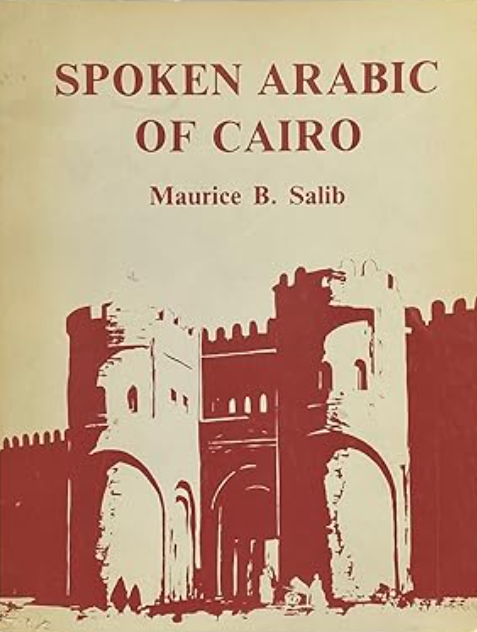
If you’re someone who likes to learn through reading, there are excellent books that can guide you. One of the best books for beginners is Spoken Arabic of Cairo by Maurice Salib.
A. Spoken Arabic of Cairo by Maurice Salib
This book is a great resource because it includes dialogues in transliterated Egyptian Arabic, making it easy for beginners to understand the pronunciation. Each chapter has new vocabulary and focuses on real-life conversations, which is very useful for practical learning.
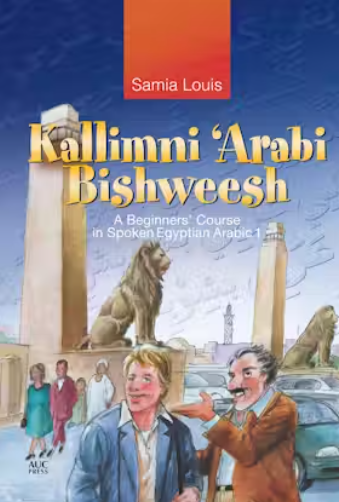
B. Kallimni ‘Arabi
Another popular option is the Kallimni ‘Arabi series. These books are designed to help learners move from basic Egyptian Arabic to more advanced levels. They include a lot of dialogues, grammar explanations, and exercises. If you’re just starting, you can begin with simpler books like Jane Wightwick’s Egyptian Arabic books before moving on to more challenging ones like Kallimni ‘Arabi once you’re comfortable with the Arabic script.
2. Apps to Learn Egyptian Arabic
Many people prefer learning with apps because they are interactive and can be used anywhere. There are several good apps to learn Egyptian Arabic that can help you practice vocabulary, listening, and speaking skills.
A. Anki
Anki is one of the best tools for learning vocabulary through flashcards. The app uses a spaced repetition system, which helps you remember words over time by reviewing them at intervals.
You can find pre-made Egyptian Arabic decks, but it’s also a good idea to create your own using words and phrases that you come across in books or conversations.
For Egyptian Arabic, it’s essential to have audio on your flashcards to practice the sounds of the dialect. Anki lets you add audio to each flashcard, which makes it perfect for learning the pronunciation of Egyptian Arabic.
B. Bluebird Egyptian Arabic
Another highly recommended app is Bluebird Language Learning. It offers over 2,000 lessons with a focus on building everyday conversation skills.
The app uses the spaced repetition technique, so you learn quickly and retain what you learn. You can even create personalized courses based on specific needs like learning for work or travel.
What’s unique about Bluebird is that you can learn hands-free—perfect for busy learners who want to study while cooking, exercising, or commuting.
3. Websites and Online Platforms
If you prefer a more structured learning experience, websites like Lingualism offer comprehensive resources for learning Egyptian Arabic.
A. Lingualism
One of their best features is the Egyptian Arabic Diaries, which includes Arabic text with Egyptian audio and English translation. This resource focuses on everyday spoken Egyptian, helping learners get used to the rhythm and vocabulary of the dialect.
B. Tandem
Many learners also find success with Tandem partners. This method involves pairing up with a native Egyptian speaker to exchange languages. You help them with your language, and they help you with Egyptian Arabic. It’s a great way to practice speaking and listening, as real conversations are one of the best ways to become fluent.
Read also: How to move to Egypt
Free vs. Paid Resources: What’s Worth the Investment?
| Resource | Free Option | Paid Option | Recommendation |
|---|---|---|---|
| Flashcards | Anki (free, community decks) | Anki (create custom decks — same app) | Free is sufficient |
| Listening practice | Egyptian YouTube, podcasts, movies | Bluebird app ($$/month) | Start free, upgrade if you want structure |
| Speaking practice | Tandem (language exchange) | Online tutor (1-on-1 sessions) | Free for practice, paid for correction |
| Grammar | YouTube explanations, free blogs | Kallimni ‘Arabi books ($15–25 each) | Books are worth the investment |
| Structured course | Limited free trials | Kalimah Center, italki, Preply | Paid courses accelerate progress significantly |
| Pronunciation | Forvo (free pronunciation dictionary) | Tarteel AI (dialect feedback) | Both useful — start free |
Bottom line: You can start learning Egyptian Arabic for free using Anki, YouTube, and Egyptian media. Once you’re ready for structured progression and pronunciation correction, investing in a qualified teacher or course delivers the fastest results.
Egyptian Arabic vs. MSA: Do You Need Both?
This is one of the most debated questions in Arabic learning circles. Here’s the honest answer:
| Scenario | Start With | Why |
|---|---|---|
| You want to chat with Egyptians, travel, enjoy media | Egyptian Arabic | It’s the living language — nobody speaks MSA casually |
| You need Arabic for work, academia, or religion | MSA first | MSA is universal across all Arab countries in formal contexts |
| You want maximum flexibility | MSA + Egyptian Arabic together | MSA for reading/writing, Egyptian for speaking/listening |
My recommendation as an Egyptian Arabic teacher: If you have the time, learn both. MSA gives you the ability to read Arabic newspapers, understand the Quran, and communicate formally across 22 Arab countries. Egyptian Arabic gives you the ability to connect — to joke, negotiate, build friendships, and truly experience Egyptian culture.
The two complement each other. MSA vocabulary frequently appears in educated Egyptian speech, and Egyptian Arabic grammar patterns help you understand how Arabic works in practice rather than just in textbooks.
If your goal is to chat with people in a cafe or navigate the streets of Cairo, start with the dialect immediately. While MSA is used for news and formal writing, it can sound overly stiff or even confusing in daily conversation. Focus on the language people actually speak to build rapport quickly.
Read also: learning Modern Standard Arabic
Master Arabic with Kalimah Center
Join our expert-led online classes and start your journey toward Arabic fluency today.
Book Your Free TrialInside Kalimah Center: Moments from Our Courses
Get a glimpse into the vibrant learning experience at Kalimah Center. These snapshots capture real moments from our live classes—where students engage deeply, connect with passionate instructors, and grow in a welcoming, supportive environment.
Here Are The Reviews On Our Courses:
Our students frequently commend the excellence of our courses and the commitment shown by our instructors. You can read their complete reviews on Trustpilot.

Learn MSA the Right Way with Our Expert Egyptian Arabic Teachers
You’re right! MSA is important for understanding Arabic everywhere. At Kalimah Center, we’ve been teaching MSA to people from around the world since 2011. Our teachers are the best, and we have special arabic learning materials to make learning fun and easy.
Why Kalimah Center?
- We have lots of experience teaching MSA.
- Our native Egyptian Arabic teachers are always learning new ways to teach better.
- We have fun lessons with special materials.
Our courses:
- Learn Arabic Online For adults. Talk Arabic easy!
- Learn Arabic for Kids: Fun way for kids to learn.
- Learn Quran Online: Read Quran right. Understand it better!
Join us for a FREE trial class today! You’ll see how Kalimah Center can help you learn MSA quickly and easily.
Conclusion:
Learning Egyptian Arabi involves a blend of mastering the alphabet (shared with Modern Standard Arabic or MSA), listening to native speakers, and gradually integrating Egyptian slang and phrases. Resources like Egyptian movies, podcasts, and apps such as Anki and Bluebird are highly recommended for practice. For children, engaging methods like songs, cartoons, flashcards, and role-playing can make learning more enjoyable.
A solid foundation in MSA is often encouraged before transitioning into Egyptian Arabic, as it helps in understanding formal contexts and the wider Arabic-speaking world. Books like Spoken Arabic of Cairo and the Kallimni ‘Arabi series, along with online platforms like Lingualism, provide structured learning paths. Consistency, practice, and interaction with native speakers are key to fluency, with conversational proficiency possible within 6 months to 2 years.
FAQs about How to Learn Egyptian Arabic
Q1: Is Egyptian Arabic hard to learn for English speakers?
Egyptian Arabic is considered moderately challenging for English speakers — the U.S. Foreign Service Institute classifies Arabic as a Category IV language. However, Egyptian Arabic is often easier to start with than MSA because its grammar is more streamlined (no case endings, no dual forms), and the massive availability of Egyptian media provides natural immersion. Most learners find pronunciation (especially throat sounds like ع and ح) to be the biggest initial hurdle.
Q2: Should I learn Modern Standard Arabic or Egyptian Arabic first?
It depends on your goals. If you want to have everyday conversations with Egyptians, travel in Egypt, or understand Egyptian media, start with Egyptian Arabic directly. If you need Arabic for academic, religious, or professional purposes across multiple Arab countries, start with MSA and add Egyptian Arabic afterward. Many successful learners study both simultaneously — MSA for reading/writing and Egyptian Arabic for speaking/listening.
Q3: Can other Arabs understand Egyptian Arabic?
Yes. Egyptian Arabic is the most widely understood dialect in the Arab world, largely due to Egypt’s dominant film, television, and music industry spanning decades. While speakers from Morocco or the Gulf may not use the same words, they can generally understand an Egyptian speaker. This makes Egyptian Arabic an excellent “universal” dialect for communicating across the Arab world.
Q4: What is the difference between Egyptian Arabic and Levantine Arabic?
The main differences are pronunciation, vocabulary, and some grammar structures. Egyptian Arabic uses a hard “G” for ج (Jeem), while Levantine dialects use a soft “J.” The word for “now” is “dilwa’ti” in Egyptian but “halla'” in Levantine. Negation also differs: Egyptian uses the “Ma…sh” sandwich structure, while Levantine typically uses “ma” alone. Despite these differences, speakers of both dialects can generally understand each other.
Q5: What are the best free resources to learn Egyptian Arabic?
The best free resources include: Anki (flashcard app with community-made Egyptian Arabic decks), Egyptian Arabic YouTube channels and podcasts (like Droos Podcast), Egyptian movies and TV shows on streaming platforms with Arabic subtitles, and language exchange apps like Tandem for practicing with native speakers. For structured free content, Lingualism’s Egyptian Arabic Diaries offer text with audio and translations.