Speaking Arabic fluently requires shifting from translation-mode to Arabic-mode — thinking directly in Arabic rather than translating from English. The fastest path to Arabic speaking fluency combines: daily shadowing of native speakers, speaking in chunks rather than individual words, maintaining a speaking diary in Arabic, role-playing common conversations, and consistent practice with native speakers. This guide covers 15 specific techniques from years of teaching experience at Kalimah Center.
✅ Quick Reference — 15 Techniques:
| # | Technique | Category | Time to Impact |
|---|---|---|---|
| 1 | Understand Arabic’s unique sounds | Foundation | Weeks |
| 2 | Think in Arabic — stop translating | Mindset | Months |
| 3 | Shadowing native speakers | Listening + speaking | Weeks |
| 4 | Speaking diary | Daily practice | Weeks |
| 5 | Learn in chunks, not single words | Vocabulary | Immediate |
| 6 | Immerse in Arabic conversations | Exposure | Ongoing |
| 7 | Expose yourself to Arabic everywhere | Environment | Ongoing |
| 8 | Talk to native speakers | Conversation | Immediate |
| 9 | Repeat high-frequency words | Vocabulary | Weeks |
| 10 | Learn conversational phrases first | Vocabulary | Immediate |
| 11 | Use simple phrases to build confidence | Confidence | Immediate |
| 12 | Role-play common conversations | Practice | Weeks |
| 13 | Practice with study partners | Social | Weeks |
| 14 | Group classes for faster progress | Structured | Months |
| 15 | Maintain fluency — daily minimum practice | Long-term | Ongoing |
I’ll share some effective methods that can help you speak Arabic fluently. These methods are not just theories—they come from years of experience teaching students who want to speak Arabic fluently and fast, especially at Kalimah Center, where we’ve seen great success using these approaches.
Speaking Arabic Fluently:
Fluency in Arabic speaking, or الطلاقة (al-ṭalāqah), means being able to express yourself easily without needing to stop and think.
When we talk about learning Arabic, many focus on reading or writing, but how to speak Arabic fluently? That’s another challenge altogether. Speaking a language requires more than just memorizing words or grammar rules. It’s about practicing, using the language in real conversations, and feeling confident even when you make mistakes. Fluency comes from practice, and that’s the secret I always share with my students.
Arabic is a rich language with many dialects, but when you aim for fluency, it’s important to focus on learning Modern Standard Arabic (MSA) or the dialect of the region you’re interested in. MSA is understood across the Arab world and is often taught in well-structured classes, like those we offer at Kalimah Center.
How to Speak Arabic Fluently?
Fluency is more than just knowing the words. It’s about how you connect them, how you think in Arabic, and how you respond naturally without needing to translate in your head. Here are some tips that can help you speak Arabic fluently:
1. Understand the Foundation of Arabic Speech
Arabic is a language rich in sound and structure. Before you dive into fluency, it’s important to understand the basics. Arabic has unique sounds, especially the letters that don’t exist in English. For example, the letter ع (‘Ayn) and the letter غ (Ghayn). They might feel strange in the beginning, but with practice, they will become easier.
Try this exercise: Say the word عائلة (ʿāʾila), which means “family.” Notice how the sound of the letter ع feels in your throat. Repeat it slowly, then faster. This will help you get used to the sound, and soon it will become natural.
2. Think in Arabic, Don’t Translate
One of the first steps to fluency is to stop translating in your head. Instead of thinking in your native language and then translating to Arabic, try to think directly in Arabic.
This may sound difficult at first, but with time and practice, it becomes natural.
For example, when you want to say “I want to eat,” instead of thinking “I want to eat” in English and then translating to Arabic, try to think directly “أريد أن آكل” (ureed an aakul).
3. Repeat and Imitate Native Speakers
A good way to improve your speaking skills is to imitate native speakers. Pay attention to how they pronounce words, their intonation, and how they link sentences together.
Try to repeat what they say and copy their speaking style. This technique is called shadowing, and it can significantly improve your fluency in Arabic.
For example, listen to a native Arabic speaker say a sentence like “كيف حالك اليوم؟” (kayfa haluka alyawm?) meaning “How are you today?” Then repeat it exactly as they said it.
4. Use a Speaking Diary
This is something not many people do, but it really helps to speak Arabic faster. Keep a small diary where you write down what you did during the day or what you plan to do, but write it in Arabic. After writing, read it out loud as if you are telling a friend what happened. For example:
- “اليوم، ذهبت إلى الحديقة مع أصدقائي” (al-yawm, dhahabt ila al-hadeeqah ma’a asdiqaa’ee) – Today, I went to the park with my friends.
By practicing this daily, you will start thinking in Arabic more, and your speaking will become faster and more natural.
5. Focus on Speaking in Chunks, Not Words
Here is one of the secrets we tell our students: don’t focus on learning individual words. Instead, learn phrases or chunks of language. This will help you sound more natural and speak faster because you are not stopping to think about each word. You’re just saying the full phrase automatically.
For example, instead of learning the word for “hungry” (جائع), learn the whole phrase:
- “Ana jaw’an wa ureedu an aakul (أنا جائع وأريد أن آكل)” – “I am hungry, and I want to eat.”
This way, you can speak fluently because you already know what to say in many common situations.
6. Immerse Yourself in Arabic Conversations
Fluency comes with practice, and the best way to practice is by immersing yourself in Arabic conversations.
Even if you don’t live in an Arabic-speaking country, you can still immerse yourself by joining online Arabic-speaking groups, listening to Arabic podcasts, or watching Arabic TV shows.
This immersion will help you get used to the rhythm of the language and improve your fluency.
7. Expose Yourself to Arabic Everywhere
Even if you live in a non-Arabic speaking country, you can still create an Arabic environment. Change your phone’s language to Arabic, follow Arabic-speaking influencers, and engage with Arabic content online.
The more Arabic you expose yourself to, the more naturally you’ll pick up phrases and understand how the language is used in everyday situations.
Kalimah Center’s Focus on Speech Practice
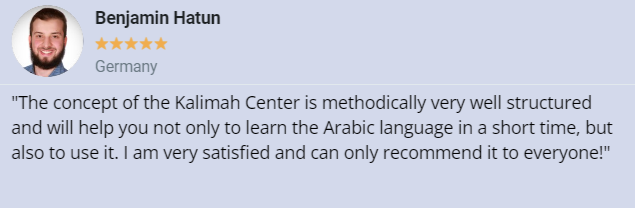
At Kalimah Center, we focus on practicing speaking Arabic from the start. Our courses are designed to make students speak naturally and fluently. Many of our former students say that Kalimah’s structured approach was key to their fast progress in speaking Arabic.
8. Talk to Native Speakers as Much as Possible
The best way to speak fluently and quickly is to talk to native speakers. Why? Because they speak naturally, and this will push you to keep up. You will learn to respond faster and more naturally, just like in real conversations.
Master Arabic with Kalimah Center
Join our expert-led online classes and start your journey toward Arabic fluency today.
Book Your Free TrialHow to Maintain Arabic Fluency
Many learners achieve real Arabic fluency through a course — then lose it within months of stopping. The reason: languages decay faster than any other acquired skill without consistent use. Here is how to maintain Arabic fluency permanently:
The minimum viable Arabic practice:
| Frequency | Activity | Time | What It Preserves |
|---|---|---|---|
| Daily | Anki vocabulary review | 10 min | Vocabulary retention |
| 3x/week | 15-min Arabic conversation (HelloTalk) | 15 min | Speaking fluency |
| Weekly | Read one Arabic article or short text | 20 min | Reading fluency |
| Weekly | 30-min Arabic podcast or video | 30 min | Listening comprehension |
The one-thing rule:
If life becomes too busy for everything above, do one thing: speak Arabic for 10 minutes daily. Read a familiar text aloud. Talk to yourself. Narrate what you are doing. Speaking is the last skill to develop and the first to decay — prioritise it.
Re-entry after a gap:
If you have had a gap in Arabic practice, don’t restart where you stopped. Go back to basics — familiar vocabulary, short texts, slow conversations. Your Arabic is still there; it just needs reactivation, not rebuilding.
Learn to Speak Arabic Fast And Quickly
Now that you know how to work towards fluency, let’s talk about how you can speed up the process of speaking Arabic quickly. Learning to speak Arabic fast requires focus and consistency. Here are some tips to help you achieve that goal:
1. Listen to the Arabic Sounds and Repeat, A Lot
One of the most powerful ways to learn to speak Arabic quickly is by listening to Arabic as much as possible. Arabic has its own rhythm, tone, and melody. You need to “tune your ear” to the way native speakers pronounce words.
Then, you need to train your mouth! Arabic has sounds that are not in other languages, like the letters خ (khaa’) or غ (ghayn). To speak fluently, your mouth needs to get used to making these sounds quickly.
Practice difficult sounds by repeating words that use them often. For example:
- “Khobz” (خبز) – bread
- “Ghareeb” (غريب) – strange
The more you practice these sounds, the easier it becomes to say them naturally in conversation. This makes your speaking faster and clearer.
What should you do?
- Listen to Arabic news, podcasts, or watch Arabic TV shows with subtitles. Even if you don’t understand everything, your brain is absorbing how native speakers talk.
- Repeat what you hear. This is called shadowing. Just mimic the sounds.
For example, the phrase “How are you?” in Arabic is “كيف حالك؟” (kayfa ḥāluka/ḥāluki) for a man and woman respectively. By repeating phrases like this often, your pronunciation will become more natural faster.
2. Learn to Pronounce the High-Frequency Words
To speak Arabic fast, you need to focus on learning the most commonly used words and phrases. By mastering these high-frequency words, you will be able to communicate more effectively in a shorter amount of time.
For example, words like “نعم” (na’am – “yes”), “لا” (la – “no”), “أين” (ayna – “where”), and “متى” (mataa – “when”) are used frequently in everyday conversations.
3. Learn Conversational Phrases First
In my classes, I always emphasize learning key conversational phrases first. These are the phrases you will need daily. The faster you master these, the faster you’ll be able to communicate with others. Focus on phrases that are most commonly used, instead of focusing on random vocabulary. This helps you feel fluent much faster.
For example:
- “I want to go to the market” = “أريد أن أذهب إلى السوق” (urīdu an adh-haba ilā as-sūq).
- “Can you help me?” = “هل يمكنك مساعدتي؟” (hal yumkinuka musā‘adatī?).
By mastering phrases like this, you will soon realize that conversations flow much easier. And don’t worry if your grammar isn’t perfect—most native speakers will still understand you!
4. Use Simple Phrases to Build Confidence
Sometimes, students try to say complex sentences before they are ready, which can make them hesitate and lose confidence. Start with simple phrases and sentences that you can use in daily conversations. As you become more comfortable, you can gradually increase the complexity of your sentences.
For example, start by saying “أنا أتعلم اللغة العربية” (ana ataalam al-lughah al-arabiyyah), meaning “I am learning the Arabic language.” Then, as you gain confidence, you can add more details to your sentence.
5. Role Play Common Conversations
Another effective method is to practice role-playing common conversations you might have in Arabic. For example, imagine you are in a restaurant, and you want to order food. Practice the conversation you would have with the waiter:
- “أريد قائمة الطعام من فضلك” (ureed qaa’imat al-ta’am min fadhlak) – I want the menu, please.
- أريد طبق من الأرز” (ureed tabaq min al-ruz) – I want a plate of rice.
By practicing these common situations, you will be ready when you face them in real life, and your response will be quicker.
Read Also: How to Speak Arabic for Kids?
6. Practice Speaking With Others as Much as Possible
One of the fastest ways to improve your speaking is by practicing with others. The more you practice, the faster you will progress. Try to find language exchange partners or join online Arabic-speaking communities.
7. Group Classes for Faster Progress
In my years of teaching, I’ve seen that group classes help students learn to speak Arabic quickly. Why? Because you’re not just learning from the teacher; you’re also learning from your classmates. You practice conversations with people who are at your level, and that speeds up your progress.
At Kalimah Center, we offer group classes where you’ll have many opportunities to practice speaking in a supportive environment. You’ll be amazed at how fast your fluency improves when you regularly interact with others who are also learning Arabic.
Our group classes offer a fun and effective way to learn Arabic quickly. Here’s why you should join:
- Affordable: Group classes are more affordable than private lessons.
- Proven Results: Students learn better in groups through shared insights and collaboration.
- Small Class Size: Everyone gets plenty of chances to participate and ask questions.
- Engaging Materials: Learn with Kalimah’s latest books and online exercises.
- Study from Anywhere: All you need is a laptop and internet connection.
- Connect with Learners Worldwide: Make new friends and learn about different cultures.

How to Build Confidence Speaking Arabic
One of the biggest barriers to Arabic fluency is not grammar or vocabulary — it is fear of speaking. Many learners know far more Arabic than they can produce because anxiety blocks them. Here are specific techniques for building speaking confidence:
1. Accept mistakes as data, not failures
Every mispronunciation tells you something useful. When a native speaker corrects you, you have received free, targeted pronunciation feedback. The correct response is: “شكرًا” (shukran — thank you) — not embarrassment.
2. Start with what you know
Never begin a conversation by attempting the hardest thing you know. Open with phrases you have used 50 times before. This gives your mouth and brain a “warm-up” and puts you in a confident state before you encounter unknown territory.
3. The 20-second rule
When you feel the urge to avoid speaking — to let someone else answer, to switch to English, to stay silent — count 20 seconds and speak anyway. The anxiety before speaking is almost always worse than the speaking itself.
4. Record yourself weekly
Record a 2-minute Arabic monologue every Sunday. Topic: your week. Play back recordings from 4 weeks ago. The improvement is almost always more dramatic than you feel while studying — and hearing your own progress is the most effective confidence builder available.
5. Use scaffolded conversations
Don’t start with open-ended conversations. Use structured prompts: “Tell me about your family,” “Describe your job,” “What did you eat today?” Having a topic prevents the blank-mind panic that destroys confidence.
6. Find a forgiving speaking partner
Your first real Arabic conversations should be with someone patient — a teacher, a language exchange partner who understands you are learning. Real-world conversations with strangers come later. Build confidence in a low-stakes environment first.
Quick Arabic Speaking Reference
| What You Want to Say | Arabic | Transliteration |
|---|---|---|
| I speak Arabic | أتكلم العربية | Atakallam al-‘arabiyya |
| I am learning Arabic | أتعلم العربية | Ata’allam al-‘arabiyya |
| How are you? (to a man) | كيف حالك؟ | Kayfa haluka? |
| How are you? (to a woman) | كيف حالكِ؟ | Kayfa haluki? |
| Response: I’m fine | أنا بخير | Ana bikhayr |
| I don’t speak Arabic well | لا أتكلم العربية بشكل جيد | La atakallam al-‘arabiyya bi-shakl jayyid |
| Can you speak more slowly? | هل يمكنك التحدث ببطء أكثر؟ | Hal yumkinuka al-tahaduth bi-but’ akthar? |
| I don’t understand | لا أفهم | La afham |
| Can you repeat that? | هل يمكنك التكرار؟ | Hal yumkinuka al-tikrar? |
| I want to speak Arabic | أريد أن أتكلم العربية | Uridu an atakallam al-‘arabiyya |
Master Arabic with Kalimah Center
Join our expert-led online classes and start your journey toward Arabic fluency today.
Book Your Free TrialInside Kalimah Center: Moments from Our Courses
Get a glimpse into the vibrant learning experience at Kalimah Center. These snapshots capture real moments from our live classes—where students engage deeply, connect with passionate instructors, and grow in a welcoming, supportive environment.
Here Are The Reviews On Our Courses:
Our students frequently commend the excellence of our courses and the commitment shown by our instructors. You can read their complete reviews on Trustpilot.
Read more reviews on Trustpilot

Kalimah Center: The Fastest Path to Speaking Fluently
At Kalimah Center, we know how important it is for students to not just learn Arabic, but to speak it fluently. That’s why we design our courses with a focus on speaking practice. Whether you’re in our one-on-one classes or group sessions, we make sure every student has the chance to speak in every lesson.
Our native Arabic teachers are trained to help you develop your speaking skills quickly, using proven methods like repetition, immersion, and practical speaking exercises.
Is Kalimah really the right fit for you?
Find out for yourself by starting your FREE Arabic Trial class today!
And Watch Your Child Speak in Arabic: Free Trial Classes Available for Kids
If you’re serious about speaking Arabic fast and fluently, Kalimah Center is the place for you.
Conclusion:
To speak Arabic fluently and quickly, it’s essential to focus on practical, involvement methods rather than just memorizing vocabulary. Begin by understanding the unique sounds of Arabic, thinking directly in the language, and imitating native speakers through techniques like shadowing. Keeping a speaking diary and practicing common phrases in context will help you build confidence and fluency.
Engaging in conversations with native speakers and immersing yourself in Arabic content further accelerates learning, creating an environment where the language can be absorbed naturally.
At Kalimah Center, the emphasis is on speaking practice from day one, using structured classes to foster quick progress. Students benefit from group interactions, which enhance learning through shared experiences.
Methods such as role-playing common conversations, focusing on high-frequency words, and utilizing simple phrases ensure effective communication. With trained native teachers and a focus on speaking, Kalimah offers a supportive pathway to achieving conversational fluency. Consider starting with a free trial class to experience this immersive approach firsthand.
FAQs about How to Speak Arabic Fluently
Q1: How long does it take to speak Arabic fluently?
Speaking fluency in Arabic depends on daily practice consistency more than total time. With 30–60 minutes of daily speaking practice: basic conversational ability (greetings, simple questions, daily routine) in 3–6 months; intermediate conversational fluency in 12–18 months; advanced fluency in 2–3 years. The critical factor is speaking — not just studying. Learners who speak with native speakers from Day 1 consistently reach fluency faster than those who wait until they feel “ready.”
Q2: What is the shadowing technique for Arabic?
Shadowing involves listening to a native Arabic speaker and repeating what they say simultaneously or immediately after — matching their pronunciation, rhythm, speed, and intonation exactly. For Arabic specifically: find a short audio clip (30–60 seconds) from an Arabic podcast or YouTube video, listen once for general meaning, then replay and repeat each sentence immediately after hearing it, then replay and speak simultaneously with the audio. This technique simultaneously improves pronunciation, listening comprehension, and speaking speed.
Q3: Should I learn MSA or a dialect to speak Arabic?
For general communication across the Arab world: MSA (Modern Standard Arabic) first — it is understood by educated speakers in all 22 Arabic-speaking countries. For specific regions: add the relevant dialect after MSA foundations are established. Egyptian Arabic is the most widely understood spoken dialect globally. Levantine Arabic is widely understood in the eastern Arab world. Starting with a dialect-only approach limits your communication to one region and complicates future MSA or Quranic Arabic study.
Q4: How do I stop translating in my head when speaking Arabic?
The translation habit breaks through volume of exposure and practice, not through willpower. Specific techniques: (1) Label objects in your environment with Arabic names — create direct word-object associations without English. (2) When you learn a new Arabic word, use it in a sentence immediately rather than just memorising the translation. (3) Keep a thinking diary — narrate your actions in Arabic internally as you do them. (4) Accept that translation-free thinking develops gradually over months — the goal is reducing translation frequency, not eliminating it overnight.
Q5: How do I maintain Arabic fluency after finishing a course?
The minimum viable daily practice to preserve Arabic fluency is: 10 minutes of Anki vocabulary review + 10 minutes of Arabic reading or listening + one 15-minute speaking session per week with a native speaker. The most important single habit: speak Arabic at least three times per week. Speaking is the first fluency skill to decay without practice and the most difficult to rebuild. Even 10 minutes of Arabic self-narration (talking about your day in Arabic) three times weekly prevents significant fluency loss.