In a nutshell: Moving to Saudi Arabia involves securing a job, obtaining a work visa, and preparing essential documents. Housing arrangements and adapting to cultural norms, like modest dress and gender-specific spaces, are crucial. Learning basic Arabic helps with daily life, while expats enjoy benefits like tax-free income and a safe environment despite the heat. Kalimah Center offers Arabic courses to ease the transition.
As a native Arabic speaker, I have seen Saudi Arabia grow and develop over the years, and I can tell you that moving to Saudi Arabia is a big decision but also an exciting opportunity now.
Here, I will guide you through everything you need to know about moving to the Kingdom, from the visa process to the cost of living, and yes, even the challenges you might face. Let’s get started.
Can I Move to Saudi Arabia?
Yes, you can! Moving to Saudi Arabia is possible, but it’s not as simple as packing your bags and hopping on a plane. Saudi Arabia has specific rules and requirements for foreigners wanting to relocate. There are different ways to enter the Kingdom depending on your situation. You might be moving for work, joining family, or even exploring long-term residency options.
To move to Saudi Arabia you will need a visa. Most people come on a work visa, but there are other types like tourist visas or family visit visas. Saudi Arabia has been opening up more in recent years, especially with initiatives like Vision 2030, which aims to attract more foreign talent. But be prepared: you can’t just arrive and stay. There’s paperwork to handle first.

How to Move to Saudi Arabia?
The process of moving to Saudi Arabia starts with the right visa. If you’re moving for work, your employer will usually sponsor your work visa (إقامة – iqama). This is the most common way people move to Saudi Arabia. Once your work visa is approved, you’ll receive a residency permit that allows you to live and work in the Kingdom.
So, if someone wants to immigrate to Saudi Arabia, What must they first do?
I’ll share with you some practical advice on how to make this move smooth.
Read also: How to move to Qatar
1. Secure a Job or Purpose for Your Move to Saudi Arabia
Before anything, you need a reason to move. Most people come for work, but others come for family or studies. Without a purpose, you cannot get the right visa. If you come for work, your future employer must give you a job contract. This is very important because the employer will be responsible for your visa.
If you don’t have a job yet, you can search for jobs online on websites like Bayt or NaukriGulf. Many companies in Saudi Arabia are always looking for workers from different countries, especially in sectors like construction, healthcare, IT, and education.
Once you have the job, your company will begin the visa process for you.

2. Prepare Your Documents
After you secure a job or a reason for moving, you need to prepare all the documents. The company will ask you for:
- Your passport (it must be valid for at least 6 months)
- A medical report to show that you are healthy
- Certificates of your education (like your university degree)
All these documents must be attested. This means they are checked by your country’s authorities to show that they are real. Then, you will send them to your employer in Saudi Arabia.
3. Get a Visa for Saudi Arabia
Now, your employer or sponsor will apply for a work visa for you. They do most of the work, but you also need to go to the Saudi Embassy in your home country to submit your documents and do a short interview.
There are several types of visas available to those wanting to move to Saudi Arabia:
- Government Visa
- Diplomatic & Official Visas
- Diplomatic Missions & Organizations
- Tourist Visa
- Business Visit Visa
- Employment Visa
- Residence Visa
- Premium Residency Visa
- Newborn Visa
- Extension of Exit/Re-Entry Visa
- Family Visit Visa
- Companion Visa
- Personal Visit Visa
- Hajj and Umrah Visa
- Student Visa
And you can further check every type and its requirement via this page.
It’s important to know that if you’re on a tourist visa, you cannot work. Working without a proper visa can lead to serious consequences, including deportation.

4. Arrange Housing Before You Arrive in Saudi Arabia
Before you come to Saudi Arabia, try to arrange where you will live. Housing is very important. Some companies provide accommodation for their workers. If your employer offers housing, this is good because it saves you time and money.
If not, you will need to find an apartment yourself. It’s best to search online before you arrive. Look for areas close to your work to avoid long travel times. Housing is usually available in big cities like Riyadh, Jeddah, or Dammam, but prices vary depending on the city.
Also, keep in mind that some expats prefer to live in compounds. These are places where many foreigners live together, and life there is a bit different from the local areas.
5. Prepare for Life in Saudi Arabia
Before you come to Saudi Arabia, you must understand the local culture. The Kingdom has different rules from Western countries. For example, men and women have separate spaces in public places, and everyone must dress modestly.
Also, most people speak Arabic. Even though many people speak English, it’s better to learn basic Arabic. Simple words like thank you (شكراً, “shukran”) or please (من فضلك, “min fadlak”) will help you a lot.
Experience Kalimah Center Classes
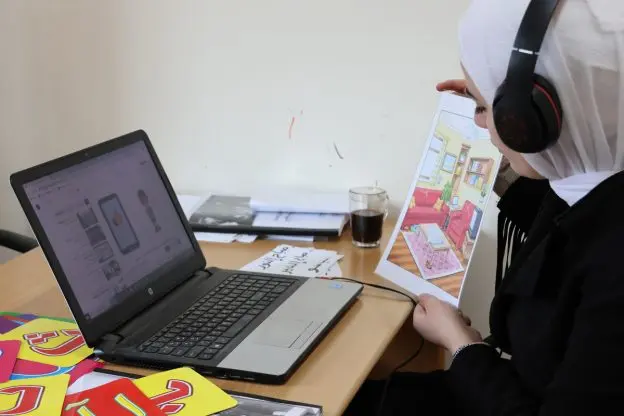
Watch real excerpts from our live sessions at Kalimah Center and see how we bring learning to life. These clips highlight our interactive, student-centered teaching approach across all our courses—designed to keep learners engaged, motivated, and actively involved every step of the way.
Master Arabic with Kalimah Center
Join our expert-led online classes and start your journey toward Arabic fluency today.
Book Your Free Trial6. Learn Basic Arabic Before You Go to Saudi Arabia
One of the most important things when moving to Saudi Arabia is learning the Arabic language. While many Saudis speak English, especially in the workplace, life outside work is very much in Arabic. You will need Arabic to go shopping, order food, visit the doctor, or even ask for directions.
For example, if you want to ask, “Where is the market?” in Arabic, you say:
- أين السوق؟ (Ayna as-suq?)
To illustrate this, imagine you are at a local market, trying to buy some fresh produce. Below is a simple conversation, excerpted from Kalimah’s Online Arabic Course Curriculum, that you might have in Arabic during your stay in Saudi Arabia:

The conversation in Arabic, transliteration and translation:
- البائع: مرْحباً، أيّ خِدمة؟
- Al-baai’: “Marhaban, ayy khidmah?”
- Seller: “Hello, how can I help you?”
- المرأة: أريدُ سمكاً و لحمًا و دجاجًا.
- Al-mar’ah: “Ureedu samakan, wa lahman, wa dajajan.”
- Woman: “I want fish, meat, and chicken.”
- البائع: تفضّلي السّمك، واللّحم، والدّجاج. وماذا تُريدين أيضًا؟
- Al-baai’: “Tafaddali as-samak, wal-lahm, wad-dajaj. Wa madha tureedeena aydan?”
- Seller: “Here’s the fish, meat, and chicken. What else would you like?”
- المرأة: أريد خيارًا و بيضًا و طماطم.
- Al-mar’ah: “Ureedu khiyar, wa baydan, wa tamatam.”
- Woman: “I want cucumbers, eggs, and tomatoes.”
- البائع: تفضّلي الخيار، والبيض، والطماطم. وماذا تُريدين أيضًا؟
- Al-baai’: “Tafaddali al-khiyar, wal-baydh, wa at-tamatem. Wa madha tureedeena aydan?”
- Seller: “Here are the cucumbers, eggs, and tomatoes. What else?”
- المرأة: أريد سكّرًا و شايًا و ثلجًا.
- Al-mar’ah: “Ureedu sukkaran, wa shayyan, wa thaljan.”
- Woman: “I want sugar, tea, and ice.”
- البائع: تفضّلي السّكر والشّاي والثّلج. هلْ تُريدين شيئًا آخر؟
- Al-baai’: “Tafaddali as-sukar, wash-shay, wath-thalj. Hal tureedeena shay’an akhar?”
- Seller: “Here’s the sugar, tea, and ice. Do you need anything else?”
- المرأة: نعم، طبق بيض، وعلبة ملح.
- Al-mar’ah: “Na’am, tibaq baydh, wa ‘ulbat milh.”
- Woman: “Yes, an egg carton and a box of salt.”
- البائع: هذا طبق البيض، و هذه علبة الملح. المجموع ثمانية ريالات.
- Al-baai’: “Hatha tibaq al-baydh, wa hathihi ‘ulbat al-milh. Al-majmoo’ thamaniyat reyalat.”
- Seller: “Here’s the egg carton, and here’s the box of salt. That will be eight Riyals.”
As you can see, understanding these types of everyday conversations will make your life much easier in Saudi Arabia. Learning these basic phrases will be a big help when interacting with locals in shops, markets, and restaurants.
At Kalimah Center, we offer online Arabic courses that help people moving to Saudi Arabia. Our courses focus on teaching you practical Arabic like in the conversation above. You will learn phrases and words that you will need every day, from buying groceries to asking for directions.
By learning with us before you move, you can ensure a smoother and more comfortable transition into your new life in Saudi Arabia.
Experience Kalimah Center Classes
Watch real excerpts from our live sessions at Kalimah Center and see how we bring learning to life. These clips highlight our interactive, student-centered teaching approach across all our courses—designed to keep learners engaged, motivated, and actively involved every step of the way.
Master Arabic with Kalimah Center
Join our expert-led online classes and start your journey toward Arabic fluency today.
Book Your Free Trial7. Plan Your Arrival in Saudi Arabia
After your visa is ready and you have prepared everything, book your flight and plan your arrival. It is best to arrive in the morning so you have time to adjust and handle any last-minute things. Make sure to let your employer know your flight details so they can help you when you arrive.
Saudi Arabia has several major airports, but most expats land in King Khalid International Airport in Riyadh or King Abdulaziz International Airport in Jeddah. From there, you can travel to your accommodation.
Read more about Learn Arabic In Saudi Arabia, Riyadh And Jeddah
Can You Move to Saudi Arabia Permanently?
Yes you can, but it’s not easy. While you can move to Saudi Arabia for work or family reasons, obtaining permanent residency or citizenship is rare. However, Saudi Arabia introduced the Premium Residency Program (الإقامة المميزة – al-iqama al-mumayyaza) recently. This allows expatriates to live in Saudi without the need for a sponsor. But this residency comes with a high price tag.
The program offers various pathways to obtain permanent residency, including:
- Unlimited Duration Premium Residency: This is the most straightforward option, granting permanent residency for a one-time fee of 800,000 SAR.
- Special Talent Residency: Researchers, healthcare professionals, scientists, and executive-level professionals meeting specific criteria can gain a 5-year residency, which can potentially lead to permanent residency.
- Residency Through Investment: Investing a minimum of 7 million SAR in economic activities and creating 10 jobs within the first two years can lead to permanent residency.
- Residency through Property Investment: Purchasing a residential property worth at least 4,000,000 SAR can grant a 5-year renewable residency, which, while not permanent initially, can provide a pathway to long-term stay in Saudi Arabia.
Moving to Saudi Arabia with Family
If you are planning to bring your family to Saudi Arabia, it’s important to know that your family members will also need iqamas, but you, as the primary visa holder, must sponsor them. Family visas allow your spouse and children to join you, but they will not be able to work unless they get their own work visa.
Keep in mind that Saudi Arabia has a strict cultural framework, so your family should be prepared for a different lifestyle. For instance, women must adhere to specific dress codes in public.
Schools for expat children are available, but it’s recommended to apply early as spaces fill quickly.
Schools in Saudi Arabia, especially in big cities like Riyadh and Jeddah, are excellent, with many international schools to choose from.
Can Americans Move to Saudi Arabia?
Yes, Americans can move to Saudi Arabia just like citizens from other countries. The process involves getting a work visa, but American citizens are also eligible for the new tourist visa launched in 2019. This visa allows US citizens to explore the country and decide if they would like to relocate.
How to Move to Saudi Arabia from USA?
For Americans, the process involves:
- Getting a Job: Just like the others, the easiest way to move is by securing employment first.
- Visa Application: Your employer in Saudi Arabia will sponsor you, and you’ll apply for the visa at the nearest Saudi Embassy.
- Cultural Differences: Life in Saudi is different from the US. It’s important to understand Saudi customs, culture, and, of course, some Arabic phrases.
How to Move to Saudi Arabia from the UK?
If you’re moving from the UK to Saudi Arabia, the process is quite similar to moving from other countries too. You’ll need a work visa, and your employer will handle most of the paperwork. British nationals can also apply for a tourist visa to visit the country before deciding to move permanently.
When you land in Saudi Arabia, you will go through immigration where you will be asked to show your passport and visa. Let’s look at a conversation titled: “Trip to Saudi Arabia رحلة إلى السعودية” in Arabic that you might have with an immigration officer:

* Excerpted from Kalimah’s Online Arabic Course Curriculum
- المسافر: السَّلامُ عَليكُم.
- Al-musaafir: As-salaamu ‘alaykum.
- Traveler: Peace be upon you.
- الضابط: وعَليكُم السَّلام. أهْلًا وسَهْلًا. جَوَازُ السَّفَرِ مِنْ فَضْلِك.
- Adh-dhaabit: Wa ‘alaykum as-salaam. Ahlan wa sahlan. Jawaz as-safar min fadhlik.
- Officer: And peace be upon you. Welcome! Your passport, please.
- المسافر: هَذَا هُوَ جَوَازُ السَّفَرِ.
- Al-musaafir: Hatha huwa jawaz as-safar.
- Traveler: Here is the passport.
- الضابط: هَلْ أَنْتَ قَادِمٌ للعَمَل؟
- Adh-dhaabit: Hal anta qādimun lil ‘amal?
- Officer: Are you coming for work?
This simple dialogue will be quite useful when you arrive, as you’ll need to understand what’s being asked of you during immigration. By knowing key phrases like this, you can navigate the process smoothly.
Kalimah Center can help you prepare for such conversations and much more. Learning Arabic before your move will make your transition easier.
At Kalimah Center, we offer structured courses, helping you learn everything from greetings to practical dialogues like this one. Start your FREE trial lesson with us today, and ensure you feel more confident and ready for your new life in Saudi Arabia!

Cost of Living in Saudi Arabia
The cost of living in Saudi Arabia can vary greatly depending on the city and your lifestyle. Generally, life in Saudi is more affordable than in many Western countries, especially when it comes to housing and transportation. However, some items like imported goods can be more expensive.
Here is an example of average monthly costs in Riyadh (in Saudi Riyals):
- Rent (1-bedroom apartment): 2,500 – 4,000 SAR
- Utilities: 400 – 600 SAR
- Groceries: 800 – 1,200 SAR
Advantages of Living in Saudi Arabia
Living in Saudi Arabia has many advantages for expats:
- Tax-free income: One of the biggest benefits is that you don’t pay income tax.
- Safe environment: Saudi Arabia is one of the safest countries in the world.
- Job Opportunities in Saudi Arabia: Especially in industries like oil, healthcare, and education.
- Modern Infrastructure: Major cities are highly developed, offering a comfortable lifestyle.
Disadvantages of Living in Saudi Arabia
However, living here isn’t without challenges:
- Cultural differences for non-Muslims: Saudi culture may be very different from what you are used to. It’s important to be respectful of local customs.
- Heat: Summers in Saudi Arabia can be extremely hot, with temperatures reaching 50°C.
Important Practical Tips You Need in Saudi Arabia
Saudi Arabia is a conservative country, and you should dress modestly. Men and women both have to follow dress codes, especially in public places. For example, women are expected to wear an abaya (عباءة) in public.
Also, Saudi Arabia has strict laws that you must follow. Be respectful of the culture and religion. For example, during Ramadan (رمضان), eating or drinking in public during daylight hours is not allowed.
And don’t forget, once you arrive, your employer will help you open a bank account. This is necessary to receive your salary.
Master Arabic with Kalimah Center
Join our expert-led online classes and start your journey toward Arabic fluency today.
Book Your Free TrialInside Kalimah Center: Moments from Our Courses
Get a glimpse into the vibrant learning experience at Kalimah Center. These snapshots capture real moments from our live classes—where students engage deeply, connect with passionate instructors, and grow in a welcoming, supportive environment.
Kalimah Center Can Help You Prepare for your New life in Saudi Arabia!
We offer online Arabic courses designed to give you the practical language skills you need to thrive in Saudi Arabia. Our courses are:
- Structured and effective: Our Arabic language curriculum is designed to help you learn quickly and efficiently.
- Taught by experienced native speakers: Our teachers will help you develop accurate pronunciation and fluency.
- Focused on everyday communication: You’ll learn the Arabic you need for real-life situations.
- Flexible and convenient: Learn online at your own pace, from anywhere in the world.
Don’t wait until you arrive!
Join us for a FREE trial class and start learning Arabic today with Kalimah Center and make your transition to Saudi Arabia smoother and more rewarding.

Conclusion:
Moving to Saudi Arabia requires securing a job and obtaining a work visa, with employers typically sponsoring the visa process. Once approved, you’ll receive an iqama (residency permit). Key preparations include attesting documents like your passport and medical reports, and arranging housing before arrival in cities like Riyadh or Jeddah.
Adapting to Saudi life means understanding cultural norms, such as dress codes and gender segregation. Learning basic Arabic is crucial for daily tasks, while English is common at work. Expats benefit from tax-free income and a safe environment, but face challenges like the extreme heat. Kalimah Center offers Arabic courses to help ease the transition.
FAQs about How to Move to Saudi Arabia?
Q1: What is the first step to move to Saudi Arabia?
The first step to move to Saudi Arabia is securing employment or a clear purpose for relocation. A future employer must provide a formal job contract to legally sponsor your work visa, known locally as an Iqama (residency permit). You cannot enter the country on a tourist visa to seek legal employment.
Q2: Can you move to Saudi Arabia permanently without a sponsor?
Yes. Expatriates can live permanently in Saudi Arabia without a local employer sponsor through the Premium Residency Program (al-iqama al-mumayyaza). This program requires specific financial or professional criteria, such as a one-time fee of 800,000 SAR for unlimited duration or a minimum property investment of 4,000,000 SAR.
Q3: What documents do I need to prepare for a Saudi work visa?
To obtain a Saudi Arabian work visa, you must submit a passport valid for at least 6 months, an official medical report proving good health, and your educational certificates (such as a university degree). Crucially, all educational and professional documents must be officially attested by your home country’s authorities before submission.
Q4: Is it necessary to learn Arabic before moving to Saudi Arabia?
While English is widely spoken in corporate environments, learning basic Arabic is highly recommended for daily life outside of work. You will encounter Arabic frequently when shopping at local markets (suq), navigating transportation, visiting medical facilities, or interacting with immigration officials at major ports like Riyadh or Jeddah.
Q5: What are the main benefits and challenges of living in Saudi Arabia?
The primary advantages of moving to Saudi Arabia include tax-free income, a highly safe environment, rapid infrastructure development, and growing job markets under Vision 2030. The main disadvantages are navigating strict cultural norms, navigating public dress codes (like the abaya for women), and adjusting to extreme summer heat reaching 50°C.