The days of the week in Arabic are: الأحد (Al-Ahad — Sunday), الإثنين (Al-Ithnayn — Monday), الثلاثاء (Ath-Thulatha — Tuesday), الأربعاء (Al-Arba’a — Wednesday), الخميس (Al-Khamis — Thursday), الجمعة (Al-Jumu’ah — Friday), and السبت (As-Sabt — Saturday). Sunday through Thursday are named after the numbers one through five in Arabic. Friday means “congregation” and Saturday is related to the Hebrew “Sabbath.” Only Friday and Saturday are named in the Quran.
Key Takeaway Table:
| Day | Arabic | Transliteration | Meaning | Number |
|---|---|---|---|---|
| Sunday | الأحد | Al-Ahad | The First | 1 — أحد |
| Monday | الإثنين | Al-Ithnayn | The Second | 2 — اثنان |
| Tuesday | الثلاثاء | Ath-Thulatha | The Third | 3 — ثلاثة |
| Wednesday | الأربعاء | Al-Arba’a | The Fourth | 4 — أربعة |
| Thursday | الخميس | Al-Khamis | The Fifth | 5 — خمسة |
| Friday | الجمعة | Al-Jumu’ah | The Gathering | Not numerical |
| Saturday | السبت | As-Sabt | The Sabbath/Rest | Not numerical |
The days of the week in Arabic don’t start like in the West. Some Islamic scholars say it’s Saturday, others say Sunday. But everyone agrees, it’s not Monday!
Now, the names from Sunday to Thursday in Arabic week? They come from numbers – one, two, three, four, five. As for Friday and Saturday, their Arabic names are mentioned in the Holy Quran as we’ll see.
I will explain everything slowly and clearly, so don’t worry. Let’s learn Arabic days!
How to Say “Day” in Arabic?
First, “day” in Arabic is يوم (pronounced “yawm”). It’s a word you’ll use all the time when you speak Arabic, so it’s good to know it well.
Here’s how you can use it in a sentence:
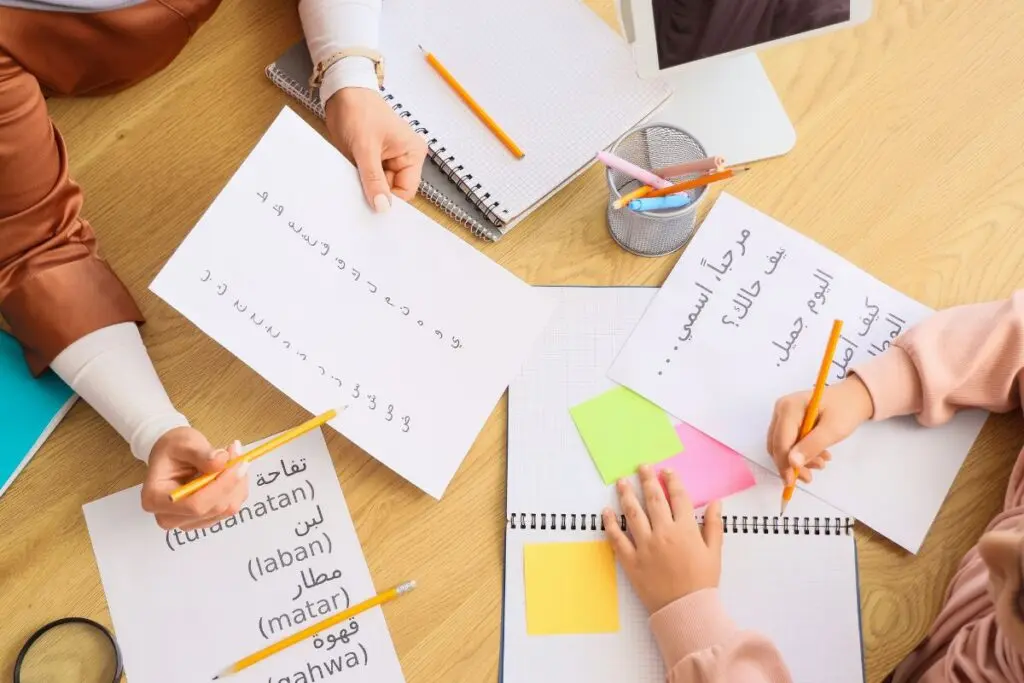
اليوم يوم جميل
(al-yawm yawm jameel)
“Today is a beautiful day.”
See how “yawm” is used twice there? First to mean “today,” and then to mean “day”!
And here’s the plural of day in Arabic: أيام (pronounced “ayyaam”). This means “days”.
مرت أيامٌ جميلة
(marrat ayyaamun jameelah)
“Beautiful days passed.”
How to Say “Week” in Arabic?
“Week” in Arabic is pronounced asأُسْبُوعٌ (ʾusbūʿ) – The “ʿ” is a sound you make in the back of your throat, kind of like a soft growl.
For example, you might say:
هذا الأسبوعُ طويلٌ جدًا
(haatha al-usbuu’u taweelun jiddan!)
This week is very long!
And the plural of week in Arabic: أَسَابِيع (ʾasābīʿ) – This is pronounced “a-sa-bee”.
All 7 Days of the Week in Arabic: Complete Guide With Meanings and Examples
To make it easy for you, I will start the days of the week in Arabic with Sunday. This way, you can use the numbers to help you remember, up to five. Then, Friday and Saturday will be simple to learn after that!
You’ll notice all days of the Arabic week start with “al-” (الـ). This is the definite article in Arabic, like “the” in English. So, “al-ahad” literally means “The Sunday”. Why is it like this? Well, think of it this way: each day is a unique, specific entity, like “the sun” or “the moon.” We are talking about that particular Sunday, that particular Monday, and so on.

Let’s explore each day in Arabic in detail with cultural insights, examples, and tips to remember them.
1. Sunday in Arabic – الأحد (Al-Ahad)
The Arabic word for Sunday is الأحد (Al-Ahad).
| Feature | Details |
|---|---|
| Arabic Script | الأحد |
| Transliteration | Al-Ahad |
| Pronunciation | al-A-had (stress on second syllable) |
| Literal Meaning | The First (Day) |
| Number Root | أحد (ahad) = one |
| Quran Mention | Not mentioned by name |
| Week Position | Day 1 of the Arabic week |
How to pronounce الأحد:
- “al” — like the “al” in “alligator,” short and clear
- “A” — a short open “a” sound, like in “cat”
- “had” — the ح (ha) is a soft, breathy “h” produced deep in the throat — breathe out strongly while slightly constricting your airway. It is not the same as the English “h”
- Full pronunciation: al — A — had with stress on the second syllable
Example sentences:
| Arabic | Transliteration | Meaning |
|---|---|---|
| نبدأ الأسبوع يوم الأحد | nabda’ al-usboo’ yawm al-ahad | We start the week on Sunday. |
| اليوم الأحد | al-yawm al-ahad | Today is Sunday. |
| سأراك يوم الأحد | sa-araka yawm al-ahad | I will see you on Sunday. |
| لدي عمل يوم الأحد | ladayya ‘amal yawm al-ahad | I have work on Sunday. |
| كل أحد نجتمع معاً | kull ahad najtami’u ma’an | Every Sunday we gather together. |
Cultural context:
In most Arab countries, Sunday is a full working and school day — the Arabic week begins on Sunday, not Monday. This reflects the traditional Islamic calendar where Sunday (the first day) follows Saturday (the day of rest in pre-Islamic Abrahamic tradition).
Memory tip: الأحد comes from أحد (ahad) = one. Sunday is Day 1 — the simplest connection in the entire Arabic week system.
2. Monday in Arabic – الإثنين (Al-Ithnayn)
The Arabic word for Monday is الإثنين (Al-Ithnayn).
| Feature | Details |
|---|---|
| Arabic Script | الإثنين |
| Transliteration | Al-Ithnayn |
| Pronunciation | al-ITH-nayn (stress on second syllable) |
| Literal Meaning | The Second (Day) |
| Number Root | اثنان (ithnan) = two |
| Quran Mention | Not mentioned by name |
| Week Position | Day 2 of the Arabic week |
How to pronounce الإثنين:
- “al” — the definite article, short “al”
- “ith” — this is the most important part: the ث (tha) sounds like “th” in the English word “think” or “three” — not like the “th” in “this” or “the.” It is a voiceless interdental fricative — place your tongue lightly between your teeth and breathe out
- “nayn” — rhymes with “mine,” a clear “ay” dipthong
- Full pronunciation: al — ITH — nayn with stress on “ITH”
Example sentences:
| Arabic | Transliteration | Meaning |
|---|---|---|
| لدي موعد مع الطبيب يوم الإثنين | ladayya maw’id ma’a at-tabib yawm al-ithnayn | I have a doctor’s appointment on Monday. |
| يوم الإثنين بداية الأسبوع العملي | yawm al-ithnayn bidayat al-usboo’ al-‘amali | Monday is the start of the working week. |
| سأسافر يوم الإثنين | sa-usafir yawm al-ithnayn | I will travel on Monday. |
| لدينا اجتماع كل إثنين | ladayna ijtima’ kull ithnayn | We have a meeting every Monday. |
| يوم الإثنين يوم مشغول | yawm al-ithnayn yawm mashghool | Monday is a busy day. |
Cultural context:
Monday is a standard working day across all Arab countries. Unlike some Western cultures where Monday carries negative associations (back to work after the weekend), Monday is simply the second day — business as usual after the weekend, which in most Arab countries falls on Friday and Saturday.
Memory tip: الإثنين comes from اثنان (ithnan) = two. Monday is Day 2. Think: “ith-TWO-nayn.
3. Tuesday in Arabic – الثلاثاء (Ath-Thulatha’)
The Arabic word for Tuesday is الثلاثاء (Ath-Thulatha’).
| Feature | Details |
|---|---|
| Arabic Script | الثلاثاء |
| Transliteration | Ath-Thulāthā’ |
| Pronunciation | ath-thu-LA-tha’ (stress on third syllable) |
| Literal Meaning | The Third (Day) |
| Number Root | ثلاثة (thalatha) = three |
| Quran Mention | Not mentioned by name |
| Week Position | Day 3 of the Arabic week |
How to pronounce الثلاثاء:
- “ath” — the word begins with an assimilated “al” where the ل merges with the following ث, producing “ath” — like “th” in “three”
- “thu” — the second ث sound again: “th” as in “think,” followed by a short “oo” vowel
- “LA” — a clear, stressed long “a” sound: LAA
- “tha'” — ends with another “th” sound plus ء (hamza) — a brief glottal stop at the end, like the pause between syllables in “uh-oh”
- Full pronunciation: ath — thu — LAA — tha’ — four syllables, stress on the third
Example sentences:
| Arabic | Transliteration | Meaning |
|---|---|---|
| لدينا تدريب كرة القدم يوم الثلاثاء | ladayna tadreeb kurat al-qadam yawm ath-thulathaا | We have football practice on Tuesday. |
| في يومِ الثلاثاءِ، أزورُ جدتي | fi yawm ath-thulathai, azuru jaddati | On Tuesday, I visit my grandmother. |
| الثلاثاء هو منتصف الأسبوع تقريباً | ath-thulathaا huwa muntasaf al-usboo’ taqreeban | Tuesday is approximately mid-week. |
| كل ثلاثاء أذهب إلى الجيم | kull thulathaا adhhab ila al-jim | Every Tuesday I go to the gym. |
| الدراسة يوم الثلاثاء صعبة | ad-dirasa yawm ath-thulathaا sa’ba | Studying on Tuesday is difficult. |
Cultural context:
In traditional Arab culture, Tuesday was historically associated with marketplace days in rural areas — people would travel from nearby villages to gather, buy, and sell goods. While this tradition has largely faded in modern times, Tuesday remains a significant mid-week working day across the Arab world.
Memory tip: الثلاثاء contains ثلاثة (thalatha) = three. You can hear “three” hiding inside the word: “Thu-LA-THA.” Tuesday is Day 3.
4. Wednesday in Arabic – الأربعاء (Al-Arba‘a’)
The Arabic word for Wednesday is الأربعاء (Al-Arba’a’).
| Feature | Details |
|---|---|
| Arabic Script | الأربعاء |
| Transliteration | Al-Arbiʿāʾ |
| Pronunciation | al-ar-BA-a’ (stress on third syllable) |
| Literal Meaning | The Fourth (Day) |
| Number Root | أربعة (arba’a) = four |
| Quran Mention | Not mentioned by name |
| Week Position | Day 4 of the Arabic week |
How to pronounce الأربعاء:
- “al” — standard definite article
- “ar” — the ر (ra) is slightly rolled, like a Spanish “r” — not the flat English “r”
- “BA” — stressed syllable, clear “b” + long “a” sound
- “a'” — ends with ع (ayn) + ء (hamza): the ع is a voiced pharyngeal sound unique to Arabic — tighten your throat as if slightly constricting it, then add the glottal stop of the hamza. This is one of the most challenging sounds for English speakers
- Full pronunciation: al — ar — BA — a’ — four syllables, stress on the third
Example sentences:
| Arabic | Transliteration | Meaning |
|---|---|---|
| عندي درس خصوصي يوم الأربعاء | ‘indi dars khususi yawm al-arba’a’ | I have a private lesson on Wednesday. |
| سأسافر يوم الأربعاء | sa-usafir yawm al-arba’a’ | I will travel on Wednesday. |
| الأربعاء هو وسط الأسبوع | al-arba’a’ huwa wasat al-usboo’ | Wednesday is the middle of the week. |
| في الأربعاء أنهي عملي مبكراً | fil-arba’a’ anhii ‘amali mubakkiran | On Wednesday I finish work early. |
| الاجتماع الأسبوعي يوم الأربعاء | al-ijtima’ al-usboo’i yawm al-arba’a’ | The weekly meeting is on Wednesday. |
Cultural context:
In many Arab work cultures, Wednesday begins to feel like the approach of the weekend — especially in countries where Thursday is a half-day or the last full working day before Friday. The phrase “halfway through the week” carries the same psychological weight in Arabic-speaking offices as it does in Western ones.
Memory tip: الأربعاء contains أربعة (arba’a) = four. Listen for “arba” at the start: “al-AR-BA-a’.” Wednesday is Day 4 — exactly half of the 7-day week (days 1-3 before it, days 5-7 after).
5. Thursday in Arabic – الخميس (Al-Khamis)
The Arabic word for Thursday is الخميس (Al-Khamis).
| Feature | Details |
|---|---|
| Arabic Script | الخميس |
| Transliteration | Al-Khamīs |
| Pronunciation | al-KHA-mees (stress on second syllable) |
| Literal Meaning | The Fifth (Day) |
| Number Root | خمسة (khamsa) = five |
| Quran Mention | Not mentioned by name |
| Week Position | Day 5 of the Arabic week |
How to pronounce الخميس:
- “al” — standard definite article, but note: because خ (kha) is a moon letter, the ل is fully pronounced — “al-KHA,” not “akh-kha”
- “KHA” — the most distinctive sound: خ (kha) is produced by constricting airflow at the back of the throat, like the “ch” in Scottish “loch” or German “Bach.” It is the same sound as clearing your throat gently
- “mees” — a long “ee” sound followed by “s” — like “meese” without the final “e”
- Full pronunciation: al — KHA — mees — three syllables, strong stress on “KHA”
Example sentences:
| Arabic | Transliteration | Meaning |
|---|---|---|
| هل تريد الذهاب إلى السينما ليلة الخميس؟ | hal tureed al-thahab ila as-sinema laylat al-khamis? | Do you want to go to the cinema on Thursday night? |
| الخميس هو آخر يوم عمل كامل | al-khamis huwa akhir yawm ‘amal kamil | Thursday is the last full working day. |
| نجتمع مع الأصدقاء كل خميس | najtami’ ma’a al-asdiqa’ kull khamis | We meet with friends every Thursday. |
| يوم الخميس قبل الجمعة مباشرة | yawm al-khamis qabl al-jumu’ah mubashara | Thursday is directly before Friday. |
| الخميس يوم الاستعداد للعطلة | al-khamis yawm al-isti’dad lil-‘utla | Thursday is the preparation day for the weekend. |
Cultural context:
Thursday holds a special place in Arab social life — it is the last working day before the Friday-Saturday weekend in most Arab countries, making Thursday evenings prime time for socializing, family gatherings, and going out. The phrase “ليلة الجمعة” (laylat al-jumu’ah — Thursday night, literally “the night of Friday” since Islamic days begin at sunset) carries festive cultural associations similar to Friday night in Western cultures.
What does Khamis mean? The name خميس (Khamis) is also used as a given boy’s name in Arab culture — traditionally given to sons born on Thursday. The city الخميس مشيط (Khamis Mushayt) in Saudi Arabia takes its name from the same root.
Memory tip: الخميس contains خمسة (khamsa) = five. The word starts with the same sound — “KHA-mis” from “KHA-msa.” Thursday is Day 5 — the final weekday before the weekend.
6. Friday in Arabic – الجمعة (Al-Jumu‘ah)
The Arabic word for Friday is الجمعة (Al-Jumu’ah).
| Feature | Details |
|---|---|
| Arabic Script | الجمعة |
| Transliteration | Al-Jumu’ah |
| Pronunciation | al-JU-mu-a’ (stress on second syllable) |
| Literal Meaning | The Gathering / The Congregation |
| Root Word | جمع (jama’a) = to gather, to assemble |
| Quran Mention | ✅ Yes — Surah Al-Jumu’ah (62:9) |
| Week Position | Day 6 of the Arabic week |
How to pronounce الجمعة:
- “al” — standard definite article
- “JU” — the ج (jeem) in MSA is pronounced like the English “j” in “jam.” Note: in Egyptian Arabic, ج becomes a hard “g” (like “game”), so Egyptians say “al-GUM-a” — both are widely understood
- “mu” — a short “oo” sound, like “moo” but shorter
- “a'” — ends with ع (ayn): tighten the throat slightly to produce this pharyngeal sound, then release. Many beginners approximate it as a simple “a” while working on the correct pronunciation
- Full pronunciation: al — JU — mu — a’ — four syllables, stress on second
Example sentences:
| Arabic | Transliteration | Meaning |
|---|---|---|
| نصلي الجمعة في المسجد مع العائلة | nusalli al-jumu’ah fil-masjid ma’a al-‘a’ila | We pray Friday prayer in the mosque with the family. |
| يوم الجمعة يوم عطلة في معظم الدول العربية | yawm al-jumu’ah yawm ‘utla fi mu’tham ad-duwal al-‘arabiyya | Friday is a holiday in most Arab countries. |
| جمعة مباركة! | jumu’ah mubaraka! | Blessed Friday! (common greeting) |
| نجتمع العائلة كل جمعة للغداء | najtami’ al-‘a’ila kull jumu’ah lil-ghada’ | The family gathers every Friday for lunch. |
| خطبة الجمعة في الساعة الثانية عشرة | khutbat al-jumu’ah fis-sa’a ath-thani ‘ashar | The Friday sermon is at twelve o’clock. |
Quranic mention — Surah Al-Jumu’ah (62:9):
يَا أَيُّهَا الَّذِينَ آمَنُوا إِذَا نُودِيَ لِلصَّلَاةِ مِن يَوْمِ الْجُمُعَةِ فَاسْعَوْا إِلَىٰ ذِكْرِ اللَّهِ وَذَرُوا الْبَيْعَ
“O you who have believed, when [the adhan] is called for the prayer on the day of Jumu’ah, then proceed to the remembrance of Allah and leave trade.”
Cultural context:
Friday is the most significant day of the Islamic week — the day of communal Jumu’ah prayer, which is obligatory for adult Muslim men. In most Arab countries, Friday is a public holiday. Families typically gather for a large lunch after the prayer. The greeting جمعة مباركة (Jumu’ah mubaraka — Blessed Friday) is exchanged widely on Thursday evenings and throughout Friday.
Important linguistic note: الجمعة breaks the numerical pattern of Sunday through Thursday. It is not named after a number — it is named after the concept of gathering (جمع — jam’), reflecting its religious significance as the day Muslims assemble for congregational prayer.
Memory tip: الجمعة = congregation / gathering. Think of “jumu’ah” → “come-together” — the day everyone gathers at the mosque.
7. Saturday in Arabic – السبت (As-Sabt)
The Arabic word for Saturday is السبت (As-Sabt).
| Feature | Details |
|---|---|
| Arabic Script | السبت |
| Transliteration | As-Sabt |
| Pronunciation | as-SABT (one syllable after the article) |
| Literal Meaning | The Sabbath / The Rest / Cessation |
| Root Word | سبت (sabata) = to rest, to cease |
| Quran Mention | ✅ Yes — Surah Al-A’raf (7:163) |
| Week Position | Day 7 of the Arabic week |
How to pronounce السبت:
- “as” — note the assimilation: the ل of الـ merges with the following س (seen, a sun letter), producing “as” not “al.” This is called sun letter assimilation (الإدغام الشمسي)
- “SABT” — the س (seen) is a sharp, clear “s” like in “sun” — not like the “s” in “measure.” The “abt” is pronounced cleanly with a light final “t”
- The whole word is remarkably simple: as — SABT — effectively one stressed syllable after the article
- Full pronunciation: as-SABT — say it like “as” + “sabbed” (past tense of “to jab”) but with a “t” at the end
Example sentences:
| Arabic | Transliteration | Meaning |
|---|---|---|
| أرتاح يوم السبت قبل بداية الأسبوع الجديد | artah yawm as-sabt qabl bidayat al-usboo’ al-jadid | I rest on Saturday before the new week begins. |
| في يومِ السبتِ، أستريحُ في البيتِ | fi yawm as-sabt, astarihu fil-bayt | On Saturday, I rest at home. |
| السبت عطلة في معظم الدول العربية | as-sabt ‘utla fi mu’tham ad-duwal al-‘arabiyya | Saturday is a holiday in most Arab countries. |
| أقضي السبت مع أسرتي | aqudi as-sabt ma’a usrati | I spend Saturday with my family. |
| السبت ينهي الأسبوع | as-sabt yunhi al-usboo’ | Saturday ends the week. |
Quranic mention — Surah Al-A’raf (7:163):
وَاسْأَلْهُمْ عَنِ الْقَرْيَةِ الَّتِي كَانَتْ حَاضِرَةَ الْبَحْرِ إِذْ يَعْدُونَ فِي السَّبْتِ
“And ask them about the town that was by the sea — when they transgressed in [the matter of] the Sabbath…”
Cultural and linguistic context:
السبت is the only Arabic day name with a direct shared root in another Semitic language. The word سبت (sabt) shares its root with the Hebrew שַׁבָּת (Shabbat), meaning “to rest” or “to cease work” — reflecting the shared Abrahamic tradition of a day of rest. This linguistic connection reveals the deep historical relationship between Arabic and Hebrew as closely related Semitic languages.
Weekend status: Saturday is part of the standard Arabic weekend (along with Friday) in most Arab countries. In Egypt, some businesses operate a half-day on Saturday. In Lebanon and Jordan, the Saturday-Sunday weekend has become increasingly common in international business contexts.
Important note: السبت also breaks the numerical naming pattern — like Friday, it is not named after a number but after a concept (rest/Sabbath). This is why only Sunday through Thursday follow the ordinal number system.
Memory tip: السبت = Sabbath / rest. English speakers can remember it easily: “As-SABT” sounds similar to “Sabbath” — because they come from the same ancient Semitic root meaning “to cease” or “to rest.” Saturday is the day of rest.
Experience Kalimah Center Classes
Watch real excerpts from our live sessions at Kalimah Center and see how we bring learning to life. These clips highlight our interactive, student-centered teaching approach across all our courses—designed to keep learners engaged, motivated, and actively involved every step of the way.
Master Arabic with Kalimah Center
Join our expert-led online classes and start your journey toward Arabic fluency today.
Book Your Free TrialRead also: Seasons and weather in Arabic
How to Pronounce Arabic Days of the Week: Step-by-Step Guide
Okay, so now you know the names of the days in Arabic, but how do you actually say them? We’ll take it slow.
First, remember that some Arabic letters have sounds that don’t exist in English. I’ll try my best to explain.
Here’s a little guide to help you pronounce the days of the Arabic week:
Arabic Days of the Week: Pronunciation at a Glance
| Day | Arabic | Syllable Break | Stress | Hardest Sound |
|---|---|---|---|---|
| Sunday | الأحد | al-A-had | Second syllable | ح — soft throat “h” |
| Monday | الإثنين | al-ITH-nayn | Second syllable | ث — like “th” in “think” |
| Tuesday | الثلاثاء | ath-thu-LA-tha | Third syllable | ث repeated + ء (hamza) |
| Wednesday | الأربعاء | al-ar-BA-a | Third syllable | ع + ء — guttural sounds |
| Thursday | الخميس | al-KHA-mees | Second syllable | خ — throat “kh” |
| Friday | الجمعة | al-JU-mu-a | Second syllable | ع — voiced pharyngeal |
| Saturday | السبت | as-SABT | Single syllable | س — sharp “s” |
1. How to Pronounce الأحد (al-ahad)
Try to say “al” like in the English word “alligator”. The “ahad” part sounds like “a-had” with a short “a” sound, like in “cat”. The “h” is a soft sound, like when you breathe on a mirror.
2. How to Pronounce الاثنين (al-ithnayn)
Say الإثنين as Al-Ith-nayn. The tricky part is th, which is like the “th” in think, not like in “this”. Again, “al” like in “alligator.”
3. How to Pronounce الثلاثاء (al-thulaathaa’)
For الثلاثاء, say Ath-Thoo-la-thaa the “th” is the same as in “ithnayn.” And that little mark at the end (‘) is called a “hamza”. It’s like a quick stop in your throat.
4. How to Pronounce الأربعاء (al-arba’aa’)
الأربعاء is pronounced as Al-Ar-ba-a’. It has that throaty “ayn ع” sound too. The “r” is rolled a little.
5. How to Pronounce الخميس (al-khamees)
الخميس is Al-Kha-mees. The “kh” sound is made in the back of your throat, kind of like when you clear your throat. The “ee” sound is long, like in “see.”
6. How to Pronounce الجمعة (al-jumu’ah)
For الجمعة, say Al-Joo-moo-a’. Just remember that “j” is pronounced like the “j” in “jam”. And another “ayn”!
7. How to Pronounce السبت (al-sabt)
السبت is the easiest—just say As-Sabt. The “s” is sharp, and the “t” at the end is light.
Repeat each name slowly. Listening to native speakers also helps a lot. At Kalimah Center, we focus on correct pronunciation by letting students practice with teachers and audio tools. This way, you’ll feel confident speaking Arabic every day!
Our students often say:

Join us for a FREE trial class and learn Arabic with the confidence of a native speaker!
Read more about: Islamic and Arabic Months in Order
Origins of Arabic Days of the Week
The Arabic week traditionally starts on Saturday (or Sunday in the modern civil calendar of many Arab countries). The days from Sunday to Thursday are simply named after their ordinal number in the sequence.
| English Day | Arabic Script | Transliteration | Origin & Meaning |
| Sunday | الأحد | Al-Aḥad | The First (Day). It is derived from the cardinal number واحد (wāḥid), meaning “one,” or أحد (aḥad), meaning “one” or “the one.” |
| Monday | الإثنين | Al-Ithnayn | The Second (Day). It is derived from the cardinal number إثنان (ithnān), meaning “two.” |
| Tuesday | الثلاثاء | Ath-Thulāthāʾ | The Third (Day). It is derived from the cardinal number ثلاثة (thalātha), meaning “three.” |
| Wednesday | الأربعاء | Al-Arbiʿāʾ | The Fourth (Day). It is derived from the cardinal number أربعة (arbaʿa), meaning “four.” |
| Thursday | الخميس | Al-Khamīs | The Fifth (Day). It is derived from the cardinal number خمسة (khamsa), meaning “five.” |
| Friday | الجمعة | Al-Jumʿah | The Gathering/Congregation. This name breaks the numerical pattern and is named for its religious significance as the day of the weekly communal (Jumu’ah) prayer in Islam. |
| Saturday | السبت | As-Sabt | The Rest/Sabbath. This word shares its root with the Hebrew word Shabbat, meaning “to rest” or “to cease.” It is connected to the religious day of rest in Abrahamic traditions. |
What Do Arabic Day Names Mean in English? Complete Meaning Guide
What Does Khamis Mean in English?
الخميس (Khamis/Al-Khamis) means “The Fifth” — Thursday is the fifth day of the Arabic week (counting from Sunday). It comes from the Arabic number خمسة (khamsa) = five.
Khamis is also used as a boy’s name in Arab culture — traditionally given to boys born on Thursday. Famous uses: الخميس مشيط (Khamis Mushayt) — a major city in Saudi Arabia.
What Does Youm al Ahad / Al-Ahad Mean in English?
يوم الأحد (Yawm al-Ahad) means “The First Day” = Sunday. Al-Ahad (الأحد) comes from أحد (ahad) = one/first.
Complete Arabic Day Name Meanings
| Arabic Name | English Meaning | Root Word | Root Meaning |
|---|---|---|---|
| الأحد (Al-Ahad) | The First | أحد (ahad) | One / The First |
| الإثنين (Al-Ithnayn) | The Second | اثنان (ithnan) | Two |
| الثلاثاء (Ath-Thulatha) | The Third | ثلاثة (thalatha) | Three |
| الأربعاء (Al-Arba’a) | The Fourth | أربعة (arba’a) | Four |
| الخميس (Al-Khamis) | The Fifth | خمسة (khamsa) | Five |
| الجمعة (Al-Jumu’ah) | The Gathering | جمع (jama’a) | To gather/assemble |
| السبت (As-Sabt) | The Sabbath/Rest | سبت (sabata) | To rest/cease |
What Does “Yawm” (يوم) Mean?
يوم (yawm) = day. It is the first word of every full Arabic day name.
| Arabic | Pronunciation | Meaning |
|---|---|---|
| يوم (yawm) | YAWM | A day / Day of |
| اليوم (al-yawm) | al-YAWM | Today (literally “the day”) |
| أيام (ayyam) | AY-yam | Days (plural) |
You will hear اليوم constantly in Arabic conversation — it means both “today” and “the day”:
- اليوم الجمعة (al-yawm al-jumu’ah) — Today is Friday
- اليوم جميل (al-yawm jameel) — Today is beautiful
Chart of Days of the Week in Arabic
To make things easier for you, I’ve prepared a handy chart that includes the days of the week in Arabic, their English translations, transliterations, and examples. Keep this chart handy as you practice.
| Arabic Word | English Translation | Transliteration | Example in Arabic with English Translation |
| الأحد | Sunday | al-ahad | نبدأُ دروسَ اللغةِ العربيةِ يومَ الأحدِ. (We start Arabic language lessons on Sunday.) |
| الاثنين | Monday | al-ithnayn | يومَ الاثنينِ، أذهبُ إلى السوقِ لشراءِ الخضارِ. (On Monday, I go to the market to buy vegetables.) |
| الثلاثاء | Tuesday | ath-thulaathaa’ | في يومِ الثلاثاءِ، أزورُ جدتي. (On Tuesday, I visit my grandmother.) |
| الأربعاء | Wednesday | al-arba’aa’ | سأسافر يوم الأربعاء (I will travel on Wednesday) |
| الخميس | Thursday | al-khamees | في المساءِ يومَ الخميسِ، نَجتمعُ معَ الأصدقاءِ. (On Thursday evening, we gather with friends.) |
| الجمعة | Friday | al-jumu’ah | يومُ الجمعةِ هو يومُ العطلةِ الأسبوعيةِ. (Friday is the day of the weekly holiday.) |
| السبت | Saturday | as-sabt | في يومِ السبتِ، أستريحُ في البيتِ. (On Saturday, I rest at home.) |
Essential Arabic Time Words: Weekend, Today, Yesterday, Tomorrow
Weekend in Arabic
| English | Arabic | Transliteration | Note |
|---|---|---|---|
| Weekend | نهاية الأسبوع | Nihayat al-usboo’ | Formal/MSA |
| Weekend | الويك اند | Al-weekend | Colloquial Arabized |
| Day off | يوم عطلة | Yawm ‘utla | General day off |
| Holiday | إجازة | Ijaza | Also means vacation |
Weekend days by country:
- Most Arab countries (Egypt, Saudi Arabia, Jordan, UAE, etc.): Friday + Saturday (الجمعة والسبت)
- Some Gulf business contexts: Saturday + Sunday (السبت والأحد)
Today, Yesterday, and Tomorrow in Arabic
| English | Arabic | Transliteration | Pronunciation |
|---|---|---|---|
| Today | اليوم | Al-yawm | al-YAWM |
| Yesterday | أمس | Ams | AMS |
| Tomorrow | غداً | Ghadan | GHA-dan |
| The day after tomorrow | بعد غد | Ba’da ghad | BA-da GHAD |
| The day before yesterday | أول أمس | Awwal ams | AW-wal AMS |
| This week | هذا الأسبوع | Hadha al-usboo’ | |
| Next week | الأسبوع القادم | Al-usboo’ al-qadim | |
| Last week | الأسبوع الماضي | Al-usboo’ al-madi |
Example sentences:
- اليوم الجمعة (al-yawm al-jumu’ah) — Today is Friday.
- أمس كان الخميس (ams kan al-khamis) — Yesterday was Thursday.
- غداً السبت (ghadan as-sabt) — Tomorrow is Saturday.
- الأسبوع القادم سأسافر (al-usboo’ al-qadim sa-usafir) — Next week I will travel.
Which Days of the Week Are Mentioned in the Quran?
Only 2 of the 7 days of the week are mentioned by name in the Quran: Friday (الجمعة — Al-Jumu’ah) and Saturday (السبت — As-Sabt). Sunday, Monday, Tuesday, Wednesday, and Thursday are not mentioned by their ordinal names in the Quran.
The days that are named and highlighted in the Qur’an are Friday (Al-Jumu’ah) and Saturday (As-Sabt), both due to their profound religious and historical significance.
Here is a breakdown of their appearance and the context:
1. Friday: Al-Jumu’ah (يَوْمَ الْجُمُعَةِ)
Friday is the only day the Qur’an explicitly mandates for a specific act of worship.
Surah Al-Jumu’ah (62:9):يَا أَيُّهَا الَّذِينَ آمَنُوا إِذَا نُودِيَ لِلصَّلَاةِ مِن يَوْمِ الْجُمُعَةِ فَاسْعَوْا إِلَىٰ ذِكْرِ اللَّهِ وَذَرُوا الْبَيْعَ
O you who have believed, when [the adhan] is called for the prayer on the day of Jumu’ah (Friday), then proceed to the remembrance of Allah and leave trade.
2. Saturday: As-Sabt (الْسَّبْت)
Saturday is mentioned in the context of previous nations (specifically the Jews) who were commanded to observe a day of rest and whose violation of this command led to a punishment. This is famously known as the story of the “People of the Sabbath” (Ahl al-Sabt).
Surah Al-A’raf (7:163):وَاسْأَلْهُمْ عَنِ الْقَرْيَةِ الَّتِي كَانَتْ حَاضِرَةَ الْبَحْرِ إِذْ يَعْدُونَ فِي السَّبْتِ
And ask them about the town that was by the sea—when they transgressed in [the matter of] the Sabbath…
The remaining days—Sunday, Monday, Tuesday, Wednesday, and Thursday—are not mentioned by their ordinal names (Al-Ahad, Al-Ithnayn, etc.) in the Qur’an.
Tips for Learning the Days of the week in Arabic
Since the Arabic days of the week are mostly based on numbers, they are relatively structured and easier to memorize than in many other languages.
Here are specific tips and techniques for learning and memorizing the Arabic days of the week, broken down by category:
1. Count Aloud:
Practice counting the days starting from Sunday, linking the number directly to the day:
- Aḥad (One) $\rightarrow$ Sunday
- Ithnayn (Two) $\rightarrow$ Monday
- Thulāthāʾ (Three) $\rightarrow$ Tuesday, and so on.
2. Flashcards:
Create dual-sided flashcards:
- Side 1: Arabic Script (e.g., الإثنين)
- Side 2: Number ($2$) and English Day (Monday)
3. Conceptual Linkage:
- Jumu’ah (Friday): Focus on the core meaning: Gathering. Associate Friday with the main weekly communal gathering/prayer.
- Sabt (Saturday): Associate Sabt directly with the English word Sabbath (day of rest) as they share the same linguistic root.
4. Write Them Out Daily:
At the start of your day, write the date in Arabic, specifically focusing on the day of the week. This repetition helps build muscle memory.
5. Use Them in Context:
Use simple sentences:
- Al-yawm huwa… (Today is…)
- Ghaddan huwa… (Tomorrow will be…)
- Ams kāna… (Yesterday was…)
6. Listen to a Song:
Search YouTube for “Arabic days of the week song” (أيام الأسبوع). Songs use rhythm and melody to make rote memorization much easier.
Arabic Greetings for Days of the Week: How to Wish Someone a Happy Day
Arabs have specific greetings and expressions for different days, especially Friday:
Friday Greetings (الجمعة)
| Arabic Greeting | Transliteration | Meaning | When Used |
|---|---|---|---|
| جمعة مباركة | Jumu’ah mubaraka | Blessed Friday | Before/during Friday |
| جمعة طيبة | Jumu’ah tayiba | Good Friday | Casual Friday greeting |
| تقبل الله | Taqabbal Allah | May Allah accept | After Friday prayer |
General Day Greetings
| English | Arabic | Transliteration |
|---|---|---|
| Happy Sunday | أحد سعيد | Ahad sa’eed |
| Good Monday | إثنين مبارك | Ithnayn mubarak |
| Have a nice week | أسبوع سعيد | Usboo’ sa’eed |
| Good morning (any day) | صباح الخير | Sabah al-khayr |
| Good evening (any day) | مساء الخير | Masa’ al-khayr |
Note: Unlike Friday, which has deeply established greetings in Arabic culture, the other days do not have standardized day-specific greetings. General greetings like صباح الخير (good morning) and أسبوع سعيد (happy week) are used instead.
Master Arabic with Kalimah Center
Join our expert-led online classes and start your journey toward Arabic fluency today.
Book Your Free TrialInside Kalimah Center: Moments from Our Courses
Get a glimpse into the vibrant learning experience at Kalimah Center. These snapshots capture real moments from our live classes—where students engage deeply, connect with passionate instructors, and grow in a welcoming, supportive environment.
Here Are The Reviews On Our Arabic Courses:
Our students frequently commend the excellence of our courses and the commitment shown by our instructors. You can read their complete reviews on Trustpilot.

How Kalimah Center Can Help You
At Kalimah Center, we understand the challenges of learning Arabic as a non-native speaker. Our online Arabic courses are structured to:
- Teach practical vocabulary, like the days of the week.
- Immerse you in Arabic cultural contexts.
- Provide interactive exercises to solidify your knowledge.
And consider joining our group classes where we offer:
- Small, interactive classes with native Arabic teachers.
- Flexible online learning that fits your schedule.
- A supportive community of learners just like you.
- Unbeatable prices! X4 cheaper
Explore Our Courses:
Online Arabic Course: Tailored to your level, our comprehensive Arabic program includes 16 teaching levels and 400+ hours of personalized sessions.
Online Quran With Tajweed Course: Perfect for non-Arabic speakers, our course spans 13 levels and equips you with Tajweed mastery from beginner to advanced.
Online Arabic Course For Kids: Nurture your child’s love for Arabic with our engaging and structured program, available in 24 levels for primary, intermediate, and secondary stages.
🚀 Start Your Free Trial Today! 🚀
Don’t miss out on this life-changing opportunity to deepen your faith and knowledge. Sign up now for your free trial and take the first step towards becoming a better practicing Muslim with Kalimah Center!

Conclusion
As we have explored, the Arabic days of the week follow a deeply logical and systematic structure, making them remarkably straightforward to memorize. The days from Sunday (Al-Ahad) through Thursday (Al-Khamīs) are simply sequential, derived from the Arabic numbers one through five. This leaves just two days that require conceptual association: Friday (Al-Jumu’ah), the sacred day of congregation and prayer, and Saturday (As-Sabt), the traditional day of rest linked to earlier Abrahamic traditions. The fact that only Al-Jumu’ah and As-Sabt are explicitly mentioned in the Holy Qur’an further underscores their unique religious and historical significance, separating them from the numerically-based weekdays.
Mastering these seven terms, along with the foundational words for day (yawm) and week (usbūʿ), is a crucial step in building fluency and understanding the cultural and religious rhythm of the Arabic-speaking world. By utilizing the simple tips provided—such as counting the days aloud, using flashcards, and associating Al-Jumu’ah and As-Sabt with their core meanings—you can quickly cement this vocabulary into your memory. This achievement marks excellent progress on your Arabic journey. Continue to practice daily, and you will soon find yourself confidently navigating the weekly calendar and speaking Arabic with ease.
FAQs about Days of the Week in Arabic
Q1: What does “Khamis” mean in English?
الخميس (Al-Khamis) means “The Fifth” in Arabic — it is named after the number five (خمسة — khamsa) because Thursday is the fifth day in the traditional Arabic week, which begins on Sunday. In many Arab countries and Islamic cultures, you will see “Khamis” used as a given name for boys born on Thursday. The word appears in place names across the Arab world — most famously الخميس مشيط (Al-Khamis Mushayt) in Saudi Arabia and خميس بني سعد (Khamis Bani Sa’d) in Yemen. Pronunciation: al-KHA-mees — the “kh” is a guttural sound like clearing the throat.
Q2: What does “Youm al Ahad” mean in English?
يوم الأحد (Yawm al-Ahad) means “the Day of the First” or simply “Sunday” in Arabic. Breaking it down: يوم (yawm) = day, الأحد (al-ahad) = the first/one. So “Yawm al-Ahad” literally translates as “the first day.” In the traditional Arabic-Islamic week, Sunday is considered the first day. يوم (yawm) alone means “day,” and اليوم (al-yawm) means “today.”
Q3: Which days of the week are mentioned in the Quran?
Only two days of the seven are mentioned by name in the Quran: الجمعة (Al-Jumu’ah — Friday) and السبت (As-Sabt — Saturday). Friday is mentioned in Surah Al-Jumu’ah (62:9) as the day of congregational prayer. Saturday (the Sabbath) appears in Surah Al-A’raf (7:163) in the context of the People of the Sabbath. The other five days — Sunday through Thursday — are not mentioned by their ordinal names (Al-Ahad, Al-Ithnayn, etc.) in the Quran.
Q4: What does “yawm” (يوم) mean in Arabic?
يوم (yawm) means “day” in Arabic. It is one of the most fundamental Arabic time words. Key forms: اليوم (al-yawm) = today (literally “the day”), يوم = a day / day of, أيام (ayyam) = days (plural). It appears as the first word in every Arabic day name: يوم الأحد (yawm al-ahad) = Sunday, يوم الإثنين (yawm al-ithnayn) = Monday, and so on. You will also hear اليوم used in everyday speech to mean “today”: “اليوم الجو جميل” (al-yawm al-jaww jameel) = “Today the weather is beautiful.”
Q5: What is the weekend in Arabic?
The Arabic word for weekend is نهاية الأسبوع (nihayat al-usboo’), literally “end of the week.” In everyday speech, Arabs often say الويك اند (al-weekend) — an Arabized borrowing. The weekend varies by country: in most Arab countries, the official weekend is Friday and Saturday (الجمعة والسبت). In some countries like Egypt, it is Friday and Saturday; Jordan and some Gulf states have moved to Saturday and Sunday for business alignment with international markets. The word for “day off” in Arabic is يوم عطلة (yawm ‘uṭla) or إجازة (ijaza).