To discuss weather in Arabic, use الطقس (aṭ-ṭaqs) for “weather” and الفصول (al-fuṣūl) for “seasons.” The four seasons are الربيع (ar-rabīʿ – spring), الصيف (aṣ-ṣayf – summer), الخريف (al-kharīf – autumn), and الشتاء (ash-shitāʾ – winter). Common weather phrases include الجو حار (al-jaww ḥārr – it’s hot) and الجو بارد (al-jaww bārid – it’s cold). Weather vocabulary is essential for daily Arabic conversations across all Arab regions.
| English | Arabic | Transliteration | Usage Example |
|---|---|---|---|
| Weather | الطقس | aṭ-ṭaqs | كيف الطقس؟ (How’s the weather?) |
| It’s hot | الجو حار | al-jaww ḥārr | اليوم الجو حار (Today it’s hot) |
| It’s cold | الجو بارد | al-jaww bārid | الليلة الجو بارد (Tonight it’s cold) |
| It’s raining | إنها تمطر | innahā tumṭir | إنها تمطر الآن (It’s raining now) |
| Spring | الربيع | ar-rabīʿ | أحب الربيع (I love spring) |
| Summer | الصيف | aṣ-ṣayf | الصيف حار هنا (Summer is hot here) |
Weather talk is universal—and in Arabic-speaking countries, discussing الطقس (aṭ-ṭaqs – weather) is a daily ritual. From the scorching summers of the Arabian Gulf to the snowy winters of Lebanese mountains, weather vocabulary is essential for travelers, learners, and anyone engaging with Arabic culture.
Whether you’re planning a trip to Cairo, reading Arabic news, or simply making small talk with Arabic speakers, knowing how to describe seasons and weather conditions will make your conversations flow naturally. In this comprehensive guide, you’ll master everything from basic season names to complex weather expressions used across the Arab world.
How do you say “Seasons” and “Weather” in Arabic?
The Arabic word for weather is الطقس (aṭ-ṭaqs), derived from the root ط-ق-س which relates to climate conditions. You’ll hear this word in weather forecasts, news reports, and formal conversations.
For seasons, Arabic uses الفصول (al-fuṣūl), the plural of فصل (faṣl). Interestingly, فصل also means ‘chapter’ or ‘division’—reflecting how seasons divide the year into distinct periods.
Alternative terms:
- جو (jaww) – Literally ‘atmosphere,’ commonly used colloquially for weather
- موسم (mawsim) – ‘Season’ in the sense of a period/era (also means ‘monsoon’ in Gulf Arabic)
- أجواء (ajwāʾ) – Plural of jaww, meaning ‘atmospheres’ or general weather conditions
In everyday conversation, you’ll hear both طقس and جو interchangeably, though طقس remains the standard formal term.”
How to say seasons in Arabic
فُصُول (fuṣūl) is the plural form and the most common way to say “seasons” in general. فَصل (faṣl) is the singular form, meaning “a season”.
How to say weather in Arabic
طقس (ṭaqs) is the most common and general term for “weather”. جَوّ (jaww) can also refer to “weather” or “atmosphere”.

* From Kalimah’s online Arabic courses curriculum.
The Four Seasons in Arabic
In Arabic, the seasons are referred to as الفصول الأربعة (al-fuşūl al-arbaʿa), meaning “the four seasons”.
1. Spring in Arabic
The Arabic word for spring is الرَّبيع (ar-rabīʿ), from the root ر-ب-ع meaning ‘to grow’ or ‘to thrive.’ Spring symbolizes renewal and beauty in Arabic culture, making ربيع a popular name for boys.
Cultural Significance:
- Egypt: Celebrates Sham El-Nessim (شم النسيم), an ancient spring festival where families picnic outdoors and eat salted fish
- Levant: Spring is poetry season—classical Arabic poets composed entire collections (dīwān) celebrating spring flowers
- North Africa: Berber communities celebrate Yennayer (Amazigh New Year) as winter transitions to spring
Common Spring Phrases:
- طقس ربيعي (ṭaqs rabīʿī) – Spring weather / Spring-like weather”
- الربيع قادم (ar-rabīʿ qādim) – Spring is coming
- أزهار الربيع (azhār ar-rabīʿ) – Spring flowers
2. Summer in Arabic
The Arabic word for summer is الصيف (aṣ-ṣayf), from the root ص-ي-ف. In the Arabian Peninsula and North Africa, summer is characterized by extreme heat, with temperatures often exceeding 45°C (113°F).
Regional Summer Experiences:
- Gulf States: People practice al-Qaylūlah (القيلولة) – midday rest/siesta during peak heat hours
- Levant: Coastal cities become beach destinations; mountain resorts offer cooler retreats
- Egypt: Summer coincides with low Nile season; Alexandria becomes the summer capital
Summer Vocabulary:
- صيف حار (ṣayf ḥārr) – Hot summer
- عطلة الصيف (ʿuṭlat aṣ-ṣayf) – Summer vacation
- ليل الصيف (layl aṣ-ṣayf) – Summer night (often used poetically)
- حر شديد (ḥarr shadīd) – Intense heat
Cultural Note: The Quran mentions رحلة الصيف والشتاء (Journey of summer and winter) in Surat Quraysh, referring to trade caravans that traveled in different seasons.”
3. Autumn/Fall in Arabic
The Arabic word for autumn/fall is الخريف (Al-Khareef). In some Arabic poetry, autumn symbolizes nostalgia and reflection.
تَسقُطُ أَوراقُ الشَّجَرِ في الخَريفِ
(Tasqutu awraqu ash-shajari fi al-khareefi)
The leaves of the trees fall in autumn.
4. Winter in Arabic
The Arabic word for winter is الشِّتاء (Ash-Shita’). Winter in many Arab countries is mild compared to Western standards, but in mountainous regions like Lebanon, experience snowfall in winter.
الجَوُّ بارِدٌ في الشِّتاءِ
(Al-jawwu baridun fi ash-shita’i)
The weather is cold in winter.

Experience Kalimah Center Classes
Watch real excerpts from our live sessions at Kalimah Center and see how we bring learning to life. These clips highlight our interactive, student-centered teaching approach across all our courses—designed to keep learners engaged, motivated, and actively involved every step of the way.
Master Arabic with Kalimah Center
Join our expert-led online classes and start your journey toward Arabic fluency today.
Book Your Free Trial* From Kalimah’s online Arabic courses curriculum.
Common Weather Phrases and Conversations in Arabic
Mastering weather vocabulary isn’t complete without knowing how to use it in real conversations. Here are essential dialogues:
Basic Weather Questions:
Q: كيف الطقس اليوم؟
(Kayfa aṭ-ṭaqs al-yawm?)
How’s the weather today?
A: الجو جميل / الجو سيئ
(Al-jaww jamīl / Al-jaww sayyiʾ)
The weather is nice / The weather is bad
Describing Current Weather:
الجو حار جداً اليوم
(Al-jaww ḥārr jiddan al-yawm)
It’s very hot today
السماء ملبدة بالغيوم
(As-samāʾ mulabbada bil-ghuyūm)
The sky is overcast / covered with clouds
إنها تمطر بغزارة
(Innahā tumṭir bi-ghazāra)
It’s raining heavily
الرياح قوية اليوم
(Ar-riyāḥ qawiyya al-yawm)
The winds are strong today
Weather Forecasts:
التوقعات تشير إلى أمطار غداً
(At-tawaqqūʿāt tushīr ilā amṭār ghadan)
The forecast indicates rain tomorrow
درجة الحرارة ستصل إلى ٤٠ درجة
(Darajat al-ḥarāra sataṣil ilā arbaʿīn daraja)
The temperature will reach 40 degrees
الطقس سيتحسن نهاية الأسبوع
(Aṭ-ṭaqs sa-yataḥassan nihāyat al-usbūʿ)
The weather will improve by the weekend
Seasonal Greetings:
أهلاً بالربيع!
(Ahlan bi-r-rabīʿ!)
Welcome spring!
صيف سعيد
(Ṣayf saʿīd)
Happy summer
شتاء دافئ
(Shitāʾ dāfiʾ)
Warm winter (wishing someone well during winter)
15 Essential Weather Vocabulary Words in Arabic
Here are some key words and phrases related to weather in Arabic:
1. Hot in Arabic
The Arabic word for hot is حار (Harr).
اليَومَ الجَوُّ حارٌّ جِدّاً
(Al-yawma al-jawwu harrun jiddan)
Today the weather is very hot.

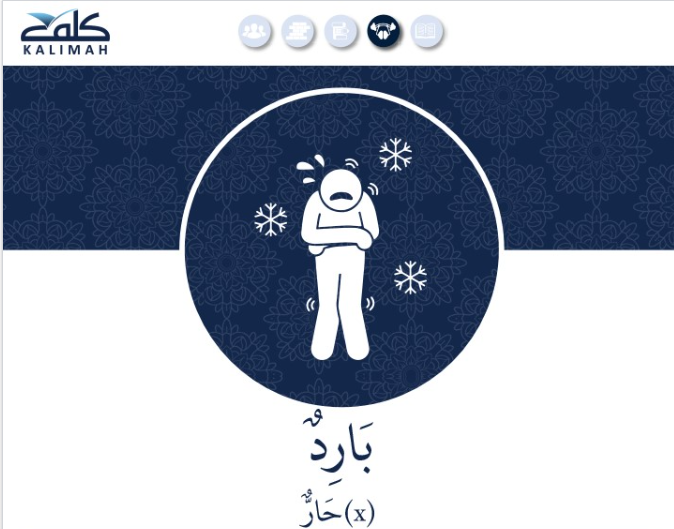
2. Cold in Arabic
The Arabic word for cold is بارِد (Barid). Barid also describes cold drinks.
اللَّيلةَ الجَوُّ بارِدٌ
(Al-laylata al-jawwu baridun)
Tonight the weather is cold.
3. Sunny in Arabic
The Arabic word for sunny is مُشمِس (Mushmis). It comes from shams (شمس), meaning “sun.”
اليَومَ الجَوُّ مُشمِسٌ
(Al-yawma al-jawwu mushmisun)
Today the weather is sunny.
4. Cloudy in Arabic
The Arabic word for cloudy is غائِم (Gha’im). It relates to being covered or hidden.
السَّماءُ غائِمةٌ
(As-sama’u gha’imatun)
The sky is cloudy.
5. Rainy in Arabic
The Arabic word for rainy is ماطِر (Matir). It comes from matar (مطر), meaning “rain.”
يَومٌ ماطِرٌ
(Yawmun matirun)
A rainy day.
6. Wind in Arabic
The Arabic word for wind is ريح (Reeh). Riyah (رياح) is the plural, “winds.”
تهب رياح قوية
(Tahub riyah qawiyyah)
Strong winds are blowing.
7. Snow in Arabic
The Arabic word for snow is ثلج (Thalej). Snow is less common in many Arab countries.
يتساقط الثلج في الجبال
(Yatasqat ath-thalej fi al-jibal)
Snow falls in the mountains.
8. Temperature in Arabic
The Arabic phrase for temperature is درجة الحرارة (Darajat al-Hararah). Daraja (درجة) means “degree,” and al-hararah (الحرارة) means “the heat.”
ما درجة الحرارة اليوم؟
(Ma darajat al-hararah al-yawm?)
What is the temperature today?

9. Humidity in Arabic
The Arabic word for humidity is رطوبة (Rutooba). Humidity is important in many Arab climates.
نسبة الرطوبة عالية اليوم
(Nisbat ar-rutooba ‘aliyah al-yawm)
The humidity is high today.
10. Storm in Arabic
The Arabic word for storm is عاصفة (‘Asifa).
هناك عاصفة رعدية قادمة
(Hunaka ‘asifa ra’diyyah qadimah)
There is a thunderstorm coming.
11. Fog in Arabic
The Arabic word for fog is ضباب (Dabab).
الضباب كثيف في الصباح الباكر
(Ad-dabab kathif fi as-sabah al-bakir)
The fog is thick in the early morning.
12. Rainbow in Arabic
The Arabic word for rainbow is قوس قزح (Qaws Quzah).
بعد المطر ظهر قوس قزح جميل
(Ba’d al-matar thahara qaws quzah jameel)
After the rain, a beautiful rainbow appeared.
13. Cloud in Arabic
The Arabic word for cloud is غيمة (Ghayma).
السماء مليئة بالغيوم
(As-sama’ mali’ah bil-ghuyoom)
The sky is full of clouds.
14. Lightning in Arabic
The Arabic word for lightning is برق (Barq).
رأيت برقا قويا في السماء
(Ra’aytu barqan qawiyyan fi as-sama’)
I saw strong lightning in the sky.
15. Thunder in Arabic
The Arabic word for thunder is رعد (Ra’d).
سمعت صوت الرعد بعد البرق
(Sami’tu sawt ar-ra’d ba’d al-barq)
I heard the sound of thunder after the lightning.
Read also: Directions in Arabic
Grammar Notes: How Weather Adjectives Work in Arabic
Arabic weather adjectives follow strict gender and number agreement rules. Understanding these patterns helps you speak naturally.
Gender Agreement Rules:
Masculine Nouns:
- الجو حارّ (al-jaww ḥārr) – The weather is hot
- اليوم بارد (al-yawm bārid) – The day is cold
- الليل معتدل (al-layl muʿtadil) – The night is moderate
Feminine Nouns:
- الليلة باردة (al-layla bārida) – The night is cold (layla is feminine)
- الأجواء لطيفة (al-ajwāʾ laṭīfa) – The atmosphere is pleasant
- السماء صافية (as-samāʾ ṣāfiya) – The sky is clear
Memory Tip: Most weather adjectives add ة (tāʾ marbūṭa) for feminine nouns.
Common Sentence Structures:
Pattern 1: الجو + Adjective
This is the most common structure for describing weather.
- الجو حار (It’s hot)
- الجو بارد (It’s cold)
- الجو معتدل (It’s moderate)
- الجو رطب (It’s humid)
Pattern 2: إنها + Verb (for weather events)
Used for actions/phenomena:
- إنها تمطر (innahā tumṭir) – It’s raining
- إنها تثلج (innahā tathlij) – It’s snowing
- إنها تعصف (innahā taʿṣif) – It’s stormy
Pattern 3: هناك + Noun
Expressing existence of weather conditions:
- هناك عاصفة (hunāka ʿāṣifa) – There’s a storm
- هناك ضباب (hunāka ḍabāb) – There’s fog
- هناك رياح (hunāka riyāḥ) – There are winds
Intensifiers for Weather:
- جداً (jiddan) – very: حار جداً (very hot)
- قليلاً (qalīlan) – a bit: بارد قليلاً (a bit cold)
- للغاية (lil-ghāya) – extremely: حار للغاية (extremely hot)
- نوعاً ما (nawʿan mā) – somewhat: رطب نوعاً ما (somewhat humid)
Complete Arabic Weather & Seasons Vocabulary Chart
To help you review and consolidate the vocabulary we’ve covered in this lesson, we’ve compiled a handy chart.
| English Translation | Arabic Word | Transliteration |
| Spring | الرَّبيع | Ar-Rabee’ |
| Summer | الصَّيف | As-Sayf |
| Autumn/Fall | الخريف | Al-Khareef |
| Winter | الشِّتاء | Ash-Shita’ |
| Weather | الطقس | At-Taqs |
| Hot | حارّ | Harr |
| Cold | بارِد | Barid |
| Sunny | مُشمِس | Mushmis |
| Cloudy | غائِم | Gha’im |
| Rainy | ماطِر | Matir |
| Rain | مطر | Matar |
| Wind | ريح | Reeh |
| Winds | رياح | Riyah |
| Snow | ثلج | Thalej |
| Temperature | درجة الحرارة | Darajat al-Hararah |
| Degree | درجة | Daraja |
| Heat | الحرارة | Al-Hararah |
| Humidity | رطوبة | Rutooba |
| Storm | عاصفة | ‘Asifa |
| Thunderstorm | عاصفة رعدية | ‘Asifa ra’diyyah |
| Fog | ضباب | Dabab |
| Rainbow | قوس قزح | Qaws Quzah |
| Cloud | غيمة | Ghayma |
| Clouds | غيوم | Ghuyoom |
| Lightning | برق | Barq |
| Thunder | رعد | Ra’d |
| Pleasant (weather) | لطيف | Latif |
| Moderate (weather) | معتدل | Mu’tadil |
| Heavy Rain | أمطار غزيرة | Amtar Ghazira |
| Changeable (weather) | متقلب | Mutaqallib |
Master Arabic with Kalimah Center
Join our expert-led online classes and start your journey toward Arabic fluency today.
Book Your Free TrialInside Kalimah Center: Moments from Our Courses
Get a glimpse into the vibrant learning experience at Kalimah Center. These snapshots capture real moments from our live classes—where students engage deeply, connect with passionate instructors, and grow in a welcoming, supportive environment.
Here Are The Reviews On Our Courses:
Our students frequently commend the excellence of our courses and the commitment shown by our instructors. You can read their complete reviews on Trustpilot.

How can Kalimah make learning Arabic vocabulary for seasons, weather, and other topics effective?
At Kalimah Center, we help you learn many things in Arabic, from basic to advanced. You see, learning about seasons and weather, it’s part of everyday talk, like we teach in our online Arabic courses.
So, how you learn about weather in Arabic with us?
- First, alphabet: Important! You must know letters to read and write words like “summer” (الصيف), “rain” (مطر). Our alphabet course is first step, very good foundation.
- Then, basic words and grammar: We teach you how to make sentences. This helps you say things like “It is hot” (الجو حار), “It is raining” (إنها تمطر). Our “Basics of Arabic” course and “Everyday Life” courses are very helpful for this. They teach you how to use verbs, adjectives, all important for talking about weather.
- Everyday conversations: In our “Everyday Life” course, we teach you how to talk about daily things. Weather is part of this! You learn to ask “How is the weather today?” (كيف حال الطقس اليوم؟) and understand the answer. This course teaches you how to have real conversations.
📚 Explore Our Courses:
Online Arabic Course: Tailored to your level, our comprehensive Arabic program includes 16 teaching levels and 400+ hours of personalized sessions.
Online Quran With Tajweed Course: Perfect for non-Arabic speakers, our course spans 13 levels and equips you with Tajweed mastery from beginner to advanced.
Online Arabic Course For Kids: Nurture your child’s love for Arabic with our engaging and structured program, available in 24 levels for primary, intermediate, and secondary stages.
🚀 Start Your Free Trial Today! 🚀
Don’t miss out on this life-changing opportunity to deepen your faith and knowledge. Sign up now for your free trial and take the first step towards becoming a better practicing Muslim with Kalimah Center!
Join us for a FREE trial class and see for yourself.

Former students praise the immersive experience and expert guidance they receive from native teachers.

FAQs about Seasons and Weather in Arabic
Q1: How do you ask “What’s the weather like?” in Arabic?
The most common way is كيف الطقس؟ (kayfa aṭ-ṭaqs?) or كيف حال الطقس؟ (kayfa ḥāl aṭ-ṭaqs?). In informal conversation, you can also say كيف الجو؟ (kayfa al-jaww?) which literally means “How’s the atmosphere?” Both are widely understood across Arab countries.
Q2: What’s the difference between طقس (ṭaqs) and جو (jaww) for weather?
طقس (ṭaqs) is the formal, standard term for “weather” used in news, forecasts, and formal contexts. جو (jaww) means “atmosphere” or “air” but is commonly used colloquially to mean weather, especially in phrases like الجو حار (it’s hot). Both are correct, but ṭaqs is more precise.
Q3: Do Arabic weather adjectives change for masculine and feminine nouns?
Yes! Weather adjectives must agree in gender. الجو حارّ (al-jaww ḥārr – masculine) becomes الليلة حارّة (al-layla ḥārra – feminine, “the night is hot”). The adjective حار adds a ة (tāʾ marbūṭa) when describing feminine nouns. This applies to all weather descriptors.
Q4: How do Arabs typically describe weather in different regions?
Gulf countries emphasize heat: الجو حار جداً (extremely hot) and رطوبة عالية (high humidity). Levantine regions use معتدل (moderate) more often. North African Arabic might use French loanwords in casual speech. Egyptians commonly say الدنيا حر (ed-dunya ḥarr) colloquially.
Q5: Are there Arabic proverbs or sayings about weather and seasons?
Yes! Common ones include: بعد الشتاء يأتي الربيع (After winter comes spring – similar to “Every cloud has a silver lining”), في الصيف يُعرف الصديق (A friend is known in summer – when help is needed), and الربيع أول الفصول (Spring is the first of seasons – celebrating renewal).