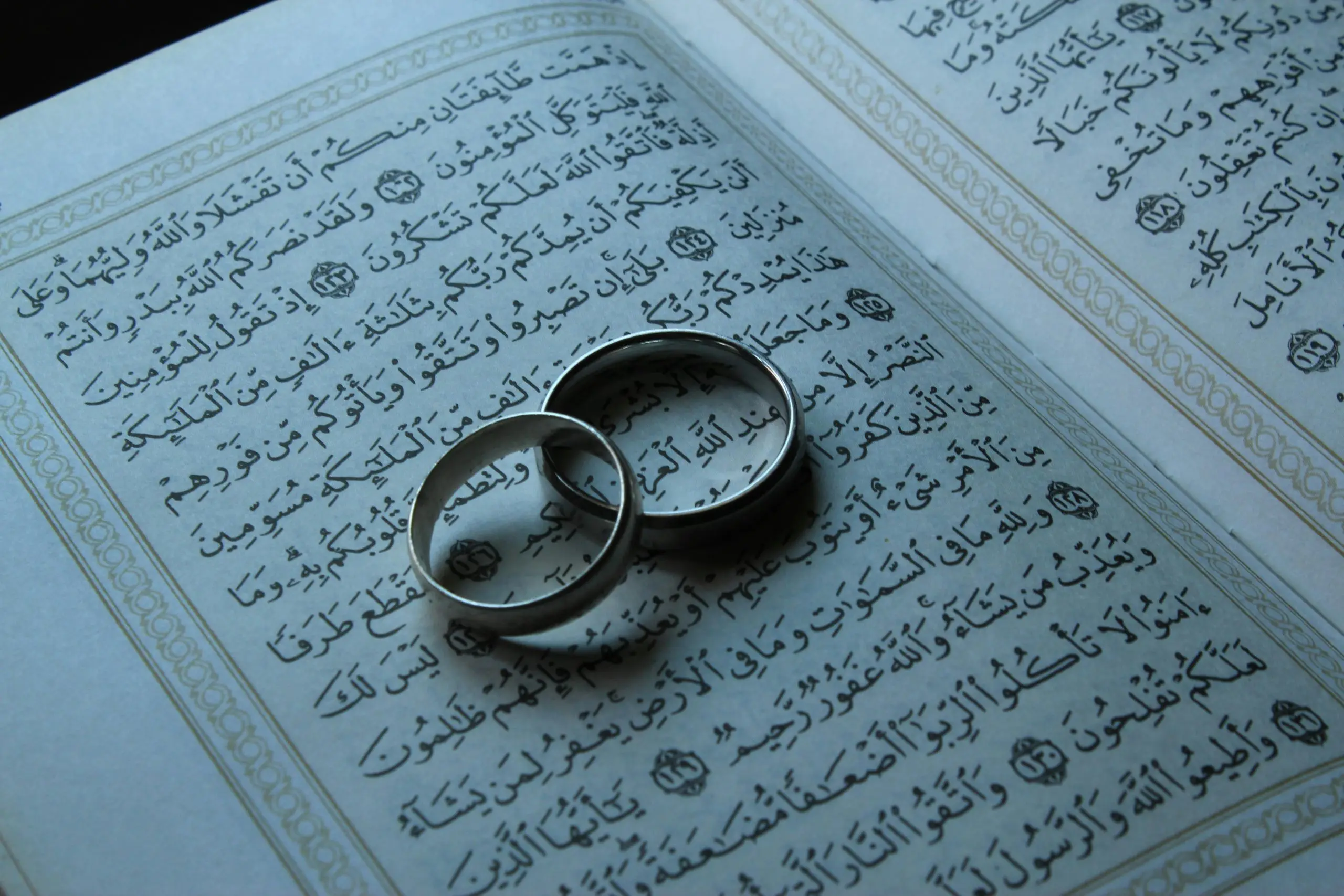
Marriage in Islam is not described once and left there. The Quran returns to it from multiple angles — as worship, as social order, as biology, as comfort — across more than a dozen surahs.
If you’re searching for Quran verses about marriage in Arabic, you’re likely looking for the exact wording to recite, write on an invitation, or simply understand more deeply.
This guide collects the most cited ayahs in their original Arabic, explains what each one actually means in context, and groups them so you can find the right verse for the right moment.
You’ll also see why these verses are recited at almost every Muslim wedding, what makes one ayah “the marriage verse” above all others, and how to read these texts the way classical commentators did — not as decoration, but as instruction.
What You’ll Learn in This Article
- The single most-quoted Quran verse about marriage, in Arabic with full context
- Short, easy-to-memorize verses suitable for invitations or short readings
- How the Quran describes the purpose of marriage beyond companionship
- The difference between verses about marriage’s foundation and verses about its legal rulings
- Where to find each verse’s Surah and ayah number for accurate citation
Among every ayah on this topic, one is quoted more than all the others combined, and it sets the emotional tone for everything that follows in this guide.
Surah Ar-Rum, verse 21, is the ayah Muslims quote more than any other when discussing marriage. It describes marriage as a sign (ayah) of God’s design, built on tranquility, affection, and mercy — not merely a social contract.
وَمِنْ آيَاتِهِ أَنْ خَلَقَ لَكُم مِّنْ أَنفُسِكُمْ أَزْوَاجًا لِّتَسْكُنُوا إِلَيْهَا وَجَعَلَ بَيْنَكُم مَّوَدَّةً وَرَحْمَةً ۚ إِنَّ فِي ذَٰلِكَ لَآيَاتٍ لِّقَوْمٍ يَتَفَكَّرُونَ (الروم: 21)
“And of His signs is that He created for you from yourselves mates that you may find tranquility in them, and He placed between you affection and mercy. Indeed in that are signs for a people who give thought.” (Quran 30:21)
This subsection breaks down the three Arabic terms inside Ar-Rum 21 “skan” wa”mudatu” wa”rahmatu” that give the verse its depth, since each word describes a different phase of a marriage rather than three synonyms for the same feeling.
Three Arabic words carry the weight of this verse: sakan (tranquility/rest), mawaddah (affection), and rahmah (mercy).
Classical exegetes, including Ibn Kathir in his Tafsir, treat these three terms as distinct stages — sakan is the calm a person feels simply being near their spouse, mawaddah is the active love that grows from shared life, and rahmah is the compassion that sustains a marriage once youthful passion fades.
This is why the verse is read at weddings worldwide: it sets the emotional and spiritual target for the relationship, not just its legal start.
Short Quran Verses About Marriage in Arabic
Not every verse on this topic runs long — several are a single line, which makes them practical for nikah ceremonies, wedding cards, or quick recitation.
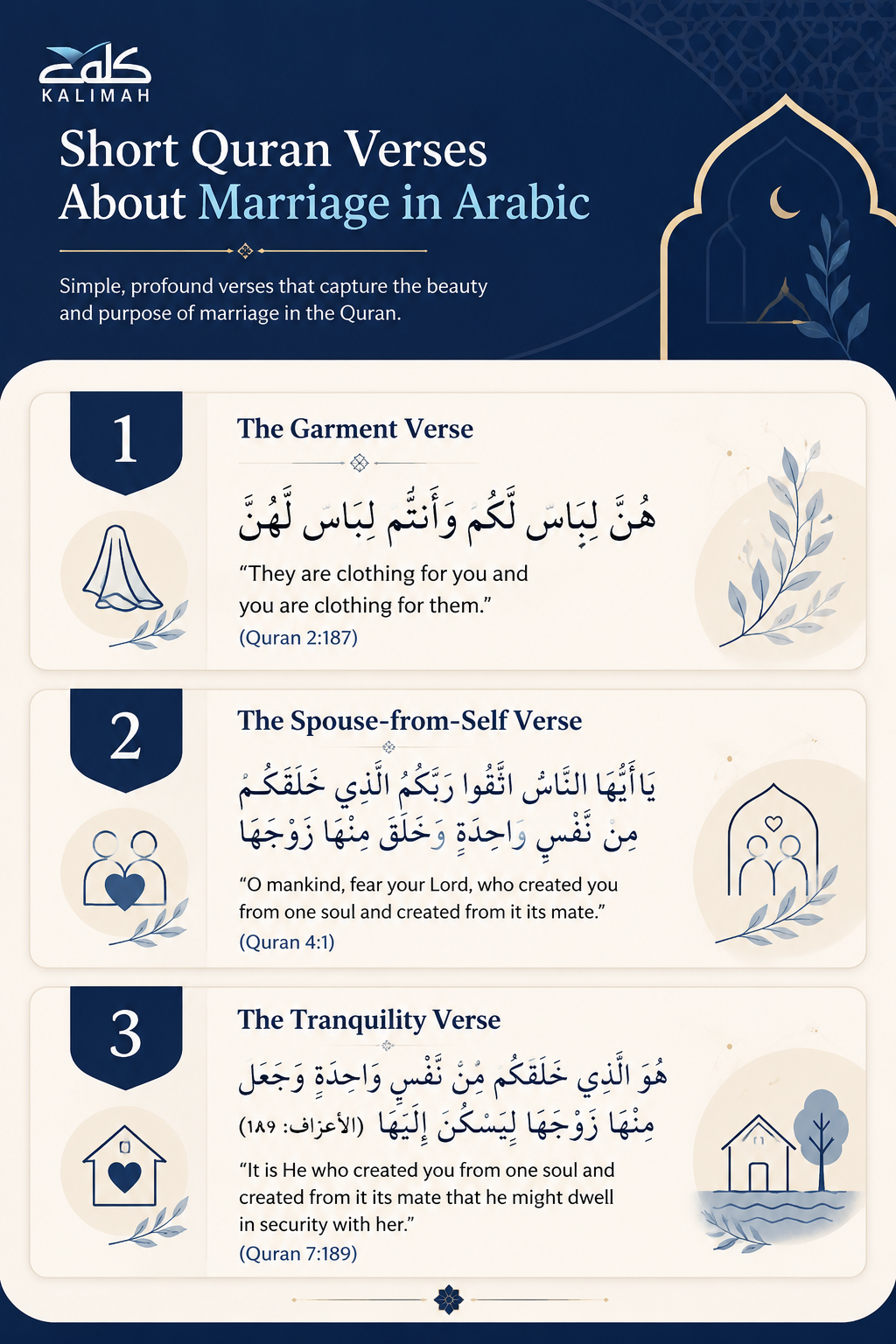
1. The Garment Verse
This subsection covers the shortest widely-cited marriage verse in the Quran and the protective imagery behind it.
هُنَّ لِبَاسٌ لَّكُمْ وَأَنتُمْ لِبَاسٌ لَّهُنَّ
“They are clothing for you and you are clothing for them.” (Quran 2:187)
This single phrase is one of the most quoted short verses on marriage. A garment covers, protects, and stays close to the body — the metaphor places both spouses in an equal, mutual role of protection and intimacy. It’s short enough to memorize in one sitting and carries enough meaning to anchor a short wedding speech.
2. The Spouse-from-Self Verse
This subsection explains the opening verse of Surah An-Nisa, the chapter the Quran uses to introduce family law.
يَا أَيُّهَا النَّاسُ اتَّقُوا رَبَّكُمُ الَّذِي خَلَقَكُم مِّن نَّفْسٍ وَاحِدَةٍ وَخَلَقَ مِنْهَا زَوْجَهَا
“O mankind, fear your Lord, who created you from one soul and created from it its mate.” (Quran 4:1)
This opens the chapter on family law in the Quran, which is why scholars often introduce it before discussing marriage rulings.
It establishes a shared human origin before any legal distinction between spouses is introduced — a point Imam al-Tabari highlights directly in his commentary, noting that the verse addresses humanity as one before any social or legal category is applied.
3. The Tranquility Verse
This subsection looks at a verse that echoes the same root word as Ar-Rum 21, reinforcing the same idea of security from a different surah.
هُوَ الَّذِي خَلَقَكُم مِّن نَّفْسٍ وَاحِدَةٍ وَجَعَلَ مِنْهَا زَوْجَهَا لِيَسْكُنَ إِلَيْهَا (الأعراف: 189)
“It is He who created you from one soul and created from it its mate that he might dwell in security with her.” (Quran 7:189)
This verse uses the same root as sakan from Ar-Rum 21, reinforcing that rest and security — not just companionship — are built into the Quran’s description of why marriage exists.
Read Also: Quran Verses About Jannah
Beautiful Quran Verses About Marriage and Their Deeper Meaning
Several verses are frequently described as the “beautiful” marriage verses because of the imagery and emotional register they use, distinct from the more legal verses found elsewhere in the Quran.
1. The Prayer for a Righteous Spouse
This subsection presents a verse framed as a prayer rather than a statement, teaching believers what to actively ask for in a spouse.
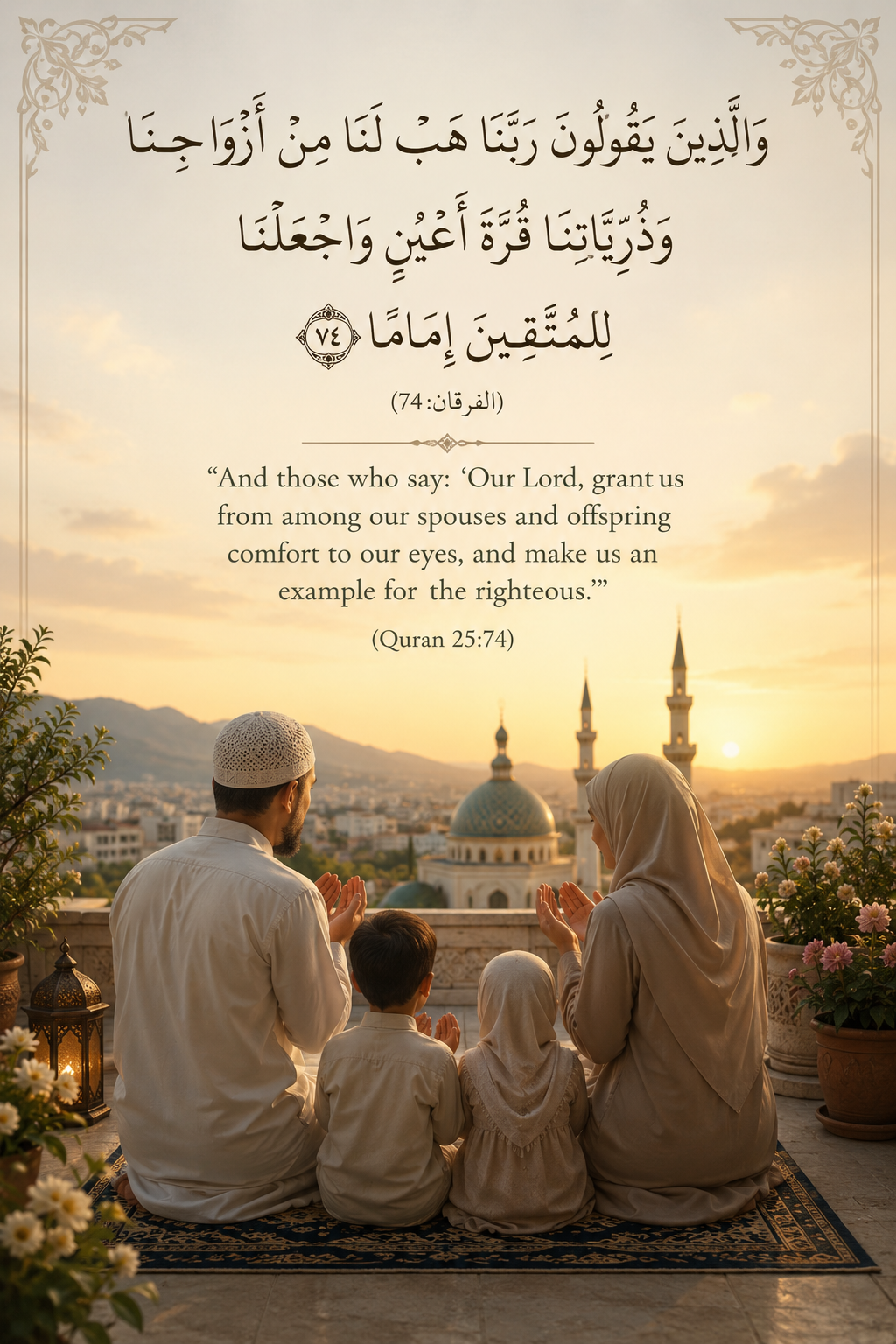
وَالَّذِينَ يَقُولُونَ رَبَّنَا هَبْ لَنَا مِنْ أَزْوَاجِنَا وَذُرِّيَّاتِنَا قُرَّةَ أَعْيُنٍ وَاجْعَلْنَا لِلْمُتَّقِينَ إِمَامًا (الفرقان: 74)
“And those who say: ‘Our Lord, grant us from among our spouses and offspring comfort to our eyes, and make us an example for the righteous.'” (Quran 25:74)
This verse is a dua, not a description — it teaches the believer to actively ask God for a spouse and children who bring genuine comfort, not merely a spouse who is present. The phrase qurrat a’yun (comfort of the eyes) is an Arabic idiom for the deepest kind of contentment, the opposite of a relationship that’s merely tolerated.
2. The Divine Promise of Provision
This subsection addresses one of the most common hesitations people have before marrying: financial readiness.
وَأَنكِحُوا الْأَيَامَىٰ مِنكُمْ وَالصَّالِحِينَ مِنْ عِبَادِكُمْ وَإِمَائِكُمْ ۚ إِن يَكُونُوا فُقَرَاءَ يُغْنِهِمُ اللَّهُ مِن فَضْلِهِ ۗ وَاللَّهُ وَاسِعٌ عَلِيمٌ (النور: 32)
“And marry the unmarried among you and the righteous among your male slaves and female slaves. If they are poor, Allah will enrich them from His bounty. And Allah is all-Encompassing, all-Knowing.” (Quran 24:32)
This verse directly addresses one of the most common hesitations around marriage — financial readiness — and reframes it.
The command isn’t to wait for wealth before marrying; it’s a promise that providing for marriage is something God facilitates, not a precondition the believer must fully secure alone first.
Experience Kalimah Center Classes
Watch real excerpts from our live sessions at Kalimah Center and see how we bring learning to life. These clips highlight our interactive, student-centered teaching approach across all our courses—designed to keep learners engaged, motivated, and actively involved every step of the way.
Master Arabic with Kalimah Center
Join our expert-led online classes and start your journey toward Arabic fluency today.
Book Your Free Trial3. The Blessing Of Spouses And Children
This subsection extends the conversation from the couple to the family that grows from the marriage.
وَاللَّهُ جَعَلَ لَكُم مِّنْ أَنْفُسِكُمْ أَزْوَاجًا وَجَعَلَ لَكُمْ مِنْ أَزْوَاجِكُمْ بَنِينَ وَحَفَدَةً وَرَزَقَكُمْ مِنَ الطَّيِّبَاتِ (النحل: 72)
“And Allah has made for you spouses of your own kind, and has made for you, from your spouses, sons and grandsons, and has provided for you good things.” (Quran 16:72)
This verse extends the discussion of marriage beyond the couple itself to its natural outcome — family across generations — framed explicitly as a divine favor (ni’mah), not a biological accident.
For readers exploring how marriage connects to the Quran’s broader vision of family, the related verses on parents, children, and household responsibility in Surah An-Nisa and Surah At-Talaq build directly on the same foundation laid in Ar-Rum 21 and An-Nahl 72.
If you’re working through verses like these for memorization or recitation practice, getting the Tajweed and pronunciation right matters as much as understanding the meaning — a single mispronounced letter in Arabic can shift a word’s meaning entirely, which is exactly the kind of detail a structured Quranic Arabic course is built to catch early.
Read Also: Quran Quotes In Arabic And English
Verses on the Purpose and Protection of Marriage
Several verses frame marriage as a safeguard — protecting chastity, family lineage, and social order — which is a separate function from the comfort-and-mercy framing in Ar-Rum 21.
1. Guarding Chastity
This subsection identifies the verse Islamic scholars cite when explaining marriage’s role as the sanctioned boundary for intimacy.
وَالَّذِينَ هُمْ لِفُرُوجِهِمْ حَافِظُونَ * إِلَّا عَلَىٰ أَزْوَاجِهِمْ أَوْ مَا مَلَكَتْ أَيْمَانُهُمْ فَإِنَّهُمْ غَيْرُ مَلُومِينَ (المؤمنون: 5-6)
“And those who guard their private parts, except from their wives… indeed, they will not be blamed.” (Quran 23:5-6)
This verse identifies marriage as the sanctioned framework for intimacy in Islam — a recurring theme across the legal verses on this topic, distinct from the emotional verses discussed above.
2. Universal Pairing In Creation
This subsection widens the discussion beyond human marriage to show how the Quran uses the same word for pairing throughout nature.
سُبْحَانَ الَّذِي خَلَقَ الْأَزْوَاجَ كُلَّهَا مِمَّا تُنبِتُ الْأَرْضُ وَمِنْ أَنفُسِهِمْ وَمِمَّا لَا يَعْلَمُونَ (يس: 36)
“Exalted is He who created all pairs — from what the earth grows and from themselves and from what they do not know.” (Quran 36:36)
This verse widens the lens beyond human marriage entirely. The Arabic word zawj (pair/mate) is used across the Quran for plants, animals, and humans alike — a recurring pattern Quranic scholars cite as evidence that pairing is a structural principle of creation itself, not an isolated human custom.
Inside Kalimah Center: Moments from Our Courses
Get a glimpse into the vibrant learning experience at Kalimah Center. These snapshots capture real moments from our live classes—where students engage deeply, connect with passionate instructors, and grow in a welcoming, supportive environment.
Here Are The Reviews On Our Courses:
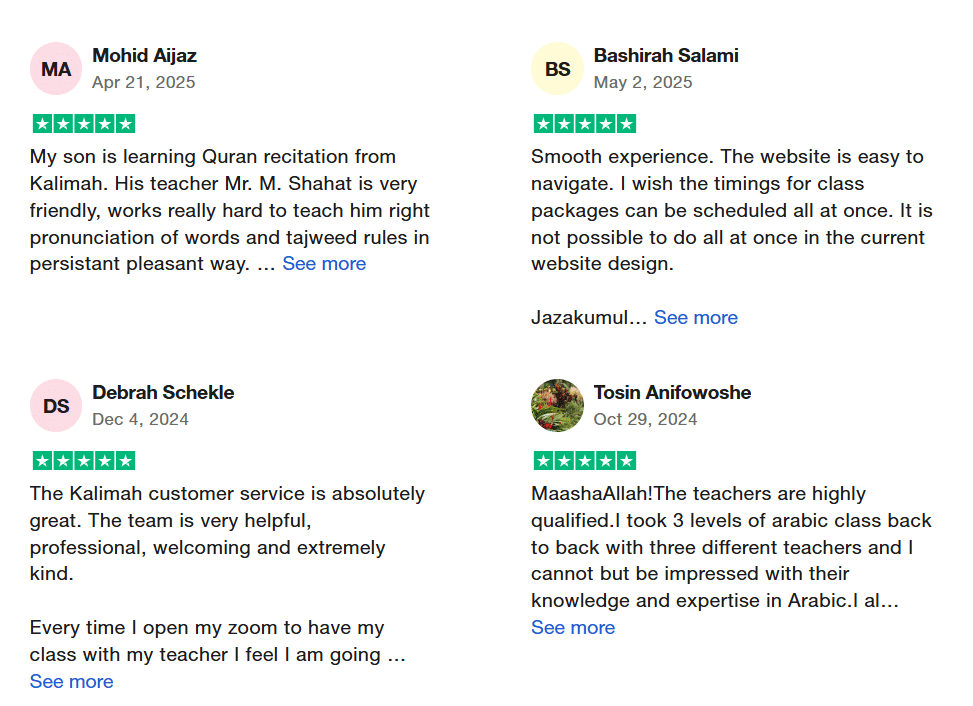
Our students frequently commend the excellence of our courses and the commitment shown by our instructors. You can read their complete reviews on Trustpilot.
Read more reviews on Trustpilot
Build Real Understanding of These Verses With Kalimah Center
This section introduces how Kalimah Center can help you move from reading these verses in translation to understanding them directly in Arabic.
Reading these ayahs in translation gives you the meaning. Reading them in Arabic — and understanding why each word was chosen — gives you the depth scholars like Ibn Kathir and al-Tabari spent volumes explaining.
Kalimah Center’s Quranic Arabic courses are built for exactly this: structured, one-on-one instruction with qualified teachers who walk you through grammar, vocabulary, and meaning together, so verses like Ar-Rum 21 stop being something you read and become something you actually understand.
Explore Our Courses:
- Online Arabic Course: tailored to your level, with 16 teaching levels and 400+ hours of personalized sessions.
- Online Quran With Tajweed Course: built for non-Arabic speakers, spanning 13 levels from beginner to advanced Tajweed mastery.
- Online Arabic Course for Kids: a structured program in 24 levels covering primary, intermediate, and secondary stages.
Master Arabic with Kalimah Center
Join our expert-led online classes and start your journey toward Arabic fluency today.
Book Your Free TrialStart Your Free Trial Today!
Sign up now for your free trial and start with the verse that matters most to you — read it correctly, understand it fully.
Conclusion
The Quran’s treatment of marriage spans tranquility and mercy in Surah Ar-Rum, mutual protection in the garment verse of Al-Baqarah, divine provision in Surah An-Nur, and the structural pairing found throughout creation in Surah Ya-Sin.
Read together, these Quran verses about marriage in Arabic describe a relationship built on shared origin, active compassion, and lasting security — not a single transaction, but a recurring theme God revisits across nearly every major surah that addresses family life.
Whether you’re memorizing these ayahs for a wedding, studying them for their tafsir, or simply trying to understand the Quran’s vision of marriage more fully, starting with the original Arabic at Kalima Center— rather than translation alone — is where the deeper meaning actually sits.
Frequently Asked Questions
This section answers the most common follow-up questions readers have after going through the verses above, each in a direct, standalone format.
1- What is the most famous Quran verse about marriage?
Surah Ar-Rum, verse 21, is the most cited Quran verse about marriage. It describes marriage as built on tranquility (sakan), affection (mawaddah), and mercy (rahmah), and is the verse most commonly recited at Muslim weddings worldwide.
2- What is the shortest Quran verse about marriage?
The shortest widely-cited verse is from Al-Baqarah 187: “هُنَّ لِبَاسٌ لَّكُمْ وَأَنتُمْ لِبَاسٌ لَّهُنَّ” (“They are clothing for you and you are clothing for them”). Its brevity and metaphor make it common on wedding invitations.
3- Does the Quran say marriage requires wealth first?
No. Surah An-Nur, verse 32, directly addresses this concern, promising that Allah will provide for those who marry while poor, rather than requiring financial security as a precondition for marriage.
4- Why does the Quran use the word “zawj” for things other than spouses?
The Arabic word zawj means “pair” or “mate,” and the Quran uses it broadly for plants, animals, and natural phenomena, not only human spouses. Verses like Ya-Sin 36 use this wider sense to describe pairing as a principle throughout creation, not specifically marital relationships.
5- How many Quran verses mention marriage or spouses?
Dozens of verses across the Quran use the words zawj (spouse/pair) or nikah (marriage contract), spanning Surah Al-Baqarah, An-Nisa, An-Nur, Ar-Rum, Ya-Sin, and others. They cover the emotional purpose of marriage, its legal conditions, and its place within the broader pattern of creation.
6- Can I recite these marriage verses at my wedding?
Yes. Surah Ar-Rum 21 and the garment verse from Al-Baqarah 187 are commonly recited or referenced at Muslim weddings (nikah ceremonies) precisely because of their direct relevance to the marital relationship’s purpose and tone.