When life feels heavy and the heart is searching for something solid to hold onto, Quran quotes in Arabic and English offer a direct line back to that steadiness. These are not motivational sayings borrowed from self-help books — they are the actual words of the Quran, paired with their English meaning, so you can read them, understand them, and carry them with you.
This collection gathers some of the most comforting and frequently sought verses on patience, hope, trust in Allah, and divine mercy. Each one is presented in the original Arabic script, with a clear English rendering beside it, so the meaning is never lost in translation.
Whether you’re searching for short Quran quotes in Arabic to memorize, motivational Quran verses in Arabic for a hard day, or simply want to understand the Arabic wording behind a verse you’ve heard before, this guide is built to give you both the words and the context behind them.
What you’ll learn in this article
- The most quoted Quran verses on hope, patience, and Allah’s mercy, in Arabic and English
- The context behind each verse — when and why it was revealed
- How to read the Arabic script alongside an accurate English meaning
- Short, easy-to-memorize Quran quotes for daily reminders
- Where these verses fit into a broader practice of reading and understanding the Quran
Quran Quotes in Arabic and English on Allah’s Closeness and Response
A recurring theme across the Quran is that Allah is not distant. He is described as near, attentive, and responsive to anyone who turns to Him sincerely — a theme that runs through verses revealed in very different circumstances, from prayer to personal hardship.
1. The Door Of Du’a Is Always Open
One of the most direct promises in the Quran concerns du’a itself — not as a ritual formality, but as a two-way exchange between a person and their Lord. This verse was revealed as a reassurance that the act of calling upon Allah is never wasted.
“وَقَالَ رَبُّكُمُ ادْعُونِي أَسْتَجِبْ لَكُمْ”
Wa qaala rabbukumu’d-‘oonee astajib lakum
“And your Lord says: Call upon Me; I will respond to you.” (Surah Ghafir 40:60)
This verse is a direct command paired with a direct promise. The instruction (call) and the result (response) sit in the same sentence, with no conditions attached beyond sincerity. It’s one of the most cited verses when someone is searching for reassurance that prayer is heard, not just performed.
2. The Absolute Nearness Of Allah
This verse was not revealed in isolation — it came in direct response to companions who asked whether Allah could be called upon from far away. The answer given makes no reference to distance at all.
وَإِذَا سَأَلَكَ عِبَادِي عَنِّي فَإِنِّي قَرِيبٌ أُجِيبُ دَعْوَةَ الدَّاعِ إِذَا دَعَانِ
Wa idhaa sa-alaka ‘ibaadee ‘annee fa-innee qareeb, ujeebu da’wata’d-daa’i idhaa da’aan
“And when My servants ask you about Me, I am indeed near. I respond to the call of every caller when they call upon Me.” (Surah Al-Baqarah 2:186)
The word used here, qareeb (قَرِيبٌ), means near in the most immediate sense — not distant in time or space. This verse was revealed during the early Medinan period in response to companions asking whether Allah could be called to from far away, and the answer given is unconditional nearness.
Read Also: Quran Verses About Mothers in Arabic
Short Quran Quotes In Arabic And English On Hardship And Relief
Hardship is treated in the Quran not as a punishment to escape but as a stage that is always paired with relief. The structure of the language itself in the most well-known verse on this topic reinforces that pairing.
1. The Ease Follows Hardship
Most people know this verse by its meaning. Fewer know that the Arabic grammar carries a layer of reassurance the English translation cannot fully convey — and that this grammar is precisely why scholars have quoted it for centuries.
فَإِنَّ مَعَ الْعُسْرِ يُسْرًا، إِنَّ مَعَ الْعُسْرِ يُسْرًا
Fa-inna ma’al ‘usri yusraa, inna ma’al ‘usri yusraa
“For indeed, with hardship comes ease. Indeed, with hardship comes ease.” (Surah Ash-Sharh 94:5-6)
This is among the most quoted Quran verses for a precise grammatical reason: the word for hardship (al-‘usr) is used with the definite article, meaning one specific hardship, while the word for ease (yusran) appears without it, meaning ease in an open, unspecified form. Many scholars read this as a signal that a single difficulty can be met with multiple forms of relief. The sentence is also repeated twice in successive verses, a literary device the Quran uses to mark something as carrying special emphasis.
2. God Equips Before He Tests
This verse is quoted most often during moments of overwhelm — but what makes it more than a comfort phrase is the precision of the Arabic word at its center.
لَا يُكَلِّفُ اللَّهُ نَفْسًا إِلَّا وُسْعَهَا
Laa yukallifu’Llaahu nafsan illaa wus’ahaa
“Allah does not burden a soul beyond what it can bear.” (Surah Al-Baqarah 2:286)
This verse is frequently quoted as a response to overwhelm — the sense that a trial is too large to carry. The Arabic word wus’aha refers to a person’s actual capacity, not an arbitrary limit, which is why this line is often paired in commentary with the idea that whatever a person is facing, they have been equipped to handle it.
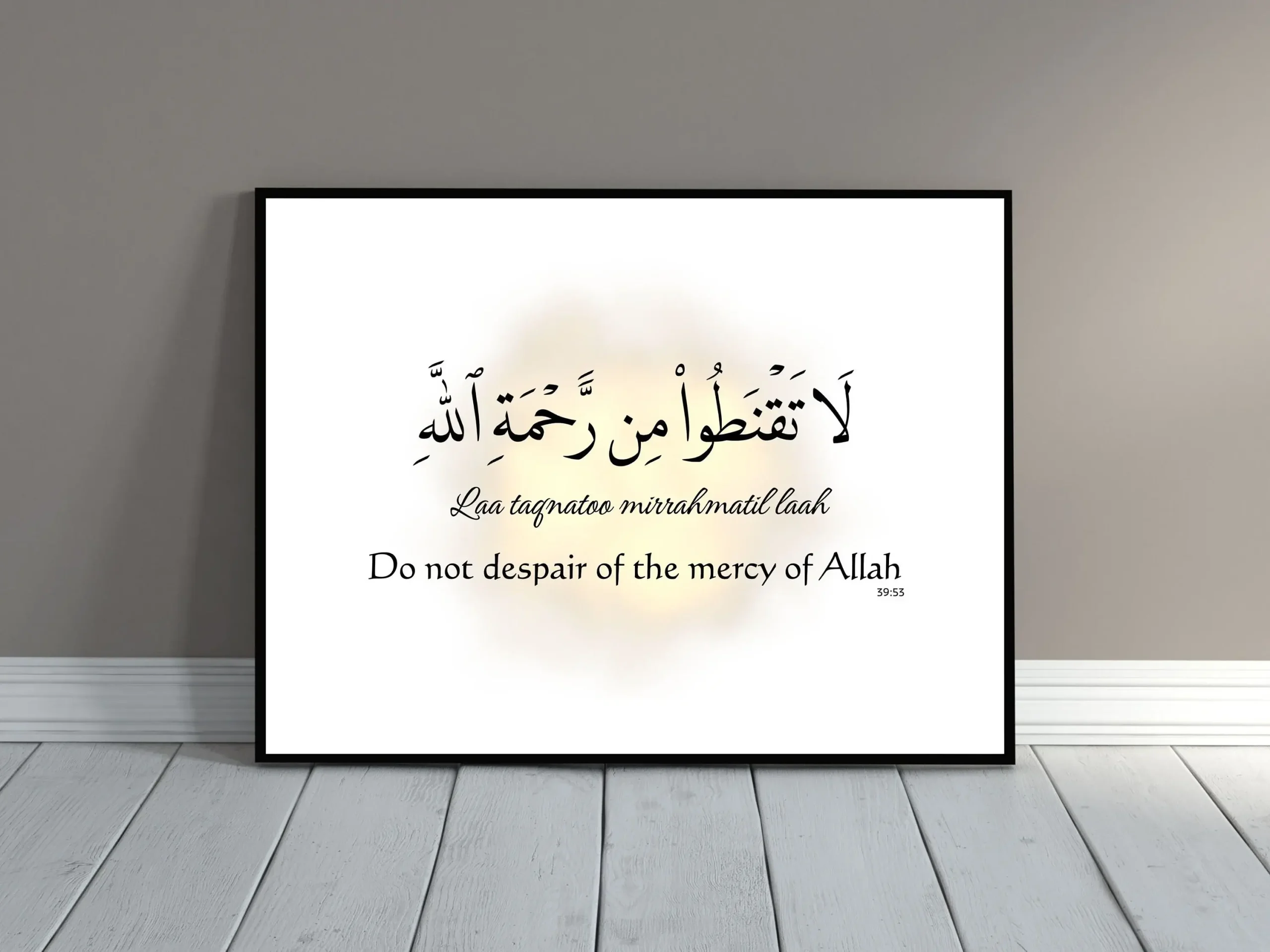
3.God’s Mercy Reaches The Sinner Before The Righteous
What distinguishes this verse from similar reassurances in the Quran is its audience. It does not speak to the righteous or the struggling; it speaks directly to those who know they have wronged themselves.
قُلْ يَا عِبَادِيَ الَّذِينَ أَسْرَفُوا عَلَى أَنفُسِهِمْ لَا تَقْنَطُوا مِن رَّحْمَةِ اللَّهِ
Qul yaa ‘ibaadiya’l-ladheena asrafoo ‘alaa anfusihim laa taqnatoo min rahmati’Llaah
“Say: O My servants who have transgressed against themselves, do not despair of Allah’s mercy.” (Surah Az-Zumar 39:53)
What makes this verse stand out is the audience it addresses directly — not the righteous, but those who have asrafoo (transgressed, gone to excess) against themselves. The verse doesn’t soften the description of the wrongdoing; it goes straight to reassurance, making it one of the most repeated quotes for anyone carrying guilt over past mistakes.
Motivational Quran Verses On Patience And Perseverance
Patience in the Quran is paired consistently with reward and divine support, rather than presented as passive waiting. Several verses frame patience as an active discipline tied directly to outcomes.
1. God’s Description Of Hardship
This verse does not simply encourage patience — it specifies patience alongside a second practice, making it one of the most instructional verses on what to do when difficulty arrives, not just how to feel about it.
يَا أَيُّهَا الَّذِينَ آمَنُوا اسْتَعِينُوا بِالصَّبْرِ وَالصَّلَاةِ إِنَّ اللَّهَ مَعَ الصَّابِرِينَ
Yaa ayyuha’l-ladheena aamanoo’sta’eenoo bi’s-sabri wa’s-salaati, inna’Llaaha ma’a’s-saabireen
“O you who believe, seek help through patience and prayer. Indeed, Allah is with those who are patient.” (Surah Al-Baqarah 2:153)
This verse pairs two specific tools — patience and prayer — as the method, not just the response, to difficulty. It is one of the clearest instructions in the Quran on what to actively do when facing hardship, rather than simply how to feel about it.
2. Encouragement After A Defeat, Not A Victory
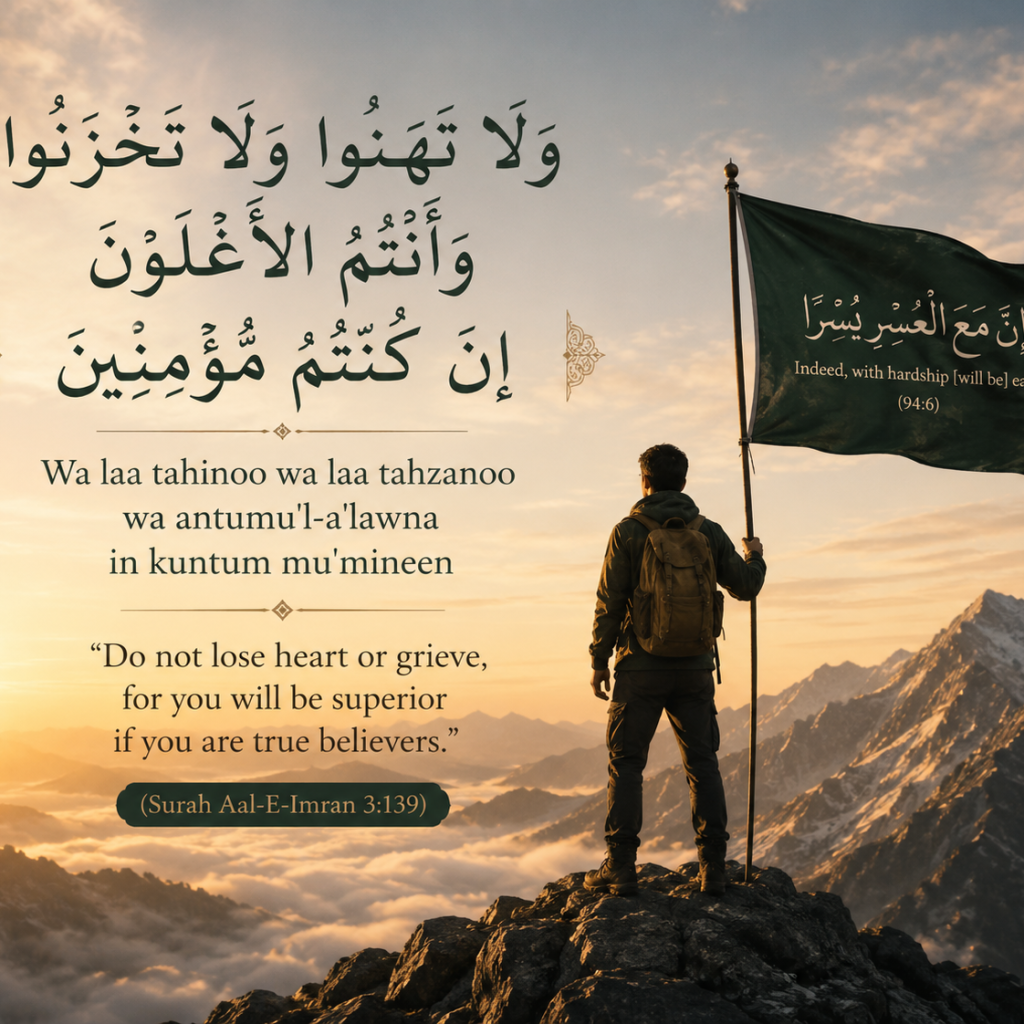
The circumstances of this verse’s revelation are part of what gives it its particular weight. It was not revealed to celebrate a triumph — it was revealed to the early Muslim community after the Battle of Uhud, a military setback.
وَلَا تَهِنُوا وَلَا تَحْزَنُوا وَأَنتُمُ الْأَعْلَوْنَ إِن كُنتُم مُّؤْمِنِينَ
Wa laa tahinoo wa laa tahzanoo wa antumu’l-a’lawna in kuntum mu’mineen
“Do not lose heart or grieve, for you will be superior if you are true believers.” (Surah Aal-E-Imran 3:139)
This verse was revealed to the early Muslim community after the Battle of Uhud, a military setback rather than a victory. Its placement matters: the Quran is offering this line of encouragement specifically after a loss, not after success, which is part of why it remains one of the most cited verses for recovering from setbacks rather than celebrating wins.
3. Patience Brings Relief
This verse does not appear alone in the Quran. It closes a passage describing believers who were tested by poverty and persecution so severe they asked aloud when relief would come. The answer is a single line.
أَلَا إِنَّ نَصْرَ اللَّهِ قَرِيبٌ
Alaa inna nasra’Llaahi qareeb
“Indeed, Allah’s help is near.” (Surah Al-Baqarah 2:214)
This closing line follows a description of earlier believers who faced poverty and persecution so severe they cried out asking when help would come. The verse doesn’t promise an easy path; it promises that the help, when it comes, is close — which is why this short phrase is often used on its own as a standalone reminder during prolonged waiting periods.
Reading these verses slowly, with attention to the Arabic structure and not just the English meaning, is part of how many people deepen their connection to the text rather than only memorizing a translation.
At Kalimah Center, this kind of guided, word-by-word approach to Quranic Arabic is built into the way verses are taught — so a quote like this one becomes something you understand, not just something you’ve memorized.
Experience Kalimah Center Classes
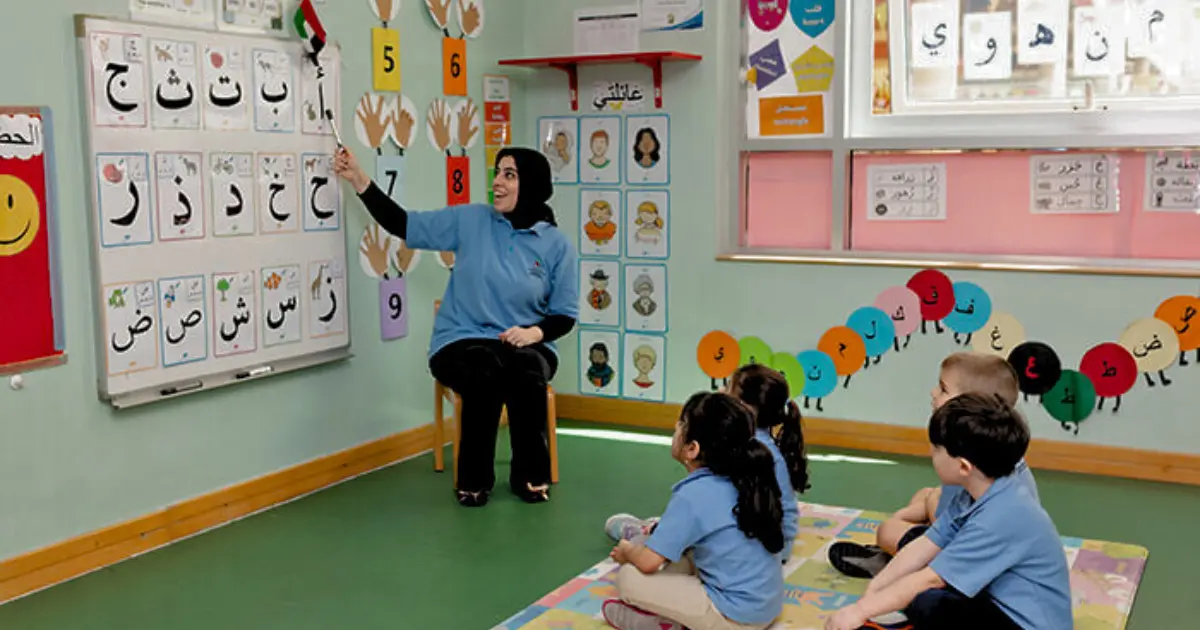
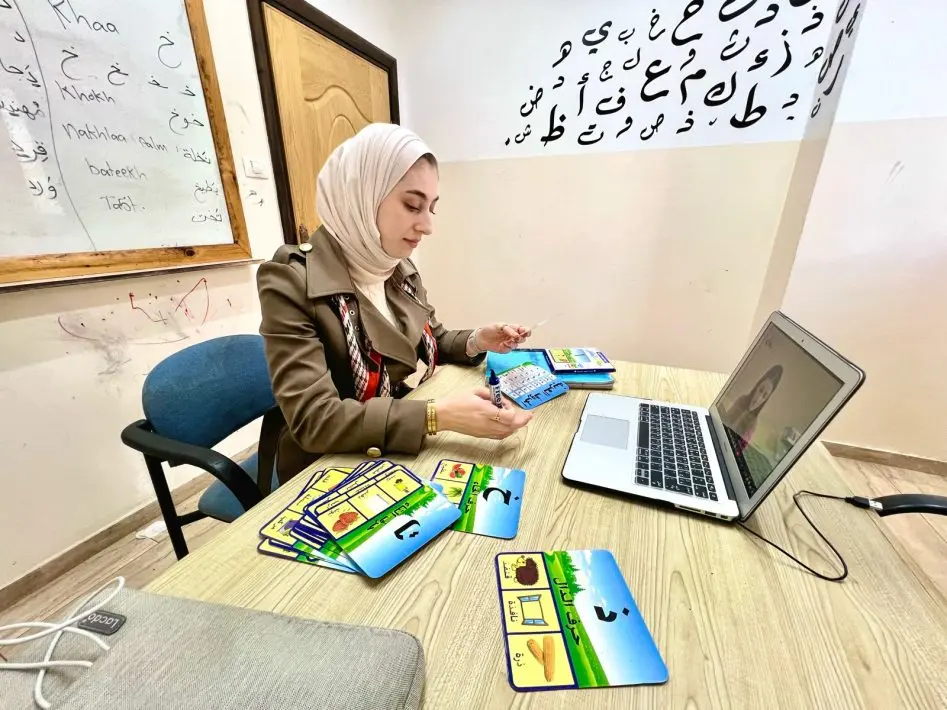
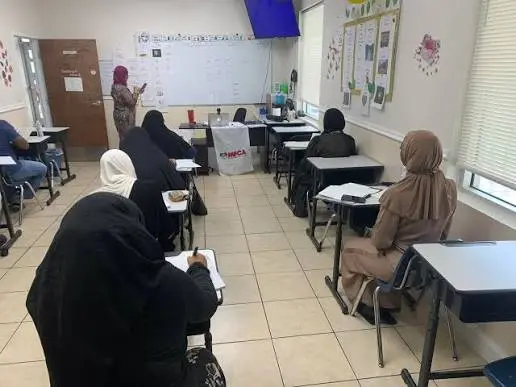
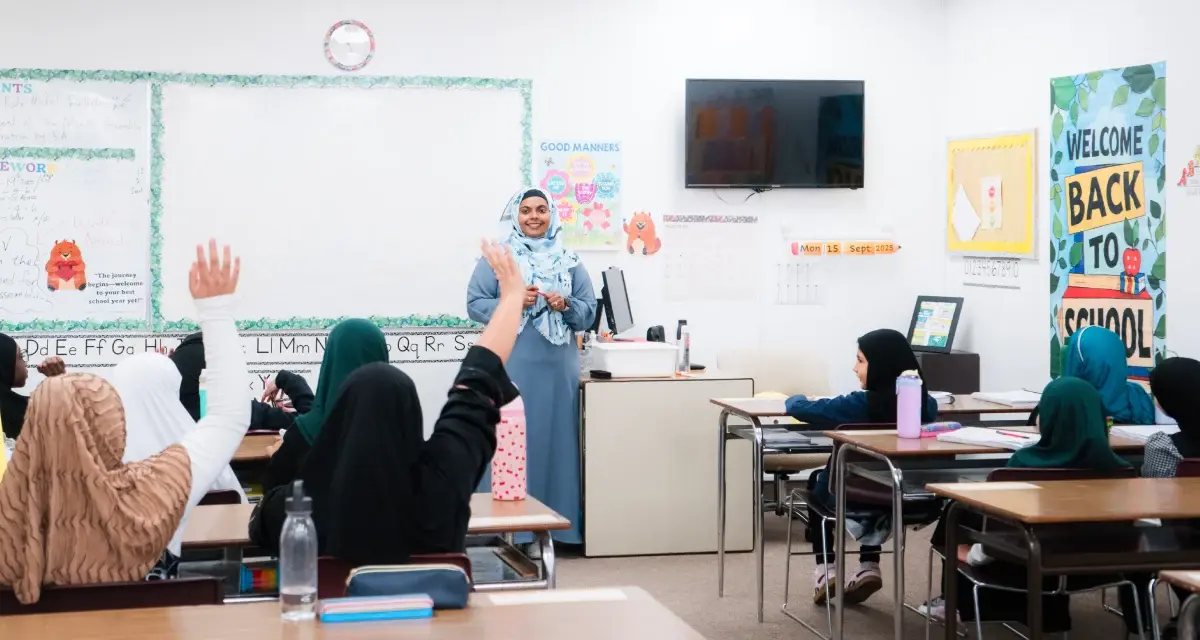
Watch real excerpts from our live sessions at Kalimah Center and see how we bring learning to life. These clips highlight our interactive, student-centered teaching approach across all our courses—designed to keep learners engaged, motivated, and actively involved every step of the way.
Master Arabic with Kalimah Center
Join our expert-led online classes and start your journey toward Arabic fluency today.
Book Your Free Trial
Read Also: Quran Verses About Patience In Arabic
Beautiful Quran Quotes On Trust In Allah’s Plan
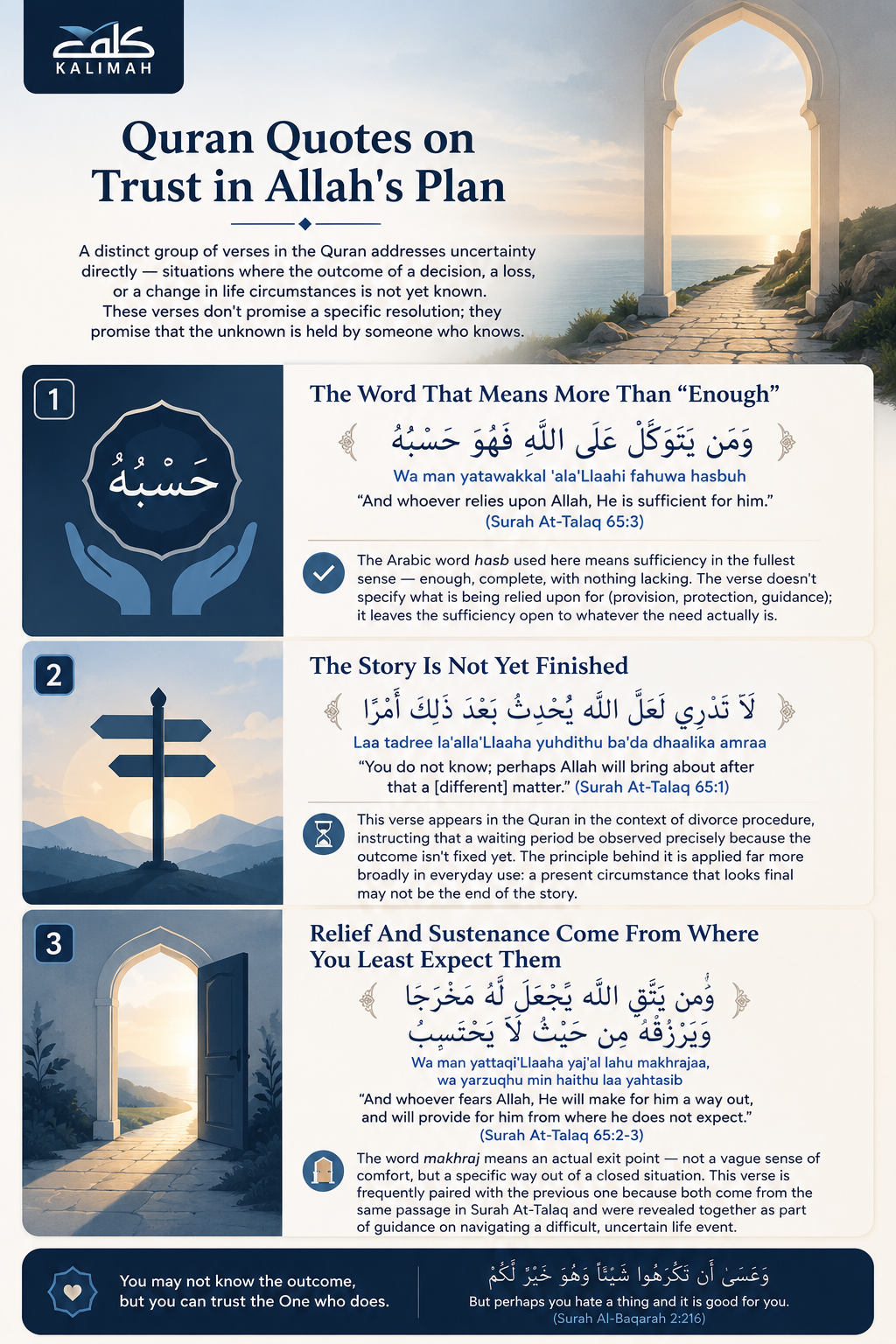
A distinct group of verses in the Quran addresses uncertainty directly — situations where the outcome of a decision, a loss, or a change in life circumstances is not yet known. These verses don’t promise a specific resolution; they promise that the unknown is held by someone who knows.
1. The Word That Means More Than “Enough”
The promise in this verse is framed around a single Arabic word that does not translate precisely into English — and that untranslatable precision is the point.
وَمَن يَتَوَكَّلْ عَلَى اللَّهِ فَهُوَ حَسْبُهُ
Wa man yatawakkal ‘ala’Llaahi fahuwa hasbuh
“And whoever relies upon Allah, He is sufficient for him.” (Surah At-Talaq 65:3)
The Arabic word hasb used here means sufficiency in the fullest sense — enough, complete, with nothing lacking. The verse doesn’t specify what is being relied upon for (provision, protection, guidance); it leaves the sufficiency open to whatever the need actually is.
2. The Story Is Not Yet Finished
This verse appears in the Quran within guidance about divorce procedure — specifically the instruction to observe a waiting period before any final decision, because the situation may shift.
لَا تَدْرِي لَعَلَّ اللَّهَ يُحْدِثُ بَعْدَ ذَلِكَ أَمْرًا
Laa tadree la’alla’Llaaha yuhdithu ba’da dhaalika amraa
“You do not know; perhaps Allah will bring about after that a [different] matter.” (Surah At-Talaq 65:1)
This verse appears in the Quran in the context of divorce procedure, instructing that a waiting period be observed precisely because the outcome isn’t fixed yet. The principle behind it is applied far more broadly in everyday use: a present circumstance that looks final may not be the end of the story.
3. Relief And Sustenance Come From Where You Least Expect Them
This verse and the previous one come from the same passage in Surah At-Talaq, revealed together as part of guidance on navigating a difficult and uncertain life event. The two are frequently quoted side by side for this reason.
وَمَن يَتَّقِ اللَّهَ يَجْعَل لَّهُ مَخْرَجًا وَيَرْزُقْهُ مِن حَيْثُ لَا يَحْتَسِبُ
Wa man yattaqi’Llaaha yaj’al lahu makhrajaa, wa yarzuqhu min haithu laa yahtasib
“And whoever fears Allah, He will make for him a way out, and will provide for him from where he does not expect.” (Surah At-Talaq 65:2-3)
The word makhraj means an actual exit point — not a vague sense of comfort, but a specific way out of a closed situation. This verse is frequently paired with the previous one because both come from the same passage in Surah At-Talaq and were revealed together as part of guidance on navigating a difficult, uncertain life event.
Inside Kalimah Center: Moments from Our Courses
Get a glimpse into the vibrant learning experience at Kalimah Center. These snapshots capture real moments from our live classes—where students engage deeply, connect with passionate instructors, and grow in a welcoming, supportive environment.
Here Are The Reviews On Our Courses:
Our students frequently commend the excellence of our courses and the commitment shown by our instructors. You can read their complete reviews on Trustpilot.
Read more reviews on Trustpilot
Go From Reading Quotes To Understanding The Quran With A Certified Quran Teacher
Recognizing a verse is not the same as understanding it. Kalimah Center’s Quranic Arabic program takes you from reading familiar quotes to grasping the grammar, roots, and word choices behind them — the layer of meaning that translations can only approximate.
Whether you’re a complete beginner with no Arabic background or someone who recites fluently but wants to understand what they’re saying, there is a course structured for your level.
Start your Arabic and Quran learning journey today with Kalimah Center and take your communication skills to the next level.
Explore Our Courses:
- Online Arabic Course:Tailored precisely to your proficiency, featuring 16 comprehensive levels and 400+ hours of highly personalized, one-on-one sessions.
- Online Quran With Tajweed Course: Purpose-built for non-Arabic speakers, this program spans 13 levels to guide you smoothly from absolute beginner to advanced Tajweed mastery.
- Online Arabic Course for Kids: A structured, age-appropriate curriculum spanning 24 progressive levels across primary, intermediate, and secondary stages.
Start Your Free Trial Today!
Don’t miss out on this life-changing opportunity to deepen your faith and knowledge. Sign up now for your free trial and take the first step towards becoming a better practicing Muslim with Kalimah Center.
Master Arabic with Kalimah Center
Join our expert-led online classes and start your journey toward Arabic fluency today.
Book Your Free TrialFrequently Asked Questions
We addressed the most common questions regarding understanding the verses and their meanings.
1- What is the most repeated Quran quote about hardship?
The most repeated Quran quote about hardship is “Fa-inna ma’al ‘usri yusra” — “For indeed, with hardship comes ease” — found in Surah Ash-Sharh, verses 5 and 6. The phrase is stated twice in direct succession, which is a deliberate emphasis technique used in the Quran to mark a statement as especially important.
2- What does “La Tahzan” mean in the Quran?
“La Tahzan” (لَا تَحْزَنْ) means “do not grieve” and appears in several places in the Quran, including Surah At-Tawbah 9:40, where it is spoken as reassurance during a moment of danger. It’s commonly used today as a short phrase of comfort on its own, separate from its original verse context.
3- What is a good short Quran quote in Arabic for daily reminders?
“Wa man yatawakkal ‘ala’Llaahi fahuwa hasbuh” — “Whoever relies upon Allah, He is sufficient for him” (Surah At-Talaq 65:3) — is a commonly used short verse for daily reminders, short enough to memorize in one sitting and broad enough to apply to most situations involving uncertainty or worry.
4- Why are some Quran quotes shared online with incorrect verse numbers?
Verse numbers and transliterations are frequently miscopied as quotes are shared and reshared across social media and websites without checking the original source. This is why verifying any quote against a direct copy of the Quran, such as Quran.com or a physical Mushaf, before sharing or memorizing it is good practice.
5- Can I learn to understand these verses in Arabic without speaking Arabic fluently?
Yes. Understanding the Arabic behind a specific verse does not require general fluency in spoken Arabic. Structured Quranic Arabic instruction focuses specifically on root words, grammar patterns, and vocabulary that recur throughout the Quran, which is a narrower and more achievable goal than learning Arabic as a spoken language.