In a nutshell: Education Vocabulary in Arabic is like تعليم (Ta’lim) is the word for education in Arabic, encompassing teaching, learning, and schooling. Key terms include مُعَلِّم (Mu’allim) for teacher, طالب (Talib) for student, and دراسة (Dirasa) for studying. For specific institutions, مدرسة (Madrasa) means school, while جامعة (Jami’a) stands for university. These terms form the foundation of educational vocabulary in Arabic, essential for understanding the educational landscape in Arabic-speaking regions.
Ahlan wa sahlan! Welcome. Today, we will explore important words related to education in Arabic, words you will hear often if you are studying Arabic or traveling in the Arab world. I will explain everything clearly, so, get your notebooks ready!
How Do You Say “Education” in Arabic?
تعليم (Ta’lim) is the most common and general word for “education” in Arabic. تعليم (Ta’lim) refers to the process of teaching and learning, instruction, and schooling. This is the one you’ll hear most often in everyday contexts.
التعليم مهم للمستقبل
At-ta’līm muhimmun lil-mustaqbal.
Education is important for the future.
First: General Education Vocabulary in Arabic
Now, we’ll explore some broader terms related to education, which will give you a more complete understanding of the educational terms used in the Arab world.
1. Teacher in Arabic: مُعَلِّم (Mu’allim) / أُستاذ (Ustadh) / مُدَرِّس (Mudarris)
Teacher is مُعَلِّم (Mu’allim). Say it: Mu-’al-lim. This is a common term for teachers at all levels. أُستاذ (Ustadh), Say it: Os-tadh, is a more formal title, often used for university professors or highly respected teachers. Another word you might encounter is مُدَرِّس (Mudarris), Say it: Mu-dar-ris, which also means teacher or instructor.
المُعَلِّم يشرح الدرس بِحماس
Al-mu’allim yashrah al-dars bi-hamas.
The teacher explains the lesson with enthusiasm.
الأُستاذ يُلقي محاضرة مُهمة
Al-ustadh yulqi muhadara muhimma.
The professor delivers an important lecture.
المُدَرِّس يُساعد الطلاب على فهم المادة
Al-mudarris yusa’id al-tullab ‘ala fahm al-madda.
The teacher helps the students understand the material.
Culturally, teachers in the Arab world are often held in high esteem. The word “Ustadh” carries a lot of respect, similar to “Professor” or “Doctor” in English.

2. Student in Arabic: طالِب (Talib) / تِلميذ (Tilmidh)
Student is طالِب (Talib), Say it: Ta-lib. This is the most common word. Another word, especially used for younger students, is تِلميذ (Tilmidh), Say it: Til-midh.
الطُّلاب يَدرسون بِجِدّ
Al-tullab yadrusun bi-jidd.
The students study diligently.
التلاميذ يَستمعون إلى المُعَلِّم
Al-talameed yastami’un ila al-mu’allim.
The pupils listen to the teacher.
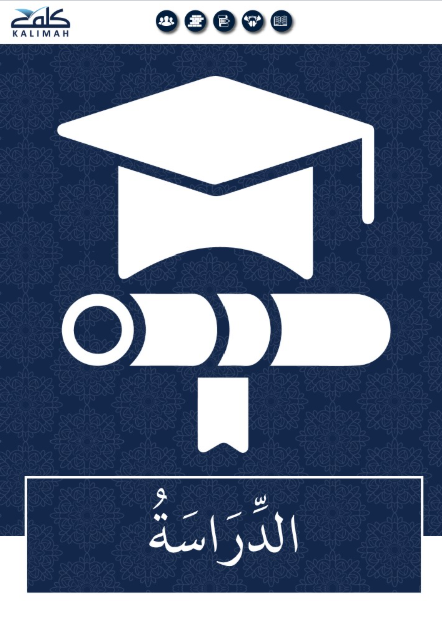
3. Study (as an activity) in Arabic: دراسة (Dirasa)
Study as an activity or the process of studying is دراسة (Dirasa). Say it: Di-ra-sa. We saw this earlier, but it’s worth emphasizing its importance. It comes from the verb درس (darasa) which means “to study”.
الدراسة بجد مهمة للنجاح
Al-dirasa bi-jidd muhimma lil-najah.
Studying hard is important for success.
* Excerpted from Kalimah’s Online Arabic Course Curriculum
4. Knowledge in Arabic: عِلْم (‘Ilm) / مَعرفة (Ma’rifa)
Knowledge is عِلْم (‘Ilm), Say it: ‘Ilm. This word has deep roots in Islamic tradition and is associated with religious and scientific knowledge. Another word for knowledge is مَعرفة (Ma’rifa), Say it: Ma-’ri-fa, which is more general and can refer to practical knowledge or familiarity.
العِلْم نورٌ يُضيء الدُّروب
Al-‘ilm nurun yudi’ al-durub.
Knowledge is a light that illuminates the paths.
لَديه مَعرفة واسعة في التاريخ
Ladayhi ma’rifa wasi’a fi al-tarikh.
He has extensive knowledge in history.
5. Curriculum in Arabic: مَنْهَج (Manhaj) / مُقَرَّر (Muqarrar)
Curriculum is مَنْهَج (Manhaj), Say it: Man-haj. This refers to the overall plan of study. مُقَرَّر (Muqarrar), Say it: Mu-qar-rar, can refer to a specific course or subject within the curriculum.
المَنْهَج الدراسي مُتَطوِّر
Al-manhaj al-dirasi mutatawwir.
The curriculum is developed.
المُقَرَّر الجديد مُثير للاهتمام
Al-muqarrar al-jadid muthir lil-ihtimam.
The new course is interesting.
6. Certificate in Arabic: شَهادة (Shahada)
A certificate or degree is شَهادة (Shahada), Say it: Sha-ha-da.
حَصَلَ على شَهادة البكالوريوس
Hasala ‘ala shahadat al-bakalorius.
He obtained a bachelor’s degree.
7. Homework in Arabic: واجب منزلي (Wajib Manzili)
Homework is واجب منزلي (Wajib Manzili), Say it: Wa-jib Man-zi-li, which literally means “home duty.”
يَجبُ عليَّ أن أُنهي واجبي المنزلي
Yajibu ‘alayya an unhi wajibi al-manzili.
I have to finish my homework.
8. Lesson Plan in Arabic: خُطَّةُ الدَّرسِ (Khuttat al-dars)
A lesson plan is خُطَّةُ الدَّرسِ (Khuttat al-dars). Say it: Khut-tat ad-dars.
يُعِدُّ المُعَلِّمُ خُطَّةَ الدَّرسِ قَبلَ البِدايةِ
Yu’iddu al-mu’allimu khuttat al-darsi qabla al-bidaya.
The teacher prepares the lesson plan before the start.
9. Subjects in Arabic: المَواد الدِّراسيّة (Al-mawad al-dirasiyya) or simply مَواد (Mawad)
Subjects in school, like math, science, etc., are called المَواد الدِّراسيّة (Al-mawad al-dirasiyya). Say it: Al-ma-wad ad-di-ra-siy-yah. You can shorten it to just مَواد (Mawad). Say it: Ma-wad.
أُحِبُّ مادةَ الرِّياضياتِ
‘Uhibbu maddat al-riyadiyyat.
I like mathematics (subject).
المَواد الدِّراسيّة مُتَنَوِّعةٌ في المَدرسةِ
Al-mawad al-dirasiyya mutanawwi’aٌ fi al-madrasa.
The school subjects are diverse at school.

* Excerpted from Kalimah’s Online Arabic Course Curriculum
Experience Kalimah Center Classes
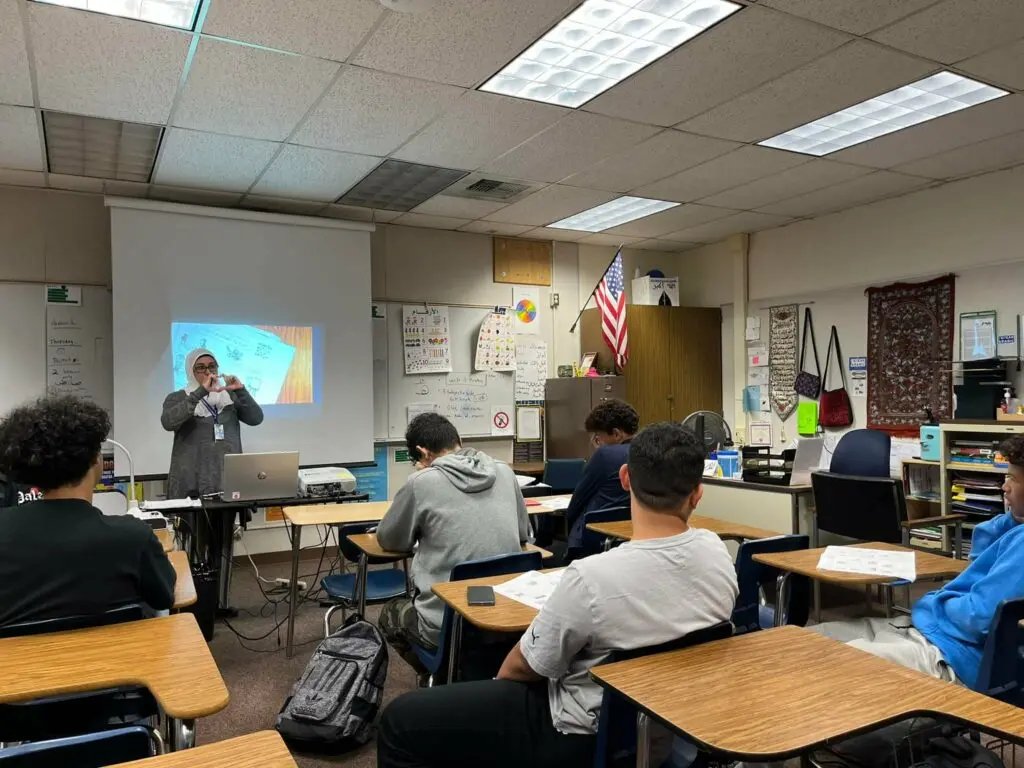
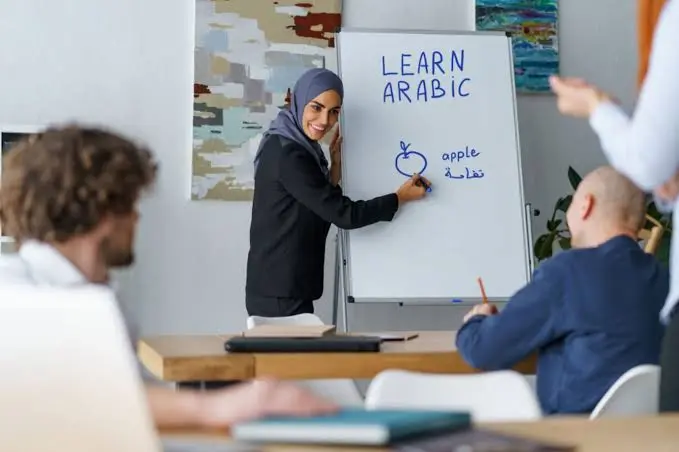
Watch real excerpts from our live sessions at Kalimah Center and see how we bring learning to life. These clips highlight our interactive, student-centered teaching approach across all our courses—designed to keep learners engaged, motivated, and actively involved every step of the way.
Second: Educational Institutions in Arabic
Now, let’s delve deeper into different types of educational institutions you might encounter in the Arab world.
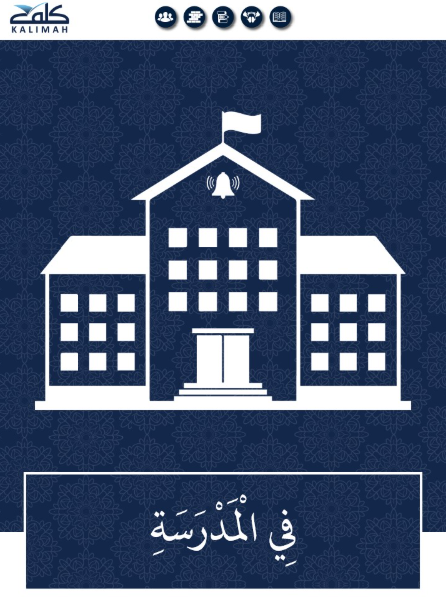
1. School (General) in Arabic: مدرسة (Madrasa)
School in Arabic مدرسة (Madrasa), pronounced Ma-dra-sa, is the general term for school. It’s important to reiterate this as it’s a foundational word.
المدرسة تقع في وسط المدينة
Al-madrasa taqa’ fi wasat al-madina.
The school is located in the city center.
2. Primary School/Elementary School in Arabic: مدرسة ابتدائية (Madrasa Ibtida’iyya)
Primary school or elementary school is مدرسة ابتدائية (Madrasa Ibtida’iyya), pronounced Ma-dra-sa Ib-ti-da-’iy-ya. This literally means “initial school.”
أخي يدرس في المدرسة الابتدائية
Akhi yadrus fi al-madrasa al-ibtida’iyya.
My brother studies in primary school.
3. Middle School/Preparatory School in Arabic: مدرسة إعدادية (Madrasa I’dadiyya) / مدرسة متوسطة (Madrasa Mutawassita)
Middle school or preparatory school can be مدرسة إعدادية (Madrasa I’dadiyya), pronounced Ma-dra-sa I’-da-diy-ya, or مدرسة متوسطة (Madrasa Mutawassita), pronounced Ma-dra-sa Mu-ta-was-si-ta. The latter means “intermediate school.”
انتقلت إلى المدرسة الإعدادية هذا العام.
Intaqaltu ila al-madrasa al-i’dadiyya hadha al-‘am.
I moved to middle school this year.
4. High School/Secondary School in Arabic: مدرسة ثانوية (Madrasa Thanawiyya)
High school or secondary school is مدرسة ثانوية (Madrasa Thanawiyya), pronounced Ma-dra-sa Tha-na-wiy-ya.
تخرجت من المدرسة الثانوية العام الماضي
Takharrajtu min al-madrasa al-thanawiyya al-‘am al-madi.
I graduated from high school last year.
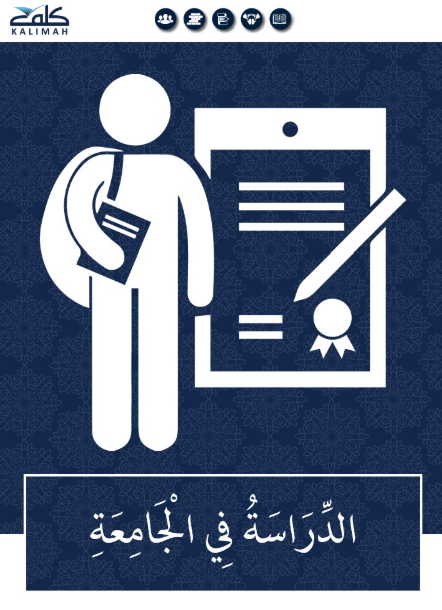
5. University in Arabic: جامعة (Jami’a)
University in Arabic is جامعة (Jami’a). Say it: Ja-mi-’a. The word comes from جمع (jama’a), meaning “to gather” or “to collect,” as a university gathers scholars and students.
جامعة القاهرة مشهورة
Jami’at al-Qahira mashhura.
Cairo University is famous.
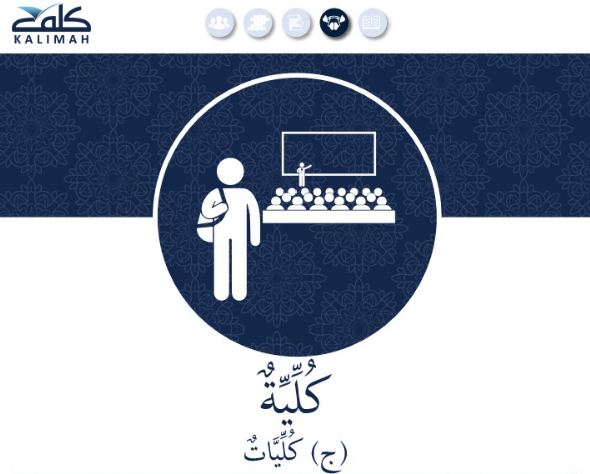
6. College in Arabic: كلية (Kulliyya)
College in Arabic is كلية (Kulliyya), pronounced Kul-liy-ya, which can mean “faculty” or “college” within a university, or sometimes even a smaller, specialized college itself.
أدرس في كلية الهندسة بجامعة القاهرة
’Adrus fi kulliyyat al-handasa bi-jami’at al-qahira.
I study at the Faculty of Engineering at Cairo University.
7. Institute (Specialized) in Arabic: معهد (Ma’had)
Institute in Arabic is معهد (Ma’had), pronounced Ma-’had, refers to a specialized institute, often focusing on technical or vocational training.
المعهد العالي للتكنولوجيا مشهور جداً
Al-ma’had al-’ali lil-tiknulujia mashhur jiddan.
The Higher Institute of Technology is very famous.
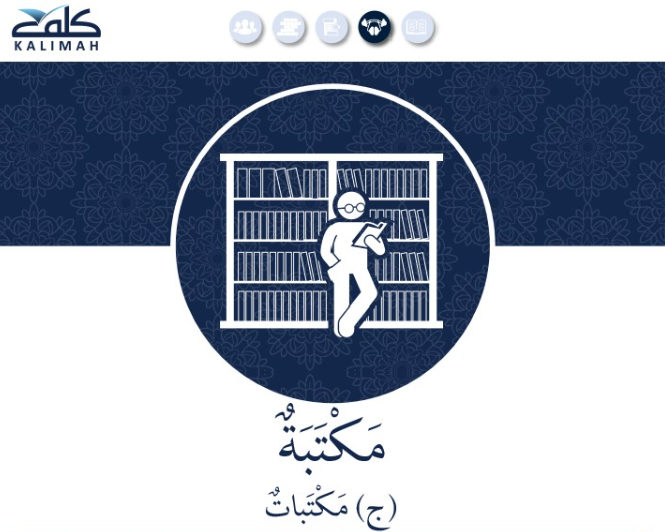
8. Library in Arabic: مكتبة (Maktaba)
A library is مكتبة (Maktaba), pronounced Mak-ta-ba. This word is related to مكتب (maktab), “desk,” and كتاب (kitab), “book.”
أذهب إلى المكتبة لأدرس
’Adhhab ila al-maktaba li-‘adrus.
I go to the library to study.
9. Educational Center in Arabic: مركز تعليمي (Markaz Ta’limi)
An educational center or training center can be مركز تعليمي (Markaz Ta’limi), pronounced Mar-kaz Ta-’li-mi, or مركز تدريب (Markaz Tadrib), pronounced Mar-kaz Tad-rib, which means “training center.”
مركز كلمة هو مركز تعليمي ممتاز لتعليم اللغة العربية
Markaz Kalima huwa markaz ta’limi mumtaz li-ta’lim al-lugha al-’arabiyya.
Kalimah Center is an excellent educational center for teaching the Arabic language.

Third: Common Classroom Objects and Activities in Arabic
Now that we know the basic people and places, let’s look at what we find inside the classroom.
1. Book in Arabic: كتاب (Kitab)
In Arabic, a book is كتاب (Kitab). This is a very important word.
الكتاب مفيد جداً
Al-kitab mufid jiddan.
The book is very useful.
The word “Kitab” is related to the verb كتب (kataba), which means “to write.” This connection is very logical, right?
2. Pen/Pencil in Arabic: قلم (Qalam)
Pen/Pencil in Arabic is قلم (Qalam), so qalam in Arabic can mean both pen and pencil.
أكتب بالقلم الأزرق
Aktub bil-qalam al-‘azraq.
I write with the blue pen.
3. Notebook in Arabic: دفتر (Daftar)
Notebook in Arabic is دفتر (Daftar).
أنا أكتب ملاحظاتي في الدفتر
Ana aktub mulahazati fi al-daftar.
I write my notes in the notebook.
4. Exam/Test in Arabic: امتحان (Imtihan) / اختبار (Ikhtibar)
At the end of a course, or sometimes during it, we have an امتحان (Imtihan) or اختبار (Ikhtibar), an exam or a test.
لدي امتحان في الرياضيات غداً
Ladaya imtihan fi al-riyadiyyat ghadan.
I have a math exam tomorrow.
5. Question in Arabic: سؤال (Su’al) / Answer in Arabic: إجابة (Ijaba)
In class, we ask سؤال (Su’al), a question, and the teacher gives us a إجابة (Ijaba), an answer.
عندي سؤال عن الدرس
Indi su’alan al-dars.
I have a question about the lesson.
الإجابة صحيحة
Al-Ijaba sahiha.
The answer is correct.
List of School Subjects in Arabic
Here is a list of common school subjects in Arabic, with their pronunciations:
- Arabic Language: اللغة العربية (Al-lugha al-‘arabiyya) – Al-lu-gha al-’a-ra-biy-yah
- Mathematics: الرياضيات (Al-riyadiyyat) – Ar-ri-ya-diy-yat
- Science: العلوم (Al-‘ulum) – Al-’u-lum
- Physics: الفيزياء (Al-fizya’) – Al-fiz-ya’
- Chemistry: الكيمياء (Al-kimiya’) – Al-ki-mi-ya’
- Biology: الأحياء (Al-’ahya’) – Al-’ah-ya’
- History: التاريخ (Al-tarikh) – At-ta-rikh
- Geography: الجغرافيا (Al-jughrafia) – Al-jugh-ra-fi-ya
- Literature: الأدب (Al-‘adab) – Al-’a-dab
- English Language: اللغة الإنجليزية (Al-lugha al-‘injiliziyya) – Al-lu-gha al-’in-ji-li-ziy-yah
- French Language: اللغة الفرنسية (Al-lugha al-faransiyya) – Al-lu-gha al-fa-ran-siy-yah
- Art: الفن (Al-fann) – Al-fann
- Physical Education: التربية البدنية (Al-tarbiya al-badaniyya) – At-tar-bi-ya al-ba-da-niy-yah
- Computer Science/Information Technology: علم الحاسوب / تكنولوجيا المعلومات (’Ilm al-hasub / Tiknulujia al-ma’lumat) – ‘Ilm al-ha-sub / Tik-nu-lu-ji-a al-ma’-lu-mat
- Religious Studies/Islamic Studies: الدراسات الدينية / الدراسات الإسلامية (Al-dirasat al-diniyya / Al-dirasat al-‘islamiyya) – Ad-di-ra-sat ad-di-niy-yah / Ad-di-ra-sat al-’is-la-miy-yah
Chart of Common Education Vocabulary in Arabic
This chart summarizes the key education-related vocabulary we’ve covered, along with some additional useful terms.
| English Translation | Arabic Word |
| School (General) | مدرسة (Madrasa) |
| Primary/Elementary School | مدرسة ابتدائية (Madrasa Ibtida’iyya) |
| Middle/Preparatory School | مدرسة إعدادية (Madrasa I’dadiyya) / مدرسة متوسطة (Madrasa Mutawassita) |
| High/Secondary School | مدرسة ثانوية (Madrasa Thanawiyya) |
| University/College | جامعة (Jami’a) / كلية (Kulliyya) |
| Institute (Specialized) | معهد (Ma’had) |
| Kindergarten | روضة الأطفال (Rawdat al-Atfal) |
| Classroom | فصل (Fasl) |
| Desk | مكتب (Maktab) |
| Chair | كرسي (Kursi) |
| Blackboard/Whiteboard | سبورة (Sabura) |
| Library | مكتبة (Maktaba) |
| Educational/Training Center | مركز تعليمي (Markaz Ta’limi) / مركز تدريب (Markaz Tadrib) |
| Learning | تعلم (Ta’allum) |
| Studying | دراسة (Dirasa) |
| Lesson | درس (Dars) |
| Exam | امتحان (Imtihan) |
| Test/Quiz | اختبار (Ikhtibar) / امتحان قصير (Imtihan qasir) |
| Grade/Mark | درجة (Daraja) / علامة (‘Alama) |
| Homework | واجب منزلي (Wajib Manzili) |
| Textbook | كتاب مدرسي (Kitab Madrasi) |
| Teacher | معلم (Mu’allim) / أستاذ (Ustadh) |
| Student | طالب (Talib) |
| Teacher’s/Teaching Assistant | مُعِيد (Mu’eed) |
| Knowledge | علم (‘Ilm) |
| Education | تعليم (Ta’lim) |
| Study (as an activity) | دراسة (Dirasa) |
| Subjects/Course Material | المواد الدراسية (Al-mawad al-dirasiyya) / مواد الدراسة (Mawad al-dirasa) |
| Research | بحث (Bahth) |
| Certificate/Diploma | شهادة (Shahada) |
| Mathematics | الرياضيات (Al-riyadiyyat) |
| Science | العلوم (Al-‘ulum) |
| History | التاريخ (Al-tarikh) |
| Language | اللغة (Al-lugha) |

Inside Kalimah Center: Moments from Our Courses
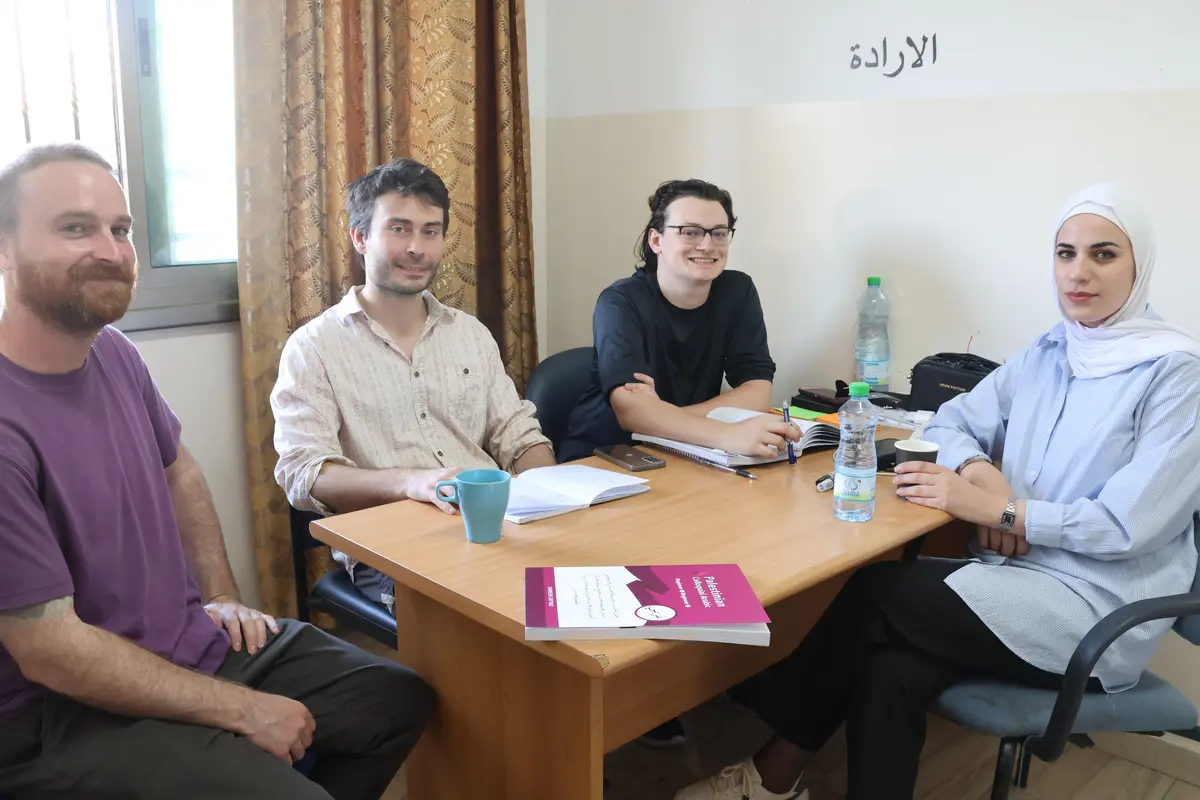
Get a glimpse into the vibrant learning experience at Kalimah Center. These snapshots capture real moments from our live classes—where students engage deeply, connect with passionate instructors, and grow in a welcoming, supportive environment.
Here Are The Reviews On Our Courses:
Our students frequently commend the excellence of our courses and the commitment shown by our instructors. You can read their complete reviews on Trustpilot.

How Kalimah Center Can Help You Use Education Vocabulary and More
At Kalimah Center, we offer structured Arabic courses designed to help you learn practical vocabulary like the ones we covered today:
- First, alphabet. Must know letters to read and write.
- Then, basic words, grammar too. You need basic words, grammar, to make correct sentences.
- We also teach about everyday life topics, like family, food, shopping. Even in these lessons, we talk sometimes about school, homework, things like that. So you learn some education words already!
- Then, more advanced, we talk about important things in society. Sometimes, we talk about education system, schools, universities. So, more words you learn there.
Our native Arabic teachers use interactive methods and real-life examples.
Join us for a FREE trial class.
Former students of Kalimah Center often praise our courses for their simplicity and effectiveness. As one of our learners said:

Conclusion:
We have thoroughly explored the essential building blocks of education vocabulary in Arabic, covering everything from the foundational word تعليم (Ta’lim – education) to the key individuals (مُعَلِّم and طالب) and places (مدرسة and جامعة) that shape the learning landscape. Mastering this set of terms, including classroom objects and various school subjects, will significantly enhance your ability to communicate effectively in any academic or general setting across the Arab world. These words are not just abstract terms; they are practical tools that open up conversation and deeper understanding of Arabic culture and daily life.
To truly internalize and use this rich vocabulary, moving beyond rote memorization is key. The next vital step is practicing these terms in context, forming sentences, and engaging in real-life conversation about your studies, teachers, and school experiences. Consider joining a structured program like those offered at Kalimah Center. By applying this comprehensive education vocabulary in Arabic within an interactive, guided learning environment, you can quickly turn these new words into fluent, natural speech, accelerating your overall mastery of the language.