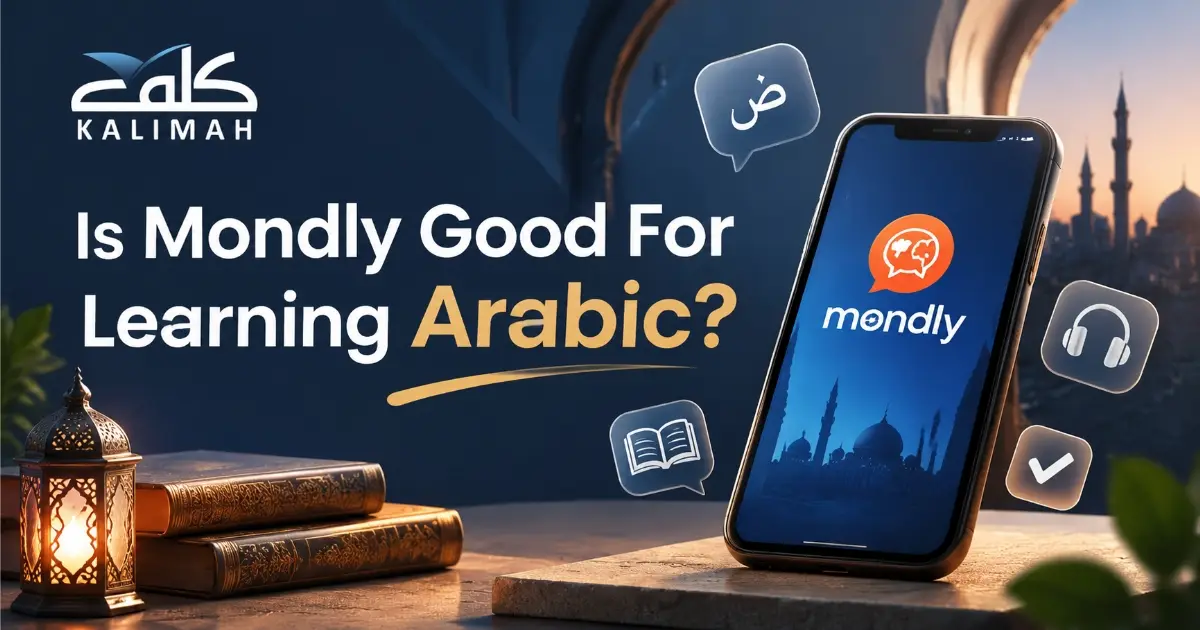
Have you ever kept an app streak going for weeks, felt proud of it, and then frozen the moment someone spoke real Arabic to you? If so, you’ve probably asked: is Mondly good for learning Arabic, or is it just a fun way to fill ten minutes?
More than 400 million people use Arabic every day, so your first learning tool matters. A good start builds momentum, while a weak one can waste months of effort and slowly drain the motivation you began with.
At Kalimah Centre, our native teachers meet former app users every week, and we keep hearing the same story: a great start, then a frustrating plateau. That gives us a clear view of what apps do well and where learners get stuck.
In this review, we look at how Mondly handles Arabic, what it teaches, where it falls short, and how to make it part of a bigger plan that gets you speaking real Arabic.
What you will learn in this article:
- What Mondly teaches in Arabic, and which variety of Arabic it uses.
- The features that help beginners and the gaps that hold them back.
- Free tools that make your Mondly practice more effective.
- When to move from an app to live lessons with a native teacher.
Is Mondly Good For Learning Arabic?
Yes. Mondly is good as a warm-up for Arabic beginners, but it can’t make you fluent on its own. The real question behind “is Mondly good for learning Arabic” is what you want Arabic for, because your goal decides how far the app can take you.
Does Mondly Teach Arabic?
Yes. Mondly has a full Arabic course made of short lessons built on pictures and native audio. They cover everyday vocabulary, common phrases, and basic sentence patterns. You can study on the web, iOS, or Android, and the app tracks your progress for you.
The course is built around practical situations like greetings, ordering food, travel, family, and shopping. Each lesson mixes listening, matching, word ordering, and short speaking prompts, so you see and hear the same words several times before moving on.
What Mondly doesn’t do is teach Arabic the way a structured curriculum does. You pick up useful chunks of language, but the logic behind them (root patterns, verb forms, and case endings) mostly stays out of sight.

Which Type Of Arabic Does Mondly Teach?
Mondly mainly teaches Modern Standard Arabic (MSA), the formal Arabic used in news, books, official documents, and schools across the Arab world. Its vocabulary is widely understood, even though it isn’t exactly how families chat at the dinner table.
This matters because spoken Arabic changes from region to region. Egyptian, Levantine, Gulf, and Maghrebi speakers all understand MSA in formal settings. Daily conversation, though, happens in dialects with their own words, sounds, and expressions.
For most beginners, MSA is a solid place to start. It unlocks reading and gives you a shared base for any dialect you learn later. Just remember that the app won’t prepare you for casual street conversations in a particular country.
The Learners Mondly Arabic Suits Best
For complete beginners who want a gentle first contact with Arabic, the answer to “is Mondly good for learning Arabic” is a clear yes. It also suits busy people with five to ten spare minutes a day, and travelers who want survival phrases.
It’s less suitable if your goals are serious, such as passing an exam, reading classical texts, understanding the Quran, or holding long conversations. Those goals need deep grammar, accurate pronunciation, and live feedback, which an app can’t fully provide.
If you already know you want real fluency, a structured path from day one makes a big difference. At Kalimah Centre, our Learn Arabic With Online Course takes you through 16 levels and more than 400 hours of one-on-one lessons with native teachers.
Read Also: Learn to Read and Write Arabic: Complete Beginner’s Guide (+ Speaking)
Mondly Arabic Features Explained
Mondly fits a lot into a small app, and several of its features help Arabic beginners. Below we look at what you get, how each feature works in practice, and how much it can realistically do for your Arabic before you need extra support.
1. Daily Lessons And Topic-Based Units
Mondly gives you a short daily lesson, plus weekly quizzes and monthly challenges that review older material. You can also work through topic-based units in order, which feels more like a course than a set of random drills.
The lessons rely on images, native audio, and repetition, which works well for building your first bank of everyday Arabic words. The short format makes it easy to start, and for busy adults starting is often the hardest part of learning a language.
The trade-off is depth. Every learner gets the same pre-set lessons, so the app can’t slow down when you struggle with a sound or speed up when a topic is easy. Personalization mostly comes down to which lesson you open next.
2. Chatbot And Speech Recognition Practice
Mondly’s chatbot lets you answer simple questions out loud or by typing, and speech recognition checks whether it understood your words. It’s a real confidence boost, because for many beginners it’s the first time they say full Arabic sentences.
The conversations follow fixed scripts, though, so the bot expects specific answers. Real people interrupt, change topics, and speak quickly, and a chatbot can’t recreate that. It may also accept pronunciation that a native listener would find unclear.
Turning scripted dialogues into real conversation takes a human partner who adapts to you. Kalimah Centre’s Arabic Speaking Course uses role-play, question-and-answer drills, and gentle corrections from native teachers to move you from survival phrases to storytelling and debate.
3. Ar, Vr, And Gamified Progress Tools
Mondly has augmented reality lessons, where objects appear in your room through your phone camera, plus a separate VR app for headset users. These features make new vocabulary easier to remember, especially for visual learners and younger learners at home.
Gamification adds streaks, points, and leaderboards that reward daily practice. For many people, it’s the main reason they keep opening the app, and a steady habit is valuable when you’re learning a language that takes years to master.
Still, streaks measure activity, not ability. You can keep a 100-day streak while skipping the hard lessons and speaking tasks. Use the game elements for motivation, but judge your progress by what you can actually understand and say in Arabic.
4. Mondly Pricing And Free Access
Mondly has a limited free version with a daily lesson and some starter content, and Premium unlocks the full Arabic course. At the time of writing, plans are usually listed at around €9.99 a month or €47.99 a year, and prices vary by region.
There’s also a lifetime plan covering all 41 Mondly languages, and promotions often bring it under $100. That’s cheap compared with most courses, but the real cost is your time if the app becomes your only way of learning Arabic.
Before you pay, use the free lessons for a week and notice what you actually remember. If you enjoy the format, Premium can be fair value as a daily review tool alongside a structured course with a qualified teacher.

Recommended reading: How to Speak Arabic Fluently: 15 Proven Techniques From an Arabic Teacher
Experience Kalimah Center Classes
Watch real excerpts from our live sessions at Kalimah Center and see how we bring learning to life. These clips highlight our interactive, student-centered teaching approach across all our courses—designed to keep learners engaged, motivated, and actively involved every step of the way.
Master Arabic with Kalimah Center
Join our expert-led online classes and start your journey toward Arabic fluency today.
Book Your Free TrialWhere Mondly Falls Short For Arabic Learners
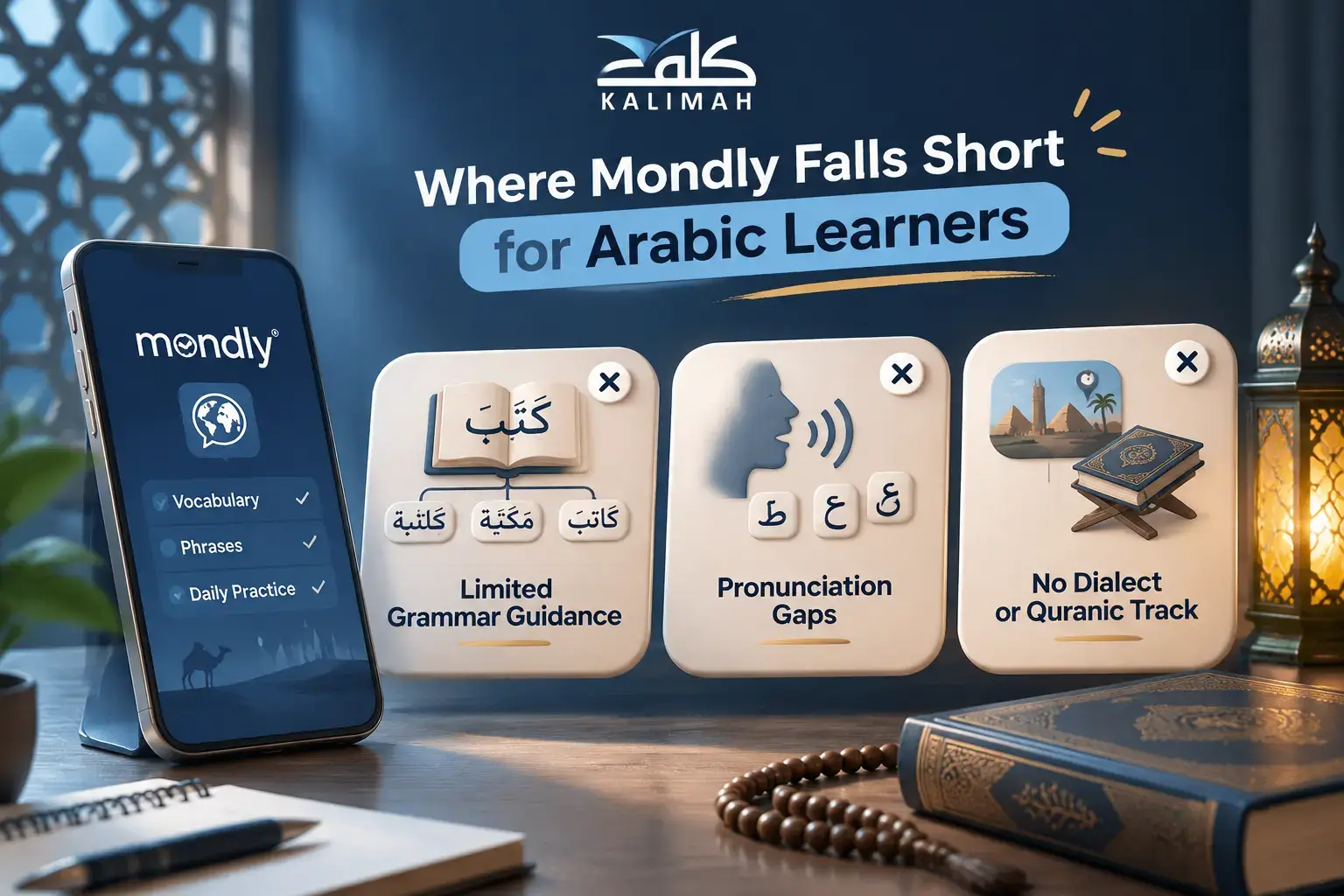
Arabic has features that general language apps find hard to teach, and this is where the answer to “is Mondly good for learning Arabic” gets more nuanced. Knowing these gaps early lets you fill them before they slow down your progress.
1. Limited Grammar Explanations
Mondly shows grammar in context but rarely explains it. You might learn that “my house” is baytī without ever seeing why the ending changes, how possessive suffixes work, or how that pattern connects to the rest of the language.
Arabic grammar is built on roots and patterns. The three-letter root k-t-b gives you kataba (he wrote), kitāb (book), and maktaba (library). Once you understand patterns, your vocabulary multiplies quickly, but apps rarely teach this logic step by step.
Verb conjugation, gender agreement, dual forms, and word order all need clear explanation and practice. Kalimah Centre’s Online Arabic Grammar Course: Nahw from Beginner to Advanced covers them in a structured progression, with native teachers and a free placement test.
2. Pronunciation Feedback For Difficult Arabic Sounds
Arabic has sounds that English doesn’t, such as ع (ʿayn), ح (ḥāʾ), ق (qāf), and the emphatic ط (ṭāʾ). Speech recognition often accepts a near miss, so learners can repeat a wrong sound for months without realizing it.
A free way to check yourself is voice typing in Google Docs. As Google’s voice typing help page explains, it supports several Arabic variants. Set it to Arabic, read a sentence aloud, and see whether the right words appear on the screen.
Even so, only a trained ear can tell you why a sound is off and how to adjust your tongue and throat. That kind of precise, physical feedback is where a live teacher saves you hours of guessing and frustration.
3. Little Support For Dialects And Quranic Arabic
Mondly doesn’t have separate tracks for Egyptian, Levantine, or Gulf Arabic, and it isn’t built for reading the Quran. If either of these is your main goal, you’ll need extra, specialized material from the very beginning.
For many Muslims, the deepest reason to learn Arabic is to understand the Quran directly. Allah (Glory be to Him) says:
“إِنَّآ أَنزَلۡنَٰهُ قُرۡءَٰنًا عَرَبِيّٗا لَّعَلَّكُمۡ تَعۡقِلُونَ”
“Indeed, We have sent it down as an Arabic Quran so that you may understand.” Surah Yusuf 12:2
The verse explains that the Quran was revealed in clear Arabic so its meaning could be understood and reflected on. Reaching that understanding takes classical vocabulary, precise grammar, and correct reading, which go far beyond the travel phrases an app teaches.
Free tools help here. You can explore the grammar of every word on the Quranic Arabic Corpus. For guided practice, Kalimah Centre’s Arabic Reading Course builds your reading level by level with native teachers who specialize in tajweed.
Further reading: Fastest Way to Learn Arabic: 6 Methods That Actually Work
How To Get Real Results From Mondly For Arabic
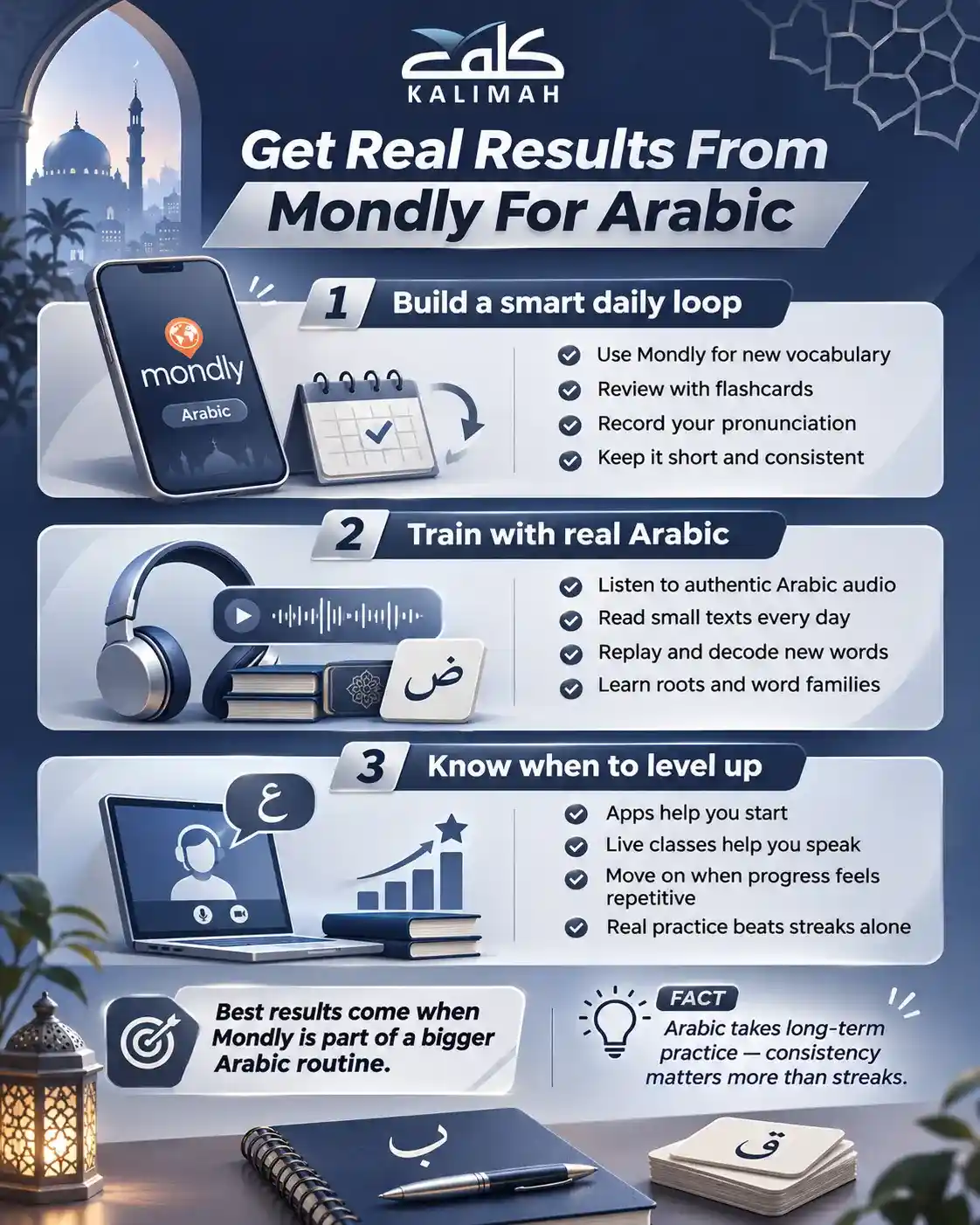
So, is Mondly good for learning Arabic when you use it wisely? Yes, as long as you give it a clear role inside a bigger routine. Here’s how to combine the app with free tools and live practice so every minute moves you forward.
1. Pair Mondly With Free Memory And Recording Tools
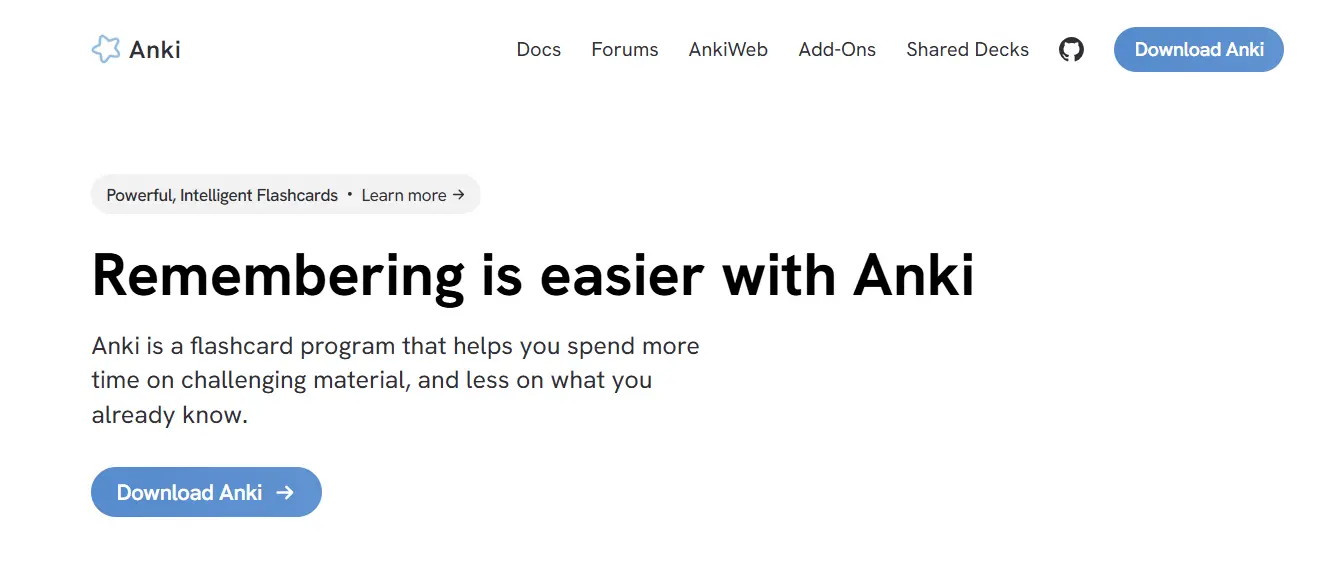
Mondly introduces words, but it doesn’t let you build your own review deck. A free flashcard app fills that gap: Anki is available on its official site, and its scheduler reminds you to review each word just before you’d forget it.
Next, record yourself. The free, open-source recorder Audacity lets you capture a lesson sentence and compare it with Mondly’s audio. Listening back feels awkward at first, but it quickly shows where your rhythm and sounds drift.
Keep the routine light: ten minutes in Mondly, five minutes of flashcards, and two minutes of recording. This short loop turns passive recognition into active recall, which is what helps words come back to you in a real conversation.
2. Add Real Listening And Reading Practice
App audio is slow and clean, while real Arabic is fast and natural. Get your ears used to it early with short clips from the BBC News Arabic channel on YouTube, which uses clear MSA. Pause often and replay difficult lines.
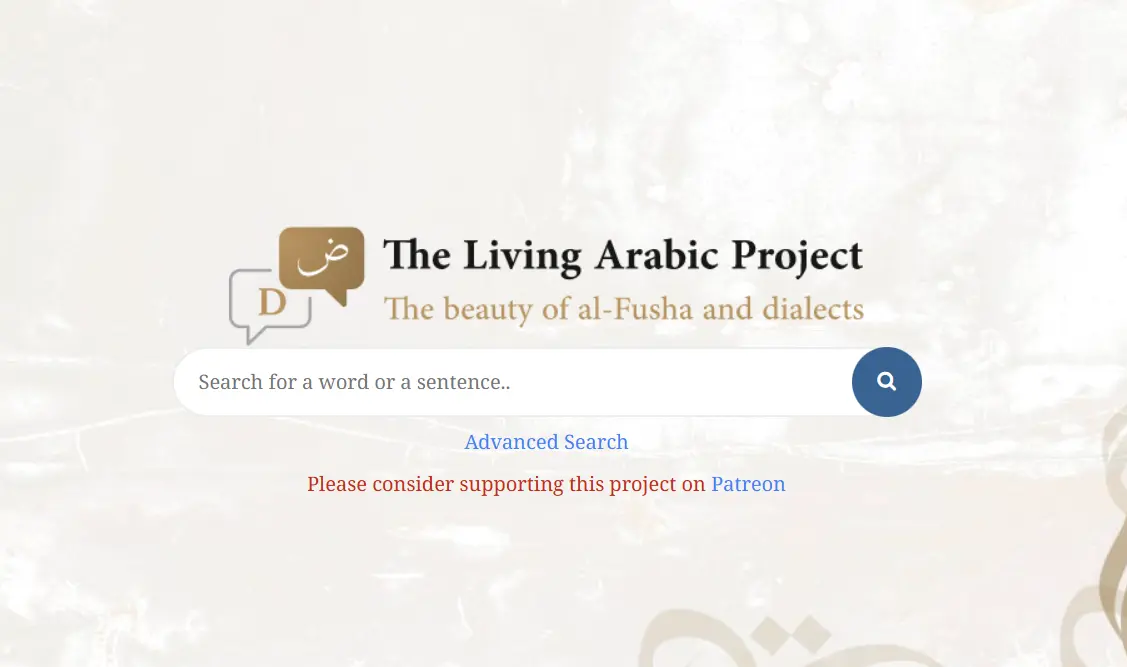
When you meet unknown words, use a dictionary that shows roots, not just translations. The Living Arabic Project has online dictionaries for Classical Arabic and several dialects, so you can see how one root connects many related words.
Aim for one short authentic text or clip a day, even if you understand only 20 percent at first. That share grows steadily, and it builds a skill apps rarely train: understanding Arabic that hasn’t been simplified for learners.
3. Know When To Move To Live Lessons
According to the US Foreign Service Institute’s language training overview, Arabic is a Category IV “super-hard” language for English speakers. It takes about 88 weeks, or 2,200 class hours, to reach professional working proficiency.
A good sign that it’s time for live lessons is when Mondly starts to feel repetitive, or when you recognize words but can’t build sentences of your own. That plateau usually shows up within the first few months of regular app use.
To move quickly once you reach that point, Kalimah Centre’s Intensive Arabic Course Online offers daily live lessons, a placement test, and an oral exam at the end of each level. Your progress is measured by real skills, not streaks.
Don’t miss: Tools to Learn Arabic: Top 8 Types
Personal Feedback From Native Teachers At Kalimah Centre
Everything in this review points to one missing piece: a person who listens to you, corrects you, and adjusts your plan to your goals. Apps give you content, but Kalimah Centre gives you a teacher who notices exactly what you’re getting wrong and shows you how to fix it.
Our native Arabic teachers, many trained in the Azhari tradition, correct your mistakes during the lesson itself, before they turn into habits. Male and female teachers are both available, so every learner can study in the setting they’re most comfortable with.
Structure is what turns effort into results. You move through clear levels, your materials are available 24/7, and you earn a certificate each time you pass a level. Instead of a streak counter, you get an honest picture of what you can actually do.
Flexibility matters too. You can choose one-on-one or group classes, book lessons around work or school, and pick from flexible study plans. If “is Mondly good for learning Arabic” brought you here, Kalimah Centre is the natural next step once the app has done its job.
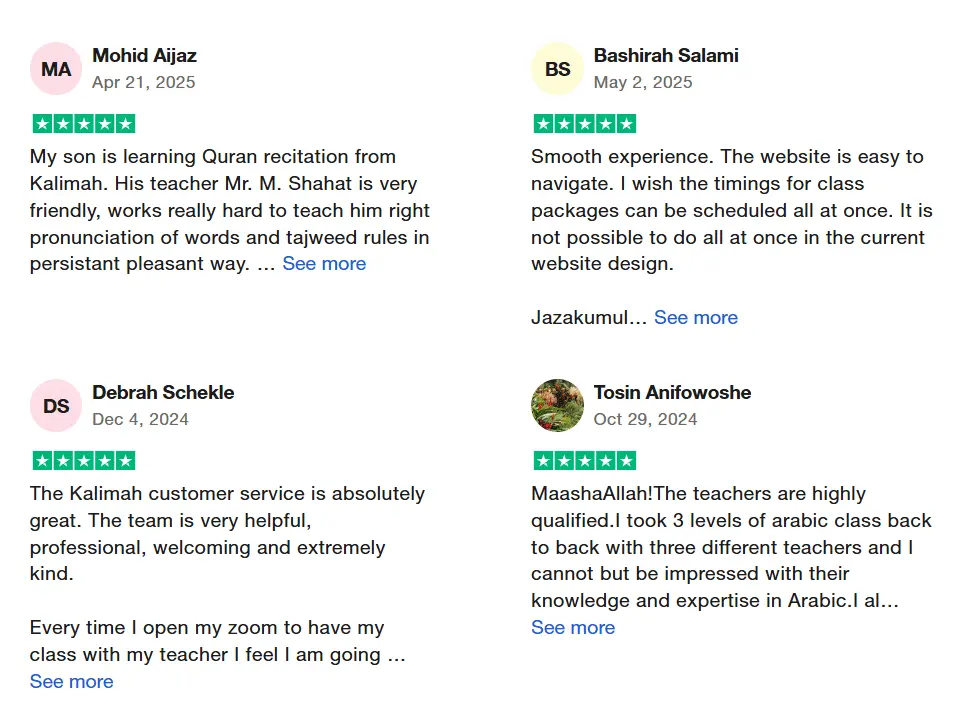
Here Are The Reviews On Our Courses:
Our students frequently commend the excellence of our courses and the commitment shown by our instructors. You can read their complete reviews on Trustpilot.
Read more reviews on Trustpilot
Master Arabic with Kalimah Center
Join our expert-led online classes and start your journey toward Arabic fluency today.
Book Your Free TrialBook Your Free Arabic Trial Class Today!
You’ve seen what Mondly can and can’t do for your Arabic. Now it’s time to experience the difference a real teacher makes. Kalimah Centre invites you to a free trial class with a native Arabic tutor, with no commitment and no pressure.
In this first session, your teacher will assess your level, listen to your pronunciation, and talk with you about your goals, whether that’s conversation, reading, grammar, or the Quran. You’ll leave with a clear, personal roadmap instead of guesswork.
Explore Our Courses:
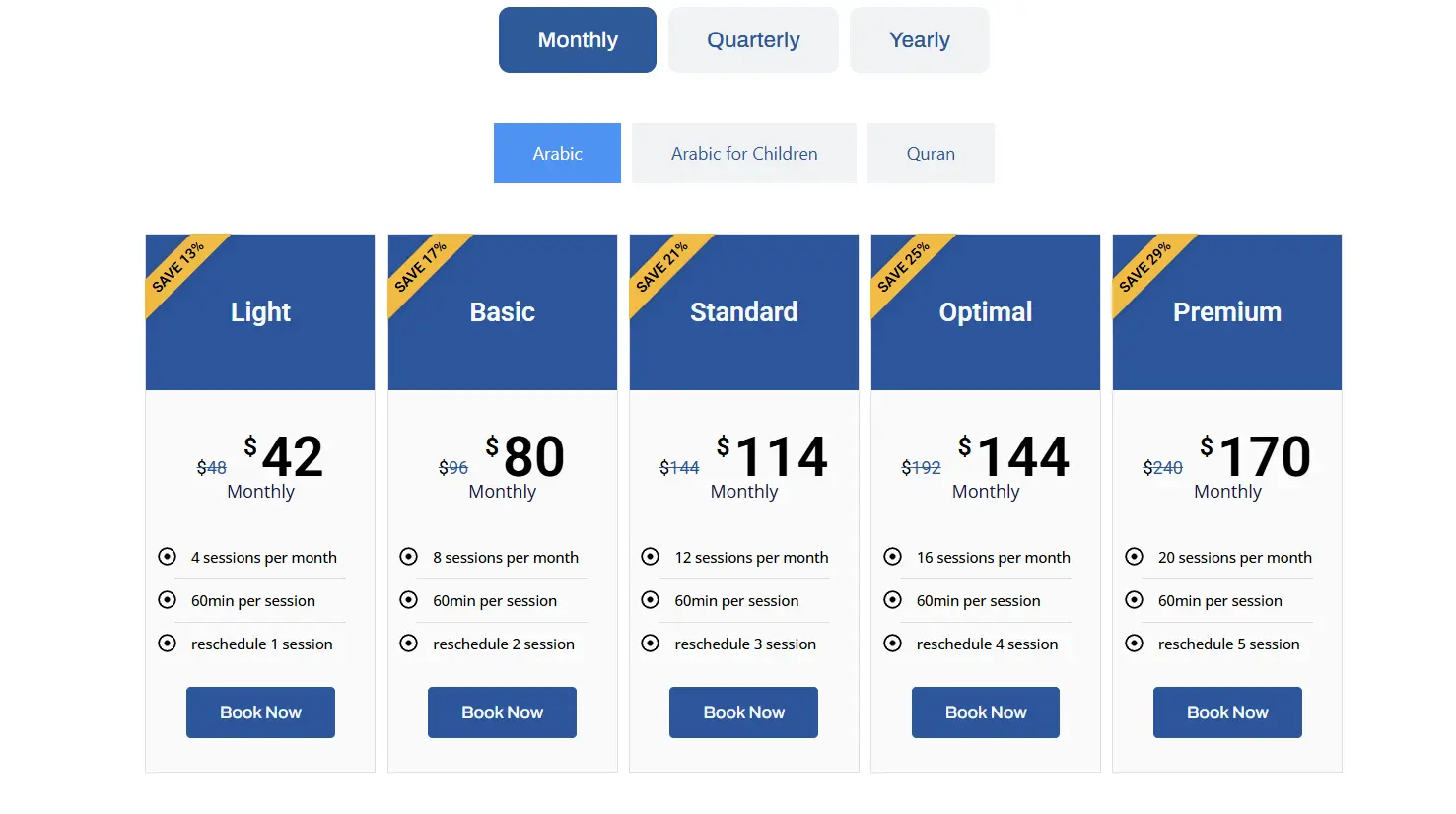
Online Arabic Course: Tailored to your level, our comprehensive Arabic program includes 16 teaching levels and 400+ hours of personalized sessions.
Online Quran With Tajweed Course: Perfect for non-Arabic speakers, our course spans 13 levels and equips you with Tajweed mastery from beginner to advanced.
Online Arabic Course For Kids: Nurture your child’s love for Arabic with our engaging and structured program, available in 24 levels for primary, intermediate, and secondary stages.
Don’t let another month go by tapping through the same lessons. Book your free Kalimah Centre trial class now and take your first real step from app learner to confident Arabic speaker.

Master Arabic with Kalimah Center
Join our expert-led online classes and start your journey toward Arabic fluency today.
Book Your Free TrialFinal Verdict
Mondly teaches Arabic through short, colorful lessons focused on Modern Standard Arabic, with a chatbot, speech recognition, AR features, and gamified streaks. It’s affordable, easy to start, and great for building a daily habit and a first set of words during the earliest weeks.
Its limits are just as clear. Grammar explanations are thin, pronunciation feedback is forgiving, dialects and Quranic Arabic aren’t covered, and lessons can’t adapt to you. Pairing it with free tools like flashcards, voice recordings, and authentic news clips makes your daily practice far more effective.
So, is Mondly good for learning Arabic? Yes, as a starting point and a review tool, but not as your whole plan. The key takeaway is simple: use the app for habit, and rely on structured lessons with native teachers like those at Kalimah Centre for real fluency.
Frequently Asked Questions
Is Mondly Good For Learning Arabic As A Complete Beginner?
Yes, is Mondly good for learning Arabic at the very start is easy to answer: it builds basic vocabulary well. Pair it with Kalimah Centre’s live lessons to turn those words into real conversation.
Does Mondly Teach The Arabic Alphabet?
Mondly shows words in Arabic script with audio, but it doesn’t teach the alphabet in a full, step-by-step way. Kalimah Centre’s teachers guide you through every letter, sound, and connected form from day one.
Can Mondly Make Me Fluent In Arabic?
No. Fluency needs grammar depth, accurate pronunciation, and real conversation, which an app can’t fully provide. Kalimah Centre’s structured levels and native teachers are designed to take you all the way to fluency.
Does Mondly Teach Egyptian Or Other Arabic Dialects?
Mondly focuses mainly on Modern Standard Arabic and doesn’t offer dedicated dialect tracks. If you need a dialect for work, travel, or family, Kalimah Centre can build a personal plan around your goals.
Is Mondly Useful For Learning Quranic Arabic?
Mondly isn’t designed for Quranic Arabic or tajweed, so it can only help with general vocabulary. Kalimah Centre offers reading and Quran-focused learning with native teachers who specialize in correct recitation.