Stroll through Al-Batha market in Riyadh, and you’ll spot shop signs that look like Arabic at first glance, yet you can’t understand a word. Many are in Urdu, Pashto, or Persian, all built on letters you already know.
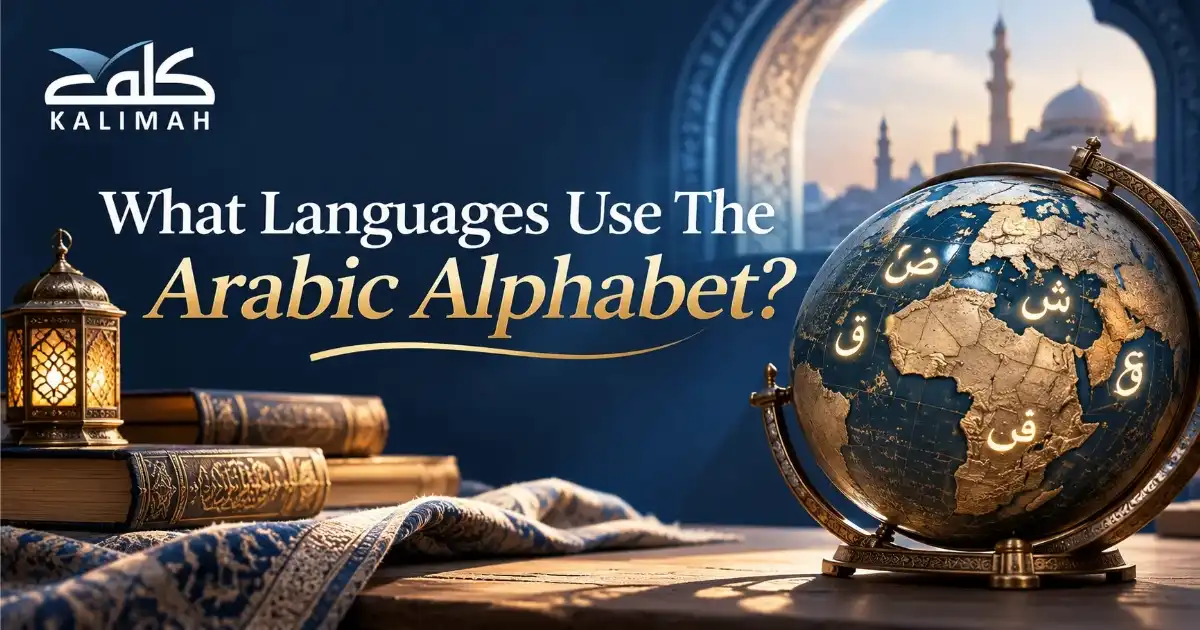
So, what languages use the Arabic alphabet, and how did one script travel from the Arabian Peninsula to China, South Asia, and Africa? The Arabic script is the second most widely used alphabetic system in the world, after Latin.
At Kalimah Centre, we teach the Arabic alphabet to learners from dozens of countries, and many are surprised to find their mother tongue already uses it. That shared foundation turns a fun fact into a real learning advantage.
In this guide, you’ll meet each major language, see the letters it added, and learn how it reshaped Arabic sounds to fit its own voice. By the end, those Riyadh shop signs will look completely different to you.
1. Persian (Farsi)
Persian tops any list of what languages use the Arabic alphabet, thanks to its tens of millions of speakers and long literary tradition. Below, you’ll see where it’s written, which letters it added, and how its sounds differ.
Where Persian Is Written In Arabic Letters
Persian is written in Arabic letters in Iran, where it’s called Farsi, and in Afghanistan, where it’s known as Dari. Both use an almost identical script, so readers in Tehran and Kabul can read each other’s newspapers.
The big exception is Tajikistan, where the Tajik variety of Persian is written in Cyrillic, a legacy of the Soviet era. So the very same language can look completely different depending on which border you cross.
Persians adopted the Arabic script after Islam reached the region in the 7th century, replacing the older Pahlavi script. Persian also absorbed thousands of Arabic words, like کتاب (ketab, book), which any reader in Jeddah recognizes instantly.
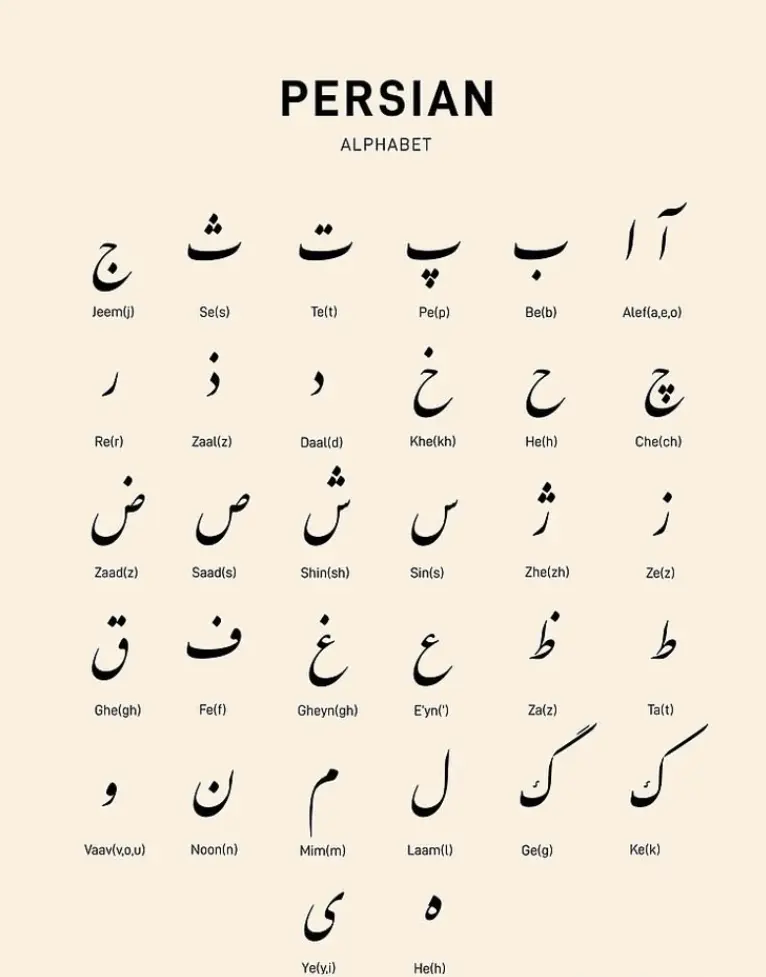
The Four Extra Letters Persian Adds
Persian uses 32 letters: the 28 Arabic letters plus پ (p), چ (ch), ژ (zh), and گ (g). These cover sounds Arabic doesn’t have, and each one was created by adding dots or a stroke to an existing shape.
The logic is easy to spot: پ is ب with three dots, چ is ج with three dots, ژ is ز with three dots, and گ is ک with an extra line. If you read Arabic, you’ll learn these four in minutes.
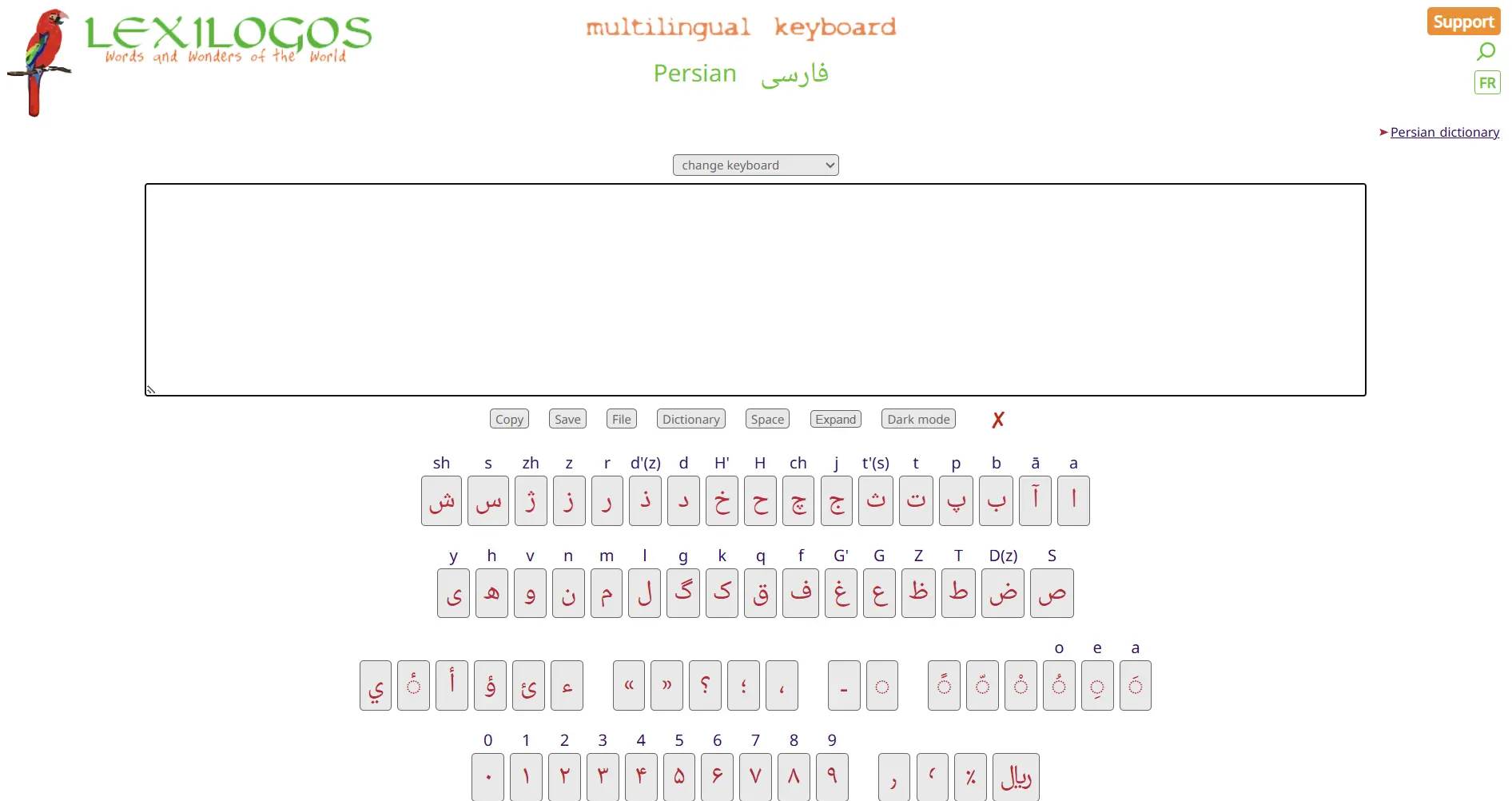
Want to try them? This free online Persian keyboard by Lexilogos lets you type Farsi with your regular keyboard and copy the result. It even shows how to add the Persian half-space used in words like میروم (I go).
How Persian Pronounces Arabic Letters Differently
Persian keeps the shapes of Arabic letters but simplifies many of their sounds. For example, ث, س, and ص are all pronounced as a plain “s,” while ذ, ز, ض, and ظ all sound like “z.”
Likewise, ط and ت both become “t,” ح and ه both become “h,” and و is usually pronounced “v” rather than “w.” That’s why Persian speakers learning Arabic need focused practice on throat letters and heavy consonants.
If you speak Persian or Dari and want accurate Arabic pronunciation, the Online Arabic Course at Kalimah Centre pairs you with native tutors who correct these sounds from day one, so you progress faster than a beginner.
Read Also: The Complete Arabic Alphabet Guide: Letters, Forms, Sounds & Practice
2. Urdu – The Arabic Alphabet In Nastaliq Style
Urdu is one of the most widely read languages written in Arabic letters, and probably the one you hear most around you in Saudi Arabia. Here’s where it’s used, what it adds, and why it looks so distinctive.
Where Urdu Is Spoken And Written
Urdu is the national language of Pakistan and an officially recognized language in India, with speakers across South Asia and the Gulf. In Saudi Arabia, the large Pakistani community keeps Urdu alive from Jeddah to Dammam.
Spoken Urdu is very close to Hindi, so speakers of both understand each other in everyday conversation. The big difference shows up on paper: Hindi uses the Devanagari script, while Urdu uses an extended Arabic script.
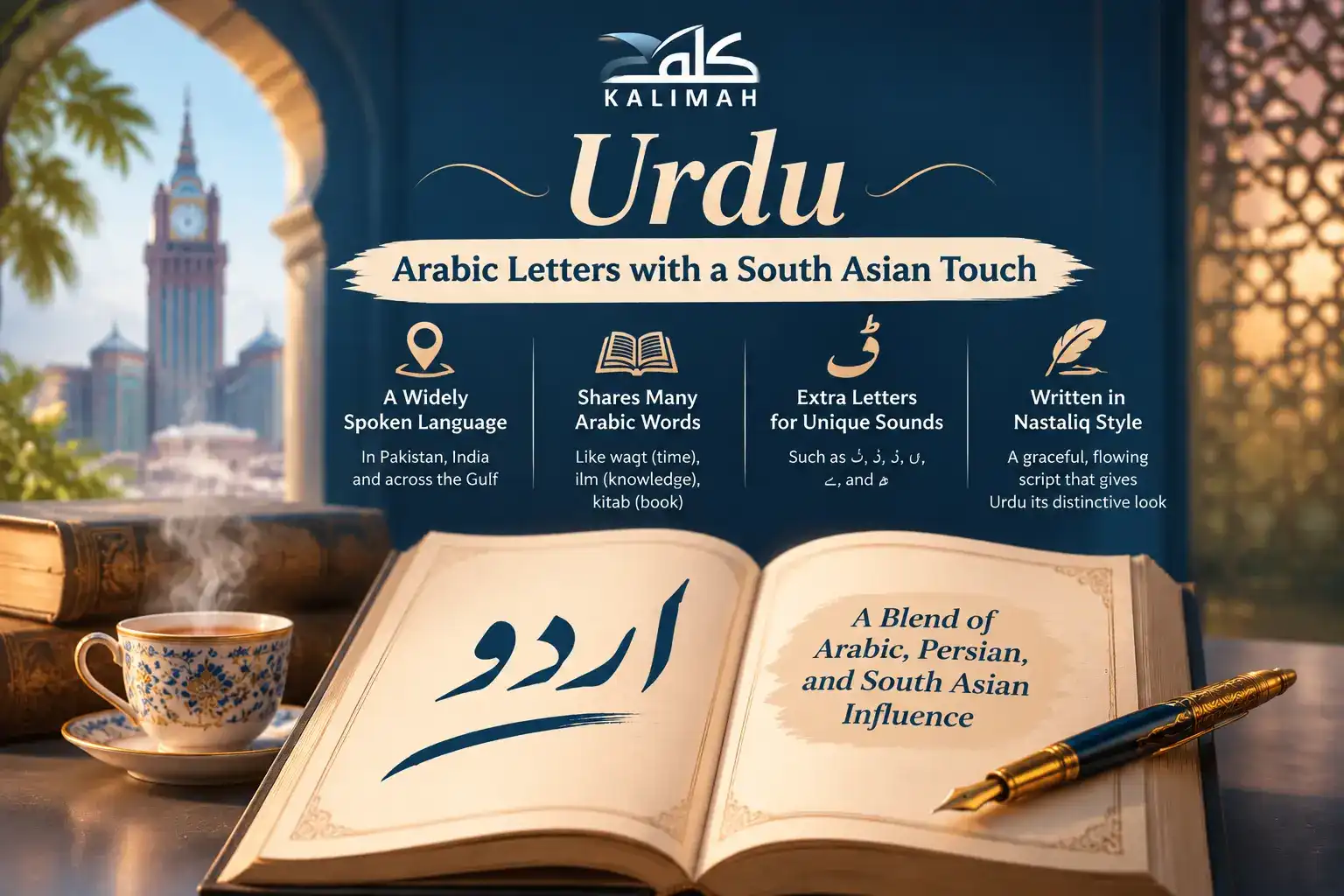
Urdu also borrows heavily from Arabic and Persian. Words like وقت (waqt, time), علم (ilm, knowledge), and کتاب (kitab, book) feel instantly familiar to an Arabic reader, even though the grammar around them is South Asian.
The Letters Urdu Adds For South Asian Sounds
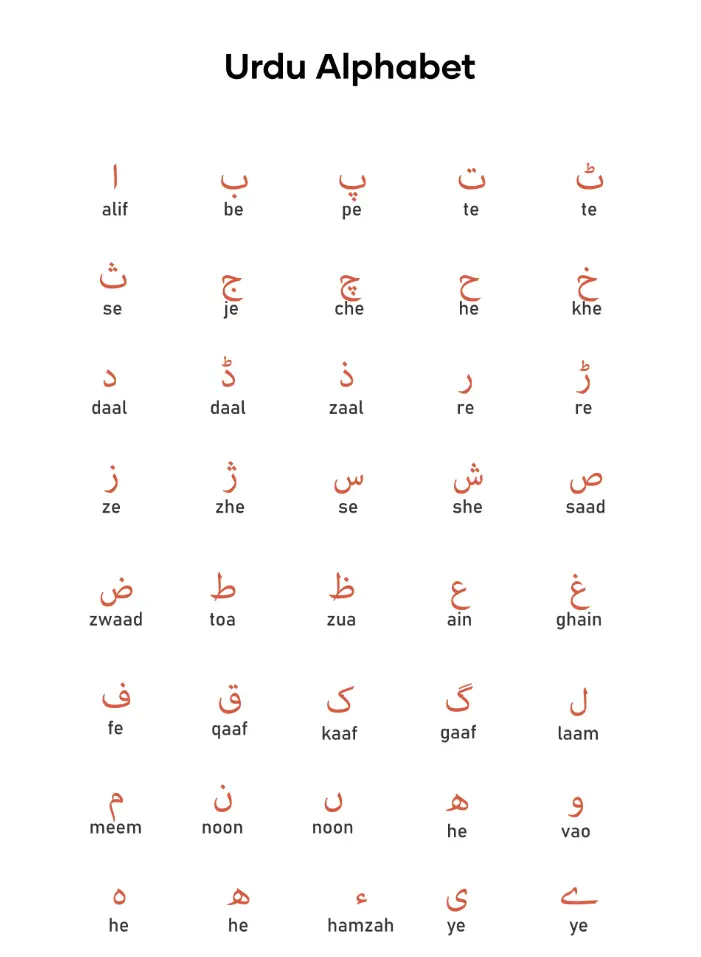
Urdu uses around 38 to 39 letters, adding new ones to the Persian set to capture sounds unique to South Asia. The best known are the retroflex letters ٹ (ṭ), ڈ (ḍ), and ڑ (ṛ), each marked with a small ط above.
Urdu also adds ں (noon ghunna) for nasal sounds, ے (bari ye) for a final “e,” and ھ (do-chashmi he) to form aspirated sounds like بھ (bh) and پھ (ph). These make Urdu easy to tell apart from Arabic.
For a clear academic walkthrough, the University of Texas at Austin’s Urdu Script & Pronunciation guide groups the letters into shape families and explains every sound. It’s an excellent free reference for comparing Urdu letters with Arabic ones.
Why Nastaliq Makes Urdu Look Different
Urdu is traditionally written in Nastaliq, a flowing style where letters slope diagonally from the top right down to the bottom left. Arabic, by contrast, is usually printed in Naskh, which sits flat along a horizontal line.
This sloping design gives Urdu its elegant look, but it was hard to display on screens for years. Google’s free Noto Nastaliq Urdu font was designed to fix that, so Urdu renders properly on any device.
Many Urdu speakers in Saudi Arabia first meet Arabic letters through the Quran. Kalimah Centre’s Online Quran Course starts with the Noorani Qaida to perfect each letter’s sound, then builds proper Tajweed step by step with Ijazah-certified teachers.
Further Reading: Learn to Read and Write Arabic: Complete Beginner’s Guide (+ Speaking)
Experience Kalimah Center Classes
Watch real excerpts from our live sessions at Kalimah Center and see how we bring learning to life. These clips highlight our interactive, student-centered teaching approach across all our courses—designed to keep learners engaged, motivated, and actively involved every step of the way.
Master Arabic with Kalimah Center
Join our expert-led online classes and start your journey toward Arabic fluency today.
Book Your Free Trial3. Pashto – Among The Arabic Alphabet Languages With The Most Letters
Pashto has one of the largest letter sets among Arabic alphabet languages, with sounds you won’t find elsewhere in the script family. Let’s look at where it’s used, its special letters, and how dialects shape them.
Where Pashto Is Used Today
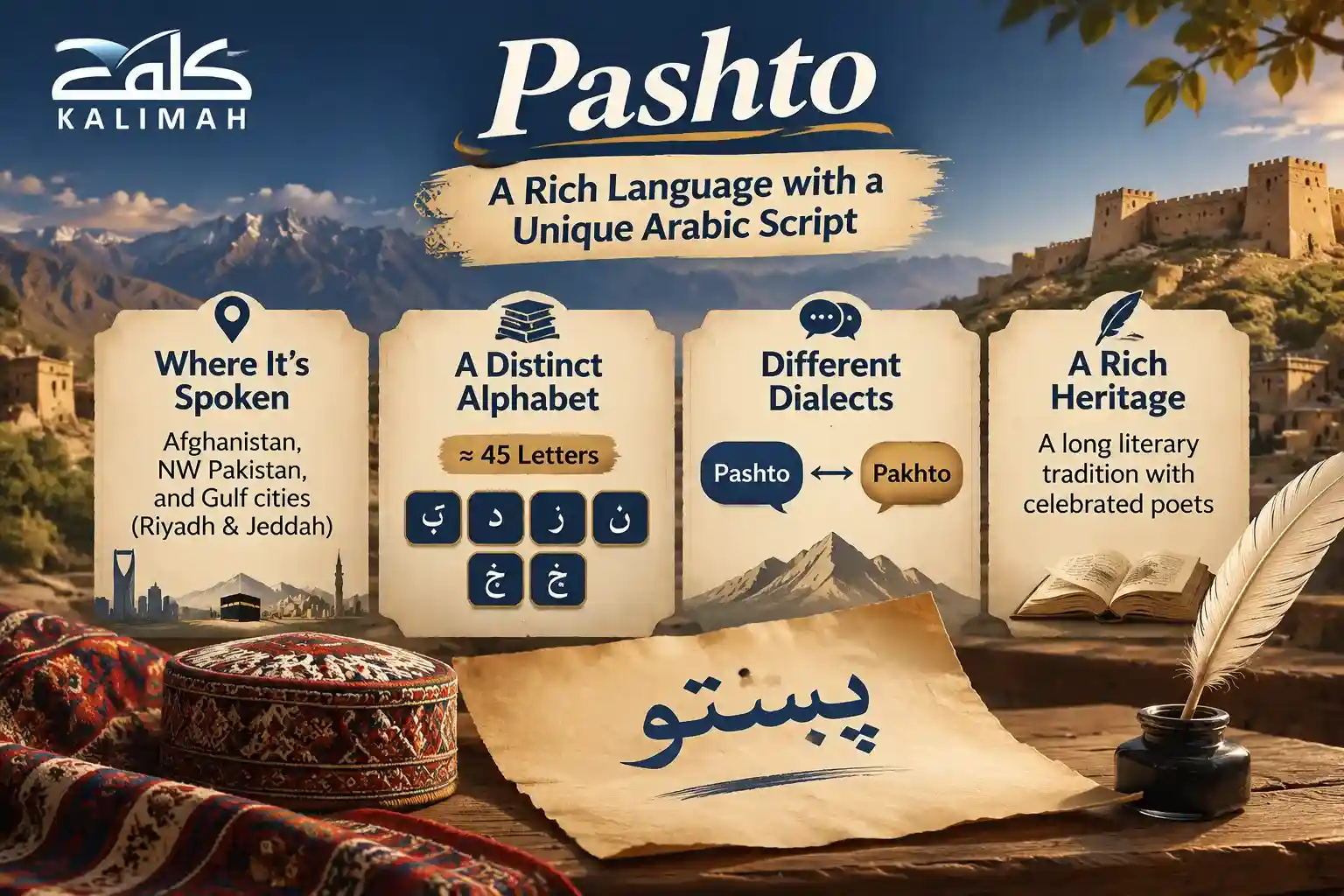
Pashto is an official language of Afghanistan, alongside Dari, and it’s widely spoken in northwestern Pakistan, especially Khyber Pakhtunkhwa. You’ll also hear it in Riyadh and Jeddah, where many Afghan and Pashtun workers live.
Pashto belongs to the Iranian branch of languages, making it a distant cousin of Persian rather than a relative of Arabic. Still, centuries of Islamic learning gave it a large stock of Arabic religious and legal vocabulary.
Pashto literature is old and rich, with poets like Khushal Khan Khattak and Rahman Baba celebrated across the region. Their poems are still printed in the same Arabic-based script used for newspapers and road signs.
The Special Letters Of The Pashto Alphabet
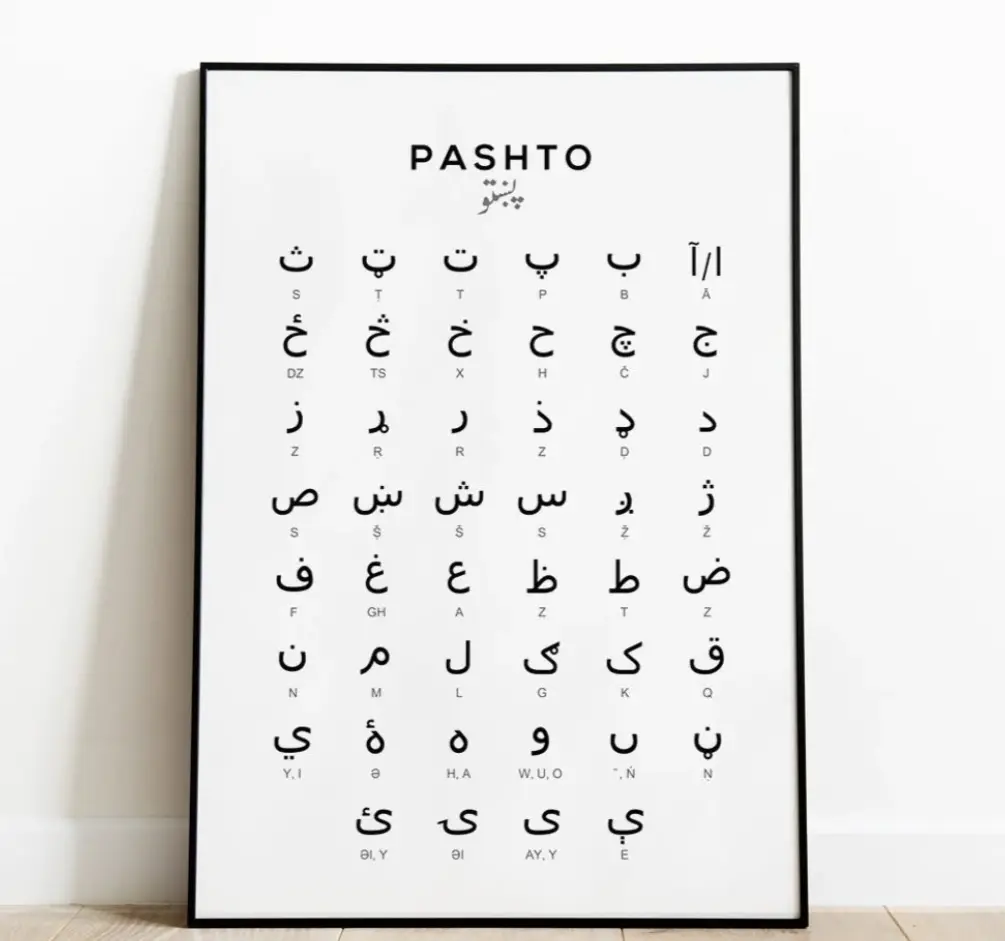
Pashto uses about 45 letters, adding unique shapes to the Persian set. These include the retroflex letters ټ, ډ, ړ, and ڼ, marked with a small ring, plus څ (ts) and ځ (dz), which look like ح with extra dots.
Pashto also has several forms of “ye” (ی, ې, ۍ, ئ), each signaling a different vowel or grammatical ending. For an Arabic reader, these small differences are the main thing to watch when decoding a Pashto word.
To practice, write simple Pashto words like سلام or ډېر (der, very) by hand, and trace each new letter slowly next to the Arabic letter it looks most like. Seeing the extra rings and dots beside familiar shapes is a quick way to lock them into memory.
How Dialects Change The Sound Of Pashto Letters
Pashto letters can change sound depending on the dialect. The clearest example is ښ: southern speakers around Kandahar pronounce it close to “sh,” while northern speakers around Peshawar say it more like “kh.”
That’s why the language name itself has two pronunciations, “Pashto” in the south and “Pakhto” in the north. The spelling stays the same, پښتو, so the written form unites speakers whose accents differ a lot.
This highlights a key strength of the Arabic script: one spelling can serve many accents. Arabic works the same way, since readers in Riyadh and Casablanca read the same newspaper but pronounce it in their own dialects.
4. Kurdish (Sorani) – Writing Every Vowel With Arabic Letters
Kurdish takes the Arabic script in a bold direction by spelling out nearly every vowel. This section covers where Sorani uses Arabic letters, how its vowel system works, and what sets it apart from its neighbors.
Where Sorani Kurdish Uses The Arabic Script
Sorani, or Central Kurdish, is written in an Arabic-based script in the Kurdistan Region of Iraq and in western Iran. It’s an official language in Iraq’s Kurdistan Region, used in schools, government offices, and media.
Kurdish isn’t a single written tradition, though. Kurmanji, the northern variety spoken mainly in Turkey and Syria, uses the Latin alphabet, so Kurds can write the same broad language in two completely different scripts.
To get Sorani on your phone or laptop, Kurdish Central, a project of SIL Global, offers a clear Sorani keyboard setup guide for Android, iPhone, Windows, and Mac. It’s a handy first step before reading Sorani news.
How Sorani Writes Vowels As Full Letters
Sorani writes almost every vowel as a full letter, unlike Arabic, which usually leaves short vowels unmarked. Letters like ە (e), ێ (ê), ۆ (o), and وو (û) sit right inside the word, so there’s little guessing.
The main exception is a short “i” sound, which is usually left unwritten. Apart from that, a beginner can often read a Sorani word aloud correctly, even without knowing what the word actually means.
Sorani also adds letters for sounds Arabic lacks, such as ڕ (a rolled r), ڵ (a heavy l), and ڤ (v). You can test them with this online Sorani keyboard, which maps each letter to a standard key.
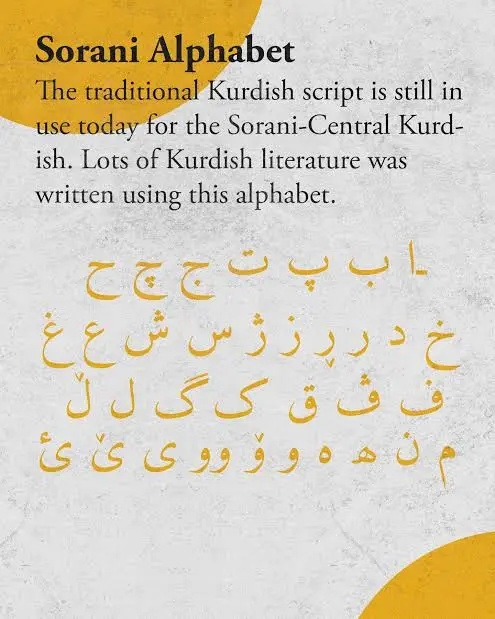
How Sorani Differs From Other Languages That Use Arabic Alphabet
Among languages that use Arabic alphabet letters, Sorani stands out because it behaves almost like a true alphabet, treating consonants and vowels equally. Arabic, Persian, and Urdu stay closer to an abjad, where readers supply short vowels.
For an Arabic reader, this makes Sorani surprisingly easy to sound out, even when the words are unfamiliar. The reverse is also true: Kurdish speakers often find Arabic harder at first because many vowels are missing on the page.
If you’re a Kurdish speaker who wants to master those hidden vowels, Kalimah Centre’s Arabic Group Classes offer a budget-friendly way to learn with 3 to 6 classmates while building real speaking confidence.
Recommended Reading: Arabic Harakat, Tashkeel, and Diacritics: Everything You Need to Know
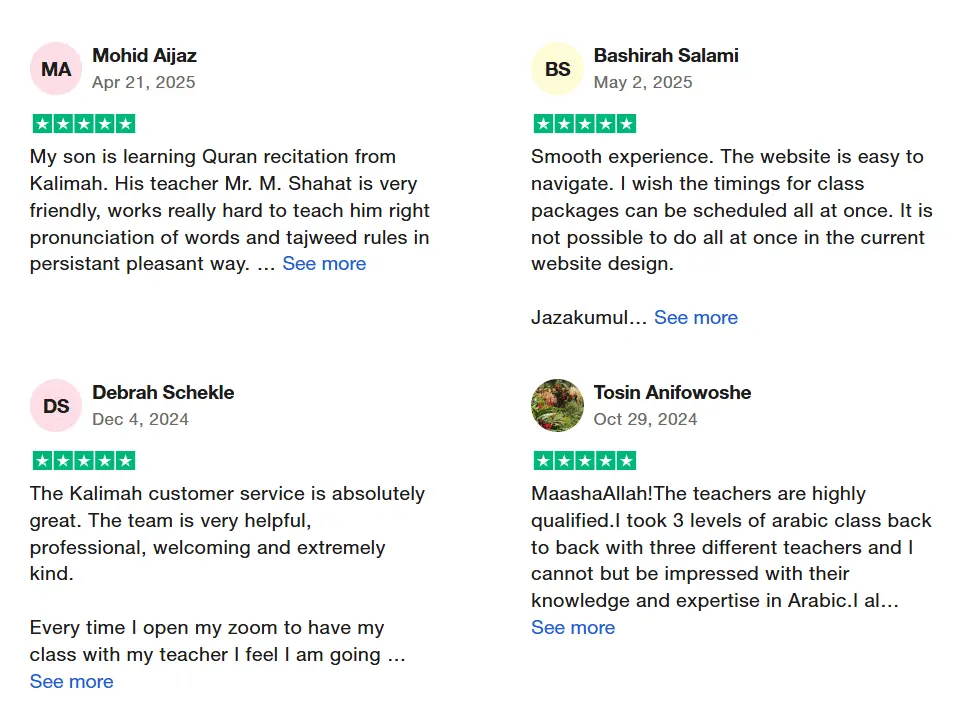
Here Are The Reviews On Our Courses:
Our students frequently commend the excellence of our courses and the commitment shown by our instructors. You can read their complete reviews on Trustpilot.
Read more reviews on Trustpilot
5. Other Languages That Use The Arabic Alphabet
The four languages above aren’t the whole story, since other languages that use the Arabic alphabet stretch from China to West Africa. This section completes the picture of what languages use the Arabic alphabet, past and present.
Uyghur – A Fully Vowelled Script In Northwest China
Uyghur, a Turkic language related to Uzbek and Turkish, is written in Arabic letters mainly in China’s Xinjiang region. Its current script was reinstated in the early 1980s, while Uyghurs in Kazakhstan usually write in Cyrillic.
Its 32-letter alphabet includes eight vowel letters, such as ۇ (u), ۆ (ö), ۈ (ü), and ې (ë), so every vowel is written in full. It also drops Arabic letters Turkic sounds don’t need, like ث, ح, ذ, and ص.
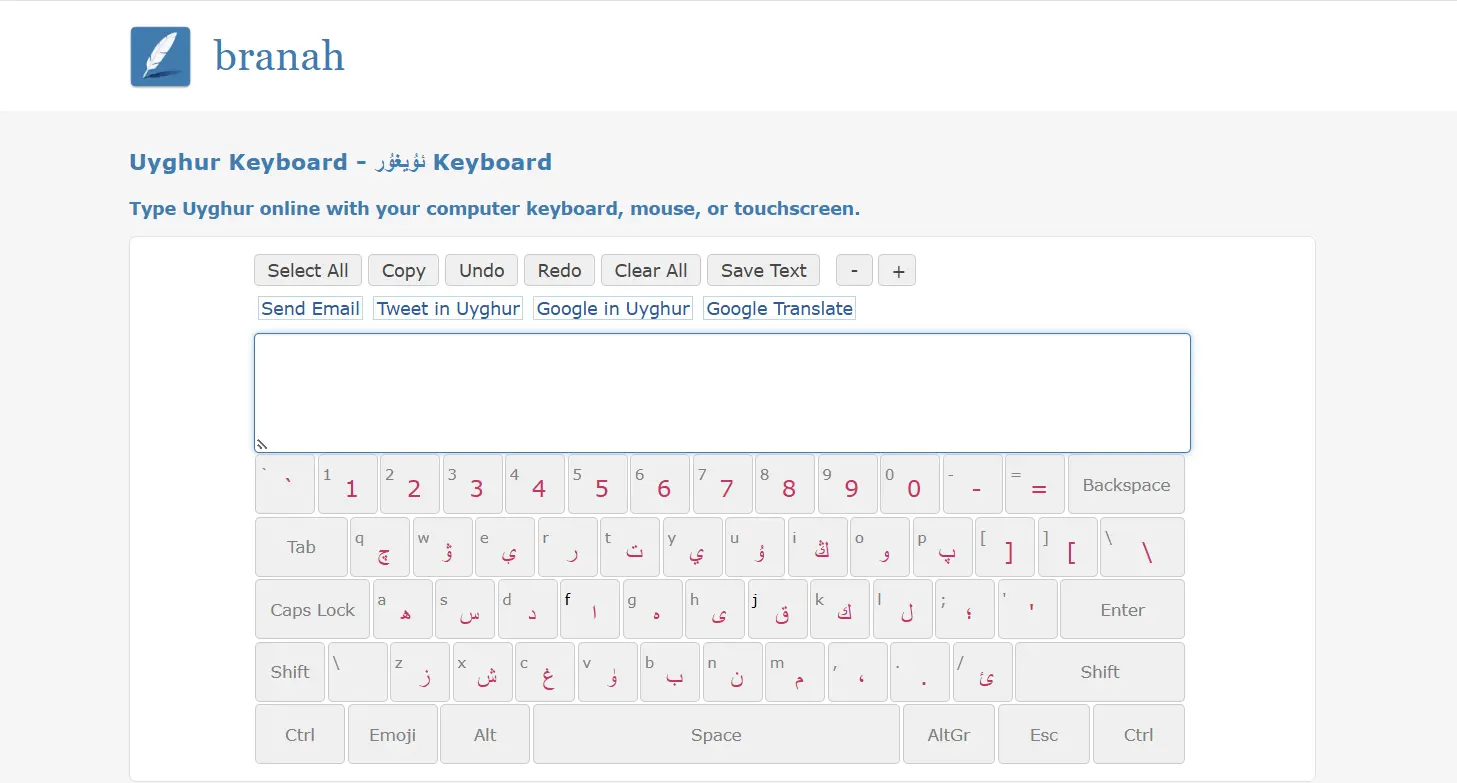
Uyghur adds a hamza carrier, ئ, before any vowel that begins a syllable, as in ئۇيغۇر (Uyghur). You can try these letters with this browser-based Uyghur keyboard, which types from right to left.
Sindhi, Punjabi, Kashmiri, Balochi, And Malay
Sindhi, Punjabi, Kashmiri, and Balochi are written in Arabic-based scripts in Pakistan and parts of India and Iran. Sindhi stands out with a 52-letter alphabet, and Punjabi in Pakistan uses a Perso-Arabic script called Shahmukhi.
To see Sindhi’s extra dots in action, this Sindhi keyboard for the Arabic alphabet lets you type and copy text in your browser. Malay, meanwhile, is also written in Jawi, which adds letters like ڠ (ng) and ڽ (ny).
For Malaysian and Indonesian families living in Saudi Arabia, this shared heritage makes Arabic feel closer than it seems. Kalimah Centre’s Arabic Classes For Kids help children build on it through 26 structured levels with patient native tutors.
How Many Languages Use The Arabic Alphabet In Total?
Around two dozen languages are written in the Arabic alphabet today, and many more used it in the past, including Ottoman Turkish until 1928, Swahili, and Aljamiado Spanish. Hausa still uses its Ajami form for religious writing.
There’s no single official figure for how many languages use the Arabic alphabet, because smaller languages like Balti, Luri, and Rohingya are counted differently. The official Unicode Arabic code chart shows how many letters were added for them.
This variety of tongues sharing one script echoes a beautiful Quranic meaning about human diversity.
Allah (Glorified and Exalted be He) says:
“وَمِنْ آيَاتِهِ خَلْقُ السَّمَاوَاتِ وَالْأَرْضِ وَاخْتِلَافُ أَلْسِنَتِكُمْ وَأَلْوَانِكُمْ ۚ إِنَّ فِي ذَٰلِكَ لَآيَاتٍ لِّلْعَالِمِينَ”
“And one of His signs is the creation of the heavens and the earth, and the diversity of your languages and colours. Surely in this are signs for those of sound knowledge.” Surah Ar-Rum 30:22
The verse presents the diversity of human languages as a sign worth reflecting on. The Arabic script mirrors that idea beautifully: one set of letters, reshaped by many peoples, now carries Persian poetry, Urdu prose, and Uyghur songs.
Learn The Original Arabic Alphabet With Kalimah Centre And Read More Languages
Now that you know what languages use the Arabic alphabet, the value of mastering the original 28 letters is clear. Learn them properly once, and you gain a head start on Persian, Urdu, Pashto, Kurdish, and more.
At Kalimah Centre, a free placement test sets your starting level, and a structured path of 16 levels and 400+ study hours takes you from single letters to confident reading, writing, listening, and speaking, with a certificate for every level.
You also choose who teaches you. Saudi families who prefer a female tutor can browse our certified female teachers, while flexible scheduling and 14+ years of experience make every lesson fit your life and move you forward.
Inside Kalimah Center: Moments from Our Courses
Get a glimpse into the vibrant learning experience at Kalimah Center. These snapshots capture real moments from our live classes—where students engage deeply, connect with passionate instructors, and grow in a welcoming, supportive environment.
Master Arabic with Kalimah Center
Join our expert-led online classes and start your journey toward Arabic fluency today.
Book Your Free TrialBook Your Free Arabic Trial Lesson At Kalimah Centre!
Ready to go beyond knowing what languages use the Arabic alphabet and start reading the script yourself? Book your free trial lesson with Kalimah Centre today and meet a certified native tutor who will map out your path.
Everything happens online, so all you need is a laptop or tablet and a stable connection, whether you live in Riyadh, Jeddah, Dammam, or anywhere else in the Kingdom. No commuting and no traffic, just focused learning.
Explore Our Courses:
Online Arabic Course: Tailored to your level, our comprehensive Arabic program includes 16 teaching levels and 400+ hours of personalized sessions.
Online Quran With Tajweed Course: Perfect for non-Arabic speakers, our course spans 13 levels and equips you with Tajweed mastery from beginner to advanced.
Online Arabic Course For Kids: Nurture your child’s love for Arabic with our engaging and structured program, available in 24 levels for primary, intermediate, and secondary stages.
Check our flexible study plans to find a schedule and budget that suit you, then pick your tutor and your first class time. Your journey from recognizing Arabic letters to truly reading them can start this week.

Master Arabic with Kalimah Center
Join our expert-led online classes and start your journey toward Arabic fluency today.
Book Your Free TrialConclusion
So, what languages use the Arabic alphabet? Beyond Arabic itself, the main ones are Persian, Urdu, Pashto, and Kurdish (Sorani), followed by Uyghur, Sindhi, Punjabi, Kashmiri, Balochi, Malay (Jawi), and Hausa (Ajami). Ottoman Turkish, Swahili, and Aljamiado Spanish also used it for centuries.
Each language reshaped the script in its own way. Persian added four letters, Urdu embraced the sloping Nastaliq style, Pashto built one of the largest letter sets, and Kurdish and Uyghur chose to write their vowels in full. The same core shapes now carry hundreds of millions of voices.
The key takeaway is simple: the Arabic alphabet is a shared key that opens doors across Asia, Africa, and the Middle East. Learn it well, and every language on this list becomes easier and more familiar to explore, starting with Arabic itself and the Quran
Frequently Asked Questions
Is Aramaic Basically Arabic?
No, Aramaic is a separate Semitic language, a close relative of Arabic, not the same language. The Arabic script did develop from the Nabataean alphabet, which itself came from the Aramaic script.
Does English Use An Arabic Alphabet?
No, English uses the Latin alphabet. Its digits 0–9, though, are called “Arabic numerals” because they reached Europe through Arab mathematicians, who first took them from India.
Is Arabic Older Than Islam?
Yes, Arabic was spoken and written centuries before Islam, as pre-Islamic poetry and inscriptions show. The Quran then set the standard for the classical Arabic that Kalimah Centre teaches today.
Why Is There No P In Arabic?
Arabic never had a “p” sound, so speakers usually say “b” instead, which is why “Pepsi” often comes out as “Bebsi.” Persian added پ to fill this gap, and Kalimah Centre’s native tutors help you hear and say these sound differences correctly.
How Many Languages Use Arabic Alphabet Letters Today?
Around two dozen today. Kalimah Centre helps you master the original 28 letters they’re all built on.