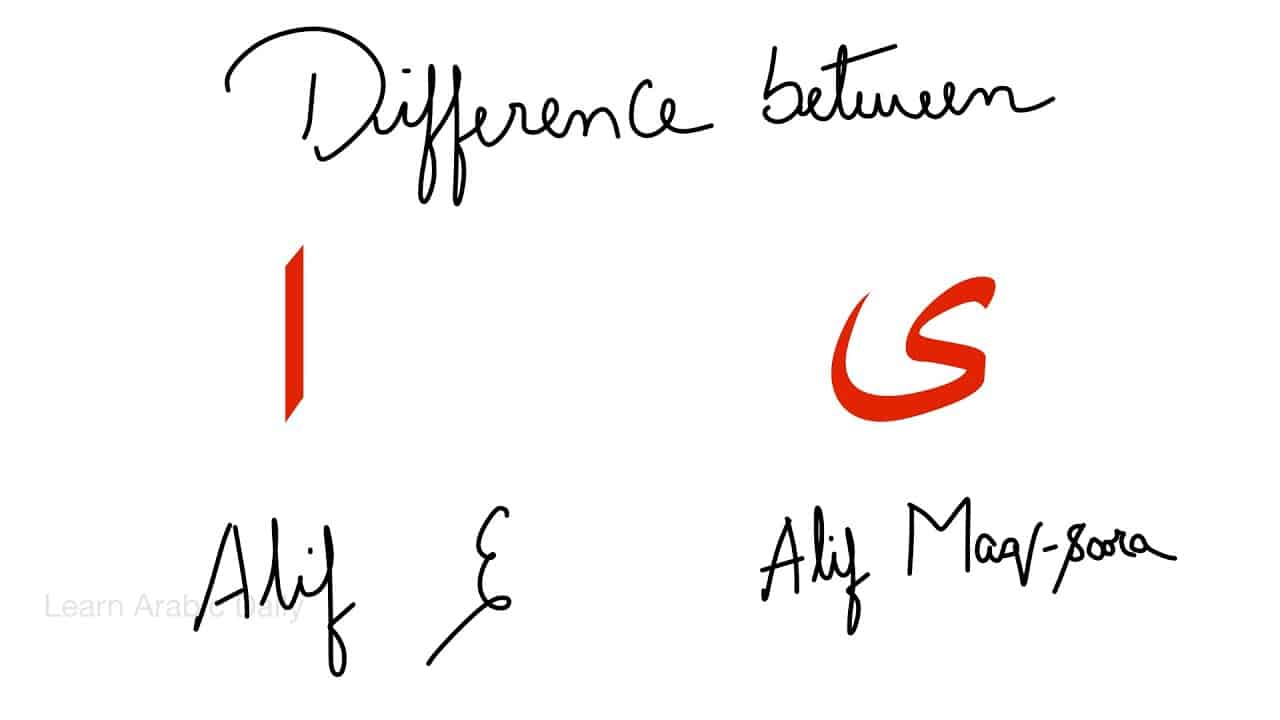
When learning Arabic, many students feel confused when they see two letters that look different but sound very similar: ا and ى. Both can represent a long “ā” sound at the end of words, but they are not written in the same way. This is where alif maqsurah in Arabic becomes important.
Alif maqsurah is the Arabic letter ى. It looks like the letter ي without dots, but it is pronounced like a long ā sound. For example, in the word هدى meaning “guidance,” the final ى is pronounced like “ā,” not like “y.”
Many learners search for alif maqsurah meaning because they want to understand why some Arabic words end with ا, while others end with ى. The answer is connected to Arabic spelling rules, word origins, and whether the final alif originally comes from و or ي.
This guide explains the meaning of alif maqsurah, how it is used, the difference between alif maqsurah and alif mamdudah, and the most important rules for understanding the Arabic letter ى usage.
What Is Alif Maqsurah مكسورة?
Alif Maqsurah (ى) is a special form of the letter alif that appears only at the end of certain Arabic words. Although it looks similar to a dotless yaa’ (ي), it is pronounced as a long ā sound, just like the regular alif (ا).
| Arabic Word | Transliteration | Meaning |
| هدى | hudā | guidance |
| فتى | fatā | young man |
| سعى | saʿā | he strove |
| رمى | ramā | he threw |
| موسى | Mūsā | Moses |
Key Points to Remember
- Alif maqsurah (ى) is pronounced as a long “ā” sound, not as a “y” sound.
- It looks like a dotless yaa’, but it functions as an alif in pronunciation.
- It appears only at the end of words in modern Arabic spelling.
- In transliteration, it is usually represented by ā, the same as a regular long alif.
Alif Maqsurah Meaning
The term alif maqsurah means “restricted alif” or “shortened alif.” In Arabic grammar and spelling, it refers to the final alif written in the shape of ى.
Although it looks like ي, it is not pronounced as “y.” It is pronounced as a long ā sound.
For example:
فتى is pronounced fatā, not fatay.
هدى is pronounced hudā, not huday.
رمى is pronounced ramā, not ramay.
So, if you are learning Arabic reading, the first rule is simple: when ى appears at the end of a word without dots, read it as ā.
What Is Alif Mamdudah?
To understand alif maqsurah, you also need to understand alif mamdudah.
Alif mamdudah is the regular Arabic alif written as ا. It also represents a long ā sound.
دعا — daʿā — he called / prayed
عصا — ʿaṣā — stick
سما — samā — he rose
دنا — danā — he came near
رضا — riḍā — satisfaction
Both ى and ا can sound like long ā, but Arabic spelling rules decide which one should be written.
This is why many learners confuse alif maqsurah and alif mamdudah. They sound similar, but their spelling depends on the origin and structure of the word.
Alif Maqsurah and Alif Mamdudah: The Main Difference
The main difference between alif maqsurah and alif mamdudah is the shape.
رمى — ramā — he threw
دعا — daʿā — he called
In pronunciation, both often sound like ā. In writing, however, they are different.
A simple way to understand the difference:
- ا is the regular long alif.
- ى is the dotless final alif used in certain words.
The spelling depends on grammar rules, especially whether the final alif comes from an original و or ي.
Why Does Arabic Use ى Instead of ا?
Arabic spelling preserves information about the history and origin of words. The final long ā sound may come from an original و or ي.
In many cases:
If the final alif comes from و, it is written as ا.
If the final alif comes from ي, it is written as ى.
Examples:
دعا becomes يدعو in the present tense.
This shows that the final alif comes from و, so it is written ا.
رمى becomes يرمي in the present tense.
This shows that the final alif comes from ي, so it is written ى.
This rule is very useful for verbs, especially three-letter verbs.
Alif Maqsurah in Arabic Verbs
Many Arabic verbs end with alif maqsurah. To know whether a verb should end with ى or ا, you often need to look at the present tense or attach a suffix.
Three-Letter Verbs Ending with ا
If the final alif comes from و, the verb is usually written with ا.
Examples:
- دعا → يدعو
- دنا → يدنو
- سما → يسمو
Because the present tense shows و, the past tense is written with ا.
Three-Letter Verbs Ending with ى
If the final alif comes from ي, the verb is usually written with ى.
Examples:
- رمى → يرمي
- قضى → يقضي
- سعى → يسعى
Because the present tense shows ي, the past tense is written with ى.
This is one of the most important rules for understanding Arabic letter ى usage.
Start Early Arabic Learning for Kids with Kalimah Center
Building a strong foundation in Arabic from a young age helps children understand the language naturally and confidently. When kids are introduced to Arabic in a structured, engaging way, they develop better reading, pronunciation, and comprehension skills that stay with them for life.
The Arabic for Children Course at Kalimah Center is designed specifically to make learning enjoyable and effective. Through interactive lessons and qualified teachers, children learn Arabic step by step in a friendly environment that builds both language skills and a love for learning.
Give your child the right start in Arabic with Kalimah Center Children Course and help them grow with confidence in their Arabic journey.
How to Know the Origin of the Final Alif in Verbs?
There are three useful ways to identify the origin of the final alif in Arabic verbs.
1. Change the Verb to Present Tense
Examples:
دعا → يدعو
The final sound comes from و, so it is written with ا.
رمى → يرمي
The final sound comes from ي, so it is written with ى.
2. Add the Pronoun “I” in the Past Tense
Examples:
دنا → دنوتُ
Because the و appears, the final alif is written ا.
سعى → سعيتُ
Because the ي appears, the final alif is written ى.
3. Look at the Verbal Noun
Examples:
عفا → عفوًا
The word shows و, so the final alif is written ا.
سعى → سعيًا
The word shows ي, so the final alif is written ى.
These methods help learners understand spelling instead of memorizing every word separately.
Alif Maqsurah in Arabic Nouns
Alif maqsurah also appears in nouns. To know whether a noun ends with ى or ا, Arabic learners can use the dual form, plural form, or related forms.
Examples of nouns ending with alif maqsurah:
- فتى — fatā — young man
- هدى — hudā — guidance
- قرى — qurā — villages
- مستشفى — mustashfā — hospital
- مرعى — marʿā — pasture
Examples of nouns ending with alif mamdudah:
- عصا — ʿaṣā — stick
- رضا — riḍā — satisfaction
- ربا — rubā — hills
- شذا — shadhā — fragrance
For learners, the best approach is to study examples and notice spelling patterns over time.
How to Know the Origin of the Final Alif in Nouns
There are also useful ways to test nouns.
1. Make the Noun Dual
Examples:
عصا → عصوان
The و appears, so it is written with ا.
فتى → فتيان
The ي appears, so it is written with ى.
2. Return the Plural to Its Singular
Examples:
خُطا → خطوة
The original letter is و, so the word ends with ا.
قُرى → قرية
The original letter is ي, so the word ends with ى.
Read also: Lam Alif In Arabic Letter With Pronunciation And Examples
3. Look at the Related Feminine Form
Examples:
أعمى → عمياء
The appearance of ي helps show the origin.
This method is especially helpful for advanced spelling and grammar learners.
Experience Kalimah Center Classes
Watch real excerpts from our live sessions at Kalimah Center and see how we bring learning to life. These clips highlight our interactive, student-centered teaching approach across all our courses—designed to keep learners engaged, motivated, and actively involved every step of the way.
Master Arabic with Kalimah Center
Join our expert-led online classes and start your journey toward Arabic fluency today.
Book Your Free TrialWhen Do We Write Alif Maqsurah?
Here are the most common cases where alif maqsurah appears.
1. In Many Three-Letter Words When the Final Alif Comes from ي
Examples:
رمى — he threw
سعى — he strove
فتى — young man
هدى — guidance
2. In Many Words Longer Than Three Letters
If a word has more than three letters and does not have ي before the final alif, the final alif is often written as ى.
Examples:
مصطفى — Mustafa
اهتدى — he was guided
مستشفى — hospital
مرعى — pasture
3. In Some Built-In Arabic Words
Some fixed Arabic words end with ى, such as:
متى — when
لدى — with / لدى
أنّى — how / from where
أولى — those / first depending on context
4. In Some Foreign Names
A few foreign names are traditionally written with ى, such as:
موسى — Moses
عيسى — Jesus
كسرى — Khosrow
بخارى — Bukhara
When Do We Write Alif Mamdudah?
Alif mamdudah ا is used in many other cases.
1. In the Middle of Words
Any alif in the middle of a word is written as ا, not ى.
Examples:
قال — he said
باب — door
فاطمة — Fatimah
Alif maqsurah only appears at the end of words.
2. When the Final Alif Comes from و
Examples:
دعا — he called
دنا — he came near
سما — he rose
عصا — stick
3. In Most Foreign Names
Most foreign names ending in an alif sound are written with ا.
Examples:
لوقا — Luke
زكريا — Zakaria
آغا — Agha
4. In Most Particles Ending with Alif
Most Arabic particles ending with alif are written with ا, except a few common exceptions.
Examples:
لولا — if not
إلا — except
كلا — no / never
يا — O / vocative particle
Alif Maqsurah in Qur’an
Many learners search for alif maqsurah in Qur’an because they see words ending in ى frequently in Qur’anic Arabic. Alif maqsurah appears in many Qur’anic words, especially in verbs and nouns connected to guidance, striving, fear, and divine names or prophetic names.
Examples include words like:
هدى — guidance
سعى — strove
يخشى — fears
موسى — Moses
عيسى — Jesus
In Qur’anic reading, alif maqsurah is pronounced as a long ā sound. However, Qur’anic orthography may include special spelling features, so learners should study Qur’anic writing with a qualified teacher or a reliable tajweed source if their goal is accurate recitation.
For general Arabic learners, the main point is simple:
ى in Qur’anic words is usually pronounced like long “ā,” not like “y.”
Arabic Letter ى Usage in Modern Arabic
The Arabic letter ى is common in Modern Standard Arabic. It appears mostly at the end of words, especially:
- Verbs ending in a long ā sound
- Nouns ending in a long ā sound
- Some names
- Some fixed words and particles
Examples:
رمى — he threw
بنى — he built
مستشفى — hospital
ذكرى — memory
كبرى — major / great
موسى — Moses
It is important not to confuse ى with ي. The letter ي has two dots and is pronounced like “y” or long “ī.” The letter ى has no dots and is pronounced like long “ā.”
Compare:
على — ʿalā — on / upon
علي — ʿAlī — Ali
The spelling changes the pronunciation and meaning.
Read also: Ta Marbuta In Arabic
Common Mistakes Learners Make
Mistake 1: Pronouncing ى Like “Y”
This is the most common mistake. Learners see ى and think it is ي. But ى is pronounced like long ā.
Wrong idea: هدى = huday
Correct: هدى = hudā
Mistake 2: Writing ي Instead of ى
Some learners write هدي instead of هدى. This changes the word and makes the spelling incorrect.
Mistake 3: Using ا and ى Randomly
Some learners write final alif randomly as ا or ى. But Arabic spelling follows rules based on word origin, length, and category.
Mistake 4: Ignoring the Difference in Names
Names such as موسى and عيسى are written with ى, not ا. These spellings should be memorized.
Alif Maqsurah and Alif Mamdudah Examples
Here is a useful comparison table:
| Alif Maqsurah ى | Meaning | Alif Mamdudah ا | Meaning |
| رمى | he threw | دعا | he called |
| سعى | he strove | دنا | he came near |
| فتى | young man | عصا | stick |
| هدى | guidance | رضا | satisfaction |
| مستشفى | hospital | دنيا | world |
This table helps learners see the difference clearly.
How to Remember the Difference?
For beginners, remember this simple rule:
If a word ends with ى, pronounce it like ā, not like “y.”
If a word ends with ا, it may also be pronounced like ā.
The difference is mainly in spelling, not basic pronunciation.
For deeper grammar, remember:
- If the final alif comes from ي, it is often written as ى.
- If the final alif comes from و, it is often written as ا.
And for longer words:
Words longer than three letters often end with ى, unless the letter before the final alif is ي.
Examples:
- مصطفى — Mustafa
- اهتدى — he was guided
- استحيا — he felt shy
- دنيا — world
Notice that استحيا and دنيا have ي before the final alif, so they are written with ا.
Inside Kalimah Center: Moments from Our Courses
Get a glimpse into the vibrant learning experience at Kalimah Center. These snapshots capture real moments from our live classes—where students engage deeply, connect with passionate instructors, and grow in a welcoming, supportive environment.
Here Are The Reviews On Our Courses:
Our students frequently commend the excellence of our courses and the commitment shown by our instructors. You can read their complete reviews on Trustpilot.
Read more reviews on Trustpilot

Master Arabic Step by Step with Kalimah Center
Understanding rules like Alif Maqsurah becomes much easier when Arabic is taught in a structured, simple, and practical way. Instead of memorizing isolated rules, you learn how each concept connects to reading, writing, and real examples, which makes everything clearer and easier to remember.
At Kalimah Center, learning Arabic is designed to be smooth and guided. Experienced teachers break down grammar, pronunciation, and reading skills into clear steps that help students progress with confidence, whether they are beginners or continuing their studies.
Start your Arabic journey today with Kalimah Center and learn Arabic the right way from the beginning.
📚 Explore Our Courses:
Online Arabic Course: Tailored to your level, our comprehensive Arabic program includes 16 teaching levels and 400+ hours of personalized sessions.
Online Quran With Tajweed Course: Perfect for non-Arabic speakers, our course spans 13 levels and equips you with Tajweed mastery from beginner to advanced.
Online Arabic Course For Kids: Nurture your child’s love for Arabic with our engaging and structured program, available in 24 levels for primary, intermediate, and secondary stages.
🚀 Start Your Free Trial Today! 🚀
Don’t miss out on this life-changing opportunity to deepen your faith and knowledge. Sign up now for your free trial and take the first step towards becoming a better practicing Muslim with Kalimah Center!
Master Arabic with Kalimah Center
Join our expert-led online classes and start your journey toward Arabic fluency today.
Book Your Free TrialConclusion
Understanding alif maqsurah in Arabic is essential for reading and spelling correctly. The letter ى may look like a dotless ي, but it is pronounced like a long ā sound. This makes it different from ي and similar in pronunciation to regular alif ا.
The difference between alif maqsurah and alif mamdudah is mainly in spelling. Alif maqsurah is written ى, while alif mamdudah is written ا. To know which one to use, learners should look at the origin of the word, especially whether the final alif comes from ي or و.
For beginners, the most important rule is simple: when you see ى at the end of a word, read it as ā. With practice, examples, and exposure to Arabic texts, the Arabic letter ى usage becomes easier and more natural.
FAQ About Alif Maqsurah in Arabic
What is alif maqsurah in Arabic?
Alif maqsurah is the letter ى. It appears at the end of words and is pronounced like a long ā sound.
What is alif maqsurah meaning?
Alif maqsurah means “shortened” or “restricted” alif. It is a final alif written in the shape of dotless ي.
How is alif maqsurah pronounced?
It is pronounced like long ā, just like regular alif ا.
What is the difference between alif maqsurah and alif mamdudah?
Alif maqsurah is written ى, while alif mamdudah is written ا. Both can be pronounced as long ā, but Arabic spelling rules decide which one is used.
Is ى the same as ي?
No. ى has no dots and is pronounced ā. ي has two dots and is pronounced “y” or long “ī.”
Is alif maqsurah used in the Qur’an?
Yes. Alif maqsurah appears in many Qur’anic words, such as هدى, سعى, موسى, and عيسى. It is pronounced as a long ā sound in recitation.