You don’t need hours of study to start speaking Arabic. You need a system — and just 3 minutes a day to run it.
Most beginners quit because they try to learn too much at once. The “learn Arabic in 3 minutes” method flips that: instead of studying for an hour once a week, you practice for 3 focused minutes every single day. The result is consistent exposure, daily repetition, and vocabulary that actually sticks.
This guide breaks down exactly how to use those 3 minutes, what to learn first, and the 25 core topics that give you a working foundation in Arabic — fast.
What You’ll Learn in This Article?
- The 3-minute daily learning routine and how each minute works.
- The 25 essential Arabic topics to cover as a beginner.
- Common mistakes that slow learners down.
- How to build a streak that turns 3 minutes into real Arabic skill.
- Where Kalimah Center fits in when you’re ready to go deeper.
The Daily Routine To Learn Arabic in 3 Minutes
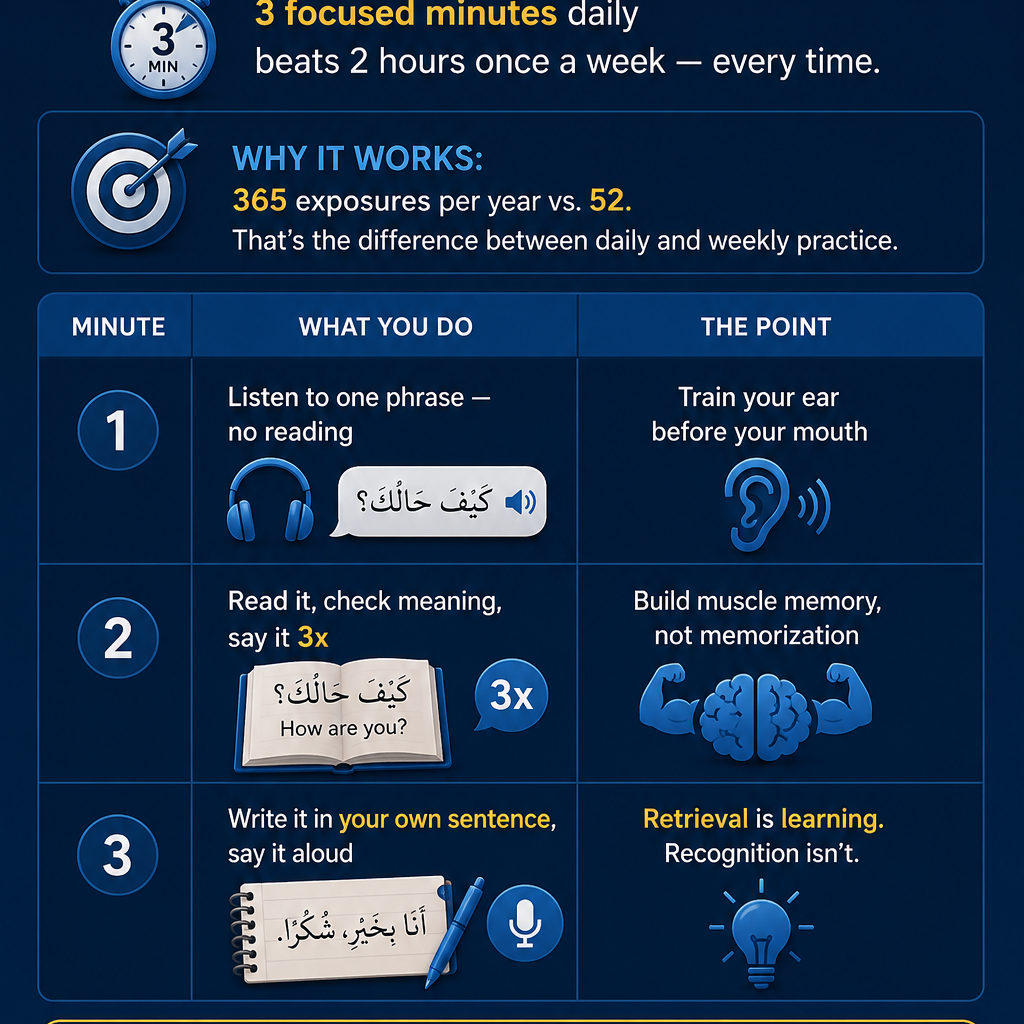
“Learn Arabic in 3 minutes” is not a marketing claim — it is a learning principle. The idea is that 3 highly focused minutes per day, done daily without exception, outperforms a 2-hour study session done once a week.
The science behind it is spaced repetition: reviewing information at increasing intervals moves it from short-term to long-term memory. Three minutes a day gives your brain 365 exposures per year. One 2-hour session per week gives you 52.
Here is how to structure those 3 minutes.
You may enjoy this guide : How To Learn Arabic In 10 Days
Minute 1: Listen To Arabic Conversation
Play one short audio clip — a greeting, a phrase, a number set — and listen without reading. At this stage, focus on becoming familiar with the sounds you hear rather than trying to understand every word.
Arabic has sounds that do not exist in English (the ع ‘ain, the غ ghain, the emphatic consonants). Passive listening first trains your ear before your mouth.
Focus on one phrase only. Do not skip ahead.
Minute 2: Read and Repeat Arabic script
Read the phrase in Arabic script, check its meaning, then say it out loud three times. Say it slowly, then at natural speed. This is not memorization — it is muscle memory.
Arabic pronunciation is consistent once you learn the rules, which means what you say today, you will still pronounce correctly next month.
Minute 3: Use what you learnt
Write the phrase in one sentence of your own. Say it out loud as if talking to someone. This is the step most learners skip — and it is the most important one.
Production (speaking or writing) forces your brain to retrieve the word rather than just recognize it. Recognition feels like learning; retrieval actually is learning.
The 3-minute rule: Set a timer. When it rings, stop. No exceptions. Stopping on time prevents the session from feeling like a burden, which is what keeps the streak alive.
Experience Kalimah Center Classes
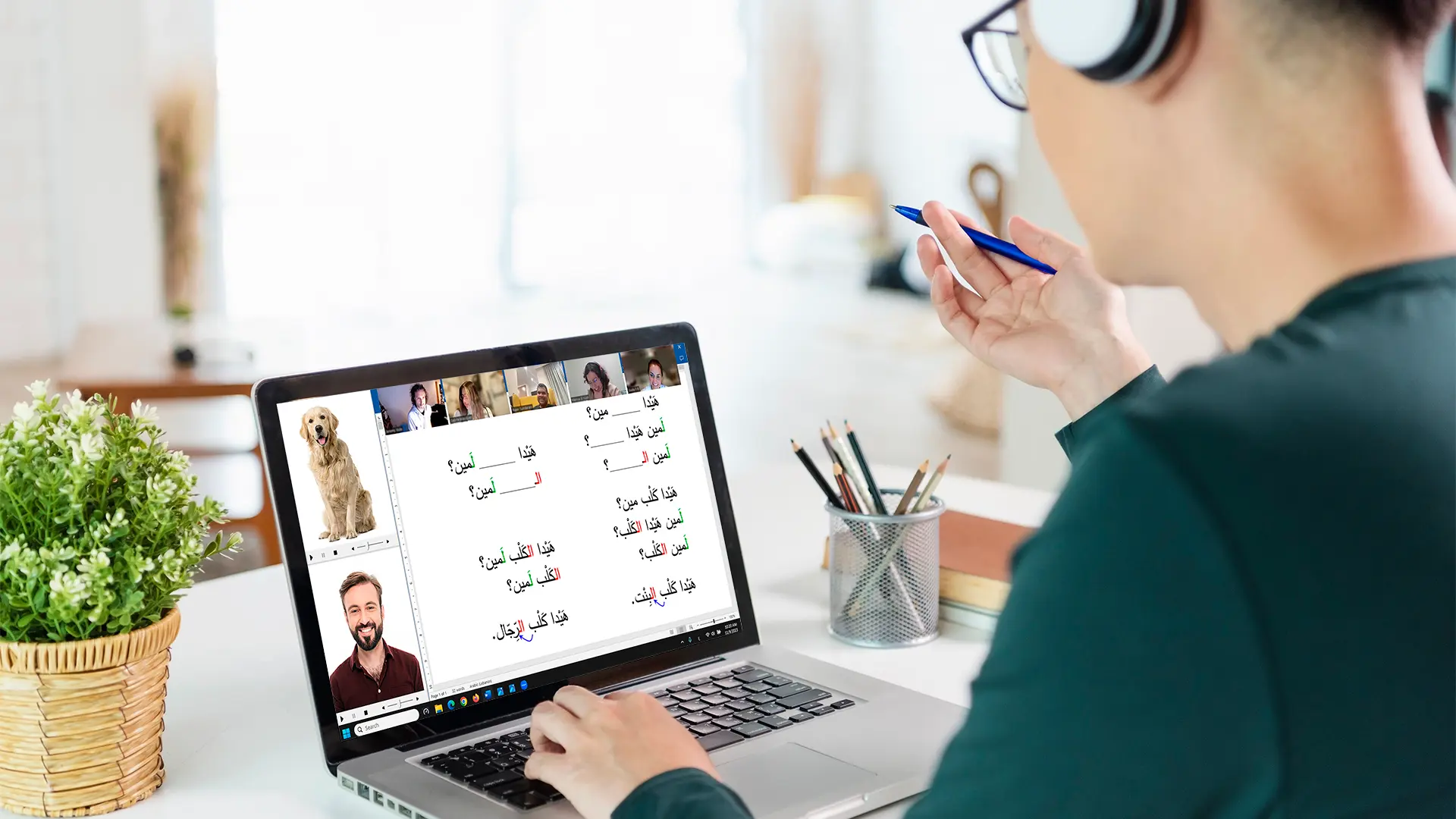
Watch real excerpts from our live sessions at Kalimah Center and see how we bring learning to life. These clips highlight our interactive, student-centered teaching approach across all our courses—designed to keep learners engaged, motivated, and actively involved every step of the way.
Master Arabic with Kalimah Center
Join our expert-led online classes and start your journey toward Arabic fluency today.
Book Your Free TrialArabic in 3 Minutes The 25 Topics That Build Your Foundation
The “Arabic in 3 minutes” lesson series covers 25 topics — each taking 2 to 5 minutes — that together give you a real working vocabulary for daily situations. Work through one topic per day and you cover the full series in under a month.
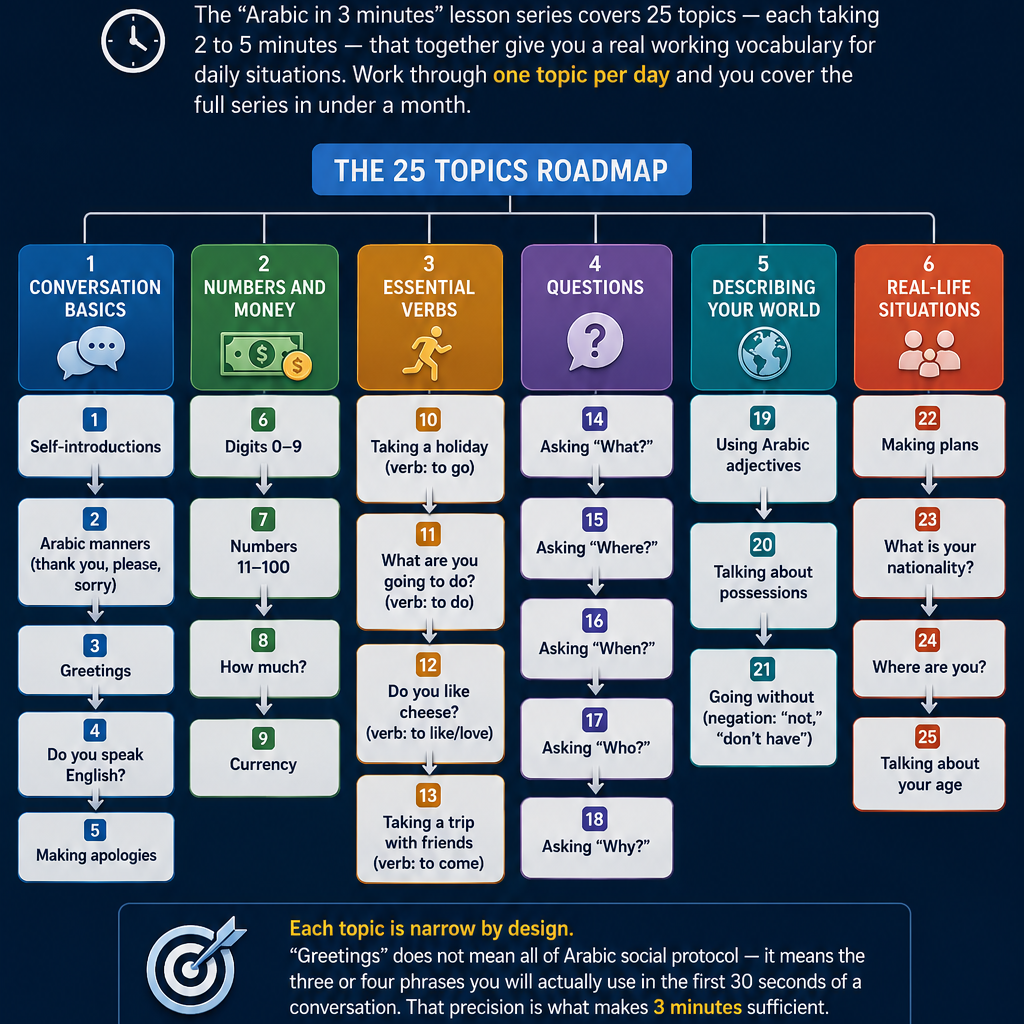
Here is the complete topic map:
- Conversation basics — Self-introductions · Arabic manners (thank you, please, sorry) · Greetings · Do you speak English? · Making apologies.
- Numbers and money — Digits 0–9 · Numbers 11–100 · How much? · Currency.
- Essential verbs — Taking a holiday (verb: to go) · What are you going to do? (verb: to do) · Do you like cheese? (verb: to like/love) · Examples include talking about your favorite things using the verb “to love” or describing a journey with friends by practicing the verb “to come.
- Questions — Asking “What?” · Asking “Where?” · Asking “When?” · Asking “Who?” · Asking “Why?”.
- Describing your world — Using Arabic adjectives · Talking about possessions · Going without (negation: “not,” “don’t have”).
- Real-life situations — Making plans · What is your nationality? · Where are you? · Talking about your age
Each topic is narrow by design. “Greetings” does not mean all of Arabic social protocol — it means the three or four phrases you will actually use in the first 30 seconds of a conversation. That precision is what makes 3 minutes sufficient.
Read also: Learn Arabic in 1 Hour a Day with a Routine That Actually Works
What Should You Learn in the First Week and in What Order?
Most beginners make the mistake of starting with the Arabic alphabet on day one. The alphabet matters, but it takes weeks to master — and spending week one on letters means week one without any usable Arabic.
A more effective sequence for your first week:
- Day 1: Greetings — مرحباً (marhaba), صباح الخير (sabah el kheir), كيف حالك؟ (kifa halak?).
- Day 2: Polite words — شكراً (shukran), من فضلك (min fadlak), عفواً (afwan).
- Day 3: Self-introduction — أنا [your name], أنا من [your country].
- Day 4: Numbers 0–9 — the foundation for prices, time, phone numbers.
- Day 5: Survival phrases — هل تتحدث الإنجليزية؟, كم السعر؟, مع السلامة.
- Day 6: “Do you speak English?” — and how to respond when someone replies to you in Arabic.
- Day 7: Review all six days using the 3-minute routine on one phrase from each.
By the end of week one, you have seven usable mini-conversations. That is more than most learners achieve in a month of inconsistent study.
The Biggest Mistake Learners Make in Short Study Sessions
Short sessions fail when learners try to cover too much. Three minutes with five new phrases is three minutes of confusion. Three minutes with one phrase — listened to, read, spoken, written — is three minutes of learning.
The second most common mistake: studying the same phrase passively instead of testing recall. Reading “شكراً = thank you” five times is passive. Closing your notes and trying to write شكراً from memory is active retrieval. Active retrieval is the mechanism that creates durable memory.
A third mistake specific to Arabic: skipping the audio and only reading transliteration. Transliteration (writing Arabic words in Latin letters) helps in the first week but becomes a crutch that prevents you from reading real Arabic. Use it briefly, then drop it.
Practitioner note: Learners who anchor their 3-minute session to an existing daily habit — morning coffee, commute, before sleep — sustain the habit at far higher rates than those who schedule it as a standalone task. The habit already exists; you are just attaching the new behavior to it.
Inside Kalimah Center: Moments from Our Courses
Get a glimpse into the vibrant learning experience at Kalimah Center. These snapshots capture real moments from our live classes—where students engage deeply, connect with passionate instructors, and grow in a welcoming, supportive environment.
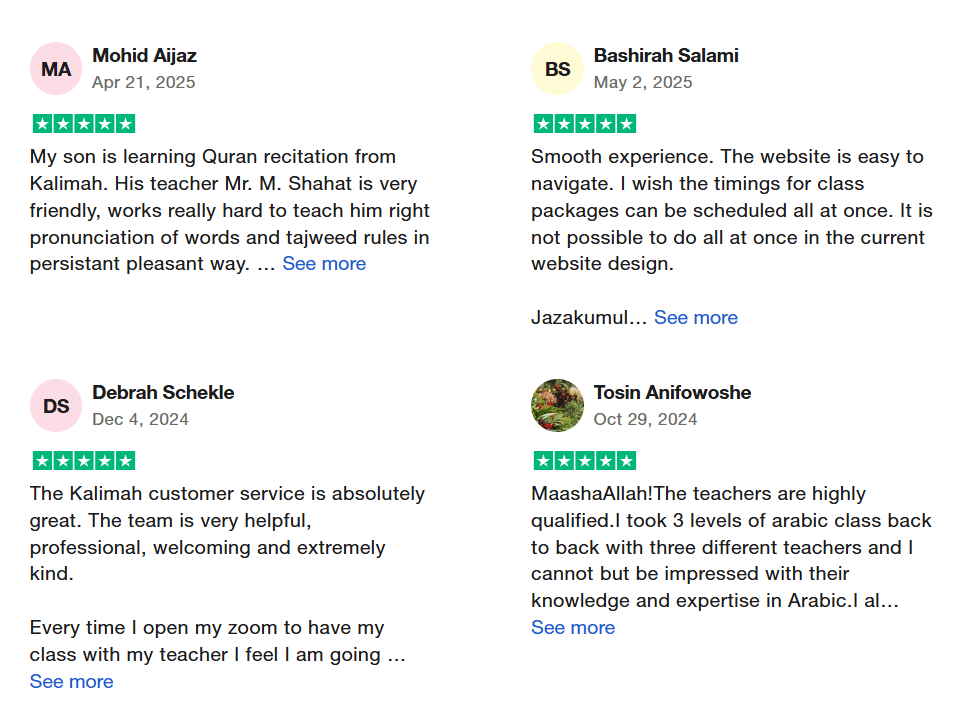
Here Are The Reviews On Our Courses:
Our students frequently commend the excellence of our courses and the commitment shown by our instructors. You can read their complete reviews on Trustpilot.
Read more reviews on Trustpilot
Read also: Learn Arabic in 15 Minutes a Day – The Routine That Actually Works for Busy Beginners
Still Counting Minutes? Let Kalimah Count Them With You.
Three minutes a day is the habit. Kalimah is what happens when that habit meets a real Arabic program.
For many students, practicing Arabic for only a few minutes each day brings steady progress at first. However, a point comes when they need guidance—someone to point out pronunciation mistakes and help them decide when they are ready to take the next step in their learning journey.
Kalimah’s three courses
The Online Arabic Course takes you from your first phrase to confident reading and writing across 16 structured levels — 400+ hours of one-on-one sessions with a specialist, not a generalist.
The Quran with Tajweed Course takes those same 3 daily minutes and connects them to Quranic comprehension across 13 levels, taught by Ijazah-certified instructors.
And the Arabic Course for Kids brings the same structure to younger learners across 24 levels designed specifically for how children actually learn.
Master Arabic with Kalimah Center
Join our expert-led online classes and start your journey toward Arabic fluency today.
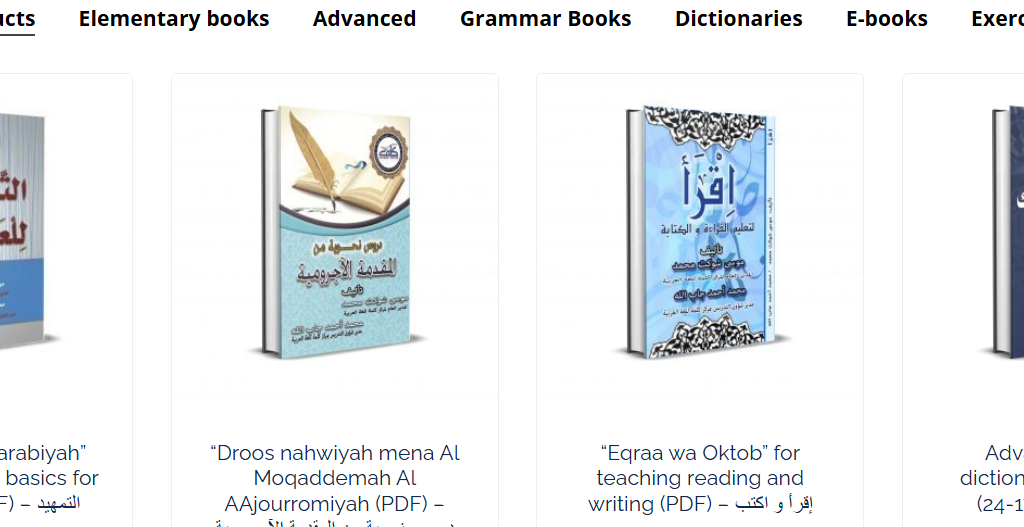
Book Your Free TrialIf You Need…..Have a Look At The Books
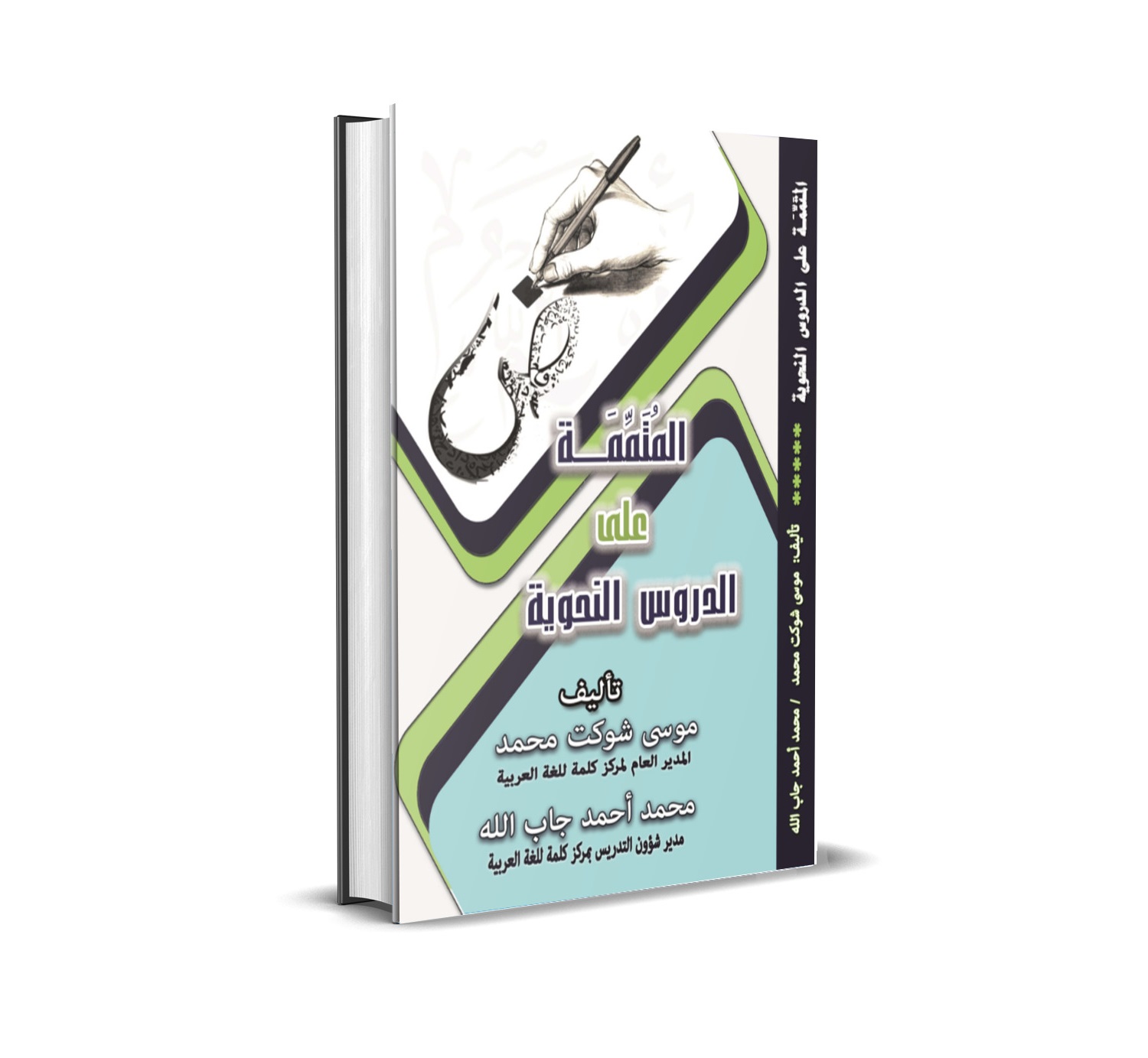
Every course comes with affordable books that make your 3-minute sessions land harder — because what your tutor covers in session, your book reinforces between sessions.
And before you pick a tutor? You read what real students said about them — learners who started with 3 minutes a day, just like you.
Watch a free Kalimah lesson
Then book your free trial
Conclusion
Learning Arabic in 3 minutes a day works — not because 3 minutes is all you need forever, but because 3 consistent minutes beat 3 inconsistent hours.
The routine is simple: 1 minute of listening, 1 minute of reading and repeating, 1 minute of active use. The content is concrete: 25 focused topics covering greetings, numbers, key verbs, and essential questions. The principle is proven: daily spaced repetition moves vocabulary from short-term exposure to long-term recall.
Start with one phrase today. Use the timer. Build the streak. When you are ready to go further, Kalimah Center is there to take you from basics to genuine Arabic fluency.
Frequently Asked Questions
Can you really learn Arabic in 3 minutes a day?
You can build a working vocabulary and daily habit in 3 minutes a day.
Three minutes is not enough to become fluent, but it is enough to learn one phrase per day — which adds up to over 300 phrases per year if you stay consistent.
What should I learn first when studying Arabic?
Start with greetings, polite words (thank you, please, sorry), and numbers 0–9.
These cover the most common real-life situations and give you something usable within the first week.
What is the difference between Quranic Arabic and spoken Arabic?
Quranic Arabic (Classical Arabic) is the language of the Quran and formal religious texts.
Spoken Arabic varies by region — Egyptian, Levantine, Gulf dialects, and others. Modern Standard Arabic (MSA) sits between the two and is used in media and formal writing across all Arabic-speaking countries.
How large should your Arabic vocabulary be before you can hold a simple conversation?
A vocabulary of 300–500 high-frequency words is enough to handle most everyday conversations.
The “learn Arabic in 3 minutes” method, done daily, can get you to that level in approximately 6 to 12 months depending on consistency.
Is Arabic hard to learn for English speakers?
Arabic is considered a Category IV language by the US Foreign Service Institute, meaning it requires more study hours than European languages.
However, Arabic pronunciation follows strict, consistent rules — once you learn them, you pronounce every word correctly. That consistency makes the early stages faster than many learners expect.
Can you begin speaking Arabic without first mastering the Arabic alphabet?
No. You can start speaking Arabic from day one using audio. Learning the alphabet should happen in parallel during your first month, but it should not block you from using real Arabic phrases right away.