You’ve heard Glossika recommended for language learning. Maybe you’ve seen it praised for its audio-heavy approach and spaced repetition.
But the real question Arabic learners keep asking is: is Glossika good for Arabic specifically — or is it just a general tool that happens to include Arabic as one of 60+ languages?
This review answers that question honestly. Glossika does some things genuinely well for Arabic learners.
It also has real limitations that most reviews skip over — especially for learners who want more than just drilling audio sentences. By the end, you’ll know exactly who Glossika is right for, and who would be better served by a dedicated Arabic learning experience.
What You’ll Learn in This Article
- What Glossika actually does and how its Arabic course works
- Where Glossika excels and where it clearly falls short for Arabic
- Who should use it — and who shouldn’t
- How a specialized Arabic academy compares to a general-purpose app
- Direct answers to the most common questions learners have before buying
Glossika is good for Arabic learners who are already at an intermediate level and want to sharpen their listening and speaking fluency — specifically in Modern Standard Arabic (MSA) or Egyptian Arabic.
It is not a complete Arabic learning solution, and it is a poor fit for beginners, for anyone who needs grammar instruction, or for learners targeting dialects beyond MSA and Egyptian.
That distinction matters more with Arabic than with almost any other language, because Arabic is not one language — it is a family of varieties. Glossika’s approach works better for some of those varieties than others.
A. How Glossika Works For Arabic?
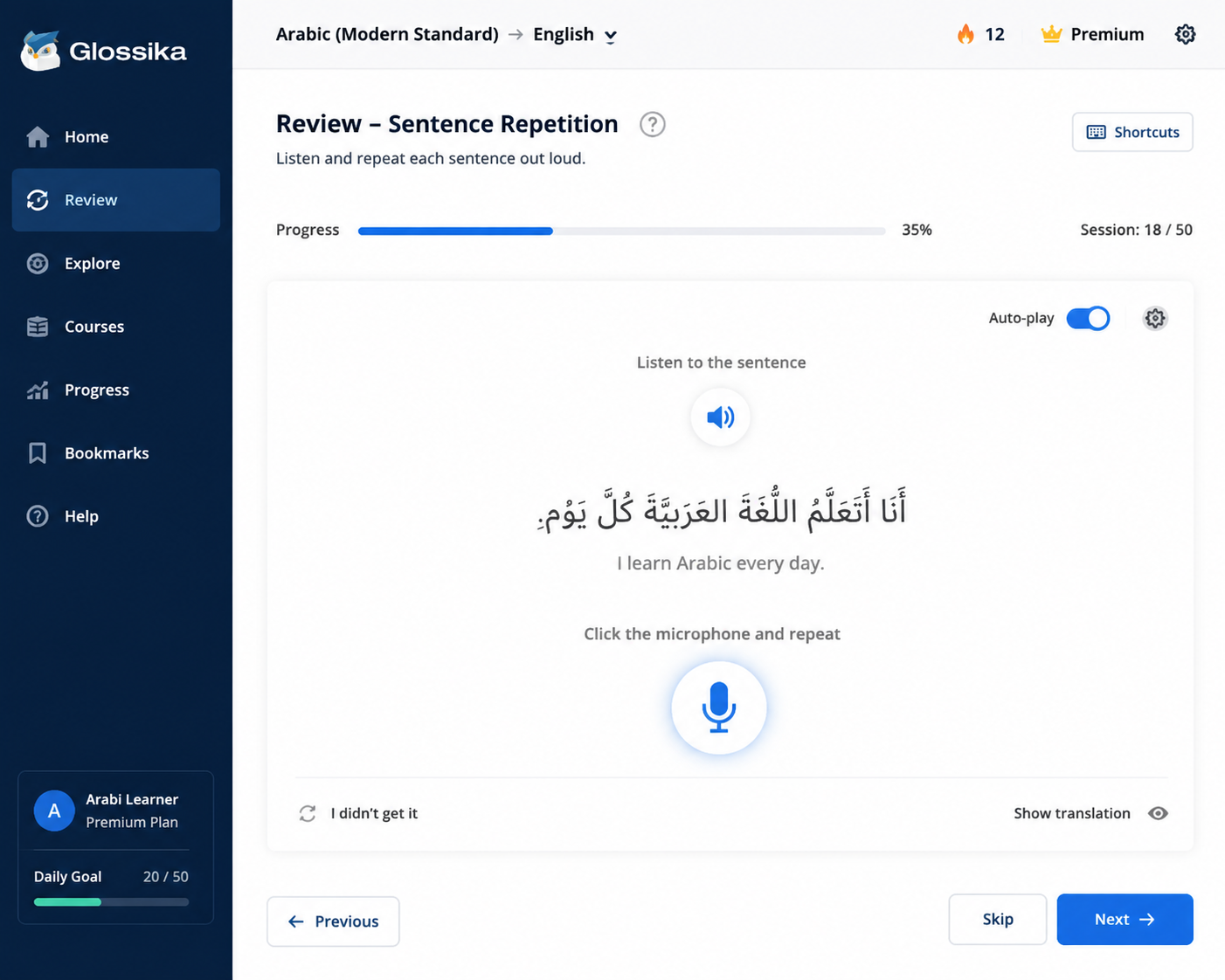
Glossika teaches through full sentences rather than isolated vocabulary or grammar rules. You listen to native speaker recordings, repeat sentences, and the platform’s spaced repetition algorithm resurfaces them until they are retained.
The system assigns new sentence batches — typically five at a time — and tracks your repetitions as a progress metric.
For Arabic specifically, Glossika offers three varieties: Modern Standard Arabic, Egyptian Arabic, and Moroccan Arabic (Darija). This is where one important limitation appears: the Darija course has been criticized by learners for sounding unnaturally formal, because the sentence structures lean on MSA patterns rather than authentic Moroccan speech.
If Darija is your goal, Glossika’s Egyptian Arabic course will likely serve you better, or a native Moroccan tutor will serve you best.
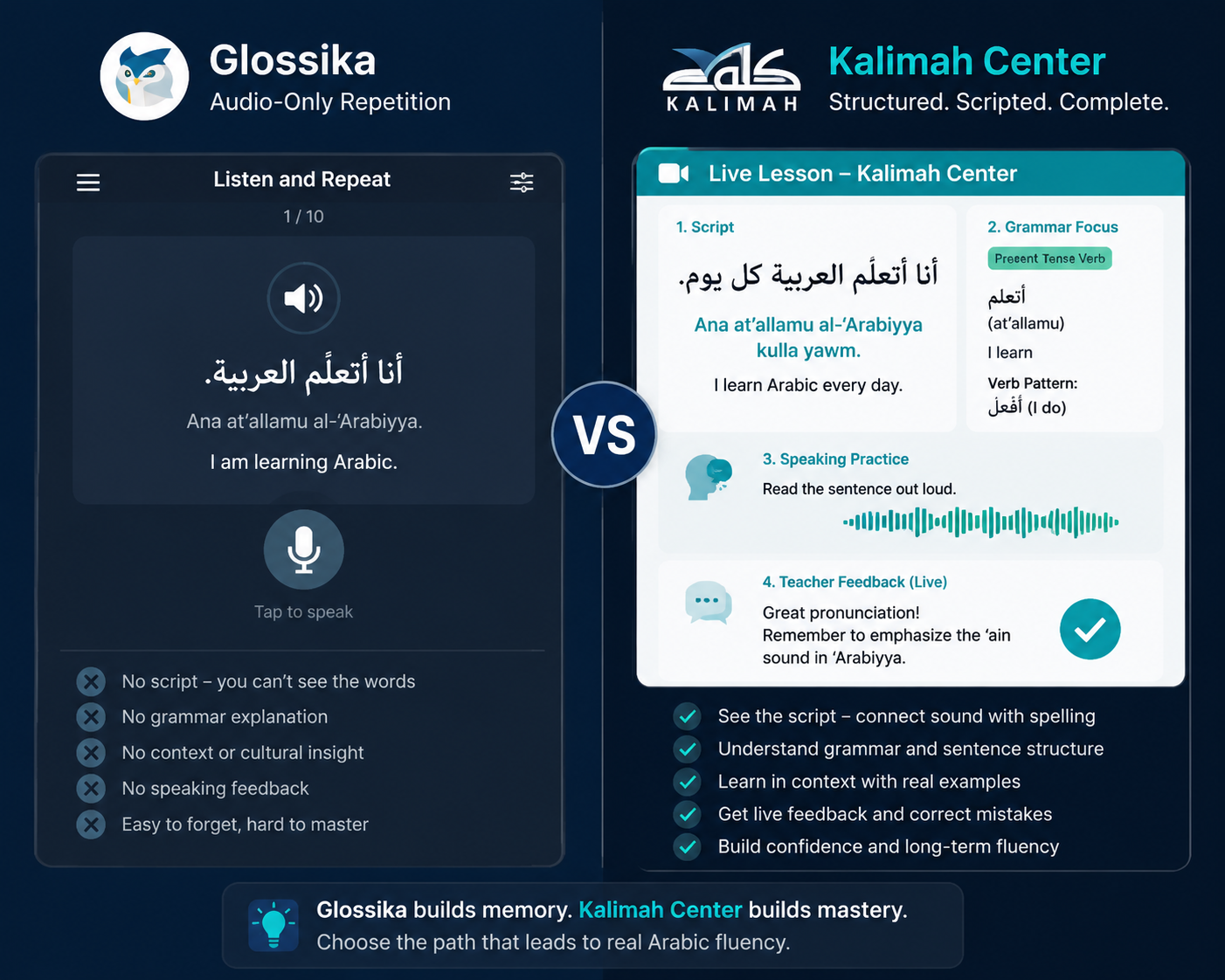
The platform bypasses grammar explanation entirely. You absorb patterns through repetition rather than understanding them analytically.
For some learners this works — for others, particularly those tackling Arabic’s complex verb morphology and case system, the absence of explanation becomes a genuine obstacle.
Read Also: Learn Arabic in 3 Hours
B. What Glossika Does Well for Arabic Learners?
Glossika’s strengths are real — but they are narrow. The platform does three things well: it delivers high-quality audio from native speakers, it spaces repetition intelligently over time, and it gives learners access to more than one Arabic variety under a single subscription.
For the right learner at the right stage, these three advantages combine into a genuinely useful tool.
1. Audio Quality and Pronunciation Training
Glossika uses high-quality native speaker recordings throughout. For pronunciation — one of the hardest aspects of Arabic for English speakers — this repeated exposure to authentic pronunciation is genuinely valuable.
Hearing MSA or Egyptian Arabic spoken naturally, sentence by sentence, trains your ear to recognize rhythm and phoneme patterns faster than flashcard-based vocabulary apps.
This is Glossika’s clearest strength for Arabic: it makes pronunciation input the center of learning, not an afterthought.
2. Spaced Repetition at Scale
The spaced repetition system (SRS) Glossika uses is well-implemented. Sentences you’ve learned come back at calculated intervals before you forget them, which builds long-term retention more efficiently than straight repetition.
For an intermediate learner who already has a grammatical base and wants to internalize large amounts of Arabic phrasing, this is a real advantage.
3. Dialect Access in One Platform
Most Arabic learning apps teach only MSA or one dialect. Glossika offering MSA, Egyptian, and Moroccan Arabic under one subscription is a genuine convenience for learners who want exposure to multiple varieties — even with the caveat about Darija quality noted above.
Kalimah Center learners who have already built a strong Arabic foundation often use supplementary audio tools like this to extend their listening practice.
If you’re already learning Arabic online with a structured curriculum, Glossika-style audio drilling can be a useful addition — not a replacement.
Read Also: Arabic Numbers Grammar
C. Where Glossika Falls Short for Arabic?
Glossika’s weaknesses are not minor inconveniences — for Arabic specifically, they are structural gaps that affect most learners at most stages. Arabic is one of the most grammatically complex languages in the world, and a platform built around audio repetition alone was never designed to carry a learner through that complexity. These are the four areas where Glossika consistently underdelivers.
1. No Grammar Instruction
Arabic grammar is not optional. It has a root-and-pattern morphological system that governs how nearly every word in the language is built, a dual form, broken plurals, gendered nouns, case endings (I’rab), and verb conjugation patterns that differ significantly from European languages.
Apps that skip grammar explanation work reasonably well for languages like Spanish or French, where a native English speaker can intuit many patterns.
Arabic is categorically different. Without understanding why a sentence is structured as it is, most learners plateau quickly — they can recognize phrases they’ve drilled, but cannot produce new ones.
Glossika’s source material itself acknowledges this: “the lack of grammar explanations can be difficult for absolute beginners.” That is an understatement for Arabic specifically.
2. Not Built for Script or Reading
Glossika is an audio platform. Arabic script, reading comprehension, and writing are not part of its offering. For a language where reading the Quran, religious texts, newspapers, or street signs requires script literacy, this is a significant gap.
A learner who completes hundreds of Glossika sessions will still be unable to read Arabic.
3. Beginners Will Struggle
Glossika’s sentence-based method drops learners directly into full sentences without building up from sounds and letters.
For Arabic — where the alphabet itself is unfamiliar to most English speakers — this creates a poor starting experience. The app provides no scaffolding for complete beginners: no alphabet introduction, no basic vocabulary building, no grammar foundation.
A common mistake: learners download Glossika at the start of their Arabic journey, find the interface overwhelming, and conclude that Arabic itself is impossibly hard.
The issue isn’t Arabic — it’s a mismatch between the tool and the learner’s stage. Is Glossika good for Arabic beginners? The evidence says no.
4. Price Relative to What You Get
Glossika costs $16.99 per month for one language or $299.88 per year. For a tool that covers only listening and speaking, and that works well only for intermediate learners, this is a steep price.
Comparable or superior outcomes in pronunciation and listening can be achieved through one-on-one lessons with a qualified Arabic teacher at Kalimah Center for a similar or lower investment with the added benefit of grammar, reading, writing, and personalized feedback all included.
Read Also: Is the Drops App Good for Learning Arabic?
Inside Kalimah Center: Moments from Our Courses
Get a glimpse into the vibrant learning experience at Kalimah Center. These snapshots capture real moments from our live classes—where students engage deeply, connect with passionate instructors, and grow in a welcoming, supportive environment.
Master Arabic with Kalimah Center
Join our expert-led online classes and start your journey toward Arabic fluency today.
Book Your Free TrialD. Glossika Vs. A Specialized Arabic Academy
This is the comparison most reviews skip. Glossika, Rosetta Stone, Mondly, and similar platforms are general-purpose language tools — they cover dozens or hundreds of languages and topics, and Arabic is just one item in their catalogue.
Kalimah Center is different in kind, not just in degree. It is a specialized Arabic learning institution — not an app, not a content library, but a structured educational environment with curriculum, qualified teachers, and a measurable learning path.
| Feature | Glossika | Kalimah Center |
| Arabic grammar instruction | None | Full curriculum |
| Arabic script and reading | Not covered | Core skill taught |
| Live teacher interaction | No | Yes — qualified instructors |
| Dialect options | MSA, Egyptian, Moroccan | MSA, dialects, Quranic Arabic |
| Suitable for beginners | No | Yes — from alphabet level |
| Pronunciation training | Strong | Teacher-corrected |
| Personalized feedback | No | Every session |
| Price transparency | $16.99/month | Available on request |
The practical decision rule: if you want to drill listening and speaking as a suppleimage: screenshot of Glossika’s Arabic learning interface showing sentence repetition mod ment to existing Arabic knowledge, Glossika is worth trying for the seven-day free trial.
If you want to actually learn Arabic — from zero or from an intermediate level — a structured program at Kalimah Center is the more efficient and complete investment.
Read Also: Numbers in Egyptian Arabic
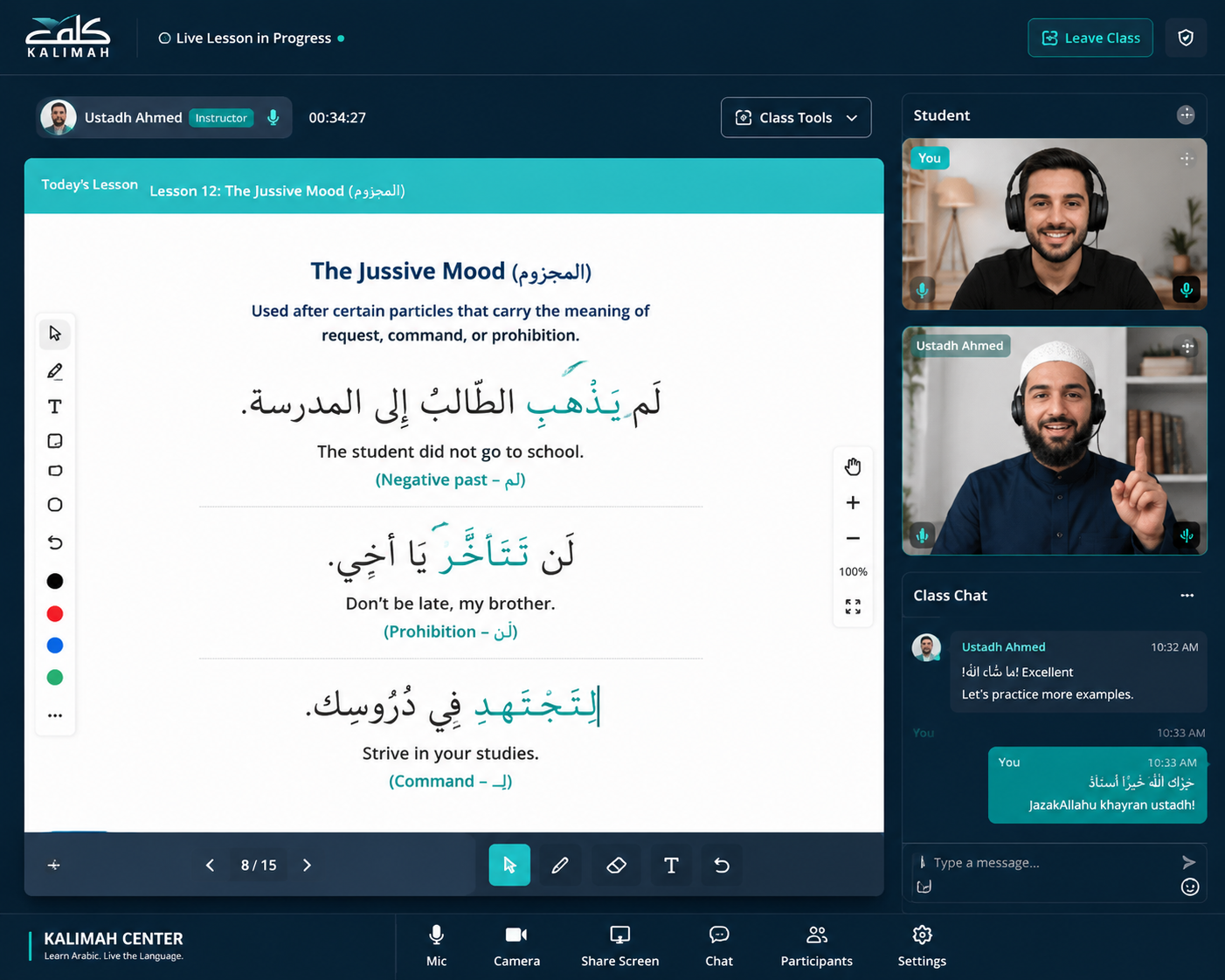
Start Learning Arabic The Right Way With Kalimah Center
Glossika can sharpen your ear. But it cannot teach you to read Arabic, explain why a sentence works, correct your pronunciation in real time, or take you from zero to confident communication.
Kalimah Center offers structured, teacher-led Arabic courses online designed for real fluency — not audio drilling. Whether you’re an adult starting from scratch, a heritage speaker filling in gaps, or a parent looking for Arabic classes for kids, Kalimah Center has a curriculum built for your goal.
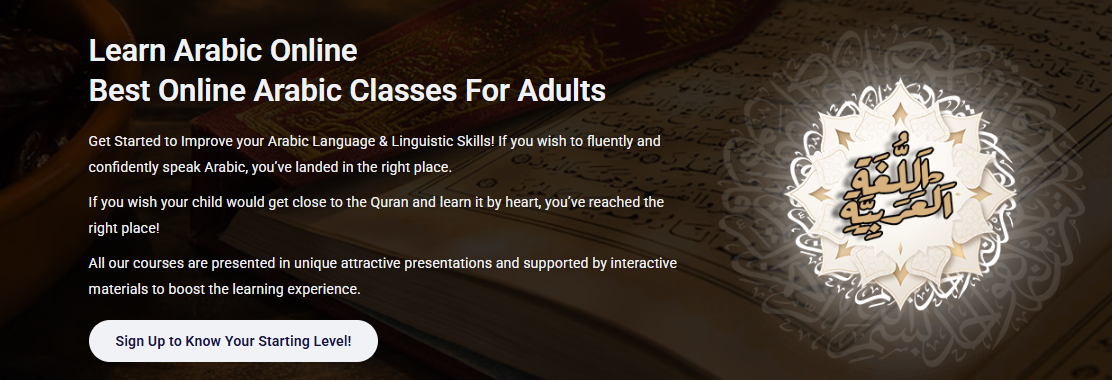
For learners who want an immersive, social experience, intensive Arabic group classes offer structured learning alongside peers at a price point that competes directly with app subscriptions.
Explore Our Courses:
- Best Online Arabic Classes for Adults: for adults who want intensive, structured progress.
- Intensive Arabic Group Classes: for learners who want affordable group learning.
- Learn Arabic Online for Kids: for children beginning their Arabic journey.
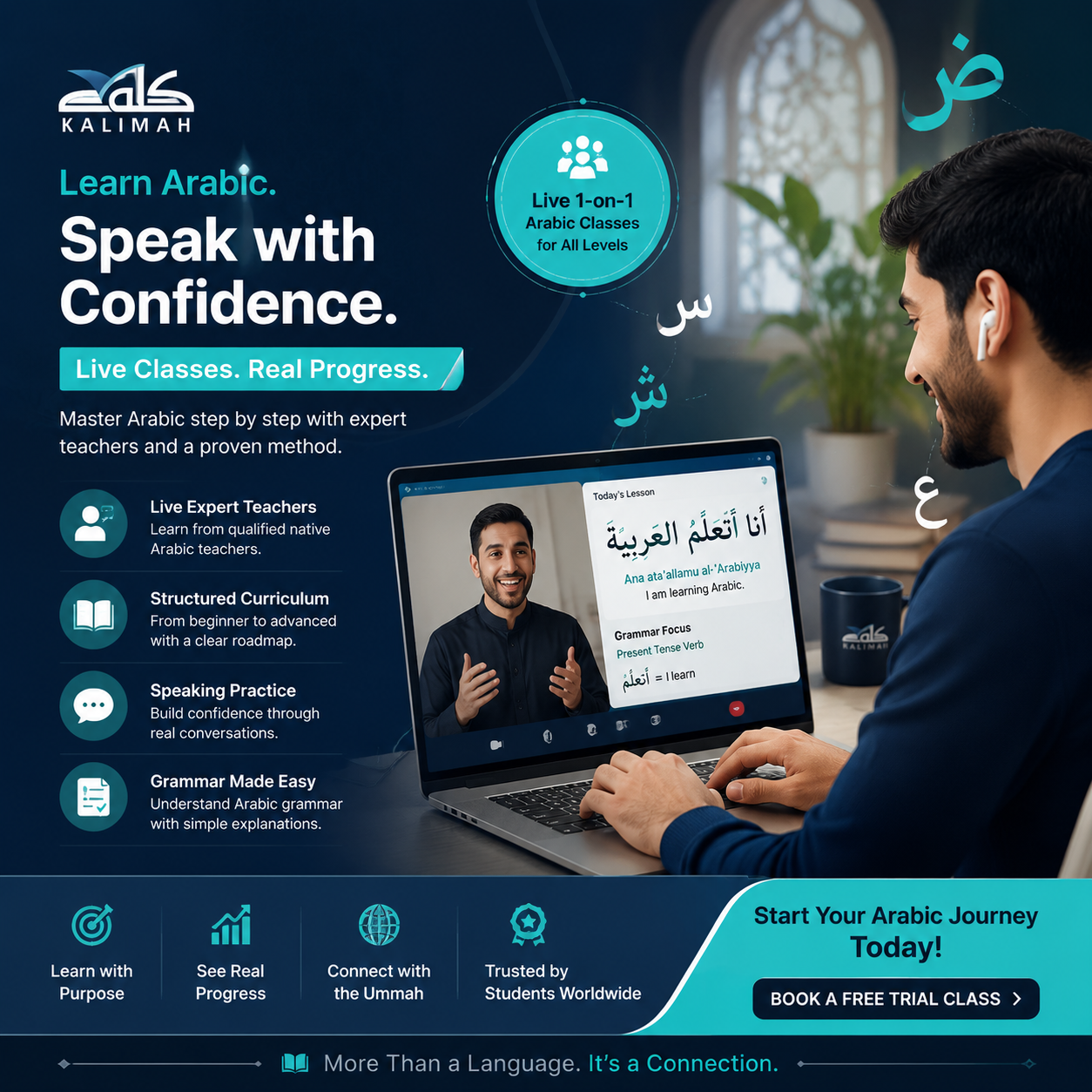
Experience Kalimah Center Classes
Watch real excerpts from our live sessions at Kalimah Center and see how we bring learning to life. These clips highlight our interactive, student-centered teaching approach across all our courses—designed to keep learners engaged, motivated, and actively involved every step of the way.
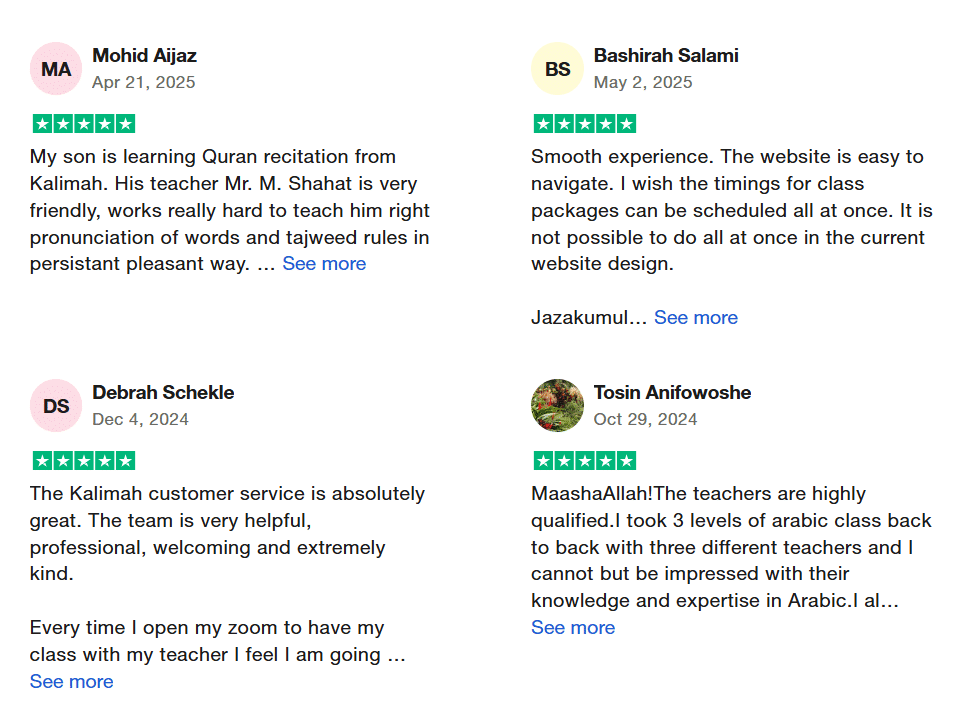
Here Are The Reviews On Our Courses:
Our students frequently commend the excellence of our courses and the commitment shown by our instructors. You can read their complete reviews on Trustpilot.
Read more reviews on Trustpilot
🚀 Start Your Free Trial Today! 🚀
Don’t miss out on this life-changing opportunity to deepen your faith and knowledge. Sign up now for your free trial and take the first step towards becoming a better practicing Muslim with Kalimah Center!
Master Arabic with Kalimah Center
Join our expert-led online classes and start your journey toward Arabic fluency today.
Book Your Free TrialConclusion
Is Glossika good for Arabic? Yes — with precise conditions. It is a strong audio drilling tool for intermediate learners who already have a grammatical foundation in MSA or Egyptian Arabic and want to build listening fluency and pronunciation through spaced repetition. For that specific use case, it does what it promises.
It is not a complete Arabic learning solution. It has no grammar instruction, no script teaching, no live feedback, and no beginner support — all of which are non-negotiable for most Arabic learners. The dialect quality is also uneven, with Moroccan Arabic notably weaker than its MSA and Egyptian offerings.
The more important question is not whether Glossika is good for Arabic in isolation — it is whether Glossika is good for your Arabic goal. For most learners, the answer points toward a structured program rather than an audio app. Kalimah Center exists precisely because Arabic deserves more than a general-purpose tool.
Frequently Asked Questions
Here are the most common questions learners ask before deciding whether Glossika is right for their Arabic journey.
1. Is Glossika good for Arabic beginners?
Glossika is not recommended for absolute beginners in Arabic. The platform skips alphabet instruction, grammar explanation, and script reading entirely — all of which Arabic beginners need before sentence drilling makes sense. Beginners should start with a structured program that builds from the Arabic alphabet upward.
2. Which Arabic dialect does Glossika teach?
Glossika offers Modern Standard Arabic, Egyptian Arabic, and Moroccan Arabic (Darija). MSA and Egyptian Arabic are the stronger courses. Darija learners have noted the sentences sound unnaturally formal because they follow MSA structural patterns rather than authentic Moroccan speech.
3. How much does Glossika cost for Arabic?
Glossika’s Arabic course costs $16.99 per month billed monthly, or $299.88 billed annually (approximately $24.99 per month). A seven-day free trial is available. Note that the annual plan charges the full amount upfront.
4. Can Glossika replace a real Arabic teacher?
No. Glossika provides audio exposure and spaced repetition, but it cannot explain grammar, correct pronunciation errors in real time, answer questions, or adapt to your individual weaknesses. A qualified Arabic teacher at an institution like Kalimah Center provides what no app can replicate.
5. Is Glossika worth it for Arabic compared to other apps?
Compared to Duolingo or Mondly, Glossika provides more authentic audio and a more serious method. Compared to Pimsleur, the two are similarly audio-focused but Glossika offers more sentence volume. Compared to a structured course at Kalimah Center, Glossika covers a fraction of what Arabic learners need. Use it as a supplement, not a primary resource.
6. How long does it take to see results with Glossika Arabic?
Most intermediate learners report noticeable improvement in listening comprehension after 4–6 weeks of consistent daily use (roughly 20–30 minutes per day). Results are strongest in pronunciation and sentence recognition. Grammar-dependent skills — speaking spontaneously, reading, writing — do not improve through Glossika alone.