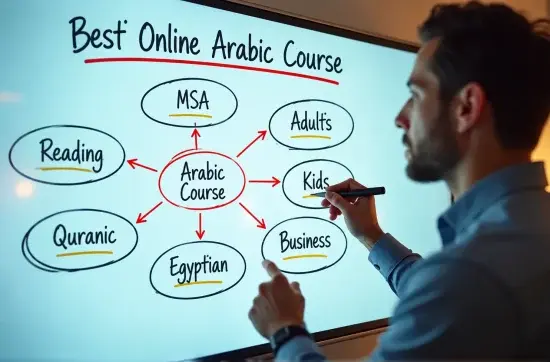
To learn Arabic online, start with the alphabet (2–4 weeks), then build basic vocabulary and grammar through a structured course or textbook. The most effective approach combines three elements: a live online course with a native instructor for structured learning and speaking correction, a vocabulary app (Duolingo, Memrise) for daily practice, and a conversation partner or language exchange for speaking confidence.
Choose Modern Standard Arabic (MSA) first if your goal is reading, Quran, or formal communication — it’s understood everywhere. Choose a dialect (Egyptian, Levantine, or Gulf) if conversational ability is your priority. Most learners reach basic conversational ability in 6–12 months with consistent study of 3–5 hours per week.
Quick Reference Table:
| Goal | Best Starting Approach | Time to Basic Conversation | Recommended Tools |
|---|---|---|---|
| Quran comprehension | MSA + Classical Arabic course | 12–18 months | Kalimah Center, Bayyinah TV, Madinah Arabic (free) |
| Everyday conversation | Dialect course (Egyptian/Levantine) + speaking partners | 6–12 months | Live tutor (iTalki, Kalimah), HelloTalk |
| Reading newspapers/literature | MSA course + grammar focus | 12–24 months | Structured course + Al Jazeera Learning Arabic |
| Business Arabic (Gulf) | MSA foundation + Gulf dialect | 12–18 months | TÖMER, Berlitz online, iTalki Gulf tutors |
| Academic/formal Arabic | Full MSA program | 18–30 months | Qasid Online, university programs |
What Makes Arabic Hard to Learn Online (And How to Overcome Each Challenge)
Below we will review the most important aspects that you have should understand and focus on it to learn the Arabic language, which you must take into account when you start studying and learning.
| Challenge | Why It’s Difficult Online | How to Overcome It |
|---|---|---|
| Arabic script (right-to-left, cursive) | No in-person handwriting correction; apps often skip letter forms | Use a structured alphabet course (Noorani Qaida or Iqraa) with a live instructor for pronunciation feedback. Practice writing by hand daily — not just typing. |
| Diglossia (MSA vs. dialects) | Online learners often jump between resources teaching different varieties | Choose MSA or one dialect before enrolling in anything. Commit to that choice for 6–12 months before adding a second variety. |
| Pronunciation (ع, ح, خ, غ, ق) | Apps cannot see your mouth or throat; no real-time correction | Live video sessions with a native instructor who can observe and correct your articulation in real time. Record yourself and compare to native speaker audio weekly. |
| Vocabulary scale | Arabic’s root system means you need to learn roots, not just words | Learn the 3-letter root system early (see Step 2). Every root you learn unlocks 5–10+ related words. Spaced repetition apps (Anki, Memrise) for daily vocabulary. |
| Grammar complexity (I’rab, case endings) | Grammar explanations online vary dramatically in quality; bad sources create bad habits | Use one trusted grammar source (Madinah Arabic Books or a structured course like Kalimah Center) and stick with it for at least 6 months before mixing resources. |
MSA vs. Arabic Dialect: Which Should You Learn First?
This is the first decision every Arabic learner must make — and getting it right saves months of wasted effort.
| # | Modern Standard Arabic (MSA) | Arabic Dialect |
|---|---|---|
| What it is | Standardized formal Arabic used in education, media, government, and writing across all 22 Arab countries | Spoken everyday varieties that differ by country/region (Egyptian, Levantine, Gulf, Moroccan) |
| Is it spoken? | Not in daily conversation — used in news broadcasts and formal speeches | Yes — what Arabs actually speak at home, in shops, and with friends |
| Is it written? | Yes — all books, newspapers, the Quran, academic texts | Rarely — mostly informal digital communication |
| Mutual intelligibility | Understood by educated speakers of all Arab countries | Varies: Egyptian understood everywhere; Moroccan Darija understood only in Maghreb |
| Grammar complexity | Full grammar system including case endings (I’rab) | Simplified grammar, fewer case endings |
| Vocabulary | Classical and modern formal vocabulary | Everyday vocabulary + regional slang and loanwords |
Decision guide:
| Your Goal | Choose |
|---|---|
| Understand the Quran | ✅ MSA / Classical Arabic |
| Read Arabic books, newspapers, or academic texts | ✅ MSA |
| Formal communication across Arab countries | ✅ MSA |
| Talk casually with Egyptian friends | ✅ Egyptian dialect |
| Watch Syrian TV series (Bab Al-Hara, etc.) | ✅ Levantine dialect |
| Work in Dubai, Riyadh, or Kuwait | ✅ MSA foundation + Gulf dialect exposure |
| Travel anywhere in the Arab world and be understood | ✅ MSA or Egyptian dialect |
| Unsure / General purpose | ✅ MSA first — then add dialect |
The expert recommendation: Start with MSA. Once you understand the grammatical system (6–12 months), picking up a dialect is relatively fast because the underlying structure is the same. Starting with dialect and then trying to learn MSA is harder — like learning slang before learning formal grammar.
read more about how to learn Arabic numbers
Your 12-Month Arabic Learning Roadmap (Step by Step)
This is the structured path most successfully online Arabic learners follow. Adjust timelines based on your study hours per week (this plan assumes 5 hours/week).
Months 1–2: Foundation
| Week | Focus | Resources | Goal |
|---|---|---|---|
| 1–2 | Arabic alphabet + letter forms | Noorani Qaida, Iqraa Book, live instructor session | Read all 28 letters in isolation |
| 3–4 | Letter connections + vowels (harakat) | Iqraa Book 1–2, writing practice | Read connected Arabic words with vowel marks |
| 5–6 | Basic vocabulary (50–100 words) | Anki flashcards, Duolingo, Memrise | Know greetings, numbers, common nouns |
| 7–8 | First grammar concepts (noun/verb/particle) | Madinah Arabic Book 1 or Al-Tamheedi, live instructor | Understand basic Arabic sentence structure |
Month 2 milestone: Read a simple Arabic sentence aloud and understand its basic meaning.
Months 3–5: Building
| Focus | Resources | Goal |
|---|---|---|
| Grammar (nominal sentences, verbal sentences, I’rab introduction) | Structured online course (Kalimah, Madinah Arabic), weekly instructor sessions | Parse simple Quranic/text sentences grammatically |
| Vocabulary (200–400 words) | Anki spaced repetition (30 min/day) | Recognize common words in reading |
| Listening (passive) | Arabic children’s shows, slow Arabic podcasts, Quran recitation | Train ear to Arabic sounds |
| Speaking (weekly sessions) | Live instructor + language exchange partner | Basic introduction, simple questions in Arabic |
Month 5 milestone: Introduce yourself in Arabic, ask basic questions, read simple texts.
Months 6–9: Intermediate
| Focus | Resources | Goal |
|---|---|---|
| Advanced grammar (verb conjugations, case endings, verb patterns) | Madinah Arabic Book 2, instructor sessions 3x/week | Apply grammar rules to real sentences |
| Vocabulary (500–800 words) | Root-based vocabulary building, Quran vocabulary | Read news headlines, follow simple conversations |
| Active listening | Al Jazeera in simple Arabic, Arabic TV series | Understand 30–50% of native speech |
| Speaking (2x/week) | Live instructor + HelloTalk/Tandem conversation partners | Hold 5–10 minute conversations in Arabic |
Month 9 milestone: Hold a basic conversation, read a short Arabic news article, understand simple Quran verses.
Months 10–12: Consolidation
| Focus | Resources | Goal |
|---|---|---|
| Grammar mastery + self-correction | Review + advanced exercises, instructor feedback | Catch your own grammar errors in speech and writing |
| Vocabulary (1,000+ words) | Thematic vocabulary lists, graded readers | Handle diverse topic conversations |
| Reading practice | Arabic books, news sites, Quran with tafsir | Read for pleasure and comprehension |
| Conversation confidence | Weekly structured conversation sessions | 15–30 minute conversations on familiar topics |
Month 12 milestone: A2–B1 level — basic to functional conversational ability. Can read simple Arabic texts independently. Understands core Quranic vocabulary and sentence structure.
→ Continue to B2 (advanced) with the same approach for another 12–18 months of consistent study.
Read also: Learn Arabic in Malaysia: Universities, Costs & Full Guide
Best Online Arabic Learning Tools Compared
| Tool | Type | Cost | Skill Focus | Best For | Rating |
|---|---|---|---|---|---|
| Kalimah Center | Live 1-on-1 course | $42–$170/mo | All 4 skills | Structured learning with native instructor | ★★★★★ |
| Bayyinah TV | Self-paced video | $11–$22/mo | Grammar + Quranic Arabic | Self-motivated Quran learners | ★★★★☆ |
| Madinah Arabic | Free textbook course | Free | Grammar, reading, vocabulary | Budget learners, self-directed study | ★★★★☆ |
| Duolingo | App (gamified) | Free / $7/mo | Vocabulary, basic grammar | Daily habit builder, absolute beginners | ★★★☆☆ |
| Memrise | App (spaced repetition) | Free / $9/mo | Vocabulary retention | Long-term word memorization | ★★★★☆ |
| Pimsleur | App (audio) | $14.95/mo | Pronunciation, speaking | Audio-preferred learners, commuters | ★★★★☆ |
| HelloTalk | Language exchange app | Free / $7/mo | Speaking, writing | Free native speaker conversation practice | ★★★★☆ |
| iTalki / Preply | Tutor marketplace | $5–$50/hr | All skills (tutor-dependent) | Flexible 1-on-1 sessions | ★★★★☆ |
| Quranic Arabic Corpus | Website (free) | Free | Quranic vocabulary + grammar | Quran verse reference and analysis | ★★★★☆ |
| Anki | Flashcard app (spaced repetition) | Free | Vocabulary | Systematic long-term vocabulary building | ★★★★★ |
Recommended combinations:
| Budget | Combination | Monthly Cost |
|---|---|---|
| Free only | Madinah Arabic + Duolingo + HelloTalk + Anki | $0 |
| Minimal paid | Kalimah Center Light plan + Anki + HelloTalk | $42/month |
| Most effective | Kalimah Center Standard + Memrise + Pimsleur + HelloTalk | ~$135/month |
| Intensive | Kalimah Center Optimal + Anki + Pimsleur + iTalki (extra speaking) | ~$165/month |
Master Arabic with Kalimah Center
Join our expert-led online classes and start your journey toward Arabic fluency today.
Book Your Free TrialRead also: Arabic courses in Newcastle
How to Learn Arabic Online?
Mastering Arabic online requires a structured approach that balances foundational literacy with active communication and grammatical precision. This guide outlines a step-by-step roadmap to help you navigate the language from basic script to confident expression.
Step 1: Learn the Arabic Alphabet (Week 1–4)
The first thing you need to learn to master the Arabic language is its alphabet. This step is looked upon as a crucial step that you, unfortunately, cannot skip. But you can add a little fun to it to make it simpler.
Which may seem complicated at first, but you’ll get used to it very fast. Also, if you’re left-handed, you will enjoy it.
- Know that the Arabic alphabet consists of twenty-nine letters, which are all consonants except for one. This means that the Arabic language is a vowel-free writing system known as an abjad.
- Keep in mind that Arabic is written and read from right to left. To get started, practice using an alphabet chart.
- This makes the Arabic language a vowel-free writing system which is referred to as an abjad. Arabic is written and read from right to left, try to practice using any alphabet chart.
- Enroll in the “Learn The Arabic Alphabet Online with Illustrations” course to start practicing the easiest and most attractive way to gain an understanding of the alphabet.
- Through this course, you will be able to become proficient in both pronouncing and writing the alphabet.
How To Learn Arabic Listening And Speaking Skills?
Listening and speaking are critical skills for mastering any language. By immersing yourself in Arabic through listening and speaking, you’ll develop a more natural accent and improve your overall communication skills.
Active listening helps you understand native speakers and pick up on nuances in pronunciation, while speaking practice builds your confidence and fluency.
- Listening Exercises: Listen to Arabic podcasts and videos to get accustomed to different accents and dialects.
- Speaking Practice: Engage in regular conversations with native speakers or join language exchange programs.
- Interactive Sessions: Participate in online courses that emphasize oral communication, such as those offered by Kalimah Center. Join our online group classes to learn from Kalimah most experienced teachers with our latest books, alongside a friendly group of learners.
Studies have shown that students who study in groups tend to perform better academically. Engaging in group discussions, peer feedback, and interactive activities can enhance your ability to speak confidently.
Step 2: Arabic Grammar Foundations (What to Learn First)
The Arabic language, just like any other language, has its own grammar. And grammar is where your next step lies into. You have to smoothly assimilate it in order to grasp the Arabic language meanings.
- You can start delving into Arabic language grammar through our Learn Arabic Online (Nahu) or by purchasing ‘Al-Arabiyya Bayna Yadayka’ book online which will provide you with all the fundamental syntax tools you need.
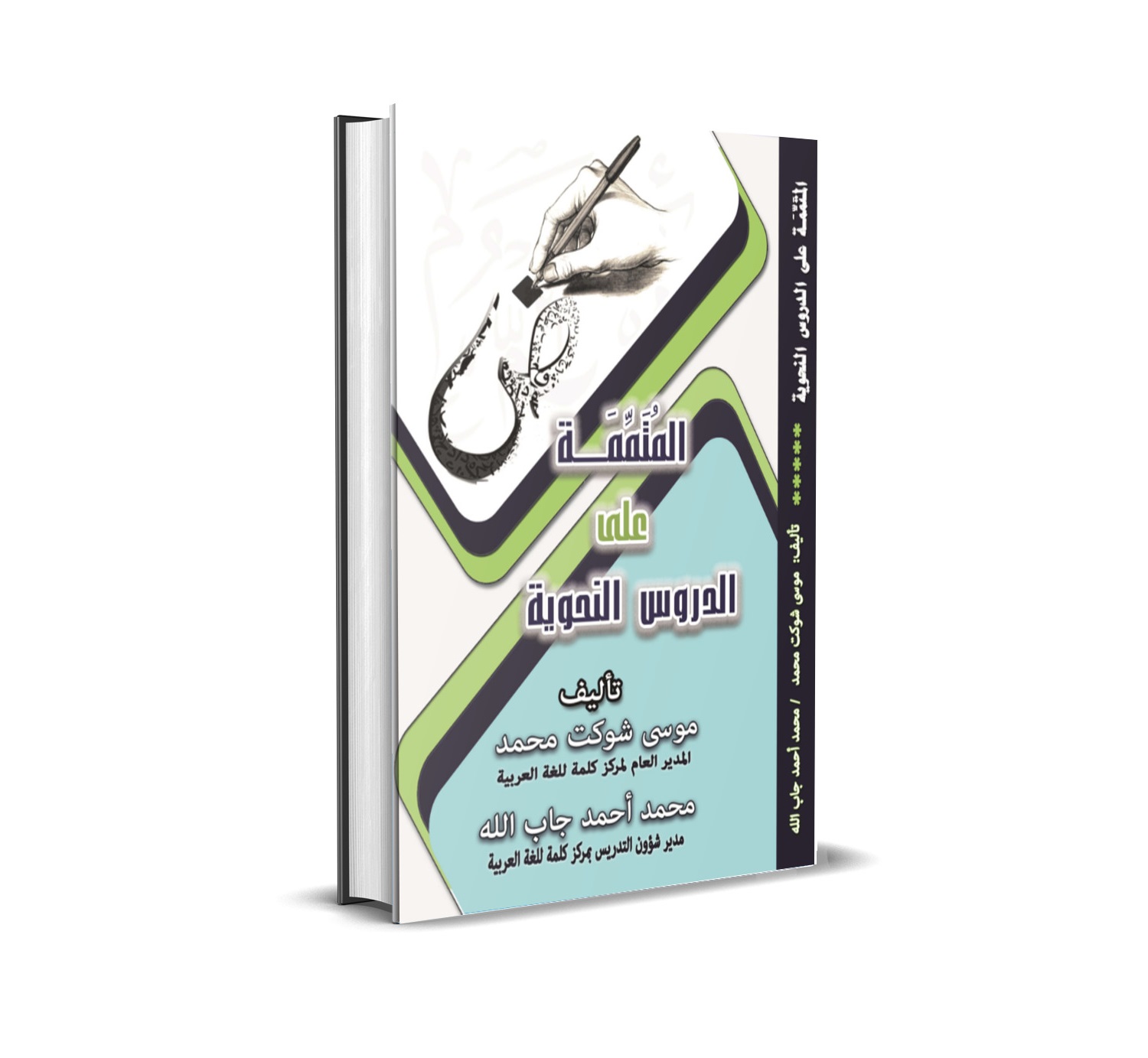
- By digging into the basics of Arabic which contains Arabic words, Arabic sentences, and Arabic phrases, you can also simplify your learning Arabic language grammar process (Al Mutammimah Grammar) book. Learn The Basics of Arabic will help you through your journey as it provides the fundamental linguistic tools for any Arabic learner.
Arabic Grammar For Beginners online
Once you have a good grasp of the alphabet, the next step is to dive into the basics of Arabic linguistics and grammar. This includes understanding essential grammatical elements such as nouns, verbs, and sentence structure.
Think of Arabic words like puzzle pieces. There are different shapes (nouns, verbs, adjectives), and they fit together in certain ways. Our friend “Al-Tamheedi“ – a great book from the Kalimah Center – will be our guide. It teaches us how to connect these pieces to say things like:
- “أنا أحب القهوة” (Ana uhib al-qahwa) – “I love coffee.”
- “هل ذهبت إلى السوق؟” (Hal dhahabta ila al-souq?) – “Did you go to the market?”
Learning the grammar is like learning the rules of a game. At first, you might need to think carefully about each move, but soon it becomes second nature. You’ll start to understand why we say things a certain way, and how little changes in word order can completely change the meaning.
Don’t worry if it seems a little complicated at first. We’ll take it slow, learning the basics and practicing them until they feel comfortable. Like building a house, we’ll start with a strong foundation and gradually add more layers.
Here are some things to keep in mind. With an image excerpted from “Al-Tamheedi” Book to provide a clear example to support our points about Arabic grammar:
Word Order
Arabic is a bit different from English. Usually, we put the verb first, then the person doing the action.
Let’s look at a simple sentence:
“يقرأ أحمد الكتاب” (yaqra Ahmed al-kitaab) – “Ahmed reads the book.”
- “يقرأ” (yaqra) is the verb – “reads.”
- “أحمد” (Ahmed) is our subject – “Ahmed.”
- “الكتاب” (al-kitaab) is the object – “the book.”
Notice how the verb comes before the subject. It’s a small difference, but it’s part of what makes Arabic unique!
Gender
Even objects have gender in Arabic! It’s like every word has a hidden personality.
The table in the following image shows how the verb “يشرب” changes to “تشرب” when the subject is female (“هي” for “she” or “أنتِ” for “you” feminine). This highlights how even verbs must agree with the gender of the subject in Arabic.
Verb Forms
Arabic verbs change depending on who is doing the action and when it happened.
The following image illustrates how the verb “يشرب” takes different forms depending on the subject: “أشرب” (I drink), “تشرب” (you drink – masculine), “تشربين” (you drink – feminine), etc. This showcases the rich conjugation system of Arabic verbs.
Read more about Learn Arabic Online Through Skype With A Free Trial
Step 3: Reading and Writing Arabic for Beginners
Reading and writing are essential for reinforcing your language skills. Start with simple texts and gradually move to more complex materials as your proficiency improves.
Reading enhances your comprehension and exposes you to different writing styles, while writing helps you internalize grammatical structures and vocabulary.
- Reading Materials: Begin with children’s books or short stories and progress to newspapers and novels.
- Writing Exercises: Keep a journal in Arabic, write essays, or compose emails to practice writing.
- Feedback: Have your writing reviewed by a teacher or language partner to get constructive feedback.
Example:
Start with simple sentences:
- اليوم ذهبت إلى المدرسة (Today, I went to school). Progress to more detailed paragraphs as you gain confidence.

How to Learn Arabic Faster: 5 Evidence-Based Strategies
Accelerate your linguistic progress by implementing proven cognitive techniques and consistent habit-building frameworks designed for maximum retention. These five strategic approaches optimize your study time, transforming Arabic from a complex challenge into a manageable and rewarding skill.
1. Learn the root system before memorizing individual words
Arabic is built on 3-letter roots. Learning the root ك-ت-ب (k-t-b = writing) unlocks كتاب (book), كاتب (writer), مكتبة (library), مكتوب (written), كتابة (writing) simultaneously. Invest 2 weeks learning the most common 50 roots and you’ll recognize 300+ words. This is 5–10x more efficient than memorizing words randomly.
2. Use spaced repetition for vocabulary (not random review)
Apps like Anki use algorithms to show you each word just before you’re about to forget it — the most efficient memory window. This doubles retention compared to reviewing words at fixed intervals. Use pre-made Arabic Anki decks (search “Madinah Arabic Anki” or “Quran vocabulary Anki”) rather than building your own from scratch.
3. Speak from session one — even poorly
Research consistently shows that speaking anxiety is the biggest barrier to fluency for online Arabic learners. Students who speak (even badly) from lesson one progress 40% faster than those who wait until they feel “ready.” Your instructor expects mistakes — that’s what they’re there for.
4. Consume Arabic media daily (even passively)
15–30 minutes of Arabic audio while cooking, commuting, or exercising rewires your brain to hear Arabic as language rather than noise. Start with slow, clear sources: Quran recitation, Arabic children’s shows, or slow Arabic podcasts. Progress to Al Jazeera news (clear MSA) and then to dialect-specific TV shows.
5. Schedule immovable practice sessions (not “when I have time”)
The #1 predictor of Arabic learning success is consistency, not intensity. 30 minutes daily beats 3 hours on Sunday. Block specific times in your calendar — treat them as appointments you cannot cancel. Most successful online Arabic learners study at the same time every day, creating a habit loop that removes willpower from the equation.
Note: You can Learn Arabic Online for kids with Egyptian Qualified Teachers.
Arabic Books For Beginners
Choosing the right Arabic books for beginners is crucial for effective learning. Look for books that offer clear explanations, practical exercises, and engaging content. Some recommended titles include:
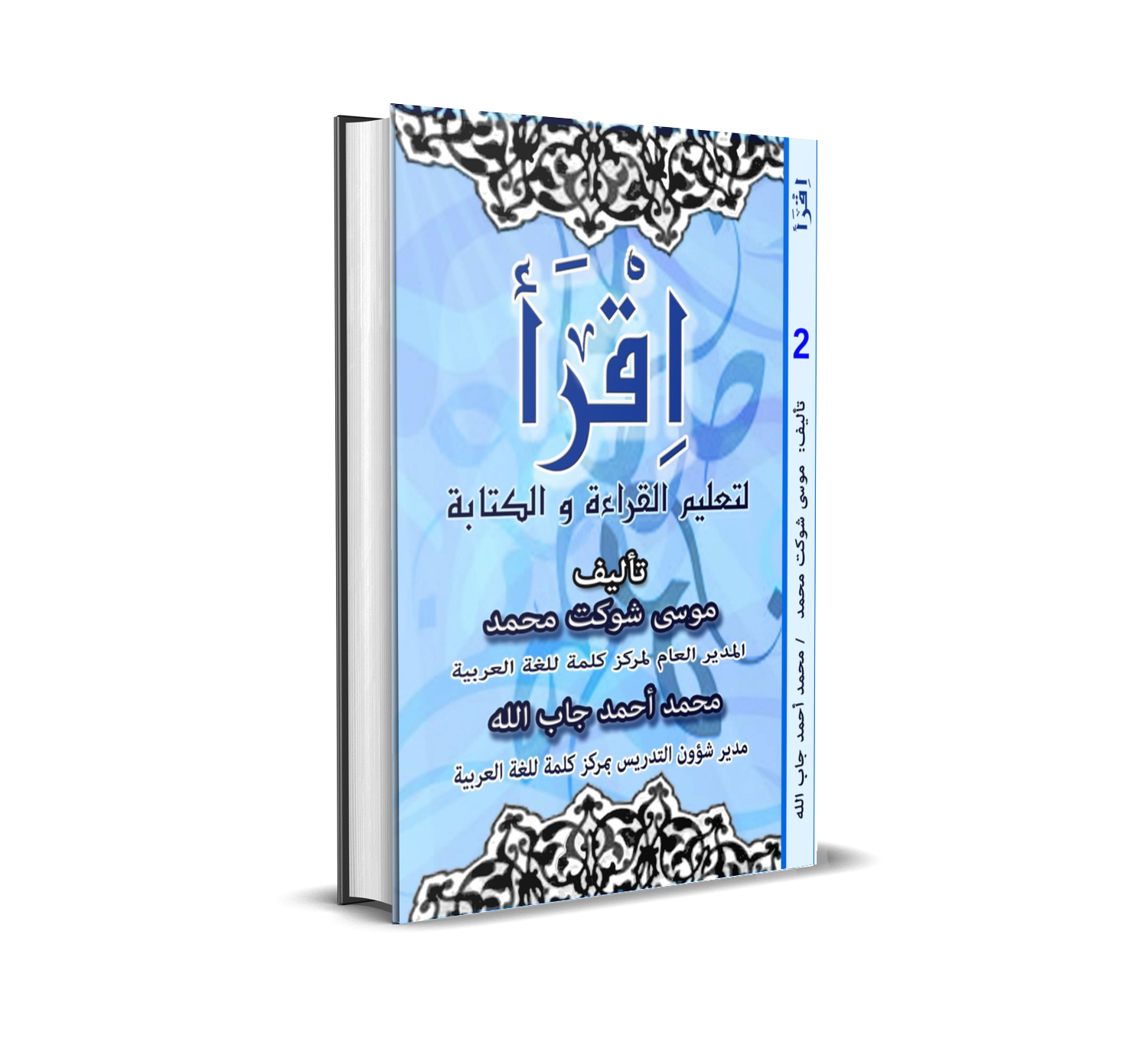
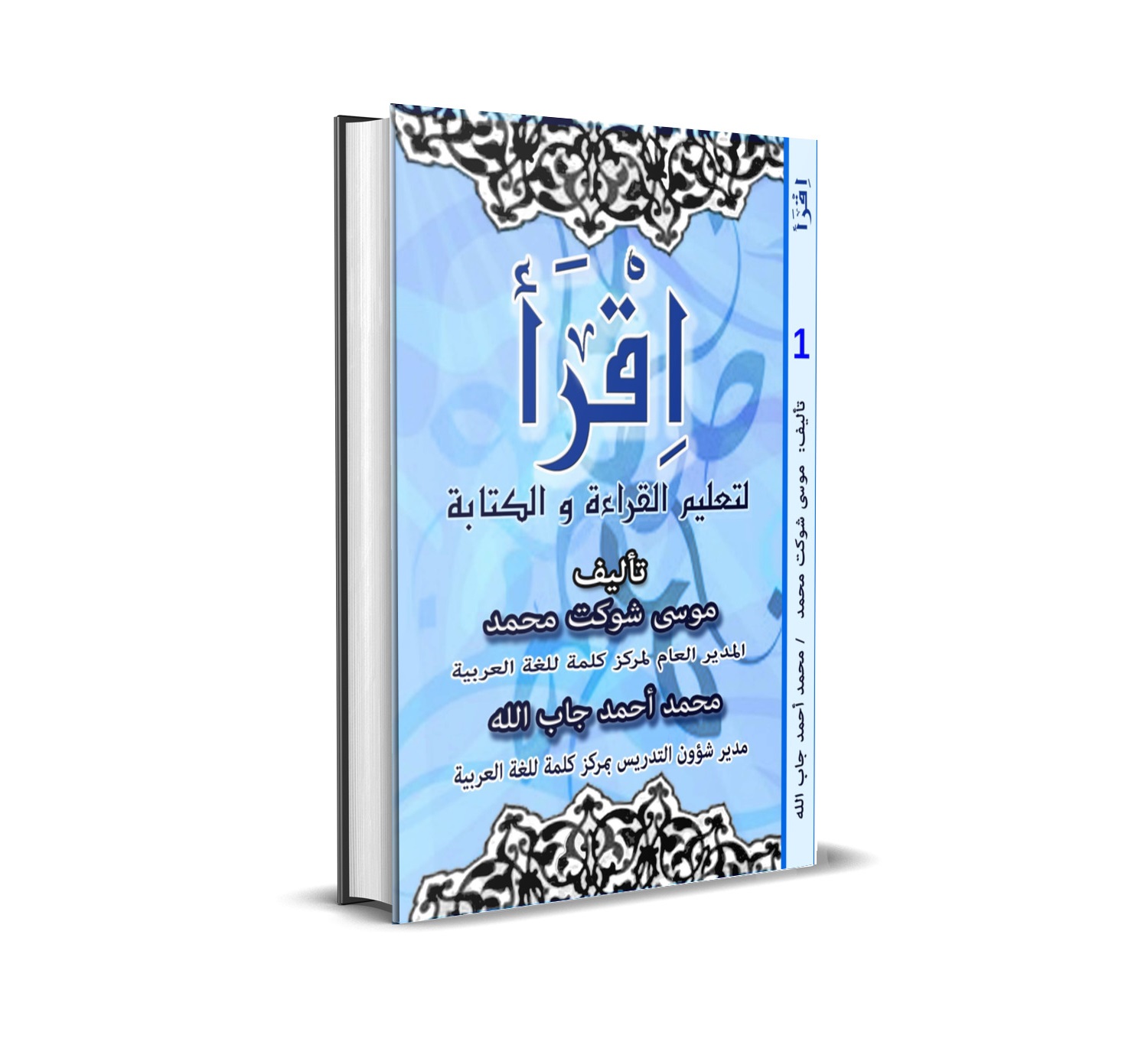
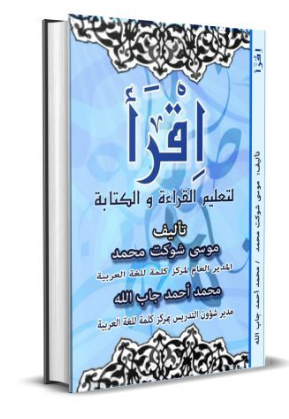
- Iqra: is specifically designed to teach reading and writing to non-Arabs, including children and those who are illiterate. It uses a unique permutation method to help students learn letters and sounds effectively.
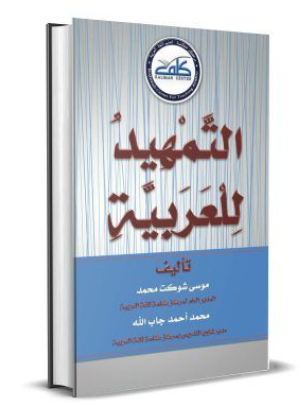
- Altamheed: is an excellent choice for beginners who have already mastered the alphabet and are ready to dive into vocabulary and simple grammar structures. It takes a communicative approach, helping learners build practical language skills.
- Alif Baa: A classic textbook often used in formal Arabic classes.
- Arabic for Dummies: A user-friendly guide covering the basics of the language.
- Complete Arabic: A comprehensive textbook suitable for self study.
Where Can I Learn Arabic?
You can learn Arabic through various platforms, including language schools, online courses, and language exchange programs. Institutions like Kalimah Center offer comprehensive courses tailored to different proficiency levels. Online resources, such as Duolingo, Memrise, and YouTube channels, provide flexible learning options. Additionally, community centers and cultural organizations often offer Arabic classes.
Can I Learn Arabic By Myself? (Honest Assessment)
It is possible to learn Arabic by yourself. I remember one of my students, Sarah, who was passionate about Arabic culture and Islamic studies. Living in a small town with limited access to Arabic classes, Sarah decided to take the plunge and learn Arabic on her own. She started with online resources, books, and mobile apps, dedicating a few hours each day to her studies.
Sarah had a strong will, and she really did learn a lot on her own, MashaAllah! But Arabic has some tricky parts, like how we pronounce things and little grammar rules. She found it difficult to understand these things without a teacher. This is where someone like me comes in – a native Arabic speaker who can help explain those tricky parts.
Sarah still did a great job by herself, and you can too! Even before finding her way to my classroom, she could already greet you with a warm “مرحبا” (pronounced “mar-ha-ban”), meaning “Hello.” Just imagine what you could achieve!
So, if you want to learn Arabic on your own, you absolutely can! It takes patience and effort, but you will be so proud of yourself when you can say “hello” and much more. Remember, We at Kalimah Center are always here to help you with those tricky parts and make learning Arabic fun and easy for you.
How Long Does It Take to Learn Arabic Online?
Timelines depend on three variables: how many hours per week you study, whether you have live instruction or self-study only, and whether you’re learning MSA or a dialect.
| Hours per Week | Method | Basic Conversation (A2) | Intermediate (B1) | Advanced (B2) |
|---|---|---|---|---|
| 3–5 hrs | Live course (2 sessions/week) + daily app | 8–12 months | 18–24 months | 36–48 months |
| 5–7 hrs | Live course (3 sessions/week) + daily practice | 6–9 months | 12–18 months | 24–36 months |
| 10+ hrs | Intensive online program (daily sessions + immersion) | 3–6 months | 8–12 months | 18–24 months |
| 1–2 hrs | Self-study only (apps + books) | 18–30 months | 3–5 years | 7+ years |
The live instruction multiplier: Learners with regular live instruction progress 2–3x faster than self-study learners at the same total hours. The difference: a native instructor catches errors before they become habits, provides immediate speaking practice, and adjusts explanations to your specific confusion points.
For context: The U.S. Foreign Service Institute (FSI) estimates 2,200 classroom hours for English speakers to reach professional Arabic proficiency. At 5 hours/week of structured study, that’s approximately 8–9 years. At 20 hours/week (intensive), approximately 2 years. Most learners don’t need professional proficiency — A2 (basic conversation) or B1 (functional intermediate) is sufficient for most personal and religious goals.
How to Learn Quranic Arabic Online: A Dedicated Path
Quranic Arabic is a form of Classical Arabic — the language in which the Quran was revealed. Learning it requires more than just Arabic reading ability; it requires Classical grammar (Nahw), Quranic vocabulary, and understanding of I’rab (case endings that affect meaning interpretation).
The Quranic Arabic learning path:
| Stage | What You Learn | Duration | Best Resources |
|---|---|---|---|
| 1. Arabic Alphabet + Tajweed | All 28 letters, short vowels (harakat), basic Tajweed rules for correct Quranic recitation | 1–3 months | Noorani Qaida, Iqraa, Kalimah Center |
| 2. Basic Quranic Vocabulary | The 500 most frequent Quranic words (covering ~80% of Quranic text) | 2–4 months | 80% Quran Words app, Quranic Arabic Corpus, Understand Quran Academy |
| 3. Quranic Grammar (Nahw) | Nominal sentences, verbal sentences, I’rab (case endings), basic verb conjugations | 4–8 months | Madinah Arabic Books 1–3, Al-Ajurrumiyyah, Kalimah Center Nahw course |
| 4. Reading the Quran with understanding | Apply grammar to actual Quranic verses; understand meaning without translation | Ongoing | Tafsir reading, Quran Companion app, live instructor sessions |
How Quranic Arabic differs from conversational Arabic:
- You need zero ability to speak or converse in Arabic to understand the Quran — Quranic Arabic is a reading and comprehension goal
- Classical grammar (particularly I’rab / case endings) is more important than in modern conversational Arabic
- Quranic vocabulary overlaps partially with MSA but includes many unique words and root usages
- The verb-first (VSO) sentence structure is more prevalent in Quran than in modern Arabic
Recommended online programs for Quranic Arabic:
| Program | Format | Cost | Best For |
|---|---|---|---|
| Kalimah Center | Live 1-on-1 with native instructor | $42–$170/month | Structured Quranic Arabic with personalized pace |
| Bayyinah TV (Dream Program) | Self-paced video | $11–$22/month | Engaging grammar explanations (Nouman Ali Khan) |
| Understand Quran Academy | Self-paced + optional live | $10–$15/month | Short daily lessons, busy schedules |
| Madinah Arabic | Self-paced textbook | Free | Budget learners, self-directed study |
| Quranic Arabic Corpus | Website (free) | Free | Reference tool for specific verse analysis |
Inside Kalimah Center: Moments from Our Courses
Get a glimpse into the vibrant learning experience at Kalimah Center. These snapshots capture real moments from our live classes—where students engage deeply, connect with passionate instructors, and grow in a welcoming, supportive environment.
Here Are The Reviews On Our Courses:
Our students frequently commend the excellence of our courses and the commitment shown by our instructors. You can read their complete reviews on Trustpilot.
Read more reviews on Trustpilot

🌟 Unlock Your Potential in Arabic and Quran with Kalimah Center! 🌟
Ready to deepen your connection with the Quran and enhance your understanding of Arabic? Join Kalimah Center today and embark on a transformative journey of learning and growth! Our professional, handpicked Online Arabic and Quran Tutors are dedicated to helping you master these essential skills with ease and expertise.
📚 Explore Our Courses:
Online Arabic Course: Tailored to your level, our comprehensive Arabic program includes 16 teaching levels and 400+ hours of personalized sessions.
Online Quran With Tajweed Course: Perfect for non-Arabic speakers, our course spans 13 levels and equips you with Tajweed mastery from beginner to advanced.
Online Arabic Course For Kids: Nurture your child’s love for Arabic with our engaging and structured program, available in 24 levels for primary, intermediate, and secondary stages.
💡 Why Choose Kalimah?
Expert Tutors: Learn from native Arabic speakers and Ijazah-certified teachers who prioritize your progress.
Flexible Learning: Enjoy one-on-one classes, 24/7 access to materials, and interactive exercises for a dynamic learning experience.
Comfortable Environment: Benefit from a supportive and encouraging atmosphere, where mistakes are seen as opportunities for growth.
Proven Success: With over 8,000 students worldwide and glowing testimonials, Kalimah Center is your trusted partner in Arabic and Quran education.
🚀 Start Your Free Trial Today! 🚀
Don’t miss out on this life-changing opportunity to deepen your faith and knowledge. Sign up now for your free trial and take the first step towards becoming a better practicing Muslim with Kalimah Center!
Master Arabic with Kalimah Center
Join our expert-led online classes and start your journey toward Arabic fluency today.
Book Your Free TrialSummary
The Arabic language is crucial due to its role in Islamic tradition and its complex structure, including its script, diglossia, pronunciation, vocabulary, and grammar. Learning Arabic online involves mastering the Arabic script, understanding regional dialects, and overcoming challenges in pronunciation and grammar. Effective online learning requires a structured approach, utilizing resources such as interactive courses, textbooks, and practice with native speakers.
To learn Arabic online successfully, one should start with mastering the alphabet and then focus on speaking, listening, reading, and writing skills. Engaging with interactive courses, practicing regularly, and using varied resources like language exchange programs and online tutors can significantly enhance the learning experience. Setting clear goals, maintaining a consistent schedule, and choosing suitable learning tools are key to making steady progress in Arabic proficiency.
FAQs about How to Learn Arabic Online?
Q1: Can I really learn Arabic online without going to an Arab country?
Yes — and for many learners, online is actually more effective than traveling unprepared. Online 1-on-1 courses give you 100% personalized instruction, flexible scheduling, and access to the best teachers regardless of geography. The main thing you miss is passive immersion (hearing Arabic everywhere). You can partially compensate for this by consuming Arabic media daily — Al Jazeera, Arabic YouTube, podcasts, and TV shows — while taking structured online classes. For most working adults, consistent online study with a native instructor produces better results than an unprepared immersion trip.
Q2: Should I learn MSA or a dialect first?
MSA first, in most cases. Here’s why: MSA is the written foundation of all Arabic — if you read the Quran, news, books, or formal texts, that’s MSA. Every Arabic dialect is a spoken adaptation of MSA’s underlying structure, so MSA knowledge makes dialects easier to learn afterward. The exception: if your only goal is casual conversation with people from one specific country (Egyptian, Levantine, Gulf), you can start with that dialect. But MSA skills transfer to all dialects; dialect skills transfer only to that dialect’s region.
Q3: How many hours per week do I need to learn Arabic online?
3–5 hours per week is the minimum for measurable progress. This breaks down as: 1–2 live instructor sessions per week (60–90 minutes each) + 15–30 minutes daily of app-based vocabulary practice + 15–30 minutes daily of Arabic media consumption. Students studying 7–10 hours per week progress roughly twice as fast. Below 3 hours per week, progress is extremely slow and many learners quit due to lack of visible improvement.
Q4: What is the hardest part of learning Arabic online?
Pronunciation is the hardest part to learn online — specifically the sounds that don’t exist in English: ع (Ayn), ح (Ha), خ (Kha), غ (Ghayn), ق (Qaf), and the emphatic consonants (ص, ض, ط, ظ). Without in-person feedback, errors become habits. This is why live sessions with a native instructor who can see your face and correct your mouth position in real time are essential — not optional. No app can correct Arabic pronunciation effectively.
Q5: What’s the difference between learning Arabic online with a tutor vs. using an app?
Apps (Duolingo, Memrise, Pimsleur) build vocabulary and expose you to written/audio Arabic. They’re excellent daily supplements — convenient, gamified, and free/cheap. But they cannot correct your pronunciation, adjust to your specific errors, explain confusing grammar rules interactively, or engage you in real conversation. A live tutor with a native instructor does all of these things. The optimal approach: apps for 15–30 minutes daily (vocabulary) + live instructor 2–3 times per week (grammar, speaking, correction). Apps alone will plateau you at A1–A2 level.