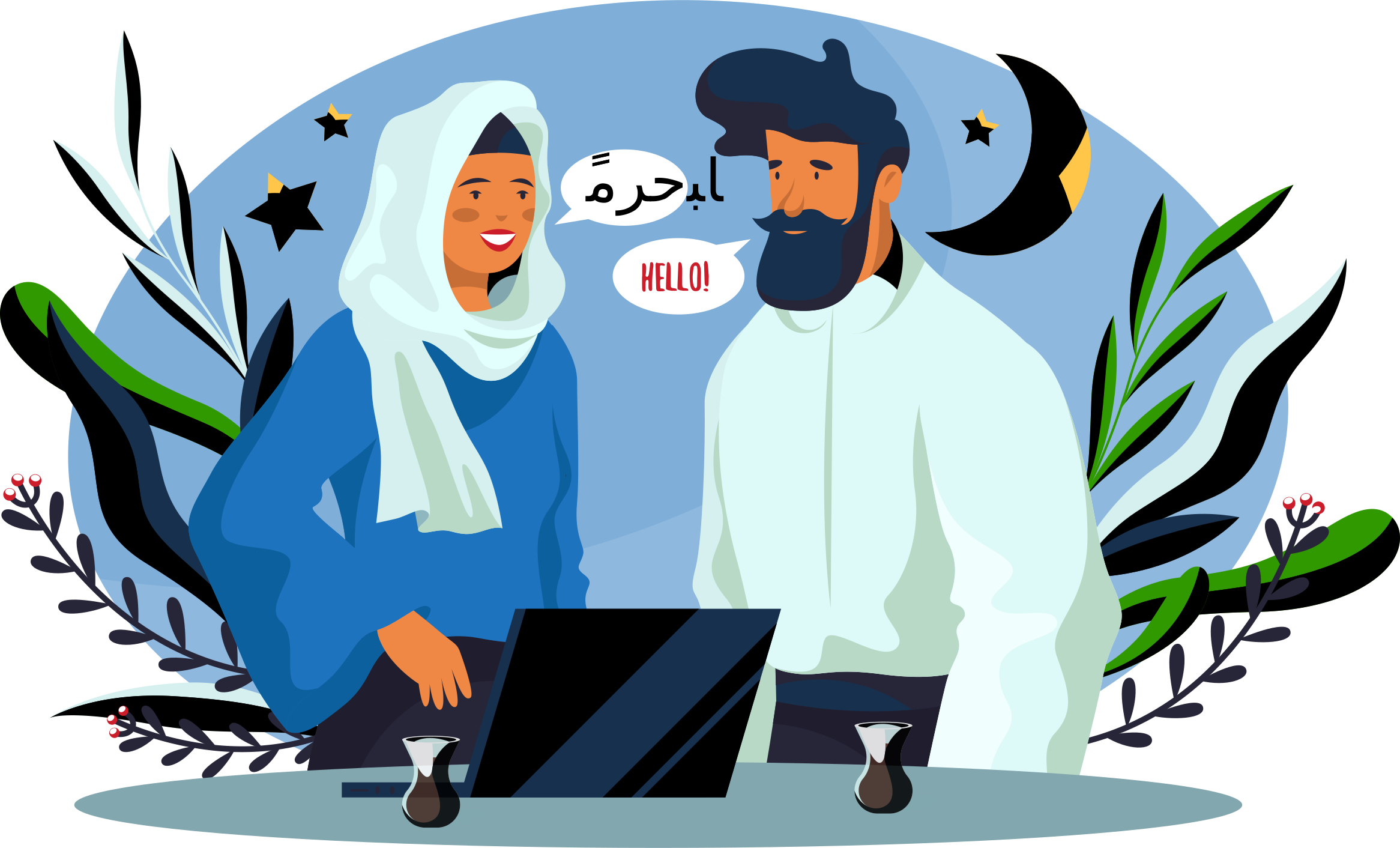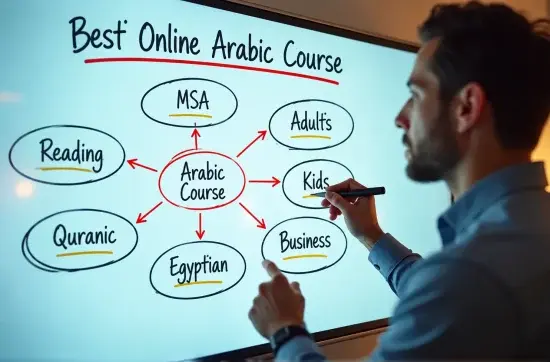
Learning practical Arabic phrases and sentences is one of the most effective ways for beginners to build real-world communicative competence. By mastering common greetings, polite expressions, and conversational sentences in Modern Standard Arabic (MSA), learners gain immediate confidence for travel, business, or social interactions with native speakers.
Understanding phonetics (Makharij) alongside vocabulary helps avoid common pronunciation errors and accelerates language acquisition through contextual repetition and spaced practice.
It will make a great difference if you are planning to go on a trip, connect with Arabic speakers, or simply take interest in the culture.
Knowing some basic expressions, such as greetings, polite phrases, and conversations for common situations, will make a big difference when trying
to get your ideas across and cement relationships.
This is a fine starting point, especially for those who would want to explore further into the language of Arabic and its rich culture.
Why Learning Arabic Phrases and Sentences Is Essential for Beginners
Arabic is a root-based Semitic language spoken by over 400 million people. Starting with high-frequency phrases allows immediate practical use while building a foundation for grammar and fluency.
Whether you are traveling to the Middle East, working with Arabic-speaking communities, or exploring Islamic texts, mastering these expressions improves cultural understanding and opens doors to deeper language study. Using structured lists with pronunciation guides (transliteration + audio) is the most effective method according to language acquisition research.
Essential Arabic Phrases and Sentences for Beginners
Learning essential Arabic phrases and sentences is the fastest way for beginners to start communicating. Key expressions include greetings like “As-salamu alaykum” (Hello), “Kayfa halak?” (How are you?), “Shukran” (Thank you), and practical sentences such as “Ayna al-hammam?” (Where is the bathroom?).
Focusing on Modern Standard Arabic (MSA) with correct pronunciation (Makharij) builds confidence for travel, work, or cultural connection.
Basic Arabic Greetings and Everyday Phrases
Learning basic sentences in Arabic is a good start and puts you on the right path to learning Arabic.

| Arabic phrase | English phrase | Pronunciation |
| السلام عليكم | Hello | as-salām ‘alaykum |
| و عليكم السلام | Reply to Hello | wa ‘alaykum as-salām |
| أهلاً و سهلاً | Welcome | ahlan wa sahlan |
| كيف حالك؟ | How are you? | kayfa ḥālak |
| أنا بخير شكرا و أنت؟ | Reply to ‘How are you?’ | Ana bekhair, shukran! Wa ant? |
| ما اسمك؟ | What’s your name? | mā ismak? |
| اسمي … | My name is … | Ismee … |
| من أين أنت؟ | Where are you from? | min ayn anta? |
| أنا من … | I’m from … | anā min … |
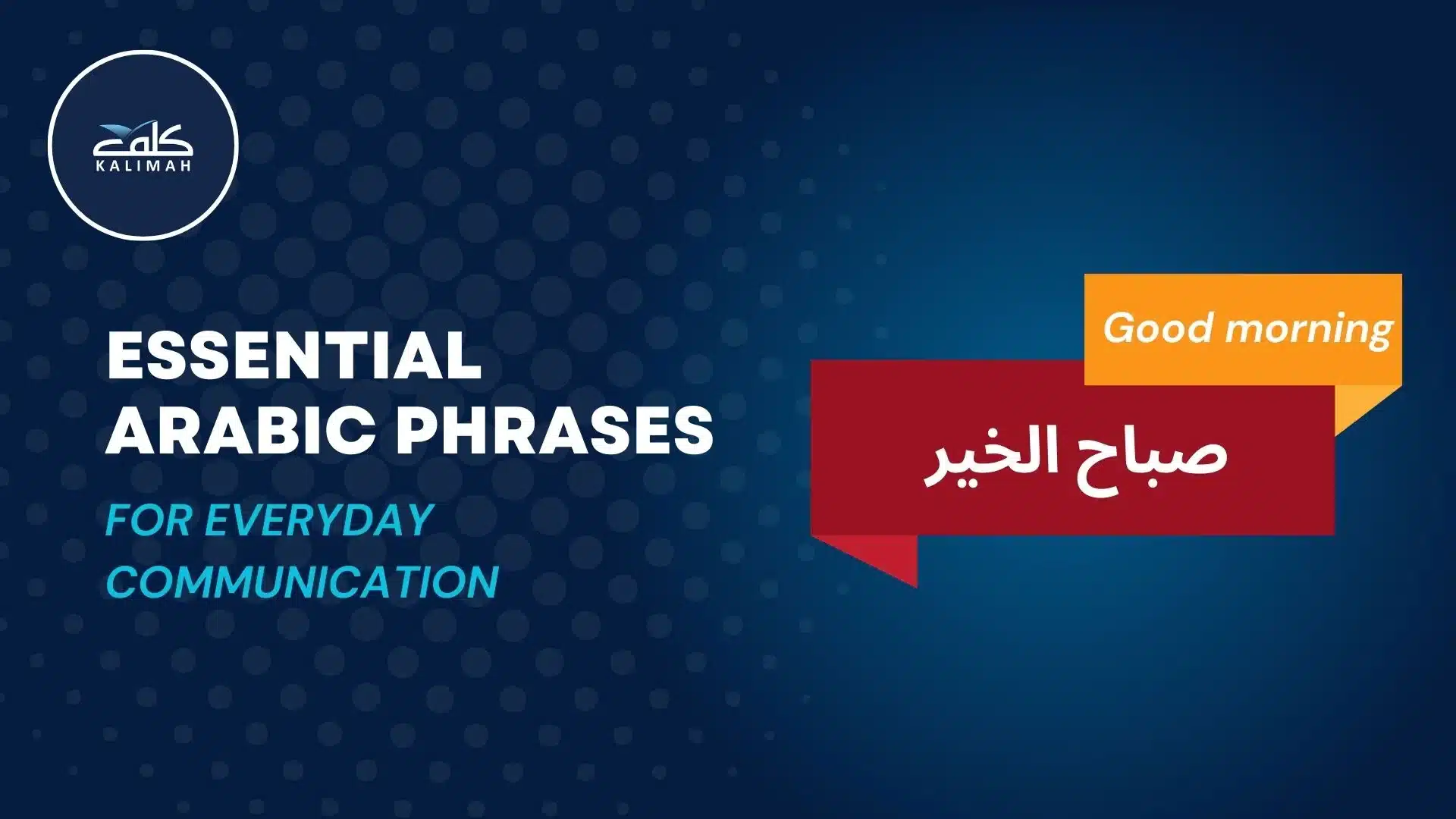
| صباح الخير | Good morning | sabahul khayr |
| مساء الخير | Good evening | Masa’ul khayr |
| تصبح على خير | Good night | tusbahu ala khayr |
| مع السلامة | Good bye | ma’a as-salamah |
| بالتوفيق! | Good luck! | bit-tawfiq |
| اتمنى لك يوما طيبا | Have a nice day | atmna lk ywma tyba |
| هل تفهمُ؟ | Do you understand? | hal tafhamu? |
| أنا أفهم | I understand | ana afham |
| أنا لا أفهم | I don’t understand | la afham |
| لا أعلم | I don’t know | la a‘lamu |
| تكلم ببطء من فضلك | Please speak more slowly | takallam bibutt’ min fadlak |
| أعد من فضلك | Please say that again | a’id min fadlak! |
| Arabic phrase | English phrase | Pronunciation |
| هل تتكلم اللغة العربية؟ | Do you speak Arabic? | hal tatakallam al-lughah al-‘arabiyah? |
| نعم, قليل | Yes, a little | na’am, qalilan |
| من فضلك | Excuse me | min fadlak |
| بكم هذا؟ | How much is this? | (bikam haza? |
| شكرا | Thank you | shukran |
| العفو | Reply to thank you | al’afw |
| أين الحمّام؟ | Where’s the toilet / bathroom? | ayn al-hammām? |
| جزاك الله خيرا | Jazak Allah Khair | May God reward you with good |
Beginner Phrases to Learn in Arabic (Start Here)
If you’re just starting to learn Arabic, focus on these essential beginner phrases that form the foundation of everyday communication. Mastering these will allow you to introduce yourself, ask basic questions, and navigate common situations with confidence.
Top 10 Beginner Phrases Every Arabic Learner Should Know:
- السلام عليكم (As-salamu alaykum) – Hello / Peace be upon you
The most common Arabic greeting, used in all formal and informal settings. - و عليكم السلام (Wa alaykum as-salam) – And peace be upon you too
The proper response to “As-salamu alaykum.” - كيف حالك؟ (Kayfa halak?) – How are you?
A polite way to check in with someone. (Use “Kayfa halik?” for females.) - أنا بخير، شكراً (Ana bikhair, shukran) – I am fine, thank you
The standard reply to “How are you?” - ما اسمك؟ (Ma ismak?) – What is your name?
Essential for introductions. (Use “Ma ismik?” for females.) - اسمي… (Ismi…) – My name is…
Follow this phrase with your name. - من فضلك (Min fadlak) – Please / Excuse me
A polite expression used when making requests or getting someone’s attention. - شكراً (Shukran) – Thank you
One of the most frequently used phrases in Arabic. - أين الحمام؟ (Ayna al-hammam?) – Where is the bathroom?
A must-know phrase for travelers. - مع السلامة (Ma’a as-salamah) – Goodbye
The standard way to say goodbye in Arabic.
Why Start with These Phrases?
These beginner phrases cover the three pillars of early language learning: greetings, polite expressions, and basic questions. They are also built using simple root-based vocabulary, making it easier to expand your knowledge as you progress. Practice these daily, and you’ll notice how quickly you can start real conversations in Arabic.
Essential Arabic Sentences for Real-Life Situations
All phrases listed below are in Modern Standard Arabic (MSA). This is the formal standard version of Arabic that is universally understood in every Arab country, and is also the form of Arabic used in the Holy Quran. All pronunciations are transliterated using standard systems that are easy for English speakers to read.

| English Phrases | Arabic Phrases |
| Where is the library? | “Ayna al-maktaba?” أين المكتبة |
| Do you speak English? | “Hal tatakallam al-ingliziya?” هل تتكلم الانجليزية |
| What time is it? | “Kam elsa’a” كم الساعة؟ |
| This is beautiful | هذا جميل “Hatha jameel” |
| That’s interesting | هذا مثير للاهتمام “Hatha muthir lil-ihtimam” |
| That was excellent! | كان ذلك مميزاً “Kana dhalika momayazan” |
| Tell me more | أخبرني بالمزيد “Akberni bil-mazeed” |
| Get well soon | أتمنى لك الشفاء العاجل “Atamana laka chifaa’ l’ajil” |
| What’s new? | Maljadeed? مالجديد؟ |
| Nothing much | Lashai jadeed لا شيء جديد |
| See you later! | Araka fi ma ba’d أراك في مابعد |
| I’m lost | Ada’tu tareeqi! أضعت طريقي! أضعت طريقي |
| Can I help you? | Hal beemkani mosa’adatuk? هل بإمكاني مساعدتك؟ |
| Can you help me? | Hal beemkanek mosa’adati? هل بإمكانك مساعدتي؟ |
| Where is the (bathroom/ pharmacy)? | Ayna ajedu (al merhaad/ assaidaliah)? أين أجد (المرحاض/ الصيدلية)؟ |
| Hold on please! (phone) | ibqa/ ala al khat raja’an إبق علي الخط رجاءا |
Inside Kalimah Center: Moments from Our Courses
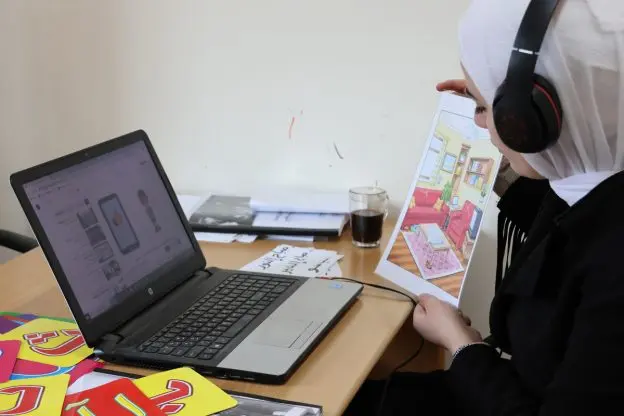
Get a glimpse into the vibrant learning experience at Kalimah Center. These snapshots capture real moments from our live classes—where students engage deeply, connect with passionate instructors, and grow in a welcoming, supportive environment.
Master Arabic with Kalimah Center
Join our expert-led online classes and start your journey toward Arabic fluency today.
Book Your Free TrialMost Common Arabic Phrases for Travel and Conversation
Mastering high frequency Arabic phrases builds the foundation for effective cross cultural communication. Unlike rote memorization of isolated vocabulary, learning complete sentences allows you to participate in real conversations much faster. These core expressions include everyday greetings, polite formalities, and common questions that you will encounter in almost every interaction with native Arabic speakers.

Practice these common phrases well, and you won’t have any more reasons to be afraid when holding one-on-one conversations. Now, let’s see some of the most helpful expressions which can make your experience even richer!
| English Phrases | Arabic Phrases |
| May God reward you with good | “Jazak Allah Khair” جزاك الله خيرا |
| May God bless you | “Barak Allah Feek” بارك الله فيك |
| Praise be to God | “Alhamdulillah” الحمد لله |
| If God wills | “Insha’Allah” ان شاء الله |
| Nice to meet you | تشرفت بلقائك “Tasharraftu biliqa’ik” |
| Stay in touch | إبقِ على تواصل “Abuqa ala tawasul” |
| See you soon | أراك قريبًا “Arak qareeban” |
| One moment please! | Lahza men fadlek لحظة من فضلك |
| Come with me! | Ta’ala ma’ee! تعال معي! |
| What are you doing | “Mada Taf’al?”ماذا تفعل |
| I’m hungry/ thirsty. | Ana jae’/ ana ‘atshaan أنا جائع/ أنا عطشان |
| Don’t worry! | La taqlaq! La taqlaqi (fem) !لاتقلق/ لا تقلقي |
| No Problem! | La moshkelah لامشكلة |
| Bless you (when sneezing) | Rahimaka Allah رحمك الله |
| Happy Eid | Eid mobarak! عيد مبارك |
| Happy Ramadan | Ramadan mobarak! رمضان مبارك |
| I will be right back! | Sa arje’o halan سأرجع حالا |
| I have to go | Yajebu an athhaba al aan! (th as in that) يجب أن اذهب الآن |
| What Is This? | Ma hatha (th as in that) ما هذا؟ |
Modern Standard Arabic (MSA) Phrases and Sentences
These MSA phrases are understood across all Arabic-speaking countries, making them ideal for formal settings, media consumption, and academic study.

| Arabic phrase | English phrase | Pronunciation |
| أحتاج إلى… | I need… | Ahtaj ila… |
| يمكنني الدفع | I can pay | Yumkinuni ad-daf’ |
| أنا سعيد | I am happy | Ana sa’id |
| أنا حزين | I am sad | Ana hazin |
| أشعر بالملل | I feel bored | Ash’ur bil-malal |
| متى يبدأ؟ | When does it start? | Mata yabda’? |
| هل هذا صحيح؟ | Is this correct? | Hal hatha sahih? |
| أشعر بالتعب | I feel tired | Ash’ur bil-ta’ab |
| هذا جميل | This is beautiful | Hatha jameel |
| أحتاج إلى استراحة | I need a break | Ahtaj ila istiraha |
| أنا متوتر | I am nervous | Ana mutawtir |
| أنا محظوظ | I am lucky | Ana mahzouz |
| ماذا تفعل؟ | What are you doing? | Madha taf’al? |
| هل لديك وقت؟ | Do you have time? | Hal ladayka waqt? |
| أنا أدرس | I am studying | Ana adrus |
| أحب السفر | I love traveling | Uhibb as-safar |
| هذا صعب | This is difficult | Hatha sa’ab |
| أريد أن أذهب | I want to go | Ureed an azhhab |
| Arabic phrase | English phrase | Pronunciation |
| لدي سؤال | I have a question | Ladayya su’al |
| أحتاج إلى نصيحة | I need advice | Ahtaj ila nasiha |
| ما هي قائمة الطعام؟ | What is the menu? | Ma hiya qaimat at-ta’am? |
| أريد الماء | I want water | Ureed al-ma’a |
| أين يمكنني العثور على مطعم؟ | Where can I find a restaurant? | Ayn yumkinuni al-‘uthur ala mat’am? |
| الطعام لذيذ | The food is delicious | At-ta’am ladhidh |
| هذا ليس صحيحاً | This is not correct | Hatha laysa sahihan |
| أريد الذهاب إلى السوق | I want to go to the market | Ureed adh-dhahab ila as-suq |
| هل يمكنك إخباري بالطريق؟ | Can you tell me the way? | Hal yumkinuka ikhbarī bit-tariq? |
| هذه هي الخريطة | This is the map | Hadhihi hiya al-kharita |
| أحتاج إلى طبيب | I need a doctor | Ahtaj ila tabib |
| أنا أشعر بالمرض | I feel sick | Ana ashur bil-marad |
| هل يمكنني الحصول على دواء؟ | Can I get some medicine? | Hal yumkinuni al-husul ala dawa’? |
| أحتاج إلى وقت للتفكير | I need time to think | Ahtaj ila waqt lil-tafkeer |
| أضعت طريقي! | I’m lost | Ada’tu tareeqi! |
| هذا رأيي | This is my opinion | Hatha ra’yi |
| إلى اليَمين | to the right | ila al-ya-meen |
| إلى اليَسار | to the left | ila al-ya-saar |
| بجانب | next to | bejanib |
| لف | turn! | leef |
Read also: Learn how to introduce yourself in Arabic
How to Identify and Use Practical Expressions in Arabic
Identifying practical Arabic expressions starts with understanding frequency of use and contextual relevance. The most useful phrases are those you’ll encounter daily—greetings, polite requests, directions, and common questions. To identify them:
- Focus on high-frequency phrases: Expressions like “Shukran” (Thank you), “Min fadlak” (Please), and “Kayfa halak?” (How are you?) appear in nearly every Arabic conversation.
- Learn situational clusters: Group phrases by context—travel (“Ayna al-hammam?” – Where is the bathroom?), shopping (“Bikam haza?” – How much is this?), or social etiquette (“Ahlan wa sahlan” – Welcome).
- Prioritize Modern Standard Arabic (MSA): MSA phrases are understood across all Arabic-speaking countries, making them universally practical for beginners.
- Use spaced repetition: Apps like Anki or flashcards help you retain practical expressions through regular review.
How to use practical Arabic expressions effectively:
- Practice pronunciation (Makharij): Correct articulation ensures native speakers understand you. For example, pronounce “Shukran” as “SHUK-ran,” not “SHOO-kran.”
- Apply phrases in real contexts: Use “As-salamu alaykum” when greeting Arabic speakers online or in person. Context reinforces memory.
- Combine with body language: In Arab cultures, greetings often include a handshake or placing your hand over your heart—knowing this makes your phrases more authentic.
- Start conversations with confidence: Even basic phrases like “Ana min [country]” (I am from…) open doors to deeper interaction.
By focusing on practical, high-frequency expressions and using them in real-life scenarios, you’ll build conversational confidence faster than studying grammar alone.
Continue Your Arabic Journey with Structured Courses
Discover our range of courses at Kalimah Center, designed to cater to learners of all levels and backgrounds. Whether you’re seeking to enhance your language skills, explore cultural topics, or delve into specialized subjects, our diverse offerings provide something for everyone.
Join us on a transformative educational journey that empowers you to achieve your goals and connect with the Arabic language and culture.
1. Learn Arabic Online
Get Started to Improve your Arabic Language & Linguistic Skills! If you wish to fluently and confidently speak Arabic, you’ve landed in the right place.
All our courses are presented in unique attractive presentations and supported by interactive materials to boost the Arabic learning experience.
2. Learn Quran & Tajweed online
Do you wish to get closer to the Quran, understand Allah’s revelation, and perfectly recite it like a native? It’s not hard or far away anymore!
In Kalimah Centre, we offer you a complete Quran Course to master the Quran recitation and learn the Tajweed rules by heart.
Our course is offered by Ijazah-certified teachers who have a long experience in teaching the Quran to non-Arabic speakers.
3. Learn Arabic Online For Kids
Do you wish your kids could learn Arabic and effectively understand it? Arabic learning has become essentially important nowadays for Muslim kids in the West.
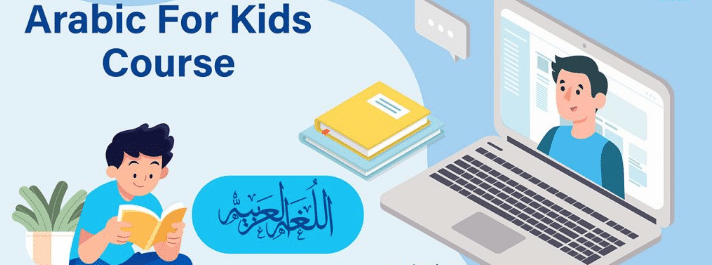
It preserves their identity, culture, and most importantly; their faith!
Here comes the opportunity to effectively and simply teach your children the Arabic language at Kalimah Centre!
Kalimah Centre provides science-based, interactive, and child-friendly Arabic classes for children all over the world with our highly experienced native tutors!
4. Kalimah Intensive Group Classes
Join our online group classes for achieving better results in a shorter time. Learn from Kalimah most experienced teachers with our latest books, alongside a friendly group of Muslim brothers with cheap prices.
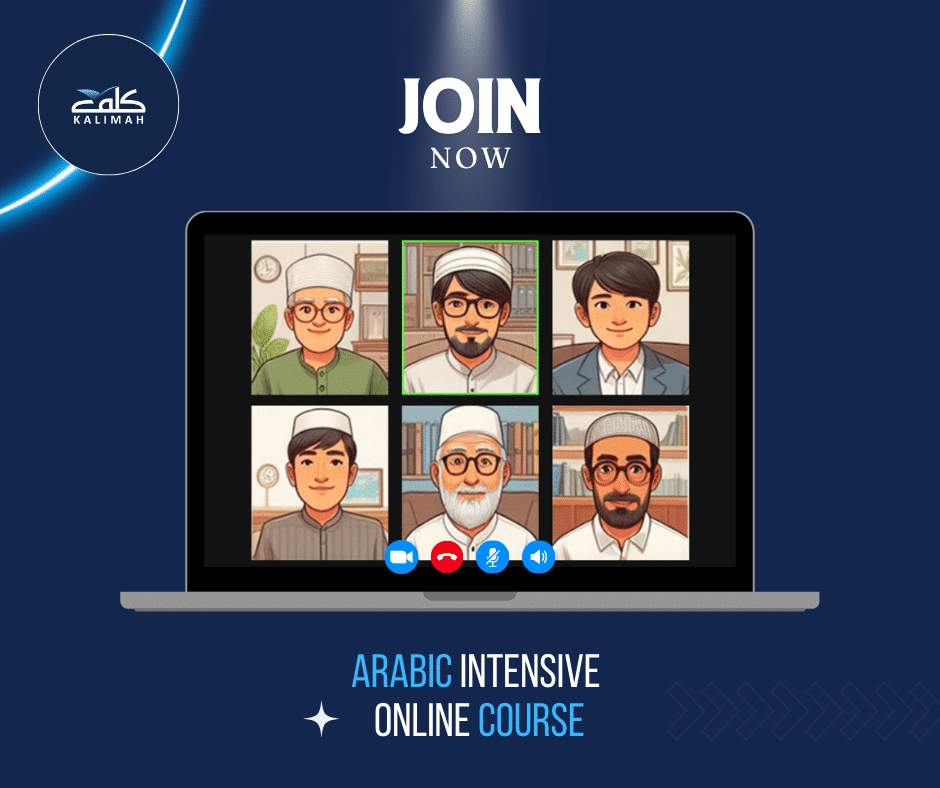
Don’t Miss Out on Your Chance to stand out, whether you’re a beginner or seeking advanced knowledge.
Experience Kalimah Center Classes
Watch real excerpts from our live sessions at Kalimah Center and see how we bring learning to life. These clips highlight our interactive, student-centered teaching approach across all our courses—designed to keep learners engaged, motivated, and actively involved every step of the way.
Master Arabic with Kalimah Center
Join our expert-led online classes and start your journey toward Arabic fluency today.
Book Your Free TrialHere Are The Reviews On Our Courses:
Our students frequently commend the excellence of our courses and the commitment shown by our instructors. You can read their complete reviews on Trustpilot.
Read more reviews on Trustpilot

Unlock Your Potential in Arabic and Quran with Kalimah Center!
Ready to deepen your connection with the Quran and enhance your understanding of Arabic? Join Kalimah Center today and embark on a transformative journey of learning and growth! Our professional, handpicked Online Arabic and Quran Tutors are dedicated to helping you master these essential skills with ease and expertise.
📚 Explore Our Courses:
Online Arabic Course: Tailored to your level, our comprehensive Arabic program includes 16 teaching levels and 400+ hours of personalized sessions.
Online Quran With Tajweed Course: Perfect for non-Arabic speakers, our course spans 13 levels and equips you with Tajweed mastery from beginner to advanced.
Online Arabic Course For Kids: Nurture your child’s love for Arabic with our engaging and structured program, available in 24 levels for primary, intermediate, and secondary stages.
🚀 Start Your Free Trial Today! 🚀
Don’t miss out on this life-changing opportunity to deepen your faith and knowledge. Sign up now for your free trial and take the first step towards becoming a better practicing Muslim with Kalimah Center!
FAQs about Learning Arabic Phrases And Sentences
Q1: What are the most useful Arabic phrases for beginners?
A: The most useful Arabic phrases for beginners include basic greetings like “As-salamu alaykum” (Hello), “Kayfa halak?” (How are you?), “Shukran” (Thank you), and “Min fadlak” (Please). Starting with these allows immediate real-world application in travel, shopping, or conversations with Arabic speakers.
Q2: How do you pronounce common Arabic phrases correctly?
A: Correct pronunciation relies on learning Makharij (points of articulation). For example, “As-salamu alaykum” is pronounced “as-sa-LAA-mu a-LAY-kum.” Use resources with audio or native tutors to master sounds unique to Arabic, such as the emphatic “ḍād” or the rolled “r.”
Q3: Should I learn Modern Standard Arabic (MSA) phrases or dialects?
A: Beginners should start with Modern Standard Arabic (MSA) phrases because they are understood across the Arab world in media, writing, and formal settings. Dialect-specific phrases (Egyptian, Levantine) can be added later for casual conversation in specific countries.
Q4: How long does it take to learn useful Arabic phrases and sentences?
A: With consistent daily practice (15–20 minutes), most beginners can master 50–100 practical Arabic phrases and sentences in 4–6 weeks. Combining flashcards, speaking practice, and real-life application accelerates retention.
Q5: Are there free resources to learn Arabic phrases with pronunciation?
A: Yes. Many online platforms offer free Arabic phrase lists with audio. For structured learning, academies like Kalimah Center provide free trial lessons that combine phrases with proper Tajweed-style pronunciation and context.
Conclusion
Learning the phrases in Arabic is one of the most crucial ways to achieve proficiency in the language, enabling you to connect with Arabic-speaking cultures. Mastery of the phrases enhances not only your way of communication but also gives an enriched view of the social and cultural contexts where the application of the language is concerned.
With every new phrase, you get closer to developing relationships with people and finding your way out through diversified situations, therefore making your journey of learning Arabic quite practical and rewarding.