Food is one of the easiest and most enjoyable ways to learn a new language. When you learn Arabic, knowing how to talk about meals, snacks, and everyday food helps you speak naturally in real situations. You may need these words when ordering food, visiting an Arab family, shopping at a market, or talking with friends about what you usually eat during the day.
This guide focuses on Snack Vocabulary in Arabic, especially words related to light meals, simple snacks, and common foods eaten between the main meals. You will also learn the Arabic names of breakfast, lunch, dinner, and useful verbs such as “I had breakfast,” “I had lunch,” and “I had dinner.”
The goal is not only to memorize food words, but also to understand how Arabs use them in daily conversation.
What Does “Meal” Mean in Arabic?
The Arabic word for “meal” is:
وجبة
wajbah
Meal
The plural form is:
وجبات
wajabāt
Meals
Today, the word وجبة can refer to any meal, such as breakfast, lunch, dinner, or even a light meal. For example:
أكلت وجبة خفيفة.
I ate a light meal.
أكلت ثلاث وجبات اليوم.
I ate three meals today.
In modern Arabic, the word وجبة is flexible. It can mean a full meal or a smaller food portion, depending on the context.
The Difference Between a Meal and a Snack in Arabic
Before learning food snack vocabulary in arabic, it is useful to understand the difference between a full meal and a snack.
A full meal is usually called:
وجبة
wajbah
Meal
A snack or light meal is commonly called:
وجبة خفيفة
wajbah khafīfah
Light meal / snack
The word خفيفة means “light.” It is the opposite of ثقيلة or دسمة, which means heavy or rich in fat.
Examples:
وجبة خفيفة
A light meal / snack
وجبة دسمة
A heavy or rich meal
طعام خفيف
Light food
شيء خفيف للأكل
Something light to eat
In daily Arabic, people often use وجبة خفيفة when they talk about a snack that is not as heavy as lunch or dinner.
Main Meals in Arabic
To understand snack vocabulary in Arabic and English, you should first know the names of the main meals.
Breakfast in Arabic
الفطور
al-fuṭūr
Breakfast
Breakfast is the first meal of the day. In Arabic, you may also hear:
طعام الصباح
ṭaʿām aṣ-ṣabāḥ
Morning food
Useful verb:
أفطر
afṭara
to have breakfast
Examples:
أفطرت الساعة السابعة.
I had breakfast at seven o’clock.
ماذا أكلت في الفطور؟
What did you eat for breakfast?
Lunch in Arabic
الغداء
al-ghadāʾ
Lunch
Lunch is usually the main meal in many Arab countries. It is often eaten in the afternoon.
Useful verb:
تغدّى
taghaddā
to have lunch
Examples:
تغدّيت مع أصدقائي.
I had lunch with my friends.
الغداء كان لذيذًا.
The lunch was delicious.
Dinner in Arabic
العَشاء
al-ʿashāʾ
Dinner
Be careful with pronunciation. العَشاء with a fatḥah on the letter ع means dinner. In Islamic context, العِشاء with a kasrah can refer to the night prayer.
Useful verb:
تعشّى
taʿashshā
to have dinner
Examples:
تعشّيت في البيت.
I had dinner at home.
أريد عشاءً خفيفًا.
I want a light dinner.
Common Snack Vocabulary in Arabic
Now let’s look at useful snack vocabulary in Arabic that learners can use in real life.
وجبة خفيفة — Snack / Light Meal
This is the most direct and useful expression for “snack.”
Example:
أريد وجبة خفيفة.
I want a snack.
تناولت وجبة خفيفة بعد الظهر.
I had a snack in the afternoon.
مقبّلات — Appetizers / Starters
مقبّلات are small dishes served before or with a meal. In many Arab homes and restaurants, appetizers can also be eaten as snacks.
Examples:
الحمص من المقبّلات المشهورة.
Hummus is a famous appetizer.
أحب المقبّلات العربية.
I like Arabic appetizers.
تسالي — Snacks / Nibbles
تسالي is a casual Arabic word used for snacks eaten for fun, especially while watching TV or sitting with friends.
Examples:
اشترينا تسالي للفيلم.
We bought snacks for the movie.
المكسرات من التسالي المشهورة.
Nuts are popular snacks.
ساندويتش — Sandwich
The word ساندويتش is borrowed from English and is widely used in Arabic.
Examples:
أكلت ساندويتش جبن.
I ate a cheese sandwich.
أريد ساندويتش فلافل.
I want a falafel sandwich.
قطعة — Piece
The word قطعة is useful when talking about small portions.
Examples:
قطعة خبز
A piece of bread
قطعة جبن
A piece of cheese
قطعة حلوى
A piece of candy / dessert
Learn Arabic in a Fun and Structured Way
If you are looking for a trusted and engaging way for your child to start learning Arabic, the Online Arabic Course For Kids at Kalimah Center is designed to make the learning journey simple, interactive, and enjoyable. This course helps children build strong foundations in reading, writing, and speaking Arabic through child-friendly lessons and qualified tutors who understand how to teach young learners step by step.
The program is structured across multiple levels, starting from basic letters and vocabulary all the way to more advanced communication skills. Each stage uses interactive methods such as storytelling, practice exercises, and guided speaking activities, ensuring that children stay motivated while developing real language skills. It’s not just about learning words—it’s about helping kids use Arabic naturally in daily life and build confidence from an early age.
Start your child’s Arabic journey today with Kalimah Center and give them the gift of language, confidence, and cultural understanding.
Popular Arabic Snacks and Light Foods
This section gives you practical food snack vocabulary in arabic with meanings and examples.
خبز — Bread
Bread is essential in Arab food culture. It is eaten with cheese, labneh, hummus, falafel, and many other foods.
Example:
أكلت خبزًا مع الجبن.
I ate bread with cheese.
جبن — Cheese
Cheese is common at breakfast and dinner, and it is also used in light meals.
Example:
أحب الجبن مع الخبز.
I like cheese with bread.
لبنة — Labneh
لبنة is strained yogurt. It is popular in the Levant and often eaten with olive oil and bread.
Example:
اللبنة وجبة خفيفة ولذيذة.
Labneh is a light and delicious snack.
زيتون — Olives
Olives are common in Arab breakfasts and light meals.
Example:
أكلت الزيتون مع الجبن.
I ate olives with cheese.
زيت وزعتر — Olive Oil and Za’atar
زيت وزعتر is a very common light food in many Arab countries. Za’atar is a mixture often made with thyme, sesame, and spices.
Example:
أحب الخبز مع الزيت والزعتر.
I like bread with olive oil and za’atar.
Read also: Common Arabic Expressions For Agreement & Disagreement
حمص — Hummus
Hummus is made from chickpeas and tahini. It can be served as an appetizer, snack, or part of a meal.
Example:
الحمص مشهور في المطبخ العربي.
Hummus is famous in Arabic cuisine.
فلافل — Falafel
Falafel is a popular Arabic food made from chickpeas or fava beans. It is often eaten in sandwiches.
Example:
أريد ساندويتش فلافل.
I want a falafel sandwich.
بيض — Eggs
Eggs are common for breakfast and light dinners.
Example:
أفطرت بيضًا وخبزًا.
I had eggs and bread for breakfast.
شوربة / حساء — Soup
Both شوربة and حساء mean soup. حساء is more formal, while شوربة is very common in daily speech.
Example:
أكلت شوربة خفيفة في العشاء.
I had a light soup for dinner.
سلطة — Salad
Salad is a common light dish and can be part of lunch or dinner.
Example:
السلطة وجبة خفيفة وصحية.
Salad is a light and healthy meal.
Experience Kalimah Center Classes
Watch real excerpts from our live sessions at Kalimah Center and see how we bring learning to life. These clips highlight our interactive, student-centered teaching approach across all our courses—designed to keep learners engaged, motivated, and actively involved every step of the way.
Master Arabic with Kalimah Center
Join our expert-led online classes and start your journey toward Arabic fluency today.
Book Your Free TrialSweet Snack Vocabulary in Arabic
Many learners also want to know how to talk about sweet snacks in Arabic.
حلوى — Sweets / Candy
حلوى can refer to sweets, candy, or dessert in general.
Example:
أكل الطفل قطعة حلوى.
The child ate a piece of candy.
كعك — Cake / Cookies
كعك can refer to cake-like or cookie-like baked sweets, depending on the country and context.
Example:
أكلت كعكًا مع الشاي.
I ate cake/cookies with tea.
بسكويت — Biscuits / Cookies
The word بسكويت is widely used in Arabic.
Example:
أحب البسكويت مع الحليب.
I like biscuits with milk.
مربى — Jam
Jam is often eaten with bread, especially at breakfast.
Example:
أكلت الخبز مع المربى.
I ate bread with jam.
عسل — Honey
Honey is a common breakfast item and a natural sweet food.
Example:
العسل لذيذ مع الخبز.
Honey is delicious with bread.
Master Arabic Online with Kalimah Center
If you are looking for a complete and structured way to learn Arabic online, the Online Arabic Course at Kalimah Center is designed to help learners of all levels build strong foundations in reading, writing, listening, and speaking. The course follows a clear step-by-step curriculum that allows students to progress gradually while gaining real confidence in using Arabic in everyday situations.
What makes this program effective is its focus on interactive learning with native Arabic tutors, real-life conversations, and practical exercises. Instead of memorizing isolated rules, learners practice Arabic in meaningful contexts such as daily communication, travel, and social interaction. This approach helps students not only understand the language but also use it naturally and fluently in real life.
Start your journey today with Kalimah Center and transform the way you learn Arabic—one lesson at a time.
Drinks Often Served With Snacks
Snacks are often served with drinks, so these words are useful too.
شاي — Tea
Tea is one of the most common drinks in Arab culture.
Example:
شربت الشاي مع البسكويت.
I drank tea with biscuits.
قهوة — Coffee
Coffee is common in many Arab countries and is often served to guests.
Example:
شربت القهوة بعد الفطور.
I drank coffee after breakfast.
حليب / لبن — Milk
In many regions, حليب means milk. The word لبن may mean milk in some countries and yogurt in others, depending on the dialect.
Example:
شربت الحليب في الصباح.
I drank milk in the morning.
عصير — Juice
Juice is common with breakfast or snacks.
Example:
أريد عصير برتقال.
I want orange juice.
Useful Verbs for Talking About Snacks in Arabic
Learning nouns is important, but verbs help you build full sentences. Here are common verbs used with meals and snacks.
أكل — To Eat
Example:
أكلت وجبة خفيفة.
I ate a snack.
شرب — To Drink
Example:
شربت كوبًا من الشاي.
I drank a cup of tea.
تناول — To Have / To Eat
تناول is more formal than أكل.
Example:
تناولت وجبة خفيفة في العمل.
I had a snack at work.
طلب — To Order
Example:
طلبت ساندويتش فلافل.
I ordered a falafel sandwich.
اشترى — To Buy
Example:
اشتريت بعض التسالي.
I bought some snacks.
Read also: Arabic Bakery Vocabulary
Snack Vocabulary in Arabic and English: Quick List
Here is a simple list of snack vocabulary in arabic and english for quick learning:
وجبة خفيفة — Snack / light meal
تسالي — Snacks / nibbles
مقبّلات — Appetizers
ساندويتش — Sandwich
خبز — Bread
جبن — Cheese
لبنة — Labneh
زيتون — Olives
زيت وزعتر — Olive oil and za’atar
حمص — Hummus
فلافل — Falafel
سلطة — Salad
شوربة — Soup
بسكويت — Biscuits / cookies
حلوى — Sweets / candy
مكسرات — Nuts
عصير — Juice
شاي — Tea
قهوة — Coffee
حليب — Milk
This list is useful for beginners who want to remember the most practical words first.
Everyday Arabic Sentences About Snacks
Here are some natural sentences using snack vocabulary in Arabic.
أريد وجبة خفيفة.
I want a snack.
هل عندك شيء خفيف للأكل؟
Do you have something light to eat?
أكلت ساندويتش جبن.
I ate a cheese sandwich.
تناولت الشاي مع البسكويت.
I had tea with biscuits.
أريد عشاءً خفيفًا.
I want a light dinner.
اشتريت بعض التسالي.
I bought some snacks.
الحمص والفلافل من الأطعمة المشهورة.
Hummus and falafel are famous foods.
أفضل الوجبات الخفيفة الصحية.
I prefer healthy snacks.
How to Ask for a Snack in Arabic?
If you are in a restaurant, café, or Arab home, these phrases can help you ask for a snack politely.
هل يوجد شيء خفيف؟
Is there something light?
ماذا عندكم من الوجبات الخفيفة؟
What light meals do you have?
أريد شيئًا خفيفًا للأكل.
I want something light to eat.
هل عندكم ساندويتشات؟
Do you have sandwiches?
هل يمكنني طلب وجبة خفيفة؟
Can I order a snack?
These phrases are practical for learners because they are simple and polite.
Cultural Notes About Snacks in Arab Countries
In many Arab homes, snacks are not always separated from meals in the same way they are in Western culture. A small plate of cheese, olives, bread, and tea may be considered a light dinner, a snack, or something served to guests.
In some countries, foods like hummus, falafel, labneh, and za’atar are eaten at breakfast, dinner, or as light meals during the day. This means that the same food can belong to different meal categories depending on the time and situation.
Also, hospitality is important in Arab culture. Guests are often offered tea, coffee, sweets, fruit, or light food. That is why learning Snack Vocabulary in Arabic helps you understand both the language and the culture.
Healthy and Heavy Snacks in Arabic
Arabic uses simple adjectives to describe whether a snack is light, healthy, or heavy.
خفيف
Light
صحي
Healthy
دسم
Rich / fatty / heavy
لذيذ
Delicious
مشبع
Filling
Examples:
هذه وجبة خفيفة وصحية.
This is a light and healthy snack.
هذا الطعام دسم جدًا.
This food is very heavy/rich.
أريد شيئًا خفيفًا وغير دسم.
I want something light and not heavy.
These adjectives help learners describe food more naturally.
Common Mistakes Learners Should Avoid
One common mistake is translating “snack” only as سناك. Although many people understand the borrowed word سناك, the better Arabic expression is وجبة خفيفة.
Another mistake is using the word وجبة for everything without context. وجبة means meal, but if you mean a small snack, it is clearer to say وجبة خفيفة.
Learners should also remember that some words change meaning by region. For example, لبن may mean milk in one country and yogurt in another. Because of this, it is always helpful to learn both Modern Standard Arabic and common regional usage.
Inside Kalimah Center: Moments from Our Courses
Get a glimpse into the vibrant learning experience at Kalimah Center. These snapshots capture real moments from our live classes—where students engage deeply, connect with passionate instructors, and grow in a welcoming, supportive environment.
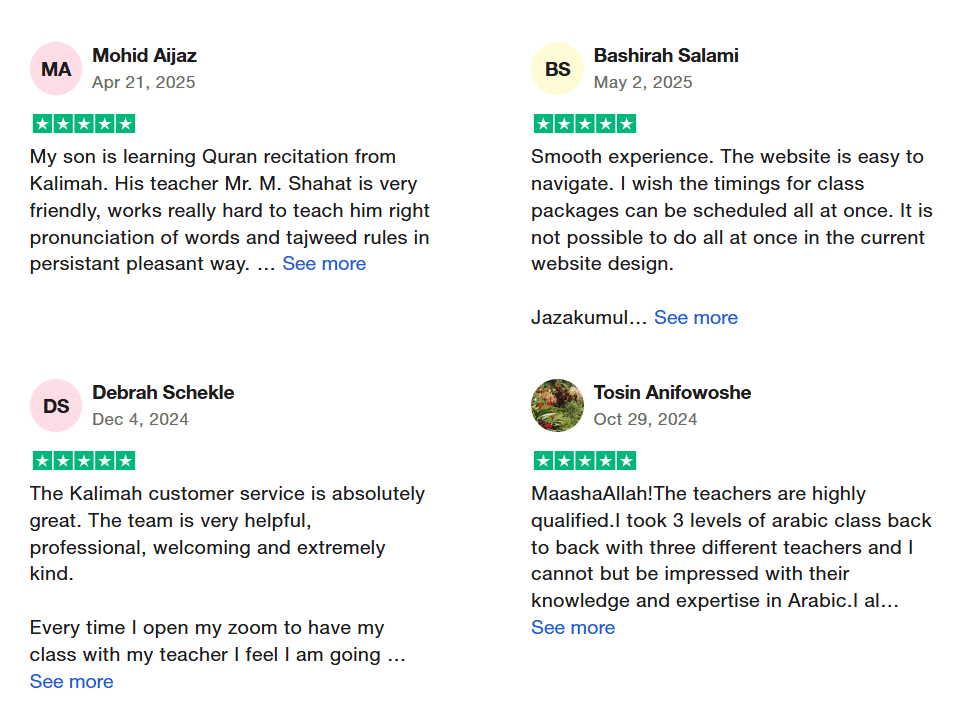
Here Are The Reviews On Our Courses:
Our students frequently commend the excellence of our courses and the commitment shown by our instructors. You can read their complete reviews on Trustpilot.
Read more reviews on Trustpilot
Learn Arabic the Smart Way with Kalimah Center
If you enjoyed learning Snack Vocabulary in Arabic and want to take your Arabic skills to the next level, then structured learning is your next step. At Kalimah Center, you will find carefully designed Arabic courses that help you build real communication skills, not just memorize words. Whether you are a beginner or continuing your journey, the center provides clear, step-by-step guidance to help you understand and use Arabic naturally in everyday life.
Joining Kalimah Center means learning with experienced teachers who focus on practical language use, pronunciation, and real conversation skills. Instead of learning vocabulary in isolation, you will practice it in meaningful contexts like food, daily routines, and real-life situations—just like the snack vocabulary you explored in this article. This approach helps you speak confidently and understand Arabic culture more deeply.
Start your Arabic learning journey today with Kalimah Center and discover the easiest and fastest way to speak Arabic with confidence and fluency.
📚 Explore Our Courses:
Online Arabic Course: Tailored to your level, our comprehensive Arabic program includes 16 teaching levels and 400+ hours of personalized sessions.
Online Quran With Tajweed Course: Perfect for non-Arabic speakers, our course spans 13 levels and equips you with Tajweed mastery from beginner to advanced.
Online Arabic Course For Kids: Nurture your child’s love for Arabic with our engaging and structured program, available in 24 levels for primary, intermediate, and secondary stages.
🚀 Start Your Free Trial Today! 🚀
Don’t miss out on this life-changing opportunity to deepen your faith and knowledge. Sign up now for your free trial and take the first step towards becoming a better practicing Muslim with Kalimah Center!
Master Arabic with Kalimah Center
Join our expert-led online classes and start your journey toward Arabic fluency today.
Book Your Free TrialConclusion
Learning Snack Vocabulary in Arabic is a practical step for anyone who wants to speak Arabic in real-life situations. Food words appear in daily conversations, restaurant orders, family visits, travel, and cultural experiences.
Start with simple words such as وجبة خفيفة, خبز, جبن, حمص, فلافل, شاي, and قهوة. Then practice full sentences like أريد وجبة خفيفة and هل يوجد شيء خفيف للأكل؟
By learning food snack vocabulary in arabic and practicing snack vocabulary in arabic and english, you will be able to talk about light meals, order snacks, describe what you eat, and understand Arabic food culture more naturally.
FAQ About Snack Vocabulary in Arabic
What is the Arabic word for snack?
The most useful Arabic expression for snack is وجبة خفيفة, which means “light meal” or “snack.”
How do you say snacks in Arabic?
You can say وجبات خفيفة for light meals or snacks. In casual speech, تسالي can mean snacks or nibbles, especially foods eaten for enjoyment.
What is the difference between وجبة and وجبة خفيفة?
وجبة means meal, while وجبة خفيفة means light meal or snack.
What are common Arabic snacks?
Common Arabic snacks include hummus, falafel, labneh, olives, bread with za’atar and olive oil, nuts, biscuits, and sweets.
Is “snack” used in spoken Arabic?
Yes, some people use the borrowed word سناك, especially in modern speech. However, وجبة خفيفة is the more correct and widely understood Arabic expression.